Things seem to be going quite well for Xbox One in this heated Black Friday, with several reports of sold out shipments for the console at local stores, and the atmosphere seems very positive at Microsoft, with Xbox’s head of Marketing Aaron Greenberg promising great things for next year.
Many people thought the PS4 would pass the 15 million mark in global sales during the holidays and it didn’t take long to happen.
Just a few weeks ago Sony’s console passed 14 million globally and 5 million in the US alone. It is being reported now that the holidays have pushed the system to 15m globally, with over 57 million games sold for the system.
I’ll admit to being wrong on the PS4’s first year. It had a terrific line up of games, both first party and with indies, but I didn’t believe pre-November 2013 that it would pass 15 million units within one calendar year. I thought 10-12 million for sure. The declining sales of Wii, Wii U, PS Vita, Xbox 360 and PS3 in 2013 had me thinking that even the Xbox One and PS4 would struggle out of the gate a bit. Proved me wrong! The Xbox One and PS4 combined are achieving higher sales than the PS3/360 in the same time frame!
How does this compare to other popular consoles? Well, the PS2 released in Japan during March 2000 and by March 2001 Sony said they had shipped 10.61 million consoles globally and 9.2 million sold to consumers. The system wouldn’t come out in the US until October 2000, so there’s a bit of an asterisk behind these sales. You could argue that the PS4 didn’t come out until February 2014 in Japan and that the decline of console sales in Japan compared to how much more popular the PS2 was in Japan makes the PS4’s sales look even more impressive.
How does the PS4 compare to the Wii? Well, by the end of December 2007 Nintendo had shipped 20 million Wii units. It truly was a sales juggernaut and may never be replicated again. The Wii released in Europe, US and Japan all at the end of 2006 so it does have a bit of an advantage on the PS4. Again, the Japanese console market was much bigger back in 2006-2007 too so that explains why the Wii had sold so much more in Japan in its first 12 months than the PS4 has done so since February.
By December 31st, 2006 Microsoft had sold 7.6 million Xbox 360 consoles, half of what the PS4 has sold. Sony shipped 10.5 million PS3 systems globally by December 31st, 2007.
The lesson here? The PS4 is selling better, faster and in greater numbers than most other consoles in history except the Wii. During the first 12-13 months on market, from November 2013 to now, the system has had a historically significant run. The system has clearly benefited from some sustained momentum from 2013 through this year. Fans can debate whether the system has received the AAA retail blockbusters they expected from the first year of a new console but for no one can deny the run away commercial success of the system. Only the Nintendo Wii stands ahead of it historically and seeing how different the Japanese market was back in 2006 compared to today, I’d say its even more impressive the PS4 has gotten this close to Wii-like numbers.
With Project Morpheus coming in 2015, possibly along with a $299 PS4 SKU, and a solid lineup of exclusives or console exclusives like No Man’s Sky, Uncharted 4, The Order and Bloodborne, I can only imagine that Sony will be able to repeat this 15 million number in 2015 again at the very worst.
Microsoft’s 8th generation home console, the Xbox One, has hit a new milestone. The console has now sold more than eight million units worldwide.
The Xbox One sold 491,702 for the week ending November 22, 2014. That brings lifetime sales to 8,061,170 units, according to VGChartz. There has also been more than 32 million games sold for the Xbox One at retail.
This news comes a week after worldwide lifetime sales for the Xbox One has topped the Wii U with the console selling more than one million units in the UK. Microsoft also announced earlier this month that they have shipped nearly 10 million Xbox One consoles.
The idea that Ubisoft somehow didn’t know the condition of Assassin’s Creed Unity doesn’t just strain credulity, it snaps it in two and then sets the pieces on fire. The game’s issues are blatant, and extensive. The manipulation of review embargoes adds an extra layer of shady behavior to the situation.
So that’s the context of the “free” DLC that’s being offered, or a free game if you purchased a season pass. A company shipped a broken product, it used the embargo system to delay the news hitting, and are now offering more content for that game as a sort of apology. And that free game? It costs them next to nothing to open up their catalog as a way to try to make good on the horrific launch of Unity. The worse Ubisoft will suffer is a few lost Far Cry sales.
We have to stop giving them a free pass
The system has become exceedingly stacked against the early buyer. We’ve passed the point anyone is trying to hide it. The fact that Ubisoft thinks it can get out of this situation so cheaply isn’t a contrite apology, it’s a victory lap. It’s up to consumers to figure out how badly this behavior will hurt companies in the future, and free DLC is a woefully inadequate first step to making this right.
Here’s an apology that would matter: A way to return the game for a full refund, and a direct apology to players along with an explanation for how and why this happened.
That’s not going to happen however, because money. Refunds would mean dealing with retailers and Uplay, Ubisoft’s own digital distribution platform, states its rule simply: “All sales on PSN, Mac and PC digital content are final.”
It would cost time and money, and it would have to note that it shipped a broken game on notes to investors, and then describe the cost involved in actually treating its customers with respect. These things are unacceptable to a business focused on the bottom line.
Instead of taking steps that would matter, Ubisoft is going to offer warm platitudes and free content for people who paid $60 or more for a game that everyone but the purchaser knew wasn’t likely to work. If you want to know why players and the press don’t often trust big publishers, this could be exhibits A through Z. The entire system has been manipulated to hide the fact the game was broken, and Ubisoft is trying to make up for that dishonesty in the least expensive ways possible.
If there’s any silver lining in this situation, the free game selection is pretty great, including Far Cry 4 and The Crew.
Publishers need to stop tip-toeing around their own failures, and offering for-pay content for a broken game for free isn’t a great way to repair the relationship.
Video games are the only business where you’ll often hear industry insiders talking about how buying at launch is a good way to support the studios behind the games. This leaves out the fact that returning an opened game is all but impossible, and broken games at launch is close to becoming the rule rather than the exception.
This isn’t about Ubisoft, it’s about an industry that’s becoming increasingly comfortable selling non-working products to buyers with little to no recourse. Read Ubisoft’s post about the free content, they describe this issue as if it something that happened to them, rather than the result of the company’s own actions.
I’m also looking at you, Microsoft. The Halo situation remains unacceptable.
If anything, this is another painful reminder to stop pre-ordering games, stop buying games at launch, and for the love of god don’t buy season passes for content that may or may not be worth your money. Ubisoft needs to stop treating its customers with this level of disrespect, and it needs to start now.
The end of November period brought just about the worst possible news for Nintendo: The latest Pokemon games sold a dazzling 1.5 million units in Japan during launch week.
It’s a massive number in a market where few titles manage to crack the 100,000 unit barrier during their debuts. The hot Pokemon rollout helped once again revive the aging 3DS portable console sales, boosting the weekly unit sales number to 83,000. This is more than seven times higher than weekly sales of Sony’s flagship PS4 console in Japan.
This toxic triumph was precisely what Nintendo did not need. The company requires shock therapy to force its hidebound executives to abandon their preposterous opposition to launching Nintendo’s beloved franchises on iPad. Instead, the ancient Nintendo properties from its ’80s and ’90s halcyon days keep performing well enough to enable the company to keep its head in the sand.
Nintendo is not crashing fast enough. The core device franchise, the 3DS, has now sold nearly 2.4 million units in Japan so far this year, which is substantially below the 4 million units it sold in the same period last year. But the erosion is simply too slow to force the company to change its mind about getting into the mobile app market. The strong Pokemon sales numbers from its home market just gave the reactionary wing of Nintendo’s management a new argument to stay the course and keep hanging onto its slowly sinking game console platforms.
While Nintendo’s console sales slide, the mobile game market is about to hit $22 billion in 2014 and is poised to balloon to $30 billion in 2016. So many of the most famous and lucrative game franchises are sitting out the tablet and smartphone game explosion completely – Mario, Zelda, Metroid, Castlevania, Pokemon, etc.
Animal Crossing would be a perfect fit for the iPad and the monetization potential of its item collection system boggles the mind. Dr. Mario and other puzzle gems Nintendo has created could challenge the billion-dollar Candy Crush Saga empire so easily. F-Zero and Mario Kart are precisely the kind of rally games that fit the tablet format.
What could possibly be more delicious than Advance Wars for iPad? An insanely addictive, turn-based strategy game that begs for a connected, touchscreen-based device with a micro-payment system. Who amongst us would not pay $1.99 for new AW campaigns every damn month?
Nintendo is missing out on billions of dollars in totally new revenue with development costs that would be substantially below of what the Wii U requires. But with every passing quarter, Nintendo’s brand power becomes a little less valuable and relevant to younger consumers. Franchises like Castlevania and Metroid are already unknown to the new generation.
The sweet elixir of Pokemon 3DS profits are a slow venom dripping into Nintendo’s veins, numbing the mind of the company that needs to embrace change right now.
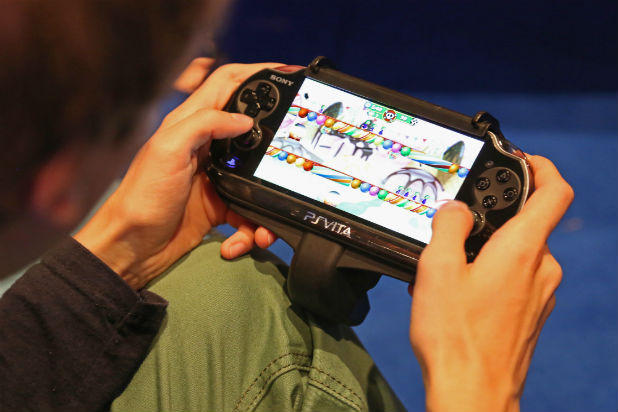
The Federal Trade Commission accused Sony Computer Entertainment America and its ad agency, Deutsch LA, on Tuesday of deceiving the public in ads and tweets for the launch of the PlayStation Vita handheld gaming console.
Deutsch and Sony agreed to settle the case, with Sony paying consumers what could top more than $750,000 in cash and buyer credits. Buyers of Vita will get the choice of $25 in cash or $50 in credit towards Sony purchases.
For the first time, the FTC pointed to tweet endorsements as the reason for making a deception complaint. The FTC said Deutsch’s ads for Vita were deceiving and accused the ad agency of illegally hiding that its employees’ “endorsement” tweets touting Vita were sponsored messages.
The FTC has warned repeatedly that any payment of significant cash or goods for social media endorsements in the blogosphere need to be clearly identified.
It cited as evidence a memo from a company executive urging the ad agency’s employees to tweet messages from their personal accounts touting Vita using the hashtag #gamechanger.
“Fellow Deutschers,” said the memo from an assistant account manager. ”The PlayStation Team has been working hard on a campaign to launch Sony’s all-new handheld gaming device, the PS Vita, and we want YOU to help us kick things off!
“To generate buzz around the launch of the device, the PS Vita ad campaign will incorporate a #GAMECHANGER hashtag into nearly all creative executions. #GAMECHANGER will drive gamers to Twitter where they can learn more about the PS Vita and join in the conversation. The campaign starts on February 13th, and to get the conversation started, we’re asking YOU to Tweet about the PlayStation Vita using the #GAMECHANGER hashtag. Easy.”
The FTC action stems from Sony’s rollout of the $250 PlayStation Vita in 2012, when according to gaming sites, Sony sold several hundred thousands of the consoles.
However, Sony did two things wrong, according to the FTC.
First in its ads for the pocket-sized console, Sony claimed it would revolutionize gaming mobility by enabling consumers to play their PlayStation 3 games via “remote play,” and that they could engage in “cross platform” play by starting a game on a PS3, pausing and saving it, and then continuing the game where they left off, on a PS Vita.
The FTC said the remote feature and the cross platform features weren’t available for many games, the advertised pause feature either wasn’t available at all or only at certain times, and that Sony misled consumers by not making it clear that to switch between consoles, consumers had to buy two versions of the same game — one for each.
“In the gaming industry, you have a problem with a new product described as a ‘game changer,’” Linda K. Badger, an FTC attorney told TheWrap. “It is hard for consumers to assess those claims.”
It is important the claims be accurate, she explained, because consumers have to base their purchases on the campaigns and can’t assess the veracity of any claims in advance.
UPDATE: While it seems that a world-leading tech company would be the last to be brought down by a hacker, this Sony thing is serious. I’ve come across a still photo of the hacked message that appeared on screens, posted by a site called business2community.com. More when it comes in. SPE spokesperson Jean Guerin said “We are investigating an IT matter.” Here’s the still photo:
EXCLUSIVE: Things have come to a standstill at Sony today, after the computers in New York and around the world were infiltrated by a hacker. As a precaution, computers in Los Angeles were shut down while the corporation deals with the breach. It has basically brought the whole global corporation to an electronic standstill. I’d heard that this began with a skull appearing on screens, and then a strangely ominous message telling users they’d been hacked by something called #GOP. It gets more bizarre as the message claims this is just the beginning and then threatens to release documents by 11 PM this evening. There is no reason given why this is happening, and no specific demands. Mentioned are websites in places around the world, some of which don’t even function. While Sony works this through, there are no corporate emails going in and out and you can’t use your computer and it’s hit or miss on whether calls are going to email. “We are down, completely paralyzed,” said a source. Waiting on reaction from Sony, but if you’re not getting your calls or emails returned from Culver City, don’t take it as an insult or reason to feel small. No comment from the studio.
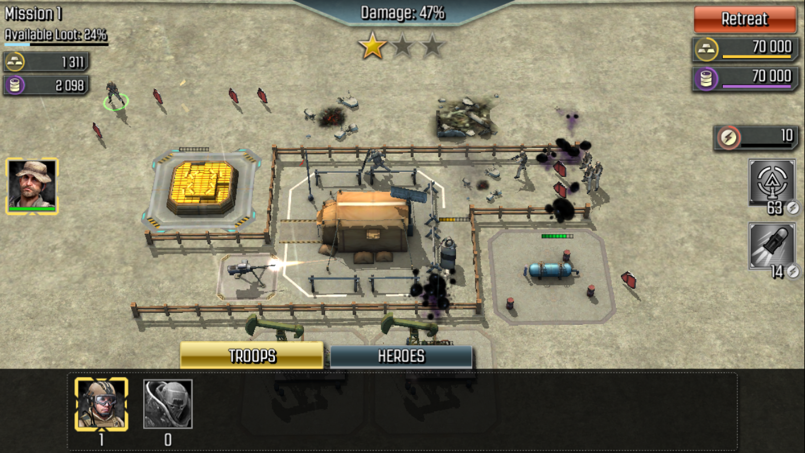
If the blockbuster action and Kevin Spacey-ness of Call of Duty: Advanced Warfare isn’t enough to scratch your militaristic itch, there’s now yet another way to take your Call of Duty addiction on the go. Taking some major design cues from hit mobile strategy game Clash of Clans, Call of Duty: Heroes has you attack and defend military bases using characters and weapons from Activision’s popular first-person shooter franchise. The free-to-play game is available now in iOS and Windows devices, with an Android version on the way.
As with Clash of Clans, Call of Duty: Heroes’ core gameplay cycle consists of using resources to fortify your base, training fighters for battle and attacking enemy strongholds. Whether you’re invading a base or defending your own, combat is as simple as tapping the screen to deploy your soldiers and watching the action unfold. The game lets you take on other players in PVP mode as well as defending against increasingly-difficult waves of enemies in survival mode.
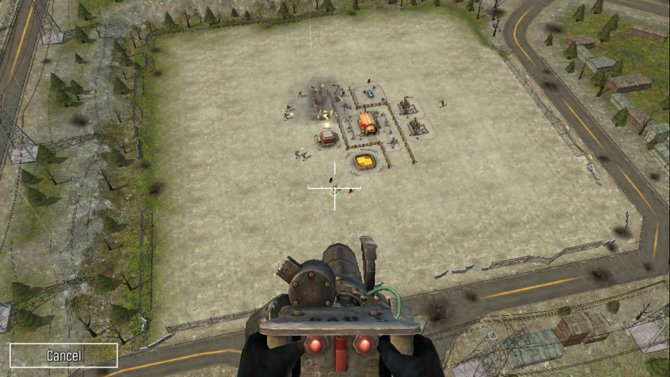
Heroes sets itself apart with some action-oriented mechanics lifted from the Call of Duty console games, such as the ability to rain down fire from above with a helicopter turret. The game’s Heroes — leader characters with special abilities — are also lifted from the core series, with the option to take control of characters like Captain Price from Modern Warfare and Mike Harper from Black Ops 2.
Heroes is far from the first Call of Duty mobile game; previous installments like Call of Duty: Strike Team and Call of Duty: Black Ops Zombies emulate the first-person shooting gameplay of their console counterparts, whereas Activision’s new Heroes game aims to capitalize on the ever-growing mobile strategy genre.
I had a good time deploying troops and ordering chopper strikes during my brief time with Heroes, and the game seems like a perfect fit for those who don’t mind a Call of Duty skin over Clash of Clans’ signature gameplay. As with most free-to-play games, you’ll likely have to either spend real money or lots of time in order to build the ultimate base, but the title is enjoyable enough in small bursts.
Video games aren’t recalled very often, in spite of the leagues of problems plaguing many of the year’s biggest releases.
Rockstar recalled Grand Theft Auto: San Andreas in 2005 after a pair of highly sexual minigames were discovered in the game. The content had been locked away but was easily unlocked by the gaming community, and retailers began pulling the game from shelves in what is now dubbed the Hot Coffee controversy.
Nintendo recalled Mario Party 8 in the UK due to the use of the word “spastic” which, apparently, is an offensive word there. (This isn’t the only game recalled in the UK for the use of this word.) Nintendo also recalled Metroid: Other M in Japan due to a bug that would freeze protagonist Samus Arun in various regions of the game, requiring a new game to be started in a new save file.
The original Final Fantasy XIV MMO was shut down and scrapped, with a new team rebuilding it from scratch and making a much, much better game in the process.
There are a handful of others, but the list remains depressingly short. If that was simply because video games were so polished at release that consumers never had anything to worry about, a short list would be fantastic. Sadly, this isn’t the case. Quite the contrary.
There Will be Bugs
We’ve seen numerous launch-related disasters in the video game industry over the past few years. But there was no recall of SimCity when that game debuted to an always-online DRM nightmare. There was no recall of Battlefield 4 in spite of its myriad issues. And now Assassin’s Creed: Unity is—for many gamers, at least—so unplayable that publisher Ubisoft is recommending things such as disconnecting from the internet in order to play, and turning off social features. Hey your brakes aren’t working? Just don’t drive the car and you won’t ever need to stop!
Ubisoft’s Unity blog is littered with posts about patches, fixes, and work-arounds. You won’t see a similar blog for Super Smash Bros. or Mario Kart 8.
And this means just one thing: Unity was obviously not ready for release. As Paul Tassi noted, both Halo: The Master Chief Collection and Assassin’s Creed: Unity are suffering from the problems each faced in their hurry to release in time for the holidays. (The Halo re-release was plagued with match-making issues in its multiplayer.)
Reviewers were gentler on Unity than the general public, but the response to its many glitches was still damning.
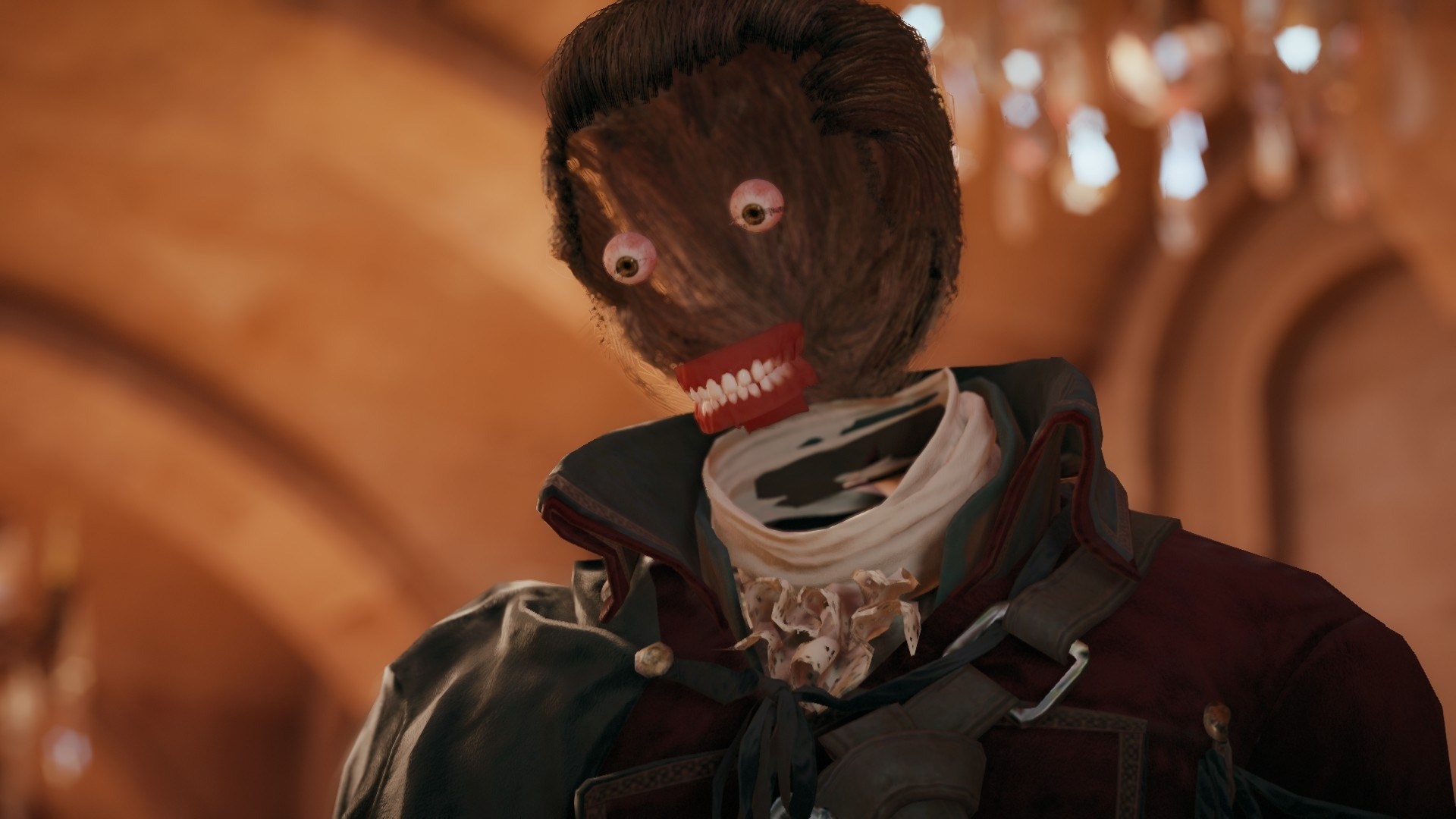
“Crash bugs, characters falling through the environment, faces not loading properly (resulting in some memorably horrific abominations), and Arno suddenly being unable to engage in combat in the middle of a battle are among the many, many tech issues I had while playing through Unity,” Giant Bomb’s Alex Navarro writes.
“Unfortunately, Ubisoft seems to have had some issues adapting the series to current-gen systems,” writes Chris Carter of Destructoid. “I encountered a number of nasty glitches on the Xbox One. For starters, the most common ones were constantly repeating dialog during key story parts, issues with the close-combat animations, some freezing while climbing tall structures, and falling through the floor during the start of certain missions. Since Unity offers checkpoints constantly it wasn’t really a game-breaking affair, but I encountered at least one small glitch every two missions or so. Enough for the technical issues to get annoying.”
And here’s Jim Sterling’s take:
Total Recall
Assassin’s Creed: Unity could have been a great game. Last year’s Assassin’s Creed IV: Black Flag was my favorite in the series, and I had high hopes for Unity. But the rushed development and poor quality control have led to a situation in which myriad gamers are feeling burned and the game itself is hurting not only the reputation of Ubisoft, but of the franchise itself.
At this point we sort of take it all for granted, however. Another buggy game release? Color me surprised. We’ve done this so many times before it hardly makes us bat an eye.
But we wouldn’t stand for it in any other industry. If I go to see a movie and it’s littered with problems I’ll go ask for my money back and leave the theatre. If a car has serious problems it’s recalled. Video games have been historically difficult to return to retailers, and digital returns are even more complicated. What Ubisoft needs to do may be expensive in the short term, but it would be wise in the long term: Issue a recall, pull Unity off the shelves, and release it when the problems it’s suffering from are fixed. Don’t subject consumers to patch after patch after the fact.
To some degree consumers will always be quality control guinea pigs, especially in huge games with big open worlds and tons of stuff going on. A few stray bugs are tolerable. But consumers should punish truly shoddy releases by voting with their wallets and, even more importantly, getting off the crazy pre-order train. That train runs on hype, and hype plays right into the hands of companies whose priority is releasing a game on time rather than a finished product.
Ubisoft obviously has the ability to release great video games. Far Cry 4 is great as was Far Cry Blood Dragon and Child of Light and the Rayman series. They have plenty of talent and they’ve put out plenty of wonderful titles. They’ve even made some smart moves delaying games to give them more development time and polish. Unfortunately, Assassin’s Creed: Unity (and to a lesser extent Watch Dogs) have undermined much of the good will the publisher built with its consumer base recently.
It’s time to make that right. Refund anyone who has purchased the game. Recall the copies still on shelves. Fix the game before releasing it to the public. Half-finished, buggy releases like this have no place in today’s industry.
I’ve recently taken some time out of saving the world and romancing elves in Dragon Age: Inquisition to finally fire up Far Cry 4. With both games released on the same day, and both receiving high praise, it can be hard to know which one to pick up and start first, though your past experience with the two series and their respective genres will probably lead you one way or another.
Far Cry 4, for the open world shooter aficionado, is Ubisoft’s second experiment in making their major series annual (depending on if you count Blood Dragon, in this case). We’ve seen the unfortunate results of that philosophy this month in regards to Assassin’s Creed Unity, which was released with a wide array of bugs and glitches, and a relative lack of innovation to boot.
Thankfully, Far Cry 4 feels less hurried, and though it may not excel in the innovation department (less so in many ways than Unity, as we’ll discuss), it launched mostly free of major disasters, and “rushed” isn’t an adjective used to frequently describe the game. At least not in the traditional sense.
Far Cry 4 is not a rushed game in that it’s not broken and unplayable at launch like so many other titles released these days (outside of a few fatal errors on PS3), but the year-long timetable only allowed for minimal changes to the blueprint of Far Cry 3. Giant Bomb’s Jeff Gertsman said it best when he described it as a game for those who loved Far Cry 3, and want to play more of it without having to go through the same game again.
The similarities aren’t just on the surface, they’re practically endless. In both games you, a twenty-something male hero, goes to a foreign land and is conscripted to fight in a rebel army against a surprisingly charismatic villain with a militarized occupational force in his pocket. Your first mission is to take down a radio tower and open up a section of the map, and you then proceed to do this no less than 17 times. You’re tasked with clearing out enemy outposts to relinquish their control over certain areas. You’re given assassinations, hunting missions, races, and so on meant to distract you from the main questline whenever possible. And I’m pretty sure I just burned a series of opium fields in a mission surgically transplanted directly from Far Cry 3.
I’ve almost never seen a game more derivative of its predecessor than Far Cry 4. But fortunately, Far Cry 3′s formula was such a great gaming experience, that’s not necessarily a bad thing. As it stands, the Far Cry series is one of the best open world games in existence, and by simply doing what Far Cry 3 did a little better, Far Cry 4 is a hit in its own right. It’s the definition of “why fix what isn’t broken?”
With that said, I’m not sure this is a card Ubisoft can play more than once. Depending on their sales data, they are undoubtedly trying to imagine the next exotic animal-filled wilderness locale they can set a future game in (the Amazon! the African plains redux!) and what kind of eccentric villain they can cast (a logging executive with a handlebar mustache! a warlord who loves Taylor Swift albums!). I’m just not sure they can continue to play it safe to this degree.
Far Cry 4 is Far Cry 3, and the two share 99.9% of the same DNA. It’s like if Far Cry 4 was simply Far Cry 3 DLC that ran a bit long and ended up being 150% bigger than the original offering. By taking the huge leap forward for the series that was FC3 and simply refining it (resettable outposts! elephant riding!) all they essentially had to do was make a new map (the hardest bit of an open world title) and write a script with vaguely the same outline as the first game.
It’s genius, and it worked, given how good the game is. Ubisoft has stumbled upon yet another formula that delivers, but if the differences between 3 and 4 are any indication, Far Cry may evolve even less with each new iteration than Assassin’s Creed does.
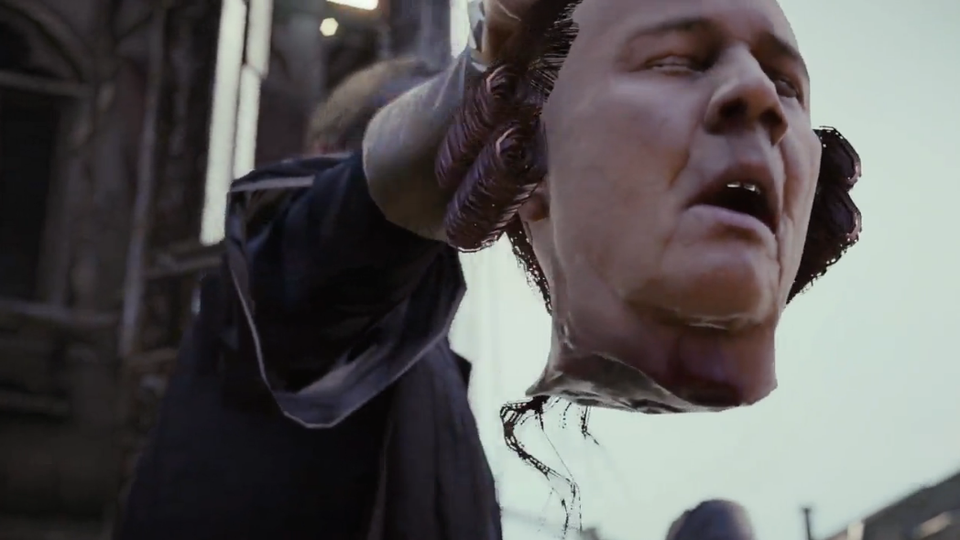
Fortunately, Far Cry has inherent fun working in its favor where Assassin’s Creed, sadly, does not. While occasionally AC comes up with a mechanic that breathes life into the series (pirate ship battles!), when it comes to plain old stealth and intrigue on the streets of Paris, the only wacky fun you’ll have is stumbling into one of the game’s face-removing glitches. But with Far Cry? Even if you played 40 hours of the last game, you can turn on Far Cry 4 and within 20 minutes set an elephant loose in an enemy encampment and be giggling like a little girl.
And yet, without further evolution, I don’t think Ubisoft can luck out like this again. My fictional Amazonian Far Cry 5 or African Far Cry 6 may indeed come to pass, but players will get tired of the formula. I suppose that can be said of many series, but I don’t think I’ve ever seen a sequel change less about its plot and core gameplay than I have moving between Far Cry 3 and 4. It’s an impressive trick, but I’ll be amazed if it works again.





 Gamer's Outpost Press (Archived)