hatred_packshot_uni

by Gamer Paradise

Gabe Newell intervenes on removing Hatred from Steam Greenlight, sends a personal message to the team and brings back the game to the public voting. The game ends up on #1 within only 7 hours after being restored

Removing Hatred from Steam Greenlight aroused strong emotions among both gamers and journalists bringing to the table some important questions about creative freedom, equal treatment for different games and developers and the rules that run gaming industry. What happened next though is something that will re-define the industry for years to come.

Steam Greenlight campaign for Hatred was shut down after only 11 hours since launch, even though the game was then #7 among all Steam Greenlight games with over 23,000 up votes. Destructive Creations team received a rather laconic information from Valve about the reasons behind the game removal but accepted it for what it was and thought that pretty much ends the whole story.

Until today when Gabe Newell himself e-mailed Destructive Creations Creative Director Jarosław Zieliński appologizing for the whole thing and bringing back the game to public voting on Steam Greenlight. You can read Gabe’s e-mail below:

gabe_newell_portrait_by_freddre-d4rnffi

Hi, Jaroslaw.
Yesterday I heard that we were taking Hatred down from Greenlight. Since I wasn’t up to speed, I asked around internally to find out why we had done that. It turns out that it wasn’t a good decision, and we’ll be putting Hatred back up. My apologies to you and your team. Steam is about creating tools for content creators and customers.
Good luck with your game.
Gabe

In reply to Gabe’s message Jarosław Zieliński, Destructive Creations Creative Director said:

We’re extremely happy to be back on Steam Greenlight! It’s hard to find proper words to describe what we all feel right now. It’s simply an amazing thing to get such a great news from Gabe Newell himself! THANKS A LOT GABE!

You can vote for Hatred on Steam Greenlight HERE.

After only 7 hours since being restored the game is already at #1 position among 2,167 Greenlight games out there and has 27,016 up votes!

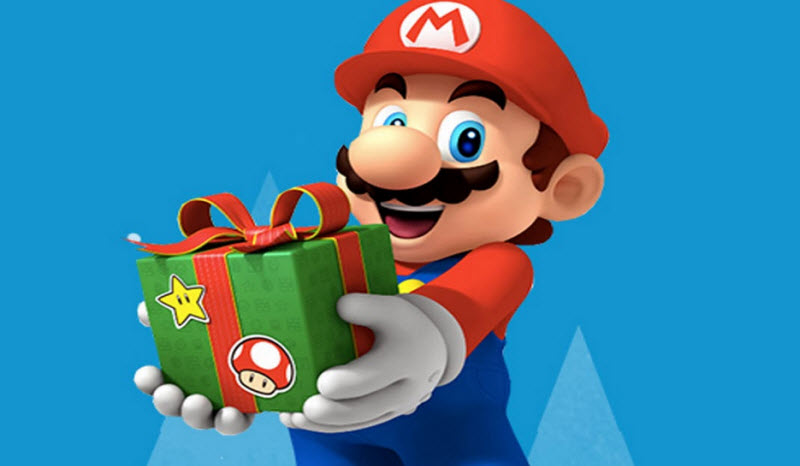
mario-christmas

by Paul Tassi

In the next week or so, there will likely be many articles stacking up the three major consoles, the PS4, the Xbox One, and the Wii U, comparing price, features, graphics, games and so on as you try to understand which one to buy for someone (or yourself) this holiday season. I may even write a few of those articles myself.

And yet, I think there’s only one console that just really screams “Christmas morning” to me, and that’s Nintendo’s Wii U.

If we were doing one of those handy comparison charts, the Wii U has plenty of significant disadvantages when placed next to PS4 or Xbox One. It’s essentially a last generation system in terms of horsepower, with graphics matching what we’ve come to expect from the PS3 and Xbox 360, but lagging behind the newer versions of those systems. And recently the console has seen a nearly complete collapse in 3rd party, non-partner support. While Nintendo still have connections that lead to joint projects like Bayonetta, 3rd party staples like Call of Duty, Madden and Assassin’s Creed have fled the system for good, and new hits like Destiny or Dragon Age will likely never make it to the console.

It’s a combination of these factors that leads to continued speculation that Nintendo would be better off in the software business, putting their well-received first party games on other consoles, and becoming an enormous software powerhouse without console hardware on their mind.

While I’m not totally opposed to that notion (and have even supported it from time to time), this is the time of year when I remember why it’s important Nintendo’s hardware still does exist. The Wii U is the only gaming device on the market that directly encourages local multiplayer, and the best games for the system are ones played with friends or family sitting next to you, not playing on their own console across town or across the country.

As such, when millions of Wii Us are opened Christmas morning (or handed out for Hanukkah), it’s really the only console a family can get which can be set up and have the whole gang playing in practically minutes. Older games like Nintendoland and New Super Mario Bros. U, or newer hits like Mario Kart 8 and Super Smash Bros. for Wii U were all designed to be played in groups. On Christmas, parents can play with kids, siblings can play with each other, friends can come over for holiday parties and play the new system. At a time where everyone is together, the Wii U is effectively the only console that can facilitate that. The PS4 and Xbox One can be plug-and-played as well, but it’s largely going to be a solo experience depending on the game.

Split screen gaming and local co-op isn’t completely dead. There’s definite fun to be had with a few Kinect dancing titles, and games like Call of Duty: Advanced Warfare have slid in split screen to at least one of its modes. And yet, that grand sense of local co-op community is inarguably the best on Wii U, where  everyone uses an assortment of increasingly ridiculous controllers from the Gamepad to the Wiimote to the Pro controller to now even decade-old Gamecube controllers.

Perhaps this is some amount of nostalgia talking, but it made me sad when I grew up and Sony and Microsoft MSFT -3.11% seemed determined to leave local co-op behind. Instead of having a friend over to play a game, I had to send him home to play on his own console over PSN or Xbox Live. When my gaming enthusiast friends would come over, there was little to actually do with the newest games we’d bought unless they’d brought their own console and TV with them. The only games we could actually play together were old ones like Halo 3 or one of the past Smash Bros. installments. Now that’s worse than ever, and local co-op is all but completely dead other than in a few multiplatform series like Borderlands, but most of the time its either stuck into a specific mode (COD’s Exo) or it simply doesn’t exist at all, even in games that encourage co-op (Dragon Age, Far Cry).

Obviously you don’t buy a console just for Christmas morning, so there’s plenty more to consider, but until Sony or Microsoft truly grasp the concept of family gaming and local co-op with friends, Nintendo is going to occupy a welcome niche in the console market, graphics and 3rd party support aside. I think it’s going to be a good holiday season for the Wii U, and its unique position in the market will help it stand out from nearly identical competition.

How_A_Hacker_Gang_Literally-4b45aacd7b40e003bc9ff40dfc0ccd8f

by James Cook

A hacker group known as Lizard Squad almost ruined Christmas for video game players. At the start of December, a notorious hacker gang named “Lizard Squad” issued a threat: it would take down over Christmas the PlayStation and Xbox Live networks, the online services that some video games need in order run from a home console.

Despite most hackers being “in it for the lulz” — a hacker term meaning “doing it for fun” — some did not take kindly to threats of disruption to their favourite video game services.

In the weeks following Lizard Squad’s threat, another gang of hackers formed. It had two aims: 1. Keep the video game services running. 2. Take down Lizard Squad.

Lizard Squad is one of the most well-known online hacker groups and has a history of attacking popular video game services. In August, Lizard Squad claimed to have caused disruption to the PlayStation Network , as well as servers run by Blizzard, the company behind World of Warcraft.

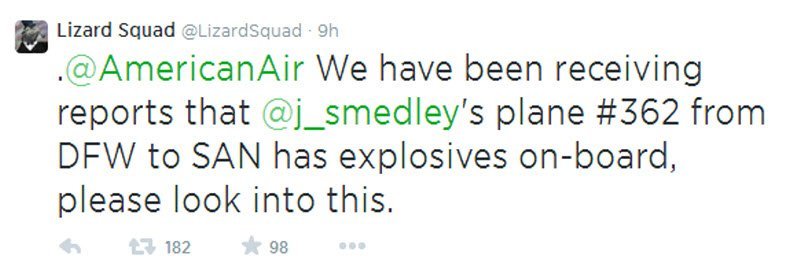
In the same month, the group took their campaign one step further by tweeting a bomb threat against Sony executive John Smedley, which forced his flight to be diverted. As Smedley’s flight was grounded, the group shared messages discussing 9/11, comparing themselves to ISIS.

How_A_Hacker_Gang_Literally-c9062869aa7708f967cbced85ef71583

After that series of hacks, Lizard Squad declared their campaign of disruption to be over, publishing this statement:

We set out on our journey 2 weeks ago with the plan to cause havoc within the gaming community Our motives varied throughout this adventure. Originally it was to see if we could evade being caught and to experience the raw thrill of anarchy, not being bound to phony laws. We’ve been called everything from an organised criminal ‘gang’ to complete a**holes, really we are just a bunch of guys with too much free time.

But Lizard Squad’s hacking campaign against video games didn’t end there. They returned in September to wreak havoc against popular games such as Call of Duty, FIFA, Destiny, Madden, and The Sims 4. Yet again, the group (which has claimed to have a handful of members) had proven that they could successfully shut down the online services that video game fans rely on to play their favourite titles.

Lizard Squad went quiet over October and November, perhaps readying themselves for their largest attack yet. The hackers resurfaced, taking the PlayStation and Xbox networks offline at the start of December. This time, though, they announced that they intended to keep the networks down for the Christmas season, describing themselves as the “Next generation Grinch.”

How_A_Hacker_Gang_Literally-8e388059c65abd0dfdc6eca7aef5f93a

The threat to ruin Christmas for video game fans was heard by another gang of hackers. Instead of joining forces to revel in the disruption, this group had more noble intentions.

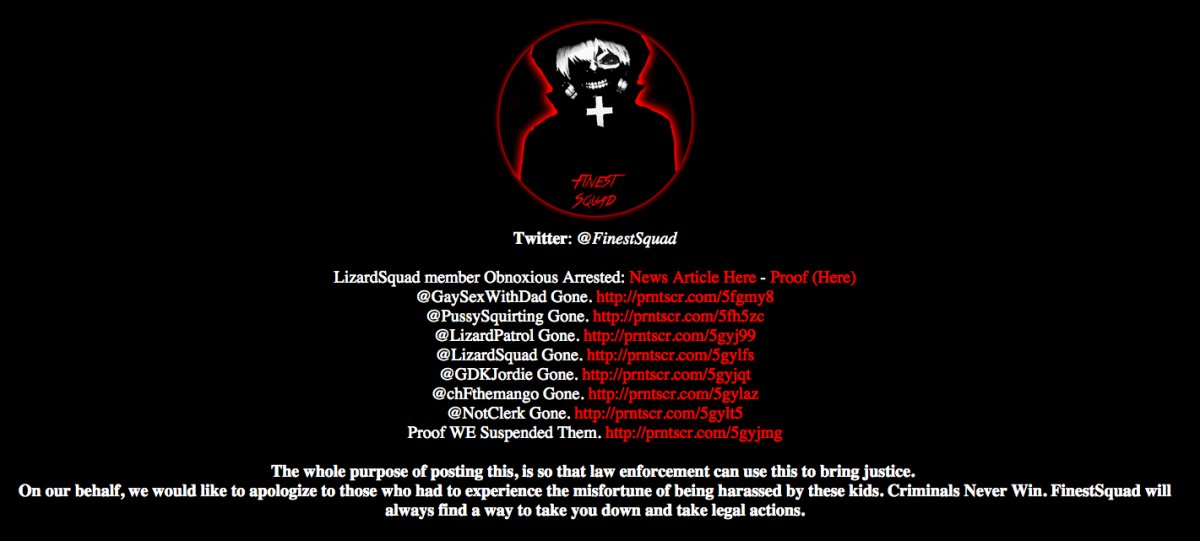
A group known as “The Finest Squad” emerged in December with the intention of bringing “cyber-criminals to justice.”

Sure enough, Finest Squad managed to break into the public Twitter accounts and websites of Lizard Squad’s members, releasing their names and photographs of them online. For any hacker, that’s a nightmare scenario. Being doxxed (having your private information posted online) will generally either lead to an arrest or to sustained harassment from people you have wronged.

One by one, the members of Lizard Squad went silent. It’s not clear exactly how Finest Squad managed to uncover their personal information, but it was likely through checking for weak spots in their email, Skype, Twitter, and web hosting accounts.

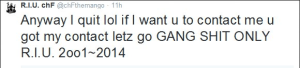
Some alleged members of Lizard Squad, sensing that their time was up, decided to quit:
How_A_Hacker_Gang_Literally-4f347e2a974992b043a9d5f9c769293b

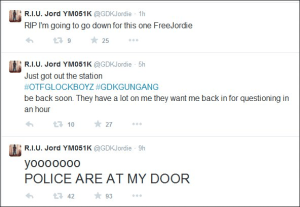
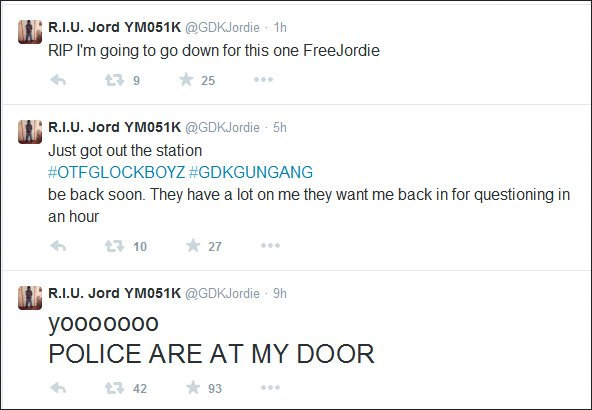
Others live tweeted their arrest:

How_A_Hacker_Gang_Literally-4baf6811da2882d19147480d3cba2215

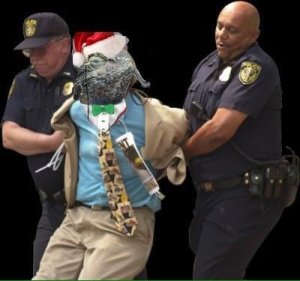
Here’s an image that Finest Squad shared to celebrate the take down of Lizard Squad:
How_A_Hacker_Gang_Literally-325fab818f4bb9ba0876694e6798c69d

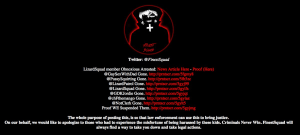
Despite their confidence, it seems that Lizard Squad’s online security was poor. Finest Squad proudly showcased their information online on a specially created website.
How_A_Hacker_Gang_Literally-af14bb5713244a62e5109186258ccf99

Weirdly, Finest Squad announced the defeat of Lizard Squad using an obscure nerdcore hip-hop track by YTCracker, a former hacker who now performs rap songs featuring remixes of classic video game soundtracks.

Finest Squad pointed to a news release by the Polk County Sheriff’s Office that announced the arrest of a 17-year-old Canadian over allegations that he had “Swatted” local schools. Swatting is when an internet prankster calls the police and claims that an armed shooter is in a school or apartment. It’s named “Swatting” because the police response is usually to send a SWAT team to the location, terrifying the unknowing occupants.

Finest Squad also revealed how Lizard managed to take the video game networks down. In short, the group used a tactic that sends a flood of web traffic to a single network. The onslaught of traffic takes the web server down. It’s estimated that the hacking services used to issue what’s known as a distributed denial of service attack would have cost as little as $300.

To make sure that no gang of mischievous teenagers would be able to do the same as Lizard Squad, Finest Squad even submitted information about the vulnerabilities discovered to the video game networks that were under attack.

e1fa6814836d3ca057b5f92d77fac0df

by Eddie Makuch

Following last week’s news that the Xbox One had outsold the PlayStation 4 in the US and UK for November 2014, Microsoft’s Aaron Greenberg has spoken out to say “we’re just getting started.”

Greenberg’s official title is Senior Director of the Studios Marketing Group for all first- and third-party Xbox games, a position he took on in June after nearly three years in the role of chief of staff.

November 2014 was the first month since the Xbox One and PS4 launched in November 2013 that Microsoft’s console came out on top in the United States, according to NPD Group data.

Xbox One software sales were also strong in November. During the period, more Xbox One games were sold in the US than PS4 or Wii U. November 2014 was also Xbox Live’s biggest month in history, with more fans logged into the service across Xbox One and Xbox 360 than ever before.

What gives Microsoft confidence it can keep its Xbox One sales momentum going? For one thing, the company says it has so many holiday 2015 games in the works that it may need to delay some to make room. Do you think Microsoft can extend its winning streak? Let us know in the comments below!

2701217-xboxonesystem

by Ben Kuchera

The Xbox One had a rough first year, and no other console has had to change its failing strategy so rapidly after launch. One could argue that Nintendo is struggling a bit more in the current market, but Microsoft has shown a willingness to listen to its customers and adapt its product in a way Nintendo seems unwilling, or unable, to emulate.

The Xbox One was announced in May of last year, in what has to be one of the worst product reveals in electronics history. The message was muddled, simple questions from the press were met with conflicting information, and players began to revolt against Microsoft’s all-digital future almost immediately.

The Xbox One outsold the PlayStation 4 for the first time in the console’s history in the US and UK this November. The two events seem to have happened in two different industries, but that only proves how humble, not to mention nimble, Microsoft became in 2014 when it comes to the Xbox One.

Price, price, price

The problem with the Kinect was never the hardware itself, although it did suffer from false-positives and an inability to play nice with many accents, but the fact that its forced inclusion drove up the price of the Xbox One.

The hardware was more expensive than its immediate competition, and many players didn’t see the value of waving their arms at their television to change channels or play a game. You could talk to the Kinect, but it would often misunderstand you.

Microsoft failed to learn the importance of having a low initial price, and the Xbox One found itself in the uncomfortable situation of being the most expensive console due to a piece of hardware that only worked some of the time and was hard to describe to a mass audience.

The Kinect was removed from the system as a forced pack-in in May of this year, almost exactly a year from the console’s announcement. This allowed Microsoft to lower the price of the hardware, and sales improved. Microsoft’s dream of an always-on camera that listened to you and allowed you to play by waving your hands was gone, but the market itself didn’t care.

The result was that prices came down, the system was more immediately approachable and players weren’t being forced to pay for a peripheral with limited support that may or may not work in their home. Microsoft became a rare thing in technology: A company that poured a ton of money into a novel technology before putting the entirety of its marketing might behind it … then ditching it in short order when it was clear the audience was not interested.

Microsoft in 2014 was an amazing example of a company learning from its mistakes and adjusting its strategy. Titanfall was a great exclusive, and the publishing deal that will give the Xbox One what is likely to be timed exclusivity of the next Tomb Raider is a solid investment.

Microsoft failed to learn the importance of having a low initial price

The vision behind the Xbox One, from the digital push to the Kinect, is in ashes, but the company continues to learn, adjust and fight back.

The story of the Xbox One in 2014 is the story of a system getting rid of all its baggage and focusing on the games While many pundits, including myself in the past, have said that this generation of consoles may have sluggish sales while justifying their price with multimedia features, players have shown that they’re willing to pay for the consoles that bring the best value to power ratio and put the focus squarely on the games.

Sony has enjoyed its lead mostly due to the fact that it launched with fewer bells and whistles at a better price while providing more power, but to Microsoft’s credit the company saw it had made a number of missteps with the Xbox One and worked to fix them.

2015 will begin with three very interesting systems filled with great games, the Wii U included, but it was perhaps Microsoft that had the longest and hardest road to this point. The system now starts at $350, which is a $150 drop from its release price in under two years, and Microsoft has picked up a number of strong exclusives while working toward improving the operating system and giving the system a better sense of identity without the Kinect. The Xbox One is being rewarded for these efforts with the most important metric: Sales.

Welcome back, Xbox One. Let’s play some games.

f1fa152a9886f8895fe70076429299e6

by Rob Crossley

Borderlands, the RPG-like shooter which went on to sell more than 5 million units, is likely coming to Xbox One and PlayStation 4 as a deluxe remastered edition.

Publishing label 2K Games has yet to officially announce the next-gen update, but a listing on the Australian Classification Board appears to have revealed the publisher’s plans prematurely. Little else can be gathered from the listing, though it does suggest that 2K Australia–which was the principal developer of Borderlands: The pre-Sequel–has been delegated duties to build the port.

Remastered updates of popular last-gen games have become a common feature of the gaming calendar. Tomb Raider Definitive Edition, The Last of Us Remastered, and Grand Theft Auto 5 are some of the most popular re-releases on next-gen systems.

Gearbox Software, the creator of the Borderlands series, recently suggested that it was the comparatively low installed-base of the next-gen consoles that convinced it to ship Borderlands: The Pre-Sequel on last-gen machines only.

assassins-creed-unity-demo-E3-download

by Eddie Makuch

Christmas comes early for some Assassin’s Creed Unity players, as Ubisoft will start handing out free games next week for owners of the game’s DLC pass, the publisher has announced.

Anyone who purchased Unity’s DLC pass or Gold Edition are eligible for the free game as part of Ubisoft’s apology over the game’s bugs and other technical issues.

As you’d expect, Unity’s DLC pass and Gold Edition have been removed from sale, meaning you can’t now buy the content as a means to score a free game. If you were one of the early adopters for Unity’s DLC pass or Gold Edition, however, you can choose from the following games to receive for free.
Assassin’s Creed IV: Black Flag
The Crew
Far Cry 4
Just Dance 2015
Rayman Legends
Watch Dogs

Ubisoft cautions that the list of available titles may vary by country, though the publisher did not provide any further details. It also explains that your free game must be on the same platform you bought Unity for.

As for how you can go about claiming your free game, Ubisoft will launch a special website next week that users can access with their Uplay, PSN, or Xbox Live accounts. A step-by-step guide on how to claim your freebie is coming next week. We’ll post that information as soon as it’s available.

If you didn’t buy the Unity DLC pass or Gold Edition, you’re still getting free content in the form of the Dead Kings expansion, which will be given to all players. A release date has not been set.

Unity was released in November, suffering through some technical troubles out of the gate. Ubisoft has released a number of patches so far, the most recent of which–Patch 4–will arrive on Monday, December 15. This latest patch is a big one, and should clear up most of the game’s remaining issues.

SONY_INSIDER_'The_Security_Team-ed3108e239170e55db2cdad7d08f6e67

by James Cook

Following the Sony hacking scandal, in which thousands of documents from the company’s movie studio were exposed, an IT worker employed by a firm that has access to Sony’s computer network has described the company’s security as a “mess.”

“The security team has no f—ing clue,” the employee told Business Insider, speaking about the team’s unpreparedness for a cyberattack.

Our source told us that Sony’s security was “outdated and ineffective.” The person described Sony’s security policies as “idiotic” and expected more from a company with more than 100,000 employees worldwide.

Sony Pictures CEO Michael Lynton sent a memo to staff in the days after the hack occurred. In the email, he quoted a security researcher from Mandiant who suggested that Sony couldn’t really have done anything to protect against the attack:

This attack is unprecedented in nature. The malware was undetectable by industry standard antivirus software and was damaging and unique enough to cause the FBI to release a flash alert to warn other organisations of this critical threat.

Our source described that letter as “pathetic,” a criticism that has been shared by many security researchers. Security researcher Adam Caudill told Mashable that Sony Pictures and Mandriant described the attack as “unprecedented” only to save face. Another expert, Adrian Sanabria, told Mashable that “you should definitely be able to detect somebody copying … data systematically.”

The employee who works with the Sony network said the company’s internal IT team was “terrible,” consisting of “incompetent people.”

We saw evidence of just how poor Sony’s security was in the files that hackers posted online. A series of documents stored in a folder named “Password” contained login information for administration accounts, social media accounts, and even SSL certificates. An SSL certificate digitally signs a web page to prove that it’s from that company.

SONY_INSIDER_'The_Security_Team-4f5f5f51b7c2e10e7e2704d315480f0d

Hackers used the passwords found in that folder to cause more damage, taking over Twitter accounts for Hollywood movies and using them to spread information about the hack.

SONY_INSIDER_'The_Security_Team-2620cd147d0ca583d71e24d4ca3411f9

The source close to Sony also said the company hadn’t learned from previous hacks.

In June 2011 the hacker group LulzSec, an offshoot from Anonymous, hacked into Sony Pictures. They said they obtained “usernames, passwords, email addresses, and dates of birth for thousands of people.” The group used a common tactic against Sony Pictures, using an SQL injection attack to gain access to the company’s computer network.

To our source’s knowledge, none of the security people in contact with the source were fired over previous hacks, and it’s unclear whether Sony terminated anyone for those security lapses. That could mean that the same people who were meant to defend the company’s servers in 2011 are still presiding over its security.

We reached out to Sony for this story and will update if we hear back from them.

uncharted-4-a-thiefs-end-listing-thumb-01-ps4-us-09jun14

by Spencer Campbell

Transparency isn’t the norm in video game press conferences, and in some ways it’s for good reason. When games are shown for the first time, they’re often far from being finished, so laying everything out on the table for consumers to witness would be to the game’s detriment. But sometimes morals get muddy when it comes to press conference transparency — for example, Ubisoft’s Watch Dogs premiere.

E3 2012 generated a metric butt ton of buzz, but no game created more of a clamor than Watch Dogs. The slick graphics and fast gameplay impressed many outlets across the web, winning it many Best of E3 awards without even being playable on the showroom floor. Then more details about the game were released.

It became obvious that Ubisoft was less than honest about how great their game looked. At first, graphical comparisons between the E3 video and later released gameplay videos revealed lower quality textures, weather effects, and lighting. Then, claims of 1080p and 60 fps were dropped until eventually we were left with a game that looked and played middlingly at best. Watch Dogs wasn’t a life-changing, game of the year bombshell. And that would have been fine, if it hadn’t been for the dishonest E3 trailer back in 2012. We were all promised an impressive experience that had to be delivered via a fan made mod for PC after release.

Which is why I’m unabashedly happy that Nathan Drake fell through the game world during the gameplay demonstration at the PlayStation Experience. Since the reveal and subsequent disappointment of Watch Dogs, I’ve been incredibly wary about submitting to any hype caused by trailers, but I’m not afraid to be excited for Uncharted 4. Nathan Drake falling infinitely into the abyss showed a devotion to transparency from Naughty Dog. By showing off a game that was a little rough around the edges, the development team was saying what their game “will be.” The utter perfection surrounding the Watch Dogs trailer showed off what that game “could be,” and ultimately wouldn’t live up to.

Bringing someone on stage to play a live demo is risky. It’s usually reserved for motion controlled games to prove that, “Hey, it really works, I swear,” and even then sometimes it doesn’t, and it’s never looked good. It wreaks of desperation, but the Uncharted 4 demo was less about alleviating players’ doubts and more about the developers letting their work speak for itself. And on that fateful day, December 6th, Uncharted 4 decided to poop the bed.

The fact that a developer as big as Naughty Dog took a risk and trusted their product not to mess up shows a pronounced confidence that a prerendered video, no matter how perfect, could never bring.

gta5-wallpaper

by Chris Matyszczyk

We tend to believe that our values are the right ones for everybody.

Many people’s definition of “liberal” seems to be “say and do whatever you like, as long as I don’t find it repulsive.” Just as many people’s definition of “freedom” is, in fact, “free to think and do only those things of which I approve.”

And so it is that a great battle of values has emerged in Australia. The country’s Kmart and Target stores have decided to ban “Grand Theft Auto V.” I’m not sure why it took them five versions to get there, but it’s clear the stores were moved by a petition that was signed by 50,000 people.

It declared that the game “encourages players to murder women for entertainment.” It added: “The incentive is to commit sexual violence against women, then abuse or kill them to proceed or get ‘health’ points.” It concluded: “Games like this are grooming yet another generation of boys to tolerate violence against women.”

Many will surely have sympathy with the petitioners. The issue of violence against women remains central to every society in the world.

Perhaps unsurprisingly, however, some GTA fans are deeply unamused. They’re now calling for Target and Kmart to ban the Bible.

Posting their own petition in the same place as the anti-GTA V one — Change.org — these petitioners declare: “Withdraw The Holy Bible — this sickening book encourages readers to commit sexual violence and kill women.”

Its wording tries to mirror that of the original petition. For example: “This book means that after various sex acts, readers are given options to kill women by stoning her unconscious, Setting them on fire, cutting off their hands, and killing their children!”

And then there’s: “One of many fan passages on In The Holy Bible depicts woman being set alight for having sex. “And the daughter of any priest, if she profane herself by playing the whore, she profaneth her father: she shall be burnt with fire.” (Leviticus 21:9).”

Many will surely have sympathy with the petitioners. The issue of violence against women remains central to every society in the world.

Perhaps unsurprisingly, however, some GTA fans are deeply unamused. They’re now calling for Target and Kmart to ban the Bible.

Posting their own petition in the same place as the anti-GTA V one — Change.org — these petitioners declare: “Withdraw The Holy Bible — this sickening book encourages readers to commit sexual violence and kill women.”

Its wording tries to mirror that of the original petition. For example: “This book means that after various sex acts, readers are given options to kill women by stoning her unconscious, Setting them on fire, cutting off their hands, and killing their children!”

And then there’s: “One of many fan passages on In The Holy Bible depicts woman being set alight for having sex. “And the daughter of any priest, if she profane herself by playing the whore, she profaneth her father: she shall be burnt with fire.” (Leviticus 21:9).”

Clearly this is more of a sardonic statement than a real attempt to get the Bible banned. However, GTA V has begun to incite even more heightened reactions than the previous versions.

As Gamespot’s Danny O’Dwyer pointed out, the addition of the first-person mode in GTA V means that the player no longer had the excuse of third-person objectivity.

“I felt guilt,” said O’Dwyer, as he performed shootings himself in the game.

There’s no universal agreement about whether violence in games motivates violence in real life. But, as O’Dwyer explained, Grand Theft Auto occurs in a world less of fantasy and more like our own.

He believes that GTA V allows us “to censor ourselves.” But how many will? And how many will find a more extreme pleasure in truly feeling like the brutal agent of destruction?

Banning the game from Kmart and Target is symbolic more than effective. It’s not as if it isn’t available in many other outlets. It’s not as if the game hasn’t been available for a long time. Its sales are somewhere near the $2 billion mark. The current furor surrounds the fact that it was re-released in November to be played on newer consoles.