3059c88e557955f4bb54a1a64bc5ad49

by Michael Andronico

If the blockbuster action and Kevin Spacey-ness of Call of Duty: Advanced Warfare isn’t enough to scratch your militaristic itch, there’s now yet another way to take your Call of Duty addiction on the go. Taking some major design cues from hit mobile strategy game Clash of Clans, Call of Duty: Heroes has you attack and defend military bases using characters and weapons from Activision’s popular first-person shooter franchise. The free-to-play game is available now in iOS and Windows devices, with an Android version on the way.

As with Clash of Clans, Call of Duty: Heroes’ core gameplay cycle consists of using resources to fortify your base, training fighters for battle and attacking enemy strongholds. Whether you’re invading a base or defending your own, combat is as simple as tapping the screen to deploy your soldiers and watching the action unfold. The game lets you take on other players in PVP mode as well as defending against increasingly-difficult waves of enemies in survival mode.

10a184244936d7a4db6a1fb27f2fcd58

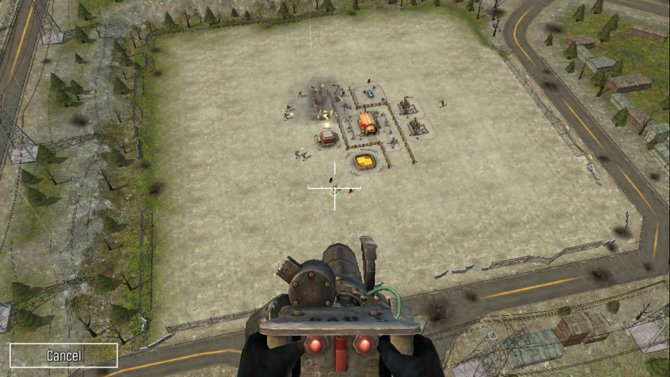
Heroes sets itself apart with some action-oriented mechanics lifted from the Call of Duty console games, such as the ability to rain down fire from above with a helicopter turret. The game’s Heroes — leader characters with special abilities — are also lifted from the core series, with the option to take control of characters like Captain Price from Modern Warfare and Mike Harper from Black Ops 2.

Heroes is far from the first Call of Duty mobile game; previous installments like Call of Duty: Strike Team and Call of Duty: Black Ops Zombies emulate the first-person shooting gameplay of their console counterparts, whereas Activision’s new Heroes game aims to capitalize on the ever-growing mobile strategy genre.

54802ef0e13513b3d6ee6e5340b28a03

I had a good time deploying troops and ordering chopper strikes during my brief time with Heroes, and the game seems like a perfect fit for those who don’t mind a Call of Duty skin over Clash of Clans’ signature gameplay. As with most free-to-play games, you’ll likely have to either spend real money or lots of time in order to build the ultimate base, but the title is enjoyable enough in small bursts.

ubisoft-recall

by Dave Thier

Video games aren’t recalled very often, in spite of the leagues of problems plaguing many of the year’s biggest releases.

Rockstar recalled Grand Theft Auto: San Andreas in 2005 after a pair of highly sexual minigames were discovered in the game. The content had been locked away but was easily unlocked by the gaming community, and retailers began pulling the game from shelves in what is now dubbed the Hot Coffee controversy.

Nintendo recalled Mario Party 8 in the UK due to the use of the word “spastic” which, apparently, is an offensive word there. (This isn’t the only game recalled in the UK for the use of this word.) Nintendo also recalled Metroid: Other M in Japan due to a bug that would freeze protagonist Samus Arun in various regions of the game, requiring a new game to be started in a new save file.

The original Final Fantasy XIV MMO was shut down and scrapped, with a new team rebuilding it from scratch and making a much, much better game in the process.

There are a handful of others, but the list remains depressingly short. If that was simply because video games were so polished at release that consumers never had anything to worry about, a short list would be fantastic. Sadly, this isn’t the case. Quite the contrary.

There Will be Bugs

We’ve seen numerous launch-related disasters in the video game industry over the past few years. But there was no recall of SimCity when that game debuted to an always-online DRM nightmare. There was no recall of Battlefield 4 in spite of its myriad issues. And now Assassin’s Creed: Unity is—for many gamers, at least—so unplayable that publisher Ubisoft is recommending things such as disconnecting from the internet in order to play, and turning off social features. Hey your brakes aren’t working? Just don’t drive the car and you won’t ever need to stop!

Ubisoft’s Unity blog is littered with posts about patches, fixes, and work-arounds. You won’t see a similar blog for Super Smash Bros. or Mario Kart 8.

And this means just one thing: Unity was obviously not ready for release. As Paul Tassi noted, both Halo: The Master Chief Collection and Assassin’s Creed: Unity are suffering from the problems each faced in their hurry to release in time for the holidays. (The Halo re-release was plagued with match-making issues in its multiplayer.)

Reviewers were gentler on Unity than the general public, but the response to its many glitches was still damning.

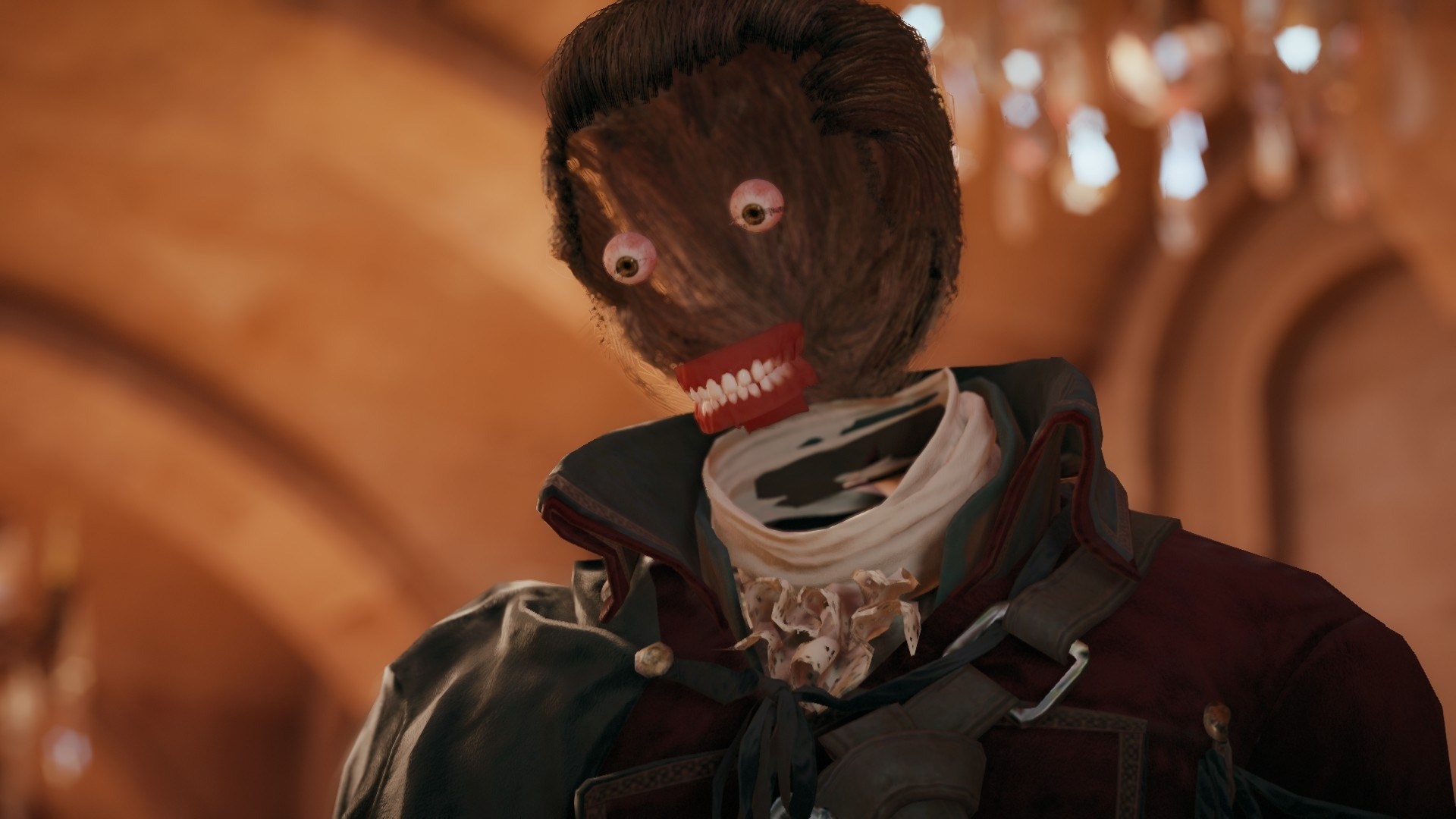
“Crash bugs, characters falling through the environment, faces not loading properly (resulting in some memorably horrific abominations), and Arno suddenly being unable to engage in combat in the middle of a battle are among the many, many tech issues I had while playing through Unity,” Giant Bomb’s Alex Navarro writes.

“Unfortunately, Ubisoft seems to have had some issues adapting the series to current-gen systems,” writes Chris Carter of Destructoid. “I encountered a number of nasty glitches on the Xbox One. For starters, the most common ones were constantly repeating dialog during key story parts, issues with the close-combat animations, some freezing while climbing tall structures, and falling through the floor during the start of certain missions. Since Unity offers checkpoints constantly it wasn’t really a game-breaking affair, but I encountered at least one small glitch every two missions or so. Enough for the technical issues to get annoying.”

And here’s Jim Sterling’s take:

Total Recall

Assassin’s Creed: Unity could have been a great game. Last year’s Assassin’s Creed IV: Black Flag was my favorite in the series, and I had high hopes for Unity. But the rushed development and poor quality control have led to a situation in which myriad gamers are feeling burned and the game itself is hurting not only the reputation of Ubisoft, but of the franchise itself.

At this point we sort of take it all for granted, however. Another buggy game release? Color me surprised. We’ve done this so many times before it hardly makes us bat an eye.

But we wouldn’t stand for it in any other industry. If I go to see a movie and it’s littered with problems I’ll go ask for my money back and leave the theatre. If a car has serious problems it’s recalled. Video games have been historically difficult to return to retailers, and digital returns are even more complicated. What Ubisoft needs to do may be expensive in the short term, but it would be wise in the long term: Issue a recall, pull Unity off the shelves, and release it when the problems it’s suffering from are fixed. Don’t subject consumers to patch after patch after the fact.

To some degree consumers will always be quality control guinea pigs, especially in huge games with big open worlds and tons of stuff going on. A few stray bugs are tolerable. But consumers should punish truly shoddy releases by voting with their wallets and, even more importantly, getting off the crazy pre-order train. That train runs on hype, and hype plays right into the hands of companies whose priority is releasing a game on time rather than a finished product.

Ubisoft obviously has the ability to release great video games. Far Cry 4 is great as was Far Cry Blood Dragon and Child of Light and the Rayman series. They have plenty of talent and they’ve put out plenty of wonderful titles. They’ve even made some smart moves delaying games to give them more development time and polish. Unfortunately, Assassin’s Creed: Unity (and to a lesser extent Watch Dogs) have undermined much of the good will the publisher built with its consumer base recently.

It’s time to make that right. Refund anyone who has purchased the game. Recall the copies still on shelves. Fix the game before releasing it to the public. Half-finished, buggy releases like this have no place in today’s industry.

vaas2

by Paul Tassi

I’ve recently taken some time out of saving the world and romancing elves in Dragon Age: Inquisition to finally fire up Far Cry 4. With both games released on the same day, and both receiving high praise, it can be hard to know which one to pick up and start first, though your past experience with the two series and their respective genres will probably lead you one way or another.

Far Cry 4, for the open world shooter aficionado, is Ubisoft’s second experiment in making their major series annual (depending on if you count Blood Dragon, in this case). We’ve seen the unfortunate results of that philosophy this month in regards to Assassin’s Creed Unity, which was released with a wide array of bugs and glitches, and a relative lack of innovation to boot.

Thankfully, Far Cry 4 feels less hurried, and though it may not excel in the innovation department (less so in many ways than Unity, as we’ll discuss), it launched mostly free of major disasters, and “rushed” isn’t an adjective used to frequently describe the game. At least not in the traditional sense.

Far Cry 4 is not a rushed game in that it’s not broken and unplayable at launch like so many other titles released these days (outside of a few fatal errors on PS3), but the year-long timetable only allowed for minimal changes to the blueprint of Far Cry 3. Giant Bomb’s Jeff Gertsman said it best when he described it as a game for those who loved Far Cry 3, and want to play more of it without having to go through the same game again.

The similarities aren’t just on the surface, they’re practically endless. In both games you, a twenty-something male hero, goes to a foreign land and is conscripted to fight in a rebel army against a surprisingly charismatic villain with a militarized occupational force in his pocket. Your first mission is to take down a radio tower and open up a section of the map, and you then proceed to do this no less than 17 times. You’re tasked with clearing out enemy outposts to relinquish their control over certain areas. You’re given assassinations, hunting missions, races, and so on meant to distract you from the main questline whenever possible. And I’m pretty sure I just burned a series of opium fields in a mission surgically transplanted directly from Far Cry 3.

I’ve almost never seen a game more derivative of its predecessor than Far Cry 4. But fortunately, Far Cry 3′s formula was such a great gaming experience, that’s not necessarily a bad thing. As it stands, the Far Cry series is one of the best open world games in existence, and by simply doing what Far Cry 3 did a little better, Far Cry 4 is a hit in its own right. It’s the definition of “why fix what isn’t broken?”

With that said, I’m not sure this is a card Ubisoft can play more than once. Depending on their sales data, they are undoubtedly trying to imagine the next exotic animal-filled wilderness locale they can set a future game in (the Amazon! the African plains redux!) and what kind of eccentric villain they can cast (a logging executive with a handlebar mustache! a warlord who loves Taylor Swift albums!). I’m just not sure they can continue to play it safe to this degree.

Far Cry 4 is Far Cry 3, and the two share 99.9% of the same DNA. It’s like if Far Cry 4 was simply Far Cry 3 DLC that ran a bit long and ended up being 150% bigger than the original offering. By taking the huge leap forward for the series that was FC3 and simply refining it (resettable outposts! elephant riding!) all they essentially had to do was make a new map (the hardest bit of an open world title) and write a script with vaguely the same outline as the first game.

It’s genius, and it worked, given how good the game is. Ubisoft has stumbled upon yet another formula that delivers, but if the differences between 3 and 4 are any indication, Far Cry may evolve even less with each new iteration than Assassin’s Creed does.

Fortunately, Far Cry has inherent fun working in its favor where Assassin’s Creed, sadly, does not. While occasionally AC comes up with a mechanic that breathes life into the series (pirate ship battles!), when it comes to plain old stealth and intrigue on the streets of Paris, the only wacky fun you’ll have is stumbling into one of the game’s face-removing glitches. But with Far Cry? Even if you played 40 hours of the last game, you can turn on Far Cry 4 and within 20 minutes set an elephant loose in an enemy encampment and be giggling like a little girl.

And yet, without further evolution, I don’t think Ubisoft can luck out like this again. My fictional Amazonian Far Cry 5 or African Far Cry 6 may indeed come to pass, but players will get tired of the formula. I suppose that can be said of many series, but I don’t think I’ve ever seen a sequel change less about its plot and core gameplay than I have moving between Far Cry 3 and 4. It’s an impressive trick, but I’ll be amazed if it works again.

f93a6e5fd53382182c811ed740c16291

by Colin Campbell

Generally speaking, hardware manufacturers and games retailers are natural partners, seeking to create order and control in the universe.

The console companies make the machines and the retailers sell the machines and both profit from the sale of games for the machines.

But as the nature of retail shifts, so too does the relationship between the retailers and the hardware companies, a ripple that threatens the harmony tying these powerful forces together.

As the digital era gets into full swing, it’s Sony and Microsoft which become the chief beneficiaries, selling games directly to consumers without the need for mall store-fronts or even online retail hubs. The console companies become retailers. This puts them in direct competition with their chums at companies such as GameStop.

And if there is one thing competing retailers are most likely to get antsy about, it’s price.

a9e6bdc5410923dfc8341269e95f5167

In its investor call yesterday, GameStop president Tony Bartel made a comment that can only be interpreted as a criticism of Sony’s and Microsoft’s digital retail strategies. “We want to help ensure that our industry does not make the same mistake as other entertainment categories by driving the perceived value of digital goods significantly below that of a physical game,” he said, according to Gamasutra.

Both Microsoft and Sony have worked hard to tie consumers into digital subscription plans that come with generous game giveaways and discounts. PlayStation Plus and Xbox Live Gold offer good value to consumers by delivering up digital goods with mostly nominal costs at a low price. They also offer extreme competition to retailers, whose costs are always actual and often onerous.

Retailers are worried about cheap digital games

At this time of year, retailers are looking to sell as many video games as possible to people who are buying or receiving consoles for the first time. This becomes more difficult when consumers are being offered a wide array of hardware bundles, attractively priced, and including top-branded games. Retailers do not make much money from hardware units, and rely on software after-sales to make the exercise worthwhile.

Consumers flush with big-name games bundled in with their consoles, being offered digital discounts beamed directly into their homes, are less likely to buy full-priced games. Consumers who buy digital games are also, of course, not to be seen trading games at GameStop counters, an area which brings in the company’s biggest margins.

During its call with investors, GameStop claimed that “$100 million worth of games have been digitally delivered for free in hardware bundles”  so far this year. In a retailer’s mind, this is all lost profit. Little wonder Bartel is miffed. He put the argument in terms of the overall health of the industry. “What we produce has value, and we should protect that value,” he said.

2440f610-2a43-11e4-aabf-f748131afaf3_consoles

If Bartel is making these statements during investor calls, you an be certain more direct conversations are going on in Microsoft’s, Sony’s and GameSpot’s meeting rooms in Redmond, San Mateo and Grapevine.

Given that GameStop managed to bring in over $2 billion in revenues in its most recent quarter, you might think this is all a touch academic. But the company missed its profits targets. Games retailers are haunted by the terrible specters of the likes of Tower Records and Blockbuster Video, once mighty physical retailers, now absent from the strip malls of America, killed off by price-cutting and digital distribution.

For console companies, retailers must be kept sweet, while they transition themselves into an Apple-like state of sublimation, away from the mundane bonds of physical retail.

disney

by Steve Bowler

Everyone had always assumed that Disney was going to buy Pixar

During one of my regular business chats with my father, who is a retired CEO, I predicted that Pixar was going to buy Disney and turn the company around. The value worked better going the other way. While Disney needed the magic of Pixar at that point in the company’s life, Pixar didn’t exactly need Disney.

My father was incredulous but, when Disney bought Pixar in 2006, I called my Dad with the news. Because holy shit, I had called it.

“As part of the deal, expected to be completed this summer, two Pixar veterans will head Disney’s animation efforts. Ed Catmull, who had served as Pixar’s president, was named president of the combined Pixar and Disney Animation Studios,” CNET reported. “John Lasseter, the Pixar executive vice president who is widely regarded as the studio’s creative leader, was named chief creative officer. Pixar will remain in its San Francisco Bay Area headquarters. ”

It gets better!

“Though Disney is issuing $7.4 billion worth of stock, it’s paying closer to $6.3 billion after factoring in Pixar’s cash holdings of slightly more than $1 billion,” the story said. “Pixar shareholders will receive 2.3 Disney shares for every Pixar share they own, a move that will make Jobs the largest individual shareholder of Disney.”

Pixar won in every important way in that deal, from the cash to the power. So today I’m making a new prediction: Disney’s next acquisition will be Nintendo.

This would be expensive

Nintendo would be Disney’s second priciest intellectual property grab to date. A fairly straightforward way to ballpark a company’s worth is to multiply their net revenue by three to four times. This puts Nintendo somewhere in the neighborhood of a $11 to $22 billion buyout based on the numbers of fiscal 2014

This is the lowest it would cost to buy Nintendo in seven years, since the company is in a slump and bleeding cash. If Disney were to buy the company, this is the time. Things are looking up for Nintendo in some ways, but coming off a long stretch of losses and struggling hardware sales there’s only so much big games can do to help the company. Nintendo is at a historic weak point, making the company very attractive for acquisition at a good price.

It would still cost a ton of money. To put the $19 billion-ish price into an easy to digest number, buying Nintendo would cost Disney more money than they paid for Pixar, Star Wars and Marvel, combined. It’s a huge purchase, unless you’re Disney.

Disney’s current Net Worth is hovering around the $142 billion mark, and the profit they made from the last two fiscal years would allow them to buy Nintendo with cash, if it came to that. And it wouldn’t.

The last time Disney made an acquisition this size was when they paid $19 billion for ABC in 1996. With inflation, that purchase would have cost about $29 billion today. Disney is no stranger to huge, ambitious acquisitions.

Disney — using the same game plan they used for Pixar, Marvel, and Star Wars — could recoup that cost within five years. The secret is that Disney wouldn’t be investing in the video game business, they would be furthering their already near monopoly on characters.

Disney wouldn’t be buying the Wii U, they’d be buying Mario

Disney is a marvel of intellectual property, and this is one area in which Nintendo excels.

The Marvel Universe Films have blown away just about everything comic-book-related save the most recent Batman films and now here comes the new Star Wars films and the Rebels TV show.

Disney has always been an impressive company, but the way it has managed its intellectual property in the post-Lasseter era has been amazing. Even the direct-to-video model has seen a huge jump in quality and organization.

It’s a huge purchase, unless you’re Disney

Disney has evolved into an unstoppable Juggernaut of intellectual property. They’ve bought Pixar, Marvel and Star Wars in the past ten years, and were even rumored to be in pursuit of Studio Ghibli at one point in 2013. What these companies have in common is a stable of characters that audiences love, that could be leveraged in multiple ways.

If you want to look at what Disney can do for a character, look at the mainstream’s acceptance of Iron Man. In 2008, Iron Man was known mostly to comic book fans and was considered to be something of a B-List hero in comparison to someone like Wolverine. Now Iron Man is one of the best known, and most profitable, characters in Marvel’s impressive arsenal. All it took was a few great movies and a huge marketing push.

Disney wouldn’t see Nintendo as a hardware company or even a software company, just as they didn’t see Marvel as a comic book company. Nintendo holds some of the best intellectual property in the world, from Mario to Link. Kids are still wearing Mario and Luigi shirts next to their classmates wearing Minecraft and Iron Man logos.

There are incredible properties, from Metroid to F-Zero, that would offer Disney huge opportunities in everything from film to theme park attractions. Nintendo, when looked at through the lens of an acquisition, is a bundle of amazing, well-known characters and worlds that are criminally underused.

Nintendo is the last company that owns characters that could compete with the worlds that Disney already controls, and adding Mario to the Disney original characters, Marvel superheroes and Star Wars would mean that Disney all but owns entertainment as a whole.

Disney would benefit in many ways

This also represents a growth opportunity for Disney. Its current success has created a monster, and it’s a very hungry, publicly traded monster.

Investors want to see their stocks grow, and that means the company has to grow. New IP is always risky — which is one of the reasons Disney leans on the “Princess” model; they’re familiar even when they’re new — so one of the safest ways to grow your company is to grab existing characters. You can’t create and grow something as big as Pixar, Marvel or Star Wars overnight.

Nintendo is a company that’s at risk due to its reliance on hardware that isn’t selling, but that hasn’t diminished the value of the games and characters themselves. Disney doesn’t need to sell Wii U hardware for the acquisition to make sense, it would merely need to find better uses for these characters.

Growth would happen when Disney takes Samus Aran and crafts a high-quality PG-rated CGI film about her adventures. It would come from Mario Kart raceways in Disney World and Disney Land. Fold Peach into the world of Disney Princesses, and create interesting toys and collectibles to be sold in Disney retail stores.

Nintendo offers the same upsides that Disney saw in Star Wars: A hugely popular cast of characters and products that are surprisingly under-exploited. If Disney does for Nintendo what it did for Marvel, the company will continue to grow, giving shareholders the bump they need to keep the stock price up.

This is a great fantasy, but it will never happen

Nintendo is suffering the same malaise that was strangling Star Wars, and it’s a failing of politics and company culture, not the products or value of the worlds themselves.

The Wii U is stagnant at retail. Sales of the portable systems are slowing down. It’s unclear where Nintendo goes from here, but Disney could provide them a way out of all these problems, while continuing to support Nintendo’s software development and bring its stable of characters to the mainstream.

Disney has a proven history of accomplishing all of the above with Pixar, Marvel and Star Wars. We have no reason to believe that if they maintain the leadership and teams behind the Nintendo games themselves that they couldn’t repeat the same level of success all over again with Nintendo.

Nintendo also has a company control that resists change, and it’s sitting on a huge mountain of currency that means the company doesn’t have to do anything for a long time.

“Buried in reams of financial data is the revelation that Nintendo have 812.8 billion Yen (£6.7/$10.5 billion) in the bank — enough for it to take a 20 billion Yen loss (£163/$257 million) every year until 2052,” UK’s Nintendo Gamer Magazine wrote back in 2012. “Then there’s almost 469 billion Yen (£3.8/$6.0 billion) held in premises, equipment and investments. When that runs out — we’re in the year 2075 by this point — they’ve got some of the most valuable intellectual property in gaming to sell off before the company goes out of business.”

In most situations Disney would be able to pick Nintendo up for a good price, and the most would benefit both companies. What’s more likely is that Nintendo will continue to lean on its savings to insulate itself from having to make any drastic changes.

If things don’t improve, however, the asking price will only go down, and I have no doubt Disney will be paying attention for the perfect time to make an offer.

Steve Bowler has worked on animated feature films, Emmy award winning animated TV series, video games on just about any recent gaming hardware from mobile to console to PC. Currently a Lead Designer at Phosphor Games helping teams to create awesome stuff.

xbox-one-anniversary_png_cf

by Jacob Siegal

This weekend, the Xbox One will celebrate its one year anniversary. In order to show its appreciation for nearly 10 million console sales since launch, Microsoft is offering a wide range of digital goodies to all of its early adopters.

If you bought an Xbox One at any point between November 22nd, 2013 and November 11th, 2014 in any of the 13 launch markets, are at least 17 years old and have 10 hours of usage on your console, these are the gifts you’ll receive this weekend:
A Year One Gamer Picture
New Xbox One backgrounds: A special Year One background as well as an exclusive Day One background for those who unlocked the Day One achievement
A Year One background image for use on Twitter, your desktop, etc.
A free rental of “Halo 4: Forward Unto Dawn” (for a limited time)
A free rental of “Dragon Ball Z: Battle of the Gods” movie and a sampler pack of “Dragon Ball Z” TV episodes (for a limited time, available in the U.S. and Canada only)

A few lucky fans will also be selected to win bigger prizes, including Xbox One bundles, a subscription to EA Access, Xbox Live Gold 12-month memberships and several free games.

And if you happen to be signed up for Xbox Marketing emails, you should receive a personalized email detailing all of your accomplishments on Xbox One over the past year.

destiny_desktop

by Chris Smith

Destiny has been a big success so far, at least when it comes to overall sales, but that doesn’t mean Bungie is happy with the number of copies it has sold to date. The company is now letting curious players who aren’t sure whether they should spend $60 on Destiny try the game free of charge. Even more interesting, the free trial includes the option for gamers to save their progress and continue the game from where they left off as soon as they purchase the full game.

“Beginning November 18th, 2014, players will be able to try Destiny for free via Trial or Demo. Both experiences offer a sampling of character creation and progression, story mission content, along with cooperative and social activities,” Bungie wrote on its help website.

The Destiny Trial is available either on PlayStation 4 or Xbox One, while the Destiny Demo is available on PlayStation 3 or Xbox 360. The Trial version requires 20GB of disk space on either console, while the Demo version needs only 6GB of disk space on either the PS3 or Xbox 360. Both the Trial and the Demo versions of Destiny are available as digital downloads from either the Xbox Store or the PlayStation Store.

However, users should know that in order to transfer their progress, they have to purchase the game on the same console where they played either the Trial or the Demo versions.

by Dave Thier

Last-gen megahit GTA 5 came out on PS4 and Xbox One yesterday, promising entirely revamped graphics worth of the new machines. And with that, we play the familiar game of looking at just how well the two different versions run. The results are interesting: at first, they don’t appear to point to a gigantic disparity resulting from PS4′s power advantage, but a more thorough investigation reveals that the PS4 version has more detail, particularly in the foliage department.

According to Digital Foundry, GTA 5 performs about equally on both the PS4 and Xbox One, sticking to a native 1080p resolution and 30FPS quite well. But screenshots circulating the forums suggest that the two versions achieve that performance in a different way, particularly when the player gets out of the city and out into the wilds of Blaine County. PS4 has a whole lot more foliage, leading to more realistic-looking and fully realized world.

m5QfIhd1

It’s an interesting take on the power disparity between the two consoles, and one that I can thoroughly get behind. Usually, we just see developers cranking either the resolution or the framerate on PS4, which renders a smoother, but in my opinion, only slightly better looking game. I’d much rather a developer looked at that extra processing and figure out how to cram a little more detail into the world. The outdoors, in general is one of the places that the improved GTA can really show off those fancy new graphics, and the results on PS4 are hard to argue with. It’s not the biggest difference in the world, and it doesn’t make it a different game, but if you’ve got a PS4 it can’t help to look at all that pretty grass and feel good about that GPU humming beneath your television.

The re-release is every bit the game it was on Xbox 360 and PS3, except better looking and with one major difference: the first person mode. Not only does first person give developers a chance to show off an incredibly detailed world from an entirely new perspective, it also makes a lot of that violence and sex that the franchise is known for visceral and immediate in a way the series hasn’t managed in years. It’s the most GTA that GTA has ever been — if that’s what you want, it’s quite something. If not, it can certainly be jarring. Which is sort of GTA’s thing.

05d8be787a0182aba4859580b2688385

by Ben Kuchera

The Woojer sounds like a stupid gimmick, and it arrives with a sales pitch we’ve heard before.

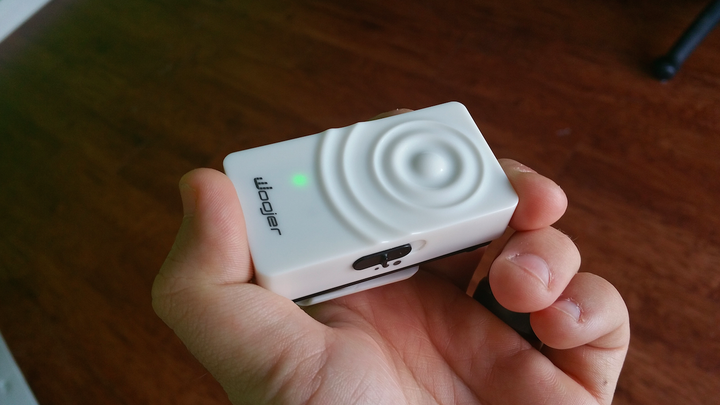
The product itself is a small box that plugs into the 3.5mm audio jack of any device, and then you connect your headphones to the Woojer. The hardware works with any device that outputs audio, from your phone to your 3DS.

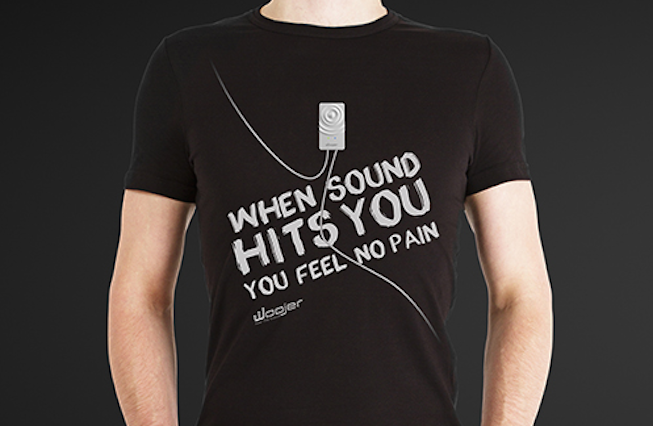
You can attach the box to your clothing using the included — and surprisingly strong — magnetic clip. I found that it works best when placed directly in the middle of my chest, and it had the secondary effect of making me feel a tiny bit like Iron Man. This is one of their promotional images showing one way to wear the device.

b452b05251e0187821b02a770db77991

Getting things set up is a goofy experience. I connected the device to the audio jack on the bottom of the PlayStation 4 controller, and then connected my headphones to the Woojer. Then you have to remove the back of the magnetic clip and snake it up the inside of your shirt before connecting it to the hardware on the outside.

The 2.5 ounce device may also make your T-shirt sag a bit, so it takes a few seconds of adjusting to get things comfortable. You’ll get around 3 hours out of each charge of the internal battery.

And then it rumbles. That’s it. When a bass signal is sent through the Woojer it converts the sound into a deep rumbling effect.

One of the strengths of the device is how it knows to ignore treble and even light bass in favor of the deeper sounds of your game or music. You won’t feel anything when a character talks to you, but you’ll know when you fire your gun or you’re in the middle of an explosion.

How does it feel?

The effect is similar to the feeling in your chest when you’re watching a good fireworks display, or when you’re sitting in a revving car. It’s a tiny device, but it fools your body into thinking something big is happening around it.

The combination of the rumbling in the controller, the Woojer, and the sound blasting from the headphones was impressive; it gives you a sense of being close to the firefights. It was interesting to “feel” the difference between the rapid “patpatpat” of submachine guns and the “WHOOM” of a shotgun blast. The deep “THUD” of the most powerful explosive weapons became much more satisfying.

It’s definitely cool, and it’s something I’m going to use when playing action games moving forward. The problem is that it requires a 3.5mm connection to work, and my computer headphones are all either wireless or USB; using the device on my gaming PC would require a major change to my setup, and I doubt I’m alone in this fact.

The Woojer is a neat device, and fans of first-person shooters or even racing games will likely get a ton of us out of it, but the $100 asking price may be a hard sell for the mass market. I paid for my unit by backing the Kickstarter with my personal funds before I worked for Polygon.

Sound-based haptic feedback always sounds like bullshit, we’ve all seen those goofy chairs with speakers or other “thumping” peripherals, but the Woojer is able to give you subtle, changing effects based on an effective bass threshold. In other words, it works.

maxresdefault

by Dave Thier

You have to hand it to Rockstar: it just made GTA new again. When GTA 5 launched last year, the developer gave us the most fully-realized and detailed world it had ever built, and yet it was hard to not feel something missing. Not only was its story mode badly written and mostly boring, its odd brand of comedy was tired at best and it once again found itself doing a whole bunch of random stuff with very little at its center. That bizarre anarchy that had seemed so intriguing and dangerous when GTA 3 first came felt just, somehow, lame. Well, the game is coming out for PS4 and Xbox One, and this time you can play in first person mode. What fresh hell is this?

Take a GTA story as old as time: you walk down the street, you pull out a shotgun, and you shoot an innocent person to death in the street. Boring, right? Shocking a decade or so ago, but we’re all used to it by now. First person mode makes that entirely different. That person fills your entire field of view. He’s big enough so that you can see the expression his face. He was texting. Who was he texting? You’re not the puppeteer controlling an agent of violence anymore — it’s one step closer to being you. It seems like this is what the developer intended all along.

Rockstar introduced a hatchet weapon for this version, and it’s hard not to imagine that this is how they intended it to be used. I won’t embed the video, but you can watch it on youtube here.

Or take another GTA classic — the prostitute scene. This isn’t just a vague view of the back of the car, anymore. You see her face. You see your own hand. For obvious reasons, I’m also not embedding the video, but you can watch the sort of NSFW link here.

It’s almost as if Rockstar saw how humdrum the violence had become and said no, no, no. This is truly as terrible as you imagine it. Look at it. Look at what you’ve done. Look at what we’ve done. It’s as if they’re hungry for the same sort of evening news that it used to get and they’re pursuing it with as much fervor as ever. And they’ve done something striking in that quest. Good job?

Of course, it’s not all about the sex and violence. First person also makes skydiving all that much more exhilarating, makes driving that much crazier, makes mountain biking down an exquisitely rendered Mt. Chilead that much more gorgeous. It makes the game’s trademark LA sunsets that much more staggering. It short, it makes everything more. First person mode makes GTA more GTA than it’s ever been: more brutal, more beautiful, more open, bigger and wilder. That’s the thing about it: for better, for worse, it’s an incredible success.

But I’m not convinced about all that other stuff. GTA 3 was a landmark exploration of open world development, but we’re lousy with gorgeous open world games now. A select few of them are as pretty and dense as GTA, but nearly all of them have a better sense of their own identities than GTA. For all its faults, Assassin’s Creed: Unity just delivered a fully explorable, drop-dead gorgeous rendering of Revolutionary Paris — it just means something in a way Rockstar can’t muster. It’s true, GTA 5′s Los Santos is probably the most detailed open world I’ve seen yet. But that just makes Rockstar the guys with the deepest pockets, not the guys with any ideas.

Just the fact that I still feel constantly compelled to compare this game to GTA 3 reminds me of when the actual innovation with this franchise happened.

It leaves us with Rockstar’s only real trick left up its sleeve: the same old approach to misanthropy and violence. Shock value still feels like the biggest thing this game has going for it, and this series burned out on that a long time ago. It’s more real than ever, and it’s more horrible than ever, but less than making the game seem more relevant it just reminds me of the slick, fancy dinosaur it is.