evolve4

by Paul Tassi

Lately pre-order bonuses and console-exclusive content have frustrated many gaming fans who feel like they’re getting the short end of the stick when it comes to new releases, unless they pledge their loyalty to an unreleased game months ahead of time. But today with 2K’s upcoming shooter Evolve, we have a console exclusive, pre-purchase bonus that’s causing something of a stir.

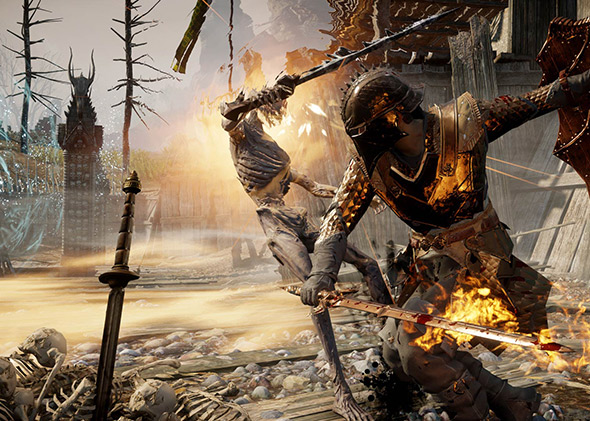
Evolve’s production has gone gold, and with that proclamation comes the now-mandatory open beta for the multiplayer game starting later this month. Ahead of that event, 2K and Turtle Rock have announced that Xbox One players who pre-order a digital copy of the game from the Xbox Live store will unlock instant access to the third tier of hunters in both the beta and the final release of the game, along with a new monster, the Wraith.

The major catch here is that a “pre-order” of a digital game in the Xbox store is really a straight-up pre-purchase, as you’re charged the full $60 for the game up front. It can be canceled any time ahead of launch, but it’s significantly more than the usual $5 GameStop down payment to be sure. Not to mention the very idea of pre-ordering a digital copy of the game now means we’re abandoning any pretense of logic regarding pre-ordering as a means to secure a launch copy of a game that might otherwise be sold out.

Past the concept of a pre-purchase, players are a bit perplexed about what’s actually being unlocked, and what it may say about the game itself. The core roles of the four hunters in Evolve never change (Medic, Assault, Trapper, Support), but as you go, different characters can be unlocked through enough gameplay. To get all the way to the third tier of characters requires a hefty amount of grinding, probably at least a ten hours per character class (plus the monster), if the alpha was any indication.

In other words, paying $60 up front is a free pass to skip a significant portion of what’s supposed to be the core progression system in the game. And compounding the strangeness of that, it’s an Xbox exclusive offer. The implication is that the grind is so bland and terrible, it’s an incentive to skip it directly with a pre-purchase.

evolve6

There are a few schools of thought about this. One is that all games should come with everything accessible and not restrict content for those unwilling to invest dozens or hundreds of hours to unlock it. The other is that progression systems create a tangible sense of progress and something to work toward, which is why Call of Duty’s prestige and unlock system is so popular. But in this case, it would be like if you pre-purchased Advanced Warfare on Xbox and you got to start at the third prestige level. It might not unbalance gameplay necessarily, but what’s the point in skipping that progression at all? It’s like admitting your grind is so boring that you’re willing to allow people to play less of your game, when the ones who are pre-purchasing are probably the most devoted to it.

Evolve has more than a few other kinks to work out besides this. An actual pre-order bonus that’s been announced, a fourth monster, seems like a pretty significant piece of content to lock away. Past that, the progression system itself appears as if it will be heavily skewed against new players, with advanced level bonuses including rarely seen perks like flat damage and defense increases, things other games have forgone for the sake of balance. This means matchmaking will have to be incredibly spot-on, or newer players will find themselves getting dunked on by veterans. I already saw a bit of this in the Alpha, and it seems like it could snowball badly if left unchanged. But I suppose that’s what an open beta should sort out.

Evolve just seems to be in a weird place ahead of its upcoming launch. One of my concerns with the game in the alpha was its relatively sparse amount of content. A bare-bones multiplayer focus can work, like with Turtle Rock’s last game, Left 4 Dead, or it can fall flat like we saw with Titanfall. Given its somewhat limited scope, it seems dangerous to allow players to A) skip progression, B) hold too much additional content as pre-order bonuses or DLC or C) have too many alphas/betas. That last item isn’t really a consumer issue, but more of a judgement call. I’d just worry about players burning out on the game before it’s even released, as that’s verbatim what happened to me after a marathon week with the Titanfall beta. But I suppose it does give players a solid look as to whether or not they want to purchase the full box copy at launch, and I can’t fault the transparency of that.

I am willing to give Evolve a pass on a lot of issues, because I would like to see an original IP with a unique core concept succeed. But they’re losing the narrative with all this pre-order, pre-purchase nonsense. If they’re confident enough in their game to offer lengthy alphas and betas, they shouldn’t feel the need to bribe Xbox players to skip playing the game itself as a pre-purchase bonus. No part of that sentence projects confidence, and it just seems like the latest annoyance in companies pushing pre-orders, and now even pre-purchases, too damn hard.

e1fa6814836d3ca057b5f92d77fac0df

by Giuseppe Nelva

Microsoft has already quite a few games announced for 2015, but Microsoft Game Studios Partner Creative Director Ken Lobb mentioned during an interview on The Inner Circle Podcast that there’s more on the menu.

Lobb explained that, as part of the “Phil philosophy” and the way Microsoft Game Studios work, they don’t target a specific month for any game. They want the big games in the holidays but they don’t avoid the spring. They have Ori and the Blind Forest “which is fenomenal” coming soon, and ScreamRide “which is kind of insane insanity,” but there’s more that we don’t know about yet:

“We’ve got a couple other things that are coming out before the fall that haven’t been announced yet.”

He continued by saying that even if he won’t make official announcements, there are a couple of other games before the big titles coming in the fall that people will be excited about and that will surprise gamers when they hear what those are.

Then there are also games that planned for spring 2016 already, and things for the fall that may or may not be finish in time. As those get moved around Microsoft will decide if those will be added to the spring line-up, and if two things move into each other something has to be shifted.

Lobb concluded by saying that there are a lot of great games coming next year across all platforms, including Sony and Nintendo, and it’s a great time to be a gamer.

oculus-rift-crescent-bay-prototype

by Steven Tweedie

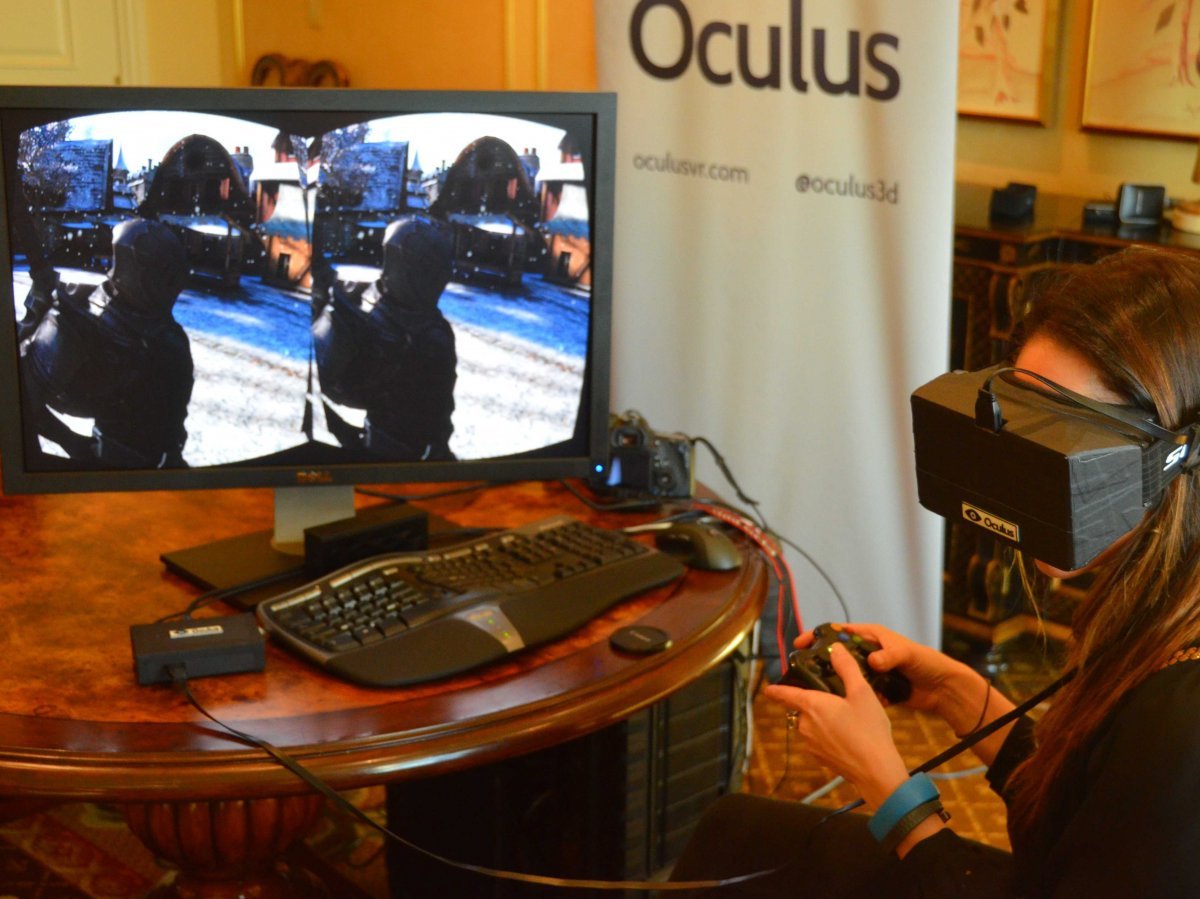
Oculus showed off its newest Oculus Rift prototype at this year’s Consumer Electronics Show in Las Vegas, and the virtual reality headset has an incredible new feature.

It’s called “spatial audio”, and it makes the virtual environments sound like you’re truly there.

To test this new feature, I was ushered into a room padded with foam to allow for better acoustics.

Spatial audio is incredible: it means if a bird flies overhead in a game, you can hear its chirp travel from behind you, to over your head, and finally to in front of you. If you turn around, the audio responds accordingly. This only adds to the realism.

I got to try a version of the latest “Crescent Bay” Oculus Rift prototype that didn’t feature spatial audio last month at Business Insider’s Ignition conference. More than a month later, I got to try the same demos, but this time with spatial audio, and I can say it certainly makes a big difference.

In one demo created to show off what the spatial audio can do, two giant robot arms that look liked like they belonged in Elon Musk’s Tesla factory faced off in a battle using magical wands. The robot arms moved in circles around me, sending sparks at each other. Thanks to the inclusion of spatial audio, the sounds always matched the physical position of the robots.

If a noise occurred in front of me while I happened to be looking down, the sounds actually moved above my head, which is how it works in reality too.

img0778jpg

The best example of the Oculus Rift’s new 3D audio was during a tug-of-war between the two robots for a tiny, squeaky toy rubber duck. After trying to wrestle the duck from each others’ robotic claws, one robot arm grabbed the toy duck and flung it over my shoulder, and I was amazed at how the squeaks traveled from in front of me to directly behind me. I even found myself turning accordingly, just as you would if someone yelled something from a car driving by.

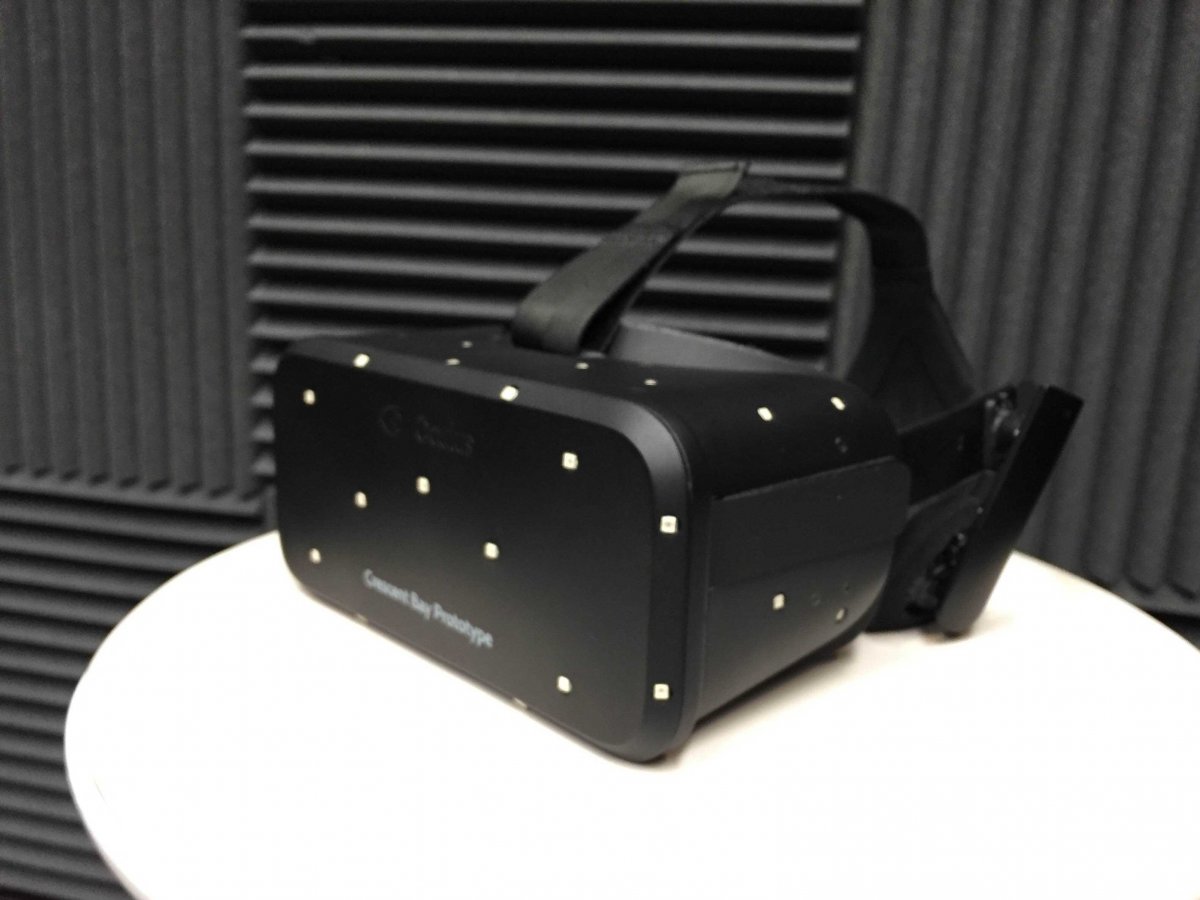
The Oculus Rift already has full positional tracking, meaning you can bend down, lean in, and walk around a small area. This is possible thanks to the new infared camera that tracks the headset’s position at all times using the dots on the front and back of the Rift.

img0775jpg

With your movements so closely tracked, tracking audio in the same way is the natural next step, and Oculus is also releasing its spatial audio software to developers so they can add it to their games for the Oculus Rift’s consumer edition launch.

There’s no doubt, however, that this was hands-down the best virtual reality experience I’ve ever had — and I’ve tried the last three virtual reality headsets Oculus has worked on.

This proves it takes more than visuals to trick your mind into truly believing you’re in a virtual environment.

Oculus is still being cagey on when the Oculus Rift consumer edition will launch, so unfortunately virtual reality enthusiasts will have to continue to play the waiting game for now.

Trust me, it’ll be worth the wait.

Job listings for company’s new studio confirms development of undisclosed RTS sequel.

msgames-coverlarge

by Chris Mawson

Microsoft Game Studios are currently developing the ‘next installment in a beloved strategy game franchise’, according to a number of listings on their careers site.

According to the posts, the company’s Decisive Games team, which ‘is focused on world class strategy game development’, is hiring three senior software engineers to work on its latest project.

The job listings go on to request applicants with ‘familiarity of Direct X11 or Xbox 360/Xbox One rendering APIs’, effectively confirming a release on both PC and Xbox consoles.

The studio is hiring a generalist game development engineer and a senior tools engineer, but perhaps the most significant listing is a post for a senior client-server network engineer. This listing confirms a significant multiplayer component to the game, with successful applicants being responsible for ‘leading the networking and multiplayer aspects of gameplay, including both the real-time gameplay networking solution as well as supporting out-of-band systems such as matchmaking and grouping.’

The identity of the RTS game in question has yet to be confirmed. Some fans are speculating that it could potentially be a follow-up to 2008’s Halo Wars. Which strategy series sequel would you like to see Microsoft release? Let us know in the comments.

One_Image_That_Proves_How-6a5a7650afe1e09edc570f705f4bf9a3

by Steven Tweedie

Virtual reality is coming, and leading the charge is Oculus VR with its highly anticipated Oculus Rift.

But even after being acquired for $2.3 billion from Facebook earlier last year, the Oculus Rift still has its fair share of skeptics who are quick to say it will flop or that people aren’t interested in gaming with a headset strapped to their face.

One look at the Oculus booth at this year’s Consumer Electronics Show in Las Vegas, however, tells a different story, and proves how popular the Oculus Rift has become.

Oculus had one of the biggest booths at CES this year. Its massive two-story structure housed multiple padded rooms where people could try the most recent prototype of the Rift.

It’s especially impressive when you look at where Oculus was just two years ago. At CES 2013, Oculus didn’t even have a booth. The team ran private demos from a suite at The Venetian, and it was pretty tiny compared to the towering booth this year.

One_Image_That_Proves_How-8ac12e9748af89d40c1279fce9e4a70f

Every time I walked past the Oculus booth while exploring the show floor, there was a line wrapped around the booth as people eagerly waited to try the Rift.

So regardless of what the skeptics say, the Oculus Rift is coming, and all signs are pointing to a truly enormous launch.

xbox-one-logo-wallpaper

by Rob Crossley

Microsoft has issued new assurances over game ownership and DRM policies after a curious incident where some customers found themselves unable to play Far Cry 4.

On Monday, a select number of Xbox One owners who bought the digital copy of Ubisoft’s open-world shooter found that the game suddenly failed to load up. Even if they deleted and reinstalled Far Cry 4, their Xbox One would return the error code ‘0X87DE07D1’ and their console would then ask whether the game had been purchased.

Curiously, the error appeared to coincide with the game’s surprise, and seemingly accidental, removal from the Xbox One Marketplace. In the early hours of Tuesday morning, Microsoft managed to re-list the game on the Xbox Live Marketplace, and users found that their boot problems had suddenly ceased.

This process would suggest that–in some, but not all, circumstances–playing the digital version of Far Cry 4 can be dependent on some kind of online verification, or automatic gating process, from Microsoft’s side.

However, while Microsoft has not explained how the incident occurred, it has assured that this error was not indicative of a DRM policy change.

In a statement sent to GameSpot, a Microsoft spokesperson said: “If customers own the rights to a game, they can visit their download history and initiate a re-download whenever they please–even if the game has been delisted from Xbox Store and is no longer available for purchase.”

However, with regards to digital games, Microsoft’s support page states that an Xbox Live connection is mandatory in certain circumstances:

The company writes: “If the game was purchased in digital form and the owner is unable or unwilling to enable sharing, the owner has to be signed in and connected to Xbox Live for that game to be played.”

Microsoft’s original plan for the Xbox One was that the console would require a persistent Internet connection, which would enrich the games with online-centric content and features, but also make digital authentication necessary. In May 2013, the Xbox executive Phil Harrison said this authentication process would occur on a daily basis.

However, following consumer upheaval, two months later Microsoft scrapped the policy, meaning the Xbox One can install and boot games with no required Internet connection.

Shadow-Realms

by Ron Duwell

We’ve been so distracted by Dragon Age: Inquisition and any incoming news of the new Mass Effect that it would be hard to blame anyone for forgetting about BioWare’s other RPG in the works, Shadow Realms. Only a little bit of information has been made available since San Diego Comic Con 2014, but insiders are claiming that all information now is dated because the game has received a major overhaul.

For those who don’t remember, Shadow Realms is BioWare’s answer to the drop in and play co-op RPG genre, and it combines both elements of fantasy and science fiction. Four players must work together to take down a fifth player acting as the dungeon master, similar to Microsoft’s incoming Fable Legends.

Originally, the game was planned to be released with episodic content through a free-to-play payment model, but sources at Kotaku are claiming that EA and BioWare have been changing the game since October. Rather than the slow release of content, the two companies have decided to repackage the game as a premium product with all of the content available at once.

Kotaku claims, “Two industry sources say they heard Shadow Realms was cancelled, but a third, reliable source familiar with goings-on at BioWare Austin says the game was overhauled in late October and will now have a full campaign.”

Originally, Shadow Realms was scheduled for a release in 2015, but we’ll have to wait for more updated information in light of the developments the source claims has happened.

Source: Kotaku

89b2fdc63655ae77a077c0a21891dbd3

by Jeff Grubb

One of the rarest video games on Earth is up for auction on eBay. But you’re gonna need quite a stack of cash if you want to get in on the action.

A factory-sealed copy of the North American version of Stadium Events for the Nintendo Entertainment System is up for sale on eBay. Bidding has already surpassed $22,000, with more than seven days left in the auction. Seller Menaceone listed the game for $5,000, and it jumped up to $22,100 after just 10 bids. That already makes it one of the most valuable games to ever go up on eBay. This marks a growing interest in classic, collectible video games.

The listing for this particular copy of Stadium Events notes that it is near-mint condition. It also come in an archival case that should protect it from the elements in the future.

So, what is Stadium Events and why is it so valuable? This is one of the first games to work with the Family Fun Fitness pad that developer Bandai released in the 1980s. Players could get up and jump up and down on the pads big foot-activated buttons, but Nintendo quickly acquired the technology from Bandai and rebranded the mat as the Power Pad. To prevent consumer confusion, the publisher put out a recall on the North American version of Stadium Events. Game historians believe that only 200 copies of this game ever reached consumers. Today, collectors estimate that fewer than 20 copies of this game exist. That makes the NA version of Stadium Events the rarest licensed NES release.

This isn’t the first time the game has gone up for auction. In 2011, another eBay seller got $22,800 for their factory-sealed version.

While the North American version of Stadium Events is extraordinarily rare, the European release is less so. That game, which debuted in 1987 in Germany and Sweden, now fetches a price of around $200 or more, depending on the condition.

GameStop_Has_A_Brilliant_Plan-ded1ddd2d2f944de8cae08757be6d13c

by Ashley Lutz

Many people assume that GameStop will go the route of book, music, and video stores, reports Joshua Brustein at Bloomberg Businessweek. However, the videogame seller is determined to avoid being the next Blockbuster. And despite the criticism, GameStop has a “surprisingly happy” prognosis, according to Brustein.

Here’s how GameStop is bucking all the gloomy predictions:

Selling downloadable game content.

GameStop has been able to get customers in stores to purchase digital content. The company lets customers come in to download video games and other licensed products, such as other game levels.

“The chain is able to sell downloads in physical stores in part because many of its younger customers don’t have credit cards, which makes it hard to pay online, and because people want to use the trade-in value of games they’re done playing,” Brustein writes.

Becoming a social destination.

GameStop’s average customer is a “young, aimless” man, according to Businessweek. The retail locations have become a place where young men can socialize.

“We have people who shop at Amazon but come in here for the interaction,” a store manager tells Businessweek. “We say, “Look man, I get paid either way — I’m here to help you.’ That goes a long way.”

Being the leader in the industry.

GameStop’s competitors include Wal-Mart, Target, Best Buy, and Amazon. There are no other major retailers who focus only on videogames. This expertise helps GameStop attract and retain more customers than the competition. The company also has trade-in and loyalty programs that are unrivaled by competitors, according to Businessweek.

150105_GCLUB_INQUISITION_jpg_CROP_original-original

by Stephen Totilo

Laura, Chris, and Jenn—I merely asked if a great video game must impress us so much that we’d play it twice, yet now we have Chris and Laura rethinking whether a game they each gave 70 hours of their lives to was worth playing once. How perverse this medium is that those of us who love it are left wondering if it just gave us a great new experience or merely robbed our life of a few days. But it’s not the nature of a video game to be easily consumed, and some of the best ones spar with us. If a game makes me want to pull my hair out, it wasn’t necessarily a bad game. In fact, it might have been excellent.

Compare the other great forms of entertainment. Most music or literature, for example, isn’t designed to defy its audience, to require learning and skill and mastery to get to the end. Some great works do, of course. Most video games, however, do push back. They push back for the reasons non-gamers might expect: They can be full of tough bad guys who are hard to defeat, replete with races that are challenging to win, stuff like that. But they can also be tough the way that learning to use a new camera or computer operating system can be tough, because the interface is poor and in need of a new iteration next year. That, I believe, is the new Dragon Age’s problem. Here’s a game that plunges players not just into a fantasy word in need of saving—but into nests of confusing, counterintuitive menus that make upgrading one’s sword or mixing potions about as fun as defragmenting a hard drive.

There was much hubbub a few years ago about the ending of Dragon Age studio BioWare’s previous game Mass Effect 3. Many fans were incensed by what they felt was an insufficiently thorough ending, one they felt didn’t proportionately take into account the many decisions Mass Effect players had made across the trilogy of games. These fans complained, and BioWare eventually decided to release a revised, expanded ending—which spawned new complaints from fans defending the sanctity of authorial intent. I found the complaints about the complaints to be absurd. Developers have tweaked and patched and improved the gameplay tuning of games for ages—made this too-powerful gun less powerful, altered this multiplayer mode to make it more competitive—so why in the world would a video game’s story be beyond post-release tinkering? To say it was, I wrote at the time, would be to say that story was more important than gameplay, and we know how I feel about that.

All of which is to say: Let this serve as my call for BioWare to do a major overhaul of Dragon Age: Inquisition’s time-wasting menus. My God. If you’re going to “fix” Mass Effect 3’s ending, fix the menus of your new game, please. Dragon Age: Inquisition needs to feel a bit more like Game of Thrones and a bit less like Microsoft Excel.

One explanation for gaming critics’ zeal for small, polished indie games is that blockbuster games are still too often released in substandard states. A publisher the caliber of EA shouldn’t be releasing a game that has such bad menu systems as Dragon Age’s. EA wasn’t alone in that regard in 2014, nor was it even the worst. Major publishers regularly release games with poor interfaces, abundant bugs, and modes that, in the case of Microsoft’s and Sony’s twin fall debacles, Halo Master Chief Collection and Driveclub, respectively, are so busted that they eventually need to be apologized for. Perhaps this will be one of 2014’s gaming legacies: a year when blockbuster game publishers were embarrassed into exerting higher quality control, such that, come 2017 or so when we answer the siren song of a new Dragon Age, we will find a game that works well and doesn’t waste our time.

A final thought: I know that 2014 frustrated many people who love video games. In many ways it was a bad year, light on great games and heavy on unkind behavior. The year has certainly left its scars, but I leave you with what the year left me with: a wonderful discovery.

We may tolerate a fair amount of unpleasantness on this frontier of entertainment, but we also regularly turn the bend to discover new wonders. Late last month, for example, I discovered a mobile and tablet game called A Dark Room. Laura knows about it already. All of our readers should. It’s a game that treats graphics about as seriously as Chris’ beloved J.S. Joust … that in unexpected ways asks you to think about life and values in a manner Laura would appreciate … and that, for the sake of the Jenn Frank household, doesn’t require virtual reality goggles to enjoy. It is simple, beautiful, and occasionally disturbing. It is a gameplay game with a surprising amount of story to it. It is adapted from a 2013 Web-based game and is one of 2014’s best. Enjoy, Video Game Club. See you all in a year.