89b2fdc63655ae77a077c0a21891dbd3

by Jeff Grubb

One of the rarest video games on Earth is up for auction on eBay. But you’re gonna need quite a stack of cash if you want to get in on the action.

A factory-sealed copy of the North American version of Stadium Events for the Nintendo Entertainment System is up for sale on eBay. Bidding has already surpassed $22,000, with more than seven days left in the auction. Seller Menaceone listed the game for $5,000, and it jumped up to $22,100 after just 10 bids. That already makes it one of the most valuable games to ever go up on eBay. This marks a growing interest in classic, collectible video games.

The listing for this particular copy of Stadium Events notes that it is near-mint condition. It also come in an archival case that should protect it from the elements in the future.

So, what is Stadium Events and why is it so valuable? This is one of the first games to work with the Family Fun Fitness pad that developer Bandai released in the 1980s. Players could get up and jump up and down on the pads big foot-activated buttons, but Nintendo quickly acquired the technology from Bandai and rebranded the mat as the Power Pad. To prevent consumer confusion, the publisher put out a recall on the North American version of Stadium Events. Game historians believe that only 200 copies of this game ever reached consumers. Today, collectors estimate that fewer than 20 copies of this game exist. That makes the NA version of Stadium Events the rarest licensed NES release.

This isn’t the first time the game has gone up for auction. In 2011, another eBay seller got $22,800 for their factory-sealed version.

While the North American version of Stadium Events is extraordinarily rare, the European release is less so. That game, which debuted in 1987 in Germany and Sweden, now fetches a price of around $200 or more, depending on the condition.

GameStop_Has_A_Brilliant_Plan-ded1ddd2d2f944de8cae08757be6d13c

by Ashley Lutz

Many people assume that GameStop will go the route of book, music, and video stores, reports Joshua Brustein at Bloomberg Businessweek. However, the videogame seller is determined to avoid being the next Blockbuster. And despite the criticism, GameStop has a “surprisingly happy” prognosis, according to Brustein.

Here’s how GameStop is bucking all the gloomy predictions:

Selling downloadable game content.

GameStop has been able to get customers in stores to purchase digital content. The company lets customers come in to download video games and other licensed products, such as other game levels.

“The chain is able to sell downloads in physical stores in part because many of its younger customers don’t have credit cards, which makes it hard to pay online, and because people want to use the trade-in value of games they’re done playing,” Brustein writes.

Becoming a social destination.

GameStop’s average customer is a “young, aimless” man, according to Businessweek. The retail locations have become a place where young men can socialize.

“We have people who shop at Amazon but come in here for the interaction,” a store manager tells Businessweek. “We say, “Look man, I get paid either way — I’m here to help you.’ That goes a long way.”

Being the leader in the industry.

GameStop’s competitors include Wal-Mart, Target, Best Buy, and Amazon. There are no other major retailers who focus only on videogames. This expertise helps GameStop attract and retain more customers than the competition. The company also has trade-in and loyalty programs that are unrivaled by competitors, according to Businessweek.

150105_GCLUB_INQUISITION_jpg_CROP_original-original

by Stephen Totilo

Laura, Chris, and Jenn—I merely asked if a great video game must impress us so much that we’d play it twice, yet now we have Chris and Laura rethinking whether a game they each gave 70 hours of their lives to was worth playing once. How perverse this medium is that those of us who love it are left wondering if it just gave us a great new experience or merely robbed our life of a few days. But it’s not the nature of a video game to be easily consumed, and some of the best ones spar with us. If a game makes me want to pull my hair out, it wasn’t necessarily a bad game. In fact, it might have been excellent.

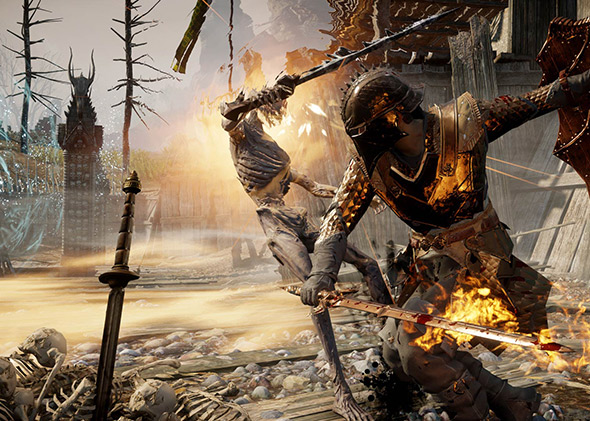
Compare the other great forms of entertainment. Most music or literature, for example, isn’t designed to defy its audience, to require learning and skill and mastery to get to the end. Some great works do, of course. Most video games, however, do push back. They push back for the reasons non-gamers might expect: They can be full of tough bad guys who are hard to defeat, replete with races that are challenging to win, stuff like that. But they can also be tough the way that learning to use a new camera or computer operating system can be tough, because the interface is poor and in need of a new iteration next year. That, I believe, is the new Dragon Age’s problem. Here’s a game that plunges players not just into a fantasy word in need of saving—but into nests of confusing, counterintuitive menus that make upgrading one’s sword or mixing potions about as fun as defragmenting a hard drive.

There was much hubbub a few years ago about the ending of Dragon Age studio BioWare’s previous game Mass Effect 3. Many fans were incensed by what they felt was an insufficiently thorough ending, one they felt didn’t proportionately take into account the many decisions Mass Effect players had made across the trilogy of games. These fans complained, and BioWare eventually decided to release a revised, expanded ending—which spawned new complaints from fans defending the sanctity of authorial intent. I found the complaints about the complaints to be absurd. Developers have tweaked and patched and improved the gameplay tuning of games for ages—made this too-powerful gun less powerful, altered this multiplayer mode to make it more competitive—so why in the world would a video game’s story be beyond post-release tinkering? To say it was, I wrote at the time, would be to say that story was more important than gameplay, and we know how I feel about that.

All of which is to say: Let this serve as my call for BioWare to do a major overhaul of Dragon Age: Inquisition’s time-wasting menus. My God. If you’re going to “fix” Mass Effect 3’s ending, fix the menus of your new game, please. Dragon Age: Inquisition needs to feel a bit more like Game of Thrones and a bit less like Microsoft Excel.

One explanation for gaming critics’ zeal for small, polished indie games is that blockbuster games are still too often released in substandard states. A publisher the caliber of EA shouldn’t be releasing a game that has such bad menu systems as Dragon Age’s. EA wasn’t alone in that regard in 2014, nor was it even the worst. Major publishers regularly release games with poor interfaces, abundant bugs, and modes that, in the case of Microsoft’s and Sony’s twin fall debacles, Halo Master Chief Collection and Driveclub, respectively, are so busted that they eventually need to be apologized for. Perhaps this will be one of 2014’s gaming legacies: a year when blockbuster game publishers were embarrassed into exerting higher quality control, such that, come 2017 or so when we answer the siren song of a new Dragon Age, we will find a game that works well and doesn’t waste our time.

A final thought: I know that 2014 frustrated many people who love video games. In many ways it was a bad year, light on great games and heavy on unkind behavior. The year has certainly left its scars, but I leave you with what the year left me with: a wonderful discovery.

We may tolerate a fair amount of unpleasantness on this frontier of entertainment, but we also regularly turn the bend to discover new wonders. Late last month, for example, I discovered a mobile and tablet game called A Dark Room. Laura knows about it already. All of our readers should. It’s a game that treats graphics about as seriously as Chris’ beloved J.S. Joust … that in unexpected ways asks you to think about life and values in a manner Laura would appreciate … and that, for the sake of the Jenn Frank household, doesn’t require virtual reality goggles to enjoy. It is simple, beautiful, and occasionally disturbing. It is a gameplay game with a surprising amount of story to it. It is adapted from a 2013 Web-based game and is one of 2014’s best. Enjoy, Video Game Club. See you all in a year.

ps4

by Paul Tassi

Sony just released its latest set of hard numbers for sales of the PS4, and those looking for signs of a slowdown won’t find it here. After reporting 10 million consoles sold to consumers in August 2014, Sony’s new figures have them selling 18.5 million PS4s. And yes, that’s still sold to consumers, not shipped to retailers, a metric often used to put a positive spin on lower sales.

Sony has used “shipped” data a handful of times, but it’s practically standard procedure for Microsoft’s Xbox One figures at this point. The latest data we have for the One is 10 million consoles shipped to retailers in mid-November. And we don’t have any hard sold-to-consumers data since Q1 of 2014, when Microsoft said 5.1 million Xbox Ones had been sold, not just shipped. And since we shouldn’t leave it out, Nintendo’s Wii U, with its year-long head start, that console has sold just under 7.5 million units to consumers by last count.

The picture is clear, and it’s not even close. Fanboy camps aside, Sony is absolutely crushing its competition this console generation in terms of sales, and its strong start didn’t just last through the release window, as it’s now over a year since launch. The PS4 is approaching a quarter of the total sales of the PS3 in just the first year, dramatically outpacing the last-generation console’s launch. It hasn’t quite reached Wii levels of sales insanity, but that was a console sold to everyone from toddlers to grandparents, and the PS4 has no such “fad appeal” to non-gamers.

This past August, Sony’s Shuhei Yoshida famously said that even he didn’t fully understand why the PS4 was selling so well:

“It’s just beyond our imagination. We are so happy. But I for one am a bit nervous because we do not completely understand what’s happening. You need to understand why your products are selling well so you can plan for the future, right? It defied the conventional thinking.”

And it’s hard to imagine that same sentiment doesn’t hold true today. While Microsoft will probably see something of a bump to Xbox One sales after crafting deeply discounted holiday bundles, moving from 10M units shipped this November to anything even close to Sony’s sell-through numbers is near impossible. I’m not sure when, if ever, we’ll finally hear those numbers, but if Microsoft has more than 12M units Xbox One’s sold to consumers, I’d be amazed. Frankly, I think we would have heard about it if they’d crossed 10M sold through, but we haven’t. And 4.1M of PS4′s new sales have come this holiday season, so it’s not as if Sony did poorly on the back of big Microsoft sales.

If even Sony can’t comprehend why their system is selling so well, I’m not going to pretend like I have all the answers. To some extent, it does defy logic. Despite the PS4 being a perfectly great piece of hardware, it certainly hasn’t done anything to distinguish itself in terms of exclusive games since launch. Games like Killzone: Shadow Fall and Infamous: Second Son have been their highest profile exclusives, which is to say the system hasn’t had many big titles to itself at all. Those are perfectly fine games, but Microsoft has an equally adequate exclusive roster (Sunset Overdrive, Halo: MCC when it works), and both of them were very obviously trumped by Nintendo this year between Mario Kart, Smash Bros. and Bayonetta.

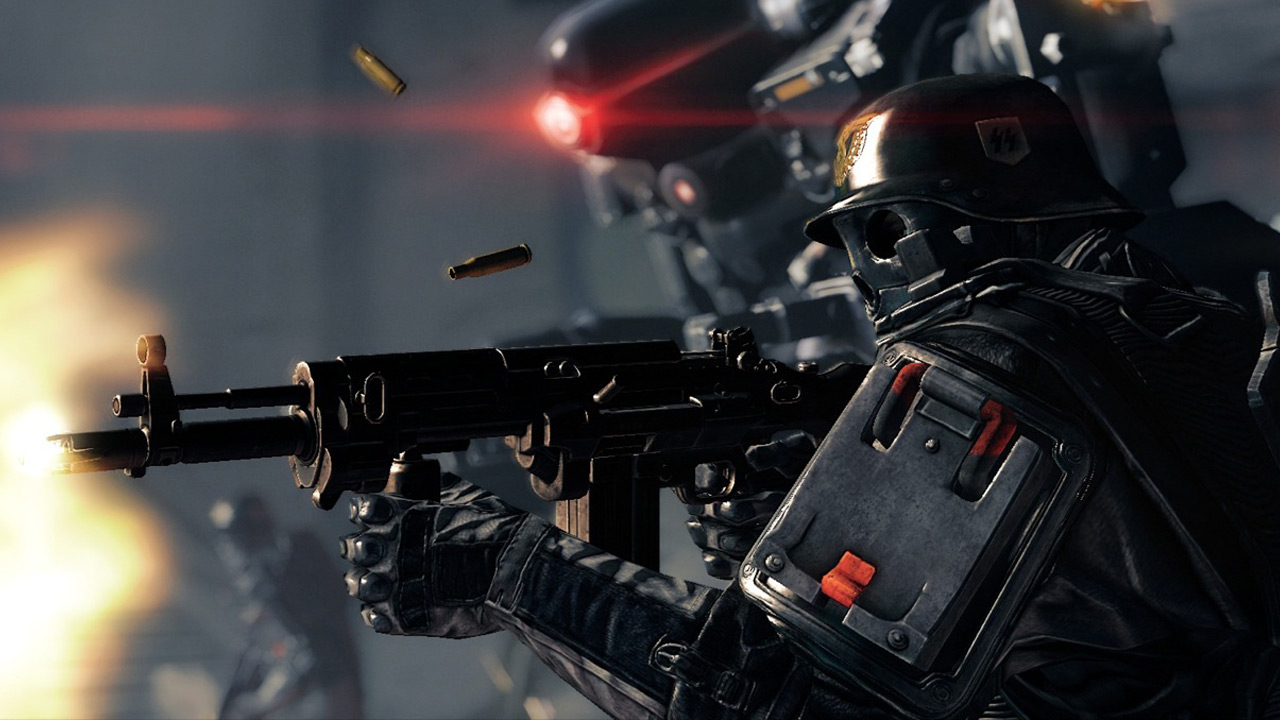
Rather, the rest of the biggest games of the year were all multiplatform, ie, available on both PS4 and Xbox One, sometimes PC, and never Wii U. These are games like Far Cry 4, Dragon Age: Inquisition, Call of Duty: Advanced Warfare, Destiny, Shadow of Mordor, Wolfenstein: The New Order and more. What then happened was that the PS4 simply became the “default” console for many of these titles, and it’s because of the momentum of the system which has snowballed since launch.

wolfenstein2

We can’t ignore the dual launch of the Xbox One and PS4 over a year ago, as its effects are clearly reverberating today. While the Wii U was fixated on a gamepad it would later prove it had no idea what to do with, and the Xbox One had fused with Kinect and turned into a mutated, pricey, monster console, the PS4 played it straight. It was the console for games, and it played them with no gimmicks. The result was a lower price, a little more power, and the adoration of fans who didn’t want the change the competition was trying to inflict on them.

The rest is history, which has now very much shaped the present. Right now, the Xbox One and the PS4 are functionally identical in almost every way, but it was a long, slow crawl for Microsoft to walk back huge issue after huge issue with the Xbox One, first turning away from a mostly disc-less future even before launch, and then eventually surgically removing the borderline useless Kinect from the system resulting in the lower price the One should have always had. Throw in your preference for exclusive games and a lower bundle price, and right now, the Xbox One might even be the more attractive option.

But these changes took the better part of the whole year, and by that time, many fans had already made up their mind to go with the system that really hasn’t had to change anything at all over the past 13 months, and the stigma of Xbox One’s past misdeeds still lingers like a poison fog among the undecided. The PS4 got it right the first take, and have been reaping the rewards ever since. Its success hasn’t been warranted by any fabulous technological breakthrough or a stellar line-up of must-have, exclusive games. Rather, Sony won by simply not losing, and they’re continuing to do so to this day, as Microsoft still can’t rid themselves completely of scandal, most recently the disastrous Halo: MCC launch which should have been their proudest moment of the year.

I can’t discount the fact that the PlayStation Experience was also a fabulously timed show right before the holiday that demonstrated how the PS4 was going to finally get all those fantastic exclusives in 2015. Games like Bloodborne, The Order 1886 and Uncharted 4 were all anyone was talking about in December, and some of that enthusiasm had to translate into holiday sales, even without very many highly discounted bundles on store shelves.

As successful as the PS4 is at the moment, the current video game landscape may not see the system ever pass the original PlayStation (102M sales) or the all-time great PS2 (155M sales). The market may just be too fractured now for that to be possible. But right now, in this current race, the only one that matters, Sony is doing almost impossibly well, given the lack of an obvious advantage other than their competition simply dropping the ball in various ways. It’s really something the console wars have never seen before. It’s easy to see why systems like the Wii and PS2 sold so explosively, but for the PS4, it’s a more blurry picture.

The PS4 is a great console. Is it twice or three times as good as its competition? Absolutely not. But Sony capitalized on the initial mistakes of Microsoft and Nintendo in brilliant, simple ways. I’m not sure the PS4 is a triumph of technology or game design as of yet, but it’s one of the more fascinating product development, branding and messaging stories of our time.

c8f05d94b98db8223abddd4dfb0cdf30

by Eddie Makuch

Microsoft’s Xbox division is going through changes. In the past two weeks alone, Xbox One designer Boyd Multerer quit the company, while more recently it was revealed that Xbox Avatars are getting a major overhaul. Now the next piece of change has emerged. A job listing spotted by NeoGAF reveals that Microsoft has formed a team that will work in secret on new projects that “push the envelope.”

“A new team has formed in Microsoft’s Xbox division with a specific purpose: to push the envelope of today’s and tomorrow’s technology as we explore new ideas from the ground floor,” reads a line from the description. “It begins with veterans from Xbox 360, Xbox LIVE, and Kinect. But we’re growing as quickly as our imaginations can be translated into code.”

Microsoft cautions applicants that the unit will work in secret, and that “joining this team comes with risks.”

“Most of what we work on is top-secret; you may not know what your new project is until you’ve accepted an offer,” Microsoft says. “Not all of our ideas will fly. We will fail, and fail fast, on some projects. We will celebrate those failures because they are vital to making sure the right ideas take off in a big way.”

f607c93e3bf0976ab73813f1278f76c7

Microsoft goes on to say that people who want a “comfortable” job should not apply.

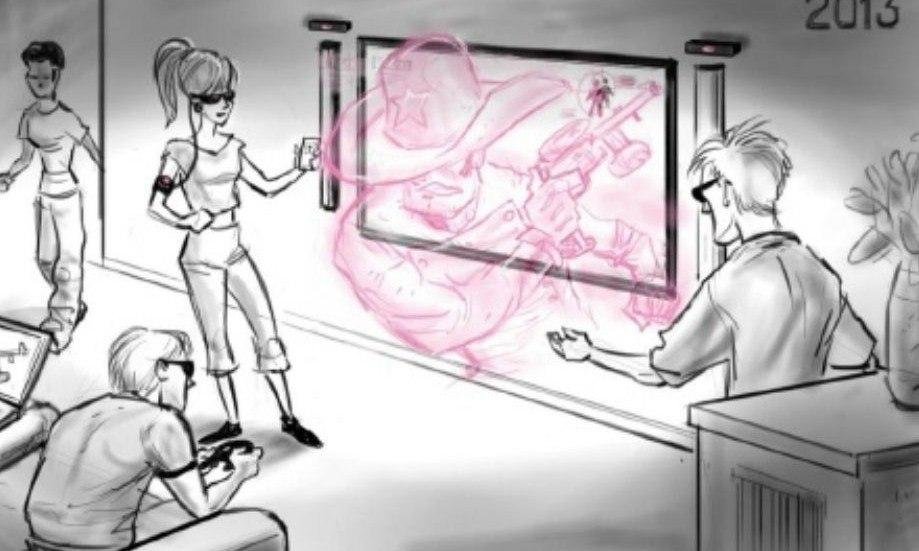
So what is the super-secret Xbox team going to be working on? According to the job ad, it will have something to do with a future iteration of Kinect.

“If you’re passionate about the potential for Kinect to continue to revolutionize entertainment and are a seasoned software engineer with the skills to prototype and build the future of premium Kinect-powered experiences, we have a growing team of talented people who want to take entertainment into the future,” Microsoft said.

We’ve contacted Microsoft for further details about the new Xbox team at Microsoft. We’ll have those details for you as soon as they become available.

It’s possible the new Xbox team at Microsoft is related to the company’s long-rumored virtual reality or augmented reality projects. Microsoft’s Xbox VR headset is reportedly already well into development, however, with an official reveal supposedly scheduled for E3 2015.

What are you hoping to see come out of Microsoft’s new Xbox team? Let us know in the comments below!

16690503-mmmain

by Matt Durr

It’s not uncommon for Joey DeGrandis to spend an entire weekend playing his favorite video game “Runescape,” while connecting with friends and followers online.

On a good day around 300 people will watch the 21-year-old DeGrandis while he plays the game and provides commentary to the action via an online broadcasting tool called “Twitch.”

It’s been a work in progress to build an audience large enough to make a name for himself in the gaming community. But when DeGrandis secured his 3,000th follower last month, he decided the audience was finally large enough to begin a project he had in mind for a long time.

Through the course of an 18-hour gaming session, DeGrandis raised $1,230 that was given to an Ypsilanti pizza delivery driver as a tip just in time for the Christmas season.

“I’ve been streaming for a few months and it’s something I’ve been enjoying,” DeGrandis said. “I always wanted to do something like that, I just never had the means to.

“Once I started streaming to a decent amount of viewers, I finally had the means to do it.”

The plan was simple, DeGrandis accepted donations during the marathon session to be given to a driver who could use the money. DeGrandis filmed the whole thing and broadcast it online so his followers could see how the event unfolded.

He called the Jet’s Pizza located at 1298 Anna J Stepp Rd., just off of Huron Street in Ypsilanti and told the manager about his plan. He asked the manager to send someone who could use the help.

DeGrandis said he chose a pizza delivery driver because he always respected the work they do and thinks they don’t get enough credit for it.

The video of DeGrandis giving a check for $630 to driver Charlie McCormick has garnered around 200,000 page views through various video-sharing websites like YouTube. However, the total tip ended up being $1,230 as viewers kept donating once they heard McCormick’s story via the stream.

Around 3,000 people ended up watching his stream while he was raising money, according to DeGrandis.

“There was tons of positive feedback,” DeGrandis said. “It really resonated throughout the entire community. We could not have asked for a better candidate for the whole thing.”

Since the story of the fundraiser has made the rounds, DeGrandis said he has run into McCormick a couple of times.

“Every time I see him, he seems like the happiest guy in the world. It does seem like it truly changed his life,” DeGrandis said.

Part of the reason why the story resonated with viewers so much centered around a personal tragedy McCormick talked about. Since his mother had passed away in September, McCormick and his family were not going to do much to celebrate Christmas.

“He was incredibly taken aback by that. You could tell that he was very shook up by it,” DeGrandis said. “Once he sat down and started telling his story, that’s when more and more money came in.”

Because the family was still dealing with the loss, the holiday didn’t seem as important as usual.

“That’s when we kind of knew it was going to be really impactful and would make a difference,” DeGrandis said.

After receiving the money McCormick and his family realized they had to make the holiday count and celebrate it as best they could.

“I knew whoever did show up it would make at least their entire month, maybe the year, but I had no idea it would have that much of an impact,” DeGrandis said.

DeGrandis did not know McCormick would be the driver who showed up at his house, but admits he knew McCormick from their days as classmates at Ypsilanti Lincoln High School. While he knew McCormick, DeGrandis said they hung out with different groups of people.

Still, some people questioned the authenticity of the event. DeGrandis said he saw some of the negative comments, and says he just ignores them because he and the people who donated know the money went to a worthy candidate.

“There’s always going to be those kind of people…you can’t really focus too hard on YouTube comments because they’re usually insane,” DeGrandis said.

DeGrandis said he is planning on organizing similar efforts in the future, but will likely change up some of the ways it’s done to ensure people stay interested in donating and to help other people who could use financial help.

mario-kart-81
by Paul Tassi

As I expected, I played a lot of video games over the holidays with family and friends around, and also as expected, I played most of them on the Wii U.

While I’ve played games like Mario Kart and Super Smash Bros. previously, this was the first time I really got to experience them in full, surrounded by other people on my couch. It reaffirmed the notion that Nintendo has produced some of the best games of the year between those two and Bayonetta 2, and the narrative that Nintendo “won” 2014, a year full of otherwise unfortunate news in the gaming industry, holds true.

Nintendo has stepped up with their exclusives in a way Sony and Microsoft MSFT +0.43% haven’t this year. In the endless amount of top ten lists you’ll see littering the internet this time of year, you’ll easily see Mario Kart, Smash and/or Bayonetta on many of them. But if you find more than one or two Sony/Microsoft exclusives, I’d be amazed.

And yet, the argument for the Wii U still is not really an argument for the Wii U. It’s an argument for Nintendo and their ability to make good games. And in turn, that makes us circle back to an old debate. Why does Nintendo have to keep making console hardware?

I worry that 2014, good as it was for Nintendo, will be the year the Wii U peaked. The biggest games of any Nintendo console generation are almost always Smash Bros, Mario Kart and a new Zelda game, and we’re already at two out of three. Yes, Nintendo has many other well-known first party franchises, but those are the big trio, and after they’re out, it’s usually time to start looking ahead to the next system. With Zelda set to (supposedly) debut in 2015, that could be soon, and many are speculating that Nintendo will start talking new hardware shortly. I wouldn’t think this year, but maybe the next.

The way I see it, there are two ways Nintendo could go from here. They could come out with a new, solid piece of hardware that manages to catch them up to the PS4 and Xbox One in terms of power. Not because their current line-up of games looks particularly crappy on the Wii U, but because the relative lack of power combined with gimmicks like the gamepad have resulted in the Wii U losing almost all third party support. A system that could combine their stellar first party line-up with the cross-platform games Xbox One and PS4 share could be gamechanging, and kill the unfortunately true “released on everything but Wii U” meme.

But looking at history, I’m not sure how likely this is. For its last two consoles, Nintendo has been one step behind in terms of the power and scope of their hardware, and their lack of third party support is practically snowballing beyond redemption at this point. As much as I’d love to believe that Nintendo can magically produce a Super Wii that brings them to the generational level of the PS4 and the Xbox One, I’m not sure that will happen.

Rather, the other option is for Nintendo to simply focus on software for consoles rather than hardware. Because the third notion, making another unnecessary, underperforming console, in my eyes, isn’t an option.

I love Wii U games, but I still don’t understand the Wii U itself. From a purely technical perspective, it’s outright worse than its competitors, from horsepower to online capabilities to a hard drive that has less storage space than most of my USB sticks, and can hold about a game and a half before filling up. And that’s the larger version.

But past that, there has been nearly nothing to demonstrate to me why I am better off playing these great games on a Wii U rather than another system. The gamepad was supposed to convince me of this, pitched as a unique way to play, but instead, if anything, it’s a deterrent to the system and even Nintendo hasn’t made good use of it in the biggest games of the year.

When you tap the touchpad of the gamepad screen while playing Smash Bros, the match disappears and you see a simple readout of character portraits and damage percentages in its place, something that adds exactly nothing to the game itself, and actually takes away information. Mario Kart is a little better in terms of what it offers, a horn, a listing of who is in what place, and track map that shows where everyone is, yet it’s impossible to actually use. Looking down even for a half second to try and find data on the gamepad screen is an invitation to instantly hit a wall or wipe out in the game. In other words, trying to use the functionality actually prevents you from performing better in the game.

cff25da1d55e57fc5e14faa16f17a3e2

Past that, the gamepad has missed out on opportunities that should have been slam dunks for the concept. A Pokemon Snap reboot where the gamepad is used as a camera seems like a no-brainer, but a few years into the console’s lifecycle and we haven’t even heard rumors of such a thing. A third party game like Watch Dogs, where the central character uses a touchscreen to do most actions, still only relegated the real-life touchscreen of the gamepad to be mostly a glorified map.

Rather, what the touchscreen seems to do better than anything is drain battery life, as a constantly unplugged, lit-up device like that is bound to have a short fuse. For every one time I charged my Wii U Pro controller, I probably had to recharge my Gamepad four times. In general, the Wii U is incredibly controller-confused, allowing players to use two new-gen controllers, the Pro and the Gamepad, last gen Wiimotes, and now even last-last gen Gamecube controllers through an adapter. Some may appreciate that level of diversity, but to me it just makes the console look messy, and helped to contribute to the initial confusion about whether or not the Wii U was a new console at all. Even as late as last week, I found out I had a game-playing friend who thought the gamepad was originally sold as an accessory to the Wii.

The only real advantage I see for the gamepad is offscreen play when someone else wants to watch TV or play a different system. But outside of that? The point is that without a technically better system, and without gameplay gimmicks that actually contribute to games in meaningful ways, there is just no reason for the Wii U to exist. Nearly every point in its favor has to do with Nintendo continuing to make good exclusive games for it. That’s great, but again, doesn’t do anything to convince me that Nintendo wouldn’t make a hell of a software-only company unbound by lackluster hardware.

The original Wii succeeded because its gameplay gimmick worked. It was indeed a novel concept to swing a Wiimote like a golf club to hit a virtual ball, and the console quite literally became an explosive fad on the back of that tech (albeit a shallow system overall, in my opinion). And with Nintendo’s handheld scene, they’re in a different market position given that their only straight competition is tablets and smartphones, with the Vita barely making a dent comparatively in the space. But the Wii U, with its unnecessary gamepad and 3rd party desert, is being held afloat by a scarce few games alone, with almost no argument at all to be made for the hardware itself.

I don’t understand the comparisons to SEGA whenever this conversation comes up. While it’s true SEGA has fallen a long way since it made consoles, that decline is not directly attributable to their lack of hardware, nor is it a company that can be directly compared to Nintendo. You’ll be hard pressed to name more than one or two truly great SEGA franchises, but you can rattle off a dozen of Nintendo’s with ease.

In this day and age it seems like a tough sell to ask consumers to shell out for a technically inferior console whose sole benefit is the fact that it plays an exclusive strain of games. For as much as I enjoy my time with the Wii U, I can’t say I also wouldn’t enjoy playing Mario Kart or Bayonetta on PS4, a console which could then also play Far Cry, Dragon Age, Mordor, Wolfenstein and the rest of the GOTY top ten. The Wii U exists best as a supplemental system, and in a crowded market where a double console purchase is a hefty proposition, that’s not really a place you want to be.

Maybe I’m wrong. Maybe a handful of solid Nintendo games is enough for those who pick up a Wii U, and the console has moved 7M units to date (to PS4′s 13.5M, with a year’s head start). But for as much fun as my friends and I had while playing Nintendo’s best games these past few weeks, when I asked them if they’d think about buying a Wii U or swapping their PS4 or Xbox One for it, they said no. As much fun as the games were, there were just too few of them released too infrequently, and they were downright stunned when I told them the Wii U had now completely lost major franchises like Call of Duty and Madden altogether. A certain level of third party support was just assumed, but many may not realize how bad it’s gotten.

I hope that Nintendo pulls together to release some kind of Super Wii console that is the best of all possible worlds, but I’m not sure that they can survive another lackluster console like the Wii U, which is only classified has having “won” the year on the backs of its exclusives alone. But the hardware itself is behind the times and an unnecessary hindrance to a wider audience enjoying Nintendo games.

I’m not sure what 2015 will hold for Nintendo, but I do know Microsoft and Sony will be stepping up their exclusives game between Halo 5, Uncharted 4 and so on. As always, I want Nintendo to succeed, but I think they’re becoming further and further isolated in an industry that’s increasingly reliant on collaboration and finding as wide an audience as possible. I’m not sure hardware is required for that, when Nintendo’s greatest strengths are so clearly rooted in software.

dragonball_xenoverse_gameplay

by Ollie Barder

Following the previous story focused trailer for the upcoming Dragon Ball Xenoverse, we now have a nice look at the how the gameplay will work.

As we only saw small snippets of the game in action, it’s nice to see just how fluid the game is going to be.

While it doesn’t show much of the flying, it does show how the combat builds up as well as the overall pacing. There are also small indications of potential environmental destruction too.

In previous games you could blast enemies through mountains and see them shatter, which was quite a satisfying sight. It’s not clear whether this kind of wanton destruction will be present in Xenoverse but I am cautiously optimistic that it will (especially as Dimps also worked on the previous games too).

Signature attacks, like the Kamehameha (seen above), are also shown and look pretty great. It’s also nice to see rapid movement being employed too, as this allows players to effectively teleport short distances and “appear” on the opposite side of their opponent. As you’d expect, that’s a handy technique to have in a brawling game such as this.

The fighting camera is also nicely cinematic, which is interesting. Normally this kind of approach tends to produce rather unwieldy games, especially for arena brawlers, but it looks like it could be alright in this instance. Obviously the signature attacks get more of an fixed camera treatment but those are the pay off, so less of a potential problem.

The game will be released first in Japan on February 5th and then a few weeks later in Europe and then the US.

I will be definitely picking this up on launch and give it a good going over.

hacker-copy-1-762x428

By Joe Tidy, Sky News Reporter

A hacker who claims to be behind the Christmas Day cyber attack on computer games consoles has told Sky News he wanted to expose poor security.

The man – known as Ryan – said a group of two or three people masterminded the attack and had no regrets about forcing “a couple of kids to spend their time with their families instead of playing games”.

Ryan – thought to be a member of Lizard Squad – admitted that he and his team of hackers considered the attack a “sort of a game”, and partly did it for their own amusement.

In an interview from Finland, over Skype, with Sky’s Joe Tidy, Ryan said the hacking team was small and included members who were under the age of 20.

“We have massive capability to take down networks like this,” he said.

“This attack was basically done by three people. We had a couple of people from outside the group helping with the attacks, helping us a little bit, but most of the traffic was coming from one or two people.”

Asked why the team carried out the attack, he said: “Mostly to raise awareness – to amuse ourselves.

“Also one of the big aspects here was raising awareness regarding the low state of computer security at these companies.

“Because these companies make tens of millions every month from subscriber fees and that doesn’t even include purchases made by their customers.

“They should have more than enough funding to be able to protect against these attacks.

“And if they can’t protect against the attacks on their core business networks then I don’t think they’re really doing that much on their overall level of security.

“And these customers are still giving these companies their credit card numbers and such.”

Ryan continued: “It is sort of a game for us I have to admit. I completely understand that it’s a bit unethical.

“I’d be rather worried if those people didn’t have anything better to do than play games on their consoles on Christmas Eve and Christmas Day.

“I mean I can’t really be (inaudible) feel bad. I might have forced a couple of kids to spend their time with their families instead of playing games.”

The Xbox Live status page said on Saturday that Microsoft services had been restored while PlayStation said it was getting to grips with the issue.

But reassurances the networks were returning to normal were met with a mixed response on social media.

Gaming fan Sho Shallow tweeted: “Finally my PlayStation is working. You lot robbed my Xmas.”

But another user, Steh Abner, wrote: “Woke up in a good mood, but I still can’t get on Xbox, so I am not in a good mood.”

The attack on PlayStation Network and Xbox Live services meant downloaded games could not be played and gamers could not compete against others around the world.

komodo-dragon-philip-desmazes-afp-getty

by Jon Fingas

If you’re a console gamer, you’re probably all too aware of Lizard Squad, the hacker outlet that allegedly knocked both the PlayStation Network and Xbox Live offline for a good chunk of the Christmas break. But just why and how is this group causing so much grief? Thanks to the Daily Dot, we now have a better (if imperfect) idea of what’s going on. It might not shock you to hear that the team is doing this both for laughs, à la LulzSec, and to expose the “incompetence” of the security teams at Microsoft and Sony. However, they also claim to have access to undersea internet cables and other “core routing equipment” that lets them flood networks with massive amounts of data. They supposedly bombarded PSN and XBL at a rate of 1.2 terabits per second, or three times the rate of the previous largest attack on record.

It’s tough to know just how capable Lizard Squad really is. It’s fond of bragging, including boasts that the group suffers from “undoxability syndrome” (that is, you could never identify anyone involved). Some would also argue that denial of service attacks like this aren’t all that sophisticated, even if they reportedly required hacks to get all the necessary bandwidth. The group doesn’t appear to be having as much success breaking the Tor anonymity network as it did with Microsoft and Sony. However, there aren’t exactly a lot of hacker outfits that can say they’ve disabled two gaming networks at once — at the least, it’s worth taking the team’s threats seriously.

[Image credit: Philippe Desmazes/AFP/Getty Images]