11168009_10153340426555851_586959447912698479_n

by L.W. ‘Sarge’ Barker, President

We lost one of our own this week. Reuben James Karnagerulz was an outstanding Executive Officer and loyal friend who dedicated the past 6 years of his life to the betterment of Gamer’s Outpost LLC.

Reuben was also a fighter whom I deeply admired for his zest for life. Whether it be a  Zombie Run, Comic Book, Cosplay and or Gaming Convention, Charitable event, or even Storm Chasing, Reuben was always at its core, never allowing health issues to prevent him from enjoying life while always placing others above himself.

For example, Reuben would often game on behalf of the sick kids of St. Jude’s Children’s Hospital via the Extra Life Charity for hours on end. And he would not stop until his set monetary goal was accomplished.

1276186_224508121040562_321231558_o

And it was his love of gaming and our overall community which brought Reuben to us in 2013 where he quickly worked his way from the rank of Editor to becoming our Executive Officer of Public Affairs and Marketing. He held this position honorably, even writing our official Mission Statement.

Reuben was the proud winner of our Annual Editor Award in 2016 and 2017 respectively. This program meant a lot to him, so to honor his memory, it has been renamed The Reuben James Karnagerulz Juarez Editor of the Year Awards.

Reuben will never be forgotten by our organization. He holds a special place with us, his “adopted gaming family”. I will miss his “night owl” wisdom when we bantered about the business from late at night into the early hours of the morning.

“Thank you” Reuben. Rest in peace my friend.

79370315_2595567157155690_7165262578065604608_o


6b8db3b966da34c61fcf6f936a20b1b3

The next generation Xbox got a big reveal last week, with a first look at the box itself and a name: Xbox Series X.

The Xbox Series X is part of the fourth generation of Xbox from Microsoft, following the original Xbox, the Xbox 360, and the Xbox One generations.

It’s quite a list of names, especially compared to the dead simplicity of Sony’s PlayStation line which starts with the PlayStation 1 in 1995 and runs through to the upcoming PlayStation 5 that’s scheduled for 2020.

But there was something particular about the way that Microsoft revealed the name of the Series X:

927dc06df645db04b01617518c86f0c8

Microsoft / The Game Awards

Do you see it?

“THE NEW” is tiny, followed by “XBOX” in huge letters, and then “SERIES X” in medium-sized letters below that.

Like this:

b2d1dff8b24b0972815dec80d938be74

Upon closer inspection, it appears that “Xbox” is the make and “Series X” is the model — as if the name going forward for Xbox consoles is simply “Xbox.”

It turns out there’s a good reason for that.

“The name we’re carrying forward to the next generation is simply Xbox,” a Microsoft representative told Business Insider, “And at The Game Awards you saw that name come to life through the Xbox Series X.”

Like the first Xbox generation, the next one is simply named “Xbox.”

It’s a basic rebranding, but a meaningful one that could help to simplify the Xbox line for interested consumers. It also clarifies Microsoft’s intention with its console line.

“Similar to what fans have seen with previous generations, the name ‘Xbox Series X’ allows room for additional consoles in the future,” the Microsoft rep told us.

28f1d7a6856eb950de2ce0e4c68332c0

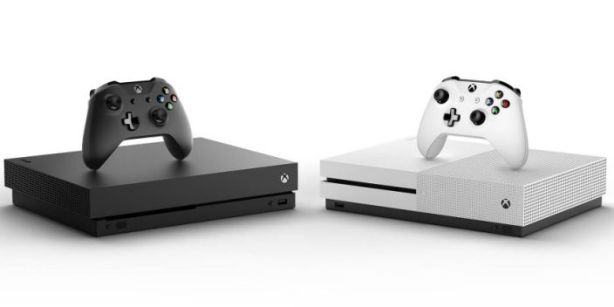
Currently, there are two models of Xbox One: The Xbox One X and the Xbox One S. Both came out after the original Xbox One, which launched in November 2013.

For several years, Microsoft also offered that Xbox One, which looked different from both of the consoles seen above. All three of these consoles are part of the “Xbox One” generation, which tracks with 2013 to present day. They all play the same Xbox One games, though the Xbox One X is technically far more powerful than the other two boxes.

Confused yet?

That’s exactly why Microsoft is simplifying its naming convention going forward. At the same time, of course, the statement indicates that Microsoft is already working on other versions of the next-generation Xbox — something that lines up with repeated rumors of a disc-less, streaming-focused Xbox. Microsoft isn’t saying just yet, though. “We’re excited to offer fans a glimpse at the next generation of gaming with Xbox Series X,” the rep said, “But beyond that, we have nothing further to share.”

One thing is clear: That “Series X” bit isn’t so important — it’s just Xbox from now on.

Check out the intro video for the new Xbox right here:

Visit us at https://www.gamersoutpostllc.com/ ❤

d617a7fa36fc4411eb9e3a3e95956ba9

(Bloomberg) — GameStop Corp., the ailing video-game retailer, plunged as much as 19% after posting a third-quarter loss that was larger than even the most dire Wall Street estimate.

The adjusted quarterly loss came to 49 cents a share, the merchant said Tuesday. The most pessimistic analyst had expected a deficit of 16 cents. Sales plummeted 26% from a year earlier to $1.44 billion, and GameStop also reduced its forecast for the year.

The shares tumbled to as low as $5.25 in their worst decline in three months. The stock had lost 48% this year as of Tuesday’s close.

The dismal results came at the start of the industry’s biggest season, with top-sellers including Call of Duty: Modern Warfare and Luigi’s Mansion 3 being released in the period.

The chain has struggled to sustain its revenue as more video-game players gravitate to free online titles that generate money by selling fans online merchandise while they play. The Grapevine, Texas-based retailer, which once boasted annual sales of more than $9 billion, is forecast to finish the current fiscal year with revenue of $7.17 billion, based on analysts’ estimates.

Another headwind: The current generation of game consoles is aging, leaving consumers without a reason to upgrade.

Chief Executive Officer George Sherman blamed “the unprecedented decline in new hardware sales” for hurting sales last quarter, “as the current generation of gaming consoles reach the end of their life cycle.”

Mike Hickey, an analyst at Benchmark Co., described the latest results as “awful.”

The company’s “voyage seems doomed as the digital storm intensifies.”

To contact the reporters on this story: Rob Golum in Los Angeles at rgolum@bloomberg.net;Olga Kharif in Portland at okharif@bloomberg.net;Christopher Palmeri in Los Angeles at cpalmeri1@bloomberg.net

To contact the editors responsible for this story: Nick Turner at nturner7@bloomberg.net, John J. Edwards III, Molly Schuetz

Visit us at https://www.gamersoutpostllc.com/ ❤

call-of-duty-4682628_1280

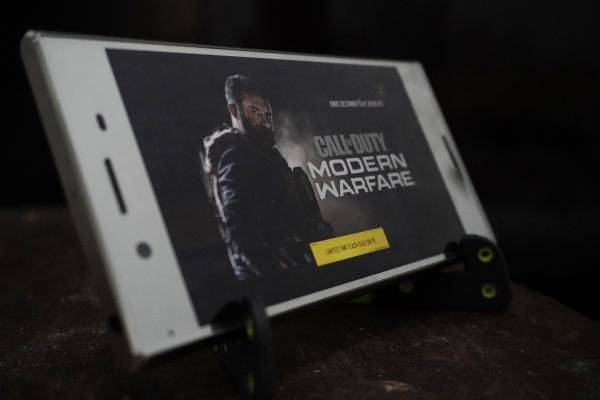
Activision Blizzard, Inc. (NASDAQ: ATVI) rolled out its new “Call of Duty: Modern Warfare” battle pass, along with other new Season One content, a move KeyBanc says makes sense given that the battle pass is becoming the standard gamers are used to.

Why The Battle Pass?

The battle pass model is becoming the industry standard, shifting away from the paid downloadable content model, KeyBanc analyst Tyler Parker wrote in a note.

Under the new “Call of Duty” battle pass, gamers can spend $10 for certain new content that gamers can unlock. The pass replaces the game’s “loot boxes,” which weren’t popular with gamers.

“The battle pass is a more user-friendly version of monetizing the player base and a shift in the right direction,” Parker wrote.

The new system increases engagement, he said, but also provides more opportunities for players to spend more money in the in-game store.

“Assuming the unlockable content remains attractive, we believe the battle pass presents an opportunity to retain users with stable investment over the next year,” Parker said.

KeyBanc has an Overweight rating on Activision Blizzard with a $60 price target.

On Wednesday, the stock was trading up 1.02% at $56.51.

Visit us at https://www.gamersoutpostllc.com/ ❤

“If there is a Snyder cut, I hope it’s better than the one that is out now,” says cinematographer Fabian Wagner.

9286ad00-cb7a-11e7-855e-d08d9ee048bd

by Zack Sharf via IndieWire

Zack Snyder went viral this week after posting a photo of film containers that seemingly contain the much-discussed “Justice League” Snyder cut. Snyder’s post was an attempt to end the debate over whether or not the Snyder cut exists. The director exited “Justice League” after a family tragedy and Joss Whedon was hired by Warner Bros. to oversee reshoots and postproduction. Whedon was also tasked with lightening up the film’s tone. During a recent Q&A (via ScreenRant), the original “Justice League” cinematographer Fabian Wagner weighed in on the recent Snyder cut buzz by saying, “If there is a Snyder cut, I hope it’s better than the one that is out now.”

Wagner has long been critical of Whedon’s “Justice League.” In an interview over the summer, Wagner said he cried all the way through watching Whedon’s drastically different version of the film than Snyder’s. The cinematographer said at the time that watching Whedon’s “Justice League” was so hard he couldn’t figure out how much of the original film was changed in reshoots. “A lot was changed,” he said. “It looked very different.” Now Wagner reasons that Whedon and Warner Bros. threw out 90 percent of what he shot with Snyder. Wagner was not involved in any of the “Justice League” reshoots.

“I did principal photography for Zack. We finished shooting and he started editing,” Wagner said. “We did the color grading for the trailers. So the first three trailers were all things we shot. Then they started reshoots. I wasn’t there. It was a completely different team. They reshot 55 days, I think. The movie that was in cinemas was 10 percent of what we shot. Everything else is a reshoot.”

Snyder’s photo of the “Justice League” film canisters includes a label that reveals a 214 minute runtime. That length makes “Justice League” as long as “The Irishman” at three and a half hours (though it could be so long because it’s possibly just an assembly cut). Although Snyder cut buzz continues to soar, there are no concrete plans as of now to release this version. IndieWire has reached out to Warner Bros. for further comment.

Visit us at https://www.gamersoutpostllc.com/

6f0bdde477fd6a4c014686c2124e6217

by Zack Sharf via IndieWire

The future of the DC Extended Universe might be a question mark, but Henry Cavill says in a new interview with Men’s Health he will not being giving up the role of Superman so easily. Cavill appeared as the Man of Steel in three DCEU films directed by Zack Snyder: “Man of Steel,” “Batman v Superman: Dawn of Justice,” and “Justice League.” Cavill suggests what many fans believe when he says his movies in the DCEU got progressively worse.

According to Cavill, his Superman origin story “Man of Steel” was “a great starting point. If I were to go back, I don’t think I’d change anything.” The actor believes “Batman v Superman” is “very much a Batman movie. And I think that realm of darkness is great for a Batman movie.” As for “Justice League,” Cavill’s thoughts are blunt: “It didn’t work.” “Justice League” was overhauled by Joss Whedon after Snyder left the project due to a family tragedy.

Cavill has not played Superman since “Justice League” and Warner Bros. has not announced any plans for a new Superman movie. The studio has taken different routes with Cavill’s “Justice League” co-stars. Gal Gadot is returning as Wonder Woman in Patty Jenkins’ “Wonder Woman 1984” (June 5, 2020), while Jason Momoa will follow last year’s one billion dollar grosser “Aquaman” with a sequel (December 16, 2022). Ezra Miller’s standalone Flash movie has gone through several different iterations but is currently on track to be directed by “It” filmmaker Andy Muschietti. Affleck exited his role as Batman, but Warner Bros. is rebooting the Caped Crusader with Robert Pattinson and director Matt Reeves for “The Batman” (June 25, 2021). Superman is the only “Justice League” character without a movie in development.

“I’m not just going to sit quietly in the dark as all this stuff is going on,” Cavill told Men’s Health of the rumor his time as Superman has ended. “I’ve not given up the role. There’s a lot I have to give for Superman yet. A lot of storytelling to do. A lot of real, true depths to the honesty of the character I want to get into. I want to reflect the comic books. That’s important to me. There’s a lot of justice to be done for Superman. The status is: You’ll see.”

Next up for Cavill is the Netflix fantasy series “The Witcher,” which debuts December 20. The streaming giant has already picked up the show for a second season.

Visit us at https://www.blackdollindustries.com/

49e5bf20-082f-11ea-b7ed-a123743d3534

by Gregory Wakeman via Yahoo Movies UK

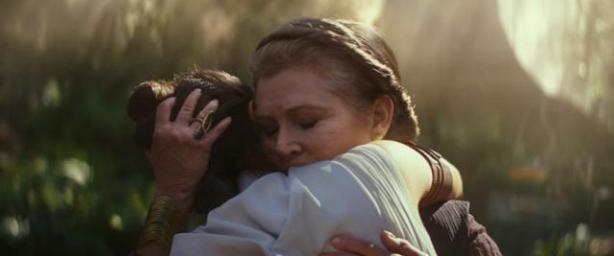
The death of Carrie Fisher at the age of just 60 in December, 2016, was a tragedy that rocked the world of cinema.

It was especially tragic for Star Wars fans because, while Fisher returned as Leia Organa in The Force Awakens and The Last Jedi, it has long been rumoured that the beloved character would feature much more prominently in the ninth installment, which we now know is called The Rise Of Skywalker. 

Leia will still be in The Rise Of Skywalker, though, as J.J. Abrams is going to incorporate deleted scenes from The Force Awakens, which he also co-wrote and directed, into the blockbuster.

Abrams has now opened up about this process, saying Leia’s involvement is uncanny, while insisting that they still got to tell her story in the way that they’d originally envisioned.

8c1b83c0-082f-11ea-aef7-c13c8df58826

“There are scenes where she’s interacting with other characters in a way that is uncanny,” Abrams told Total Film. “Hopefully, if it works, it will be an invisible thing and if you didn’t know, you would never know.”

“But we got to tell the story with Leia that we would have told had Carrie lived. And that’s kind of incredible.”

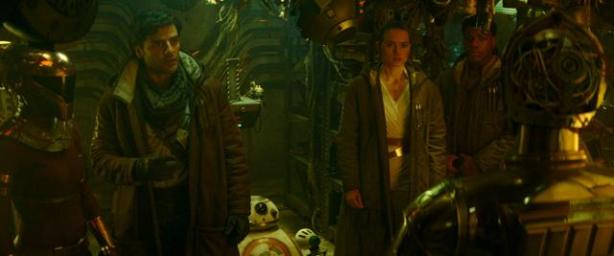
Of course, we now don’t have that long to see what Abrams does with both Leia Organa and Star Wars: The Rise Of Skywalker, as the ninth and concluding part of the Skywalker saga is going to be released on December 20th.

The Rise Of Skywalker will revolve around Daisy Ridley’s Rey, John Boyega’s Finn and Oscar Isaac’s Poe Cameron coming together to take on Adam Driver’s Kylo Ren and the remaining First Order.

It’ll also be the last big-screen Star Wars story we see for a while as Disney have already revealed that the franchise is going to go on hiatus after its release.

Visit us at https://www.blackdollindustries.com/

Sonic

by Connor Sheridan via Total Film Magazine

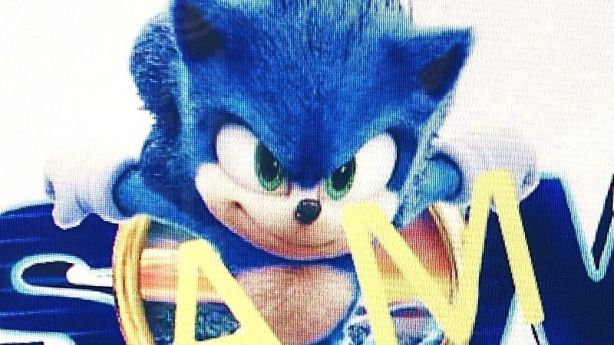
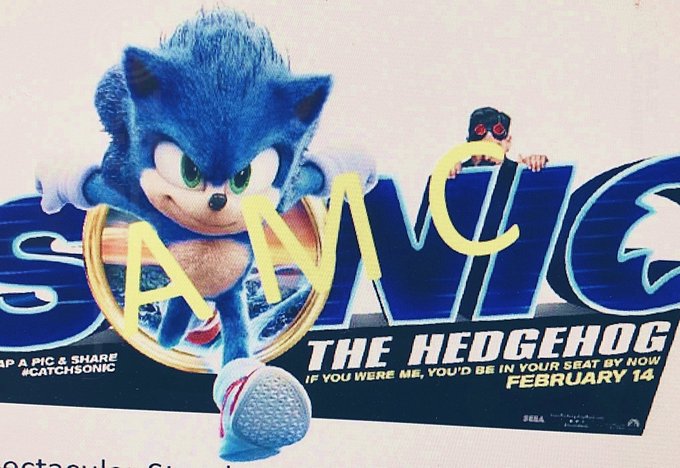
The Sonic the Hedgehog movie’s redesigned protagonist appears to have been revealed.

His new look seems to be a heck of a lot closer to the speedy blue mammal you know from the games, after an early trailer promoted a vocal backlash from fans. Physical advertisements for the movie that show Sonic with a much less frighteningly human head have been spotted by eagle-eyed Twitter users. In fact, if you didn’t look too close, you might think it was just an extra-furry version of Modern Sonic.

Tails’ Channel | Sonic the Hedgehog News & Updates@TailsChannel

Here’s a wider picture of the allegedly leaked redesigned standee image. Source is also unconfirmed.

View image on Twitter
The original movie design for Sonic the Hedgehog gave him an upsettingly human-looking face (and teeth), giving him the overall effect of being a muscular child in a furry blue onesie. The redesign restores his skinny limbs, his white gloves, and his trademark lopsided smirk. It almost gives him back his old connected goggle eyes, though it doesn’t go quite that far into cartoon territory. The biggest remaining difference from the game version now, aside from having individually rendered fur/quills, is that his arms are still blue.

No official announcements have been made about Sonic’s new look so far, aside from the movie’s producer saying that “the fans have a voice in this too”, but the appearance in that leak lines up with another one spotted in October.

pablothinghouse@pablothinghouse

at this point its going to spread like wildfire, i posted the image to the public first and i didn’t take a photo.

View image on Twitter
The Sonic the Hedgehog movie was originally due to hit theaters this week, but it was delayed because of the overwhelmingly negative response fans had for the original design. It looks like fans are much more pleased with the new version, so hopefully the movie as a whole will be similarly well received when it hits theaters on February 14, 2020.

Visit us at https://www.blackdollindustries.com/


fc02a4f634abd83620e4241b34b4ea97

by Cameron LeBlanc via Fatherly

If you’re a Netflix subscriber who relies on an older Samsung TV or Roku streaming device, your days of watching Stranger Things could be numbered if you don’t invest in some new equipment.

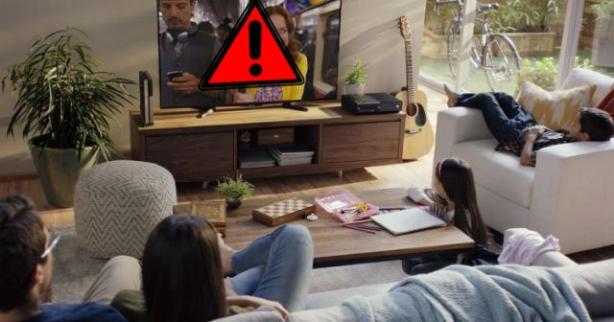
On December 1, certain older Samsung TV’s and Roku streaming devices will lose access to the streamer due to “technical limitations.” If your device is affected, you’ve likely seen this error message and/or received an email from Netflix warning you of the impending loss of compatibility.

Unfortunately for those of us trying to understand the situation, no one seems to understand what, exactly, those “technical limitations” are. It could be that they don’t want to dedicate developer time and effort to writing software for devices that are no longer widely used. It could be a conspiracy to sell new equipment. It could be something entirely different. But the fact that none of the three companies is eager to provide exonerating details suggests that something less than consumer-friendly is afoot.

Clues are, unfortunately, scant. Engadget says that if your Roku can’t autoplay the next episode in a series—a key feature that keeps people watching passively—it will no longer be supported.

A Roku spokesperson told Digital Trends that the Roku 2050X, Roku 2100X, Roku 2000C, Roku HD Player, Roku SD Player, Roku XR Player, Roku XD Player are among the devices affected. It’s unclear if this is a complete list.

Samsung has been even less specific, stating on its website just that “Some older Samsung smart TV’s are affected by this change.”

If you lose access to the streamer, you can check out Netflix’s list of supported devices. Because unfair as it may be, dropping some cash on a new streaming device is probably worth it if you’re already invested in the latest season of The Great British Baking Show or any other the thousands of other Netflix titles.

Visit us at https://www.blackdollindustries.com/

Guillermo del Toro, Mads Mikkelsen, Lindsay Wagner, Margaret Qualley, and Norman Reedus star in a video game that doubles as one of the year’s best cinematic experiences.

Death-Stranding-logo

by David Ehrlich via IndieWire

Hideo Kojima’s “Death Stranding” is massive, moody, and — as usual for the video game auteur — weird as hell. The open-world experience has enough contemplative moments to make it feel like a “Grand Theft Auto” sequel directed by Andrei Tarkovsky, and it’s the greatest achievement yet from themost eccentric and forward-thinking designer of a medium in which virtually every large-scale project is created by committee.

“Death Stranding” could be described as the best “video game movie” ever made, but that doesn’t quite capture what makes it feel special. Is it a film that you play? A game that you watch? Does it invite all of the same criticisms that have been leveled at Kojima’s work since last century? Yes, yes, and yes. At a time when video games can finally look like movies as much as movies have started to look like video games — when people like Kojima and James Cameron are working towards similar ends with many of the same techniques — Kojima has created a bizarre masterpiece that doesn’t just blur the line between these mediums, but also illustrates the power of knotting them together.

“Death Stranding” begins with a quote that distills the ethos of his entire career. It’s a key excerpt from a Kōbō Abe novel called “The Rope,” and the words dangle in front of you for just a moment before they’re replaced by some cryptic narration about the Big Bang:

“The rope and the stick are two of humankind’s oldest tools. The stick to keep evil at bay, and the rope to bring that which is good closer. Both were the first friends conceived by humankind. The rope and stick were wherever humankind was to be found.”

Most video games think of a controller as the stick. Kojima, an obsessive cinephile who abandoned his filmmaking dreams in order to pursue a form of storytelling that can reach beyond the confines of a screen, has always thought of a controller as the rope. “We don’t need a game about dividing players between winners and losers,” he once wrote in his now-defunct Rolling Stone column devoted to the intersections and overlaps between digital media, “but about creating connections at a different level.”

Kojima has been trying to make that game for at least 21 years. It’s a journey that can be traced back to September 1998, and one of the most famous moments in the history of interactive entertainment. Anyone who’s played “Metal Gear Solid” already knows what I’m talking about: Psycho Mantis, the telepathically enhanced fourth boss that you encounter in Kojima’s landmark tactical espionage game, begins to read the player’s mind. He starts with some parlor tricks, as the leather-clad bad guy makes the player’s controller rumble as evidence of his power. Even back then, that part was kind of a yawn. Psycho Mantis gets a bit more personal from there, scanning the player’s memory card and citing some of their favorite recent Konami games; a fun and clever gambit, but more of an advertisement for the developer’s other products than anything else.

Then Psycho Mantis breaks your television.

The screen cuts to black, the music stops, and the controller becomes a worthless hunk of plastic in your hand. The word “HIDEO” appears in the upper-right corner of the screen, written in the blocky lime green letters the television industry once adopted as a universal symbol for “Input.” When the image eventually winks back to life, Psycho Mantis is invincible, essentially predicting the player’s every move. But, as with many of the bosses strewn across the “Metal Gear” saga, there’s a hidden secret that makes beating him a breeze: Players have to get off their butts, go over to their Playstations, and plug their controller into a different console port.

People complained that the cut-scene-heavy “Metal Gear Solid” was more of a movie than a game, but one moment was all it took for series mastermind Kojima to shatter the fourth wall that had sealed off the art form since its inception. Since then, Kojima has only grown more obsessed with bridging the gaps between fiction and reality; cinema and gaming; ropes and sticks.

Kojima’s latest is set in a post-apocalyptic world a few generations since a mysterious event known as the Death Stranding ripped civilization apart at the seams. The precise details of what happened are portioned out across the epic adventure (which this critic finished along with a decent number of sidequests in about 60 hours), but the gist of it is that something awful caused the world of the dead to be transposed over the world of the living.

When two distinct planes of existence merged together, in the blink of an eye, America — and maybe the rest of the Earth along with it — was overrun with invisible monsters called BTs. The sky began to rain a water-like substance known as “Timefall,” which rapidly ages any skin or metal that it touches. Human corpses started to melt into black pools of chiral crystals, and many of the bodies caused “voidout” explosions. The survivors, meanwhile, retreated into small underground shelters across the country where they isolated themselves out of fear and preservation. The country had been growing distrustful and remote from itself for some time, and the Death Stranding just hastened the inevitable.

You play as Sam Porter Bridges, an immortal delivery man who schleps cargo around the Eastern seaboard so that he doesn’t have to dwell on his tragic backstory (Sam is embodied by a 3D photogrammed Norman Reedus, whose moving performance never steps foot in the uncanny valley). Eventually, he’s tasked by his adopted mother — the dying President of the United States — to embark on a coast-to-coast trek to reconnect people to the chiral network and “Make America Whole Again.” In a game that grapples with how America’s failed potential curdled into an extinction-level event, this early quote will not be the most explicit reference to Donald Trump.

But the internet is not an inherently benevolent force, and the story of “Death Stranding” is framed against our current darkness, an age defined by real walls along imaginary borders, industries that are burning up the planet they were invented to power, and social networks that bring people together in order to tear them apart. There’s no telling if rebuilding the country’s bridges will be for the best; no telling if Sam is bringing people the rope or arming strangers with the stick.
MAma-1600x800-e1572615806806

So far, so relatively normal for this kind of thing. Built on the engine used for “Horizon Zero Dawn,” the gameplay itself is par for the course as well, with fun but clumsy combat sequences interjected between long and contemplative sequences of walking between distant outposts and sneaking around whatever monsters you might find along the way. It’s a testament to the ingenious cargo mechanics and the staggering world-building that you never really stop to consider that you’re role-playing as a glorified Amazon courier.

But Kojima hasn’t gone straight. This is someone whose Brechtian instincts and John Carpenter-inspired sensibilities have combined for many of the most daring and peculiar experiments in video game history. (Just ask anyone who beat “Metal Gear Solid 2: Sons of Liberty.”) He’s used his acrimonious split from Konami to follow his muse like never before: “Death Stranding” soon reveals itself to be the strangest thing Kojima has ever made.

The pre-title sequence alone contains some of the most arresting, unusual imagery that games have ever seen: Sam meets a Léa Seydoux character named Fragile, fends off a BT, has an Oval Office encounter with a death mask-wearing cabinet member who refers to himself as Die-Hardman (Tommie Earl Jenkins), re-enacts “The Ballad of Narayama” with his mother’s body, and finds himself outfitted with an adorable fetus “Bridge Baby” who can sense BTs when connected to Sam via a synthetic umbilical cord.

Players carry BB in a chest pod and have to soothe him when he cries out at you through the speaker embedded in the Playstation controller; maybe these are just the sentiments of an expectant father, but the emotional bond you eventually form with the little guy is deeper and more primal than anything a game has manufactured this side of “The Last of Us.” The connection between them even resonates with enough power to survive the “Irishman”-length expository monologues that suck the life out of the game’s “End of Evangelion”-inspired final chapters.

But if Kojima’s storytelling can be so convoluted and grandiose that it makes the finale of “Metal Gear Solid 4” feel like Chekhov, his vision has never been clearer. The prologue ends with Sam being roped into a rescue mission that devolves into the most spectacular and terrifying set piece I’ve seen in any medium this year. By then, there’s no doubt that Kojima has followed his own strange path to become the director he once dreamed of being.

And just when it’s starting to feel like “Death Stranding” is the greatest movie that Guillermo del Toro never made, the iconic “Pacific Rim” creator shows up in the game as a BB-obsessed NPC called Deadman. Del Toro, who previously collaborated with Kojima on the aborted “Silent Hills” and the Escher-like “P.T.” that it left behind, only lends his likeness to the character (voiced by Jesse Corti), which leads to some major cognitive dissonance for anyone who’s ever heard him talk before.

gn-gift_guide_variable_c-1

But his appearance, and the perceptual clash that it causes, speaks to the heart of a game that’s about the schisms between and inside us; a game that treats ancient Egyptian ideas about the body and soul with peer-reviewed seriousness, uses a non-proprietary system of Facebook-esque “likes” as its currency, and leaves you with an entire language worth of Kojima’s pseudo-scientific philosophies about our own conflicting states of being (drink every time someone says the word “Beach” and you’ll be necrotizing before you know it).

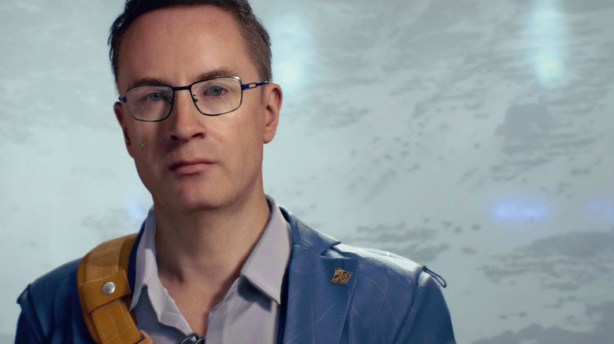
Del Toro’s disembodied role indicates how giddy “Death Stranding” is about its own cinephilia, even by the standards of an auteur whose “Dune”-level dense “Metal Gear” franchise extrapolated some “Escape from New York” references into an entire alternate history of the Cold War. Nicolas Winding Refn lends his likeness to a very amusing major character named Heartman who goes into cardiac arrest every 21 minutes, two other very recognizable directors play bit parts, and the world is strewn with pre-Stranding relics such as the score to Dario Argento’s formative giallo masterpiece, “Deep Red.”

But the filmic nature of “Death Stranding” goes much deeper than nods and detritus and the presumption that the game’s primordial landscape more closely resembles contemporary Iceland than post-apocalyptic Baltimore due to Kojima’s affinity for “Prometheus” and its sequel (a fitting backdrop for a soundtrack powered by the American-Icelandic band Low Roar, whose lovely electronic post-rock ballads sound like a ray of sunlight breaking through the clouds). The most movie-like thing about it stems from the famous actors (no spoilers here) who reconcile the “ha” and “ka” of it all by voicing their own digital avatars. Kojima directed them in much the same way that Rupert Wyatt and Matt Reeves directed Andy Serkis in the recent “Planet of the Apes” trilogy, and the results are spectacular.

Not only does Sam Bridges so closely resemble Norman Reedus that you lose sight of the distance between them, but the fact that he’s played by such an obviously real and recognizable person makes it so much easier to believe in the porter’s humanity. “The ability to control real actors is unique to the fiction of games,” Kojima wrote while developing “Death Stranding,” “and it leads to a more realistic experience; and that is the shared aim of gains and movies alike.” In its own demented way, the verisimilitude of “Death Stranding” is off the charts.
death_stranding_heartman

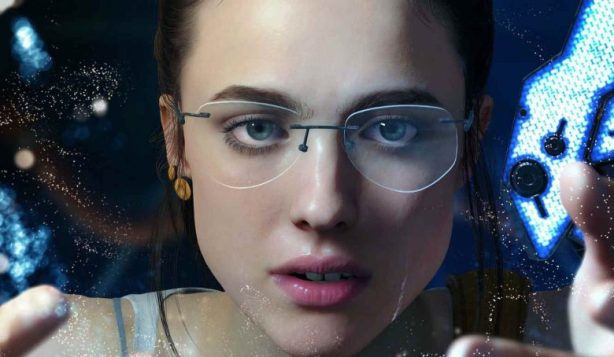
Margaret Qualley helps prove that point. The “Once Upon a Time in Hollywood” star is so expressive that she leaps off the screen even as a hologram, but her layered performance as a tech-head named Mama becomes truly devastating once the character shows up in the flesh. The palpable weight and emotionality that Qualley brings to the role allows Mama to veer off in some wild directions that would feel silly if they weren’t so raw. Mads Mikkelsen is scary and poignant in a role that I couldn’t explain if I tried, but Kojima keeps this strand of the story from fraying apart by using a series of classic film tropes as footholds. And the Bionic Woman herself, Lindsay Wagner, carries the weight of the world as both President Strand and her twentysomething daughter Amelie, as Kojima more seamlessly de-ages the 70-year-old actress than “Gemini Man” could ever dream of doing. The strained bond between the past and the present is crucial to a story in which time causes far more wounds than it heals, and Wagner’s double-sided turn is able to trace a powerful line between them.

Some of these scenes are so drunk on their own nonsense that they leave you scratching your head. Others are so tender and well-composed that they take your breath away. All of them are so rapturously expressive that Kojima no longer has to rely on his old meta-textual trickery. And yet, in characteristic fashion, the most indelible moments of all manage to tie filmic and gaming devices into an inextricable knot that use the conventions of one medium to subvert the expectations of another.

I wouldn’t dare spoil a demented, exasperating stretch in the penultimate chapter, but suffice it to say that cinematic traditions crash into the game’s longest cut-scene with such destabilizing force that it’s hard to make sense of what you’re watching. You forget that you’re playing a mega-budget product that’s sure to sell millions of copies the world over — that you’re not the only person alive who’s bearing witness to it. Kojima uses game language to remind you how isolating a screen can be, and then in the subsequent climactic sequence (which hardly requires you to hit a single button), uses film grammar to expand the kind of stories that video games have been able to tell.

It’s BB who makes this effect most obvious, as the dramatic cut-scenes involving the big-eyed fetus make you more reactive to it during gameplay, and its various coos and cries during gameplay render you more invested in it as a character. As Deadman repeatedly observes, BB evolves from one kind of tool to another over the course of “Death Stranding.” Its nature and abilities never change, but the way that we and Sam think about it does.

As a whole, “Death Stranding” itself is the same way. The game starts by putting a stick in your hand, only for the controller to slowly become a rope as players guide Sam to unify a broken world over the course of the 60 hours that follow. Players are elated when they finally receive guns that work against the BTs, only to find that the bullets draw from your own blood — fire too many and you’ll die. Ladders, climbing lines, and 3D-printed postal boxes are some of the most rudimentary tools you’re given, but they only grow more powerful as other players on the Playstation Network begin to use them on their own quests (a brilliant riff on how the “Dark Souls” franchise twists the hostility of online gaming towards the better angels of our nature).

“Death Stranding” bends a wide array of modern tech back towards the most basic aspirations of art: It affirms that we’re alive, that we’re connected, and that humanity will always have reason to hope because our extinction and salvation are made possible by the same tools. The stick can prod us into action, and the rope can be fashioned into a noose; a movie can alienate, and a game can unify. What something does is only defined by how we use it. If we’re not careful, every new means of bringing us closer together can become a method for pulling us apart.

Like global warming and the spread of the internet, the singularity between film and video games has become inevitable; at this point, we only have the power to manage it. But “Death Stranding” finds that every cataclysm is its own opportunity, and that the end of one thing is the beginning of another. Kojima believes that the future will only destroy us if we don’t allow it to bring us together, and he’s never found a better way of delivering that message.

“Death Stranding” is available November 8 on the Playstation 4.

Visit us at https://www.blackdollindustries.com/