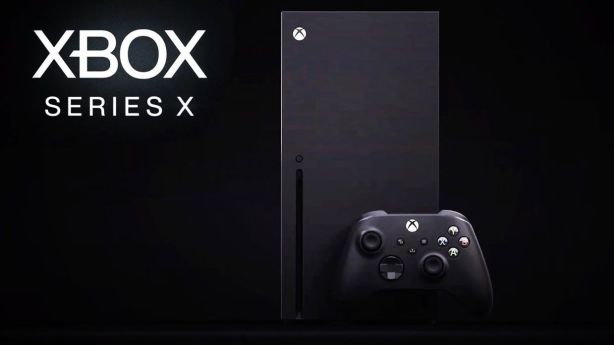
The measure should improve network stability as more isolated gamers go online.

03d4a0580db024bc7fb16709e44de10f

by Marc DeAngelis via Engadget

Earlier this week, both Sony and Microsoft announced that they would follow the lead of many streaming companies and limit the bandwidth of their gaming services in Europe amid the coronavirus pandemic. Today, Sony updated PlayStation fans, saying that it will take similar measures in the US. By capping download speeds, the company hopes to maintain network stability as more and more people resort to gaming to pass the time while social distancing. Sony says gamers should expect slower game downloads, but assures them that they will experience the same robust gameplay as normal. In other words, it sounds like Sony isn’t planning on throttling traffic for online games — just file downloads.

With the majority of people working from home and so many people killing time streaming music, movies and games, networks are hit with intense amounts of traffic. Hopefully these measures will help preserve network stability so people can continue enjoying them. Microsoft hasn’t announced any updates regarding Xbox’s network services in the US. That said, PlayStation gamers hoping to play Doom Eternal this weekend may want to start their download sooner rather than later, and Xbox gamers might want to download the game while Xbox Live is still operating at full speed.

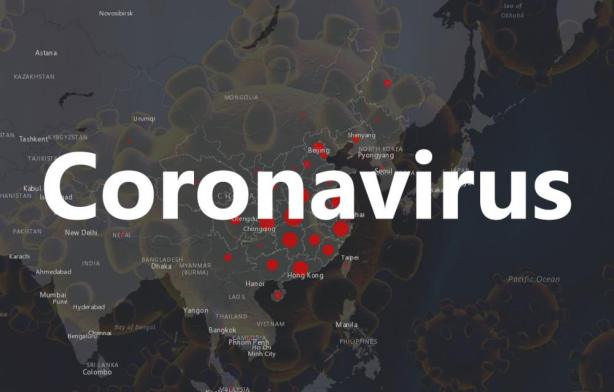
Coronavirus-dashboard-000

by Matthew Gault via Time

As many people around the world limit their time outdoors for fear of the coronavirus, one might think it’s a boon time for the video game industry, which can provide a form of entertainment that isolated people so desperately need.

But in reality, the outbreak could not have come at a worse time for the gaming business. Concerns over the virus, which can cause potentially deadly health complications, have led organizers to postpone a major industry event where designers often make big publication deals, potentially killing the next Fortnite in the cradle. Furthermore, it threatens to wreak havoc with the industry’s supply chain just as Sony and Microsoft, two of the industry’s biggest competitors, are gearing up to release their next big consoles later this year.

News that the Game Developers Conference, or GDC, was being rescheduled came down late Friday. “After close consultation with our partners in the game development industry and community around the world, we’ve made the difficult decision to postpone the Game Developers Conference this March,” reads a statement from the show’s organizers. “Having spent the past year preparing for the show with our advisory boards, speakers, exhibitors, and event partners, we’re genuinely upset and disappointed not to be able to host you at this time.”

While GDC isn’t as much of a public festival as, say, E3, it’s a hugely important event for those in the industry. Big-name games publishers will be largely unaffected by the show’s postponement, but it could be a massive blow to small indie developers. Many indie designers spend considerable amounts of energy and treasure banking on GDC as a means of striking a publishing deal or getting publicity. GDC’s organizers are refunding the cost of entry, but it may be harder for indie developers to claw back their airfare, hotel fees and other related expenses.

“For a lot of [independent developers], this is the one event they go to,” says Rami Ismail, co-founder of Dutch indie games studio Vlambeer. “This is quite a blow … this might be career ending.”

merlin_168118896_6006f1c7-043c-489c-9091-8e48d3a706b2-videoSixteenByNineJumbo1600

It’s a blow to gamers, too: Ismail says the show’s postponement might mean some indie games that might have been the next big thing may never see the light of day. “If you’re an independent CEO who’s been working on a game for a year and a half, had money for a year, but pushed through on no money at all for a few months to get a build ready for GDC so that you can pitch a publisher … now all those games may be dead,” he says.

Keep up to date on the growing threat to global health by signing up for our daily coronavirus newsletter.

Still, some in the gaming business say postponing GDC was the right move. “It’s a good thing that companies prioritized keeping their employees safe even if some might consider the fears overblown,” says a senior employee at a major gaming studio who spoke with TIME on condition of anonymity for fear of alienating others in the industry. “I’m glad that GDC finally decided to defer the event, although it’s obviously still tough for anyone traveling there on their own dime, especially considering how expensive a badge is to begin with.”

And while the coronavirus is indeed causing a spike in short-term demand for video games and consoles, it could prove challenging for the industry to keep up. Nearly 90% of video game consoles in the U.S. were made in China — the heart of the coronavirus outbreak — according to Daniel Ahmad, a senior industry analyst at Niko Partners. As employees there are being kept away from work to avoid spreading the virus, it’s resulting in production shortfalls across all sorts of sectors, gaming included. Nintendo says it can’t make enough Switch consoles to meet demand, Facebook is having similar problems with its Oculus Quest VR headset, and Sony is preparing for a dip in PlayStation 4 production. Other technology firms outside gaming, like Apple and Huawei, are also struggling with supply chain issues amid the coronavirus outbreak; Apple supplier Foxconn has even begun making surgical masks.

Ahmad says that the gaming industry should be fine if the coronavirus outbreak can be “contained within the next month or two.” But Panos Kouvelis, a supply chain expert at Washington University in St. Louis, thinks the industry should prepare for the worst — especially as Sony and Microsoft are working to release their PlayStation 5 and Xbox Series X consoles, respectively. “Right now, the factories in China are trying to start ramping up, but they’ll be constrained by labor … so the ramping up is going to be rather slow.”

Kouvelis says that many of the factories making semiconductors, a key component of video game consoles, are highly automated, giving manufacturers confidence that they can avoid coronavirus-related shortfalls. But he also cautions that the virus could complicate Sony and Microsoft’s release schedule, though neither have yet indicated they expect any delays. “When you have these new product development cycles, there are things that aren’t that easy to substitute,” he says. “The impact on the industry will be significant.”

Visit us at https://www.gamersoutpostllc.com/ ❤

by Mike Snider via USA Today

Atari. Magnavox. Intellivision.

Each evokes memories of the golden age of video games, which brought the first wave of consoles you could connect to your home television.

But there’s an oft-forgotten person from that era whose contributions to the industry still resonate today: a black engineer named Jerry Lawson.

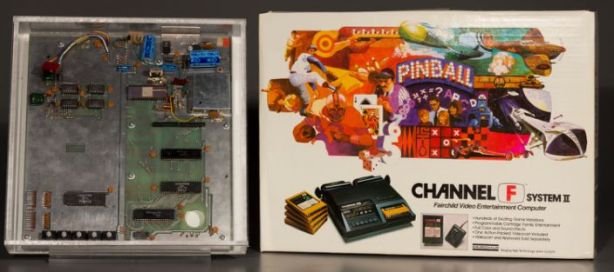
Lawson oversaw the creation of the Channel F, the first video game console with interchangeable game cartridges – something the first Atari and Magnavox Odyssey systems did not use.

Those initial consoles had a selection of games hardwired into the console itself. (The Magnavox Odyssey, released in 1972, also used game “cards,” that were printed circuit boards, but did not contain game data as the subsequent cartridges did.)

But Lawson, an engineer and designer at Fairchild Camera and Instrument Corp., led a team at the Silicon Valley semiconductor maker charged with creating a game system using Fairchild’s F8 microprocessor and storing games on cartridges.

7259258cf56a878e8930e256eb704ca2
Jerry Lawson, who oversaw the creation of Fairchild Camera and Instrument Corp.’s Channel F home video game system, the first to use interchangeable game cartridges; shown here in a scanned photo from Black Enterprise magazine.

“A lot of people in the industry swore that a microprocessor couldn’t be used in video games and I knew better,” Lawson said during a speech at the 2005 Classic Gaming Expo in San Francisco posted on YouTube.

The Fairchild Video Entertainment System, later named the Channel F (for “Fun”), which began selling in 1976, had games such as hockey, tennis, blackjack and a maze game that foreshadowed Pac-Man.

Before Atari, there was Channel F

The console beat the Atari 2600 to market by one year. But Atari’s name recognition and marketing heft basically pushed the Channel F into video game history obscurity. The system would sell about 250,000 units while the Atari 2600, which would get hits such as “Space Invaders” and “Asteroids,” would go on to sell about 30 million units.

Regardless, the Channel F established the concept of console that could play an unlimited number of games, the foundation for today’s global video game market, which is projected to surpass $160 billion in 2020, according to research firm Newzoo.

7036b60521bcb1fb124e90ff0a611b29
The Fairchild Camera and Instrument Corp.’s Channel F home video game system, the first to use interchangeable game cartridges, on display at The Strong Museum.

Lawson, who died in 2011 at the age of 70 due to complications of diabetes, “literally created an industry that is bigger than the movie industry,” said John William Templeton, executive producer of curriculum and content for ReUNION: Education-Arts-Heritage, which creates programming for schools.

How Jerry Lawson got into games

A groundbreaker as one of the few African-American engineers in the industry at the time, Lawson grew up in Queens, New York. He was a lifelong inventor who attended college but did not earn a college degree, according to his obituary in The New York Times. As a teen, he made money by repairing televisions.

After he moved to the Bay Area and was working at Fairchild, Lawson belonged to a home inventors club that included Steve Jobs and Steve Wozniak; the pair would go on to found Apple. Lawson also built his own coin-operated arcade game called “Demolition Derby” in his garage, which led the company to ask him to focus on games, according to an interview in 2009 with Vintage Computing and Gaming.

When he left Fairchild, Lawson founded his own video game company, Videosoft, which created games for the Atari 2600 and made some of the first 3-D games. But he closed the company during the video game crash of the mid-1980s.

Lawson got some recognition before he died. He was included in the 2009 documentary, “Freedom Riders of the Cutting Edge,” produced by Templeton, who had served as editor of the San Jose Business Journal from 1987 to 1989.

Soon after that, Templeton mentioned Lawson to Joseph Saulter, chairman of the International Game Developers Association’s diversity advisory board. “I just said to him, ‘Well, you know the person who did the first video game console was black.’ He just literally stopped in his tracks,” Templeton said. “I just interviewed him I can bring him over and have him speak to folks.”

As a result, Lawson was invited to a Blacks in Gaming gathering at the Game Developers Conference in San Francisco in 2011. “The most important part of it was that there were maybe 70 or so black developers there listening to him,” Templeton said. “It was just extremely emotional for them because for their entire lives, their professional lives, they had been feeling like outsiders and, then they (could say), ‘Hey, wait a minute, somebody who looks like me started the whole thing’.”

Gordon Bellamy, who at the time was the IGDA’s executive director, recalled how the event helped younger African-Americans working in video games embrace “our reality, to learn and value and celebrate the very history of how our careers were built on (Lawson’s legacy),” he said.

In the early ’90s, Bellamy was one of the few African-Americans working in video games and he rose to become a lead designer on Electronic Arts’ John Madden Football franchise. “We are a continuation of a history,” said Bellamy, who seven years later got an IGDA lifetime achievement award named after Lawson.

Meeting Lawson, he said, “was great and obviously for me resonant. I think for him it was his first time seeing his legacy live on not only in the recognition of his work but in all of us existing in the craft.”

“As I reflect on it, I was an engineer myself coming out of school,” said Bellamy, who is currently a visiting scholar at the University of Southern California and president of Gay Gaming Professionals. “I am just so thankful for his contributions that afforded me my career.”

07f501006fad60d86bf218e3a65f22ba
Some of the artifacts relating to the career of Jerry Lawson, who oversaw the creation of Fairchild Camera and Instrument Corp.’s Channel F home video game system, the first to use interchangeable game cartridges

His place in video game history

An exhibit of Lawson’s handiwork is on permanent display at The World Video Game Hall of Fame at The Strong National Museum of Play in Rochester, New York. There, you can see the Channel F game system and some of Videosoft’s games. The museum has Lawson’s papers in its archive, too. Lawson and the Channel F game system are also included in A History of Video Games in 64 Objects, a book published by the museum in 2018.

Among the museum’s missions: bringing to light the contributions of minorities and women in the video game industry. Lawson’s contributions counter a lack of representation of black game developers in the industry, said Jeremy Saucier, an assistant vice president for interpretation and electronic games at the museum.

“The major figures often tend to be white men,” Saucier said. “We really want to get the history right and tell a more inclusive history than the meta-narrative that we have stuck with in the past.”

The creation of the Channel F system by Lawsons’s team at Fairchild was “an achievement (that) ends up completely changing what was at the time a really burgeoning video game industry,” he said. “It laid that groundwork for the business model of the industry, the razor blade model, of (putting) a console in the hand of consumer for a low profit or loss and make much higher profits on all these individual games.”

Violence in today’s video games

As he aged, Lawson became upset with how video games glorified violence. “Most of the games that are out now – I’m appalled by them,” he told Vintage Computing and Gaming. “They’re all scenario games considered with shooting somebody and killing somebody. To me, a game should be something like a skill you should develop – if you play this game, you walk away with something of value. That’s what a game is to me.”

Lawson’s story is told almost daily still. Templeton co-produced (with William Hammons II) another documentary, “A Great Day in Gaming: the Gerald Anderson Lawson Story” in 2011 and it is shown in schools that participate in the ReUNION network.

As he works with children in Brooklyn and Queens, Templeton says he often evokes Lawson’s career, “as an example of how they can be creators and not just consumers.”

Visit us at https://www.gamersoutpostllc.com/ ❤

Our digital creations can survive us, providing a way for others to connect with us after we’ve gone.

3636656-letters-and-flowers---memorialize-the-loved-ones-we’ve-lost--promo-thumb2

by Aron Garst via GameSpot

It was late one evening as Meredith Myers was lying in bed relaxing when her sister, Jenna, walked in with an expression of shock on her face. Jenna had been taking an evening stroll in Animal Crossing: New Leaf, walking past fruit trees and over wooden bridges that connect the different parts of her town. Lolly, a friendly cat who had just moved into town, locked eyes with her and ran over.

“I didn’t realize the mechanics of the game would do this–it showed my sister the letter after Lolly had moved from my town to hers,” Meredith told GameSpot. “Lolly showed her the letter she had written to me in my town.”

The letter her sister showed her was from their other sister, Kylie, who had passed away from cancer four years earlier.

Scenarios like this, where an NPC villager moves from one person’s town to another, is normal in New Leaf, and the newcomers always bring mementos like letters with them. Meredith didn’t expect Lolly to turn up with such an impactful memory, though.

3636672-animalcrossing

Meredith and her sisters had loved Animal Crossing while growing up, but she wasn’t playing in her own town after her sister passed away–she was making sure Kylie’s town was weed-free and full of happy villagers instead. “I picked up her 3DS to finish Link Between Worlds for her,” Meredith said. “I did that pretty quickly and then I found Animal Crossing and it became a thing. I couldn’t take care of her anymore, but I could take care of her village. That’s something.”

Meredith kept Kylieland, as her sister named it, well-stocked with yellow flowers (Kylie’s favorite) and kept sending her villager’s similarly sweet letters like the one Lolly had brought back. The Myers had always bonded over video games and Animal Crossing was something they all loved and played regularly when they were younger.

“We didn’t start playing [Animal Crossing] again until she got sick, because she was bored in the hospital and didn’t have anything to do,” Meredith said. “I didn’t know how much time, care, and dedication she had put into it until she had passed and I found her 3DS and thought I’d take a look. It was like having this connection to her, with this whole world she had created, these friendships she had with the other characters. It was neat to hang onto her in that way. I took over her town and played for years since.”

“There was probably a 10-year gap [between when she last played] until I took her 3DS and started taking care of her New Leaf town,” she added. Meredith has been able to keep a special connection to Kylie through their shared love of Animal Crossing, one she can revisit every day. It’s a place she can help grow and change, where Meredith can go and continue all the bug-catching, house-expanding, fossil-collecting Kylie started all those years ago.

Animal Crossing, according to Katsuya Eguchi, one of its creators, is an experience that lets families play together even if they weren’t playing at the same time.

“I’d always get home really late. And my family plays games, and would sometimes be playing when I got home. And I thought to myself–they’re playing games, and I’m playing games, but we’re not really doing it together,” he said in an interview with Gamasutra. “It’d be nice to have a play experience where even though we’re not playing at the same time, we’re still sharing things together. So this was something that the kids could play after school, and I could play when I got home at night, and I could kind of be part of what they were doing while I wasn’t around.”

Eguchi didn’t know that his game design philosophy would stretch into the afterlife. In the Myers family’s case, it’s a perfect example of how video games can help people grieve after losing a loved one.

“If not stronger, it’s a more active connection to her sister,” Portland Institute for Loss and Transition Director Robert A. Neimeyer, Ph.D., said in an interview with GameSpot. “A connection that confronts her with ongoing challenges. It’s almost a virtual expression of how we grieve in general.”

Meredith’s connection to her sister is a powerful example of the continuing bonds theory, the idea that a normal, healthy and important part of grief is maintaining a connection with those loved ones who have passed away.

The theory isn’t as clear-cut as it seems, though. As different people grieve in different ways, some are able to maintain this bond and continue living in a healthy way, while others may struggle with daily reminders of their loss.

“Grieving still happens differently, some people can still detach due to their past experiences,” Neimeyer said. “Both continuing bonds and breaking bonds can be considered healthy ways to cope.”

3636660-rally sports challenge

Sharing The Race

Michael was 6 years old when his father died, and afterward, he couldn’t bring himself to touch the original Xbox they had shared. He had to wait 10 years to build up the courage to boot the old console up to play one of his favorite games: RalliSport Challenge.

“Once I did, I noticed something,” Michael, who goes by the online tag 00WARTHERAPY00, wrote in a Youtube comment in 2014. “I started meddling around and found a ghost, literally…you know, when a timed race happens, the fastest lap so far gets recorded as a ghost driver? Yep, you guessed it, his ghost still rolls around the track.”

He had found a digital copy of his father flying around that dirt track more than 10 years after his death. It gave Michael an odd comfort, even though he missed his old man. “I played and played and played until I was almost able to beat the ghost,” he wrote. “Until one day I got ahead of it, I surpassed it, and I stopped right in front of the finish line, just to ensure I wouldn’t delete it.”

“Bliss,” he wrote.

Michael’s interaction with his father’s ghost racer is another impactful example of the continuing bonds theory at work, except it illustrates how maintaining a virtual connection after a loved one has passed can be dangerous.

“Continuing bonds theory, you don’t just move on and forget about [loved ones who’ve died]. You have to figure out a new way to maintain that connection with them,” Sienna College professor of Social Work Carla J. Sofka, Ph.D. told GameSpot. “Before technology, [mourners would] go to the gravesite and have conversations with them.”

The problem comes with the concept of secondary loss, the idea that a primary loss, the death of a loved one, can lead to secondary losses like losing your job or home due to circumstances caused by the first loss. “What happens if that technology goes away? How likely is the game a permanent thing?” Sofka asked. “The concept of second loss, which would be the grief that someone experiences if that virtual reality disappears, then that person is going to grieve all over again. It’s a blessing, but what happens if it’s discontinued?”

Debra Bassett, a Ph.D. candidate in the Sociology Department of the University of Warwick, studies the new phenomenon of second loss, which is the idea that these digital remnants of our loved ones can themselves be lost and is a different concept from secondary loss. “This fear of second loss is a new phenomenon for those grieving in our digital society,” she wrote in an article on Fast Company. “While images of the dead stowed away in boxes of photos in attics may well fade or perish over time, they don’t form part of people’s everyday lives in such a socially active way as digital memories do.”

For example, if Michael crosses that finish line before the ghost racer left behind by his father, the ghost time disappears, overwritten by Michael’s new best time in the race. That remnant of his parent would disappear and Michael could experience the pain of losing him all over again. The same can be said about Kylieland in Animal Crossing. It’s a blessing that can potentially lead to more pain down the road.
3636662-edith1

Visiting An Altar

Susan Rivers was finishing up a course she was teaching high schoolers about identity and mental health last year. She used playthroughs of What Remains of Edith Finch, a game about a family who believed they were cursed, to talk about how we view the people closest to us.

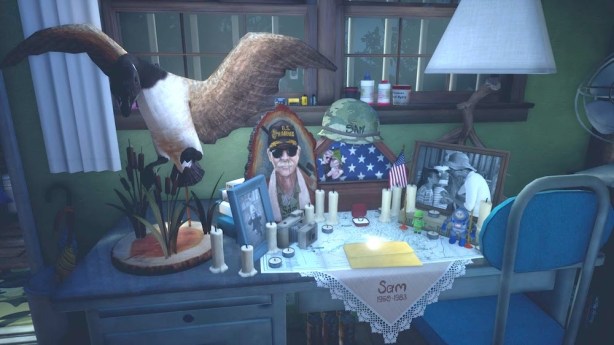
What Remains of Edith Finch is a game about death, one in which you explore the lives of lost family members through individual vignettes. Each one is presented with a different shrine, a collection of items left behind by that person.

“It helps them think about the people around them, how they view them. One of the interesting things about Edith Finch is, you can dig into a slice of the artifacts these people left behind in the shrines of each level,” Rivers said in an interview with GameSpot. “It gives people a different perspective about who people are.”

Rivers is the executive director of iThrive, a non-profit organization with operating in Atlanta, Boston, and New York that explores the intersection of games, mental health, and education. The organization uses different forms of interactive media to create a curriculum that teaches students about mental health, depression, grief, and other related topics.

“Grief naturally comes up with Edith Finch,” she said. “What do we remember about the individuals and what they leave behind?”

What Rivers didn’t expect was to go through her own experience of grief during one of the first times she taught her curriculum. Her mother died, pushing her to use some of the same ideas she taught in how she grieved the loss of someone she was incredibly close to. “The notion of curating our own space to reflect our identity. I didn’t really think deeply about that concept until we did our work with Edith Finch. The final project is to create a museum of me,” Rivers said. “I was curating the things from my mother’s life.”

Playing through What Remains of Edith Finch helped give Rivers the idea to focus on her mother’s letters, which were much like the letters that told the story of each individual vignette in the game.

“One of the things I connected to is the traditions we held and repeated,” she said. “Since she passed away, I’ve started to collect her letters, even thank-you notes she sent to others.”

While Rivers’s experience didn’t contain an in-game memory of her mother, What Remains of Edith Finch’s family home perfectly represents the idea of an altar–a collection of items gathered in one space, a table or a box, for mourners to visit and grieve. Creating physical altars are a century-old practice, used in holidays such as Día de Muertos to honor the dead.

Video games are becoming a prominent platform for digital memories and experiences, where players can create an altar, either on purpose or by accident.

“There is a potential for a digital altar to be infused with life, it’s dynamic,” Joanne Cacciatore, Arizona State University Director of the Graduate Certificate in Trauma and Bereavement, explained in an interview with GameSpot. “Altars are a living ritual, they’re a way in which we ritualize our dead by creating a physical space, a tangible connection, an artifact that connects us to them.”

Neimeyer regularly works with people who are close to the ends of their lives to gather items and construct legacy projects to help bring them peace. “In this, people share their stories in a way that can be captured and passed on to their survivors,” he said. “[Kylie] did that herself–left her a little world where she would always be there.”

Kylieland and the RalliSport Challenge ghost racer are both altars; places for Michael and Meredith to rekindle relationships with lost loved ones, and places to maintain a connection that wasn’t lost, but transformed. Altars can be beautiful in how they preserve a part of someone’s life, and painful in how second loss can bring grief all over again. Video games, whether they be life simulators in which you send letters to quirky animals or dirt road racers where you compete against lap time, can create serendipitous memories that help us grieve.

For Meredith, Kylie’s Animal Crossing town is a perfect way to keep her memory alive by continuing what she started.

“I know she wanted to expand her house, so I’m going to pay off her debt,” Meredith said. “I can build off what she started. That’s part of the beauty of Animal Crossing.”

Visit us at https://www.gamersvanguard.com/ ❤
5df3a184fd9db222d0026954

by Ben Gilbert via Business Insider

This holiday season, the next PlayStation and Xbox consoles are scheduled to arrive.

But the PlayStation 5 and the Xbox Series X, just like much of the world’s consumer electronics, are being manufactured in China. And China is currently the focal point of the Wuhan coronavirus outbreak.

Of the more than 560 people who have died from the virus, all but two fatalities have been in mainland China. Over 28,000 people were reported as infected as of Wednesday.

China’s manufacturing sector, which is responsible for producing the vast majority of the world’s consumer electronics, has been hit particularly hard. Foxconn, the manufacturing giant that produces the iPhone, is quarantining workers. At least one supply chain executive told Nikkei Asian Review that, “The [coronavirus] situation in China could affect the planned production schedule” of the next iPhone.

Similarly, as Microsoft and Sony ramp up production of their next-gen consoles, those launches could see delays or, at least, constrained launch supply due to the coronavirus outbreak.

8efbc9e28965886ba2915d347f2e5cf6

“The video game sector is currently manufacturing, or beginning to, a once-in-several-years’ product generation change for the 2020 holiday season,” a note from Jefferies Group published this week says. “If [company] shutdowns exceed a month or so, game schedules will be delayed. New consoles may likewise suffer supply issues from a prolonged disruption, ahead of their Fall 2020 planned launches.”

Put more simply: Next-gen consoles, and the games being produced for those consoles, may get hit with delays due to the coronavirus outbreak.

Though most major video games are made in North America, Europe, and Japan, large components of those games are outsourced to China. As much as “30-50% of art creation in western games is done in China,” according to the note. In terms of the hardware itself, nearly 100% of the manufacturing takes place in China.

Notably, Nintendo has outright announced production delays due to the coronavirus outbreak — shipments of the Nintendo Switch console are delayed to Japan, the company announced this week. Both Sony and Microsoft didn’t respond to request for comment on potential next-gen console delays due to the virus outbreak.

Visit us at https://www.gamersgarrison.com/ ❤

1604897

by Dave Thier via Forbes

Want to play your PS4 games on the Nintendo Switch? Sony wants to know if you’re interested, at the very least. The company recently sent out a survey primarily focused on its remote play feature, which allows you to use your own PS4 as a remote server to play games on PCs and smartphones. Among other things, the survey asked whether people would be interested in remote play coming to Nintendo Switch, Xbox One, or a “generic handheld device”. Which is an interesting notion.

The survey comes to us from Reddit user YouRedditHereFirst, and also wonders about a slim dualshock designed for portable play. It’s worth noting that video game companies—and other companies—test the waters with surveys all the time, and this in no way means such a feature is coming. But it does mean that the idea is at least a passing notion, and an enthusiastic response could lead to some more internal discussions.

Honestly, aside from the mild cognitive dissonance and presumed technical difficulties, it’s easy to see how this is a win/win from a business perspective. The reason is simple: Remote Play still requires you to own a PS4 (or presumably a PS5, later), and so it doesn’t cut into sales at all. It does expand functionality for both the PS4 and the Switch in a consumer-friendly way, however.

It’s hard to see just what functionality playing these on an Xbox One would add, but one could imagine you’re at a friend’s house who only has an Xbox One and you want to show them Bloodborne, or something. As far as a “generic handheld device”, it’s always possible that Sony would want to consider a new piece of hardware, but that would be a whole different conversation.

The Switch here is what I’m most interested in, because there’s also been chatter about the idea that the Switch could be used as an Xcloud device, something that’s a little easier for me to imagine given Sony and Microsoft’s recent collaboration. But regardless, the idea is the same: the Switch is already a perfect second console to pair with your Xbox or Sony products, and a ton of Switch owners already own a beefier machine. Helping them play better together seems like it would make a lot of people happy without ceding any ground.

Visit us at https://www.gamersoutpostllc.com/ ❤

960x0

by Dave Thier via Forbes

The console generation, in loose, constantly shifting terms, has dominated the world of video games for my entire life. The early era of home consoles is various and crazy, but for the sake of simplicity we’ll put the codification of the idea on one company alone: Nintendo. The NES, for all intents and purposes, standardized what we come to think of as a game console today, even if plenty other companies did something like it before. So that would make the transition from the NES to the SNES the first real console generation, something that all other manufacturers would begin to adopt as time went on. Eventually the field winnowed down, and generations became much more rigidly defined, eventually coming to a kind of apex with the release of the Xbox One and PS4, released as generational updates to their predecessors within a week of each other. And it’s well that the console generation reached it’s platonic form back in 2013, because that’s all done now.

Microsoft’s recent discussion of its plans with the Xbox Series X wasn’t really news, but it’s striking nonetheless. When the Xbox Series X releases, it won’t have exclusive games. Every Microsoft game that works on the Series X will also work on the Xbox One, and vice versa. Third-party publishers won’t have to abide by that at the beginning, but the economics of install bases dictate that they almost certainly will. While the PS4 and PS5 won’t necessarily abide by the same rules, we’re all assuming that Sony will at least pursue backwards compatibility, and I have to also assume that it’s going to have to have some kind of strong cross-gen compatibility plans. So while we’re still waiting to hear exactly what’s happening here, Microsoft’s rejection of the old ideas seems to confirm to me that the console generation, as we know it, is over.

This has been a long time coming. Console transitions are hellish on developers, which have to both work extra hard figuring out how to develop for new hardware and then turn around and sell those new games to an install base the fraction of the size of the previous generation. And they’re limiting for manufacturers, too: Apple gets to sell people a new iPhone like every other month, while console manufacturers find themselves waiting years to sell new hardware.

960x0 (1)

The first sign that Microsoft and Sony were done with generations came with the Xbox One X and PS4 Pro: mid-generation refreshes that functioned like a mini-generation, selling new machines and capabilities without any of the restrictions of previous generations. But with the next machines I expect this idea to be eliminated entirely. That’s what Microsoft’s naming convention is all about: it will release the Xbox Series X, followed by the Xbox Series (something else) and so on and so forth. PlayStation reserves its numbers for traditional generations, but I fully expect Sony to follow suit with the PS5 Lite, the PS5 Pro, or something like that.

The PS5 and Xbox Series X are much bigger deals than those refreshes. But when they launch, it will look a lot more like those refreshes than a traditional generation.

In this new scenario, games work backwards and forwards, playing on older machines with graphical compromises and upgrades on newer machines. Much like in the world of cell phones, older machines will still get phased out, it just won’t happen with the notion of generational sweep that it does now. So 3 years into the lifespan of the Xbox Series X—at which point we expect to have another Microsoft console in the mix—games will start getting released that won’t run on the Xbox One S. A year later, we might see games that don’t work on the Xbox One X. And so on.

Developers are ready for this. As Microsoft has noted, they’ve been doing it for years with PC development: most new games can be souped up to 4K, 60FPS with raytracing or be turned way down to what Gamespot calls “potato mode”. And while most developers don’t really want their games to look quite that bad on any hardware, they should be able to get games to run on a much wider variety of devices than they did in the past. One of the benefits of modern lighting-based graphical improvements like ray-tracing is that they can be turned off.

It’ll be interesting to see how it all works. Console Gamers are still very much invested in the idea of a console generation, which you can see from the degree to which we’re going to hype these new machines. But while the launch of the Xbox Series X and PS5 is going to look a whole lot like the launch of the Xbox One and PS4, in practice it’s going to be nothing like it. I’m mostly curious to see what things look like when the dust settles in 2021.

Visit us at https://www.gamersoutpostllc.com/ ❤

57d842dcb0ef97f0288b51ea

by Ben Gilbert via Business Insider

This holiday season, both Sony and Microsoft plan to launch new, so-called next-generation versions of the PlayStation and the Xbox.

Goodbye, PlayStation 4 and Xbox One! Hello, PlayStation 5 and Xbox Series X!

It marks the fourth game console “generation” that Microsoft and Sony consoles have gone head-to-head, starting with the PlayStation 2 and the original Xbox around the turn of the century. Nintendo exited direct competition on hardware with both companies years ago, starting with the wildly successful launch of the Nintendo Wii in 2006.

These days, the “console wars” are a head-to-head between Sony’s PlayStation and Microsoft’s Xbox. But in 2020, it looks as if Microsoft is shifting its business strategy in a way that might end them for good.

Here’s how Microsoft plans to do it:

1. Microsoft doesn’t mind if you don’t buy its new Xbox console, as long as you buy the game.

5df3a184fd9db222d0026954

Do you want to play games on an Xbox? A PC? Your phone? Microsoft wants to reach you there — ideally across all three.

To that end, Xbox has major initiatives across all three platforms: a new game console (Xbox Series X), a cloud gaming service (Project xCloud), and a Netflix-like gaming service (Game Pass).

“That remains core to what we’re trying to do,” the Xbox leader Phil Spencer told Business Insider in an interview last June. “To allow creators to reach the customers that they want, allow players to play the games that they want with the people they want to play with, anywhere they want. And it fits right into the opportunity ahead.”

It’s part of a broader effort at Microsoft to bring Xbox games to as many people as possible — even if those people don’t buy a new Xbox console. To that end, all first-party Xbox games across the next two years will also head to Xbox One.

“As our content comes out over the next year, two years, all of our games, sort of like PC, will play up and down that family of devices,” the Xbox Game Studios director Matt Booty told MCV in a recent interview.

When the big new “Halo” game arrives alongside the Xbox Series X this holiday, it’ll also arrive on Xbox One and PC.

2. The new Xbox is just the latest box, not a whole new ecosystem.

563b68dcdd0895ec6b8b45af

The next Xbox console will play Xbox One games. It will also play all the original Xbox and Xbox 360 games that already work on the Xbox One. It will also work with all the current Xbox One accessories, from gamepads to fight sticks.

“The original Xbox games and Xbox 360 games that are backward-compatible now on your Xbox One, those will play. Your Xbox One games will play, your accessories will play,” Spencer said last June.

This is an important precedent that was set with the Xbox One, and it’s continuing with the next generation of Xbox consoles: Your digital game library carries forward, like app purchases on smartphones or movie purchases on Amazon Prime. It establishes your Xbox library as a continuing digital platform, something no game console maker has done thus far.

The compatibility actually stretches further — games with large existing communities will continue to grow those communities on the next Xbox.

“I don’t want to announce anything about what another game team is doing,” Spencer said, “But I think what we would say at the highest level is if you talk about these games that have such massive communities today, a lot of those developers and studios are going to want to think about how they grow their community — not how they take it to zero and try to rebuild it.”

It doesn’t take a lot of hard thinking to imagine the games Spencer is talking about; games like “Fortnite” and “Minecraft” stand out, among many others with large, multiplatform audiences.

3. Going forward, it’s just “Xbox.”

5df3a7f3fd9db20e8c12fe1b

The Xbox Series X is part of the fourth generation of Xbox consoles from Microsoft, following the original Xbox, the Xbox 360, and the Xbox One generations. It’s a real murderer’s row of bizarre names.

The Series X, however, isn’t a whole new line of Xbox consoles — it’s just the name of the latest in the Xbox console brand.

“The name we’re carrying forward to the next generation is simply Xbox,” a Microsoft representative told Business Insider in December.

It’s a small branding change, but it clarifies Microsoft’s position with its console line: You can expect your Xbox digital library to work on Xbox devices, similar to Apple’s approach with the iPhone.

You might get an iPhone 11 Pro, or you might get an iPhone 8 — they all run the same stuff, albeit in varying degrees of fidelity. Such is the case with the Xbox brand going forward.

Visit us at https://www.gamersoutpostllc.com/ ❤


You can put that “Shut up and take my money” meme away (for now).

QpFmej88ZGcEak9aMb8Rq-2560-80

by Peter Brown via GameSpot

Microsoft has announced the official name for Project Scarlett is Xbox Series X, or just simply ‘Xbox‘. The new Xbox is scheduled to release during the holiday season in 2020 alongside Sony’s PlayStation 5. However, despite revealing the console at The Game Awards, Microsoft isn’t ready to open pre-orders just yet–if you want to buy it, you’ll have to keep waiting. And that’s an intentional choice on the part of Microsoft.

“We think, in the end, what people want from us is … to put a controller [in their] hand,” Xbox partner director of program management Jason Ronald told GameSpot. “People tell me, ‘Hey, I want to pre-order right now,’ and we definitely love that–like it’s great to have those fans–but I also know that these investments aren’t trivial for families. I want to be transparent about what our design goals are.”

To ensure customers know what they’re paying for, Microsoft is going to hold off on pre-orders for a little longer. Though we now know a lot more about Xbox Series X–like its name (i.e. Xbox), its PC desktop-looking design, the new share button on its controllers, how it will work with Project xCloud, and a host of other details–we’re still in the dark about quite a few things. The big one is, of course, its price tag.

More than anything though, Microsoft doesn’t want to start selling the new Xbox yet because customers haven’t had a chance to try the console. The Game Awards presents a wonderful platform for announcements, but, as Ronald puts it, the show doesn’t present “an opportunity for people to play–it’s a stage.”

Visit us at https://www.gamersoutpostllc.com/ ❤

22DC-spy5-superJumbo

WASHINGTON — It is billed as an easy and secure way to chat by video or text message with friends and family, even in a country that has restricted popular messaging services like WhatsApp and Skype.

But the service, ToTok, is actually a spying tool, according to U.S. officials familiar with a classified intelligence assessment and a New York Times investigation into the app and its developers. It is used by the government of the United Arab Emirates to try to track every conversation, movement, relationship, appointment, sound and image of those who install it on their phones.

ToTok, introduced only months ago, was downloaded millions of times from the Apple and Google app stores by users throughout the Middle East, Europe, Asia, Africa and North America. While the majority of its users are in the Emirates, ToTok surged to become one of the most downloaded social apps in the U.S. last week, according to app rankings and App Annie, a research firm.

ToTok amounts to the latest escalation in a digital arms race among wealthy authoritarian governments, interviews with current and former U.S. foreign officials and a forensic investigation showed. The governments are pursuing more effective and convenient methods to spy on foreign adversaries, criminal and terrorist networks, journalists and critics — efforts that have ensnared people all over the world in their surveillance nets.

Persian Gulf nations like Saudi Arabia, the Emirates and Qatar previously turned to private firms — including Israeli and U.S. contractors — to hack rivals and, increasingly, their own citizens. The development of ToTok, experts said, showed that the governments can cut out the intermediary to spy directly on their targets, who voluntarily, if unwittingly, hand over their information.

A technical analysis and interviews with computer security experts showed that the firm behind ToTok, Breej Holding, is most likely a front company affiliated with DarkMatter, an Abu Dhabi-based cyberintelligence and hacking firm where Emirati intelligence officials, former National Security Agency employees and former Israeli military intelligence operatives work. DarkMatter is under FBI investigation, according to former employees and law enforcement officials, for possible cybercrimes. The U.S. intelligence assessment and the technical analysis also linked ToTok to Pax AI, an Abu Dhabi-based data mining firm that appears to be tied to DarkMatter.

Pax AI’s headquarters operate from the same Abu Dhabi building as the Emirates’ signals intelligence agency, which until recently was where DarkMatter was based.

The UAE is one of America’s closest allies in the Middle East, seen by the Trump administration as a bulwark against Iran and a close counterterrorism partner. Its ruling family promotes the country as an example of a modern, moderate Arab nation, but it has also been at the forefront of using surveillance technology to crack down on internal dissent — including hacking Western journalists, emptying the banking accounts of critics, and holding human rights activists in prolonged solitary confinement over Facebook posts.

The government blocks specific functions of apps like WhatsApp and Skype, a reality that has made ToTok particularly appealing in the country. Huawei, the Chinese telecom giant, recently promoted ToTok in advertisements.

Spokesmen for the CIA and the Emirati government declined to comment. Calls to a phone number for Breej Holding rang unanswered, and Pax employees did not respond to emails and messages. An FBI spokeswoman said that “while the FBI does not comment on specific apps, we always want to make sure to make users aware of the potential risks and vulnerabilities that these mechanisms can pose.”

When The Times initially contacted Apple and Google representatives with questions about ToTok’s connection to the Emirati government, they said they would investigate. On Thursday, Google removed the app from its Play store after determining ToTok violated unspecified policies. Apple removed ToTok from its App Store on Friday and was still researching the app, a spokesman said. ToTok users who already downloaded the app will still be able to use it until they remove it from their phones.

It was unclear when U.S. intelligence services first determined that ToTok was a tool of Emirati intelligence, but one person familiar with the assessment said that U.S. officials have warned some allies about its dangers. It is not clear whether U.S. officials have confronted their counterparts in the Emirati government about the app. One digital security expert in the Middle East, speaking on the condition of anonymity to discuss powerful hacking tools, said that senior Emirati officials told him that ToTok was indeed an app developed to track its users in the Emirates and beyond.

ToTok appears to have been relatively easy to develop, according to a forensic analysis performed for The Times by Patrick Wardle, a former NSA hacker who works as a private security researcher. It appears to be a copy of a Chinese messaging app offering free video calls, YeeCall, slightly customized for English and Arabic audiences.

ToTok is a cleverly designed tool for mass surveillance, according to the technical analysis and interviews, in that it functions much like the myriad other Apple and Android apps that track users’ location and contacts.

On the surface, ToTok tracks users’ location by offering an accurate weather forecast. It hunts for new contacts any time a user opens the app, under the pretense that it is helping connect with their friends, much like how Instagram flags Facebook friends. It has access to users’ microphones, cameras, calendar and other phone data. Even its name is an apparent play on the popular Chinese app TikTok.

Though billed as “fast and secure,” ToTok makes no claim of end-to-end encryption, like WhatsApp, Signal or Skype. The only hint that the app discloses user data is buried in the privacy policy: “We may share your personal data with group companies.”

So instead of paying hackers to gain access to a target’s phone — the going rate is up to $2.5 million for a hacking tool that can remotely access Android phones, according to recent price lists — ToTok gave the Emirati government a way to persuade millions of users to hand over their most personal information for free.

“There is a beauty in this approach,” said Wardle, now a security researcher at Jamf, a software company. “You don’t need to hack people to spy on them if you can get people to willingly download this app to their phone. By uploading contacts, video chats, location, what more intelligence do you need?”

In an intelligence-gathering operation, Wardle said, ToTok would be Phase 1. Much like the NSA’s bulk metadata collection program — which was quietly shut down this year — ToTok allows intelligence analysts to analyze users’ calls and contacts in search of patterns, though its collection is far more invasive. It is unclear whether ToTok allows the Emiratis to record video or audio calls of its users.

Each day, billions of people freely forgo privacy for the convenience of using apps on their phones. The Privacy Project by the Times’ Opinion section published an investigation last week revealing how app makers and third parties track the minute-by-minute movements of mobile phone users.

Private companies collected that data for targeted marketing. In ToTok’s case — according to current and former officials and digital crumbs the developers left behind — much of the information is funneled to intelligence analysts working on behalf of the Emirati state.

In recent months, semiofficial state publications began promoting ToTok as the free app long sought by Emiratis. This month, users of a messaging service in the Emirates requiring paid subscriptions, Botim, received an alert telling users to switch to ToTok — which it called a “free, fast and secure” messaging app. Accompanying the message was a link to install it.

The marketing seems to have paid off.

In reviews, Emiratis expressed gratitude to ToTok’s developers for finally bringing them a free messaging app. “Blessings! Your app is the best App so far that has enable me and my family to stay connected!!!” one wrote. “Kudos,” another wrote. “Finally, an app that works in the UAE!”

ToTok’s popularity extended beyond the Emirates. According to recent Google Play rankings, it was among the top 50 free apps in Saudi Arabia, Britain, India, Sweden and other countries. Some analysts said it was particularly popular in the Middle East because — at least on the surface — it was unaffiliated with a large, powerful nation.

Though the app is a tool for the Emirati government, the exact relationship between the firms behind it is murky. Pax employees are made up of European, Asian and Emirati data scientists, and the company is run by Andrew Jackson, an Irish data scientist who previously worked at Palantir, a Silicon Valley firm that works with the Pentagon and U.S. spy agencies.

Its affiliate company, DarkMatter, is in effect an arm of the Emirati government. Its operations have included hacking government ministries in Iran, Qatar and Turkey; executives of FIFA, the world soccer organization; journalists and dissidents.

Last month, the Emirati government announced that DarkMatter would combine with two dozen other companies to create a defense conglomerate focused on repelling cyberattacks.

The FBI is investigating American employees of DarkMatter for possible cybercrimes, according to people familiar with the investigation. The inquiry intensified after former NSA hackers working for the company grew concerned about its activities and contacted the bureau. Reuters first reported the program they worked on, Project Raven.

At Pax, data scientists openly brag about their work on LinkedIn. One who listed his title as “data science team lead” said he had created a “message intelligence platform” that reads billions of messages to answer four questions: “who you are, what you do, how do you think, and what is your relationship with others.”

“With the answers to these four questions, we know everything about one person,” wrote the data scientist, Jingyan Wang.

Other Pax employees describe their experience creating tools that can search government data sets for faces from billions of video feeds and pinpoint Arabic dialects from transcribed video messages.

None mention an affiliation with ToTok.

This article originally appeared in The New York Times.

© 2019 The New York Times Company