anita

by Todd Martens

This column is usually dedicated to discussing video games, but in the past week and a half, you’d be forgiven for not having the stomach to play one. I haven’t.

Infighting, finger-pointing and the airing of dirty laundry have dominated the late summer in video games. For those who have played an online multiplayer game, this may sound like any other day in video games. But it’s not. Now the attacks are so threatening in nature that even the FBI has taken notice.

A long-simmering schism among select, very vocal members of the gaming community and others in the industry has come to the fore over the last two weeks, resulting in unprecedented levels of death threats and harassment directed at game designers and writers — many of them women.

This is not, to be clear, some trash-talking in a “Call of Duty” match. The hateful social media posts, a number of them threatening rape and crippling injury, have been so violent that some intended targets have gone into hiding.

The fury started in mid-August. The exact incident, in which the spurned ex of a female independent game designer reportedly published embarrassing personal details of their relationship and accused her of infidelity, is now beside the point. That moment has become an excuse, an opportunity to rail against designers and writers who are attempting to intellectualize the medium — “social justice warriors,” as they’ve been labeled by their online assailants.

These “social justice warriors” are seen as capable of destroying the very essence of what some players love about video games: violence, fantasy and scantily clad women.

Far from making a point, the ugly reaction has instead exposed the rage and rampant misogyny that lies beneath the surface of an industry that’s still struggling to mature.

Much of the ire has been aimed at Anita Sarkeesian, a respected pop-culture critic whose series of videos under the Feminist Frequency banner analyzes sexism in mainstream video games. On Aug. 26, she posted to Twitter that “some very scary threats have just been made against me and my family. Contacting authorities now.”

Sarkeesian, whose biting, unflinching observations have long made her a punching bag for those who feel she’s attacking the games they love, has been candid on social media in exposing the recent barrage of harassment. “I hope you die” is one of the few tweets slung her way this week that’s actually printable.

Her most recent supposed offense is posting a video that analyzes how top-shelf video games often resort to using women as background decorations, such as a cringe-inducing strip-club setting of the gunfight in “Mafia II: Joe’s Adventures,” in which bullets soar over the body of a dead, barely clothed exotic dancer.

Attempts to reach Sarkeesian this week have thus far been unsuccessful, as have attempts to reach a number of the other women affected. But anonymous message board postings calling for a game designer who’s been outspoken on social issues to receive a “good solid injury to the knees” is not uncommon.

On Thursday, video game site Polygon broke the news that the FBI this summer reached out to a prominent game organization to discuss alleged harassment and cybercrimes in the industry.

“We want to keep the community safe, and we don’t want people to be harassed by anybody,” said FBI spokeswoman Emily Yeh, who confirmed that the organization met with the International Game Developers Assn.

The online vitriol has become so disturbing that an appeal for decency has been endorsed by those who work for game powerhouses such as Ubisoft, Riot Games, Microsoft, Telltale Games, Sony and more. This month more than 2,400 industry professionals signed an open letter seeking an end to offensive behavior in the game industry.

“We believe that everyone, no matter what gender, sexual orientation, ethnicity, religion or disability, has the right to play games, criticize games and make games without getting harassed or threatened. It is the diversity of our community that allows games to flourish,” read an online petition started by indie game developer Andreas Zecher.

Still, at least one zealous group has formed a nascent Twitter movement to combat what is seen as the increased cultural criticism being applied to video games. It should be noted that the word “movement” is used loosely, as it’s not quite clear what those tweeting with the Gamergate hashtag are after, other than an end to all serious critiques of video games.

“Can we please just keep the agendas out of video games? Entertainment is meant to be the furthest possible thing from politics,” states one Gamergate supporter. And another: “It’d be nice if the gaming industry/gaming journalism would just … focus on games over politics.”

Such views seem driven in part by a few recent developments. It’s only in the last few years that game journalism has more regularly delved into the sort of cultural criticism common to other forms of mass media. Hobbyist media was once focused largely on product or game mechanics, but as the game audience has broadened and more have recognized the medium as a legitimate cultural force, more have also started to question if games are as smart as they should be.

And then there’s the rise in independent gaming, which has given us games that tackle depression, poverty, slavery, classism, LGBT concerns and other nuanced social issues. The fear, apparently, is that their success — and their support by those who offer cultural commentary on the game sector — will cause those who make big-budget games to conduct a little soul-searching, and in turn make their games more inclusive (or politically correct, to use a more charged term).

To most of us, this sounds swell. The indie game sector has proved what those who have loved games have known all along: namely, that the digital world is good for much more than shooting things.

But the recent brouhaha makes one wish that those old gamer clichés still held true; that the most serious of players were loners — dudes who sat alone in a room, illuminated only by a monitor. The dark at least kept the community’s most unsavory aspects hidden from view.
http://www.gamersoutpost.net/

PS4-logo-201_440

by Giuseppe Nelva

Console platforms are always evolving, and manufacturers often look into pushing the envelope by providing their developers with the best tools to create the best games, but also to make their life easier. Sony seems to be planning to do just that, as revealed by a career opportunity ad seeking a Senior Java Engineer.

“SCEA’s Tools and Technologies Group (TNT) provides tools, infrastructure services and run-time technology to a broad set of Sony Computer Entertainment divisions. We work closely with all of our Vita, PS3 and PS4 game teams, and with QA groups from all regions. We have an immediate need for an expert/lead Java/Web/Server software engineer. The successful candidate will be a key contributor in the creation of technologies used to improve PlayStation’s competitive advantage.”

“Job responsibilities include, but are not limited to the following:
Design, specify and implement new features for mission critical crash-reporting systems
Work directly with the game teams, group tech leads, and group managers to define and implement optimized tools, system libraries and drivers, protocols, and more as needed
Lead a team of senior engineering staff
Work directly with SCEI in Japan (liaison services available, some travel required).”

Considering that, at least for what PS4 is concerned, PlayStation’s competitive advantage seems to be pretty deep, it’s interesting to see that Sony isn’t resting on its laurels. Unfortunately we’re probably never going to know the actual impact this will make on PlayStation consoles, as low level improvements aren’t normally publicly announced.

http://www.gamersoutpost.net/

miyamoto-660x350

by Sam Mattera

“[It’s just] a bigger iPod touch,” said Satoru Iwata, Nintendo’s CEO, in response to Apple’s unveiling of the first-generation iPad back in 2010.

Iwata wasn’t necessarily wrong, but Apple has clearly had the last laugh: The explosion of mobile gaming, led in large part by Apple’s iPad, has had a devastating effect on Nintendo’s business. Nintendo’s handheld DS and Wii living room video game consoles, released in 2004 and 2006, respectively (long before the iPad), were somewhat of a popular phenomenon, moving a combined total of over 250 million units.

But their successors, the 3DS and Wii U, have been far less successful. The Wii U, in particular, has fallen short of Nintendo’s expectations, while the 3DS is on track to sell barely a third as well as its predecessor. As of Nintendo’s last report, the two systems have combined for just over 50 million units sold.

With its hardware rejected by the market, some investors have called on Nintendo to shift its focus to established mobile platforms, bringing its legendary franchises like Super Mario and The Legend of Zelda to Apple’s iOS.

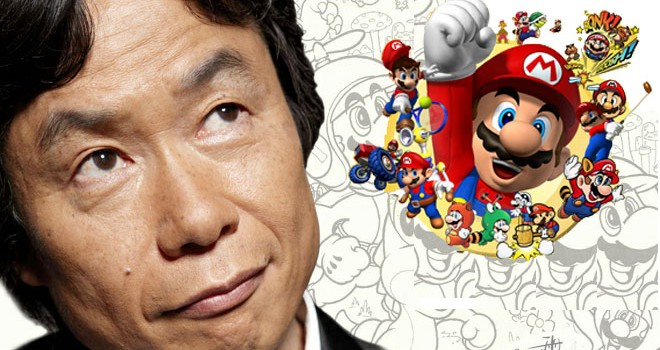
But Shigeru Miyamoto, Nintendo board member and creator of both franchises, has some harsh words for mobile gamers. In a recent interview with Edge magazine, Miyamoto derided the casual approach these platforms endear.

“Pathetic”

“In the days of the DS and Wii,” Miyamoto told Edge, “Nintendo tried its best to expand the gaming population.”

The DS, and to a much greater extent the Wii, sold well because of their appeal to consumers who had traditionally avoided video games. During the Wii’s heyday, in 2006 and 2007, the mainstream press was flooded with articles marveling at the Wii’s widespread appeal. Nintendo found willing consumers in unusual places — even nursing homes.

But times have clearly changed — many of these consumers have moved on. More adult women now play video games than teenage boys (the traditional video game market), but only because of the rise of mobile platforms — where women spend more time and money on games than men.

“Because of the spread of [smartphones and tablets], people take games for granted now,” Miyamoto quipped to Edge. “The sort of people who, for example, might want to watch a movie. They might want to go to Disneyland. Their attitude is, ‘OK, I am the customer. You are supposed to entertain me.’ It’s kind of a passive attitude they’re taking, and to me it’s kind of a pathetic thing.”

Miyamoto’s status in the video game industry is unparalleled, but his comments to Edge reek of sour grapes. Now that these casual gamers have moved on to other platforms, Miyamoto insists that Nintendo is happy to see them go.

“It’s a good thing for us, because we do not have to worry about making games something that are relevant to general people’s daily lives.”

Nintendo refuses to change its strategy

Unlike other operating systems, Apple’s iOS and OS X are only available to buyers of Apple-made products. Similarly, Nintendo has long kept its games confined to its own hardware, and if Miyamoto’s comments are any indication, that strategy does not seem likely to change anytime in the near future.

“There are always people who really want to get deeply into a game … We want to create, and they want to experience, something unprecedented all the time. For us to meet these goals, we needed dedicated hardware that is designed to cater to the needs of these avoid gamers … That’s why I believe that Nintendo … will be sticking to these dedicated game machines.”

There’s already evidence that Nintendo is beginning to embrace this new, enthusiast-focused strategy.

The Wii’s remote was notable for its relative lack of buttons — just four, compared to nearly a dozen on other controllers. But the buttons are back: Last week, Nintendo unveiled an update to its 3DS — a new version of the handheld packs two additional shoulder buttons and a second analog stick. The new 3DS also offers swappable faceplates and connectivity with its forthcoming Amiibo figurines — initiatives that should generate additional revenue from its most committed customers.

Nintendo’s stubbornness could guarantee future losses
Although Nintendo has a sizable cash hoard — about $7.5 billion as of the end of June — the company has struggled to remain profitable in recent quarters, posting a more than $200 million loss last fiscal year. While it was courting a casual audience, core gamers have largely migrated to the PlayStation and Xbox brands, leaving Nintendo with far fewer customers with which to sell its games to.

Without the support of third party publishers, and their popular franchises like Call of Duty, Madden and Grand Theft Auto, it’s difficult to imagine Nintendo succeeding in this new endeavor.

http://www.gamersoutpost.net/

6f92b813a176338f8416c75f2a044565

by Chris Pereira

Activision is offering an enticing offer for Destiny that will be of particular interest to anyone who hasn’t yet invested in an Xbox One or PlayStation 4. For a limited time, buying a digital copy of Destiny on Xbox 360 or PS3 will entitle you to a free digital copy on Xbox One or PS4.

The deal has very few catches–you simply need to buy the game (or season pass) by no later than January 15, 2015. Because it’s a digital copy you have to buy, there won’t be any way to then give your old game to a friend, which is likely why Activision is willing to offer this.

The last-gen version you buy dictates which current-gen version you can upgrade to. In other words, if you buy the PS3 version, you’ll only be able to get the PS4 version, while the same holds true for Xbox 360 and Xbox One. Either way, upgrading to a current-gen version won’t prevent you from continuing to play your last-gen copy. And because your progress transfers between platforms (within the same console family), you won’t leave to start over when you move from PS3 to PS4 or Xbox 360 to Xbox One.

Should you choose to buy the Limited Edition or Ghost Edition, both of which include the game’s season pass, you’ll be able to download the DLC content for free on PS4 or Xbox One after upgrading. The same holds true for buying the season pass on its own.

The process for downloading your free Xbox One or PS4 content is straightforward, and simply involves browsing to the game’s page on either console’s store while logged into the same account that made the purchase in the first place. The exact process is explained here.

Destiny launches this coming Tuesday, September 9.

http://www.gamersoutpost.net/

Forza5_Gamescom_Audi_R18_E-tron_WM_07

by Sam Machkovech

On Wednesday, Microsoft announced the first-ever free trial of a full, unlocked retail game on an Xbox platform. The first game to receive the “Gold Weekend” treatment will be Forza Motorsport 5, which will become free to download and play for all Xbox Live Gold members on Xbox One beginning Thursday, September 4 and lasting until the following Sunday.

While nearly all games on Xbox 360, and many games on Xbox One, can be downloaded as free trials, this offer has the distinction of unlocking the full, start-to-finish experience of a game that hasn’t been purchased. It also seems to split the difference between limited trials and the free games doled out to Gold members by way of the Games With Gold promotion.

Adding to the confusion, this differs from Xbox Live’s occasional “free weekends,” which had mostly opened up online play to users who had yet to pony up for a Gold subscription. We’ve asked Microsoft to confirm technical details of this promotion—whether it requires an uninterrupted online connection to play the game in question, what happens mid-game when the trial period ends at midnight PST on Sunday, and whether we may ever see the promotion reach Xbox 360—and we’ll update this post with any clarifications.

It has been years since Steam began offering free, limited-time trials of full games, usually on a weekend to encourage players to buy into the full version once their free few days are up. Strangely, gaming consoles had yet to follow suit before this announcement, in spite of being equipped to download games and authenticate online memberships. Neither last-gen console ever supported such a timed full-game trial feature, and Sony’s PlayStation 4 has yet to receive an equivalent (perhaps because its PlayStation Plus service has already doled out so many free games without time restrictions).

http://www.gamersoutpost.net/

Screen_Shot_2014-09-03_at_2_27_30_PM_0_0_cinema_1280_0

by Ben Kuchera

There has been research that measured the effects of buying things versus the effects of buying experiences, and the findings were that purchased experiences make us happier. So if you can buy a painting on one hand, or a trip to space on the other, the trip to space is going to do more for your happiness than the object.

Think of it as buying memories, a way to spend money on interesting stories and things that enrich your life. You may be more happy budgeting for a trip to your favorite vacation spot than buying new furniture for your house.

A recent study in the Journal of Consumer Psychology has looked at these findings from another angle, and presents evidence that items bought that provide experiences also provide high levels of satisfaction, and that includes things like video games. These experiential products offer much more satisfaction than other objects.

Games shouldn’t be seen as objects

The research shows that you can’t just look at objects and experiences as two distinct purchases. There are things to buy, and that includes video games, sporting equipment, or musical instruments, that are physical objects that increase our happiness in the same way as a life experience, because they themselves have to be experienced.

“Experiential products, unlike material items, enrich and create their own life experiences (Van Boven & Gilovich, 2003); for example, consuming video games facilitates multisensory, fantasy-like, and interactive experiences,” the study states.

“Moreover, the use of goods that render a service tend to be consumed more as life experiences and less as material items (Grönroos, 2008). As experiential products increase in their intangibility, consumers become more likely to reconstruct their evaluations of these purchases as life experiences (Braun, 1999), resulting in similar and rosier recollections (Van Boven & Gilovich, 2003).”

So when you buy a copy of inFamous: Second Son you’re not buying a download or a disc at a store, you’re buying the experience of playing it, the enjoyment you get out of the story and the mastery it takes to finish the game. Your brain doesn’t perceive it as a single purchase, it sees the purchase as an experience, and you enjoy the game as an adventure.

There is also the fact that these experiences are often shared.

“Moreover, video games and sporting goods are often purchased with the intention to be consumed with others. As described by Caprariello and Reis (2013), these social material purchases provide the same amount of well-being as do social life experiences because they both likely meet the need for relatedness,” the study continues later.

This also gives us some clues about why video games don’t just make us happier, they can provide people with a sense of identity.

“Darwin Guevarra, a doctoral candidate in the U-M Department of Psychology and the study’s lead author, said experiential products offer more well-being than material items because they satisfy a person’s autonomy (behaviors to express one’s identity), competence (mastering a skill or ability) and relatedness (having a sense of belonging with others),” Jared Wadley wrote in an article about the study in Michigan News.

When you buy a game, and become skilled at playing it, you’re fulfilling a number of emotional needs.

This isn’t just games, these findings hold true for any “experiential products.” So a guitar, if you learn to play or simply practice often, will be a very rewarding purchase. So will a hockey stick, as long as you learn to use it and play with others. Video games offer the same sort of rewards as musical instruments or sporting equipment, which offer a good return on happiness for your investment.

http://www.gamersoutpost.net/

8340385836_ada3ae3a7d_h_0_0_cinema_1280_0

by Brian Crecente

Gearbox Software studio head Randy Pitchford did “whatever the fuck he likes” when it came to the marketing and promotion of Aliens: Colonial Marines, according to documents filed this week in the class-action lawsuit claiming the game was falsely advertised at trade shows.

The Sept. 2 filing by Sega of America details the publisher’s take on why Gearbox is just as culpable in the case as Sega. The company’s attorney writes that despite Gearbox’s claims that they weren’t involved in marketing, Gearbox participated equally, sometimes overstepping bounds or keeping Sega in the dark about promotional decisions.

Aliens: Colonial Marines was released Feb. 12, 2013, to harsh criticism and low review scores. Some players and reviewers noted that the game’s visuals didn’t match what Sega and developer Gearbox showed off of the game prior to release at fan and press events.

These demos, which Gearbox co-founder Randy Pitchford called “actual gameplay,” according to the filing, were criticized after the game’s launch for featuring graphical fidelity, AI behavior and even entire levels not featured in the game. Our review of Aliens: Colonial Marines featured a gallery highlighting some of the differences between a 2012 video walkthrough of the title, and the same level in the final version of the game.

In August, Sega and the plaintiffs reached a tentative agreement for $1.25 million, much of which was to be paid out to people who had purchased the game before Feb. 13, 2013. According to court documents, Gearbox attorneys were told they could be included in the settlement if they agreed to pay an additional $750,000 into the settlement. But instead, Gearbox filed a motion to throw out the case. Gearbox argued it shouldn’t be included in the suit because it operated as a contractor, and that Sega had final say on the game and its marketing.

Gearbox Software is fighting to have the tentative agreement thrown out, saying that the settlement with Sega would leave Gearbox “holding the bag” in future lawsuits despite being a contractor, that they weren’t a part of the settlement negotiations and that it isn’t a fair deal for gamers.

In the motion filed this week, Sega notes that it was initially given “absolute discretion” with regard to marketing decisions, but that the publisher was contractually required to discuss and consult Gearbox on all marketing activities.

“The parties had to mutually agree to the ‘precise particulars of marketing assets’ delivered by Gearbox,” according to the motion. “Gearbox’s participation — Randy Pitchford’s, in particular — was a key element in the ACM marketing strategy from the beginning.”

An enclosed proposition document noted that Pitchford is a “respected development celebrity and is guaranteed to be headline material in worldwide press coverage.”

The motion goes on to say that the E3 2011 demo, which many point to as the crux of the misleading advertising, was created entirely by Gearbox.

Following the presentation, Gearbox officials told Sega officials that the demo was the bar the game should be held to, according to an internal email.

“During one of my conversations with Gearbox today I verified that the E3 Demo is indeed the bar that we should use to determine where the entire game will be,” Matt Powers, senior producer at Sega of America, wrote to a handful of other Sega employees. “That is Gearbox’s plan and what they believe in. I just wanted to double-check with them and since I did I figured I would pass that along to you.”

The filing lists eight other examples of times when Sega says Gearbox made announcements to the press and public without Sega’s approval, sometimes despite specific requests not to, according to the motion.

That includes E3 2011, when Sega officials noted that Pitchford went well beyond the bounds of a prepared questions and answers document Sega provided and “talked a LOT beyond what was in there.”

Other examples included posts to the game’s website, announcements at a community day event and releasing an unapproved screenshot. This seemed to culminate in October 2012, when a member of the Sega PR team spoke with a Gearbox official in person about what they called “leaks.”

“I spoke face to face to [Gearbox’s Steve] Gibson about their persistent panel leaking,” Matt Eyre wrote in an email to other company officials. “Effectively — it’s Randy [Pitchford] doing whatever the fuck he likes. Apparently he did it twice on [Borderlands 2] also, against, against all plans and despite the fact they asked him not to. I think our best result here is that we have no more panel sessions …”

The filing also refutes Gearbox’s earlier claims that they never received any payments tied to the sales of Aliens. According to the filing, Sega paid Gearbox millions of dollars in advance royalties in the form of milestone payments. These were payments tied to the timed completion of things like a demo.

“If and when Sega recoups the royalties advanced to Gearbox in the form of milestone payments, Gearbox will receive a percentage of the net receipts for each sale of ACM,” according to the motion.

The motion, which asks the court to ignore Gearbox’s request to block the settlement with Sega, does not address earlier claims by Gearbox that it paid millions of its own money to finish the game.

The next hearing is being held on Oct. 29.

http://www.gamersoutpost.net/

aliens-colonial-marines-hive-concept-art_1600_0_cinema_1280_0

by Brian Crecente

Sega of America will pay out $1.25 million to settle a class-action suit brought against it and Gearbox Software that claimed the two companies falsely advertised Aliens: Colonial Marines by using faked demos of the game at E3 and other trade shows, under a settlement plan filed with the court today.

If approved, the settlement will clear Sega of America of any further litigation, but not Gearbox Software, which recently filed a request to have claims against it dropped.

In the motion for preliminary approval of class action settlement agreement, filed with the Northern District of California court on Monday, attorneys for plaintiff John Locke said they expect to request the court to grant approval of the suit on Sept. 17.

If approved by the court, Sega will pay $1.25 million into a settlement fund. Of that fund, $312,500 will be used to cover attorney fees for the plaintiffs, $200,000 will be used to cover the cost of adminstration, $2,500 will go to the plaintiff and the rest will be used to pay to those eligible customers who purchased the game. Payments to customers who fill out a three question claim form, purchased the game before Feb. 13, 2013 and are approved, will not exceed the amount paid for the game. The amount each customer receives back will be dependent on how many people submit claims. No money will be returned to Sega.

“In exchange for the relief described above, Sega — but not Gearbox — will receive a full release of all claims related to Aliens: Colonial Marines, including claims relating to the design, marketing, operation of, or warranties provided in connection with the game,” according to the filing. “Quite importantly, the settlement only releases claims against Sega — not Gearbox — so the litigation will continue as to that defendant with the prospect of further recovery.”

Specifically, according to the filing, the plaintiffs expect another chance to “recover” in this suit against Gearbox.

The settlement is not an admission of guilt, according to court papers. Despite agreeing to the settlement, Sega has denied and continues to deny any wrongdoing whatsoever. Company officials agreed to settle, according to the filing, because of the cost of fighting the suit and uncertainty inherent in any litigation.

Aliens: Colonial Marines was released on Feb. 12, 2013 to harsh criticism and low reviews. Some players and reviewers noted that the game’s visuals didn’t match what Sega and developer Gearbox showed off of the game prior to release at fan and press events.

The suit, filed in April 2013 by Roger Damion Perrine and John Locke on behalf of a class, claimed that Gearbox and Sega falsely advertised Aliens: Colonial Marines by showing demos at trade shows like PAX and E3 that didn’t end up being accurate representations of the final product.

These demos, which Gearbox co-founder Randy Pitchford called “actual gameplay,” according to the filing, were criticized after the game’s launch for featuring graphical fidelity, AI behavior and even entire levels not featured in the game. Our review of Aliens: Colonial Marines featured a gallery highlighting some of the differences between a 2012 video walkthrough of the title, and the same level in the final version of the game.

“Each of the ‘actual gameplay’ demonstrations purported to show consumers exactly what they would be buying: a cutting edge video game with very specific features and qualities,” the claim reads. “Unfortunately for their fans, Defendants never told anyone — consumers, industry critics, reviewers, or reporters — that their ‘actual gameplay’ demonstration advertising campaign bore little resemblance to the retail product that would eventually be sold to a large community of unwitting purchasers.”

In January, attorneys for those involved in the suit spent a day in mediation but couldn’t reach an agreement. In March, the parties reached a basic compromise, but the judge overseeing the case rejected it in June saying there were some concerns about the terms.

In July, attorneys for Gearbox filed requests to be dropped from the case and refused to take part in any further negotiations, so they are not a part of this new settlement agreement. In that filing, Gearbox attorneys said the developer was a contractor and that it sunk millions of its own money into finishing the game.

“Gearbox never belonged in this lawsuit,” according to the motion. “Gearbox is a video game software developer. It was neither the publisher nor seller of the video game at issue. For more than a year, Gearbox has quietly abided the plaintiffs’ claims so that Sega, the game’s publisher and the party responsible for the game’s marketing and sale, could assume the defense of this lawsuit. Gearbox has honored its publisher’s request in spite of plaintiffs’ highly-publicized-and highly-misplaced-claims against Gearbox. At this point, however, Gearbox is obligated to pursue its rightful departure from this case.”

A day earlier, the plaintiffs filed a motion to remove Perrine from the suit, noting that Perrine is “presently incarcerated in Pennsylvania.” The attorneys discovered his incarceration after hiring a private detective to find Perrine, according to the documents. According to Westmoreland County, Pennsylvania court records, Perrine is in jail awaiting trial on three charges including simple assault and terroristic threats with intent to terrorize another.

Under the terms of today’s proposed agreement, class members may file a claim form with their name, email address, date and location where the game was purchased and amount paid on or before Feb. 12, 2013. Further details about filing a claim will be posted on a certain websites and in print in Guns & Ammo, ESPN and Rolling Stone magazines.

Separately today, attorneys for the plaintiff filed a request with the court asking for more time to respond to Gearbox’s request to have the suit against them dropped.

We have reached out to officials with Sega, Gearbox and the plaintiff and will update this story if they respond.

http://www.gamersoutpost.net/

Destiny-8-978x704

by Tatiana Morris

Bungie, the same developers that brought us Halo have been working on their next space-epic first-person-shooter, Destiny, for quite a while. In fact, the game is done and set to release in a week from today. Recently though, it came to light that review copies for Destiny won’t be arriving at several notable gaming outlets until Monday, September 8, a day before the game’s launch. Reviews tend to spring up a few days prior to a game’s release, but this will likely not be the case for Destiny. As an MMO-like experience, it’s probable reviewers will need considerable amounts of hands-on with the game before formulating a score.

Before you run to cancel your pre-order, consider SimCity’s launch. The game’s reception was great before it released. The online play was smooth; the game was garnered high scores. But that all changed upon release. One video game news outlet even revised their SimCity review twice, taking the score from 9.4 to 8 to 4. Why? The game’s launch didn’t go as intended — servers crashed rendering the game unplayable. It could be argued that by waiting a day to avoid all of the launch madness, the game would have received a true score.

This is where we come full circle, back to Destiny. Bungie didn’t create a game with offline play as an option; it’s all online, as in always-online (even the character creation process is done online). By the time reviewers receive their copy of the game the world will be inhabited. It will be lived in and the servers will have been tested by the absurd amount of people who pre-ordered it. The game will be reviewed at face value.

eeee

In any case, a responsible video game site would delay their review of an always-online game or make it an on-going review. You simply can not experience an always-online game prior to its release. Imagine World of Warcraft’s Azeroth inhabited by just a few review sites. The world would be empty; queues for dungeons would take too damn long and a group quest wouldn’t be possible (unless you’re a Paladin, you can do anything if you’re a Paladin). While a game’s review doesn’t always look at the atmosphere that players create, it does give you some insight on the variety builds/talents/specs in the game (think Diablo 3’s classes; glass cannon vs damaging soaking).

It could very well be argued that Bungie and Activision are afraid of review scores (and people are arguing that), but seeing as how the game already had 4.6 million beta players experience a portion of it, that’s likely not the case. Bungie’s history should be assurance enough that any delays in reviews aren’t stemming from a lack of confidence in their product.

The only valid concern that I can see is the concern on the length of the game and the content itself. The beta gave us a good idea of how it will play, but not what the story or other planets are like.

TL;DR: The world is not going to burn down because Destiny’s review copies are going out later than you’d like.

We’ve reached out to Activision and Bungie regarding review copies and will let you know if we hear anything official.

http://www.gamersoutpost.net/

ps

by Dragos Dobre

Sony’s PlayStation 4 has just received another update, that once again promises to add a tad more stability to some features available on the consoles. This time the update is a bit heavy, having almost 200 MB — so we can expect for some real improvements.

If we got a penny every time a console manufacturer released an update under the tag “improves system stability”, we would currently have our pockets full of money. But that’s a common practice, and we can’t do much about it.

However, if it’s mandatory, we should know what it contains. You will have to update your console to 1.76 in order to play online from now on, enjoy!

We will update this post if Sony releases any information about this system update!

http://www.gamersoutpost.net/