microsoft_67298

by William Usher

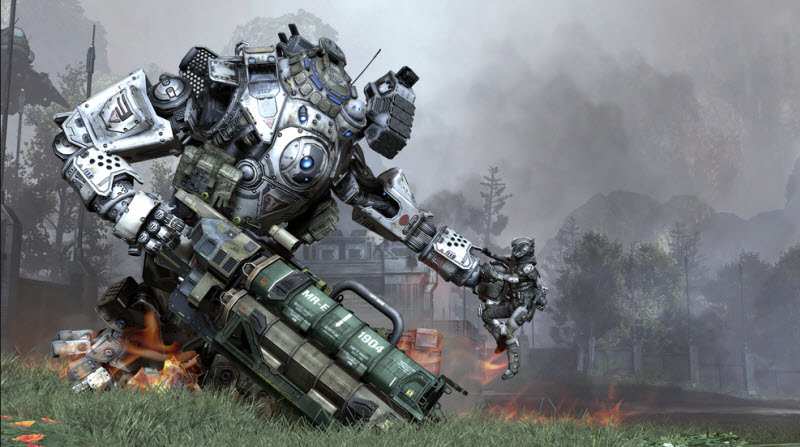
Microsoft had previously mentioned about utilizing their Azure cloud services for more than just offloading server data and hosting multiplayer games through titles like Titanfall. The company hinted at cloud streaming before, but new information indicates that they may be taking a similar approach to streaming in the same way that Sony is approaching the market with PlayStation Now.

Neowin is reporting that Microsoft is currently testing running Xbox One and Xbox 360 games in web browsers; not just Internet Explorer, either. The testing is supposedly taking place in Chrome and other popular browsers, too.

As noted in the Neowin article…

“It was about this time last year that Microsoft showed off Halo 4 running in the cloud on various devices at the company’s all-employee meeting, and this project is the on-going work from that demo to bring it to more users. Our understanding is that significant progress has been made from that demo and it is now being rolled out to more users.”

Earlier in the year Microsoft also showcased how physics-processing could be offloaded to the cloud. Although, we’ve yet to see how the real-world application of that process could be applied to gaming on a large-scale basis.

Based on the information made available, it would seem as if Microsoft gunning for having games running through browsers might actually relate to them pursuing something ever-so-close to Sony’s PlayStation Now service. With PS Now gamers have the option of playing older generation titles and soon newer-gen titles from a wide variety of supported Sony platforms and mobile devices.

With Microsoft looking into Xbox 360 emulation for the Xbox One, it seems like the perfect solution would be hosting Xbox 360 games through the cloud and allowing players to access them through the Xbox One.

It’s still not really an ideal solution, given that pricing becomes a huge factor – just like pricing is one of the most debilitating drawbacks for PS Now – and, as mentioned in the Neowin article, licensing third-party publisher games for digital streaming becomes another huge hurdle. Games with licensed music, trademarks or content face tougher roadblocks for being streamed digitally, an issue that held up the re-release of GTA: Vice City.

Nevertheless, Microsoft testing this new streaming service paints a positive sign for anyone hoping for some form of backwards compatibility for the Xbox One. Of course, there’s nothing actually official about this other than that they’re testing a streaming method. For all we know this could be one of those projects that stays in research and development limbo; constantly being iterated and worked on but never actually seeing the light of day within the eighth generation of gaming.

Of course, we’ll only know for sure when the company finally begins to make public their intentions and roadmap for the cloud.

For now it’s only been used as a sort of tertiary support system for the Xbox One and its games, and nothing has really stood out for the system that gives the Xbox One any “must buy” appeal.

http://www.gamersoutpost.net/

e4a7203a977c7f60f0943e1c1cae5b4b

by Owen S. Good

Over the past few years, hardware modder Ed Zarick built a number of “Xbook 360” laptops, at about $1,000 each, on commission. When the Xbox One launched, his fans wondered if he’d come up with a portable version of that console as well. He has.

This is the “Xbook One,” comprising a 22-inch Vizio 1080p LED monitor, a slot-loading front-facing disc drive, and 3D-printed components. Zarick stresses no enhancements have been made to the Xbox One but, of course, modifiying its hardware in this way completely voids the unit’s warranty.

The Xbook One will work with a Kinect sensor (not shown here.) He’s accepting commissions, but Zarick expects a $750 nonrefundable deposit, and even if you provide your own console the job is going to run in excess of $1,100, with shipping. If you don’t have a console and want an HDMI out port, it’ll go over $1,500. Each unit will take about two to three weeks to finish, Zarick says.

http://www.gamersoutpost.net/

by Paul Tassi

The reviews are in and Destiny appears to be something of a disappointment for fans and critics alike. The game has received rather low review scores from many major outlets, 6 out of 10s and the like, and its all-important Metacritic rating is hovering at a troubling 75.

Past that, it’s a strange situation as in the wake of GamerGate, fans and critics don’t seem to be at odds with one another regarding low review scores of Destiny. This is an industry where fans will lose their minds if a Zelda game is scored in the 8 range, but there has been surprisingly little push back even among those fans who like the game.

I know the feeling. I like Destiny more than most critics it seems, but I understand that there are pretty huge, pervasive problems with it, some of which involve what it contains, some of which involve what it doesn’t.

One major complaint about Destiny is that the scale is vast, but largely repetitive, where players will retread over the same maps, fighting the same enemies in the same mission formats. The other big issue everyone has with Destiny?

destiny-promise

It just doesn’t seem like what was promised.

It’s a giant world, but it’s empty, as I explained in detail yesterday. We were promised a “shared world shooter” and quasi-MMO like nothing else before it. Planets to explore! Sci-fi mysteries to uncover! A whole new video game universe to enjoy over the next ten years.

And yet, that’s not what the final game delivered, at least not at launch. It’s largely empty maps with an uncomfortably sterile hub world, and on top of it all, a story so incoherent even the game’s most ardent defenders admit it’s terrible.

All of this seems like it’s happened before. And it has, twice this year already.

Destiny was the third of three major IPs to debut this year, all of which have been greeted with fairly mixed reviews from fans and critics alike. I’m talking of course about Titanfall, the game meant to shake-up the shooter landscape, and Watch Dogs, which was poised to reinvent the sandbox genre. All three of these games arrived on colossal waves of expectation and hype, and all dashed against the rocks, producing adequate experiences at best, but failing to be the game-changers they were supposed to be.

The press has been blamed for this to some degree. There are accusations that for all three of these games, the media hyped up each and built up these false expectations. I don’t think that’s the case, given the evidence at hand.

Watch Dogs is a different case from the others. That game famously overdressed its E3 footage to the point where the final product was leagues behind what was debuted for the general public. That game’s hype was a slow decline until release when we were given a serviceable, but hardly revolutionary sandbox shooter.

Titanfall and Destiny share the same issue in this case. Both had a beta that allowed players to experience the game for themselves. You may think that’s the most honest and transparent way to demonstrate what your game will be like, but the problem is that with each of these games, there was no way to know exactly what was going to be contained in the final product after a promising start.

Titanfall was a more egregious example of this, with the final game having a handful of multiplayer modes and the flimsiest attempt at a single-player story in recent memory. Destiny certainly has more substance to it, and yet even during the beta, it was hard to get a full picture of what the game was going to be like.

titanfall-promise

Well, that’s not strictly true. There were certainly clues that many picked up on, and those who thought the game would be repetitive and empty were right. But others like myself had faith that because it was a beta, the blanks would be filled in by release. I remember thinking that the dead-ends I was running into in Patrol mode would surely be filled with treasure and cool enemies by release. I remember believing the story would pick up and become more interesting in time. I remember hoping that somewhere out there were interesting characters to meet, and missions would become more diverse down the road.

But instead we got the content of the beta repeated four times across four planets (well, three planets and a moon). We didn’t learn until after the fact that “endgame” content was the same content from your first playthrough, repeated on a harder difficulty. A singular raid is coming, and more content is being updated periodically, but again, if it retreads the same ground, the game will still face the same problems.

Erik Kain sums up the “what could have been” problem with the game nicely in his most recent review:

““I pictured an open space game in which you’d travel via spaceship from one planet to the next, to open and vast worlds ready to be explored.

I pictured a shared-world where players would encounter each other as they explored in an exciting and organic way, eschewing traditional concepts of party-based play and the over-crowded nature of most MMORPGs. I wanted to feel like a galactic hero, superful and badass, out in uncharted danger, only encountering my fellow Guardians (of the Galaxy) through luck and at times of great need.

I imagined outposts and other human settlements or military bases sprinkled throughout the galaxy—multiple hubs, essentially—and an actual metropolis rather than just the Tower hub.”

In short, it’s about expectations. The problem is that when we heard news about a shooter MMO from Bungie, we expected all the best things about the two genres. The massive universe with so much to discover. Characters to meet, mysteries to solve, friends to make, and so on. Instead, we got the worst aspects of an MMO, grinding for marginally better gear in repetitive zones, without the backdrop of an interesting universe at all. Bungie got two of their key points right, the amazing visuals and the tight gameplay, but they missed everything else.

And I’ve said it a million times before, but Titanfall, Watch Dogs and Destiny all share a lack of memorable characters. Tell me who the face of each of these games are. For Watch Dogs you have Aiden Pearce, an unlikable, improbable, bland hero. For Titanfall and Destiny, you have faceless space-soldiers. In fact, the “face of Destiny” is probably Peter Dinklage’s Ghost at this point, and I think we can all agree that’s kind of terrible. To become an iconic series, your game has to create icons.

the-last-of-us-promsie

I’m looking back to the year before this one where The Last of Us and BioShock Infinite were both vying to be game of the year. Both were hugely successful and beloved because of the stories they told, and the characters they created. I wrote a post about the mind-bending ending of Infinite which was my most popular of the year simply because people wanted to discuss the story that much. The Last of Us made instant icons out of Joel and Ellie, even if it didn’t innovate all that much in the gameplay department.

This year it feels like three strikes and you’re out. Three games that were sold as new entries that would revolutionize their genre, but ended up disappointing in one way or another because they failed to deliver on that implied or implicit promise. It’s a tough market for new IPs and I hope the lesson here for dev isn’t to stick with sequels. But I think consumers and critics are going to be incredibly wary of future games riding this much hype, even if they’re trying to be transparent through betas and demos.

I think out of all of these titles, there’s the most hope for Destiny. It feels a lot like Diablo 3 at launch in many ways, a game that disappointed at the start, but through hard work and listening to fan feedback was able to patch and expand itself into something pretty great. And given that Destiny even shares many of the exact same problems as Diablo (lackluster loot, a repetitive endgame), there’s literally a roadmap on how to fix these issues.

I like Destiny well enough, but it’s hard not to be disappointed with many aspects of it. Maybe it’s us that have the unrealistic expectations. Maybe despite how much games are advancing, we just can’t have it all between endlessly entertaining content, diverse missions, engaging characters, an interesting plot, easy co-op partying, and a fun and balanced multiplayer. Maybe given the finite resources of game development, we have to pick three of those and be satisfied.

But I hope not. I want that perfect combination of all of the above, and some games get very, very close. It just seems like developers sometimes focus on the wrong issues in an effort to create the next immortal franchise. In this case, Destiny reached in every direction, and in the process became a Jack of all trades, and a master of none.

It’s been a strange year for games when out of Destiny, Watch Dogs and Titanfall, I’d actually pick Wolfenstein: The New Order as a better game than all of them. That game wasn’t making grandiose claims to revolutionize any genre, and yet by doing what it knew well, it managed to surpass everyone’s expectations.

I think there are a lot of lessons to learn here about the importance of story and characters in almost any genre, the balance between proper marketing and complete oversaturation, and games that believe they can add content later and not expect players to be annoyed with a sparse offering at release.

All of these games will get sequels, and I just hope they learn their lessons for next time.

http://www.gamersoutpost.net/

Grand-Theft-Auto-V-feature-4-672x372

by John Papadopoulos

Ah, the delay of GTA V PC has sparked lots of discussions about it. And contrary to what most people believed, Rockstar went ahead and officially explained why the PC version has been delayed. According to the company, this particular version needs more development time in order to be amazing and polished as possible. Yeap, you read that right: Rockstar is talking about optimizations, and that’s obviously a good thing.

As Rockstar claimed:

“We’re glad to see so many of you are excited for the upcoming release of the new versions of GTAV and we look forward to sharing more details with you soon. We are also incredibly excited to be bringing GTAV to the PC, but the game requires a little more development time in order to ensure that it is as amazing and polished as possible.”

For what is worth, Rockstar’s game testers have been testing the PC version on Steam yesterday and today. It appears that every week these two game testers are testing the PC version, so hopefully more of them will get to test it once the current-gen console versions are out.

GTA V is coming to the PC in January 2015.

http://www.gamersoutpost.net/
2440f610-2a43-11e4-aabf-f748131afaf3_consoles

by John Archer

Nothing makes me laugh more than the ongoing obsession with the Xbox One’s difficulties rendering games at a full 1080p resolution.

Gaming forums are full of scathing comments from PS4 fan boys about how the Xbox One delivering a number of its games with resolutions a few lines less than 1080 proves Microsoft MSFT -0.65%’s console is rubbish. Even the editorial sections of most gaming sites have fallen prey to navel gazing and technical over-analysis on the same subject.

What every single person who gets caught up in these hilariously petty arguments fails to recognise is that actually the PS4 and Xbox One are both past their sell by dates. In fact, they’ve been living on borrowed time from the very day they launched. Why? Because neither of them truly support 4K.

This argument might initially seem a stretch to ‘normal’ people not involved day to day in the inner workings of the AV industry. But I’m confident that within as little as 12 months most of you will agree that their inability to deliver games at a ‘4K’ or Ultra High Definition (UHD) resolution of 3840×2160 pixels – or something close to it, at least – will make both the supposedly ‘next generation’ consoles feel like yesterday’s news.

sonyps4console

The main reason I say this is the exceptional speed with which 4K screens are being produced and adopted. On the production side, at the time of writing Amazon already lists nearly 60 4K/UHD TVs starting from as little as $339, and I’ve spoken to a number of people working in TV hardware production who foresee a situation where possibly by the end of 2015 and almost certainly by the end of 2016 it will difficult to buy a decent big-screen TV that doesn’t carry a native 4K resolution.

It’s not just the manufacturers saying this, either. For instance, AV industry legend Joe Kane, of Joe Kane Productions, stated during a presentation at the recent IFA technology show in Berlin that ‘a year or two from now you won’t be able to buy a 1080p TV.’

Where sales are concerned, 4K TVs have already achieved a 6% global sales penetration despite currently costing considerably more than 1080p TVs. And with 4K prices plummeting daily and 4K panels rapidly supplanting 1080p ones on shop shelves, this 4K penetration figure is going to explode in the next 12-24 months. Far faster, I suggest, than the (in any case impressive) rates of 4K market penetration predicted recently by the likes of the Digitimes Research Group.

What we’re very soon going to have, then, is a situation where console gamers – many of whom tend to be early adopters of new TV technologies, don’t forget – are having to play 1080p (at best) games on 4K screens. This will quickly start to create a sense of frustration for players, especially given the obvious obsession in a large section of the gaming fraternity with resolution and graphical capabilities.

This frustrating feeling that their games console – a device which has historically led technology rather than falling behind it – is already outmoded will be exacerbated by the appearance of other native 4K sources in the next 12-24 months. For while as I discussed in a previous feature there are currently technical hurdles to delivering 4K in to the home (at least at the sort of astounding quality it’s capable of), by Christmas 2015 it now looks like there will at the very least be 4K streaming services from Netflix NFLX -1.01%, Amazon, and Nanotech, as well as 4K Blu-ray discs (as officially revealed last week by the Blu-ray Disc Association). There may even be a 4K broadcast or two.

4kultrahdlogos

In other words, 4K TV owners will soon have access to enough 4K sources to constantly highlight the lack of such quality coming from their games console.

There’s also a potential practical as well as ‘aesthetic’ problem with only gaming at 1080p on a 4K TV: input lag. I’ve covered this before in a separate article so I won’t go into detail again here. But in simple terms I’ve found that some 4K TVs take longer to render HD pictures received from gaming consoles than native 1080p TVs do, presumably because of the processing required to convert 1080p feeds to the 4K TV’s much higher resolution. Of course, wherever you’ve got any delay in pictures appearing on a TV screen, you’ve got a greater chance of, say, getting beaten to a pulp in Destiny. Ouch.

Even the makers of the Xbox One and PS4 acknowledge that 4K is a big deal. Ahead of each console’s launch last year speakers for both Microsoft and Sony were falling over themselves to try and suggest that their consoles would handle some sorts of 4K content – be it their interfaces, their streaming capabilities or even, particularly optimistically, their Blu-ray drives. But it’s all gone very quiet on this since, and it seems to me there are huge hurdles to the consoles delivering on all but the smallest of their 4K promises.

As for 4K gaming, as you might expect given the theme of this article, it’s a bust. Sony has flat-out said as much, and while Microsoft has been cagier about it – in fact, a handily unnamed Microsoft ‘representative’ even told Polygon last year that Xbox One games WOULD support native 4K – the fact that the console is struggling to run games in 1080p makes the notion of native 4K gaming on it seem laughable, frankly.

It’s argued (though I’ll believe it when I see it) that both consoles may be able to output games upsaled from HD to 4K. But even if this proves possible it’s no replacement for a true source-to-screen 4K experience.

xboxoneconsole

The bottom line is that Microsoft and Sony got so caught up in the race to be first to market with a ‘next generation’ console that they failed to actually deliver a truly next generation console. Seriously, in all honesty how many of you have sat there jaw agape with amazement at what a huge step forward your PS4 or Xbox One is over its predecessor? Not many I’ll warrant. And before anyone tries to suggest that gaming is what matters, not graphics, I refer you to any gaming forum you care to mention to find out the grim pixel-based truth of the matter.

Even if Microsoft and Sony had waited just one more year before bringing their new consoles to market there’d have been at least half a chance we’d have ended up with genuine next-generation products that might have enjoyed lifespans at least in line with those of the Xbox 360 and PS3.

As it is we’re stuck with consoles that will both feel seriously underpowered by many of their users by as early as the end of next year, creating a level of frustration that both Microsoft and Sony will likely feel motivated to address with new products sooner rather than later.

At which point it’s probably best that I sign off, as I’ve suddenly started to feel a very unhelpful urge to mention that Japanese broadcaster NHK actually filmed some of the recent World Cup in Brazil in 8K…

http://www.gamersoutpost.net/
eeee

by Dan Crawley

Destiny is getting a supply drop of extra content just days after launch.

Developer Bungie wants to keep its shared-world, first-person shooter alive for a long time to come, and it’s already bringing fresh missions to the game, which brought in over $500 million in one day.

Starting today, Bungie is adding new events for Destiny players. These include a Salvage multiplayer mode, live from now until the end of the weekend, which pits two teams of three against each other in an attempt to capture and hold relics. Other highlights include “Vault of Glass,” a cooperative Raid mission set on Venus for players level 26 or higher, which arrives Sept. 16.

Bungie has a 10-year plan for the Destiny franchise, and keeping the playing community engaged with fresh challenges is key to its lasting success. Outlining the first installment of new content, Bungie community manager David Dague reiterated that the launch period is just the beginning of an “epic adventure that unfolds over time.”

“To keep you steeped in new challenges and clad in fresh rewards, we have some tricks up our gauntleted sleeves,” said Dague. “It’s time to roll them up and share some details about the next missions that will rely on your bravery and your gunfire.”

Players can expect to see random public events occurring more often from now on. These events, which pull people together from across a shared map to fight for a common goal, were a big part of Destiny’s open beta but have been less noticeable in the full game so far. The game’s central hub, The Tower, is about to get busier, too.

“Very soon, strange characters will arrive in the Tower with special offerings in hand,” said Dague. “And Bungie will enter the fray with some bounties of our own for you to claim – if you can.”

You can see details of the upcoming events in the graphic below.

0862f86da28a33e277cd13850bcfb700

http://www.gamersoutpost.net/
fireteam_desktop_1

by Paul Tassi

The past few days have been a blur of gunfire, alien screams and endless, nonsense sci-fi jargon, but at last I’ve reached the soft level cap in Destiny at 20. It’s where all the best gear and hardest missions are locked away, and after you hit the marker, a different phase of the game begins.

I know a lot of people are wondering exactly what endgame content in Destiny looks like, and since I probably could not have physically played this game more the past three days, I think I can comment reasonably well on what life is like post-story mode and once you hit that level wall, based on my experience so far.

There’s some confusion about whether or not 20 is the cap, and what you’re supposed to do to further your level after that, so let me clear up a few things.

You continue earning XP once you hit twenty, only instead of hitting a new level that way, you earn “Motes of Light,” a currency that can be traded in for Legendary class gear (cosmetic only, from what I can tell). Additionally, by the time you hit 20 you will not be anywhere close to maxing out your skills with either of your class specialties. XP continues to build those up as well, and it seems as if unlocks will continue well into the future, even if your rank doesn’t increase at the same rate. Alternating between my two Hunter specialties, I think I have maybe half to two-thirds of the different perks and upgrades unlocked. And now opening up a new one takes forever.

light3

So, how do you keep leveling? Like absolutely everything in this game, it has to do with “light.” In this case, Light is a new stat that you’ll find attached to your four swappable pieces of armor. The more light an item has, the closer it will push you to level 21, 22 and so on. I think you need 20 Light to hit 21, and rare gear starts off only giving you three or four each. Legendary gear available for sale will be giving you 18 or 19 Light each, so it clearly ramps up over time.

How do you earn this new gear? There seem to be two major ways forward. Certain legendary items can only be bought using Crucible marks, earned from playing competitive multiplayer. Others can only be bought with Vanguard marks, earned from playing Strike playlists. So whichever style of play suits you, aka co-op or competitive, you can start earning better gear that way.

But wait, things are even more complicated than they appear. You can also start earning marks and reputation points for the different factions inside the Tower, each with their own currency and types of gear. You have to buy a piece of their armor and equip it, then you start earning for them instead of the default Vanguard. I’m guessing this will fly over the heads of most players for quite a while, and I only just figured it out as I was writing this piece. Also, earned marks are capped at 100 a week, so play all the Crucible matches and Strikes you want, but it will take you at least two weeks to buy your first legendary weapon.

Additionally, you can find new gear randomly without earning marks or reputation at all just by replaying story missions on harder difficulties, or doing Patrol mode. These aren’t exactly reliable in terms of rewards, but I have gotten some good items from both from time to time (though I have never had a legendary drop in the wild yet). But more on Patrol mode in particular later.

After hitting 20, players will find themselves caught in a sort of purgatory when it comes to the endgame. The much talked about friends-only raids are still nowhere to be found, presumably locked away until you reach a much higher Light level. But gaining Light is often purely based on luck. I’ve done more than a few Strikes where my reward hasn’t gotten me a single new point of Light on my armor, so you’re at the mercy of drops and end-of-mission rewards.

light2

The problem with this “middle end game” is that to hit 20 in the first place, you pretty much have done everything already. Each story mission, each Strike, each Patrol mode and maybe a few multiplayer games. And once you’re at the cap, you’re simply repeating all of this content, except on a more challenging setting.

Strike playlists are a good length, usually about 25-40 minutes depending on the IQ of my fireteam. But the problem is that there are only six Strikes in the game right now, and that can lead to annoying scenarios like when I was forced to play the same Strike three times in a row. Bad luck maybe, but it’s clear all of these will get a little repetitive quickly anyway. Almost every Strike is structured the same, beginning with A) random assorted enemies  then B) a respawn free zone with yellow health bar enemies and finally C) a boss fight that has you hiding behind pillars from massive weapon blasts while trying to whittle down their comically enormous health bar.

(Update: Hold on a second. Unless I have the worst luck ever, it seems Strike matchmaking is segregated by level. As in, each tier is not picking from all six Strikes. Rather, level 18 is either the moon or Earth, level 20 is only the two Venus missions while 22 is Mars. That means if you’re choosing the proper Strike playlist for your level, you’re only coinflipping between two different Strikes, which explains why I’ve played the Venus “kill the Archon before it gets its soul” one about seven times now. If you do the level 18 one, you get garbage gear, if you do 22 before you’re ready, you will get demolished. I have absolutely no idea why each of these playlists doesn’t choose randomly between all six strikes and just adjust the level accordingly. It’s like the game is going out of its way to be repetitive.)

In that sense it’s almost more appealing to re-do one of the game’s 25-odd story missions, though those don’t come with the promise of a rare item at the end, nor Vanguard marks from what I can tell. You may have a daily mission quest that gives you some of that currency, but after that, there’s little reason to do story mode.

But what I’m most disappointed about is how much Patrol mode is lacking. It’s the fastest way to level up your Vanguard rank, but it’s painfully dull and frustrating at present.

Some missions take two seconds (kill 10 enemies) and some will have you trekking across the entire length of the map for an “exploration” or “scan” mission, and then strand you in the middle of nowhere forcing you to hike miles to an area where you can get more missions. Often times it’s easier to simply return to orbit and go back down to the planet again than make the arduous journey. Also, in 20+ hours of gameplay I’ve seen exactly one world event, and I had to complete it by myself. So all there really is to do is the same four or five sub-missions on repeat.

That’s not strictly true, as there’s still good old actual “exploration” to be done as you try to crawl down every crevice in a map. But to me, this is the most frustrating aspect of Patrol mode. You know those areas where you ran across “??” high level enemies before? Well, you can go back to them now, kill everyone, and be rewarded with….nothing.

This is so odd I almost think it’s a bug. In the Cosmodrome alone, I’ve found three areas with high level enemies, and one named boss that took me probably ten minutes to kill even though he was two levels lower than me, and there was simply no reward for doing so. In another instance, I stumbled upon a tunnel formerly filled with ?? enemies, and expected some sort of elaborate secret dungeon. Instead I killed six enemies and found it simply led to another part of the map I’d already been. You get your 25 glimmer for killing a yellow health bar enemy, but I haven’t had one drop an item yet, and I’ve found no chests lurking nearby. There’s just nothing at all, and no reason to try and find these hidden alcoves of high level enemies from what I can tell. This seems like either an outright error, or an enormous missed opportunity. Or maybe I have to kill these same clusters on repeat until they finally give something up. But right now, Patrol feels like a never-ending series of dead-ends.

light1

The problem with Destiny’s endgame content right now is that you’ve experienced all of it by the time you finish the game. As I said, I was hoping there were new, dangerous areas of each worldmap to explore, or maybe harder high level Strikes, but it’s usually the game just making old content harder.

I suppose this is why raids are looming once everyone slowly inches up their Light meter to reach higher levels. I don’t know what those will be like, but I have to imagine they’ll use the same maps and feature the same enemies, but will just be harder and longer. And even though fans are banding together to try and form raiding parties via third party websites (due to an utter lack of in-game communication), I know I’m not going to have the effort to consistently play friends-only raids. I may do one if I can coordinate with five friends or random internet strangers, but is that really going to be worth it? And if so, is that even feasible to do on a consistent basis? I can pick up a Strike any play it whenever, but a 6-man friends-only raid is going to require more coordination than I have patience.

I think Destiny’s endgame has potential, but I’m a little worried about it from what I’ve seen so far. The Strike playlist is fun, there just needs to be more of them (DLC incoming). Patrol mode needs a complete overhaul and areas that spawn dangerous enemies and actually give you a reward for killing them. The Crucible is the Crucible, and if competitive multiplayer is your thing, that’s probably the easiest overall way to consistently get new stuff.

It feels like the level 20 cap is going to confuse a lot people, as it’s not very clearly explained and I still don’t understand many aspects of it. I have three types of rare currency in my stash I have no idea what to do with, and I’m not sure how I feel about the idea of saving up marks (two more forms of currency) for Legendary gear to be bought at the Tower store. Bungie said item trading didn’t exist in the game because they wanted to ensure that you had “an epic story for each piece of gear.” I don’t really think “I played 50 Strikes to earn enough marks to buy these boots” is a terribly epic story.

Again, these are all technically just first impressions of the endgame, and I realize there’s still an end-ier game on the horizon in the form of raids. But in its current form, I think some may grow weary of the grind and cease playing Destiny earlier than Bungie and Activision want them to.

If you’ve hit 20, what do you make of the initial endgame so far? Leave your answer below.

http://www.gamersoutpost.net/

destiny_desktop

by Edward Smith

Destiny

I love Destiny. It’s somehow managed to bypass the cynical, suspicious-of-AAA, fed up with standard game design part of my brain and plug into a tiny, flickering synapse somewhere that still gets off on finding loot and collecting points. I don’t know how it’s happened – maybe it’s because, on PS4, Destiny looks incredible – but this game has got to me. I can see all of it’s little ploys in action, all that grubby meat and potatoes design, just trying to drag me in for one more hour, but I don’t care. It’s beaten me. I just want to play it.

To clarify, basically everything about Destiny goes against my personal taste. It’s a hulking great Videogame with a capital V, a corporate monolith, seemingly built with the singular purpose of getting as many people to play it for as long as possible, i.e. make a lot of money. The plot is total guff, some sci-fi fizz about prophecies and lasers, and the mechanics are straight as a die: you kill creatures, collect points, use them to upgrade your guns then kill more creatures. If I was writing a quote for some kind of anti-Destiny ad campaign I’d say it was “like Borderlands but without the jokes.” On paper, this just isn’t for me.

eeee

This is the product of people with genuine fire in their bellies

But here I am, nevertheless infatuated. When I tried the beta, I described it like a work of architecture. I said it wasn’t particularly artful, but it was clearly the product of talented, experienced game designers. I called it trade craft. I said that as by the numbers AAA launches go, Destiny was the most refined.

Now, having played the full game (or at least, 30 hours of the full game) that original assessment seems pretty reductive. Destiny is completely down the line, but that doesn’t mean it has no heart. I get the impression that the developers truly believe what they’re making is important, that they aren’t just dried up cynics, conniving new ways to squeeze a few bucks into their coffers. It’s a horrible catch-all term, but passion has definitely gone into this game. This is the product not just of game designers who are at the top of their field skills wise, but of people with genuine fire in their bellies.

It’s in everything. With a game so smoothly and flawlessly designed as Destiny, it’s easy to feel cold towards it- every function is perfectly honed, every area has been tested and re-tested until it flows perfectly. It’s easy to look at Destiny like it’s a machine, but you have to remember that getting all of these things to function so immaculately takes time, and so, so much effort. The work that has gone into Destiny can’t just have been inspired by capitalism. People have clocked in, day in, day out, for around five years in order to get this game to sing the way it does, and if that’s not passion, I don’t know what is.

Destiny-8-978x704

Destiny is more than just mass-market appeal.

And then you have these genuinely beautiful little moments. Occasionally you’ll glance something on the horizon, like a faraway star system or the floating debris of a spaceship, and it looks amazing. Other times, the social element of the game will play out just perfectly. More than once I’ve been stranded in a gunfight, down to my last few bullets and almost dead, and suddenly another player has jumped into the arena and cleaned the bad guys out, before turning to me and giving a quick wave, as if to say “no problem.” Destiny is more than just mass-market appeal. At the best of times, it can be as evocative or personal as a game from the independent scene.

But there’s always this thick, AAA carapace sitting over the top and despite the obvious fervour on Bungie’s part, I can’t enjoy Destiny without feeling acutely self-aware. I do get swept up by the lustre on occasion, but for the most part, visually, Destiny is bland. It’s that kind of Dead Space, hack-and-slash school of enemy design where everything is a rough collection of shapes and colours, where enemies flow into one another and are really only distinguishable by how many hit points it takes to kill them. Likewise, the in-game technology, especially your wee robotic pal, Ghost, is sleek and magical. Characters just press a button and everything happens for them automatically. There’s no sense of grime or attrition. The world of Destiny, though it’s supposed to be post-apocalyptic, always runs like a well-oiled engine.

Destiny-Game-Classes

And that leaves it feeling lifeless. When I think of a really good sci-fi aesthetic, I think of Alien or Blade Runner, where everything is wet, rusted and run by computers that have actual keyboards. I understand that loosely-defined, spectral technology is freeing for gameplay designers, since it gives them a context for their wilder ideas, but it really stifles your engagement. In Destiny, I never feel like I’m fighting for my life. The support characters keep reiterating how dire the situation is, but I have so many tools and guns that I can’t imagine ever losing. When one of the early level quests is to kill 100 enemies in a row without dying, it’s hard to lose yourself in the game’s apocalyptic drama.

Destiny has one simple, unwavering solution: shoot it

The structure doesn’t help, either. Invariably, your mission is to enter some zone occupied by enemies, kill them all and collect a trinket. It’s not necessarily boring – Destiny is compulsive, in the same way you can’t stop yourself from eating an entire bag of nuts – but again, it nullifies your senses. Every problem in Destiny comes with a simple, unwavering solution: shoot it. If the game has a fatal flaw, it’s that for all the monologues and orchestral music, there’s no implicit drama. You’re never thrown a curve ball. Your guns are always the answer. Any tension is artificial, since mechanically, Destiny runs like a simple input-to-output computer.

That doesn’t diminish how much of an achievement this game is. As I’ve written already, this is real craftmanship and despite my personal leanings and better judgement, I’ve been sucked into Destiny wholeheartedly. Verily, I want to play it some more. I want to level-up my character, beat all the quests and find all the MacGuffins. I’m just not sure it’s for the right reasons. I don’t feel invested in the world or the emotional experience of Destiny so much as I feel enslaved to that part of my mind that enjoys rewards and bonuses.

By that measure, I might say Destiny has a dim-view of its players. I might say it’s cynical and deliberate, in the same way as micro-transactional, cash-spinning mobile games. But still, there’s that lustre, that perfection, that craftwork. I can’t write Destiny off as a mere money-maker because, by God, some work has gone into this game.

6f92b813a176338f8416c75f2a044565

Scores:

Graphics: 8/10 – Superb. Even if the art design is lacking, the fact a world this big can look this good is incredible.
Gameplay: 7/10 – Slick, functional and perfectly refined, but the mission structure repeats itself and always runs contradictory to the game’s drama.
Writing: 5/10 – Again, it’s perfectly functional, but drab and convoluted. On top of that, it doesn’t fit, at all, with the game’s mechanics.
Sound: 8/10 – There are a few distinct tracks among the score and Peter Dinklage does some great voice work as Ghost. Guns are suitably loud, also.
Replay value: 10/10 – Destiny is massive. You’ll be playing this for years.

Overall: 8/10 – Ambitious, polished and clearly pored over by hundreds of people, Destiny is an incredible creative undertaking. It doesn’t all click, but it’s a huge achievement.

http://www.gamersoutpost.net/
BatmanArkham

by Giuseppe Nelva

This morning Warner Bros. announced that Batman: Arkham Knight will be a PS4 exclusive in Japan, but didn’t mention if said exclusivity would be permanent or temporary.

Apparently, it’s a rather permanent affair, as Microsoft was forced to remove its official page dedicated to the game, which still scheduled the Xbox One version for 2015 for a few hours after the announcement. You can see it above for the posterity. Now it simply leads to a broken link.

But that’s not all: Ubisoft Japan also opened today the registrations for the Japanese beta of The Crew, and the publisher announced that the testing will be done exclusively on PS4 as well.

For the moment the game itself is still mentioned as multiplatform for PS4, Xbox One and PC locally, also confirmed by the official site, and hopefully for Japanese Xbox and PC fans it’ll stay that way.

The removal of Batman‘s Xbox One page several hours after the announcement certainly begs the question on what happened behind the scenes, especially since Microsoft publicized the game during the console’s presentation conferences just a couple months ago.

Did Warner Bros. fail to notify Microsoft about the exclusivity decision in time, or maybe the timing of the announcement was decided to avoid influencing the console’s local launch last week?

Most probably, we’ll never know.

http://www.gamersoutpost.net/
604x400xXbox-One-604x400_jpg_pagespeed_ic_bJA1ZLgpgM

by ‘Anders’

It seems like many new Xbox One owners are reporting a specific issue, since the console has launched in Tier 2 countries a few days ago. The problem occurs on Kinectless consoles, and it consists of a loud buzzing or rattling sound when the console is idle (for example, when it is in the dashboard).

Of course it is difficult to say how widespread the problem is, but is seems like quite a few are experiencing it, based on the 500+ posts in the Xbox Support forums on this problem. Other forums, including NeoGAF, report this issue as well. On Twitter, the hashtag #xboxnoise has been launched in order to draw attention to the problem.

It is unclear what exactly is causing the issue, with some saying the sound only occurred after installing the latest firmware update.

Microsoft‘s official reply in the Support forums is to try and replace your console at the retailer you purchased it from, and if this is not possible or if you already have, to send the console to Microsoft for repair.

http://www.gamersoutpost.net/