35578f81d6ba03ca0b135927289858bd

by Tamoor Hussain

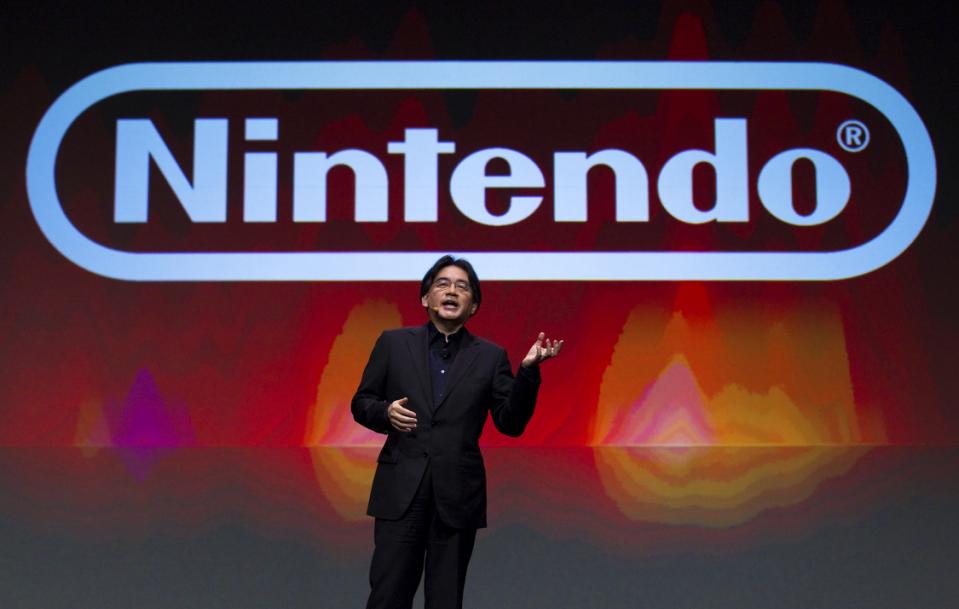
Nintendo’s next console, codenamed the Nintendo NX, may use Google’s Android platform as its operating system, according to Japanese newspaper Nikkei.

In a recent article from the publication, Nintendo highlighted the fact that third-parties were not able to easily move between developing games for other gaming hardware and Nintendo’s console.

Instead, the console’s architecture required developers to create titles specifically for Wii U and, as a result, development costs tend to be greater.

Nintendo has not provided any information on its next console beyond the codename. With this in mind, it’s important to note that this is currently a rumour, albeit one from a publication with a reliable track record.

According to CEO Satoru Iwata, the company will not reveal the Nintendo NX until 2016, which means it will not be featured in its E3 2015 showcase.

The hardware’s development was first confirmed March, along with Nintendo’s plans to bring its games and IP to mobiles and smartphones.

At the time, Iwata said that the hardware project represents a “brand-new concept”, but didn’t elaborate further.

“As proof that Nintendo maintains strong enthusiasm for the dedicated game system business, let me confirm that Nintendo is currently developing a dedicated game platform with a brand-new concept under the development codename ‘NX’,” Iwata explained at the press conference.

“It is too early to elaborate on the details of this project, but we hope to share more information with you next year.”

Nintendo has also confirmed that, along with the Nintendo NX, its mobile and quality of life titles will also not be shown at E3.

“Since we understand that E3 is an event for dedicated video game machines, we do not intend to discuss the smart devices as well as quality of life,” said Iwata.

post-63234-These-two-Diablo-III-players-s-eaZB

by Michael Thomson

Last year, Blizzard cooperated with the FBI to get two Diablo III players to plead guilty in criminal court over charges relating to a series of in-game thefts in summer after the game’s release. Patrick Nepomuceno and Michael Stinger spent a summer using a Remote Access Tool sent as as link sent through Diablo III’s chat system to take control of other players’ computers and transfer gold and Legendary items to their own accounts. Reporting on the case for Fusion, Kashmir Hill recounts the duo’s plans to sell the stolen items through the game’s now defunct Auction House, a contentious addition to the game that allowed players to sell each other gear and items in exchange for real money.

Stinger contends Blizzard banned their accounts before either had a chance to actually make any money but estimates they had amassed around $9000 worth of items before they were caught. The pair eventually accepted misdemeanor plea offers for probation and promised to repay the $5,654.61 Blizzard claims to have spent investigating the case in $100 monthly payments.

The case is not the first time videogame publishers have turned on their fans and cooperated with the government in prosecution cases. Last year, an Australian man was arrested after hacking into a Riot Games employee’s computer and claiming to have access to 24.5 million League of Legends accounts. Before he was arrested, he was said to be making $1000 a day selling rare character skins taken from these accounts. He would also occasionally harass high-level players by disconnecting them from matches during public streams or resetting their accounts to far-away countries to cause game lag. He was arrested on nine charges of hacking and fraud and found with more than $110,000 in Bitcoin.

Perhaps most famously, Valve worked with the FBI in 2003 to set up a fake job interview to lure Axel Gembe, a young German who hacked into the company’s internal servers to download a pre-release copy of Half-Life 2, into confessing his crime. Valve claimed Gembe had cost them $250 million dollars in damage, but he would eventually be given two years probation. Ironically, Valve would later turn this fan desire to see an in-development game into a proprietary business with its Early Access program, a way of exploiting fan eagerness to actually pay to contribute to focus testing and bug testing a game.

Each of these cases reveal an alarming tendency to make play culture subject to criminal laws meant to protect profit and property in the name of public interest. There remains an irreconcilable ambiguity in the idea that a digital good constitutes defensible property. In the case of Diablo III, the idea that one weapon is more desirable than any other is an algorithmic construct, built from a model of artificial scarcity and simulated labor players are expected to perform in order to simulate progress. Stringer and Nepomuceno were not stealing items from other players but triggering some small piece of code that unlocked those items in software they already owned. Likewise, those items remained in the game software of their supposed victims. What the two ultimately did was find an alternate way to trigger access to those items within the software, pushing back against the artificial limits of Blizzard’s design.

Though the actual charges against them were for illegally accessing a “protected computer,” which courts have interpreted under the Computer Fraud and Abuse act to mean any computer connected to the Internet, it’s hard to exculpate Blizzard from its role in designing a game in a way that makes such behavior more gratifying and playful than simply following the rules.

Theorist and researcher Nathan Jurgenson has popularized the concept of digital dualism as a way of describing the erroneous belief that there are digital and non-digital dimensions of reality. While this argument has been useful in deflating portentous arguments about how alien and exceptional new technologies are, there remain important distinctions in software as legally defensible material that makes it worthwhile to hold onto some sense of dualism. Game makers criminalizing certain player behavior points to a distinction between play and software, between executable code and the ideological models of behavior and thought they force us to engage with.

In The Interface Effect, Alexander Galloway describes a long-running dialectic of computer code as both narrative and machinic. Computer code “must always exist as an amalgam of electrical signals and logical operations in silicon.” Yet, code is always infused with a “mystification or distancing” something that ensures its material operation and eventual consequence are “most definitely not the same thing.” As games, the use of rules to coerce certain types of behavior must always be conditional and subject to player rejection or interference. Criminal prosecutions against people attempting to uses software for precisely these playful purposes reflect an elevation of the ideological values of software over the often largely unaffected material basis from which those values come.

This conflict is at the heart of a wide variety of arguments about the value of digital media and how it should be protected through criminal and property laws. When Blizzard participates in the prosecution of its customers, it’s not defending any particular material interest but the company’s authoritative position in controlling the uses of its software. In recent years, the requirement of some regular online authentication to make a game operable has made it possible for developers and publishers a near autocratic power to monitor how their products are used. This expanded oversight has made it possible to extend the market domain of each developer or publisher, monetizing not just the software, but of individual uses of its parts, governed by the structure of a digital marketplace that depends on a symbolic scarcity of items, which only the developer or publisher shall have authority to manipulate through code the player already owns.

More than any public interest or material value, it’s this position within a hierarchy of ideological control that digital fraud laws protect. A recent story in the New York Times co-authored by two Yale psychologists and two Harvard economists argued symbolic or social incentives trump financial ones when trying to encourage behavior change. People are more likely to obey a certain rule or do a certain thing if they are given a visible token or if they’re provided information on how others acquired their tokens. “When your choices are observable by others, it makes it possible for good actions to benefit your reputation. Similarly, norms make you feel you’re expected to cooperate in a given situation, and that people may think poorly of you if they learn you are not doing your part.”

The overlap with Diablo III’s structure, not as a game but as a software built around uneven distribution of identity tokens, is less about play than about maintaining Blizzard’s centrality in defining how its tokens are valued. It’s clear the drop rate for Rare and Legendary loot in Diablo III began at an extreme low to push people to use the Auction House, and in the time since it was shut down, the drop rates have become significantly more generous.

The digitization of commercial culture has proven the artifice of market-driven scarcity models, and the incoherence of giving transnational industries authority over pastimes. Though optimists sometimes argue that software has been the pretext through which play has become the defining spirit of our times, a ludic century in the words of designer and academic Eric Zimmerman, the legal aggression of game designers over the pettiest matters make a persuasive case that play has been used as a pretext for an epochal expansion of computation, something that’s proven more effective at creating coercive social and political norms against which no playful transgression will be tolerated.

If the 21st Century is to become genuinely ludic, we will at some point have to accept the spirit of play is antithetical to computation. Forms that seem to combine those two opposites may produce momentary spectacles, but over time those individual works lose their novelty and become recognizable as bizarrely machined trickery, something that depends on jealously guarded networks of control, punishment, and profit, values which always seem to be given precedence over playful ones in every instance where they come in conflict.
446a936490b81dcb18bab98c6adf7adf

by GameSpot Staff

The chief executive of Grand Theft Auto parent publisher Take-Two Interactive has spoken out on the subject of microtransactions, one of the industry’s hot-button topics. Speaking this week during the 43rd Annual Technology, Media & Telecom Conference in New York, Strauss Zelnick said players should never feel as if they’re being robbed.

Rockstar Games “You never want to the consumer to feel as though you’ve picked their pocket,” he explained. “You want a consumer to feel like you gave them a great experience. You want them to be happy that they spent money on the experience.”

This might seem like an obvious approach to take, but Zelnick also said, without naming any names, that some developers prioritize monetization over creativity.

“But I think some interactive entertainment companies, typically not the console companies, but some of the free-to-play companies, have focused entirely on monetization and, ‘creativity as a necessary but annoying pre-condition to monetization,'” he added. “And we just don’t look at it that way at all. Monetization stems organically from creativity. And so the more that we give consumers to do that they love doing, the more likely they are to spend money while they’re doing it.”

Zelnick said 2K Sports’ NBA 2K franchise has a “really high pay rate” for in-game currency sales. The executive has also previously spoken about Grand Theft Auto V’s online mode, GTA Online, as “the gift that keeps on giving” as it relates to microtransactions. In addition, he pointed out that, importantly, Take-Two designs its games to be fun, complete experiences that don’t require people to pay extra for in-game items or currency.

How do you feel about microtransactions in console games? Let us know in the comments below.

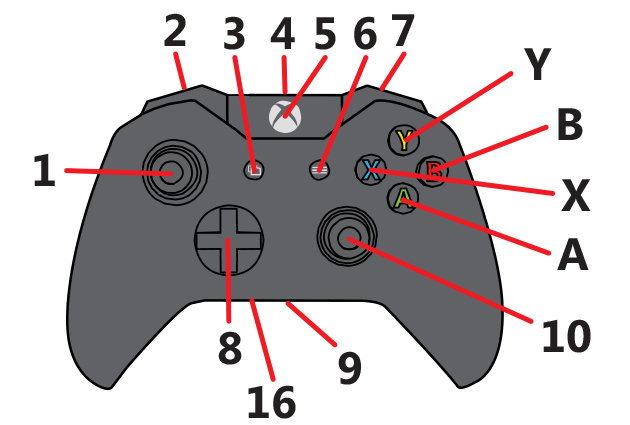
c7a12fbe-af04-4a90-92f2-18338219c2aa by Aaron Souppouris Even though the Xbox One controller has earned many plaudits, one thing universally hated is the lack of a headphone port. So far the best solution has been to buy the $24.99 Xbox One Stereo Headset Adapter, but even that’s not without its problems. Although it won’t be much consolation to gamers that already bought the adapter, Microsoft is going to release a refreshed controller this June with a 3.5mm port built in. The news comes via Microsoft’s own support site, which says the port (number 16 on the diagram above) will feature on “controllers released after June 2015.” It also notes that only “compatible” 3.5mm audio devices can be connected to this port. Chances are you’ll be able to hear audio through any headphones, but there will be some headset mics that won’t work due to the pointlessly different way manufacturers order the conductors on their jacks. The PlayStation 4, and many phones, suffer from the same issue, so that’s not really something Microsoft can control.

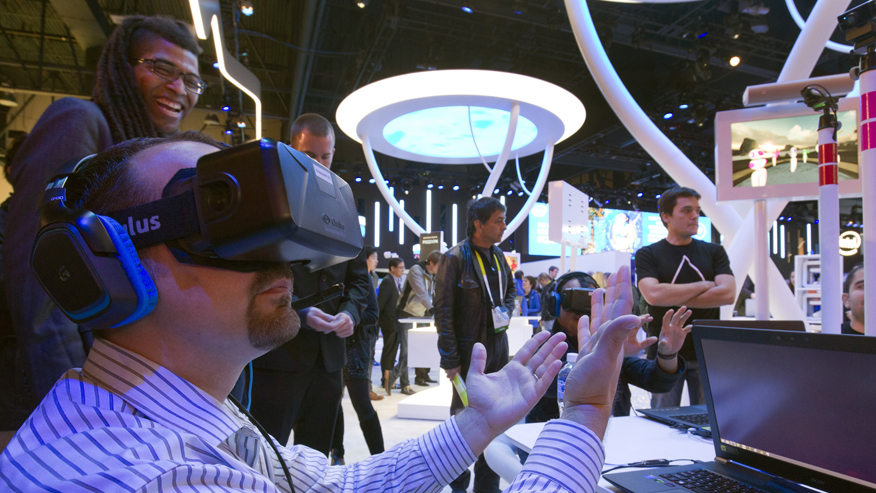
An attendee wearing an Oculus Rift virtual reality headset plays in a virtual volleyball game at the Intel booth during the 2015 International Consumer Electronics Show (CES) in Las Vegas, Nevada January 6, 2015. The goggles give a full 3D immersion and 360 degree view, a representative said. REUTERS/Steve Marcus (UNITED STATES - Tags: SCIENCE TECHNOLOGY BUSINESS) - RTR4KAO3

An attendee wearing an Oculus Rift virtual reality headset plays in a virtual volleyball game at the Intel booth during the 2015 International Consumer Electronics Show (CES) in Las Vegas, Nevada January 6, 2015. The goggles give a full 3D immersion and 360 degree view, a representative said. REUTERS/Steve Marcus (UNITED STATES – Tags: SCIENCE TECHNOLOGY BUSINESS) – RTR4KAO3

by Zach Epstein

Virtual Reality pioneer Oculus VR this week announced its acquisition of Surreal Vision, a company that specializes in recreating actual physical spaces in real time for insertion into a virtual reality environment. In other words, virtual reality just got real.

Oculus VR has spearheaded a revitalization in the virtual reality space. And when Facebook acquired the company for $2 billion last year, it became more than apparent that VR is now here to stay.

Virtual reality is nothing new, of course, but technology has finally reached a point where terrific VR experiences can be delivered by gear that is both affordable and portable. Consider Samsung’s Gear VR headset, made in partnership with Oculus VR. The device adds a superb VR gaming element to the company’s smartphones for just $199, and models are available for all three of the company’s flagship handsets.

But virtual reality is about much more than just gaming.

Consider this: From the comfort of your own home in New York, you can walk around a new exhibit at the Louvre Museum in Paris, France. Not just a still representation of the exhibit that was captured by cameras months earlier and then recreated in virtual reality. You can be there in real time, right now.

Possibilities flood the mind, and Surreal Vision is working to make those possibilities a reality. With Oculus’ focus on mixed reality, the company seems like a perfect fit to help move Oculus VR’s vision forward.

An obvious use case is telepresence. With the tech being developed by Surreal Vision, and now Oculus VR, a user would be able to remotely attend a meeting halfway around the world in real time, as if he or she were there. The same user could then visit with friends or family across the country just a few minutes later.

Surreal Vision co-founder Richard Newcombe offered the following statement alongside the announcement:

“From the human point of view, the world is constantly in motion. As we move around, our eyes dart about the scene and the rich dynamical nature of the scene’s contents come flooding in. We’re able to make sense of those changing signals to produce a coherent understanding of the world we live in, which we effortlessly navigate and interact with. Over the past three decades, a great deal of work in computer vision has attempted to mimic human-class perceptual capabilities using color and depth cameras.

At Surreal Vision, we are overhauling state-of-the-art 3D scene reconstruction algorithms to provide a rich, up-to-date model of everything in the environment including people and their interactions with each other. We’re developing breakthrough techniques to capture, interpret, manage, analyse, and finally reproject in real-time a model of reality back to the user in a way that feels real, creating a new, mixed reality that brings together the virtual and real worlds.

Ultimately, these technologies will lead to VR and AR systems that can be used in any condition, day or night, indoors or outdoors. They will open the door to true telepresence, where people can visit anyone, anywhere.

Much progress has been made toward this future, but significant challenges remain. For virtual reality, the accuracy and quality of the continuously updating 3D reconstruction must be near flawless, which is a requirement almost no other modern computer vision problem faces. When we cross these seminal thresholds, users will perceive the virtual world as truly real – and that is the experience we’re driving toward.

By achieving the ability to continuously reconstruct and track the world around us, we’ll be able to build an understanding of the world at a semantic level. This will bring the power of the digital world to the myriad of interactions we as humans perform everyday, leading toward a breakthrough in human-computer interaction and a computing platform that has true spatial awareness.

Given the team, the resources, and this shared vision, there’s no better place for us to help bring about these breakthroughs than Oculus. We’re incredibly excited for the future.”

The terms of the deal were not disclosed.

code2015_20150527_145104_7703

by Kurt Wagner

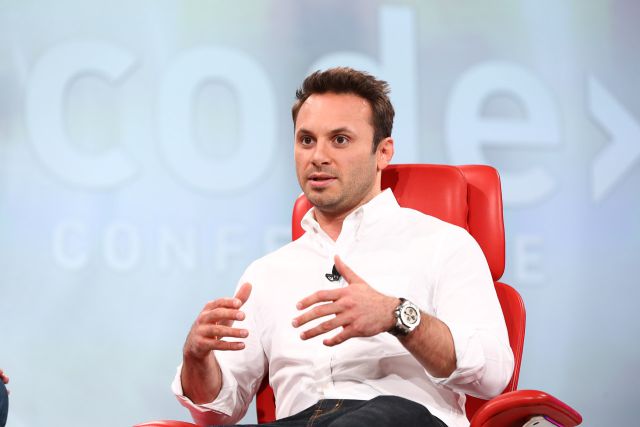
Oculus CEO Brendan Iribe said Wednesday that his soon-to-be-available virtual reality Oculus headset and the computer needed to run it will cost “in the $1,500 range.”

The company, owned by Facebook, announced in early May that it would start selling the Oculus Rift to consumers in early 2016, but the price for the headset itself has yet to be announced.

“We are looking at an all-in price, if you have to go out and actually need to buy a new computer and you’re going to buy the Rift … at most you should be in that $1,500 range,” Iribe said onstage at Re/code’s annual Code Conference in Rancho Palos Verdes, Calif. Over time, he’d like to see that cost come down to under $1,000.

In other words, it’ll be expensive.

ps4-review-1

by Jacob Siegal

If you’ve been holding out for a PlayStation 4 price drop, you might be in luck. On Wednesday, WholesomeGamer was tipped off that Sony’s official retail loyalty site, intended to reward verified video game retail employees, is currently running a promotion which gives members the chance to win a PS4, PS Vita and other prizes.

Within the rules of the promotion, Sony lists the ARV (average retail value) of each prize, but here’s the catch: the prices listed don’t match up with the current MSRP of the PS4 or the Vita.

Here’s a screenshot of the rules with the adjusted ARV:

ps4-price-drop-rumor

As you can see, the PS4 is valued at $349.00 and the PS Vita has an ARV of $89.00. On the other hand, Best Buy, Amazon, Target and most other retailers are still selling the PS4 and its various bundles for $400 and the PS Vita for $200.

A $50 price cut on the PS4 wouldn’t come as much of a shock, but the enormous discount on the PS Vita makes us think that the original version of the handheld might be the model included in the promotion.

Regardless of whether or not the leaked document is legitimate, the fact that the Xbox One managed to overtake the PS4 in April might be incentive enough to bring the price down. If a price cut is incoming, we’re sure to hear more about it at E3 2015.

b4c70cbe94038ab59e720e44d8a7efed

by Owen S. Good

This week marked the 20th anniversary of Sega’s startling E3 1995 announcement that the Sega Saturn was already on shelves in North America, ahead of its planned September launch. The rush job sealed the device’s doom, and triggered Sega’s decline from console titan to near-afterthought.

Sega Nerds talked to Tom Kalinske, the outspoken former president of Sega of America, on the anniversary of the announcement itself, and found Kalinske still adamant that hustling out the console was a terrible decision. Kalinske already is on record saying Sega of Japan’s rejection of a partnership with Sony to make its next console was “the stupidest decision ever made in the history of business.” So Sega’s Japan leadership, followed the enormous success of the Genesis/Mega Drive with two colossal blunders.

The Saturn had launched in Japan in November 1994, and the following March, the company announced it would launch in the United States in September. But in this rewind by The Guardian, one sees a Sega leadership first fixated on competing with the Atari Jaguar — an even bigger flop — and then panicked by the oncoming PlayStation. Determined to get something to shelves before Sony, Kalinske was sent to the stage in L.A. to declare that the Saturn was already on shelves, at a price of $399.

Minutes later — literally — at Sony’s own presentation, the nascent console maker shot back with Steve Race’s famous “two-ninety-nine” mic drop, announcing the PlayStation’s retail price. Sega was thoroughly pantsed, now committed to an expensive console rooted in the sprite-based, kids-on-couches days of gaming, up against a PlayStation that, for $100 less, delivered revolutionary three-dimensional visuals.

Moreover, as Kalinske lamented to Sega Nerds, rushing out the Saturn left it with a barren games lineup and next to no marketing plan, which hurt the console’s launch no matter its price. Sony, meanwhile, came to market with a robust catalog, shrewdly pursued older and higher-income demographics and rode that to success.

“Had we waited until we had more and better games, launching with all retailers instead of with a few,” Kalinske told Sega Nerds, “with marketing that could reach every player, we would have been much more successful, even if that meant waiting for a late October or November launch.”

Both reads are worth your time this weekend. Sega followed the Saturn with its much-loved and lamented Dreamcast, beating the PlayStation 2, Xbox and GameCube to the market; but the damage had been done, and it was discontinued in 2001, ending Sega’s run as a console maker.

gears-of-war-1

by Michael McWhertor

Microsoft is cracking down on some of the testers who leaked details about the Xbox One remaster of Gears of War, banning them permanently from Xbox Live and temporarily making their Xbox One consoles “entirely unusable.”

Gears of War for Xbox One, which is still officially unannounced, leaked last month when the game’s multiplayer mode went out to testers. Gameplay video of the Xbox One remaster emerged earlier this week.

Third-party testing service VMC emailed its testers today to warn them of violations against the company’s non-disclosure agreement and that some testers who violated that agreement have been banned from Xbox Live, per Microsoft’s end user license agreement.

According to an email from VMC, Microsoft “permanently disabled their Xbox LIVE accounts (as well as other suspected accounts present on their Xbox One kits) and temporarily blocked all of their Xbox One privileges — meaning that for a period of time which Microsoft decides on depending on the severity of the offense, their Xbox One is entirely unusable.”

Here’s the full email from VMC:

Hi everyone,

In the light of recent events, we’d like to bring a situation to the community’s attention in attempts to strengthened everyone’s awareness and vigilance regarding the NDA which binds every single one of you to VMC.

Recently, multiple leaks were perpetrated by several GBTN community members. In one case, a member who was participating in that test shared a screenshot on Snapchat with their friend, who wasn’t part of the project, but tricked his friend by saying he didn’t believe him when he said they were working on the same project. Upon reception of the screenshot, the friend who received the Snapchat leaked it online, betraying his friend as well as his NDA with VMC Games. While the tester who first took the screenshot didn’t think he was doing anything bad, he was still going against the NDA, and was part of the cause why the information got leaked. Because of this, both members were permanently removed from the community and addressed to our legal department, as per the terms of the NDA.

Now, new wording is about to reach the community regarding this particular event. The nature of the leak having had occurred through Xbox One, actually also went against the Microsoft EULA, which is agreed upon when creating an Xbox LIVE account, or any other type of Microsoft account. This being said, as per that agreement with the testers in fault, Microsoft also permanently disabled their Xbox LIVE accounts (as well as other suspected accounts present on their Xbox One kits) and temporarily blocked all of their Xbox One privileges – meaning that for a period of time which Microsoft decides on depending on the severity of the offense, their Xbox One is entirely unusable.

The reason behind the Non-Disclosure Agreement is not only to protect our clients and our program, but also our community, and to make each and every single one of you aware of the severity of revealing confidential information which you’re entrusted with. One screenshot, message or even conversation shared with someone else can easily snowball into a situation that goes out of control, and not only penalize the offender as well as anyone else directly involved, but sometimes far beyond that. In certain cases, there were consequences which had affected people which had no malicious intentions but ended up entwined within the legal case – we’re fully aware that this also targeted very faithful, hard workers who had been with us from the start, and this situation crippled the entire community. We do not want to go that way ever again and are constantly in search of better solutions to single out perpetrators before too much is at risk. The community itself is growing stronger, and often times leaks are reported by community members to us – and we’re extremely thankful for that as it not only speeds up investigations drastically, but also shows us that this community is tightly knit and merely contains a few bad apples, who unfortunately ruin the experience for too many participants already.

We would like to take this opportunity to remind everyone that this is a community. Your actions and behavior reflect on each other as well as on us, and acting selfishly has the potential to ruin the experience to everyone. Please be mindful of others throughout your actions.

Thank you,

GBTN Coordinators
Global Beta Test Network
VMC

Microsoft’s remastered version of the original Gears of War, first released in 2006 on Xbox 360, is in development at Black Tusk Studios and Splash Damage. We expect to hear more about the Xbox One game at E3 in June.

ps4_0_0

by ‘Wololo’

We’ve revealed a few weeks ago that some electronic stores in Brazil were advertising a way to copy pirate video games onto your PS4 for a fee. Although the technique was not described in details (these stores wanted, after all, to make a profit out of the scheme, not share it for everyone to get it for free, or for Sony to patch it), we’ve been in touch with several members of the hacking scene, as well as customers of these stores, who have all confirmed the existence of the “hack”.

Yesterday, journalists at UOL Jogos, a trusted site in Brazil, have confirmed that the hack is real, as they have verified it themselves on a test console (original article, in Portuguese, can be found here). It needs to be emphasized that this is not the well known “account sharing” trick, but a new kind of hack.

PS4 Hack for piracy confirmed to be real

ps4_jailbreak_raspberry_pi

Small electronics store in some streets of Sao Paulo will charge from R$ 300 to R$ 400 (about $100 to $150) in order to install 10 pirated games on your console. The UOL journalists have confirmed the hack to work on their own console.

The process, as described by Brazilian modchip stores, is close to what we have explained before: a Dump of a “legit” console with a dozen games on it is performed, and copied to the target console. In addition to a copy of the hard drive, it is safe to assume a dump of the NAND/BIOS is performed as well. It seems the dump is performed with the help of a regular raspberry pi, as this had been implied the first time we uncovered this story.

The process described on UOL is extremely similar to what has been described on the scene, and as we reported here. Activate a PS4 for a given account, make a full copy of its state/NAND, deactivate it, then copy the backed-up NAND again. UOL mentions however that in their experiment, their console ended up with 2 registered accounts, which are part of the cloning process, and required for the games to work.

A new way to pirate PS4 games, a lucrative business

Other ways have existed for pirates in the past: Sony lets people activate several consoles on the same account, so some people abuse that system by sharing accounts with their friends. This piracy technique remains limited as you can only share an account with a limited number of consoles. This new technique, however, has virtually no limit to how many PS4s could replicate the games. As such, this is a very lucrative business for these electronics shop, who make close to 100% profit on this technique.

These shops in Brazil charge about $100 to install 10 games. These games would cost almost $600 normally. This is a great deal for both the client and the seller. To get more games, one has to come back to the store and pay roughly $15 for each additional game. UOL mention that with 10 games of the current generation, your PS4 hard drive is pretty much full anyway, so you’ll have to erase a few ones to add new ones.

The article on UOL mentions that the hack initially originated on a Russian site. Given what I’ve been told so far though, it could literally have originated from anywhere, as it is heavily inspired from a similar technique on the PS3 that is widely known. It could be one of those “not so secret” secrets of the scene.

As we’ve discussed before, this is not really what could be considered as a PS4 Jailbreak, and of minimal interest from a homebrew perspective. It is still interesting however, from my point of view, to confirm once again that a system is as secure as its weakest link. Although no encryption is broken here, pirates are still able to find their way, while us “homebrewers” are left in the cold.

Sony already taking legal action in Brazil

23e58ccd18e32cab182dbd6268a12868_XL

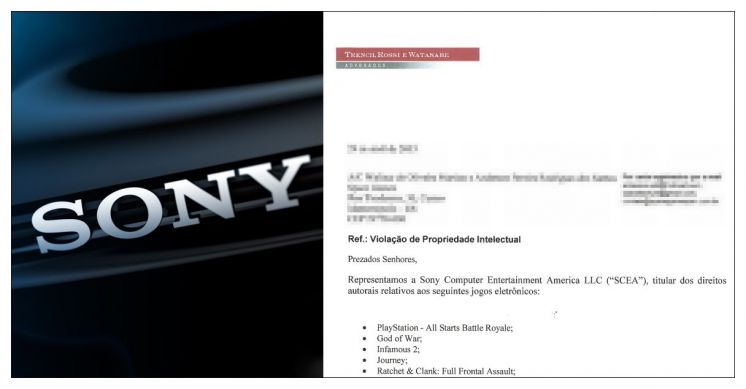
Sony are not totally ignoring the issue of piracy in Brazil. It seems they are aware of the “account sharing” technique (and how some stores are monetizing it) and already sending cease and desist notices about that. It is safe to assume they will at least do the same for this new piracy technique, and will probably be looking into ways to patch the hack. As a reminder, people on the PS4 hacking scene have told us that the technique they knew about has been patched on 2.51, so it seems the technique used by Brazilian stores is slightly different from that.

As always, we will be keeping our page up to date with the latest PS4 Jailbreak news, so you can be aware as soon as a valid technique exists that doesn’t solely rely on the greed of a few pirates.