9fa2da537272e41e52c2c7a024d133ec

by Eddie Makuch

The Xbox One may be trailing behind the PlayStation 4 in the current-generation sales race, but Microsoft has high hopes for its console this holiday. Speaking with GameSpot this week at E3 2015, Microsoft executive Aaron Greenberg said a string of blockbuster exclusive games and new backward compatibility functionality will lead to a “massive migration” of Xbox 360 owners moving to Xbox One.

“A lot of people have been waiting for the next Halo; a lot of people have been waiting for Gears; a lot of people have been waiting for backwards compatibility,” Greenberg said.

Halo 5: Guardians, Gears of War Ultimate Edition, and backward compatibility will all be available on Xbox One before the end of the year.

“And so we think having all of that coming this holiday; we expect we’re going to see a massive migration,” he added. “We expect millions of Xbox 360 owners to migrate and move to Xbox One. We see that the majority of people who buy an Xbox One today own an Xbox 360. So our fanbase has stayed very loyal. And frankly, they’re waiting for those new releases to come this year.”

Greenberg stressed that you should not underestimate how pivotal backwards compatibility will be in encouraging people to upgrade from an Xbox 360 to an Xbox One.

drakes-fortune-e1434634387793

by Paul Tassi

One of the biggest stories to come out of E3 that doesn’t involve the announcement of an actual game is the news that Microsoft’s Xbox One will now be able to play Xbox 360 game discs, offering full backwards compatibility for the console, something long thought impossible for this new console generation.

Nearly everyone, outside of entrenched fanboy camps perhaps, sees this as a pretty huge deal for the Xbox One, as that now means reluctant 360 players are free to upgrade without the fear of losing their massively expensive game collections. Yes, an Xbox One is still $350, which isn’t cheap, but the fact that it’s backwards compatible now just made it feel a lot more valuable to those with big 360 library. And with 80 million Xbox 360s sold, that’s no small number.

It’s not going to win Microsoft the console war by itself, and certainly won’t be used by all (I traded in most of my 360 games for a Wii U a while back. I don’t regret it, though I did wince a little when this was announced), but undoubtedly Sony has to be sitting up and taking notice of this development. Out of the PS4, Xbox One and Wii U, the PlayStation 4 is now the only console that isn’t backwards compatible. Surely Sony now must be considering performing whatever voodoo Microsoft did to make the One play 360 games, so they can offer their PS3 library to fans, right?

Don’t count on it.

The real genius of this move here by Microsoft isn’t that they’re now offering something Sony doesn’t have. It’s that they’re offering something Sony almost can’t have, based on how they’ve structured the PS4.

I’m not talking about system architecture. Though it would likely be hard, there probably is some way that the PS4 could be altered to be able to play PS3 discs. Rather, I’m talking about what Sony essentially replaced backward compatibility with: PlayStation Now.

The real genius of this move here by Microsoft isn’t that they’re now offering something Sony doesn’t have. It’s that they’re offering something Sony almost can’t have, based on how they’ve structured the PS4.

I’m not talking about system architecture. Though it would likely be hard, there probably is some way that the PS4 could be altered to be able to play PS3 discs. Rather, I’m talking about what Sony essentially replaced backward compatibility with: PlayStation Now.

playstation-now

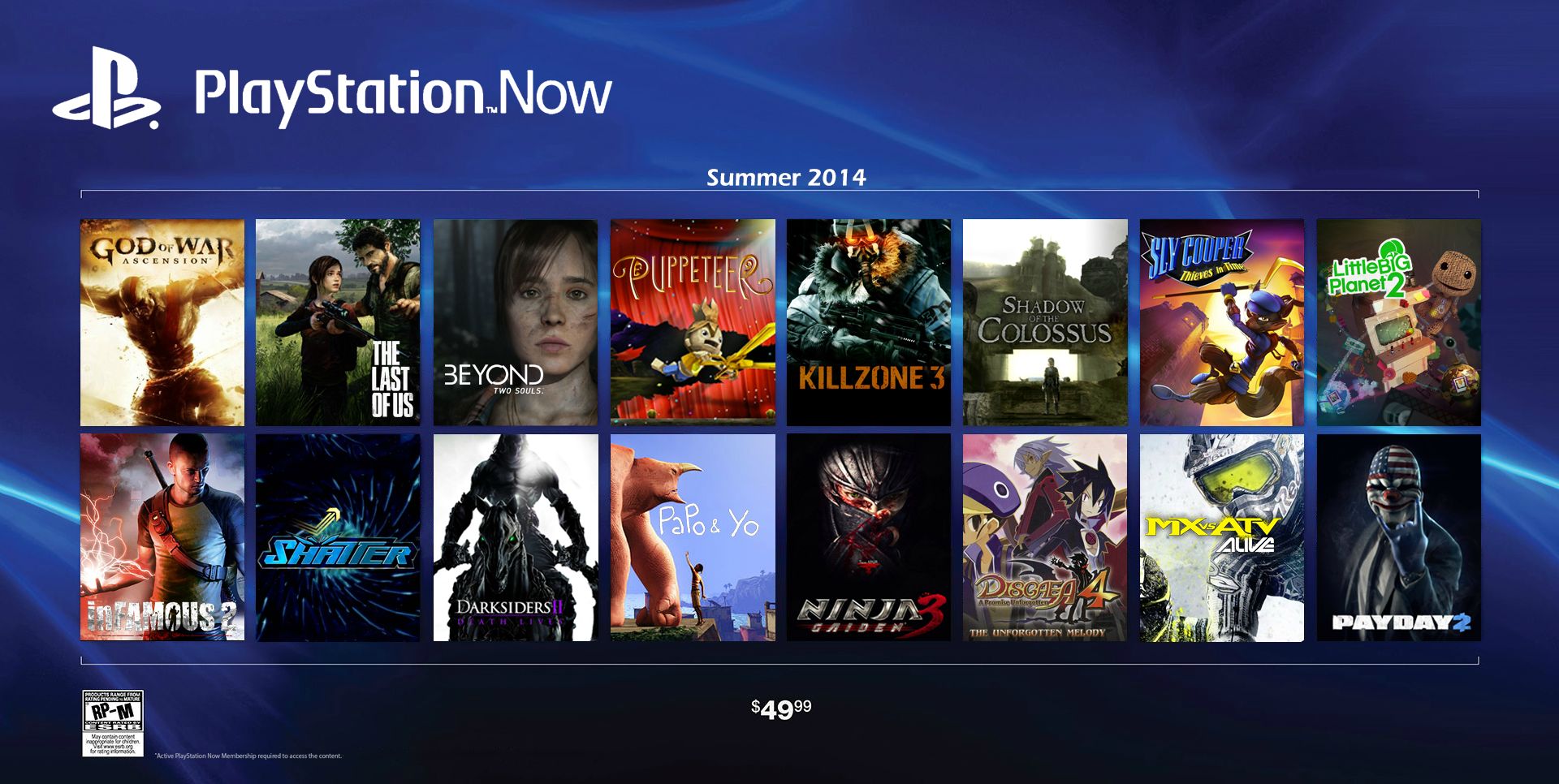
Sony has invested a lot of time, money and effort into PlayStation Now, the streaming service which allows for the digital rental of a huge host of old PS3 games from classics to the obscure. PS Now has struggled to find a proper pricing model, but from the beginning the intention was clear. Since backwards compatibility was too hard to implement, Sony thought they could offer select PS3 games that players might have a hankering to replay, while making themselves and the publishers a few bucks in the process.

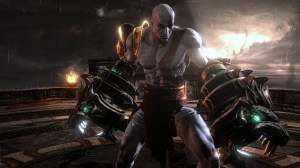
In a vacuum, this isn’t a bad idea. PS Now does work pretty well, and even if prices have been wonky, chances are PS4 owners aren’t dying to play old PS3 games all the time. When the craving hits them, they can spend a few bucks a play Uncharted or God of War or what have you, or try something else they never got around to.

The problem, of course, is now when both of your rivals, Microsoft and Nintendo, suddenly are offering full backward compatibility for their consoles, your rental system doesn’t look quite as appealing. And the fact is that if Sony converted the PS4 into a backward compatible machine, much of the point of PlayStation Now, which they’ve invested so much into, would be rendered moot.

Past that logic, Sony is still in a position where they don’t need to view the Xbox One as nipping at their heels. Though Microsoft’s console has come a long way since its disastrous launch in 2013, the sales gap remains enormous between the PS4 and Xbox One. Backwards compatibility is a great function to have and certainly no one (no one sane, anyway), is saying that it’s a bad thing for a console to offer.
god-of-war4

But with that said, the longer time goes on, the less relevant backwards compatibility will be. Ideally, you want your console to offer the ability to play last-gen games right at launch, which makes the transition from one system to another much more painless. Rather than keeping two boxes around and trying to build a new library from scratch with the new-gen system, you can simply have one new box that plays everything you’ve bought over the last six years, and everything else yet to come.

Two years into the console’s lifecycle means that transition is a little rougher. The appeal is still there, but you have people like me that were resigned to the fact that this would never happen so they ditched their libraries. Or you have others who already switched to Sony at the start, and they’re not going to also buy an Xbox One just to unlock their 360 library.

This is probably what’s going through Sony’s head right now. This is a big story at E3 sure, but in practice, is it worth it for the PS4 to relentlessly pursue backwards compatibility to “catch up” with a system they’re already dramatically outselling? I’m not so sure. Add in PlayStation Now’s desire to act as a last-gen rental service that would be hugely undercut by PS3 discs, and it seems downright impossible.

If Sony could crack the code and figure out a way for existing PS3 game discs to unlock content on PlayStation Now for free, that would be kind of a genius compromise. Though the technical feasibility of that is unknown, and it would still fundamentally gut PS Now in a lot of ways. The more likely option is that Sony just keeps ignoring backwards compatibility and hopes that after E3 dies down, it won’t spark some Xbox One sales frenzy. They’re ahead, they had a plan, they’re probably going to stick to it.
 

reggie-fils-aime_741c6

by Brian Crecente

To be perfectly clear: Nintendo president Satoru Iwata didn’t apologize.

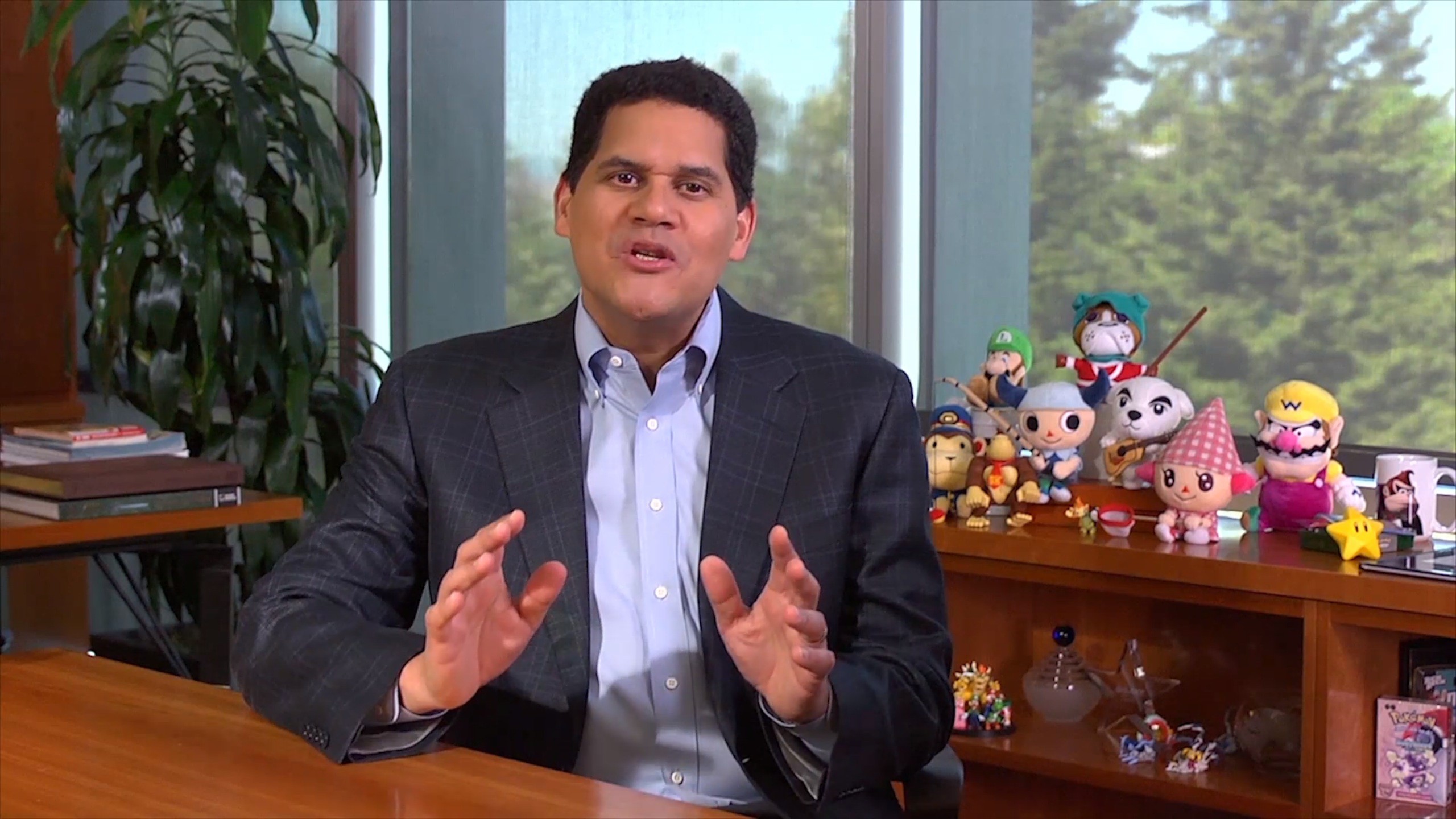
“It was not an apology,” said Nintendo of American president Reggie Fils-Aime. “It was not a statement about the content we’re showing, essentially it was an ‘I hear you’ message.”

The not-apology, the message, was a tweet sent out by Iwata seemingly in reaction to a tidal wave of negative online reaction to the company’s E3 Nintendo Direct this week.

One translation, by NeoGaf user Cheesemeister has Iwata saying this:

“Thank you for watching. We take opinions of this year’s Digital Event seriously and will work to better meet your expectations.”

But Fils-Aime says that translation isn’t exactly right and misses some of the context.

“Mr. Iwata is in Japan and what he’s trying to do is help explain to consumers in Japan what’s going on at E3,” he said. “The correct translation of his message was: ‘Thank you for your feedback. We hear you and we are committed to continuing to meet your expectations,’ was essentially his message.

Apology or not, it was certainly spurred by the reaction to the games and news Nintendo pushed out at E3.

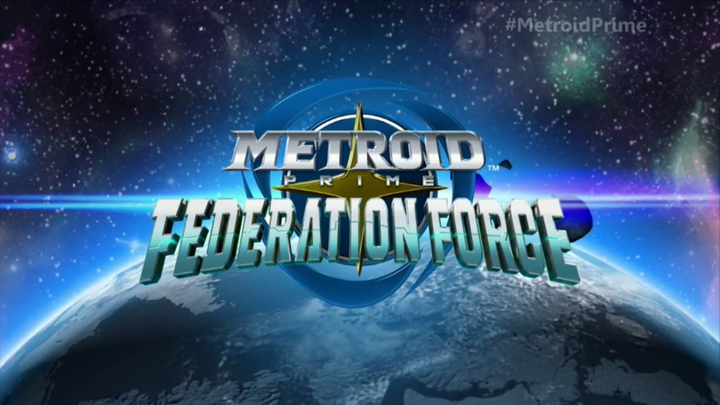
Many fans reacted with vitriol, either disappointed with what wasn’t said, or with what was. Nearly 12,000 fans signed a petition on Change.Org to try and convince Nintendo not to continue developing one of the newly announced games: Metroid Prime: Federation Force.

9e6db53bf8c934af0ce05b207f060d5d

But Fils-Aime seems unfazed by the reaction.

“One of the things I find interesting is that if you look at E3 historically for Nintendo, typically what happens is a press briefing happens or our digital event happens,” Fils-Aime said, “and then over the course of the next couple of days people see the games get to play the games and the appreciation and understanding of what we’re doing increases over those three days and continues to build into the holidays.”

Take for example Splatoon, he said.

Splatoon, a new sort of shooter unveiled at last year’s E3 based on an entirely new IP, didn’t receive an entirely positive reaction at the show. At least not initially.

“Splatoon is a game that people are loving right now, but if you rewind to E3 last year, Splatoon was being viewed as, ‘Yes, it’s innovative and it’s different, but the controls are a little hard and I don’t understand the mechanic of turning into a squid and going through the ink.’ There were all of these complaints. But now you look at the finished product and the satisfaction is huge.”

The key to Nintendo’s success, Fils-Aime said, isn’t just to make good games, but to help people understand why they’re good.

“For us, our goal is to make sure we announce the content, help people understand the content, but most importantly get hands on with the games,” he said.

That’s why Nintendo has programs like the one that delivers demo versions of unreleased games at Best Buys around the country or allows people to download early version’s of games on their Wii U to try for themselves.

“I haven’t heard the feedback (for this year’s Best Buy demonstrations), but I think the feedback is going to be quite positive because what we do is make great games and they show well and they really lead to consumer excitement.”

ps4-backwards-compatibility-not-straightforward

by Brian Crecente

News during Microsoft’s E3 press conference this week that limited Xbox 360 backward compatibility was coming to the Xbox One was met with a roar of approval.

The surprise announcement, coming so long after the launch of the Xbox One, also caught the attention of Sony. But not enough to get the company to reconsider its take on PlayStation backward compatibility.

“The backward compatibility news was interesting,” said Shuhei Yoshida, Sony Computer Entertainment’s head of world wide studios. “The technology involved must be very challenging.

“I’m interested in seeing the list of titles.”

Earlier in the week, Xbox head of publishing Shannon Loftis said the Xbox One will essentially be running an Xbox 360 emulator and that the decision to create support on the Xbox One for a number of 360 titles — a hundred by this holiday — was driven by that company’s desire to offer more options to gamers.

“I still play some Xbox 360 titles,” she said. “I love them and I have a big investment in them, both emotionally and financially.”

While Yoshida seemed impressed with the news of Xbox backward compatibility, he was clear it wasn’t going to change anything about PlayStation’s decision not to support previously purchased PS3 games on the PS4.

“The announcement didn’t change,” he said, “I don’t think we will change our approach. The PlayStation 4 doesn’t have backward compatibility.”

Instead, he said, the company will continue to focus on creating new services and new features on the PS4.

That includes the recently announced new media player that people have been asking for, he said.

The closest thing the PlayStation 4 has to backward compatibility is PlayStation Now, an on-demand video game rental service that includes a select number of PlayStation 3 games.

“PlayStation Now works surprisingly well,” Yoshida said. “But the primary purpose of that project was to create a new network service that could be used to bring PlayStation games to multiple devices including non-PlayStation devices, like Sony and Samsung televisions.

“That is an example of our adding and creating new services and initiatives.”

But why doesn’t Sony want to do backward compatibility on the PS4? I asked.

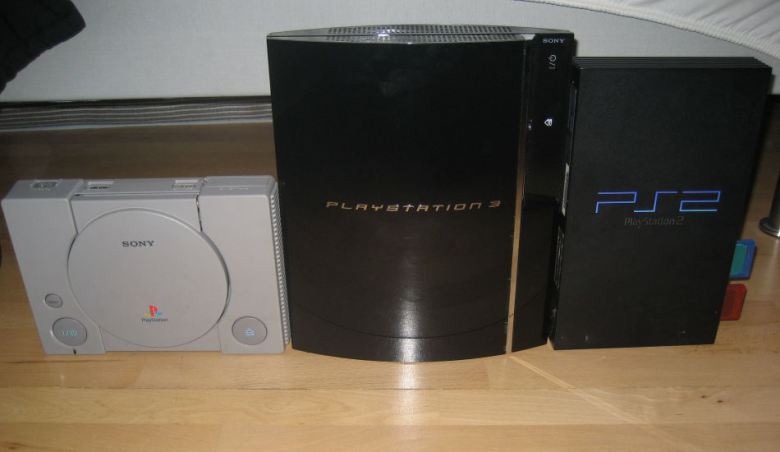
“Backward compatibility is hard,” he said. “I won’t say we’ll never do it, but it’s not an easy thing to do.

“If it was easy we would have done that.”

Theres_an_ugly_truth_behind-41557447bda583cc1db1b6cc11692840

by Tim Stenovec

Sony wowed the audience at E3, the annual video game conference happening this week in LA, when the company announced that it would start to sell some of the TV channels on its new PlayStation Vue internet TV service individually.

That means that people who subscribe to PlayStation Vue, which is only available to those with PlayStation 3 and 4 game consoles — and who live in one of the five cities where it’s currently offered — will be able to buy some TV channels a la carte, instead of having to buy a huge bundle of channels that likely includes many they don’t watch.

This model of television — where consumers only pay for the channels they want — has been the dream of TV watchers for years. The average TV home in the US watches only 17 channels, but subscribes to nearly 200 of them, according to a report last year by the measurement company Nielsen.

But paying for TV a la carte, as observers have noted in the past, looks like it’s going to add up very quickly, at least when it comes to Sony’s service. Take the pricing for the three channels that Sony announced, for instance: Showtime, at $10.99 per month, Fox Soccer Plus, at $14.99 per month, and Machinima, a gaming-centric network, for $3.99 per month.

If you were only to subscribe to those three channels, you’d be paying $30 per month, just for those three. That’s unlikely, of course, but it’s certainly a lot to pay for three channels when you can get 50 from Sony for $49.99.

(People who subscribe to PlayStation Plus, the company’s premium network, will get discounts of $2 per channel when they buy a la carte.)

To be sure, the channels that Sony’s offering a la carte should be thought of as premium add-on channels, not core channels that would usually come as part of a basic bundle.

But Andrew House, PlayStation president and group CEO, still made a point of saying that it was “the first paid TV service to allow users to subscribe to individual channels without the purchase of a multi-channel bundle.”

Sony’s three bundles — which are priced at $49.99, $59.99, and $69.99 — don’t include any of the three channels the company is offering a la carte.

Theres_an_ugly_truth_behind-7763039b439763e530d9d2077a1d917e

Sony says that it will offer more a la carte channels in the future, but it remains to be seen whether the company will include any of the channels that are part of the company’s bundles now, thereby “unbundling” its own packages.

A Sony spokesperson declined to provide any detail as far as what those channels would be, how much they’d cost, and when they’d become available.

But as Phillip Swann, a TV industry consultant who runs the site TVPredictions.com, wrote Tuesday, the cost of paying by the channel has the potential to balloon quickly if Sony is charging $15 per month for a soccer channel: “For example, the local channels could go for $5 or $6 a month; CBS now charges $5.99 for a separate online edition. CNN? Maybe $4 a month? Basic cable channels such as TBS and TNT? Maybe $5 each?”

Swann goes on to write that once you start including local sports channels, you “could wind up paying nearly $100 a month, or more,” just for about 20 channels.

Sony’s announcement comes as the entertainment industry tries to grapple with the changing way that people watch TV. Americans are watching less traditional TV and ratings are down. Subscriptions to traditional pay TV operators are also down as people turn to standalone services like Netflix, Hulu, and HBO Now to get their video entertainment.

Sony’s announcement also comes as an increasing number of networks, like Showtime, Nickelodeon, and CBS, begin to offer standalone streaming services to reach people who subscribe to internet but don’t pay for TV.

So for most people, the dream of paying only for the channels you want to watch, for now, remains just a dream. Unless, of course, you have a PlayStation 3 or 4 and live in New York, Philadelphia, Chicago, Los Angeles, or San Francisco, and you only want to subscribe to Showtime, Fox Soccer Plus, or Machinima.

first-click-e3_0_0_0

by Rich McCormick

I remember the dark times of E3. I remember 2006, a year in which our wallets were raided by giant enemy crabs, flipped over and attacked for $599 and massive damage. I remember Ridge Racer. I remember Riiiidge Raaacer. I remember 2011, and Mr Caffeine, and a Ubisoft show so awkward I had to hover my finger over the mute button to slam down whenever someone started talking. I remember 2012, when Microsoft tried to convince us the most exciting thing about video games was TV. I remember every company talking about the past, about six-year-old consoles like they were the future. I remember feeling like there was no future in games.

But something strange has happened to 2015’s E3. It’s actually good. Bethesda’s show made good on the promise of post-apocalyptic RPG Fallout 4 with several minutes of game footage, while EA’s show introduced a new Mass Effect game and let us plan out our Star Wars fantasies with Battlefront multiplayer. Microsoft, still recovering from its disastrous 2013 show, packed its conference with new Dark Souls, Halo, and Gears of War games, before being outshone once again by Sony.

So far it’s the Japanese company that’s “won” E3, tossing out sequels to fan favorites previously thought dead forever like treats to a starved dog. Shenmue III is not only real, it’s looking likely to hit its $2 million Kickstarter target inside 24 hours, having knocked the crowdfunding site offline for a while at the time of its announcement. The surprise appearance of The Last Guardian, a game first announced in 2007, was a shock only equaled by the news of a legitimate Final Fantasy VII remake, something fans have been clamoring for over the past two decades.

In addition to a genuinely exciting slate of video games, this year’s E3 has also shown that publishers and developers are listening to feedback and focusing on representing their audiences. Women have starred in the shows, both as presenters and as playable characters, a move that feels like a conscious change after the developers of Assassin’s Creed and Battlefield: Bad Company 2 previously said female humans were too difficult to include in their games.

The result is the best E3 for years. While the opulent show still isn’t perfect, for anyone who can remember the bad times of E3s past, 2015’s event has made gaming feel more inclusive, more forward-thinking, and more exciting than it has for long time.

banjo_0_0

by Tom Warren

Microsoft announced its plans to bring Xbox 360 games to Xbox One yesterday, and I’ve had a chance to take an early look at some of the titles available to Xbox preview members. Behind the scenes, Microsoft has built an Xbox 360 emulator that runs on the Xbox One to get these games working, and it’s easy to spot. When you first launch an Xbox 360 game on the Xbox One it starts a setup process that includes the Xbox 360 boot up animation and even the Xbox Live prompt to note you’ve signed in. It’s a little surreal, but there’s a virtual Xbox 360 running on my Xbox One now.

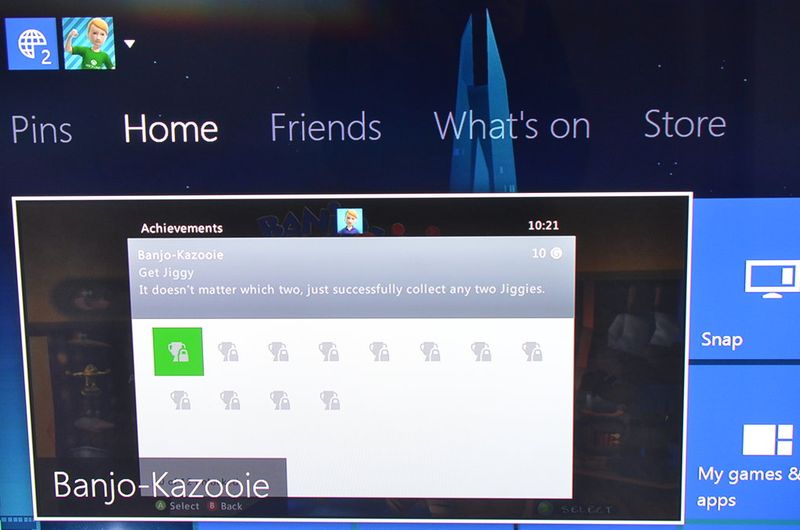
I’ve tried Banjo-Kazooie and BattleBlock Theater, and both work well with no performance issues. These titles are barely pushing many pixels, so I wouldn’t expect to see any problems. Once you’re in a game you can access achievements and it brings up the quick access part of the familiar Xbox 360 dashboard. The dashboard is also shown whenever you select storage for games, but it doesn’t randomly appear elsewhere and it just feels like a regular Xbox game otherwise.

rsz_vls_7403_0

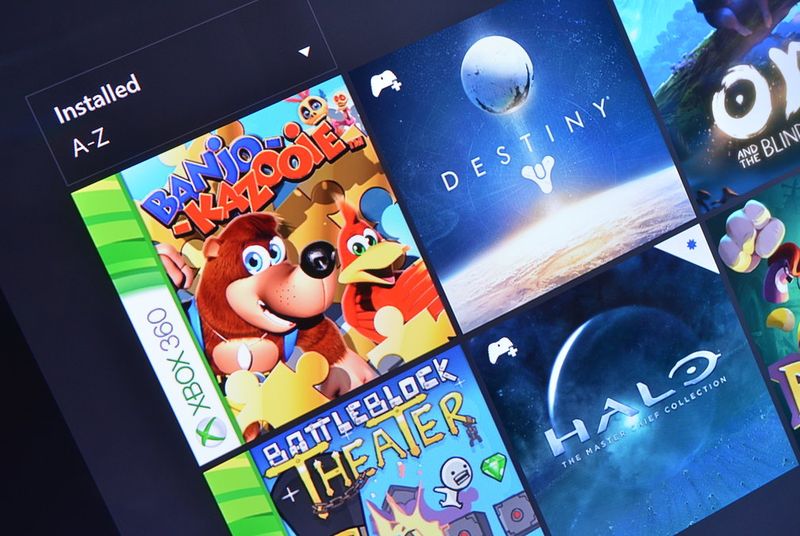
If you already own digital copies of Xbox 360 games then they’ll show up in the my apps and games section on the Xbox One. From there you just download them and then they’re listed like any other game, just with a clear Xbox 360 label on them. Discs are also supported as long as you keep the game inserted in the tray while you’re playing. Xbox 360 games blend in seamlessly with my existing list of Xbox One games, and I can take screenshots or game clips of Xbox 360 titles. Because Xbox 360 games run just like Xbox One titles, you can even snap another app side-by-side without any performance issues. If you didn’t see the boot up animation or Xbox 360 dashboard at any point, you’d just think these were any other Xbox One games.

Most of the 22 games currently available are basic titles, and Microsoft is promising it will have more than 100 games available in the fall with hundreds added over the coming months. It’s a rather impressive achievement that Microsoft has managed to engineer its Xbox One console to run old Xbox 360 games, and it will likely make the console more attractive for those considering the move from an Xbox 360. Xbox One Preview members can test 22 games right now, and the rest will be available in the fall. Microsoft is also planning to release a new dashboard update for the Xbox One in the fall with Cortana integration and a huge new design.

a73100c07d72490c314e983851137cc7

by Eddie Makuch

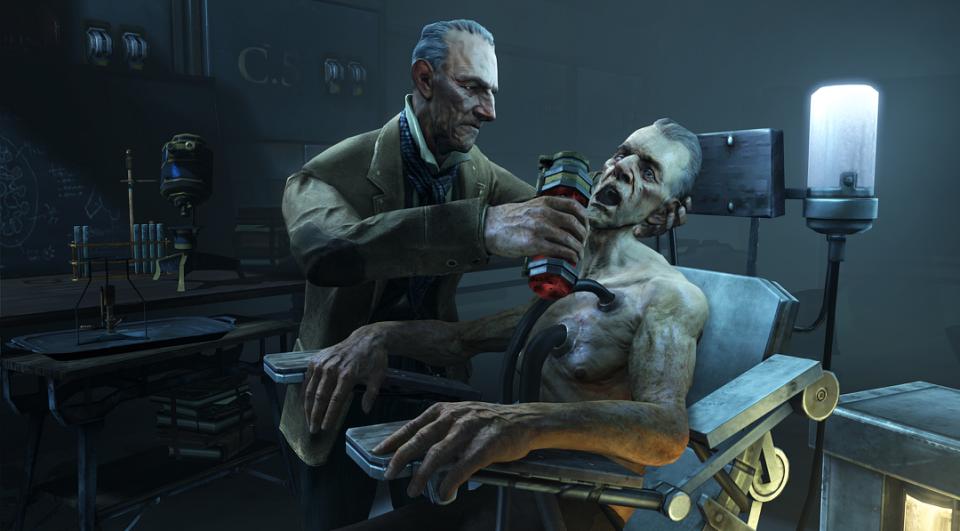
Bethesda’s first-ever E3 briefing tonight not only brought news of a Dishonored sequel, but also Dishonored Definitive Edition, a new version of the 2012 stealth-action game.

The game is launching this fall for Xbox One and PlayStation 4. The game includes better graphics and all previously released DLC. A PC version was not announced.

Bethesda’s E3 event is ongoing. And you can follow along here.

6cc5d6f6b5dc99da66acf03766edce92

by Samit Sarkar

At last, Doom will launch next spring on PlayStation 4, Windows PC and Xbox One, culminating a development history stretching back as far as 2007, Bethesda announced tonight at its pre-E3 news conference.

Originally called Doom 4, the game’s development has been long and troubled, even seeing id Software throw everything away and go back to the drawing board after being acquired by ZeniMax Media in June 2009. Reports spoke of a game trapped in the archetypal “development hell” as designers plotted out and threw away concepts and design changes.

The beta offer in Wolfenstein followed by a formal reveal last year at QuakeCon indicated the game was finally back on track.

Developing …

e8097c1a31f64920da16124e2f5049ed

by GameSpot Staff

Microsoft’s E3 lineup has just gotten a little smaller.

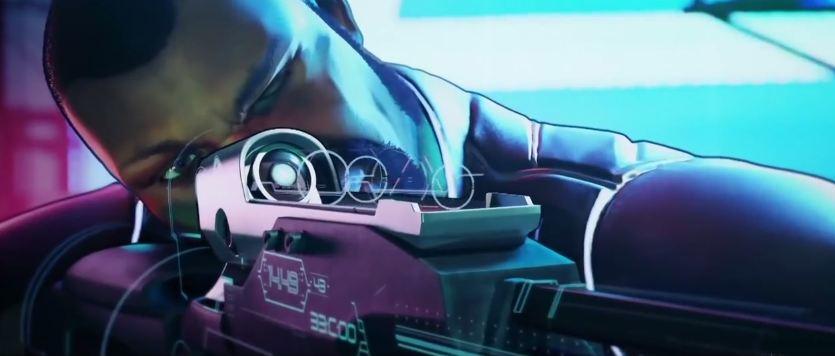
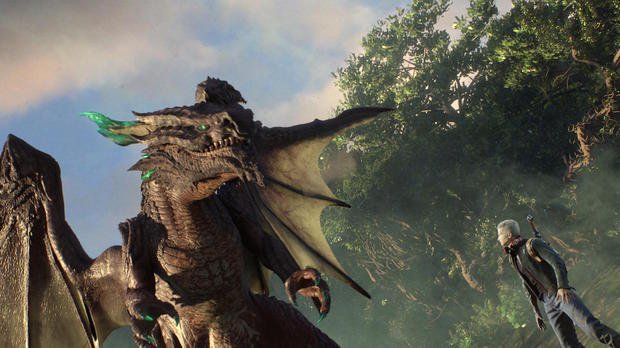
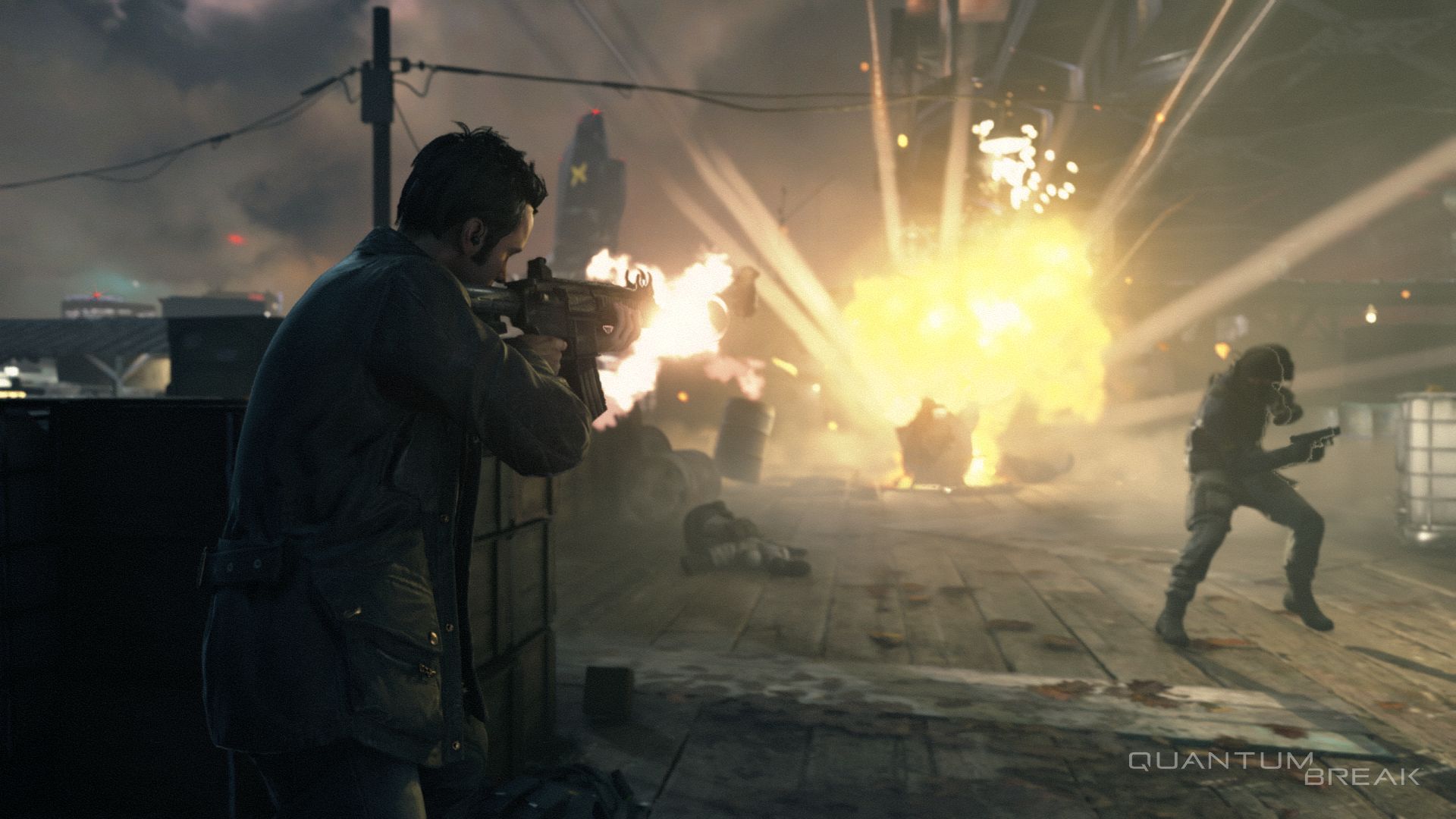
According to a post on the Xbox website, Scalebound, Crackdown, and Quantum Break will not show up at the conference next week. Instead, Microsoft will hold off on showing these Xbox One exclusives until Gamescom, which takes place in Germany in early August.

bf744473e507b7983d6f900f7a3b9432

Head of Xbox Phil Spencer explained, “Having a jam-packed lineup of games to show at E3 means that there simply isn’t enough time to give each of our upcoming titles its well-deserved time in the spotlight. We’ve decided to save some of our most eagerly-awaited future titles for Gamescom in August.”

Additionally, he stated that the company will have more Windows and Xbox games to reveal at Gamescom alongside news about announced games.

QB-Screenshot3

Microsoft still has a lot of games to show off at E3. Rise of the Tomb Raider, Halo 5: Guardians, and Forza Motorsport 6 are among the upcoming Xbox One exclusives that the company will bring to the conference.

E3 takes place this week, and Microsoft’s big press conference is on Monday.