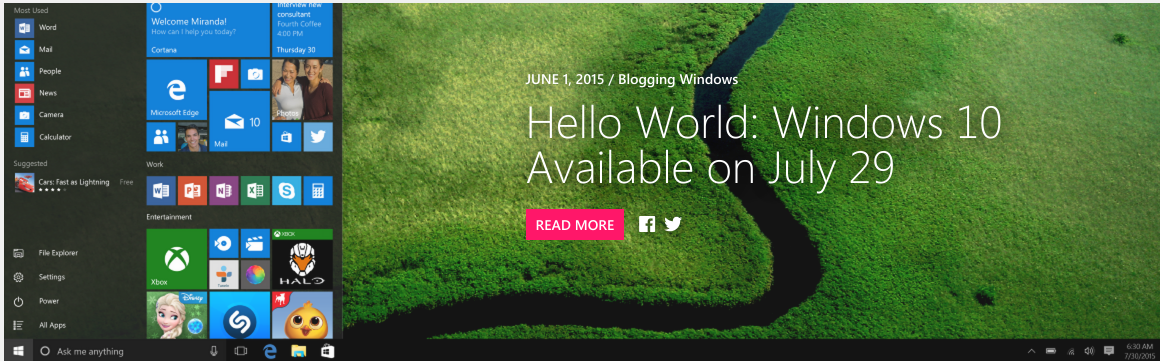
by Gordon Kelly via Forbes

Windows 10 splits opinions and it has split mine. I think Microsoft MSFT +0.43% nailed the core OS, but the policies around it are controlling and overly invasive. In short: great software, shame about the rules. And here’s another perfect example…

Now Windows 10 has launched, Microsoft is starting to fill in the blanks regarding features removed from Windows 7 and Windows 8 and it doesn’t make for pleasant reading. Why? Because behind this free upgrade are the first signs of where Microsoft will start charging users in future and it begins at the very bottom:

1. Solitaire

Yes, surprising as it might seem, Microsoft has announced it will actually charge users a monthly subscription to play Solitaire – a free staple of Windows releases since Windows 3.0 in 1990.

Having been stripped out of Windows 10, Solitare is now found in the Windows Store and it is a freemium download. This means it can be used for free, but is ad supported and in this case the ads are highly invasive with mandatory 30 second video slots playing over the screen between every game. If you want to switch that off you must pay Microsoft $1.49 per month or $9.99 per year.

Solitaire-paid

The good news is for that fee you do get an upgraded game with five variations, more card designs, daily challenges and tournaments. Still you would think those upgrades would be what the premium upgrade was for, not access to the basic game.

For those with conspiracy theories about Windows 10’s long term subscription ambitions, Solitaire (of all things) will only add more fuel to the fire.

2. Windows DVD Player

Along with Solitaire, another feature removed from Windows 7 and Windows 8 was the venerable Windows Media Center. WMC was long in the tooth, but beloved by those who still used it and in conjunction with its removal from Windows 10 the lack of even a basic DVD player in the new operating system was something of a mystery.

Not anymore. Microsoft has now announced the launch of ‘Windows DVD Player’. It is no WMC replacement and its full feature list is simply:
•Plays DVDs on your PC
•Simple controls for disc navigation

Windows DVD Player also won’t play Blu-ray discs nor DVDs from file backups, it is 100% optical discs only. All of which makes it pretty limited, but this is just the start.

Microsoft states Windows DVD Player will only be “free for a limited time” but doesn’t say how long this will be. Even the player’s FAQ simply says “The timing has not been finalized yet. It will end at or before the free Windows 10 upgrade offer.” Great.

DVD-Player

After that unspecified time Microsoft will charge a hefty $14.99 for Windows DVD Player, a ludicrous decision when far more powerful and accomplished players like VLC are free. What’s more, even if you grab Windows DVD Player for free now, you may have to pay for it later.

Digging further into the player’s FAO page, Microsoft states only upgraders from Windows 7 or Windows 8 will get it free and users who perform clean installations of Windows 10 will not. Furthermore if users ever need to reinstall Windows 10 (for example, due to problems) then Microsoft doesn’t count that as coming from Windows 7 or Windows 8 and again you lose free access to Windows DVD Player unless you first install Windows 7 or Windows 8 then upgrade to Windows 10.

Yes, this is bonkers. It also asks a bigger question: where is all this headed?

Windows As A Service

At this point it is important to state that Solitaire and Windows DVD Player alone cannot be held up as indisputable proof of an evil Microsoft master plan to trick users out of their money via a mass of tiny, expensive additions. That said both are clear indicators of how the company’s business model is evolving.

Having openly stated that ‘Windows as a service’ is the platform’s future, Microsoft is effectively taking a hit by giving Windows 10 away free on the gamble that it opens up the possibility of charging for add-ons. This can be as small as Solitaire and Windows DVD Player, but more importantly than the software in question this time (third party Solitaire apps and DVD players are everywhere) is how it sets the precedent for Microsoft to scale up to bigger features in future. Those features can be automatically pushed to users in trial form through Windows 10’s mandatory upgrades with fees to then keep them running.
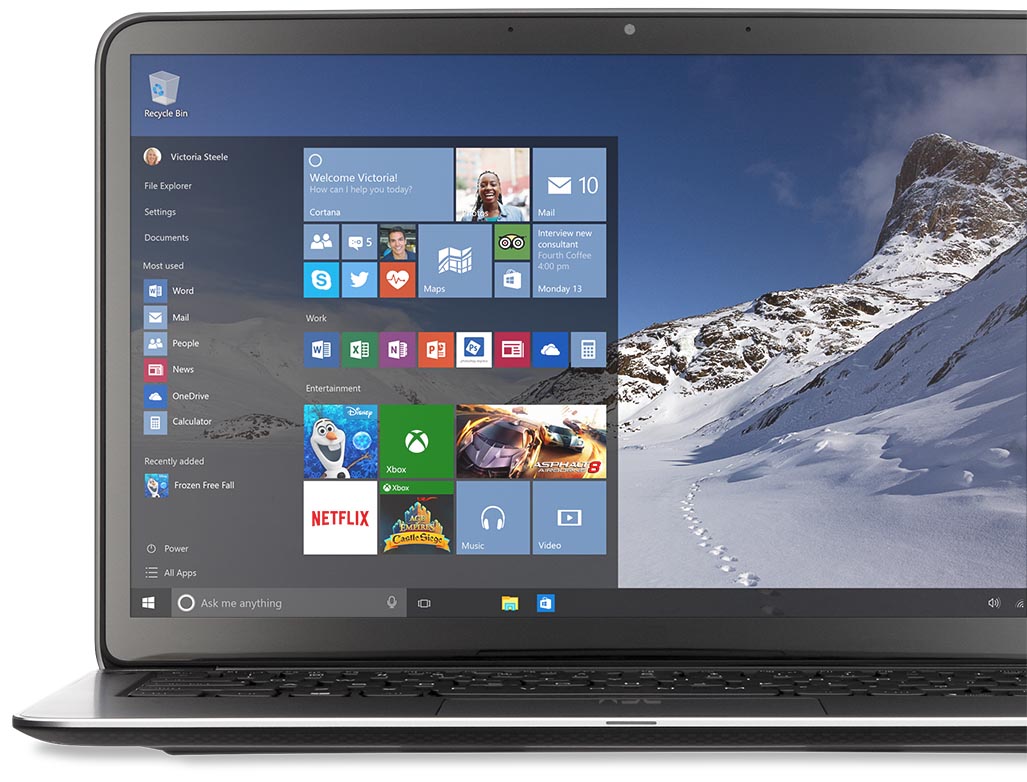
device_laptop_mini_start_cortana

In itself this business model is nothing new, but it is new for Windows users and – quite understandably – many don’t like it.

Personally my belief is Microsoft is entitled to do whatever it wants to do and earn however it wants to earn and customers will vote with their feet. The trouble is in the run up to Windows 10 Microsoft has not been transparent with users so many are not clear on what they are signing up to or from where future costs may come. Microsoft is sitting back and letting ‘Free Windows 10’ do all the selling.

And that’s true: the core Windows 10 experience IS free. But when it comes to even the simplest of extras, what is increasingly clear is users are getting what they paid for.

Female_gamers_have_it_bad-af6a76d96b17e3b1b53a9364bf7004bf

by Dave Smith via Business Insider

There’s a pretty strong correlation between male game players’ sexist remarks towards female game players and how bad those men are at playing games, according to a new study published in the journal PLOS One last week, which also sheds some light on the behaviors and attitudes of men that act anonymously online.

Jeffrey Kuznekoff and Michael Kasumovic — researchers from Miami University and University of New South Wales, respectively — watched how male players treated female players during 163 sessions of “Halo 3,” a popular Xbox 360 first-person shooter game that debuted in 2007. The game has an online multiplayer mode that enables actual human beings to speak with each other live, in real-time.

According to researchers, players only spoke in 102 of the 163 total matches, but in those games, “a total of 189 players spoke…all of them were male. This is not to say that women did not play, just that they did not speak.”

Unbeknownst to the players, the researchers had connected an audio playback device to their Xbox controllers, which allowed them to “broadcast pre-recorded audio clips to other players as if they were speaking to each other through the real-time voice channel.”

Female_gamers_have_it_bad-9449333ae8e84bd5abaa93dd1635ea8e

There were three experimental “manipulations”: a control, where matches were played as normal, as well as male and female manipulations, where the researchers broadcast pre-recorded phrases made by male and female voices to the players over the real-time voice channel on Xbox Live.

“These prerecorded phrases were identical in the male and female condition, harmless in nature, and designed to be inoffensive,” the researchers said. “Phrases included: ‘I like this map’, ‘nice shot there,’ ‘I had fun playing that game,’ ‘I think I just saw a couple of them heading this way,’ and ‘that was a good game everyone.'”

You could probably guess what the researchers concluded. Here it is, from the discussion in their paper:

We found that skill determined the frequency of positive and negative statements spoken towards both male- and female-voiced teammates.

In addition, poorer performance (fewer kills and more deaths) resulted in more negative statements specifically in the female-voiced manipulation.

We thus argue that our results best support an evolutionary explanation of female-directed aggression. Low-status males that have the most to lose due to a hierarchical reconfiguration are responding to the threat female competitors pose. High-status males with the least to fear were more positive, suggesting they were switching to a supportive, and potentially, mate attraction role.

Female_gamers_have_it_bad-ea53c2bb10aced6678f797209b6807e2

(Flickr/Rachel Johnson) “The idea that video games may be reinforcing such gender segregation as the norm for many teenagers is troubling given the fact that a significant proportion of them are gamers,” the researchers said. “Such ideas have the potential to spill over in real-life interactions and promote socially unacceptable behaviors such as sexism.”

What’s perhaps most interesting about this experiment is that the study’s conclusions could be applied to other settings where online users are allowed to act and say things anonymously — like Twitter, or Reddit. Here’s more from the study:

Our results support an evolutionary argument for why low-status, low-performing males are hostile towards female competitors. Dominance is tightly linked to fitness in men…Low-status and low-performing males have the most to lose as a consequence of the hierarchical reconfiguration due to the entry of a competitive woman. As men often rely on aggression to maintain their dominant social status, the increase in hostility towards a woman by lower-status males may be an attempt to disregard a female’s performance and suppress her disturbance on the hierarchy to retain their social rank. This idea is reinforced by the fact that higher-skilled males that should not feel threatened by a female increased their number of positive comments.

While the researchers note it is novel for male players in their data set to play with females in a male-dominated shooter game like “Halo 3,” they still hope it could show some young male players — and perhaps male online users, too — that “losing to the opposite sex is not socially debilitating.”

The whole study can be found here; it’s really an interesting read. We first saw this study mentioned on The Washington Post.

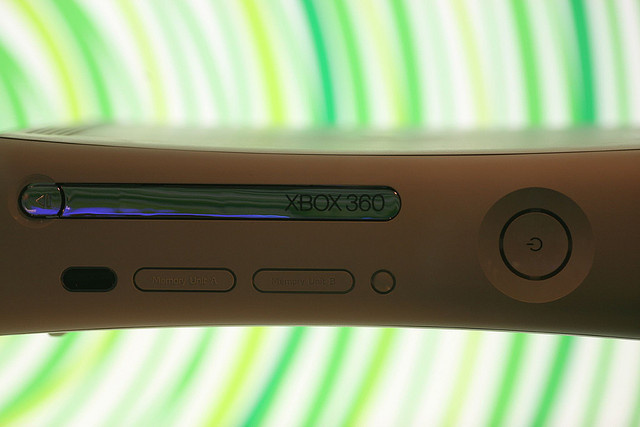
Three years after console’s debut, Microsoft racked up 55,000 scratching complaints

xbox360-640x427

by David Kravets via Ars Technica; Photo credit: Thomas Hawk

No matter how hard Microsoft tries, it can’t defeat a judicial order requiring it to face a proposed class-action lawsuit claiming that the Xbox 360 renders gaming discs unplayable because the console scratches them.

The decision (PDF) Monday by the 9th US Circuit Court of Appeals sets the stage either for litigation over the allegations or a Supreme Court showdown.

As we’ve previously described, here’s what the flap is all about:

The suit claims that vibrations or small movements of the gaming console can cause the optical drive to scratch discs. Microsoft was accused of knowing about the alleged issue before the Xbox 360 launched in 2005. A Microsoft manager, Hiroo Umeno, said in a court document that the company was well aware of the damage that could be caused to discs when players repositioned their consoles. “This is … information that we as a team, optical disc drive team, knew about. When we first discovered the problem in September or October, when we got a first report of disc movement, we knew this is what’s causing the problem,” Umeno said.

Three years after the console’s debut, Microsoft racked up some 55,000 complaints about the issue. Microsoft, which said that gamers’ misuse was the cause, argued that the case should be dismissed because 0.4 percent of console owners reported problems.

Microsoft also maintained that aggrieved gamers could bring a suit individually instead of collectively.

The San Francsico-based appeals court originally ruled (PDF) 3-0 against Microsoft in March. The court on Monday set aside Microsoft’s renewed plea for the court to rehear the case—which seeks economic damages—with a larger panel of 11 judges. No judge on the nation’s largest federal appeals court voted in favor of a rehearing.

11742835_954606114598993_1561842946744717945_n

by Michael McWhertor via Polygon

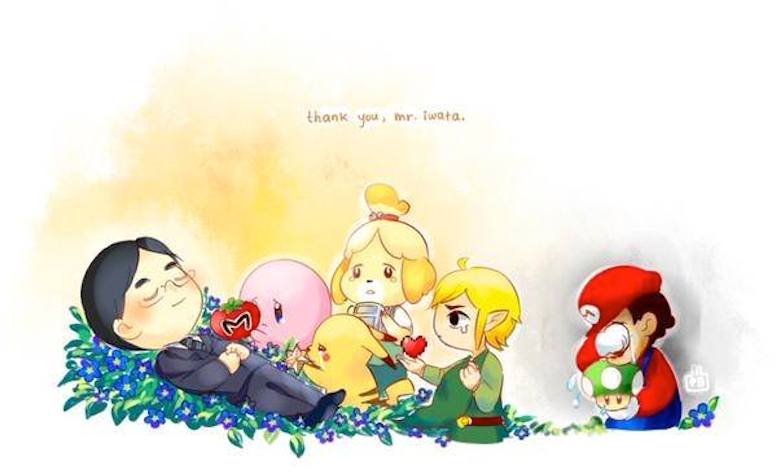
At funeral services for Nintendo president Satoru Iwata, who died this week at the age of 55, the company’s senior managing director and current co-representative director, Genyo Takeda, delivered a memorial address for his former colleague, pledging to continue Iwata’s legacy.

Takeda, a 43-year veteran of the game maker, spoke to both Nintendo employees and members of Iwata’s family in attendance in his eulogy, offering his condolences and prayers.

Nintendo released a translated transcript of Takeda’s remarks from Iwata’s memorial service, which you can read in full below.

“As we gather here today for a joint funeral with Nintendo Co., Ltd. and Mr. Iwata’s family, I would like to share my heartfelt condolences. President Iwata, allow me to call you Iwata-san, just as I always used to.

Iwata-san, you left us far too soon. Having just chaired our shareholders’ meeting the other day on June 26, the news of your sudden death has left all the employees overcome with a deep sorrow. The late Yamauchi-san passed the baton to you in naming you the president of Nintendo in 2002, and the two Senior Managing Directors of the company, Shigeru Miyamoto and I, have been assisting and working alongside you. Being rather short-tempered myself, the thing that I am most deeply struck by is that you were a true leader in every sense of the word, overflowing with compassion for people. You always maintained a two-way dialogue, even with the next generation of employees, or with much younger members of the development and marketing teams, or with employees outside of Japan whose different customs and cultures can make communication challenging — sometimes even admitting your own mistakes to them. You demonstrated this through your belief that people could eventually come to understand one another, and your strong conviction that the best way for us to grow is through patient communication, even if it took several times, a dozen times or even seemingly endless discussion.

You succeeded in planting the seed in employees’ hearts that, in order to solve an issue, there is a fundamental cycle whereby you make a hypothesis, execute the plan, see the result and then make adjustments, and by which you have caringly nurtured these seeds to sprout and mature into plants.

Until now, our successors and the younger generation would take a few first steps and then look back at you for guidance because they could not tell if they had chosen the right path. Today they cannot ask for your guidance anymore.

However, I am sure that they have already made the firm determination that they will continue on their own, making the hypothesis, executing the plan, seeing the results and reflecting on the results to improve and adjust by themselves.

In the face of your unbelievable passing it will surely take some time before we can emerge from this deep sorrow. Please know, however, that the seeds you have planted, and the plants that have sprouted will put forth small flowers as they bring smiles to the faces of people around the world, blossom into a grand flower bigger than even you, our leader, Iwata-san. Together with Miyamoto and others of our generation, we swear in our hearts that we will continue our efforts so that, someday, we can report and present to you the blossoming of these flowers. May you continuously watch over and guide us managers, our employees and your family.

On behalf of all of us, I would like to offer my heartfelt condolences and sincerest prayer. May you rest in peace, Iwata-san.”

Win+10+Xbox+One+game+streaming

by Timothy J. Seppala via Engadget

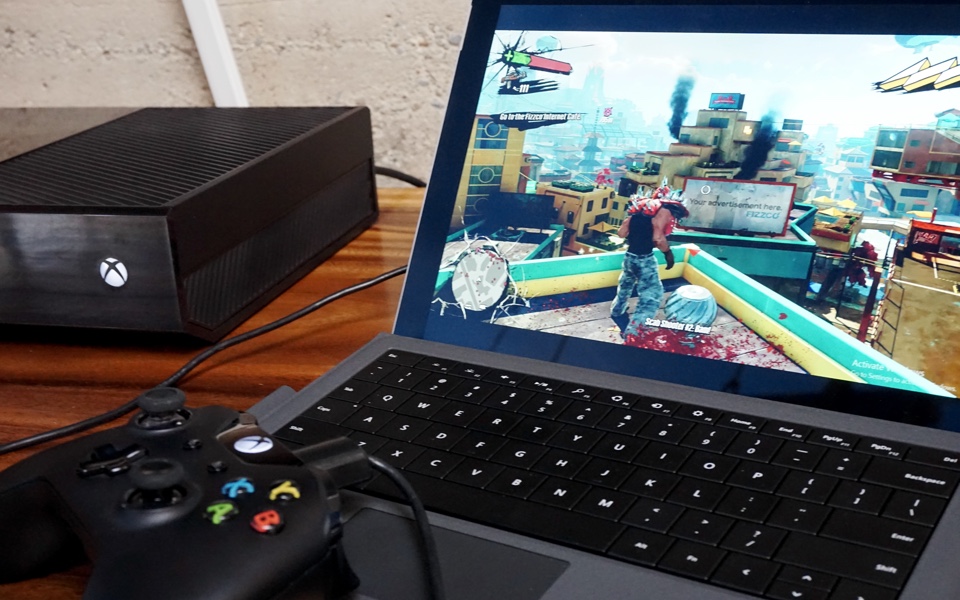
Microsoft’s removed the Xbox-to-PC game-streaming restrictions and now anyone with Redmond’s latest console and Windows 10 can play Sunset Overdrive or attempt to jump into a few online Halo: The Master Chief Collection matches on their device. More than that, some pretty big new features are hitting the Windows 10 Xbox app including party chat and tweaks to how screenshots and video clips are shared via the Game DVR.
Perhaps most impressive is how the My Games functionality within the application works now. Sure, your games purchased from the Windows Store automatically populate under the banner as you’d expect, but that’s extending to “a large number” of older games you might’ve bought from other sources too. You can manually add titles if they don’t appear as well, and Microsoft says it’ll keep track of what you’re adding so the automation improves with time. Of course there are plenty more new additions to the service, so be sure to check out the Xbox Wire post to read all about ’em.

1989_Batmobile_with_Batman_Skin_0_0

by Adi Robertson via The Verge

Rocksteady’s Arkham games have turned into a kind of Batman franchise hall of fame. You haven’t really made it until whatever villain or costume or gadget you created gets tucked away in some corner of the games’ massive worlds. And next month, fans of Tim Burton’s take on the character will be able to rest easy. Anyone who bought the $40 “season pass” to Batman: Arkham Knight (yes, on top of the $60 game) will soon be able to swap their Batman for one from the 1989 film, and they can turn their Batmobile into Michael Keaton’s slick retro ride. Except that Michael Keaton couldn’t also use his car as a tank.

Arkham Knight already includes a number of extra skins and Batmobiles, including a ’60s Adam West costume. While some of them are available for everyone, publisher Warner Bros. parceled others out as “exclusives” across platforms, retailers, and game editions. You basically need a chart to keep track of them. But 1989 Batman is just a way to reward people who paid for six months of extra maps, designs, and missions after the game’s launch. Today also marks the release of Arkham Knight’s first real extra storyline, starring Batgirl. Sadly, this is all moot for PC owners; the game’s many technical problems aren’t supposed to be fixed until fall, and the lost souls who already bought it will have to wait on Batgirl.

Bat-Family_Skin_Pack_0

It’s also not the only new costume coming in August. There are three more Batmen (a ’70s version, an “iconic gray and black” one, and one from prequel Arkham Origins), as well as Robin from the “One Year Later” comics arc; the slightly more emo version of Nightwing from older game Arkham City; and a purple, non-Michelle Pfeiffer ’90s Catwoman. They’re all featured above, but frankly, you might want to wait for the chart.

satoru-iwata

by L.W. Barker aka ‘Sarge’

I was watching a movie with my family yesterday evening when I glanced down at my phone to see a post from my Sr. Editor, Reuben Karnagerulz Juarez baring the sad news of Satoru Iwata’s death.

My heart dropped like a rock as I reacted…and so strongly was that reaction that my wife paused the film. I was in anguish and totally saddened by this latest Industry loss. It seems so unfair for someone who was on the verge of realizing his biggest ‘NX’ dreams to just be dead! But then I gathered my thoughts and began to write.

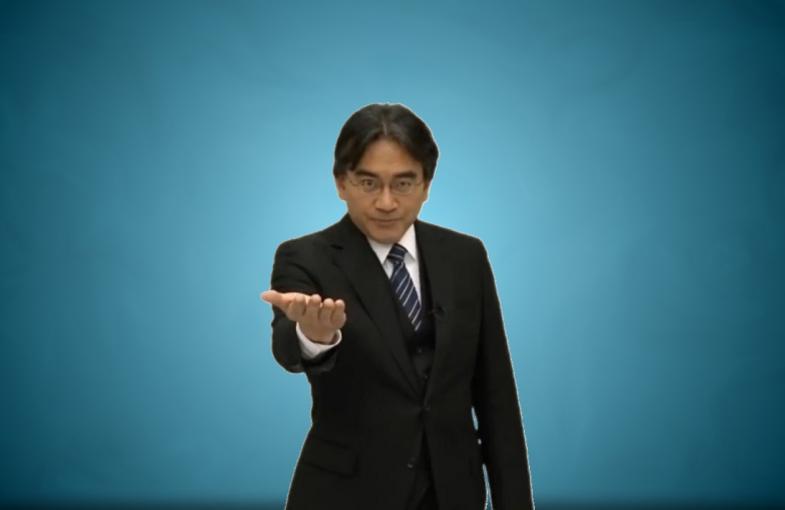
Iwata-san, as he was honorably known, was a giant in our Industry who has left behind foot prints on gaming that will be analyzed, admired, and hopefully copied for as long as there are gamers. He was a man with a vision for Nintendo and even through harsh criticism for the few failures in his tenure as CEO, he remained calm and kept that vision going. And not because he was stubborn, but because he believed in his company’s brand and its unwavering ability to deliver quality products to his fellow gamers. A trait that won him Industry-wide respect and made him legendary within our community.

Now with his death, that vision will not die. The essence of Satoru Iwata lingers in the games he created, the memories we share of him, and even in projects yet unborn. Thank you Iwata-san for a job well done. Your enduring legacy is forever.

nintendo-iwata

by ‘Apolon’ via iDigitalTimes

There’s a lot riding on the Nintendo NX, Nintendo’s upcoming “game platform,” which everybody seems to be assuming is a handheld and console hybrid (I wouldn’t be so sure—all we know for sure is that it isn’t Android-based and isn’t virtual reality–based. It’s a big mystery, and it carries on its shoulders the whole future of Nintendo… which may not be great news, since we hear the thing might be weaker than the PS4.

The Nintendo NX Really Needs To Succeed

Don’t get me wrong: Nintendo isn’t really in dire straits. The company isn’t even losing money anymore, although it did for two years in a row—the only time in the company’s century-long history it lost money at all. The Wii and the Nintendo DS were, of course, both phenomenal successes. The Nintendo 3DS was an initial failure that turned into a reasonable success. The Wii U has not done very well at all. Nintendo’s new “third pillar,” Amiibo, is the company’s highlight right now… a major success, selling millions of units every month. But the company needs a dedicated platform to support its new toy line.

For that, the Nintendo NX needs to be a hit. The company has scraped by the Wii U generation on the back of the 3DS and Amiibo, even as the Wii U has never really taken off. But ‘scraping by’ really is the phrase to use. Wii U releases have been relatively few and far between. Flagship titles haven’t been coming out nearly enough to drive strong interest in the console, aside from Super Smash Bros Wii U, which also had a Nintendo 3DS counterpart. And third party releases are totally gone at this point, besides from standard EA shovelware. There’s not much to cling to, and even with a new slew of first-party AAA titles, the console wouldn’t get new momentum at this late stage, in what would normally be mid-lifecycle.

So instead it looks like Nintendo is going to move beyond Wii U and hope to kickstart the new generation half a cycle early with the Nintendo NX. It’s a big risk,  and a lot is riding on it, probably up to and including Nintendo’s future in the hardware business. Certainly the console business is at stake. If Nintendo NX is a bust, following the Wii U… it’s hard to imagine Nintendo having the money and good will for a third stab at a dedicated console. Face it: If Nintendo NX doesn’t succeed, Nintendo as we know it will change forever. And that’s why the company is getting ready to go all in.

Windows-10-free-1940x1090

by Gordon Kelly via Forbes

Windows 10 is famously ‘free’, but Microsoft has been worryingly silent about just how free it really is. Now, only three weeks before release, leaks suggest ‘free’ Windows 10 might not be a good deal at all…

The news comes from ComputerWorld which attained Microsoft internal slides that strongly suggest many Windows 10 owners will have to start paying to receive updates within two years. The key lines ComputerWorld discovered are:

“Revenue allocated is deferred and recognized on a straight-line basis over the estimated period the software upgrades are expected to be provided by estimated device life…. [The estimated device life] can range from two to four years.”

‘Device life’ is the key phrase here. Microsoft has already stated revenue earned from Windows 10 must be deferred because of the free upgrade model (cash isn’t taken upfront), but it repeatedly stressed Windows 10 owners can expect to get free updates for the “supported lifetime of the device”.

The problem is Microsoft hadn’t defined how long the ‘supported lifetime of the device’ will be and now we see it: “two to four years”.

A Two Year Con?

So what does “two to four years” mean? Is it two or is it four?

Again the slides help – and surprise. In a change of language Microsoft states device lifetime will be determined by “customer type” whereas it had previously stated it would be determined by “form factor”.

This is crucial. ‘Form factor’ could mean a phone where two years of support isn’t great, but survivable and similarly four years support for a tablet or PC isn’t great but it is survivable. But defining by ‘customer type’ invokes Microsoft’s two main customer licence types: Home (average consumer) and Professional (prosumer/business).

By this new definition “two to four years” would mean two years free support for Windows 10 Home users regardless of their device type and up to four years free support for Windows 10 Pro users regardless of their device type.

Two years free support on a PC is garbage. It would see Windows 10 free support expire in 2017 while Windows 7 and Windows 8 free support doesn’t expire until January 2020 and 2023 respectively.

It also opens up an even bigger question: what follows the expiry of free support?

There are several ways of looking at this. Most charitably Microsoft could release ‘Windows 10.1’ and then kickstart another two years of free support, the same again for ‘Windows 10.2’ and so on which pushes users to keep updating. It’s a nice thought, but Microsoft already has a strict threat in place for those who lag behind.

The other perspective returns us to the “deferred revenue” Microsoft says it will encounter with Windows 10.

The interesting part is Microsoft claims the money it loses from the free upgrades will be made up within three years. If there’s a free upgrade plus two years of free support (for all consumers) then the introduction of subscription based charging, this suddenly fits together and angry conspiracy theories run wild.

Windows-10-Release

What To Believe

So what’s the answer?  Frustratingly, infuriatingly, mystifyingly we have no way of knowing because – even with just three weeks to go before launch – Microsoft’s controlled drip feed of Windows 10 information shows no sign of speeding up.

Yes it’s mad. Microsoft is releasing arguably the most important version of Windows in its history this month and we don’t know how long it will be supported or what future costs we will be charged after this unknown period. Instead Microsoft simply keeps shouting:

“It’s Free! It’s Free! It’s Free!*”

(*for the lifetime of the device – and we won’t define ‘lifetime’ or what happens after that)

Small-print

This sucks. It sucks because there could be a perfectly good explanation but Microsoft is not being open about it.

It sucks because upgrading Windows versions is not an easy task for many users and even more of a hassle to downgrade if users find they’ve been shortchanged. And it really sucks for those who buy a new Windows 10 PC and are locked into the unknown.

But most tragically it sucks because Windows 10 is actually a great OS. Throughout my participation in the Windows Insider testers program it has been the fastest, most stable series of Windows betas I’ve used, but Microsoft may be about to hamstring the whole thing.

Promising ‘Free Windows 10′ then delivering ’Freemium-Windows-10-Get-Your-Credit-Cards-Out-In-Two-Years’ would be a disaster and right now Microsoft’s ongoing silence about how everything works feels ever more suspicious.

Ultimately the company is either playing us or its naivety is now bordering on idiotic. It’s a crazy situation to be in where we all have to hope and pray it is the latter…

man_woman_video_gaming

by Doug Bolton via Belfast Telegraph

A German court has fined a 23-year-old man after he admitted to giving his girlfriend a sedative so that he could keep playing video games with his friends.

As reported by The Local, a court in Caxtrop-Rauxel, a town in eastern Germany, heard that the man’s (now ex) girlfriend had arrived home while he was playing games with his friend one night in August last year.

Keen to keep playing after she came home, the man put sedative in her tea, causing her to sleep until midday the next day.

sleeping-girl

He told the court: “I only put four or five drops into her tea.”

Even when she awoke from her sleep and heading to work the next day, she said she was still nodding off from the effects of the drugs.

The man admitted what he had done the day after the crime, and she told the court that he had been on drugs at the time – something which contributed to their break-up a few days later.

Ordering the man to pay a €500 fine, the judge said: “Your girlfriend slept long and deeply, which didn’t harm her, but his is certainly a premeditated bodily harm.”

Speaking to the Westdeutche Allgemeine Zeitung, the man said he was now on a straighter path – off drugs for 10 months, and soon beginning an apprenticeship.