Archive for the ‘Opinion Piece’ Category

6f92b813a176338f8416c75f2a044565

by Steve Wright

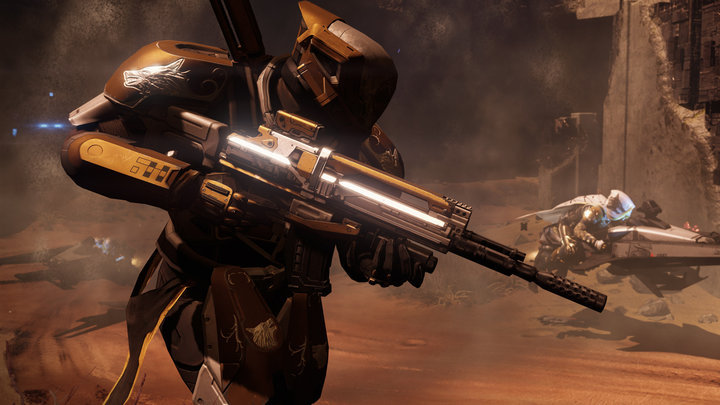
As many gamers expected since its discovery, the infamous Destiny loot cave has been patched by developer Bungie. Fair call or not, the way in which Bungie did so is a a slap in the face to anyone playing the game.

If you’ve hit the level 20 soft cap in Destiny, you’ve discovered that you can continue to increase your level up to 30 by using armour equipped with Light. This armour will be Rare or above — so Rare, Legendary or Exotic — and at the moment is mostly obtained via in-game drops.

So, loot.

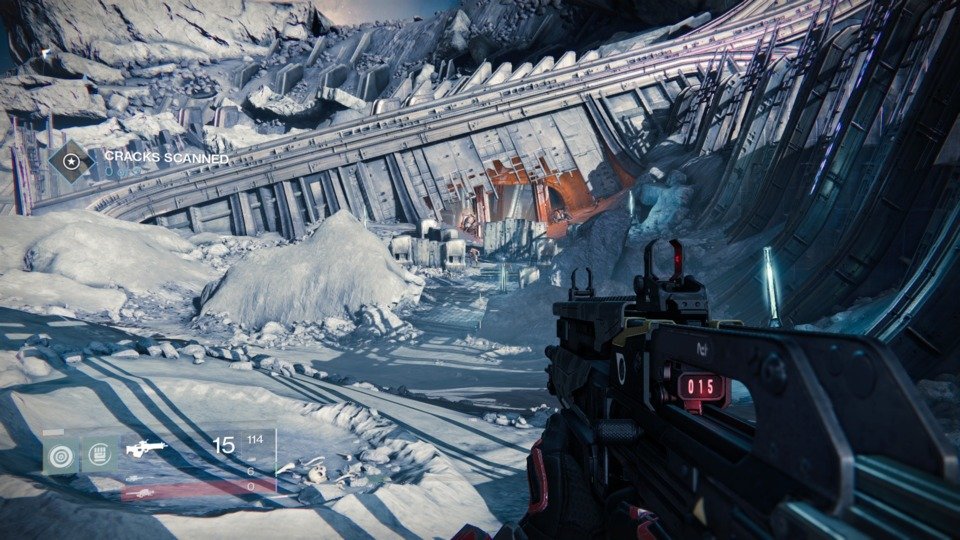
Saavy gamers found a certain cave in Old Russia that was a constant spawn source for Hive enemies. By headshotting anything that tried to come out of the cave, gamers created a nice little spot where enemies could be dispatched quickly and in a contained space. Sitting at the cave for a while meant you’d have a pocket with a couple Rare or maybe even Legendary Engrams to then redeem in an attempt to try to increase your Light score.

It wasn’t perfect; you still had to take those Engrams over to the Cryptarch and watch as he basically fucked you over more often than not, providing gear that was worse than the stuff you already had.

Anyway, that’s how the loot cave worked, now how Bungie has disrespected its players. Let’s delve into that, shall we?

In a post explaining that the cave had been nerfed, Bungie tried to do it in a jovial manner. They failed. Miserably.

“The social experience of a cave farming run is amazing: the herding to get a team of Guardians all behind the line and firing in the right direction, the rush to grab the loot, the scramble when the panic wave starts, the beckoning glow from inside the cave. The speed at which the community organized around this activity was inspiring and humbling to us.

“But shooting at a black hole for hours on end isn’t our dream for how Destiny is played,” Bungie said. “Our hope is that social engagement in public spaces is only one part of the Destiny experience. Expect changes soon which decrease the efficiency of cave farming and correspondingly increase engram drops from completing activities.”

In case you didn’t pick up on it, Bungie has just told us all that loot farming via the loot cave is wrong. We’re not meant to obtain gear in this manner. Rather, we’re meant to repeatedly play Destiny’s handful of (not-even-remotely-) story missions over and over again, hoping that we’ll get loot drops as we play. We’re meant to go and play through The Crucible, hoping for drops. We’re meant to go and play through increasingly more difficult — and still extremely repetitious — special playlists for drops. Call me entitled, but I don’t like being told how I need to play a game.

Destiny-8-978x704

Here’s the problem, Bungie: your game is broken. I don’t want to go and play through Strikes and story missions and then find I get drops that are lower than my character can use. Or are for another character type altogether. I don’t want to slog through the Crucible, picking up the best kill/death ratio of the match, only to receive nothing post-game. I certainly don’t want to do that and find that the worst player of the entire match manages to get a Legendary Engram to boot. I can’t go and take on level 24 “Queen’s Wrath” missions by myself — because I get destroyed — and since you don’t offer matchmaking, I’m left to try to find friends that can play with me at the same time. Even then, this whole broken Light system means my friends have to hope for proper gear to get to level 24 or above or else they’re useless to me.

Hell, when two friends and I finally got to do “Queen’s Wrath” twice, I got the same damn Legendary helmet both times.

I know I can align with a faction and grind through the Crucible and Vanguard missions to buy gear, but all of the issues explained above still apply.

Everything about Destiny is frustrating at the moment, and Bungie, you have the audacity to tell us we’re playing your game wrong? I’m gobsmacked. We’ve got missions that are classified as level 28, but no real path to get to that level without things like the loot cave. But, fuck it, it’s gone cause it’s not how we’re supposed to level up.

The loot cave has already been patched, so you don’t need to “expect changes soon,” as Bungie said. That’s a huge slap in the face as well; Bungie’s quite quickly made sure we can’t use the loot cave, but haven’t addressed other pressing issues that they’ve acknowledged exist. The list of issues isn’t small either.

By your own admission, Bungie, Auto Rifles are better at ranged distances than the Scout Rifle. That’s not fixed yet.

The Cryptarch destroys engrams. That’s not fixed yet.

Strikes are “grindy” — your words, not mine. That’s not fixed yet.

If we’ve resorted to playing your game in a certain way, it’s because your game is wrong. Developers on the whole, know that it’s never a case of people playing your game wrong. To say that is to act like a child, threatening to take your toys away from friends because they’re not playing the way you like. It’s pathetic.

Developers should never scold gamers after they’ve found different ways to play their game. In fact, things like this should be encouraged! Bungie, get off your high horse and listen to what gamers are actually saying, or else you’ll find your user base will be diminished quite quickly.
d2969835c695539b1b874e3c25988b4a

by Colin Campbell

Few arrivals in gaming history have been ushered into existence with quite the same level of scrutiny as Bungie’s Destiny.

Apart from Bungie and its anxious paymasters at Activision, no-one will have watched the game’s arrival with as much interest as 343 Industries. Located just eight miles from Bungie’s offices, 343 is Microsoft’s manufactured ‘new Bungie,’ a development studio entirely created to replace Bungie, when it quit the company’s fold. 343’s job is to take over the future of Halo, the franchise that Bungie created, and that made Bungie.

The relationship between the two studios can safely be described as “competitive,” though there is an element of mutual respect and even interdependence. They are both competing in the high stakes space age first-person shooter market, and they both require the other to continue contributing to the good name of that genre.

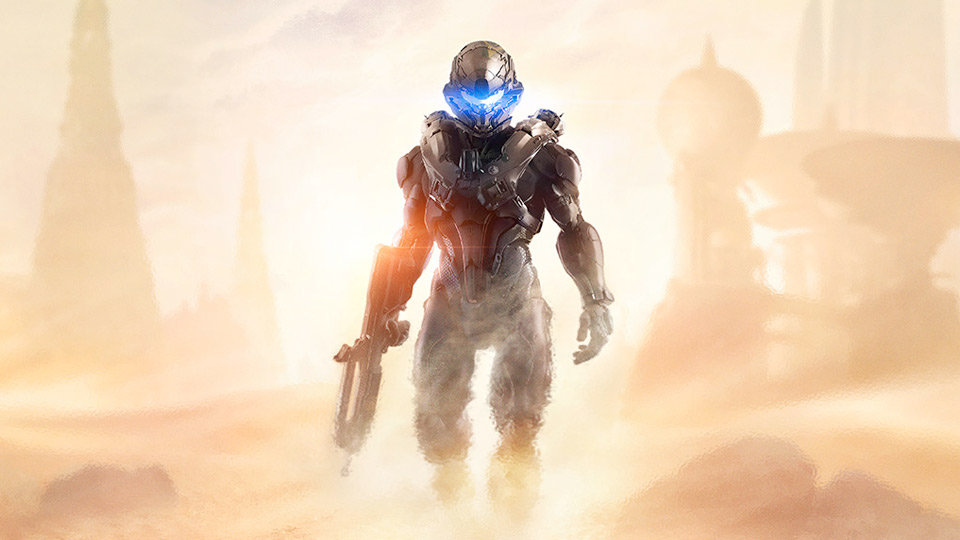
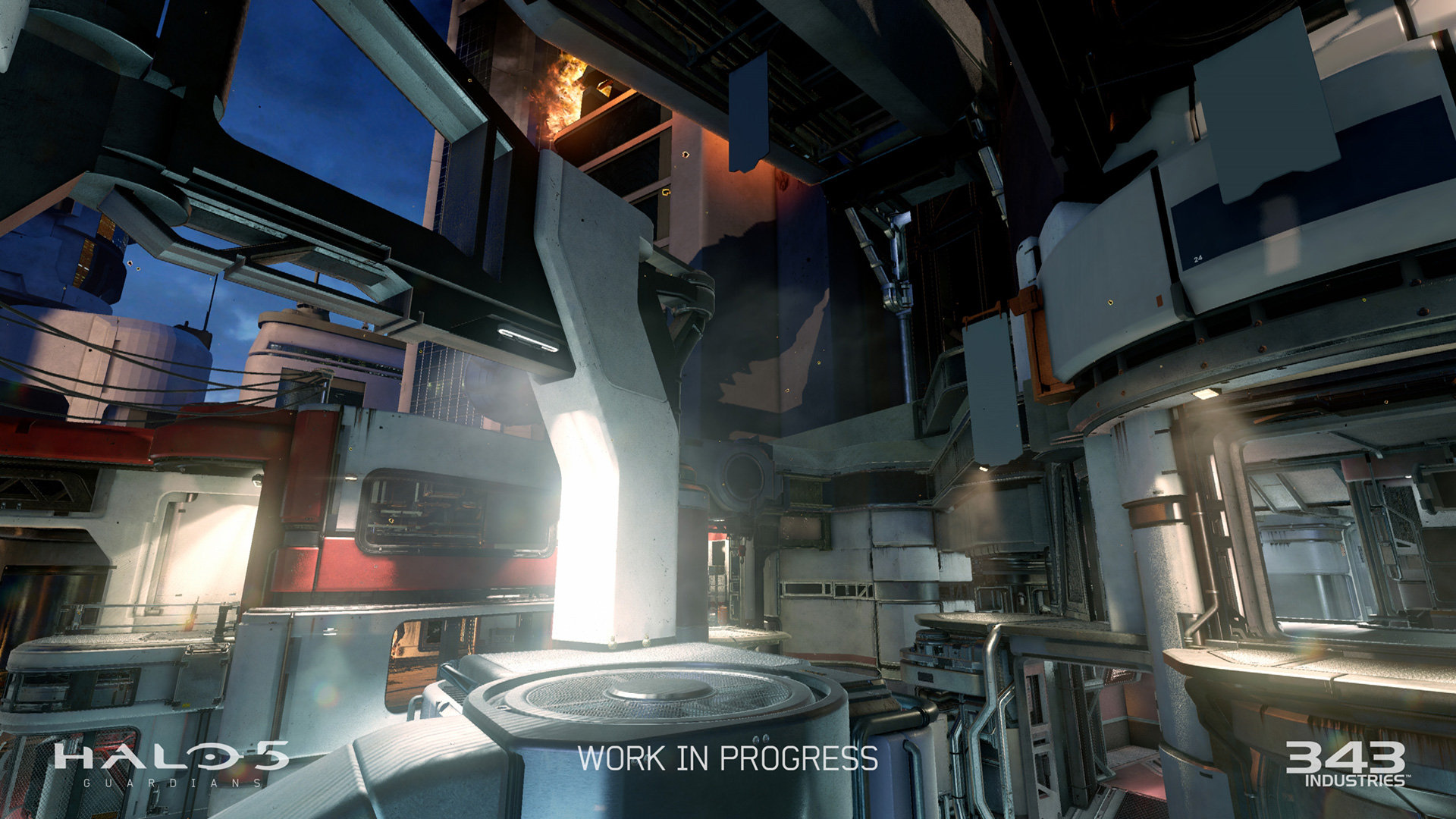
Microsoft is readying Halo 5: Guardians (below) for a beta introduction later this year, and launch in 2015. Halo 5‘s fortunes are closely aligned with Xbox One’s fortunes. For Microsoft, there is no more important game.

48700565c3e02fbef911bdeda219125a

If the game had been terrible, or sold badly, we might now be reading doomsday predictions about the future of space-shooters. Let us not pretend that Destiny is anything other than a successor to the original Halo games from Bungie, both stylistically and spiritually.

If the game had been a commercial and creative triumph, Halo might have quickly seemed like a thing of the past, a herald for the arrival of the true space-shooter king.

As it is, things have worked out pretty perfectly for 343 Industries…

Destiny Sold Really Well

Destiny‘s commercial success, including sales of $325 million in its first five days, is a clear sign that large numbers of people still want to play Halo-like shooting games in a sci-fi setting. This may seem like a constant given, but tastes change, especially during console transitions.

Although the console shooter has remained a favorite for a decade-and-a-half, subsets within that genre have glowed and faded. Destiny is the best market research Microsoft is likely to receive.

Hype Springs Eternal… Still

Activision showed that an expensive and carefully staged hype campaign still works wonders. Lots of people were enthused by the hype and did not wait for reviews, many of which turned out to be negative.

In reality, Activision showed very little of Destiny before its launch, made a great deal about its high-level aspirations, and reaped major benefits. Even if you do not agree with the reviewers, it is certain that if the sub-80 percent reviews had been available on day one, that $325 million figure would have been diminished. Destiny is Bungie’s lowest rated game since Oni, in 2001.

In the social media age, the ability to control messages through expensive and highly controlled marketing is still highly prized by large companies, and they don’t come much bigger than Microsoft. It is highly probable that Halo 5‘s pre-launch marketing campaign will follow the same drip-drip pattern as Destiny‘s.

Central Characters Have Appeal

One of the questions constantly put to Bungie execs in the run up to Destiny‘s launch was the lack of a central figure like Master Chief. The execs had a canned response about how the game was really about the player and his or her own identity. This is a reasonable direction to take.

However, Destiny‘s story, and the characters introduced throughout the game, were pretty yawn-inspiring. This was a surprise, given Bungie’s pedigree with Master Chief whose stories, while convoluted and confusing, have always seemed appropriate to their setting and enjoyable in the moment.

Microsoft’s 2014 play with the Halo franchise is a re-issue of the games associated with Master Chief, a reminder of the rich fictional world underpinning the franchise. Bungie tried to co-opt some of this heritage by talking up the Destiny narrative setting as a classic in the making, but the reality felt flat and empty. When it comes to personality, Halo still has a significant lead over Destiny.

be9927bdbcbb2be6a49465860ade8739

Bold New Ideas, Ripe for Revision

Despite its flaws, Destiny was an impressive creation, especially in terms of its world-building and the ways in which its designers sought to integrate single-player and different kinds of multiplayer experiences together.

There were other bold ideas that entwined role-playing elements into emergent character creation, all wrapped up with enemy loot drops and mission choices. Some of these ideas worked out better than others, but few were decisively brilliant.

343 can make use of Bungie’s innovations and shape them to their own designs, without looking like they have basically copied their rival’s ideas. Destiny has innovated, but it has not innovated so far as to change the entire landscape of shooter design. No-one is really saying, ‘how the hell is 343 going to top this?’

Destiny has Failed to Rewrite the Rules

Most of us who like video games tend to cheer for new properties. We want to see something other than sequels, and so we root for the new guys. Games companies make use of this laudable instinct, by affirming our desires with promises that, frankly, turn out to be untrue.

343 will consider Destiny’s launch, its successes and its failures, to be a win

When I went to a Destiny press day a few months ago, I expressed my disappointment that so little of the actual game was being shown, while journalists were assailed with a constant stream of interviews all saying much the same thing; that Destiny was a new kind of game that would make everything before it seem smaller and lesser.

Bungie is not the only company to do this. Witness the contrast between Watch Dogs‘ ludicrously overblown arrival in 2012, with its actual launch in 2014. The media and consumers must take some responsibility for the continued success of these strategies.

Both these games have created enjoyable entertainment and, in their own ways, have progressed the idea of what video games can do. But the level of their progression is not so significant that developers working on other games have been caught unawares.

343 is a fairly new studio, and none of its work to date had come close to the demands placed upon it by Halo 5. But the 343 team members working eight miles down the road from Bungie should consider Destiny‘s launch, its successes and its failures, to be a win for their own project.

http://www.gamersoutpost.net/

15106068128_c2c329d683_z_large

by Daniel Kline

September 24, 2014 | Comments (1)

Sony (NYSE: SNE ) has had very little to be happy about in recent years, but its games division has been a rare bright spot in a sea of disappointments. PlayStation 3 was a huge success and now PlayStation 4 has gotten off to a strong start, which has led the company to increase its efforts in gaming with new initiatives planned involving streaming video games, a $99 PlayStation TV, and the Morpheus Virtual reality headset.

Though Sony has been losing money and recently increased its forecast for how much it expects to lose in the current fiscal year to $2.12 billion, the company plans to increase its investment in gaming. That makes sense because sales in the company’s Games & Network Services division increased 95.7% year over year in the most recent quarter, driven in part by the sale of PS4 hardware, the company reported in its most recent earnings release.

Games have been good
The division even eked out a profit of $43 million for the first quarter, which is impressive because consoles themselves are essentially a break-even proposition that lead to future sales opportunities for games, apps, and other software. The November 2013 launch of PS4 actually helped Games and Services reverse its fortunes as its revenue had slipped and profits had dropped from 29.3 billion yen in 2012 to a barely there 1.7 billion yen in 2013. The games division contributed only 7.8% of sales for 2013, but it’s clear that there is an opportunity to grow games’ contribution and use games to help other areas of Sony.

Better yet, the best appears to be ahead of the division. While Sony was increasing its overall expected loss forecast, Sony Computer Entertainment CEO Andrew House told Reuters earlier this month that he “hopes he can again raise the division’s profit forecast for the year to end-March. Sony pushed up that forecast in July to 25 billion yen ($230 million) from 20 billion yen,” the news service reported.

With Sony’s mobile division facing huge losses and massive cuts, and the company already exiting the PC business, it seems increasingly likely that gaming and the PS4 will play a major part in whether Sony survives at all.

What’s next for Sony games?
Because of the success of the PS4, House told The Wall Street Journal that the company plans to create a service to stream video games onto smartphones, tablets, and other devices. Those devices would not be limited to ones made by Sony.

“A streaming-based approach needs to have a very wide funnel of devices, and that inherently means a broad- and manufacturer-agnostic approach,” House told the paper without giving a timetable for its launch.

The company also plans to build on the success of PS4, which, at over 10 million consoles sold, has doubled sales of Microsoft’s (NASDAQ: MSFT ) rival Xbox One. (My fellow Fool Andrew Tonner broke down the sales difference in a recent piece titled “The Sony PlayStation 4 Continues to Put the Microsoft Xbox One To Shame.”)

One way it’s doing that is last week Sony made available software that allows game developers to more easily create titles for PS4, which should increase the amount of games available. The company also used the recent Tokyo Game Show 2014 to show off its Morpheus virtual reality headset, which has been in development since 2011 but now looks closer to an actual release. Morpheus will originally target heavy gamers, but the Journal said Shuhei Yoshida, who is in charge of the project, hoped it would deliver “whole new experiences” for non-gamers.

On Monday, Sony also set an Oct. 14 release date for its previously announced PlayStation TV. The small console costs $99.99, or $139.99 with controller, and should serve as a competitor to Amazon.com’s (NASDAQ: AMZN ) Fire TV as well as Nintendo’s (NASDAQOTH: NTDOY ) original Wii. It launches with nearly 700 games available, including a number of well-known titles, giving Sony a viable option for people unable to spend $399 on a gaming system.

The company is also leveraging the success of PS4 to attempt to find some audience for its Xperia Z3 tablet (as well as other Sony-made tablets) and help the fortunes of the company’s reeling mobile division. The Z3 will offer the ability for gamers to access their PS4 console via home Wi-Fi to play actual PS4 games on the tablet using the console’s controllers. It’s a bit of a gimmick, as the user is already home, and playing on a big screen is a better experience, but offering the service exclusively on Sony tablets could raise interest in those devices. The tablet has been on sale since Sept. 4, but the PS4 integration does not launch until November, according to ZDNet.

Games are Sony’s future
Sony is in trouble and the foundation being built with PS4 could give it stability and allow the company to launch some new, profitable products and services. With a lineup that includes a high-end console, as well as an inexpensive one, the company is positioned to offer something for everyone.

The PSTV could ultimately serve as a stepping stone product that leads people to PS4 but even if it doesn’t it puts Sony’s online store into even more living rooms. Games alone may not save the company, but they certainly will be a big part of any turnaround.

#GamersOutpost
http://www.gamersoutpost.net/

670x327xbloodborne_lotf_art-670x327_jpg_pagespeed_ic_dZRTS9pg5g

by Alessio Palumbo

I’ve been able to get my hands on both Bloodborne (the highly anticipated new IP by Hidetaka Miyazaki, revered creator of Demon/Dark Souls) and Lords of the Fallen, a new project led by Tomasz Gop, who was Senior Producer on The Witcher 2: Assassin of Kings.

Both games clearly fall within the same genre, being action roleplaying games with a focus on 1-vs-1 combat, fairly small environments and a high degree of challenge. While Bloodborne seeks to distance itself from the Souls series mainly through a different setting (it takes place in Yharnam, an ancient city overrun with a horrifying curse) and a more aggressive combat system compared to the defensive one favored by the Souls games, Lords of the Fallen draws as much from the games developed by From Software as they do from the traditional Western RPG.

600x337xlords-of-the-fallen-black-knight-600x337_jpg_pagespeed_ic_I4EigaN92R

In Lords of the Fallen, the main character is Harkyn, a convicted criminal who turns out to be humanity’s last hope against the return of a Fallen God. Unlike Souls games (and probably Bloodborne), players will able to make pivotal decisions during dialogue which supposedly change the plot’s outcome, leading to very different endings.

While playing the game, the influence of Miyazaki’s masterpiece is undeniable. However, there are a few differences; while Gop and his team want Lords of the Fallen to be challenging, they also want to alleviate some of the unnecessary discomfort which translates in frustration. As a result, there are checkpoints nearby bosses, and I cannot stress how happy this made me; by the way, in case you think this makes the game “easy”, let me assuage your fears.

It doesn’t. In my 30 minutes hands-on, I spent about 10 minutes making my way towards the demo’s final boss and about 20 minutes trying to kill it; I didn’t even get past half of its Health Points. Jan Klose, Creative Director at Deck 13 Interactive (working on the game alongside CI Games) was giggling on my left side, saying that it was normal for someone who isn’t experienced with the game to be failing this much, and I was actually doing nicely compared to the rest of the press. This didn’t really do much for my self-esteem, though in my self-defence I’ll say that this was a high level area, where supposedly players will have gathered more gameplay experience than I had.

The boss was not only hard-hitting (he could kill me in four or five hits, despite my character being fully decked in plate armor and using a massive shield as a Cleric), but also quite fast for its size, not to mention that he summoned a stream of fireballs coming from all sides that required perfect dodge timing. Perhaps a Rogue character would have had less issues; it will be interesting to try different classes, weapons and skills.

Perhaps the most striking feature of Lords of the Fallen is its graphics, though. I played on PC (with an Xbox 360 controller) and the game looked fantastic, with (almost) perfect image quality, high resolution textures and stunning fire/snow & spell effects. I’m not quite sure of the system configuration, and obviously the PlayStation 4/Xbox One versions might be slightly inferior (speaking of which, it was confirmed yesterday that it will run at 1080P on PS4 and 900P on XB1), but what I’ve seen is certainly impressive, and way more so than Bloodborne.

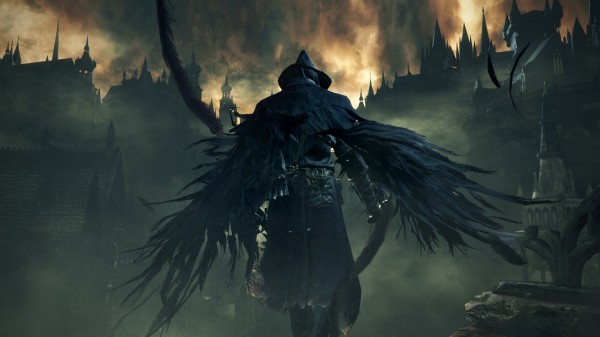
bloodborne_city_looming-600x337
The PS4 exclusive, which had a way shorter demo on display, didn’t look like it was using Sony’s hardware to its fullest (like Infamous: Second Son or Killzone: Shadow Fall, for example); there was a lot of aliasing on the scene, and the textures seemed to be similar in quality to those in Dark Souls II. There were a few frame rate issues as well, although it should be noted that the game is coming out in early February, so they definitely have time to smooth this.

Overall, gameplay felt like a rehashed version of Dark Souls II; it was a bit disappointing to see that, with the notable exception of the main character’s cloak, environmental physics and animations weren’t improved. Bloodborne’s strongest point is clearly its dark, brooding atmosphere, which gives the city of Yharnam a unique and eerie feel; if the story will be able to match the setting, then the game could still be something special.

Another area where Bloodborne might outshine Lords of the Fallen is longevity. Klose told me that LotF will last about 20 hours (although there’s a new Game+ mode, collectibles etc.), and since games in the Souls are known for their massive longevity, it’s fair to say that Bloodborne should easily surpass 20 hours.

Still, I’ve personally always favored quality over quantity and I can’t help but be more impressed by Lords of the Fallen at this stage of development. At any rate, fans of this peculiar RPG niche will have two great games, and they might be surprised when it will come to choosing a favorite.

http://www.gamersoutpost.net/

destiny_traveler-578-80

by Matt Whittaker

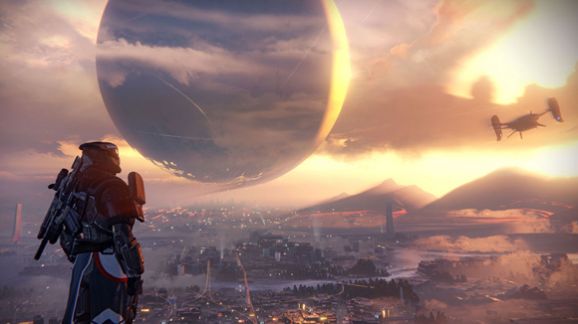
There’s no doubt that Destiny is the biggest game of 2014. It’s captivated the gaming ecosystem, essentially forcing the world to pay attention to its offerings. However, while Destiny’s gun-play is some of Bungie’s best, and its RPG elements are downright addictive, this shared world shooter is not without its flaws. The MMO elements can be an annoyance, the menu navigation system is immersion-breaking, and let’s not even get started on that story. Yes, Destiny is a great game, but if you have sixty hard-earned American dollars in your pocket and a shiny new PlayStation 4, you can certainly get more value elsewhere. Here’s a better way to spend $60 on your PS4 without buying Destiny:

transistor-stab

Transistor – $20

Transistor, the sophomore effort from Bastion-creator Supergiant Games, is beauty in motion. Boasting one of the most captivating narratives of 2014, this unique RPG has the power to capture players’ hearts as well as their minds. Those who fully commit to Red’s story will find it nearly impossible to tear themselves away from their televisions. Transistor’s unique combat system, which combines real-time action with time-stopping turn-based elements, is nothing short of gripping. Add the fact that experimenting with its highly customizable ability system enhances both the gameplay and the story, and you have a bona fide winner. For one-third the price of Destiny, you can have access to one of 2014’s best games.

Resogun

Resogun – $15

One feature Destiny certainly lacks is the ability to play through the entire campaign as Laser Beam Jesus. All custom ship jokes aside, Resogun, Housemarque’s PlayStation 4 launch title, remains one of the best games on Sony’s newest console. In a world where an increased emphasis is placed on narratives and cinematic elements, Resogun reminds us that excellent gameplay still reins supreme. Save all of the humans, go for a new high score, or simply create ridiculous ships for the world to download and enjoy. It’s easy to spend dozens of hours in this cylindrical world, especially if you’re willing to go the extra mile and try for Resogun’s challenging Platinum Trophy. The best part? Resogun will only set you back fifteen dollars, one fourth the price of Destiny.

child-of-light-stained

Child of Light – $15

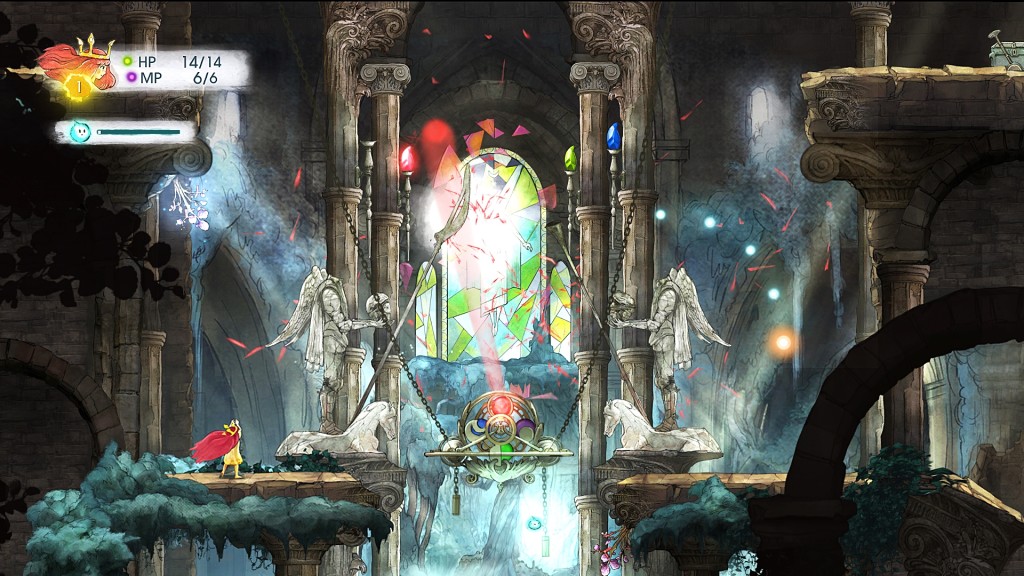
It wouldn’t be that outrageous to argue that Child of Light is best-looking video game of all time. Think of its art-style as the best watercolor painting ever done with the charm of a Roald Dahl book cover sprinkled on top. Likely the best title to come out of the much-heralded UbiArt Framework, Child of Light is essentially a playable fairy-tale. With a surprisingly emotional story and unique dialogue told in iambic pentameter, it’s shocking to think that this was published by the same company as Assassin’s Creed. Oh, and the Grandia-style battle system inserts a bit of energy into the generally slow-paced world of turn-based combat. You could buy a new copy of Destiny, or simply download Child of Light and keep forty-five dollars in your pockets.

HotlineMiami-2012-10-22-17-08-17-98

Hotline Miami – $10

If you haven’t at least given Hotline Miami a shot, you’re doing video games wrong. While its right at home on the PlayStation Vita, the recent PlayStation 4 port gives players the chance to play this outstanding title in a current-gen setting. This psychological top-down action game, set in 1980s Miami, is easily the PlayStation 4’s most masochistic title. Enemies will die. You’ll die. EVERYTHING WILL DIE. For all of it’s rage-inducing challenge, there’s a real sense of accomplishment that comes with each perfect run. With the highly anticipated Hotline Miami 2: Wrong Number on the horizon, there is no better time than the present to play the original. For a meager Alexander Hamilton, this is an absolute steal.

Total Amount Spent – $60

So there you have it folks. For the same price as Bungie’s high-budget hit, you can have an eclectic mix of phenomenal games, each of which is better than Destiny. We, as gamers, have more options than ever before, so why not take advantage of them? Can you come up with a better way to spend $60 on PlayStation 4 software? Let us know in the comments below.

http://www.gamersoutpost.net/

WiiU_HyruleWarriors_53_Movie_09_0_0_standard_800_0

by Andrew Webster

It’s an exciting time for Legend of Zelda fans. Following the release of last year’s brilliant A Link Between Worlds on 3DS, Nintendo is working on a brand-new, open-world Zelda that’s shaping up to be Link’s most exciting adventure in years. But while Wii U owners anxiously await that game’s 2015 release, Nintendo is launching something a whole lot weirder this month: Hyrule Warriors, a game that blends the Zelda universe with an obscene amount of action. It’s not what you’d expect from the series, but it can be a lot of of fun.

Hyrule Warriors is actually a mash-up of two different games. It’s part Zelda, and part Dynasty Warriors, an action series that dates back to 1997. What’s most surprising about Dynasty Warriors’ lasting appeal is that all of the many, many games are basically the same, and they feature some of the most simplistic combat around. In most cases you can just mash the attack button without actually thinking about what you’re doing. What makes the games interesting, though, is their sense of scale; Dynasty Warriors is basically a game version of those insanely huge battles from the Lord of the Rings movies, except you play as a massively overpowered character that can take out dozens of enemies in a single move.

WiiU_HyruleWarriors_42_Ganondorf_vs_King_Dodongo_01_0

This remains unchanged in Hyrule Warriors. To give you a sense of just how crazy things get, in my very first mission, less than 15 minutes into the game a pop-up appeared announcing that I had already defeated 1,000 enemies. I hadn’t even faced off against the first boss yet. The combat is simultaneously thrilling and tedious, but it’s helped along by some light strategies that force you to take over different areas of the map before you’re completely overrun by bad guys. There are also some cool — and, of course, gigantic — boss creatures that require you to do things like aim and dodge instead of just mashing a single button.

If this doesn’t sound anything like a Zelda game, that’s because it isn’t: Hyrule Warriors is developed by the team behind Dynasty Warriors and features virtually identical gameplay. What makes it Zelda is all of the fan service thrown in. There’s a huge line-up of characters you can play as, from Link to Sheik, and you’ll be battling across iconic Hyrule landmarks like Death Mountain and those colorful floating islands from Skyward Sword. You’ll even hear the all-too-familiar “hey, listen!” to alert you to action happening elsewhere in the level. It’s little more than a Zelda-themed coat of paint, but it’s surprisingly effective: I’ve always found the Dynasty Warriors games to be bland and tedious, but it’s a whole lot more interesting when you’re playing as Princess Zelda and wielding familiar weapons like bombs and boomerangs.

Nintendo has a very spotty history when it comes to letting other developers handle its properties — Other M is definitely not the Metroid game I was hoping for — but Hyrule Warriors is a surprisingly good use of the Zelda license. It’s not a particularly deep or challenging game, but it’s mindless fun with plenty of moments and details that longtime fans of the series will pick up on. It’s crazy, sure, but crazy enough that it works. Hyrule Warriors is coming to the Wii U on September 26th.

http://www.gamersoutpost.net/

Destiny_67350

by William Usher

It’s often debated that a game’s brand worth and the development studio behind it are determined by the Metacritic score – an aggregate of reviews from a collection of websites. This hotly contentious subject has become a topic of discussion recently due to all the middling and less-than-enthusiastic reviews that didn’t quite line-up with the hype surrounding Destiny.

Game Planet makes the observation that Destiny’s current Metacritic ranking and Gamerankings score are not good, relative to what they needed in order to secure post-launch bonuses.

Over on Gamerankings. the Xbox One version of Destiny sits at 78.42%, with the PlayStation 4 resting comfortably at 76.03%. Over on Metacritic, the Xbox One version of Destiny carries a 79 out of 100 and the the PlayStation 4 version has settled in at 76 out of 100.

The reason this is brought up is because back in 2012 a contract had leaked between Bungie and Activision discussing what sort of conditions the development studio would have to meet in order to payout bonuses. As mentioned in the article from two years ago…

“Bungie has to make good on each release and if they do they will be contractually granted an additional $2.5 million dollar bonus if the game gets a 90 or above on Metacritic. What’s more is that another stipulation for Bungie is that Destiny has to move at least 5 million SKUs in its first six months otherwise Activision can void the entire contract and walk away Scot-free. “

Interestingly enough, I don’t think that the five-million SKUs will be a problem for Bungie or Activision. Ubisoft had an internal estimation for Watch Dogs needing to push six-million SKUs before the next fiscal year, and they cleared that number by a sizable margin. A lot of those trumped up figures has to do with the fact that these games with large sales estimates are being released as cross-generational titles, so even if Destiny only sold a million copies on each platform (e.g., Xbox One, Xbox 360, PS3, PS4) they would just need to shift an extra million to hit that margin. Given that they’ve already sold-in $500 million worth of Destiny copies to retailers, I don’t doubt that they’ll hit their goal within six months.

However, hitting 90 on Metacritic just isn’t happening. It would take quite a few 100/100 entries across the board to boost up the score from where it currently resides.

The likelihood is that Bungie may be out of their $2.5 million bonus from failing to hit the Metacritic target. Of course, it should be noted that depending on how the money was actually distributed to Bungie could determine how stable the studio is for the long haul. The lack of a bonus payout to Obsidian for Fallout: New Vegas for being 1 point off their Metacritic target forced them to layoff staff.

However, if sales are good then it’s likely Activision will stick with the brand – they already made back their $500 million investment and it’s not unlikely that they have a long roadmap of DLC planned, along with some sequels down the line. I mean, if you break even the first day with sell-ins on a brand new IP, why not milk the brand for everything it’s worth?

http://www.gamersoutpost.net/

destiny_desktop

by Giuseppe Nelva

It all started on the official Bungie Forums. Just before the launch of the game I came across the message of a gamer just like me and you. The only caveat is that Jebi, or “Jebitron” if you want to use his PSN handle, is terminally ill.

Jebi’s words were positive and enthusiastic, full of anticipation for Bungie’s new game, and I’d like to share them with you, raw and unedited.

“Terminal illness has created a home-bound living environment for me so I have plenty of time to play Destiny. So! My wife and I have spent all of August and a bit of the other past months to prepare for September 9th. We’re making sure everything we need to do is done already. Such as major house chores, long talks with our parents out of the way, shopping is out of the way for at least a few months, etc… Our PS4 Destiny Bundles and Ghost Editions have been pre ordered and arrangements made to pick them up at midnight such as a carrying case, cab fare, the perfect “camp” chair to sit in for line waiting comfort and snacks/drinks to stay awake.”

“On the same night we’ll activate DL content, and navigate our screens to the create character option and power down both of our new Dedicated Destiny PS4 systems. Then we’ll go to sleep and wake up to an all day playing of Destiny all rested and alert for a fresh start. The morning of September 9th holds our beginning to our new life… Destiny, Destiny, more Destiny, and lots of Destiny. We’ll get plenty of sleep after our first day playing for at least 12-16 hours. This continues every day afterward until a Dr apt, or other such necessities are required to disrupt our adventures. Pill organizers have been prepared and of coarse we’ll have reasonable breaks, food, showering, etc… A life in Destiny, after all, is a life to live.”

“Monitors, proper stereo audio adjustments, “gaming caves” and Destiny Themed enthusiasm has long been prepared. Posters, shelving to display future Destiny merchandise and other wall-mountables have been placed for gaming motivation. We’ve prepared for this day and it’s finally here. We’re ready. September 9th’s arrival will be welcomed with open arms! We even make jokes that we’ve treated this historical event similar to how others prepare for their new-born. Ha! See everyone starside!”

After reading Jebi’s post, I decided to contact him, and to ask him a bit more about his condition, his gaming hobby and his strong and positive outlook on life and gaming itself.

Jebi lives in Milwaukee, Wisconsin, with his wife, and is affected by Duchenne’s Musculary Dystrophy. Doctors kept telling him that he could live only until 12 years old, then 19, then 25, and then 32. Now that he’s 37 years old he’s still fighting, and intends to keep fighting.

Below you can read what he told me. I won’t write anything further after his last answer. I spent a couple hours thinking on the best way to conclude this piece, and honestly I can find no better ending than the words of Jebi himself. We probably all have something to learn from him.

Giuseppe: Now that Destiny has been out for a while, and you’ve had plenty time to play, What’s your opinion of the game?

Jebi: Destiny is a very fun world to play in. I play almost all day and still feel like I can’t play it enough! The design, vistas, missions, mystery and lore, mechanics, music and multiplayer aspects are very well thought out and well done. The views are amazing and there’s always a way to stay busy. There’s also a special “feeling” I get when I’m playing Destiny. I got attached to it early on and have grown even closer to it now. I love it!

G: What class/race are you playing in game? And what level did you achieve?

J: I’m currently playing as an Exo Warlock and am level 21. I plan on trying another class someday but right now I’m very connected to the Warlock. I like being the Exo race because I rely on machinery to keep me alive. My next character would probably be a Titan.

G: What’s your favorite thing in Destiny? And is there something you’d change if you were in charge?

J: Wow! Favorite thing? Being a machine of war capable of space magic! Besides that, I find myself mostly playing PvE and trying out as many weapons as possible. My favorite thing to do in Destiny would probably be leveling up by completing bounties and Paroling the locations to find new things. I love discovering things.

I don’t think I would change anything if I were in charge. I think Bungie is doing a great job so far and am very content with what’s available in the game. If they can keep a guy like me busy all day and excited about future plans, they’re doing something right.

G: Given your condition, how important is your hobby and identity as a gamer to you, and how relevant is it in your daily life?

J: This is the best time to be a gamer. A lot of people in my life know I’m a gamer. Gaming in general is very important to my daily life. I’m home-bound and in a motorized wheelchair. I can’t do much for myself without the help of an aid or my wife. DMD has weakened my immune system and I have to stay home so I don’t get sick. When I play video games, I have a lesser chance of getting bored because there’s always something to do. This aspect in Destiny, for example, is important in my daily life because it keeps me focused and makes me feel a lot less confined. I have chronic pain so likewise, video games distract me from feeling some of it. I don’t have to sit and think about how miserable things could be. I can feel free and spread my wings. I feel very blessed to have all the things I do, despite my situation.

Video games also allow me to do many social activities with people I normally wouldn’t be able to do outside my home. I can be a hero with my friends, go exploring and share moments that I normally wouldn’t be able to experience while being at home.

My wife (PSN Gabija) is an active gamer as well, so being able to share our time together is priceless. When my wife and I started playing together, we realized that we could go on vacation every time we turned on our PS4′s. Being able to do that in Destiny, for example, with my wife’s company, is something I can’t express with words and Bungie has made that possible. Video games can make that possible. There are other games we play together, but after playing Destiny, we feel its new technology allows us to feel more engaged in the game. It’s almost like going outside where you can see other people or run into people we know.

Identity wise, video games make me feel comforted. Destiny‘s story kind of describes how I see myself. The Guardians are at war with aliens that came and took our civilization because the Traveler was deeply injured by the Darkness. DMD came and took a lot of my muscle mass away. There’s a constant struggle in Destiny and a lot of other video games. I can relate to that in my daily life. like the Guardians of the Traveler in Destiny, I must stay strong and overcome my struggles with DMD, almost in the same way they must protect the Traveler from the Darkness and all who desire it’s power.

DMD wants all my strength and I must fight to make sure it won’t take me without giving it some heavy punishment. I use video games to keep my hands strong enough to do the things I still can; and keep doing them. There are a lot of health problems DMD has given me but what it has not taken… is my will to fight. That is something the Darkness can never take from a Guardian in Destiny, similar to how DMD will never take it from me in real life. DMD has given me a rare opportunity to become a stronger person and I sometimes see that as a blessing, not a curse.

Don’t let life’s challenges bring you down. Accept them and become stronger. I know it’s easier said than done, but we can all do something to become a better person no matter what our situation may be. Live life. Be happy.

http://www.gamersoutpost.net/

c87e86ba9b0c-xl

by Patrick Klepek

I would mostly describe myself as someone who sticks with single player. Crucially, these games have a beginning and an end, which lets me feel comfortable with moving onto the next game. Not having enough time needed to become skilled in multiplayer is certainly part of that, but I also like playing lots of games, and seeing whatever games can offer me. Credits give me that cue.

Even though I’ve played 20 or so hours of Diablo III in the last two weeks or so, there’s precious little I could tell you about that experience. That’s not to say it wasn’t fun–I had a total blast. It was just a blur. Attack this, dodge that, equip this, upgrade that. Rinse, repeat. Diablo III is pleasurable repetition incarnate. I played the game co-op, and conversation dominated much of it. Even on expert, Diablo III is a cakewalk whose delicious loot is best enjoyed with a friendly companion. On the occasional night I was on my own, it felt completely alien. It was certainly something that I had the option to do, but I was only doing it because I had to.

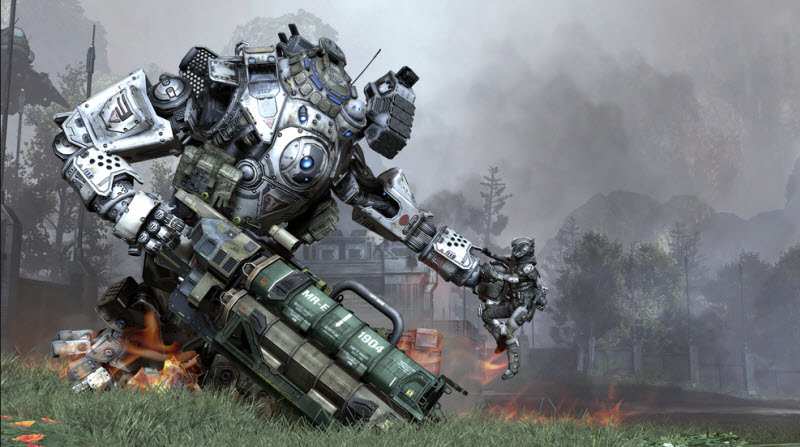
We’re seeing more and more games designed with multiplayer from the outset, but out-and-out excluding the option is heresy, so games come up with ways to include it. Respawn Entertainment’s Titanfall includes a light campaign mode, but it might as well not even count. Titanfall became one of the first truly big games to say goodbye to single player.

Enter Destiny, Bungie’s ambitious post-Halo experiment to mingle shooters and MMOs.

While playing Destiny, it gives me Diablo III vibes. And I now understand why Bungie won’t allow matchmaking for endgame raids, instead making players group with friends to take them on. In some ways, Destiny feels like this enormous compromise, a way of bridging the gap between the game they want to make and the games they’ve been making for years now. It’s not hard for me to imagine an early meeting where Destiny could only be played together.

It’s why I’m of two minds when I play Destiny. In one world, we have the traditional way I approach games. It’s me vs. the world, a solo journey. In that case, it feels weird to play a game that seems as though it’s meant for you, but it’s not. It’s an illusion. This looks like Halo, it plays like Halo, but, oh boy, this is definitely not Halo. Your ingrained Halo skills may transfer over, but any idea it’s designed to be played by yourself are quickly washed away.

In Halo, it’s a great singleplayer experience greatly complimented by its co-op and multiplayer. It doesn’t feel like one is sacrificed for the other. In Destiny, it’s a great multiplayer experience that just so happens to include a single player experience, even it’s not really recommended.

c9d1cb35b3e1da8a218e8d32537f0d62

One of the common examples I’ve heard about how Destiny should work is a scenario in which you’re playing on your own, struggling to stay alive, and suddenly a bunch of friends swoop in to save the day. But that situation should never happen. If you’re playing by yourself, it’s not the same game.

But when I play Destiny with a friend, it’s transformative. With both Diablo III and Destiny, I’m not sure where and how to attribute my enjoyment. Yes, the mechanics of both are sound, but given the resounding emptiness felt when played solo, perhaps the co-op element is compensating. I’d go so far as to argue games can be less mechanically compelling, so long as the multiplayer element is engaging. The thrill of barking orders at friends can, in a way, cover design flaws. I hem and haw on the quality of each game’s mechanics because the co-op aspect literally distracted me from engaging with them to some degree. (For what it’s worth, the way Destiny’s difficulty spikes meant that I was paying far closer attention to it.)

But “cover” might be the wrong word. Even if Destiny or Diablo III feels fundamentally less interesting without other people around, that may merely reflect the original design goals.

This isn’t meant to be a deep critique of Destiny, but a gut reaction to a very particular transition. I’m merely wondering when games will become more honest about what they’re actually offering.

When Call of Duty: Modern Warfare multiplayer took off, the copycats were endless. It wasn’t just that every shooter started aping Infinity Ward’s leveling system, but games that never would have otherwise included multiplayer suddenly had new teams assigned to building it. The thinking was that singleplayer brought people to the table but multiplayer kept them sitting down (read: not selling their copy).

Now, we may be seeing the rise of games that ditch single player entirely. It’s not a great PR message. Many are going to be reluctant to actually pull the trigger. But that may be a disservice to everyone involved. Players go into the game thinking they can get something they can’t, and developers are forced to compromise a gameplay experience, knowing it’s not what they’re truly building. That’s a lose-lose.

http://www.gamersoutpost.net/

by Paul Tassi

The reviews are in and Destiny appears to be something of a disappointment for fans and critics alike. The game has received rather low review scores from many major outlets, 6 out of 10s and the like, and its all-important Metacritic rating is hovering at a troubling 75.

Past that, it’s a strange situation as in the wake of GamerGate, fans and critics don’t seem to be at odds with one another regarding low review scores of Destiny. This is an industry where fans will lose their minds if a Zelda game is scored in the 8 range, but there has been surprisingly little push back even among those fans who like the game.

I know the feeling. I like Destiny more than most critics it seems, but I understand that there are pretty huge, pervasive problems with it, some of which involve what it contains, some of which involve what it doesn’t.

One major complaint about Destiny is that the scale is vast, but largely repetitive, where players will retread over the same maps, fighting the same enemies in the same mission formats. The other big issue everyone has with Destiny?

destiny-promise

It just doesn’t seem like what was promised.

It’s a giant world, but it’s empty, as I explained in detail yesterday. We were promised a “shared world shooter” and quasi-MMO like nothing else before it. Planets to explore! Sci-fi mysteries to uncover! A whole new video game universe to enjoy over the next ten years.

And yet, that’s not what the final game delivered, at least not at launch. It’s largely empty maps with an uncomfortably sterile hub world, and on top of it all, a story so incoherent even the game’s most ardent defenders admit it’s terrible.

All of this seems like it’s happened before. And it has, twice this year already.

Destiny was the third of three major IPs to debut this year, all of which have been greeted with fairly mixed reviews from fans and critics alike. I’m talking of course about Titanfall, the game meant to shake-up the shooter landscape, and Watch Dogs, which was poised to reinvent the sandbox genre. All three of these games arrived on colossal waves of expectation and hype, and all dashed against the rocks, producing adequate experiences at best, but failing to be the game-changers they were supposed to be.

The press has been blamed for this to some degree. There are accusations that for all three of these games, the media hyped up each and built up these false expectations. I don’t think that’s the case, given the evidence at hand.

Watch Dogs is a different case from the others. That game famously overdressed its E3 footage to the point where the final product was leagues behind what was debuted for the general public. That game’s hype was a slow decline until release when we were given a serviceable, but hardly revolutionary sandbox shooter.

Titanfall and Destiny share the same issue in this case. Both had a beta that allowed players to experience the game for themselves. You may think that’s the most honest and transparent way to demonstrate what your game will be like, but the problem is that with each of these games, there was no way to know exactly what was going to be contained in the final product after a promising start.

Titanfall was a more egregious example of this, with the final game having a handful of multiplayer modes and the flimsiest attempt at a single-player story in recent memory. Destiny certainly has more substance to it, and yet even during the beta, it was hard to get a full picture of what the game was going to be like.

titanfall-promise

Well, that’s not strictly true. There were certainly clues that many picked up on, and those who thought the game would be repetitive and empty were right. But others like myself had faith that because it was a beta, the blanks would be filled in by release. I remember thinking that the dead-ends I was running into in Patrol mode would surely be filled with treasure and cool enemies by release. I remember believing the story would pick up and become more interesting in time. I remember hoping that somewhere out there were interesting characters to meet, and missions would become more diverse down the road.

But instead we got the content of the beta repeated four times across four planets (well, three planets and a moon). We didn’t learn until after the fact that “endgame” content was the same content from your first playthrough, repeated on a harder difficulty. A singular raid is coming, and more content is being updated periodically, but again, if it retreads the same ground, the game will still face the same problems.

Erik Kain sums up the “what could have been” problem with the game nicely in his most recent review:

““I pictured an open space game in which you’d travel via spaceship from one planet to the next, to open and vast worlds ready to be explored.

I pictured a shared-world where players would encounter each other as they explored in an exciting and organic way, eschewing traditional concepts of party-based play and the over-crowded nature of most MMORPGs. I wanted to feel like a galactic hero, superful and badass, out in uncharted danger, only encountering my fellow Guardians (of the Galaxy) through luck and at times of great need.

I imagined outposts and other human settlements or military bases sprinkled throughout the galaxy—multiple hubs, essentially—and an actual metropolis rather than just the Tower hub.”

In short, it’s about expectations. The problem is that when we heard news about a shooter MMO from Bungie, we expected all the best things about the two genres. The massive universe with so much to discover. Characters to meet, mysteries to solve, friends to make, and so on. Instead, we got the worst aspects of an MMO, grinding for marginally better gear in repetitive zones, without the backdrop of an interesting universe at all. Bungie got two of their key points right, the amazing visuals and the tight gameplay, but they missed everything else.

And I’ve said it a million times before, but Titanfall, Watch Dogs and Destiny all share a lack of memorable characters. Tell me who the face of each of these games are. For Watch Dogs you have Aiden Pearce, an unlikable, improbable, bland hero. For Titanfall and Destiny, you have faceless space-soldiers. In fact, the “face of Destiny” is probably Peter Dinklage’s Ghost at this point, and I think we can all agree that’s kind of terrible. To become an iconic series, your game has to create icons.

the-last-of-us-promsie

I’m looking back to the year before this one where The Last of Us and BioShock Infinite were both vying to be game of the year. Both were hugely successful and beloved because of the stories they told, and the characters they created. I wrote a post about the mind-bending ending of Infinite which was my most popular of the year simply because people wanted to discuss the story that much. The Last of Us made instant icons out of Joel and Ellie, even if it didn’t innovate all that much in the gameplay department.

This year it feels like three strikes and you’re out. Three games that were sold as new entries that would revolutionize their genre, but ended up disappointing in one way or another because they failed to deliver on that implied or implicit promise. It’s a tough market for new IPs and I hope the lesson here for dev isn’t to stick with sequels. But I think consumers and critics are going to be incredibly wary of future games riding this much hype, even if they’re trying to be transparent through betas and demos.

I think out of all of these titles, there’s the most hope for Destiny. It feels a lot like Diablo 3 at launch in many ways, a game that disappointed at the start, but through hard work and listening to fan feedback was able to patch and expand itself into something pretty great. And given that Destiny even shares many of the exact same problems as Diablo (lackluster loot, a repetitive endgame), there’s literally a roadmap on how to fix these issues.

I like Destiny well enough, but it’s hard not to be disappointed with many aspects of it. Maybe it’s us that have the unrealistic expectations. Maybe despite how much games are advancing, we just can’t have it all between endlessly entertaining content, diverse missions, engaging characters, an interesting plot, easy co-op partying, and a fun and balanced multiplayer. Maybe given the finite resources of game development, we have to pick three of those and be satisfied.

But I hope not. I want that perfect combination of all of the above, and some games get very, very close. It just seems like developers sometimes focus on the wrong issues in an effort to create the next immortal franchise. In this case, Destiny reached in every direction, and in the process became a Jack of all trades, and a master of none.

It’s been a strange year for games when out of Destiny, Watch Dogs and Titanfall, I’d actually pick Wolfenstein: The New Order as a better game than all of them. That game wasn’t making grandiose claims to revolutionize any genre, and yet by doing what it knew well, it managed to surpass everyone’s expectations.

I think there are a lot of lessons to learn here about the importance of story and characters in almost any genre, the balance between proper marketing and complete oversaturation, and games that believe they can add content later and not expect players to be annoyed with a sparse offering at release.

All of these games will get sequels, and I just hope they learn their lessons for next time.

http://www.gamersoutpost.net/