Archive for the ‘Opinion Piece’ Category

uncharted-4-a-thiefs-end-listing-thumb-01-ps4-us-09jun14

by Spencer Campbell

Transparency isn’t the norm in video game press conferences, and in some ways it’s for good reason. When games are shown for the first time, they’re often far from being finished, so laying everything out on the table for consumers to witness would be to the game’s detriment. But sometimes morals get muddy when it comes to press conference transparency — for example, Ubisoft’s Watch Dogs premiere.

E3 2012 generated a metric butt ton of buzz, but no game created more of a clamor than Watch Dogs. The slick graphics and fast gameplay impressed many outlets across the web, winning it many Best of E3 awards without even being playable on the showroom floor. Then more details about the game were released.

It became obvious that Ubisoft was less than honest about how great their game looked. At first, graphical comparisons between the E3 video and later released gameplay videos revealed lower quality textures, weather effects, and lighting. Then, claims of 1080p and 60 fps were dropped until eventually we were left with a game that looked and played middlingly at best. Watch Dogs wasn’t a life-changing, game of the year bombshell. And that would have been fine, if it hadn’t been for the dishonest E3 trailer back in 2012. We were all promised an impressive experience that had to be delivered via a fan made mod for PC after release.

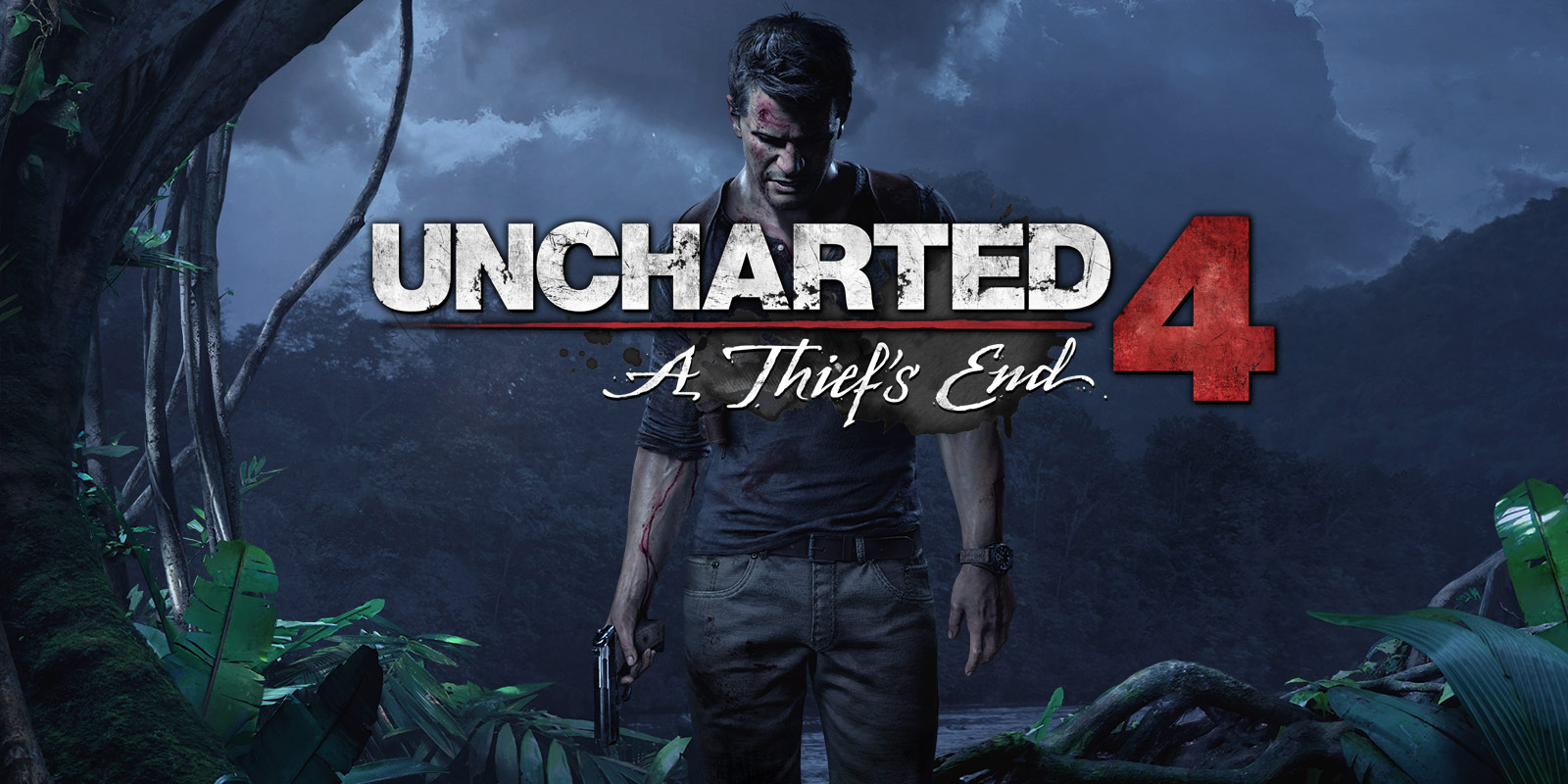
Which is why I’m unabashedly happy that Nathan Drake fell through the game world during the gameplay demonstration at the PlayStation Experience. Since the reveal and subsequent disappointment of Watch Dogs, I’ve been incredibly wary about submitting to any hype caused by trailers, but I’m not afraid to be excited for Uncharted 4. Nathan Drake falling infinitely into the abyss showed a devotion to transparency from Naughty Dog. By showing off a game that was a little rough around the edges, the development team was saying what their game “will be.” The utter perfection surrounding the Watch Dogs trailer showed off what that game “could be,” and ultimately wouldn’t live up to.

Bringing someone on stage to play a live demo is risky. It’s usually reserved for motion controlled games to prove that, “Hey, it really works, I swear,” and even then sometimes it doesn’t, and it’s never looked good. It wreaks of desperation, but the Uncharted 4 demo was less about alleviating players’ doubts and more about the developers letting their work speak for itself. And on that fateful day, December 6th, Uncharted 4 decided to poop the bed.

The fact that a developer as big as Naughty Dog took a risk and trusted their product not to mess up shows a pronounced confidence that a prerendered video, no matter how perfect, could never bring.

PlayStation 5: What To Expect?

Posted: December 1, 2014 in Opinion Piece

by Christopher Morris

Despite leading this console generation Sony will already be considering its next video gaming move

While it hasn’t been the best time for Sony Corp financially, with its mobile phone division posting massive losses, one crumb of comfort for the Japanese corporation has been the success of its PlayStation 4 video games console. Sony seems to have hugely benefited from really listening to what consumers wanted with this eighth-generation video games console, and has been rewarded by outselling Microsoft Corporation’s Xbox One system by a ratio of nearly 2-to-1 worldwide.

Playstation-5-PS5

PlayStation 5: Staying ahead of the curve

But Sony will not be sitting on his laurels, and in a marketplace which is as fast-moving as video games, staying ahead of the curve is always absolutely essential. Just ask Sega; within a matter of a few years the now video games developer went from being an absolutely major player in the video games console manufacturing market, to being eliminated from it completely due to the failure of the Sega Saturn and Dreamcast consoles.

Thus, Sony will already be thinking about when it will introduce the PlayStation 5. In the video games market, whether or not you produce a sequel to an existing console is pretty much dependent on market forces. But the success of the PlayStation 4 guarantees that there will be a PlayStation 5. Although cloud-based gaming and other technology such as Valve’s Steam Box has suggested that the console’s days may ultimately be numbered, at this point in time it doesn’t look as if this will develop fast enough for the eighth-generation to be the death knell for consoles.

PlayStation 5: Death of the disc

Additionally, both Sony and Microsoft appear to have plans for the next generation of video games consoles which will enable their devices to remain relevant. There is already speculation that both the PlayStation 5 and whatever Microsoft decides to name the next Xbox in its range, will ship without a disc drive. The death of physical media has of course been predicted for many years, and usually prematurely! But with Internet speeds increasing, and obvious incentives for video game developers to phase out the old-fashioned disc, it is possible that the PlayStation 4 might be the last Sony console to accept physical media.

In-line with this, Sony might be looking to develop and improve its online services, including its PlayStation Now technology. At this point in time, broadband speeds don’t really seem to be sufficient to support cloud-based gaming, or any form of gaming which is completely reliant on streaming over a server. But these will actually increase in the near future, and eventually it does seem inevitable that disks will be defunct.

It is also thought that the PlayStation 5 will launch in a relatively short period of time into the future compared with previous console generations. There are several reasons for this, not least the disk dilemma, but another major consideration is the fact that both the PlayStation 4 and the Xbox One just aren’t all that powerful.

Unquestionably, the Sony PlayStation 4 provides a significantly improved gaming experienced over the PlayStation 3. It can quite simply slickly carry out all of the tasks that the PlayStation 3 used to struggle to deal with. But its spec and capabilities don’t really compare to a high-end PC, and of course computers will develop further in terms of internal specifications in the coming years.

PlayStation 5: Dealing with 4K

Although the PlayStation 4 is theoretically able to deal with 4K video, in reality this is a physical impossibility. There is no way that the processor in the PS4 will ever be able to render 4K content in an acceptable fashion. So as this becomes a more prominent resolution, it is possible that content produced by the PS4 will look increasingly dated.

Additionally, the ability of the PS4 to deal with the Project Morpheus virtual reality technology that Sony is currently developing will obviously be considerably less than that of PCs. The Oculus Rift project could leave Morpheus looking rather pale by comparison, and this will be a major consideration if virtual reality gaming takes off in the next few years.

So when we consider the make-up of the PS5, these trends and issues will be strongly reflected in its portfolio of features and specifications. Firstly, we can expect the PS5 to launch in around 2020. It is possible that the device may even hit the stores before then, but this generation of consoles can expect to be replaced in around 5 to 6 years.

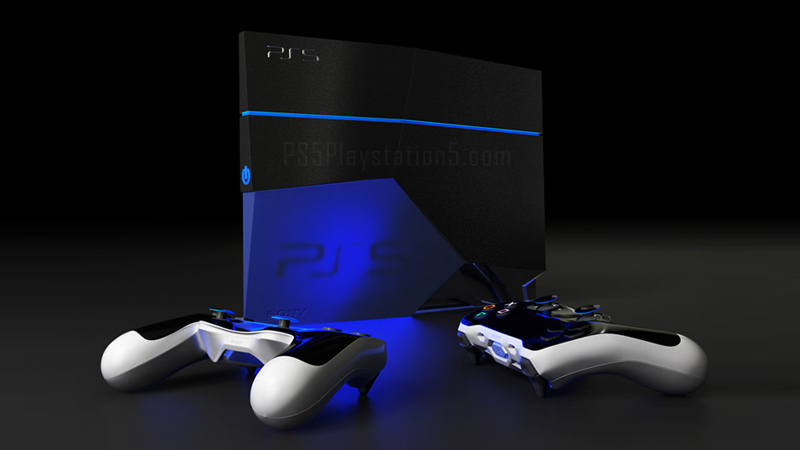
Features in the PlayStation 5 will very much reflect the world it will be coming into. This could be a cloud storage-based console with no disc drive, which is APU driven. The ability of the PlayStation 5 to deal with 4K video will be absolutely key, and thus the dedicated graphics chips and processor included in the device will be mega-powerful. This will also assist the ability of the console to deal with virtual reality.

By the time 2020 comes round, gaming and consoles could be very different beast from what we’re accustomed to.

Screen_Shot_2014-07-14_at_3_29_52_PM__2__0

by Ben Kuchera

The idea that Ubisoft somehow didn’t know the condition of Assassin’s Creed Unity doesn’t just strain credulity, it snaps it in two and then sets the pieces on fire. The game’s issues are blatant, and extensive. The manipulation of review embargoes adds an extra layer of shady behavior to the situation.

So that’s the context of the “free” DLC that’s being offered, or a free game if you purchased a season pass. A company shipped a broken product, it used the embargo system to delay the news hitting, and are now offering more content for that game as a sort of apology. And that free game? It costs them next to nothing to open up their catalog as a way to try to make good on the horrific launch of Unity. The worse Ubisoft will suffer is a few lost Far Cry sales.

We have to stop giving them a free pass

The system has become exceedingly stacked against the early buyer. We’ve passed the point anyone is trying to hide it. The fact that Ubisoft thinks it can get out of this situation so cheaply isn’t a contrite apology, it’s a victory lap. It’s up to consumers to figure out how badly this behavior will hurt companies in the future, and free DLC is a woefully inadequate first step to making this right.

Here’s an apology that would matter: A way to return the game for a full refund, and a direct apology to players along with an explanation for how and why this happened.

That’s not going to happen however, because money. Refunds would mean dealing with retailers and Uplay, Ubisoft’s own digital distribution platform, states its rule simply: “All sales on PSN, Mac and PC digital content are final.”

It would cost time and money, and it would have to note that it shipped a broken game on notes to investors, and then describe the cost involved in actually treating its customers with respect. These things are unacceptable to a business focused on the bottom line.

Instead of taking steps that would matter, Ubisoft is going to offer warm platitudes and free content for people who paid $60 or more for a game that everyone but the purchaser knew wasn’t likely to work. If you want to know why players and the press don’t often trust big publishers, this could be exhibits A through Z. The entire system has been manipulated to hide the fact the game was broken, and Ubisoft is trying to make up for that dishonesty in the least expensive ways possible.

If there’s any silver lining in this situation, the free game selection is pretty great, including Far Cry 4 and The Crew.

Publishers need to stop tip-toeing around their own failures, and offering for-pay content for a broken game for free isn’t a great way to repair the relationship.

Video games are the only business where you’ll often hear industry insiders talking about how buying at launch is a good way to support the studios behind the games. This leaves out the fact that returning an opened game is all but impossible, and broken games at launch is close to becoming the rule rather than the exception.

This isn’t about Ubisoft, it’s about an industry that’s becoming increasingly comfortable selling non-working products to buyers with little to no recourse. Read Ubisoft’s post about the free content, they describe this issue as if it something that happened to them, rather than the result of the company’s own actions.

I’m also looking at you, Microsoft. The Halo situation remains unacceptable.

If anything, this is another painful reminder to stop pre-ordering games, stop buying games at launch, and for the love of god don’t buy season passes for content that may or may not be worth your money. Ubisoft needs to stop treating its customers with this level of disrespect, and it needs to start now.

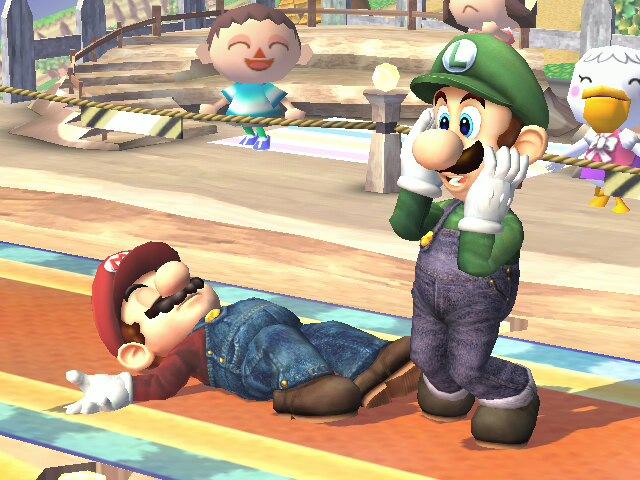
Pokemon is killing Nintendo

Posted: November 26, 2014 in Opinion Piece

mario-dead

by Tero Kuittinen

The end of November period brought just about the worst possible news for Nintendo: The latest Pokemon games sold a dazzling 1.5 million units in Japan during launch week.

It’s a massive number in a market where few titles manage to crack the 100,000 unit barrier during their debuts. The hot Pokemon rollout helped once again revive the aging 3DS portable console sales, boosting the weekly unit sales number to 83,000. This is more than seven times higher than weekly sales of Sony’s flagship PS4 console in Japan.

This toxic triumph was precisely what Nintendo did not need. The company requires shock therapy to force its hidebound executives to abandon their preposterous opposition to launching Nintendo’s beloved franchises on iPad. Instead, the ancient Nintendo properties from its ’80s and ’90s halcyon days keep performing well enough to enable the company to keep its head in the sand.

Nintendo is not crashing fast enough. The core device franchise, the 3DS, has now sold nearly 2.4 million units in Japan so far this year, which is substantially below the 4 million units it sold in the same period last year. But the erosion is simply too slow to force the company to change its mind about getting into the mobile app market. The strong Pokemon sales numbers from its home market just gave the reactionary wing of Nintendo’s management a new argument to stay the course and keep hanging onto its slowly sinking game console platforms.

While Nintendo’s console sales slide, the mobile game market is about to hit $22 billion in 2014 and is poised to balloon to $30 billion in 2016. So many of the most famous and lucrative game franchises are sitting out the tablet and smartphone game explosion completely – Mario, Zelda, Metroid, Castlevania, Pokemon, etc.

Animal Crossing would be a perfect fit for the iPad and the monetization potential of its item collection system boggles the mind. Dr. Mario and other puzzle gems Nintendo has created could challenge the billion-dollar Candy Crush Saga empire so easily. F-Zero and Mario Kart are precisely the kind of rally games that fit the tablet format.

What could possibly be more delicious than Advance Wars for iPad? An insanely addictive, turn-based strategy game that begs for a connected, touchscreen-based device with a micro-payment system. Who amongst us would not pay $1.99 for new AW campaigns every damn month?

Nintendo is missing out on billions of dollars in totally new revenue with development costs that would be substantially below of what the Wii U requires. But with every passing quarter, Nintendo’s brand power becomes a little less valuable and relevant to younger consumers. Franchises like Castlevania and Metroid are already unknown to the new generation.

The sweet elixir of Pokemon 3DS profits are a slow venom dripping into Nintendo’s veins, numbing the mind of the company that needs to embrace change right now.

vaas2

by Paul Tassi

I’ve recently taken some time out of saving the world and romancing elves in Dragon Age: Inquisition to finally fire up Far Cry 4. With both games released on the same day, and both receiving high praise, it can be hard to know which one to pick up and start first, though your past experience with the two series and their respective genres will probably lead you one way or another.

Far Cry 4, for the open world shooter aficionado, is Ubisoft’s second experiment in making their major series annual (depending on if you count Blood Dragon, in this case). We’ve seen the unfortunate results of that philosophy this month in regards to Assassin’s Creed Unity, which was released with a wide array of bugs and glitches, and a relative lack of innovation to boot.

Thankfully, Far Cry 4 feels less hurried, and though it may not excel in the innovation department (less so in many ways than Unity, as we’ll discuss), it launched mostly free of major disasters, and “rushed” isn’t an adjective used to frequently describe the game. At least not in the traditional sense.

Far Cry 4 is not a rushed game in that it’s not broken and unplayable at launch like so many other titles released these days (outside of a few fatal errors on PS3), but the year-long timetable only allowed for minimal changes to the blueprint of Far Cry 3. Giant Bomb’s Jeff Gertsman said it best when he described it as a game for those who loved Far Cry 3, and want to play more of it without having to go through the same game again.

The similarities aren’t just on the surface, they’re practically endless. In both games you, a twenty-something male hero, goes to a foreign land and is conscripted to fight in a rebel army against a surprisingly charismatic villain with a militarized occupational force in his pocket. Your first mission is to take down a radio tower and open up a section of the map, and you then proceed to do this no less than 17 times. You’re tasked with clearing out enemy outposts to relinquish their control over certain areas. You’re given assassinations, hunting missions, races, and so on meant to distract you from the main questline whenever possible. And I’m pretty sure I just burned a series of opium fields in a mission surgically transplanted directly from Far Cry 3.

I’ve almost never seen a game more derivative of its predecessor than Far Cry 4. But fortunately, Far Cry 3′s formula was such a great gaming experience, that’s not necessarily a bad thing. As it stands, the Far Cry series is one of the best open world games in existence, and by simply doing what Far Cry 3 did a little better, Far Cry 4 is a hit in its own right. It’s the definition of “why fix what isn’t broken?”

With that said, I’m not sure this is a card Ubisoft can play more than once. Depending on their sales data, they are undoubtedly trying to imagine the next exotic animal-filled wilderness locale they can set a future game in (the Amazon! the African plains redux!) and what kind of eccentric villain they can cast (a logging executive with a handlebar mustache! a warlord who loves Taylor Swift albums!). I’m just not sure they can continue to play it safe to this degree.

Far Cry 4 is Far Cry 3, and the two share 99.9% of the same DNA. It’s like if Far Cry 4 was simply Far Cry 3 DLC that ran a bit long and ended up being 150% bigger than the original offering. By taking the huge leap forward for the series that was FC3 and simply refining it (resettable outposts! elephant riding!) all they essentially had to do was make a new map (the hardest bit of an open world title) and write a script with vaguely the same outline as the first game.

It’s genius, and it worked, given how good the game is. Ubisoft has stumbled upon yet another formula that delivers, but if the differences between 3 and 4 are any indication, Far Cry may evolve even less with each new iteration than Assassin’s Creed does.

Fortunately, Far Cry has inherent fun working in its favor where Assassin’s Creed, sadly, does not. While occasionally AC comes up with a mechanic that breathes life into the series (pirate ship battles!), when it comes to plain old stealth and intrigue on the streets of Paris, the only wacky fun you’ll have is stumbling into one of the game’s face-removing glitches. But with Far Cry? Even if you played 40 hours of the last game, you can turn on Far Cry 4 and within 20 minutes set an elephant loose in an enemy encampment and be giggling like a little girl.

And yet, without further evolution, I don’t think Ubisoft can luck out like this again. My fictional Amazonian Far Cry 5 or African Far Cry 6 may indeed come to pass, but players will get tired of the formula. I suppose that can be said of many series, but I don’t think I’ve ever seen a sequel change less about its plot and core gameplay than I have moving between Far Cry 3 and 4. It’s an impressive trick, but I’ll be amazed if it works again.

disney

by Steve Bowler

Everyone had always assumed that Disney was going to buy Pixar

During one of my regular business chats with my father, who is a retired CEO, I predicted that Pixar was going to buy Disney and turn the company around. The value worked better going the other way. While Disney needed the magic of Pixar at that point in the company’s life, Pixar didn’t exactly need Disney.

My father was incredulous but, when Disney bought Pixar in 2006, I called my Dad with the news. Because holy shit, I had called it.

“As part of the deal, expected to be completed this summer, two Pixar veterans will head Disney’s animation efforts. Ed Catmull, who had served as Pixar’s president, was named president of the combined Pixar and Disney Animation Studios,” CNET reported. “John Lasseter, the Pixar executive vice president who is widely regarded as the studio’s creative leader, was named chief creative officer. Pixar will remain in its San Francisco Bay Area headquarters. ”

It gets better!

“Though Disney is issuing $7.4 billion worth of stock, it’s paying closer to $6.3 billion after factoring in Pixar’s cash holdings of slightly more than $1 billion,” the story said. “Pixar shareholders will receive 2.3 Disney shares for every Pixar share they own, a move that will make Jobs the largest individual shareholder of Disney.”

Pixar won in every important way in that deal, from the cash to the power. So today I’m making a new prediction: Disney’s next acquisition will be Nintendo.

This would be expensive

Nintendo would be Disney’s second priciest intellectual property grab to date. A fairly straightforward way to ballpark a company’s worth is to multiply their net revenue by three to four times. This puts Nintendo somewhere in the neighborhood of a $11 to $22 billion buyout based on the numbers of fiscal 2014

This is the lowest it would cost to buy Nintendo in seven years, since the company is in a slump and bleeding cash. If Disney were to buy the company, this is the time. Things are looking up for Nintendo in some ways, but coming off a long stretch of losses and struggling hardware sales there’s only so much big games can do to help the company. Nintendo is at a historic weak point, making the company very attractive for acquisition at a good price.

It would still cost a ton of money. To put the $19 billion-ish price into an easy to digest number, buying Nintendo would cost Disney more money than they paid for Pixar, Star Wars and Marvel, combined. It’s a huge purchase, unless you’re Disney.

Disney’s current Net Worth is hovering around the $142 billion mark, and the profit they made from the last two fiscal years would allow them to buy Nintendo with cash, if it came to that. And it wouldn’t.

The last time Disney made an acquisition this size was when they paid $19 billion for ABC in 1996. With inflation, that purchase would have cost about $29 billion today. Disney is no stranger to huge, ambitious acquisitions.

Disney — using the same game plan they used for Pixar, Marvel, and Star Wars — could recoup that cost within five years. The secret is that Disney wouldn’t be investing in the video game business, they would be furthering their already near monopoly on characters.

Disney wouldn’t be buying the Wii U, they’d be buying Mario

Disney is a marvel of intellectual property, and this is one area in which Nintendo excels.

The Marvel Universe Films have blown away just about everything comic-book-related save the most recent Batman films and now here comes the new Star Wars films and the Rebels TV show.

Disney has always been an impressive company, but the way it has managed its intellectual property in the post-Lasseter era has been amazing. Even the direct-to-video model has seen a huge jump in quality and organization.

It’s a huge purchase, unless you’re Disney

Disney has evolved into an unstoppable Juggernaut of intellectual property. They’ve bought Pixar, Marvel and Star Wars in the past ten years, and were even rumored to be in pursuit of Studio Ghibli at one point in 2013. What these companies have in common is a stable of characters that audiences love, that could be leveraged in multiple ways.

If you want to look at what Disney can do for a character, look at the mainstream’s acceptance of Iron Man. In 2008, Iron Man was known mostly to comic book fans and was considered to be something of a B-List hero in comparison to someone like Wolverine. Now Iron Man is one of the best known, and most profitable, characters in Marvel’s impressive arsenal. All it took was a few great movies and a huge marketing push.

Disney wouldn’t see Nintendo as a hardware company or even a software company, just as they didn’t see Marvel as a comic book company. Nintendo holds some of the best intellectual property in the world, from Mario to Link. Kids are still wearing Mario and Luigi shirts next to their classmates wearing Minecraft and Iron Man logos.

There are incredible properties, from Metroid to F-Zero, that would offer Disney huge opportunities in everything from film to theme park attractions. Nintendo, when looked at through the lens of an acquisition, is a bundle of amazing, well-known characters and worlds that are criminally underused.

Nintendo is the last company that owns characters that could compete with the worlds that Disney already controls, and adding Mario to the Disney original characters, Marvel superheroes and Star Wars would mean that Disney all but owns entertainment as a whole.

Disney would benefit in many ways

This also represents a growth opportunity for Disney. Its current success has created a monster, and it’s a very hungry, publicly traded monster.

Investors want to see their stocks grow, and that means the company has to grow. New IP is always risky — which is one of the reasons Disney leans on the “Princess” model; they’re familiar even when they’re new — so one of the safest ways to grow your company is to grab existing characters. You can’t create and grow something as big as Pixar, Marvel or Star Wars overnight.

Nintendo is a company that’s at risk due to its reliance on hardware that isn’t selling, but that hasn’t diminished the value of the games and characters themselves. Disney doesn’t need to sell Wii U hardware for the acquisition to make sense, it would merely need to find better uses for these characters.

Growth would happen when Disney takes Samus Aran and crafts a high-quality PG-rated CGI film about her adventures. It would come from Mario Kart raceways in Disney World and Disney Land. Fold Peach into the world of Disney Princesses, and create interesting toys and collectibles to be sold in Disney retail stores.

Nintendo offers the same upsides that Disney saw in Star Wars: A hugely popular cast of characters and products that are surprisingly under-exploited. If Disney does for Nintendo what it did for Marvel, the company will continue to grow, giving shareholders the bump they need to keep the stock price up.

This is a great fantasy, but it will never happen

Nintendo is suffering the same malaise that was strangling Star Wars, and it’s a failing of politics and company culture, not the products or value of the worlds themselves.

The Wii U is stagnant at retail. Sales of the portable systems are slowing down. It’s unclear where Nintendo goes from here, but Disney could provide them a way out of all these problems, while continuing to support Nintendo’s software development and bring its stable of characters to the mainstream.

Disney has a proven history of accomplishing all of the above with Pixar, Marvel and Star Wars. We have no reason to believe that if they maintain the leadership and teams behind the Nintendo games themselves that they couldn’t repeat the same level of success all over again with Nintendo.

Nintendo also has a company control that resists change, and it’s sitting on a huge mountain of currency that means the company doesn’t have to do anything for a long time.

“Buried in reams of financial data is the revelation that Nintendo have 812.8 billion Yen (£6.7/$10.5 billion) in the bank — enough for it to take a 20 billion Yen loss (£163/$257 million) every year until 2052,” UK’s Nintendo Gamer Magazine wrote back in 2012. “Then there’s almost 469 billion Yen (£3.8/$6.0 billion) held in premises, equipment and investments. When that runs out — we’re in the year 2075 by this point — they’ve got some of the most valuable intellectual property in gaming to sell off before the company goes out of business.”

In most situations Disney would be able to pick Nintendo up for a good price, and the most would benefit both companies. What’s more likely is that Nintendo will continue to lean on its savings to insulate itself from having to make any drastic changes.

If things don’t improve, however, the asking price will only go down, and I have no doubt Disney will be paying attention for the perfect time to make an offer.

Steve Bowler has worked on animated feature films, Emmy award winning animated TV series, video games on just about any recent gaming hardware from mobile to console to PC. Currently a Lead Designer at Phosphor Games helping teams to create awesome stuff.
maxresdefault

by Dave Thier

You have to hand it to Rockstar: it just made GTA new again. When GTA 5 launched last year, the developer gave us the most fully-realized and detailed world it had ever built, and yet it was hard to not feel something missing. Not only was its story mode badly written and mostly boring, its odd brand of comedy was tired at best and it once again found itself doing a whole bunch of random stuff with very little at its center. That bizarre anarchy that had seemed so intriguing and dangerous when GTA 3 first came felt just, somehow, lame. Well, the game is coming out for PS4 and Xbox One, and this time you can play in first person mode. What fresh hell is this?

Take a GTA story as old as time: you walk down the street, you pull out a shotgun, and you shoot an innocent person to death in the street. Boring, right? Shocking a decade or so ago, but we’re all used to it by now. First person mode makes that entirely different. That person fills your entire field of view. He’s big enough so that you can see the expression his face. He was texting. Who was he texting? You’re not the puppeteer controlling an agent of violence anymore — it’s one step closer to being you. It seems like this is what the developer intended all along.

Rockstar introduced a hatchet weapon for this version, and it’s hard not to imagine that this is how they intended it to be used. I won’t embed the video, but you can watch it on youtube here.

Or take another GTA classic — the prostitute scene. This isn’t just a vague view of the back of the car, anymore. You see her face. You see your own hand. For obvious reasons, I’m also not embedding the video, but you can watch the sort of NSFW link here.

It’s almost as if Rockstar saw how humdrum the violence had become and said no, no, no. This is truly as terrible as you imagine it. Look at it. Look at what you’ve done. Look at what we’ve done. It’s as if they’re hungry for the same sort of evening news that it used to get and they’re pursuing it with as much fervor as ever. And they’ve done something striking in that quest. Good job?

Of course, it’s not all about the sex and violence. First person also makes skydiving all that much more exhilarating, makes driving that much crazier, makes mountain biking down an exquisitely rendered Mt. Chilead that much more gorgeous. It makes the game’s trademark LA sunsets that much more staggering. It short, it makes everything more. First person mode makes GTA more GTA than it’s ever been: more brutal, more beautiful, more open, bigger and wilder. That’s the thing about it: for better, for worse, it’s an incredible success.

But I’m not convinced about all that other stuff. GTA 3 was a landmark exploration of open world development, but we’re lousy with gorgeous open world games now. A select few of them are as pretty and dense as GTA, but nearly all of them have a better sense of their own identities than GTA. For all its faults, Assassin’s Creed: Unity just delivered a fully explorable, drop-dead gorgeous rendering of Revolutionary Paris — it just means something in a way Rockstar can’t muster. It’s true, GTA 5′s Los Santos is probably the most detailed open world I’ve seen yet. But that just makes Rockstar the guys with the deepest pockets, not the guys with any ideas.

Just the fact that I still feel constantly compelled to compare this game to GTA 3 reminds me of when the actual innovation with this franchise happened.

It leaves us with Rockstar’s only real trick left up its sleeve: the same old approach to misanthropy and violence. Shock value still feels like the biggest thing this game has going for it, and this series burned out on that a long time ago. It’s more real than ever, and it’s more horrible than ever, but less than making the game seem more relevant it just reminds me of the slick, fancy dinosaur it is.

Why I’m done with Destiny

Posted: November 6, 2014 in Opinion Piece

destinysad

by Mike Minotti

I want out.

I was playing a lot of Destiny, the online multiplayer sci-fi shooter that came out in September for PlayStation 4, Xbox One, PlayStation 3, and Xbox 360. Sure, it had its immediate problems (lame story, uninspiring missions), but I really enjoyed fighting endless waves of weird aliens with my brothers and friends. We would do the daily bounties, missions, Strikes (three-player cooperative endeavors that are harder than missions), and multiplayer together. We even beat the The Vault of Glass raid, the hardest co-operative experience that Destiny currently offers.

But I think I’m done. Here’s why.

I’m seeing the same content over and over

Destiny’s endgame essentially has you replaying story missions and Strikes for currency and reputation so that you can get better gear. After a couple of months, I’m really tired of fighting through the same dungeons and bosses. Destiny only has six Strikes(and five if, like me, you’re playing on an Xbox console). That is not a lot of variety, especially when the Weekly Strike and Weekly Nightfall Strike have you playing the same missions.

Even Destiny’s raid, The Vault of Glass — while cool — loses its luster after you beat it once. Sure, it takes a lot of teamwork and effort to beat its two bosses the first time. But, after that, you kind of know what you’re getting yourself into. Yeah, you can play it on hard mode, but it’s still the same thing. Basically, I’m starving for more content. It’s a good thing that the first expansion, The Dark Below, is coming out on Dec. 9, right?

des18

The expansion isn’t giving me enough content

Sadly, The Dark Below isn’t giving me as much I was hoping for. It adds one new Strike (two for PlayStation owners, but I’m playing on the Xbox One, so that’s pretty annoying), one new raid, three new multiplayer maps, new story missions, and new gear.

If the story missions show the same lack of creativity as in the base game, you’ll excuse me for not getting too excited about them. New multiplayer maps are fine, but the player-vs-player stuff has always felt like a distraction next to the co-operative missions, the real meat of Destiny. I expect new gear. So, I’m left with one new Strike and one new raid. How long will it take me to get through that?

The Strike will take one try, and then it’ll get thrown into random playlists with the others. The raid will take longer, but will it really last me until the next expansion comes out next year? An expansion, I’m assuming, that will offer the same amount of content.

warlords-of-draenor-1680x1050

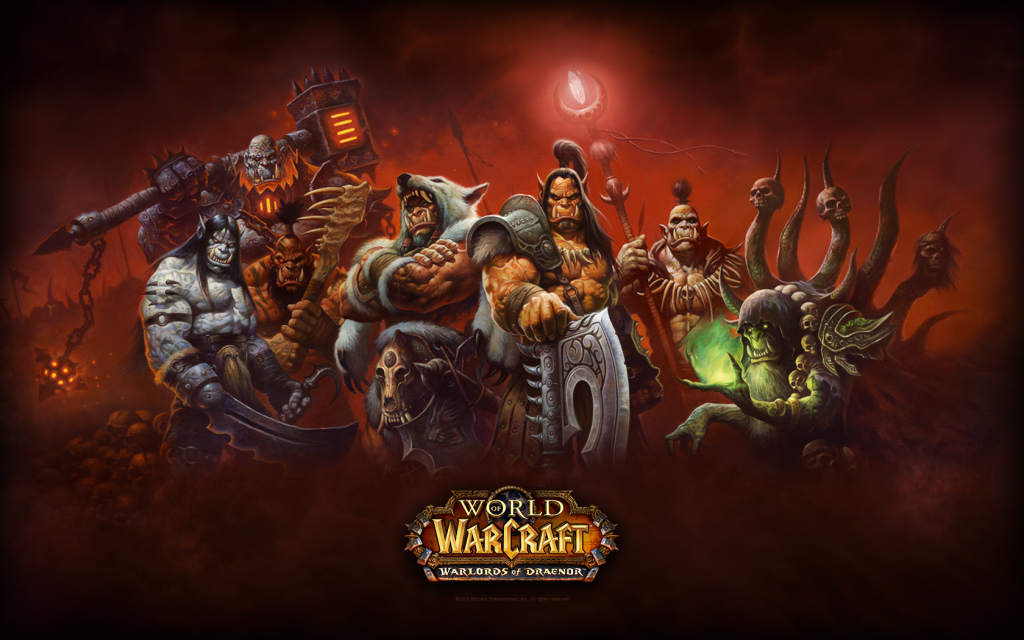
Really, the word “expansion” is what’s bothering me. That usually signifies a lot of new content. Diablo III’s expansion, Reaper of Souls, added a new campaign chapter, a new class, new skills, a new endgame mechanic, and tons of other gameplay tweaks. World of Warcraft next expansion, Warlords of Draenor, gives players updated character models, a level increase from 90 to 100 (The Dark Below increase’s Destiny’s max level by just two), the garrison building, and multiple new dungeons and raids.

Sure, Destiny’s expansion is cheaper ($20, while Warlords of Draenor costs $50 when it comes out on Nov. 13), but that’s not the point. I’m not looking for a deal, I’m looking for content. The fact is that I’m bored in Destiny. It’s not the giant world of endless gaming possibilities that I was hoping for. All I have is player-vs.-player combat and missions, and I’ve already done it all multiple times. Adding one Strike and one raid is not enough to keep me engaged.

So many other games are coming out

I think a big reason I played Destiny as long as I did was because September and October were relatively quiet months for new gaming releases, but November is changing that. Already, a lot of my Xbox One friends have moved on to Call of Duty: Advanced Warfare, and I’m sure more of them will get Halo: The Master Chief Collection when that comes out Nov. 11. And then comes Assassin’s Creed: Unity, Super Smash Bros. for Wii U, Little Big Planet 3, and more.

I feel like most of the people I played with already moved on from Destiny, and I don’t think that The Dark Below’s meager offerings will bring them back. Frankly, with so many other games to play, I’m probably joining them.

Destiny’s future seems unclear. How many expansions will it get? Just the two we already know about? And now we know that Bungie is already making a sequel. When does that come out? Will my character and progress transfer over? Is that a part of Bungie’s “10 year plan” for the franchise?

Maybe I will jump back in when the sequel comes out. But, as far as the original goes, I’m done. Sure, I guess I got my “money’s worth,” but I still feel oddly unsatisfied about the whole experience.

by Dave Thier

Here’s the thing about the world of video games right now: there are actually three competing consoles. I know! The console war is all about Microsoft’s MSFT +0.61% Xbox One going up against Sony’s Sony’s PS4, about Nathan Drake vs. Master Chief and all that good stuff. But while there’s no denying a certain binary quality to modern consoles, one would do well to remember Nintendo’s Nintendo’s Wii U. Nintendo’s odd little box had a perfectly fine launch back in 2012, but it’s struggled since. During those two years, however, it has built up a solid library of first-party titles and, in its own way, more than justified its asking price. Arguably, even more so than its competition. The gamepad remains a terrible idea, but that hasn’t really held back Nintendo’s development teams.

Nintendo has always followed a software-first strategy, and while the Wii U’s hard/firmware is weird at best, its game library makes up for that. So in keeping with Nintendo’s philosophy, Wii U’s five best reasons are all games — there are other reasons to get a Wii U, of course, but that’s where the focus lies today. Check out five reasons for the PS4 from yesterday and five reasons for the Xbox One from the day before.

smash-bros-wii-u

Mario Kart 8:

Oh, Mario Kart: king of kart racers, ever young, ever changing, and always one of the most fun racing experiences to be had anywhere. The insane world of flying shells and bananas may lack the precision of super-serious racers like Forza, but I’ll take Mario Kart over something with real cars any day. As an added bonus, huge numbers of non-gamers I talk to tell me they “only play Rock Band and Mario Kart,” so this is a good way to get more people in on the action.

You’ll notice a theme here, as we go through: local multiplayer. The Xbox One and Ps4 have more or less surrendered themselves to the world wide web, but Nintendo’s Wii U is an important bastion of couch-based competition, which is more fun anyway.

Super Smash Bros:

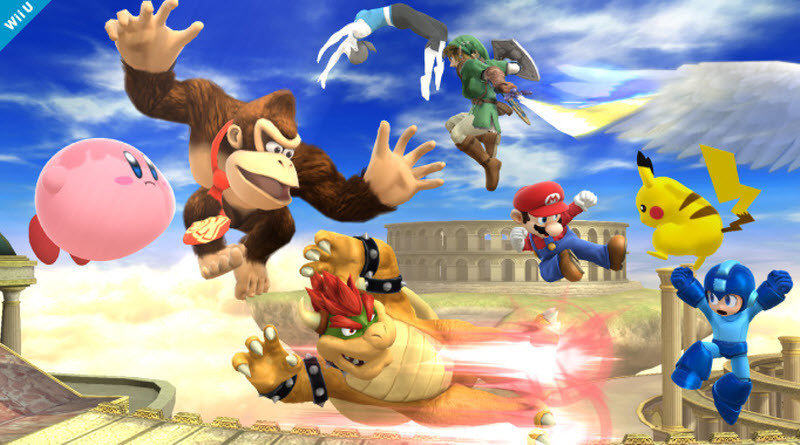
Technically, this game isn’t out yet, but we have a very clear idea what it’s going to look like from the 3DS version that’s already on shelves. Nintendo’s brawler has grown considerably since over the years and its extensive roster of first and third-party heroes provide the sort of manic nonsense that provides a much-needed counterpart to the legions of gruff games found on other platforms. Beneath the strangeness rests a fighting game complex and precise enough to have developed a loyal hardcore base.

The potential for eight player multiplayer also makes this what could be one of the more absurd experiences to be had in videogames today. Pick it up in time for the holidays and Christmas break won’t be boring.

 The Next Next Zelda:
Another game that’s yet to hit shelves, but, really, there’s no going wrong with Zelda. Even lackluster entries are head and shoulders above most of the rest of the industry in terms of design, and Nintendo’s E3 presentation showed off a stunning art style. Many people buy Nintendo consoles for Zelda alone, and hope springs eternal that the big N will make something that stands next to or even surpasses some of its defining early works. The concept of an open world could be just what the series needs to truly shine again.

Super Mario 3D World:

In much the same way Legend of Zelda: Ocarina of Time defined the 3D action game, Super Mario 64 defined the 3D platformer. I trot out this ancient comparison because both games still definitely follow in their ancestor’s footsteps, but hey. Those are some pretty good footsteps to follow in. Super Mario 3D world gives the player the chance to play as any member of Mario’s gang, throwing some new mechanics and twists into the mix even as it stays true to classic gameplay. As with any Nintendo title, it’s the immaculate construction and attention to detail that distinguish this game from the competition.

Bayonetta:

Bayonetta deserves special mention because, unlike every other game on this list, it’s not made by Nintendo. Third-party developers have largely abandoned the Wii U, and so Bayonetta stands out as a distinctive third-party game unique to Nintendo’s console, and it serves as an important counterbalance to all those other titles. It’s a sexualized third-person combo-based slasher that turns the knob to 11 and spends the rest of its time seeing if there are any numbers after that. It’s not for everyone, but it is definitely for some.

2a6f5323489d3db70c0ef547ac70a7d66e1188cf

by Chris Morris

Today’s 3D technology can make games a lot more immersive, but it could be making players angrier, too.

A study from Ohio State University examined the anger levels of players after they had played games on either 2D or 3D screens. Researchers concluded that adding one measly dimension can stir up some seriously negative emotions.

“3-D gaming increases anger because the players felt more immersed in the violence when they played violent games,” said Brad Bushman, co-author of the study and professor of communication and psychology at Ohio State. “As the technology in video games improves, it has the ability to have stronger effects on players.”

It’s worth noting that the study’s definition of 3D isn’t necessarily the same one many gamers think of. Researchers looked not at game engines that rendered a virtual recreation of three dimensions, but simply the effects of playing on a 3D screen.

A group of 194 college students played Grand Theft Auto IV on a 17-inch 2D screen, a 96-inch 2D screen, or a 96-inch 3D screen (while wearing dorky 3D glasses). Half were told to pay the game violently, while the other half were told to play a nonviolent bowling mini-game. After each session, they were asked to rate their feelings using a number of adjectives on a 1-to-5 scale.

The players who were instructed to play the game nonviolently were pretty relaxed no matter what screen they were playing on. But those who were allowed to immerse themselves in the game’s mayhem saw significant anger spikes after playing on a 3D screen.

The study is less a condemnation of 3D TV than it is of violent games in general. Bushman himself sounds the alarm.

“The combination of violent content and immersive technology like 3-D can be troublesome. This is something that needs to be considered by everyone involved — electronics manufacturers, video game developers, consumers, parents, and content ratings agencies,” he says.

What the study ignores, though, is that 3D TV has largely flopped, and gamers have never embraced the technology. Sony tried to push it by making an affordable 3D monitor specifically for the PlayStation. No one bought it. Even Nintendo, the standard-bearer for 3D with its 3DS portable system, has downplayed its 3D capabilities.