Archive for the ‘Game Articles’ Category

58c85c506ad50a8f038b4bfd-1536-768

by Matt Weinberger via Business Insider

If you’re under 18 or know somebody who is, there’s a pretty good chance you’ve heard of Roblox, a massively popular online gaming platform with 64 million players that also turned three teens into millionaires last year.

This weekend, Roblox is hosting its annual Roblox Developers Conference in Burlingame, California, very close to San Francisco. At the event, the company is expected to tell the 4 million developers building games for its platform that it’s on track to pay them a collective $70 million this year, up from more than $30 million last year.

“There’s enormous upside in the size of our opportunity here,” Roblox CEO David Baszucki told Business Insider.

Some of that upside is for the company itself. Earlier this year, Roblox announced it was cash flow positive for the first time, with “hundreds of millions” of dollars in bookings in 2017. More recently, Recode reported, citing a company filing, that Roblox was fundraising at a valuation of up to $2.4 billion. Baszucki declined to comment.

Unlike “Fortnite” or most other smash-hit video games, Roblox is created entirely by its users. All 40 million Roblox games, including popular ones like “Meep City” and “Jailbreak,” were made by its base of mostly younger independent developers. If a player chooses to spend the premium virtual Robux currency — which costs real money — in a game, the developer gets a cut.

5b4802307439162b008b48f3-1334-667
“Meep City” is the most popular game on Roblox. Matt Weinberger/Business Insider

That has meant big opportunity for Roblox developers. Last year, one top creator cleared $3 million in earnings, while two more claimed $2 million. Others are paying for their college educations or even starting their own companies to make more Roblox games.

Now, Baszucki says, as the platform grows so too has the opportunity for developers. While not every Roblox creator can make millions, “the long tail of developers who are making a living has grown exponentially” over the past year or so, he said.

To keep the momentum going, Roblox has hired the former Activision exec Enrico D’Angelo as vice president of product for the developer platform. The goal is to keep building the behind-the-scenes tools that developers use to build their games, in pursuit of what Baszucki says is the ultimate, ambitious goal of the Roblox platform.

“We have an enormous vision for a new category for human interaction and, ultimately, immersive entertainment,” Baszucki said.

To that end, Baszucki also highlighted the company’s educational efforts: This summer, Roblox has planned more than 500 coding camps and other introductory classes, using its platform as a learning tool.
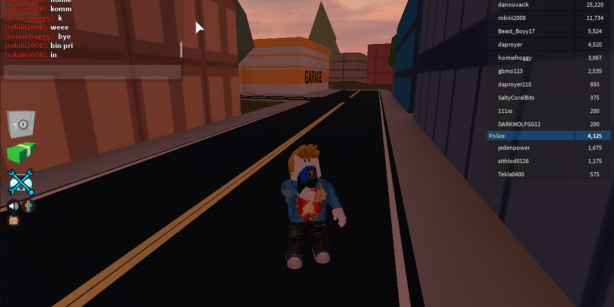
5b4802e1f4af9c38008b4705-1536-768
“Jailbreak” is another massively popular Roblox game. Matt Weinberger/Business Insider

Importantly, those classes are both in the United States and abroad in countries including Canada, Brazil, and the United Kingdom — highlighting what Baszucki sees as a major opportunity to bring the platform to international audiences.

For more established developers, Baszucki says Roblox is working on ways to engage with them and help them be more successful. For instance, the company has begun inviting developers to come to its Silicon Valley offices for two- or three-month residences, giving them direct access to the people who make the platform.

“We’re developing a lot of resources for developers to build their knowledge,” Baszucki said.

Finally, Baszucki says that if Roblox is going to reinvent entertainment as he believes it will, it must continue doubling down on finding other ways for developers to monetize that goes beyond their games. The company recently got into the action-figure and apparel businesses, licensing popular characters from top Roblox games. And Baszucki says there’s no reason Roblox games couldn’t inspire movies, TV shows, or a web series either.

Developers’ vision “goes beyond creating gameplay,” he said. “There’s enormous value in their stories, avatars, and situations.”

Visit us at http://www.gamersoutpost.net/

Silent-Hills-PT

by Tom Chapman via Screen Rant

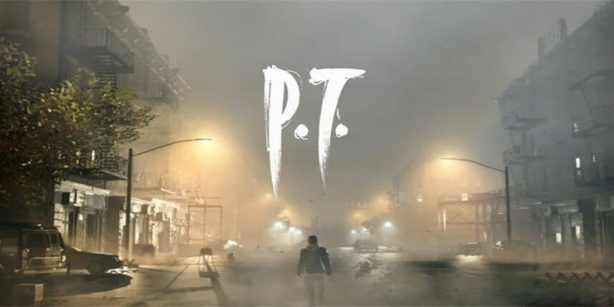
Another faithful recreation kicks the bucket as Konami shuts down a fan-made Silent Hills playtest. The joint venture between Hideo Kojima and Guillermo del Toro promised to be something big for the studio, and although P.T. was pulled from the PlayStation store in 2015, it lives/lived on in various forms like this latest PC port using the Unreal Engine 4.

Since 1999, Silent Hill has had gamers hiding behind their pillows as they venture into the survival horror and take on the monsters that await them in the nightmarish series. From highs like Silent Hill 2 to lows like Silent Hill: Book of Memories, fans have seen it all from the terrifying town. There were once hopes that Silent Hills could reinvent the series, but after a demo was made available following Sony’s 2014 presentation at Gamescom, the title slipped into development hell.

Considering the playable Silent Hills was downloaded over 1,000,000 times, it is easy to see why there is still a fanbase out there. Hoping to recapture the fear factor from Konami’s P.T., a 17-year-old uberfan known as Qimsar ported the playtest for PC. Qimsar’s work proved popular and Silent Hill Reddit mod MarcellusDrum decided to leave it on the site for gamers to enjoy. But now, the fun’s all over. According to a statement by Qimsar (via Game Jolt), the Silent Hills port has been permanently removed. While the staff at Konami were apparently impressed, the legalities mean that P.T. had to be removed. In his post, Qimsar thanked people for their support and credited Konami for being “extremely cool about things.”

Silent-Hills-PT-gameplay

Qimsar reminds fans that there are dozens of P.T. remakes out there and questioned why his was the one removed. That being said, if Konami has started clamping down on unauthorized content, it could be a case of download them while you can. As it stands, 2012’s distinctly average Silent Hill: Downpour is currently the last console game, while the future of the franchise still remains uncertain.

There was some good news though as Qismar revealed he was given some merchandise and has been offered an internship with the gaming giant. As for Silent Hills, the game has returned to fiery depths of the town that it came from as Konami continues to plow its efforts into the long-awaited Death Stranding. 

Visit us at http://www.gamersoutpost.net/

Blood-and-Truth-02

by Jeremy Horwitz via Venture Beat

Following its release of the first-person criminal underworld experience The London Heist for PlayStation VR in 2016, Sony’s London Studio has been working on the highly anticipated shooter Blood & Truth. But its lead designer believes even bigger VR advances are on the horizon. Speaking at the Develop: Brighton conference (via MCV), Michael Hampden offered predictions for the next 5, 10, and 25 years, saying that VR will soon become more compelling — and then ubiquitous.

Over the next five years, Hampden said to expect a handful of developments, most notably that “one new genre of game will be born, one that will only be possible in VR.” Many VR titles today are ports of non-VR titles, but Hampden suggests that new games should be designed from the ground up for VR. He advised developers to start by understanding why they selected VR as a medium and then differentiate their experiences using VR “presence,” surround audio, distinctive input methods, and head tracking.

Part of the five-year process will include creating both consistent and user-customizable interfaces for VR games. Hampden expects that a consistent design language will be established for VR, and that developers will learn how to use customization — including controller and movement options — to reduce motion sickness and improve experiences for sensitive players. As a result, the next five years will see VR gain true killer apps, and become more popular in both the mobile and medical sectors.

By the 10-year mark, Hampden expects that haptic feedback will be part of the VR experience — and “a game changer” as users will be able to feel objects down to the texture level. This will make VR experiences more immersive, and enable further “new genres of VR games to emerge.” Then, 25 years down the line, he expects that “VR should be as ubiquitous as smartphones are today.”

Interestingly, Hampden also reinforced a point that has been made by other tech companies recently: Despite the decline of brick-and-mortar retail, physical stores are becoming critically important in winning over customers. “It’s really hard to get across how the VR experience is actually going to feel with the headset on,” Hampden said. “It’s not as simple as putting a video out there and then you know exactly what our game is like in VR. It’s a very different thing to see it and to actually feel it and to have that presence in VR and be inside that experience.”

He said that the solution is demo stations at retail shops. “If you can actually play a demo of something, it can actually give you that sense of understanding the game and you’re going to buy it.”

Unfortunately, VR demo stations remain very hard to find throughout the United States. But Hampden noted that arcade-style VR destinations are on the upswing as developers pivot from room-scale home experiences to location-based VR, resulting in “powerful” games like Star Wars: Secrets of the Empire that people love and will pay to play. “We have a limited number of these experiences out there so far, but I think this trend is here to stay, and we’ll see more and more location-based VR coming in the future.”

Visit us at http://www.gamersoutpost.net/

Amy-Hennig-Departure-Visceral-Star-Wars-Game

by Robin Burks via Screen Rant

One of the most influential people in video games, Amy Hennig, believes that there is a big problem with the pricing of single-player video games. Although many are ringing the death knell for single-player games, Hennig believes they are not dead yet and that a different pricing model could fix the problem.

Hennig began designing games for Nintendo in the late 1980s. Since then, she has gone on to help create some of the most beloved game franchises of all time, such as Legacy of Kain and Jak and Daxter series. Most gaming enthusiasts know her, though, for her groundbreaking work as writer and creative director on the Uncharted games, right up until she left Naughty Dog in 2014. After that, she joined Visceral Games to work on a Star Wars game, although that studio later got shuttered. She then started her own small game development studio to work in virtual reality.

In an interview with Venture Beat, Hennig spoke about her experience in game development, as well as about the future of single-player video games. Hennig reiterated that she does not believe that single-player games will ever truly go away, although some studios seem to want to move away from them. Instead, she questioned the current pricing model, which she feels actually hinders the industry and makes single-players games increasingly more cost-prohibitive.

“It’s not that we’re looking at the death of single-player games, or that players don’t want that. Some publishers are going to fall on one end of that spectrum or another based on their business plan. Fair enough. It’s just that the traditional ways we’ve done that are getting harder and harder to support. That’s why I’ve talked in the past about feeling like we’re in an inflection point in the industry. We’ve talked about this for a long time. How do we keep on making games like this when they’re getting prohibitively expensive? We don’t want to break the single-player experience, but there’s pressure to provide more and more at the same price point games have always been.”

Hennig has often spoken about the importance of storytelling in video games. She believes that players will still want that, especially in an environment so inundated with multiplayer where the story seems secondary. She offered some suggestions on what game developers could focus on in the future when it comes to releasing single-player games:

“I hope that we see more shakeup in the industry. We’ll open up the portfolios — maybe with a subscription model — so we can see that there can be story games that are four hours long at an appropriate price point. We have digital distribution. That should be possible. We shouldn’t be stuck at this brick and mortar price point and trying to make more and more content, breaking the spirit of these games.”

Her ideas aren’t too far-fetched. Digital distribution is already becoming more popular in the industry and some analysts believe that games will be 100 percent digital by the year 2022. This saves developers on manufacturing costs, allowing them to release games in a faster and more cost-efficient way. Many small developers are already doing this. For example, last year’s Hellblade: Senua’s Sacrifice, by Ninja Theory, offered a digital download that included a gaming experience of around 6-8 hours for the lower price of $29.99. That’s about half of what a AAA title generally costs.

Hennig is an expert in her field and developers should take note of her words. Gamers still want single-player experiences, particularly those who love titles that are more immersed in creative stories over the typical monotony offered in the loose storylines of multiplayer.

Visit us at http://www.gamersoutpost.net/

Fallout-76-power-armor

by Tom Chapman via Screen Rant

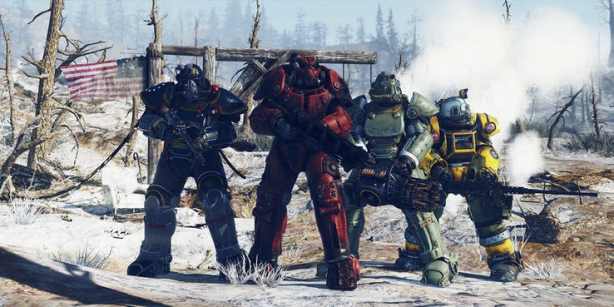
Although the upcoming Fallout 76 will be the franchise’s first online multiplayer, Bethesda boss Todd Howard says single-player options could appear in the future. Despite an impressive marketing campaign ahead of Fallout 76‘s November release, many gamers are still left confused about how the game will work.

As fans once again prepare to head out into the Wasteland, they’re promised that Fallout 76 won’t be as lonely as previous titles in the series. Teamwork is key in the MMO, and although NPCs are being almost totally done away with to make for a PvP experience, developers have clearly looked into returning to a classic Fallout formula somewhere down the line.

Fallout 76 may be something different to the “main” series of Fallout games, but that hasn’t stopped Howard reiterating that it will still be part of the same family. Asked by Italian website Multiplayer.it whether Fallout 76 will contain any single-player areas or dedicated player vs environment servers, he confirmed that it won’t be part of the game’s launch:

“Not at the launch. When you come into play you can see the other players but you will not be forced to interact with them; you can play on your own. You can see them but you do not have to fight them. Maybe you can use them to exchange items, to join a team, or you can visit their camp. There are a lot of things you can do with other players that is not a comparison with weapons. However, one of our long-term plans is to have servers where you can live your lonely world. You alone. Or at the limit where you can invite only your friends; or you can apply mods and change the rules at your discretion. All of this is in our projects but there will not be at the launch of the game.”

While Howard doesn’t give a timeframe for the possible introduction of a single-player option, the popularity of Grand Theft Auto Online shows the potential of a game like Fallout 76 running for a long time. If Fallout 76 is as popular as Bethesda hopes, it could become an evolving title that might one day have single-player servers or even move beyond its West Virginia backdrop.

Considering Fallout 76 has made such a big deal about its cooperative mechanics and working together as part of a team, it makes sense that Bethesda continues to push the unique selling point when the game launches. That being said, World of Warcraft has already shown the benefits of PvE within a multiplayer game. It is a handy way for casual gamers to train and level up without the fear of being harassed by bloodthirsty players. On the flip side, PvE can be criticized as a lonely style of gameplay that encourages fans to go it alone rather than get into the spirit of teamwork.

There is a long-term plan as Bethesda promises cosmetic microtransactions will help fund Fallout 76’s DLC options for “years and years.” What the game’s shelf left is remains to be seen, but it sounds like those aloof players who want to become their own scavenging loners will also be catered for at some point. Whether buddying up to take on the apocalypse with friends or echoing the single-player campaigns of the Sole Survivor, Courier, and Lone Wanderer, Bethesda is working on something for everyone with Fallout 76.

Visit us at http://www.gamersoutpost.net/

0e4f498f7a3b949f724878141f2e8a8e

by Kris Holt, via Engadget

4de82a560af7058ce8a3d155235aec9d

by Gabe Gurwin via Digital Trends

It has been nearly five years since the launch of the Xbox One, and the console has changed significantly over that time with the discontinuation of Kinect, full redesign of the Xbox One S, and major enhancements of the Xbox One X. But revisions like these can only get a console so far, and it has us thinking about what comes next. Here is everything we know about the next Xbox console.

Sony’s PlayStation Now subscription service allows PlayStation 4 users to stream games from the cloud instead of buying and downloading them outright, and in Japan, the Nintendo Switch has even flirted with this for Resident Evil 7.

No such service exists on the Xbox One, but during Microsoft’s E3 2018 presentation, Phil Spencer revealed that his team is currently developing cloud gaming technology that will allow you to play console-quality titles from several devices. It goes without saying that the next Xbox will be one of the supported systems, and this service could save players money if they want to try a game for a few hours before purchasing it.

However, it’s very unlikely that the next Xbox will drop support for discs. The Xbox One S and X are the only two consoles on the market that support 4K Blu-ray discs, and with internet speeds still slow in much of the United States, physical games still serve a purpose.

It will likely be backward compatible

The Xbox One introduced backward compatibility with Xbox 360 games a few years ago, and it eventually added backward compatibility with original Xbox games, as well. It appears this will continue with the next generation of Xbox, though what form this will take remains unclear.

Speaking to Eurogamer, Phil Spencer said he is “very proud of [Xbox’s] track record of compatibility” and that he wants to respect players’ previous purchases. Nothing concrete was revealed, but this certainly makes it sound like Xbox One games will be supported on the next Xbox.

b765feed4a19eefc0412125f86d4a54f

Virtual reality won’t become reality

Mike Nichols, Microsoft’s Chief Marketing Officer for Xbox, squashed the rumors about virtual reality support by telling Gameindustry.biz that “We don’t have any plans specific to Xbox” for VR, or even mixed reality.

The “specific to Xbox” phrase could give Microsoft an out, since it’s possible the company could bring over technology from Windows. Still, that seems like a long shot, because Microsoft has struggled there, too.

The hardware will be similar, but quicker

There’s no firm rumors about what will be in next Xbox, but there’s also not many options. Both Microsoft and Sony turned to using x86-based processors, like those found in PCs, with the latest console generation. They also turned to using AMD to build graphics. Both those solutions remains the most sensible, so it’s unlikely we’ll see anything different in the next Xbox.

That said, the follow-up will of course be more powerful than the Xbox One X. The architecture of the current Xbox One and Xbox One X suggest the company has many opportunities for improvement. It could increase the CPU core count, change the CPU architecture, or upgrade to a new GPU architecture, like AMD’s Vega or perhaps even Navi, which isn’t yet in production but is on AMD’s roadmap.

It’s codenamed ‘Scarlett’ and it’s two years away

According to Thurrott’s Brad Sams, the next Xbox consoles are being codenamed “Scarlett,” similar to how the Xbox One X was referred to as “Project Scorpio” before its final name was revealed.

The same report claimed the systems are planned for release in 2020, which would fall in line with Microsoft’s general timeline for hardware launches. The Xbox 360 was followed by the Xbox One eight years later, but that was an unusually long time for a console generation. Given the relatively low sales numbers for the Xbox One since its launch, expediting this process seems likely.

Visit us at http://www.gamersoutpost.net/

5a085d65d5d3ed1bdb524a94c9b404c1

by Ben Gilbert via Business Insider

AAyVCv2

by Adi Robertson via The Verge

Microsoft has completely pulled back on plans to support virtual reality headsets on the Xbox. In an interview with Gamesindustry.biz, Microsoft’s chief marketing officer of gaming Mike Nichols said that “we don’t have any plans specific to Xbox consoles in virtual reality or mixed reality.” Nichols goes on to say that the PC is “probably the best platform” for virtual and mixed reality, and that for the Xbox, “our focus is primarily on experiences you would play on your TV.”

This basically completes the slow decay of Microsoft’s console VR plans, at least for now. In 2016, Xbox chief Phil Spencer said that the upcoming Project Scorpio console would support “high-end VR” like that available on Windows PCs. Since Microsoft had previously partnered with Oculus to support Xbox controllers on the Oculus Rift, there was widespread speculation that Scorpio might work with the Rift as well.

This never happened, but later that year, Microsoft announced an entire line of VR headsets — and a few months after that, it said that mixed reality content would be coming to Xbox devices in 2018. However, at last year’s E3, Spencer was substantially less enthusiastic. He told Road to VR that although he was “long-term bullish” on VR, it wasn’t ready to come to Xbox yet, and the market was “years away.” Now, Nichols is barely even expressing interest in the platform.

Spencer described an “over-exuberance” in Microsoft’s early VR plans, and the market has definitely grown more slowly than many imagined. However, Microsoft’s competitor Sony has done reasonably well with its PlayStation VR headset, and Microsoft has gone forward with several PC VR headsets alongside partners like Samsung and Acer. Microsoft is still trying to shore up the Xbox One’s shaky position, though, in part because it overemphasized selling the Kinect motion controllerearly on. It’s not surprising to see the company’s Xbox VR plans slip away — especially since it’s largely focusing on business uses for its mixed reality headsets.

Visit us at http://www.gamersoutpost.net/

skull-ps4_preview

by Brian Heater via TechCrunch

Honestly, “gaming disorder” sounds like a phrase tossed around by irritated parents and significant others. After much back and forth, however, the term was just granted validity, as the World Health Organization opted to include it in the latest edition of its Internal Classification of Diseases.

The volume, out this week, diagnoses the newly minted disorder with three key telltale signs:

  1. Impaired control over gaming (e.g. onset, frequency, intensity, duration, termination, context)
  2. Increasing priority given to gaming to the extent that gaming takes precedence over other life interests and daily activities
  3. Continuation or escalation of gaming despite the occurrence of negative consequences

I can hear the collective sound of many of my friends gulping at the sound of eerily familiar symptoms. Of course, the disorder has been criticized from a number of corners, including health professionals who have written it off as being overly broad and subjective. And, of course, the potential impact greatly differs from person to person and game to game.

The effects as specified above share common ground with other similar addictive activities defined by the WHO, including gambling disorder:

“Disorders due to addictive behaviours are recognizable and clinically significant syndromes associated with distress or interference with personal functions that develop as a result of repetitive rewarding behaviours other than the use of dependence-producing substances,” writes the WHO. “Disorders due to addictive behaviors include gambling disorder and gaming disorder, which may involve both online and offline behaviour.”

In spite of what may appear to be universal symptoms, however, the organization is quick to note that the prevalence of gaming disorder, as defined by the WHO, is actually “very low.” WHO member Dr. Vladimir Poznyak tells CNN, “Millions of gamers around the world, even when it comes to the intense gaming, would never qualify as people suffering from gaming disorder.”

Visit us at http://www.gamersoutpost.net/