Archive for the ‘Game Articles’ Category

MW-GZ410_GameSt_20181130113426_ZH

by Ciara Linnane via Market Watch

GameStop Corp. is “lost at sea” with a leadership that remains unjustifiably optimistic in the face of declining new and used software sales, a shift toward lower margin hardware sales, continued discounting and a “Hail Mary” effort to sell the rest of the company.

That’s the view of Benchmark analyst Mike Hickey, who said the company’s weak financials are an impediment to attracting a bid, dampening the takeover hopes that have been one of few catalysts for the stock this year. The videogame retailerGME, +0.34% is in the midst of a strategic review as it struggles to sell physical games to customers who can simply download them at home, and has said it is open to a sale of the company.

GameStop “has become irrelevant in the videogame market, as consumers accelerate the migration towards digital purchases, and as games adopt live service models that greatly extend the average play experience and where platform/publishers work towards future subscription/streaming models,” Hickey wrote in a note Friday.

What’s more, the management team “lacks investor credibility” and there are no signs of a turnaround. “We believe GME has zero terminal value, and we see financial performance and valuation suffering over the long term,” said Hickey. The analyst is sticking with his sell rating on the stock and lowered his price target to $9 from $10, or 32% below its current trading level.

GameStop shares were trading down 9% Friday after the company slashed forecasts for the year as it reported third-quarter earnings after market close on Thursday. Hickey’s assessment was harsher than most, but analysts were generally concerned that the company is unable to slow the decline in its core videogame business and fight its way out of its doldrums.

GameStop posted net losses of $488.6 million, or $4.78 a share, after net income of $59.4 million, or 59 cents a share, in the year-earlier period. Adjusted for items such as goodwill and asset impairments due to the company’s sustained stock decline, earnings were 67 cents a share, ahead of the FactSet consensus of 57 cents.

Revenue rose to $2.08 billion from $1.99 billion in the year-ago period, also ahead of the FactSet consensus of $2.03 billion. But the company said it expects adjusted earnings of $2.55 to $2.75 a share for fiscal 2018 and for sales to decline by 2% to 6%. Analysts were expecting fiscal 2018 adjusted earnings of $3.04 a share.

The company’s pre-owned business fell 13.4% in the quarter, partly due to new digital access to older titles. GameStop’s used-game business is a major profit center as sales of physical disks decline.

On the company’s earnings call, Chief Operating Officer and Chief Financial Officer Robert Alan Lloyd said that trend had picked up.

“We are seeing more of the impact of that in recent months and it does have to do with how customers can get some of those older titles, the very inexpensive titles that you can get through either subscription memberships or online in a pretty heavily discounted mode,” he told analysts on the call, according to a FactSet transcript.

The pace of digital downloads in lieu of physical purchases appears to have sped up in the quarter, said Wedbush analyst Michael Pachter. The company blamed the trend on a weaker-than-expected performance by Activision Blizzard’sATVI, -0.02%  “Call of Duty” and sports titles, but Pachter said it was more likely due to attractively priced offerings from gaming companies such as “season passes” for downloadable products.

“With EPS declining more rapidly than we expected ($3.34 last year and an estimated $2.75 this year) before taking into account the proposed Spring Mobile sale, GameStop clearly deserves to trade at a compressed multiple,” he wrote in a note.

Wedbush cut its price target to $18 from $19, but said it is sticking with an outperform rating because it believes a sale to private equity is imminent. The recent announcement that the company is selling its Spring Mobile business, or Tech Brands, a network of AT&T Wireless stores, for $700 million, “increases the potential for GameStop to ultimately be acquired,” said the analyst.

At Jefferies, analyst Stephanie Wissink agreed that the sale removes a deal hurdle, as reselling and franchise rights agreements come with some tricky change of control provisions.

“Without the Tech Brands, GME is a much more attractive takeout candidate and has greater LBO capacity,” she wrote in a note.

Assuming the $700 million payment is used to reduce debt, it could save the company $48 million in interest payments, which is more than the estimated free cash flow from the tech brand division, she said.

Wissink still sees value in the model if the company can reduce dependence on software and focus on advantages in hardware and peripherals, content and community and collectives. Still, she said, “fundamental push-outs don’t help.”

Credit Suisse analysts noted that the company highlighted strong trends over the Black Friday, Cyber Monday holiday weekend. But those were also supported by promotions and discounting, which along with the shift to lower margin categories, will squeeze margins.

“We remain on the sidelines as we balance risks of declining cash flow of the core business with upside risk/ optionality from further strategic alternatives (that process is still ongoing) and very low current valuation,” they wrote in a note.

Credit Suisse rates the stock as neutral and lowered its price target to $13.50 from $15.00.

GameStop shares have fallen 23% in 2018, underperforming the S&P 500’sSPX, -1.02%  2.6% gain and the Nasdaq’s COMP, -0.31%  5.6% gain. The Dow Jones Industrial Average DJIA, -1.42%  has gained 2.4% in the year so far.

Visit us at http;//www.gamersoutpost.net/ ❤
xbox-one-x

by Chris Smith via BGR News

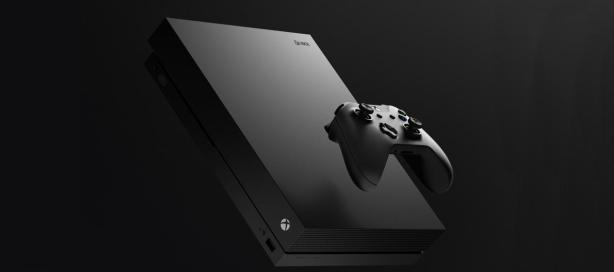
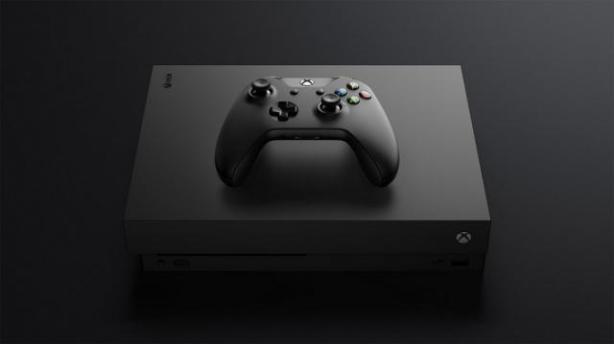
We’ve known for a while that Microsoft is working on an Xbox console that will not have a physical optical drive, but a new report says the console will come bundled with Microsoft gaming subscriptions at launch that would let gamers get into the action as soon as they plug in the device. The same source, Thurrott, which revealed details about Microsoft’s future Xbox consoles in the past, is out with a new report about the affordable console.

The cheaper Xbox will arrive in early 2019, and the console will be bundled with subscriptions right out of the box. When ordering, customers will have the option of purchasing both the console as well as Xbox Live Gold and Xbox Game Pass subscriptions at once.

That way, the console will be ready to play games right out of the box. Gamers won’t have to buy physical copies of games, and they’ll have access to more than 100 titles directly from Microsoft. The report also says the next-gen high-end Xbox console, the “Scarlett,” may be bundled with subscription services when it arrives as well:

Imagine you go on Microsoft.com, select the disc-less console, then pick two years of Xbox Live Gold and Game Pass, pay the fee, and when the console arrives, it’s all set up with the service ready to go. This functionality should arrive next year and also be part of the Scarlett business model as well.

In the future, the cheap console will also work with the xCloud game streaming servicethat will let gamers play high-end titles on a variety of devices. Microsoft’s cloud will handle all the heavy lifting for xCloud gaming, allowing full games to be streamed to smartphones, PCs, and Xbox consoles. Xbox fans looking to buy high-end games without breaking the bank may be interested in pairing the cheap console with the future xCloud service.

That said, the report doesn’t mention any prices for the upcoming cheap Xbox console, the various bundles that might launch alongside the new hardware, or the forthcoming xCloud gaming service.

Right now, Microsoft offers gamers an Xbox All Access program that includes an Xbox One S or X console, a year of Xbox Live Gold and the new Xbox Game Pass. The program makes the Xbox even more affordable, as gamers end up paying a monthly fee for 24 months rather than buying the console outright.

Visit us at http://www.gamersoutpost.net/

6dff435f7bb0e89184e71bf50a5b6455

by Rachel England via Engadget

Unless there are very significant changes involved, updates to gaming consoles are rarely released to any fanfare, silently slipping on to the market with minor tweaks designed to rectify any teething problems associated with that model’s launch. That the latest release of the PS4 Pro was so discreet is fitting, then, because its revision has made it the quietest PS4 Pro yet.

The PS4 Pro is powerful, no doubt about it, and with that power comes noise — the commonly-cited “jet engine” effect. The latest revision — the CUH-7200 version — was measured by Eurogamer to have reduced the console’s noise output from a minimum 50 decibels for the launch model (CUH-7000) to just 44 decibels. It’ll peak at 48 decibels at its loudest, but that’s still comparatively a whisper compared to the roar of older models at their max. However, it does seem that Sony has achieved this by doing away with thermal reduction, so expect the newer version to run hotter than its predecessors.

Of course, the CUH-7200 looks pretty much exactly the same as the others, so you’ll need to check the label to clarify which is which. Or, have a look on the back of the model — this one now uses the same “figure 8” power plug as the PS4 Slim and Microsoft’s Xbox One. Right now, it seems it’s only available as part of the Red Dead Redemption 2 bundle pack, but it’ll no doubt make its way onto shelves as a standalone once stores have run out of the previous, noisier models.

Visit us at http://www.gamersoutpost.net/

Fortnite
by Paul Lilly via Hot Hardware
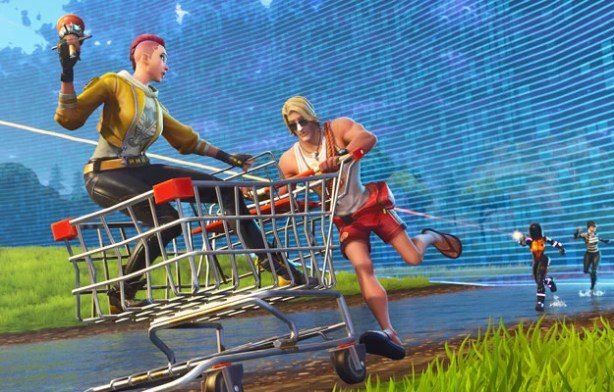
Sony has not exactly been a champion of supporting multiplayer gameplay across different platforms, otherwise known as crossplay. If there was a time and place to reverse course, it would be now, in Fortnite, the world’s most popular battle royale shooter. Sony is sticking to its guns, however, drawing ire from not just gamers, but also Microsoft.
Fortnite is a veritable cash cow for developer Epic Games, and part of the game’s success is its availability on so many different platforms—PlayStation, Xbox, Nintendo SwitchiOS, and Android. And for the most part, players on one platform can play against people on another platform. That is, expect for PlayStation 4 owners, who can only play against other PS4 owners.
“On cross-platform, our way of thinking is always that PlayStation is the best place to play,” Sony’s new chief executive officer Kenichiro Yoshido recently said, according to Independent. “Fortnite, I believe, partnered with PlayStation 4 is the best experience for users, that’s our belief.”
It’s an absurd excuse, that somehow forcing people with friends who own a PS4 to also purchase a PS4 for crossplay is somehow in their best interest. As one former Sony executive put it, the stance essentially boils down to a dumb money grab. It’s also drawn the attention of rival execs, namely Microsoft Xbox boss Mike Ybarra.
“[Sony] still isn’t listening to gamers. All games should be crossplay and progression with the right input flexibility and gamer options,” Ybarra wrote on Twitter, in reference to Sony’s lack of crossplay support in Fortnite.
Make no mistake, Sony’s hesitation to support crossplay in Fornite is not rooted in some kind of technical limitation. Yoshida essentially confirmed as much, noting that Sony picks and chooses when to support crossplay, based on this mystery metric of user experience.
“But actually, we already opened some games as cross-platform with PC and some others, so we decide base on what is the best user experience. That is our way of thinking for cross-platform,” Yoshida added.
It seems clear that Sony is financially motivated. Does the company have a point? After all, the PS4 has more cumulative sales than the Xbox One. Ybarra addressed this when it was brought up as a comment to his above Twitter post. Here’s the exchange:
Twitter user Hero: Lol he’s wrong but can you really blame him… as far as a business standpoint, they’ve been beating Xbox for years now.
Mike Ybarra: We run Windows and Console. Larger gaming audience who wants to play together. Gaming is diverse, if you only serve to bring joy to part of an audience then you are behind in many, many ways.
The situation stinks, though as was also pointed out in the Twitter thread, there is room to criticize Microsoft as well. Specifically, Microsoft’s subscription Xbox Live service is viewed as a ‘paywall’ to multiplayer (and by extension, crossplay) by some users.

Visit us at http://www.gamersoutpost.net/

ps5

by Will Fulton via Digital Trends

As we approach five years out from the initial launch of the PlayStation 4, history tells us it’s time to start digging for rumors about its successor, Sony’s inevitable PlayStation 5. Although the recent release of intra-generational upgrades with both the PlayStation 4 Pro and the Xbox One X led many to speculate that the age of discrete console generations might be coming to an end (or at least slowing down), there are rumblings of varying credibility suggesting that Sony is working on a full-fledged PlayStation 5.

We’ve rounded up all the rumors floating around about the PlayStation 5, so you can judge for yourself.

When is it coming?

In May 2018, Sony Interactive Entertainment CEO John Kodera told reporters, “We will use the next three years to prepare the next step, to crouch down so that we can jump higher into the future.” This came shortly after he remarked that the PS4 was entering the “final phase of its life cycle.”

So while Sony is obviously thinking and working on the future, the PlayStation 5 will likely launch in 2021.

Industry analyst Michael Pachter, however, believes the console could launch earlier. Speaking to GamingBolt in July, Pachter said he believes the console will come in 2020, and this could be why Sony announced such a small number of new games during its E3 2018 event.

What are the specs?

The PlayStation 5 could use an AMD Ryzen processor. A note written by Simon Pilgrim, principal programmer of Sony’s Advanced Technology Group, revealed that he was working on improving compatibility between AMD Ryzen processors and “Zen” core architecture within the LLVM compiler stack. All of that may sound like gibberish, but the compiler stack is a key component of the development environment in PlayStation systems.

SemiAccurate’s Charlie Demerjian claims to have tangible details about PS5 devkits that are already in circulation (via WCCFTech). According to Demerjian, the PS5 will feature an 8-core Zen CPU and a GPU based on AMD’s upcoming Navi architecture (Hey! Listen!), both customized, of course.

We’ve known that Navi is likely coming in late 2018/early 2019 for several years now, but details are otherwise unavailable on its capabilities. Demerjian has a history of leaking accurate console specs, so his rumors are worth serious consideration.

Another report from the Taiwan Semiconductor Manufacturing Company said the company is producing a new gaming chip. If development kits have made it out to developers, new hardware production would have to be ramping up. The report doesn’t mention Sony or PlayStation by name.

On the other hand, in a report responding directly to Demerjian’s, Kotaku’s Jason Schreier said a source with knowledge of Sony’s plans laughed that the rumored specs were not accurate. According to Schreier’s reporting, early PS5 devkits may be out in the wild, but most developers seem to be unaware of them.

Improved VR support

In addition to under-the-hood power, Demerjian’s report suggested the PS5 will be built from the ground up with virtual reality support in mind. Although PSVR (or, frankly, VR in general) has not yet set the world on fire in the way that many optimistic analysts predicted it would circa 2016, Sony’s headset has been home to a few gems so far, and it’s still almost certainly the best value and most readily accessible, high-end consumer VR.

The PS4 Pro buffed up the base console’s specs in order to better support PSVR, but starting from scratch with VR as a core feature of the console will no doubt open up a lot of possibilities for developers.

Any word on games?

With no official announcement from Sony about the console, developers are remaining tight-lipped if they do have PS5 devkits in hand. Several have made comments that could be construed as hints that they do, however.

7e732745ffac3d5a436f64a9a5cec6c1

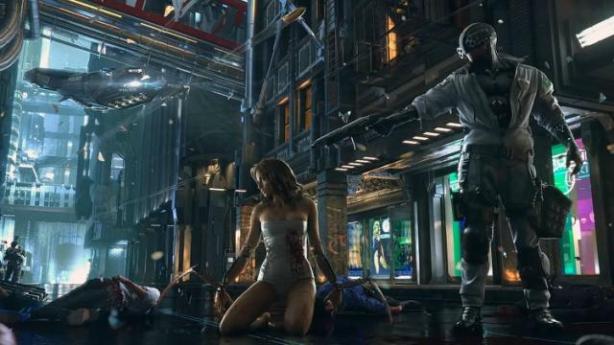
The Witcher 3’s developer, CD Projekt Red, is hard at work on their next epic, Cyberpunk 2077. At a 2018 conference in Bergen, the studio heads gave a presentation about the game which included a slide with the phrase “Rich, true-to-life visuals built on current and next generation technology.” That could mean a lot of things, of course, but one could interpret that as a nod to the fact that they are simultaneously developing the game for both the current- and next-generation of consoles, of which the PS5 would have to be one.

Similarly, Gran Turismo Sport creator Kazunori Yamauchi made a comment that could suggest they are already tinkering with the PS5. On a studio tour, he told Finder.com that new cars take so long to develop because they are “building for future versions of the console rather than the one we see today.” He also mentioned that he thought it “would be no problem to run it at 8K even,” which is well above what the PS4 Pro is capable of putting out.

Sony’s own Death Stranding, which is planned for a PlayStation 4 release, could be coming to the PlayStation 5. Speaking to GamingBolt, industry analyst Michael Pachter said the game will “likely be a cross-generational title.” Sony hasn’t done this very often in the past, though a number of third-party games released on both the PlayStation 3 and PlayStation 4 at the beginning of the generation. Given that Death Stranding doesn’t even have a release window yet, it seems like the most likely candidate, and would certainly be a good way for Sony to sell consoles early on.

Bethesda Softworks appears to be one of the game companies most open about its ambition to release upcoming games on next-generation systems. Speaking to Eurogamer at the Gamelab conference in Spain, Bethesda game director Todd Howard revealed that the science-fiction game Starfield will be next-generation in both hardware and software. Given that Bethesda is releasing Starfield before The Elder Scrolls VI, which it also announced at E3 2018, there’s very little doubt that The Elder Scrolls VI will also release on PlayStation 5.

It could be the last PlayStation system

Game streaming services could replace traditional consoles in the future, at least if you ask Ubisoft CEO Yves Guillemot. Speaking to Variety, Guillemot expressed his belief that there will “one more console generation” before the industry completely moves to a streaming-only model.

Guillemot added that this technology would become more accessible to more players over time, but with the loss of net neutrality and data caps in place at many internet service providers, the market for a traditional console with physical media is still strong.

Visit us at http://www.gamersoutpost.net/

Update: Legal notice clamps down on sales of ‘new’ games from ‘unauthorized sellers’

428578

by Colin Campbell via Polygon

Amazon’s Marketplace who was trying to sell a sealed copy of The Evil Within 2 as new, demanding that they remove their listing. That letter included a phone number for sellers of Bethesda’s games to call, suggesting that the company is sending out such notices to multiple sellers.

Philadelphia-based Ryan Hupp recently contacted Polygon to explain how he’d been forced by Bethesda to stop selling his copy of The Evil Within 2. He bought the game but never unwrapped it, he told us. He’d been expecting to purchase a PlayStation 4, but instead spent his money upgrading a gaming PC. Hupp said he often sells used goods through Amazon Marketplace, which works in much the same way as other online trading sites, such as eBay.

Bethesda’s legal firm Vorys sent Hupp a letter, which he forwarded to Polygon, warning that the game must be taken down and threatening legal action for non-compliance. In its letter, Vorys made the argument that Hupp’s sale was not “by an authorized reseller,” and was therefore “unlawful.” Bethesda also took issue with Hupp’s use of the word “new” in selling the unwrapped game, claiming that this constituted “false advertising.”

Hupp complied with the demand, but in a reply to Vorys, he pointed out that the resale of used copyrighted goods — such as books, video games, DVDs — is protected in U.S. law through the First Sale Doctrine. This allows consumers to sell a game, so long as it’s not significantly altered from its original form.

Bethesda’s letter claims that Hupp’s sale is not protected by the First Sale Doctrine, because he is not selling the game in its original form, which would include a warranty. The letter says this lack of warranty renders the game “materially different from genuine products” that are sold through official channels. In theory, this argument could be used against anyone who sells a game without specific permission from Bethesda.

“Unless you remove all Bethesda products, from your storefront, stop selling any and all Bethesda products immediately and identify all sources of Bethesda products you are selling, we intend to file a lawsuit against you,” the letter reads. It goes on to state that a lawsuit would seek “disgorgement of profits, compensatory damages, attorneys’ fees and investigative and other costs.”

Hupp’s specific listing appears to have been targeted because it was listed as new and unopened. Amazon still list dozens of used and new copies of The Evil Within 2 from Marketplace sellers.

When contacted by Polygon, Bethesda declined to comment on this story. We also asked for clarification on how the company’s warranties work on used and second-hand goods sold through official channels. GameStop, for example, offers a blanket 30-day warranty on used games that do not work, so long as the game has not been broken by the buyers. (GameStop stores also decline sealed games during trade-ins, requesting that the customer open trade-in games if they’re unwrapped.) Bethesda did not reply.

We also contacted Vorys for comment multiple times, but did not receive a reply. Amazon’s publicity department also did not respond to a request for comment.

On its website, Vorys offers advice for companies seeking to eliminate the sale of products via places like eBay in an article titled, “Three-Step Approach to Stopping Unauthorized Online Sales on eBay.” Here’s an excerpt:

Under what is known as the First Sale Doctrine, once a trademark owner (“the company”) sells a product, the buyer ordinarily can resell the product without infringing the owner’s mark. However, the First Sale Doctrine does not apply when a reseller sells a trademarked good that is materially different from the company’s genuine goods.

Case law has established a few important principles relating to material differences. This includes that: 1) the threshold of materiality is considered “low”; 2) only a single material difference is necessary to give rise to a trademark infringement claim; and 3) material differences do not have to be “physical” differences.

This appears to be the basis of Bethesda’s legal claim against Hupp. Bethesda is a notoriously litigious company. It’s not clear how many similar letters have been out to people selling its games online, but Vorys’ voicemail message for Bethesda’s used games cases tells callers to leave details based on “the letter you have received” such as storefront name. It also thanks recipients of the letter if they have already ceased sales of Bethesda’s software.

“I understand the legal arguments Bethesda are relying on, and accept that they have some legitimate interest in determining how their products are sold at retail,” said Hupp in an email to Polygon, “but threatening individual customers with lawsuits for selling games they own is a massive overreach.”

If you’ve come across a game company seeking to stop you from selling a used or second-hand game, please contact Polygon via our tips line.

Visit us at http://www.gamersoutpost.net/

6435be7600167a48b1be8e0a261f35d0

by Matt Weinberger via Business Insider

If you’ve been following this stuff for a while, you think of Microsoft and Apple as bitter rivals — before there was iPhone vs. Android, or even Facebook vs. Snapchat, the biggest fight in tech was Mac vs. PC.

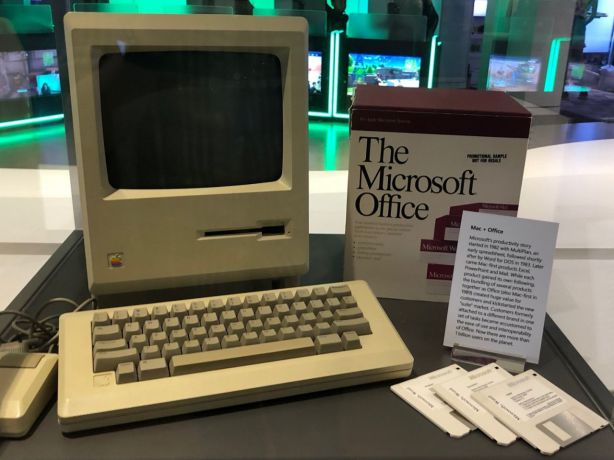
So it might be somewhat jarring to visit the recently-revamped Microsoft Visitor Center at its Redmond campus, only to find that the very first Apple Macintosh is proudly displayed, right next to other significant artifacts like Bill Gates’ first business card.

There is, however a very good reason for it: Microsoft as we know it might not exist without Apple’s groundbreaking Macintosh, the first mainstream computer with a graphical user interface (GUI).

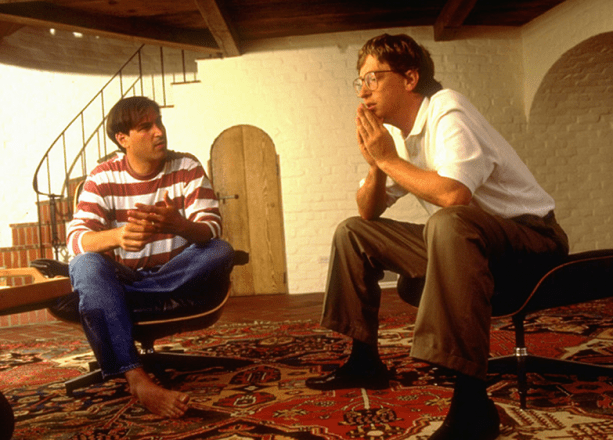
In the early ’80s, Bill Gates and Steve Jobs were something like frenemies. Jobs flew up to Microsoft’s Washington headquarters for what Gates later called a “weird seduction visit,” in a successful attempt to have the company make Macintosh software.

Gates played a key role in hyping up the Macintosh, and even appeared alongside Jobs in a “Dating Game” parody video that was circulated among developers. In the video, Gates said that the Mac “really captures people’s imagination.”

The Macintosh would eventually come out in 1984, with its arrival announced by its still-infamous “1984” Super Bowl ad. Microsoft followed through on its commitment to the fledgling Mac: The first-ever versions of Excel, PowerPoint, and Mail followed thereafter. Indeed, Microsoft Office 1.0 started on the Mac. Gates once quipped that Microsoft had more people working on the Macintosh than Apple did.

Behind the scenes, though, things started falling apart in 1985, when Microsoft announced that it was getting into the graphical operating system game with Windows 1.0. A furious Jobs accused Gates and Microsoft of ripping off the Macintosh. But Gates didn’t care — he didn’t think Apple had the exclusive rights to the idea.

Besides, Gates and Jobs both got the idea from Xerox PARC, the famous research lab, which had originally pioneered the GUI.

As Jobs accused Microsoft of plagiarism, Gates famously replied: “Well, Steve, I think there’s more than one way of looking at it. I think it’s more like we both had this rich neighbor named Xerox and I broke into his house to steal the TV set and found out that you had already stolen it.”

The ongoing battle between Apple and Microsoft, which included at least one lawsuit, only widened the gulf between Jobs and Gates. Over the years, the two would take very public potshots at each other, with Jobs once ripping Microsoft for making “third-rate products” in a PBS documentary.

894169c05ae7ba65793539f537d3d1cb

Later in life, though, the two came to a kind of reconciliation. One of the very first things that Jobs did as Apple CEO in 1997 was announce that Microsoft had invested to help keep the company afloat after a years-long rough patch. The deal was announced with Gates appearing on a massive screen above Jobs.

By the end of Jobs’ life, tensions between them had cooled significantly. Jobs conceded that he admired Microsoft, and enjoyed working with Gates. For his part, Gates acknowledged Jobs’ taste.

“I respect Steve, we got to work together. We spurred each other on, even as competitors. None of [what he said] bothers me at all,” Gates said after Jobs passed.

In more recent years, Microsoft has mellowed out about competition in general. Under CEO Satya Nadella, Microsoft has released Microsoft Office apps for iPhone and Android, and made several appearances on-stage at Apple events. They still compete, especially as the Microsoft Surface laptops go head-to-head with Apple’s Macs and iPads. But tensions between the two companies seem lower than ever.

So maybe it’s no surprise that Microsoft is bragging about that aspect of its history, which played an important role in the current dominance of Microsoft Office 365. Perhaps it’s a new day at Microsoft, after all.

Visit us at http://www.gamersoutpost.net/


37a62e47a939f8445408c526bc08ed16

by Shawn Knight via TechSpot

The lead-up to Fallout 76 arguably couldn’t be going any better for Bethesda, especially considering the developer hasn’t had to lift a finger as of late to keep fans tuned into the Fallout universe. Fallout 4 fan mod Northern Springs dropped earlier this month and now, we’ve got another land expansion to drool over.

Fallout Miami will send players on a journey to the post-nuclear vacation wasteland of Miami Beach where they’ll take part in the ideological struggle between Order and Freedom. The new game map is said to be a loving recreation of part of southern Miami Beach. A few creative liberties were taken but otherwise, it’s a mostly accurate recreation of the real world location.

The in-game map is said to be slightly larger than Far Harbor and feature a new set of factions that better fit with the unique culture and history of Miami. The pitch sounds a lot like the one made for Northern Springs (not that that’s a bad thing) with a main quest, multiple side quests, new items, companions and a large cast of voiced characters.

“The Sole Survivor journeys to the sunny South, following the promise of a well-paid job, but ends up embroiled in a conflict between various groups, some vying for power, others fighting to uphold their ideals.”

The mod doesn’t yet have a release date but when it does eventually arrive, it won’t be available on consoles due to its size (and Sony’s policy on the use of external assets). It will also require all of the official DLC including Far Harbor and Nuka World.

Fallout 76, meanwhile, launches on November 14 for Xbox One, PS4 and PC.

Visit us at http://www.gamersoutpost.net/

xboxonexangle-1-1260x804

by Taylor Soper via GeekWire

Microsoft already said it is working on the next version of its Xbox console. But now a new report reveals some of the company’s plans for not just one, but two new devices — including a lower-cost option powered by Microsoft’s cloud streaming service.

Brad Sams at Thurrott.com reported Monday that in addition to a traditional new Xbox, Microsoft will sell a cheaper “streaming box” designed to work with its previously-announced streaming service.

Sams said the streaming box, codenamed “Scarlett Cloud,” would run games both locally and in its Azure cloud — also known as slice or splice. This would apparently help reduce poor latency that gamers experience with cloud-based services.

Sams notes that Microsoft makes a bulk of its gaming revenue on subscriptions and game sales, versus hardware. “If Microsoft can create a next-gen console that requires lower up-front payment and longer subscription payments (remember, all games will run in the cloud, so you will need to pay ‘something’ to access them), this is a huge win for Xbox and Microsoft,” he wrote.

Microsoft has been investing in AI and cloud resources related to gaming technologies. Speaking at E3 last month, Xbox chief Phil Spencer said the company is building a “game streaming network to unlock console-quality gaming on any device.”

“We are dedicated to perfecting your experience everywhere you want to play: on your Xbox, your PC, or your phone,” Spencer noted.

As the gaming industry moves toward cloud-based infrastructure, it may reduce the need for a high-powered console. Other gaming giants like Sony, EA, and Nvidia are also building cloud-based game streaming services.

Microsoft’s cloud division continues to be one of the primary architects of its comeback in recent years. The Intelligent Cloud division posted revenue of $9.6 billion during the three-month period ending June 30th.

Visit us at http://www.gamersoutpost.net/