Archive for the ‘Game Articles’ Category

3ba3e590-acd1-11e9-bfe7-33959e5f25ae

by Mike Bebernes via Yahoo News 360

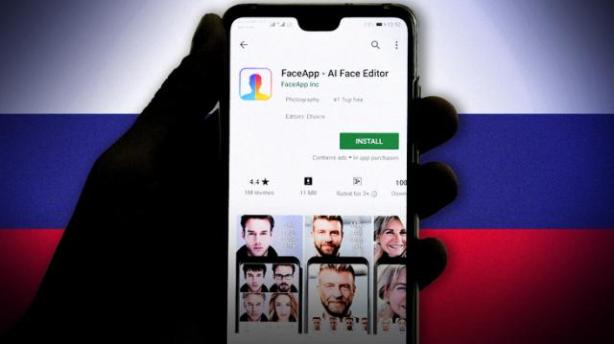
What’s happening: Anyone who used a social media site last week saw the images — photo after photo of faces that had been digitally altered to look older or younger or with different hair color. The images were created by FaceApp, an app that includes a variety of filters to change a person’s appearance.

FaceApp has been around for a couple years, but recently saw a surge in popularity. More than 100 million people have reportedly downloaded the app, including many celebrities.

Shortly after last week’s viral surge, experts were vocal about their privacy concerns. By agreeing to the app’s terms of service, users grant its creators “perpetual, irrevocable, nonexclusive, royalty-free, worldwide” ownership of images used in the app and the freedom to “use, reproduce, modify, adapt, publish [and] translate” them however they see fit.

There were also questions that the app might scrape data from a user’s mobile photo album, location, messages or other private information. These worries intensified when users learned that FaceApp’s development team is based in Russia. The Democratic National Committee warned presidential candidates not to use the app. Senate Minority Leader Chuck Schumer called on the FBI and the FTC to investigate its national security risks.

Why there’s debate: Reports about FaceApp’s potential privacy issues led many people to worry they had unwittingly handed personal information to Russian hackers, but so far there’s little evidence that has happened. FaceApp’s terms of service may sound troubling, but they’re similar to agreements used by platforms like Facebook, Twitter or Instagram, experts say. The issues with Faceapp are seen by some as a microcosm of the way online privacy is routinely undermined.

Some argue that the backlash to FaceApp is a good thing because it shows that the public is becoming more aware of the importance of protecting digital data. Recent incidents in which high-profile brokers either failed to protect or deliberately gave away mass stores of personal data, some say, have taught consumers to be more careful about who they trust with their online lives.

What’s next: Privacy experts recommend deleting FaceApp, though they concede there’s no way to get back what the app has already sent to developers. When it comes to the broader issue of online privacy, some firms have started to receive pushback from lawmakers.

The credit bureau Equifax is expected to face a $650 million fine for exposing the sensitive information of 145 million people. Facebook recently received a $5 billion fine for its mishandling of privacy issues, although some argue that the fines are far too small to make the tech industry take privacy more seriously.

The terms of service give FaceApp’s developers too much power over personal data.

“It’s also worth noting the company’s extremely broad terms of service, which appear to give FaceApp permission to do anything it wants with your images.” — Michael Grothaus, Fast Company

FaceApp’s terms of service are scary — but it’s not the only app that should worry you.

“FaceApp isn’t unique here. Many apps use similarly vague ― and frighteningly far-reaching ― boilerplate language in their terms and conditions. This should concern you about all apps, not just FaceApp” — Ryan Grenoble, HuffPost

FaceApp may be specifically designed to trick users into giving away data.

“There is the very real possibility that applications like these are simply honeypots designed to get you to give up information about yourself. You just sent them close-up, well-lit images of your face. Now they know your name and vital details and can create an annotated image record of you as a human.” — Marc Boudria, Hypergiant vice president of technology, to Popular Mechanics

The reaction to FaceApp shows how worried users are about data privacy.

“[Experts] also have concluded that the heightened panic was not based on the evidence, but rather anxiety after multiple cataclysmic data breaches in recent years that have made people proactively — and reflexively — protective of their privacy.” — Davey Alba, BuzzFeed

Big Tech shares some responsibility for allowing apps like this in their online stores.

“The bigger lesson was how much app-makers and the stores run by Apple and Google leave us flying blind when it comes to privacy.” — Geoffrey A. Fowler, Washington Post

FaceApp shows that consumers are learning about the importance of data security.

“We care about our digital privacy but still don’t quite understand it. Which is what makes the last week potentially heartening in the long term. Privacy is complex and often dull and hard to get even concerned internet dwellers to pay attention to. This week, however, we’re paying attention.” — Charlie Warzel, New York Times

Focusing on privacy issues with one app lets the rest of the industry off the hook. “Singling out individual viral trends is no different from shaking a fist at a banker when you’re mad at capitalism: We direct our ire at one another, and the noose continues to tighten.”
— Sidney Fussel, The Atlantic

Visit us at http://www.gamersoutpostll.com/


halo-4

by Tyler Fischer via ComicBook.com

As you may remember, last week a report surfaced claiming that Xbox once wanted to bring Halo: The Master Chief Collection to PlayStation 4, but eventually the deal broke down. Now, fast-forward a bit, and a new interview between Kotaku and Xbox boss Phil Spencer has posted, and one of the topics that came up was putting Xbox-published games on other platforms beyond PC, something it has begun to do with the Nintendo Switch and some smaller titles.

According to Phil Spencer, the big focus for Xbox is cross-play and letting gamers play with each other. Further, Xbox isn’t a console company, it’s a platform company. Does this mean Xbox will go third party? Well, Spencer thinks that’s an odd way to phrase it. Again, Xbox is a platform, not a console, and Microsoft needs to think “how that platform infrastructure could grow.”

That said, when pressed specifically about having titles like Halo on PlayStation or Switch, Spencer seemed to downplay the chances of all of its games — but more importantly its bigger games — coming to other consoles, at least for now.

“The games themselves are critically important to players and people playing. But ensuring that you have a connected ecosystem with the players, where people’s save game and their state and their friends list and their entitlements move seamlessly from every ecosystem—from every device—that they want to play on is critical,” said Spencer. “There aren’t other systems where we can go do that today.”

As you can see, Spencer more or less suggests that in order for Xbox’s games to come to say PlayStation or Nintendo devices in bulk, Xbox Live also needs to come to said devices, which is probably where the talks between PlayStation and Xbox break down at the very least.

“Today on the Switch, what we’re able to do is we have Xbox Live on the Switch so we can keep those communities connected,” added Spencer. “And we have, as you pointed out, a certain number of franchises that have shipped over there.”

Continuing, Spencer noted that if it’s bringing some of its games to other platforms that doesn’t mean the Xbox as a piece of hardware is going anywhere anytime soon.

“In the end we think us having a native platform in the home for years is going to be critical for to continue to push our vision of where the gaming platform should be,” said Spencer.

If any of this sounds a bit non-committal and hazy to you, it’s because it is. But from the sounds of it, no, big franchises aren’t coming to Nintendo or PlayStation systems anytime soon. However, Microsoft is clearly experimenting, which is why Cuphead is available on Nintendo Switch now. If Halo or Gears of War or Fable were to ever come to PlayStation or Nintendo systems, Xbox Live has to come with them, and I think for that reason Sony isn’t going to be interested anytime soon. Nintendo on the other hand, well they obviously seem to mind less, so who knows what will happen there.

Spencer has noted in the past that Microsoft’s current focus is bringing its platform to Android due to its larger install base. In other words, if you’re looking for the next place to play Xbox games, it’s going to be on Android devices.

Visit us at http://www.gamersoutpostllc.com/

Contra-Mobile

by Tyler Fischer via Comicbook.com

It looks like Konami is getting ready to either release a brand-new Contra for PS4, Nintendo Switch, and Xbox One, or at the very least, is getting ready to release a remake, remaster, or the previously announced Contra Anniversary Collection, which is poised to arrive sometime this summer. Put more simply, Konami is doing something with Contra, which naturally has retro gaming fans quite excited. The news comes way of a retail listing out of Germany. More specifically, big German retailer NetGames has gone up with multiple listings for “Contra” across the PS4, Nintendo Switch, and Xbox One. Unfortunately, no further details are disclosed.

As you may know, retail listings — unless you’re dealing with Amazon, Best Buy, or one of the huge retailers — aren’t always reliable. However, NetGames is a pretty big retailer in Germany, so it probably would be in the know if Konami was cooking up a Contra announcement. Further, there’s no red flags. The release date that accompanies the listing is August 29, 2019, which is a Thursday. While Tuesday and Friday are the most common release dates for games, plenty release on Thursday. At the very least, it’s not a Saturday or Sunday, which would be a major red flag.

That said, still proceed with caution. In other words, don’t take this to the bookies. There seems to be something to this leak, but even if there is, who knows what it could be.

For those that don’t know: Contra debuted all the way back in 1987 as a coin-operated arcade game. A run n’ gun shoot-em’ up from Konami, the series has produced 13 releases. However, the most recent release came all the way back in 2011, meaning we haven’t seen the series in quite some time. But it looks like that could be changing soon.

Anyway, as always, feel free to leave a comment letting us know what you think or hit me up on Twitter @Tyler_Fisher_ and let me know over there. What do you think this? What would you like to see Konami do with Contra?

Visit us at http://www.theofficialgamersoutpost.com/

a55478fe00516f5af2dc098b10369fbd

by Pavel Alpeyev and Yuji Nakamura via Bloomberg

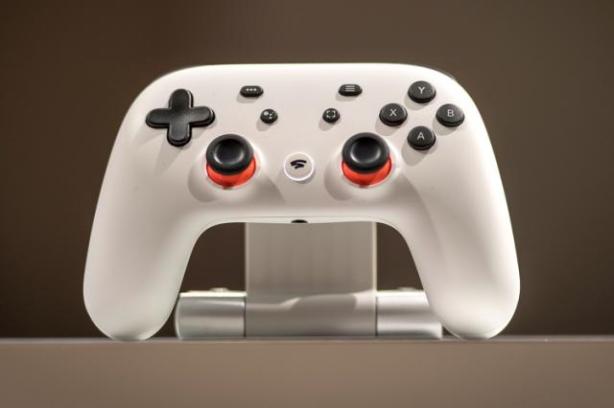
(Bloomberg) — Sony Corp. and Nintendo Co. shares slid after Alphabet Inc.’s Google outlined a major push into video games with a streaming service called Stadia.

Nintendo dropped as much as 4.6 percent and Sony declined 4.5 percent Wednesday, the biggest intraday drop for both stocks in six weeks. Stadia lets developers put games on a streaming platform that will allow players to access the action through the web, skipping expensive consoles or personal computers, Google announced at the Game Developers Conference in San Francisco.

The game industry’s business model of creating a hardware platform, such as Sony’s PlayStation and Nintendo’s Switch, and then charging publishers for the right to access it has come under pressure in recent years. That’s happened as many casual gamers turn to free-to-play mobile titles.

“There is no doubt this service makes life even more difficult for established platforms,” Amir Anvarzadeh, a market strategist at Asymmetric Advisors Pte, said in a note to clients. “Google will help further fragment the gaming market which is already coming under pressure by big games which have adopted the mobile gaming business model of giving the titles away for free in hope of generating in-game content sales.”

The Japanese companies have responded by creating subscription services and offering content other than games, but Google’s push into the $180 billion industry threatens the longstanding hardware model. The search giant however not only has to provide a smooth lag-free experience, it must also convince publishers to bring their marquee titles.

Sony has already rolled out its own streaming service PlayStation Now, which was released in 2014. But its streaming technology and limited investment in data centers has held back the service, with some users complaining about lag times. Asumi Maeda, a spokeswoman for Sony Interactive Entertainment, said “the game industry heating up is something that should make players happy.” A Nintendo spokesman declined to comment.

“Technology should adapt to people, not the other way around,” Google Chief Executive Officer Sundar Pichai said at the event. “We are dead serious about making technology accessible for everyone.”

Google wouldn’t say how much it will charge users, or whether it will be funded through advertising like most of its other businesses. The service will launch later this year, the company said, without announcing partnerships with the top-tier game developers.

Stadia runs through the company’s YouTube video-streaming platform and takes advantage of Google’s extensive network of data centers. With its presentation, Google drove home the point that its technical tools alone would make the future of gaming services work. It repeatedly mentioned the advantage of its cloud-computing power and YouTube, suggesting the service is designed to bring more users to those units — two areas where investors are looking for sales growth beyond advertising.

“This is only the start,” said Karol Severin, co-founder of MIDiA Research. “The tech majors Microsoft, Google and Amazon will be the real winners creating synergies with their existing entertainment ecosystems and leveraging cloud infrastructure and high content budgets.”

Visit us at http://www.gamersoutpost.net/

The company predicts more cameras in smartphones means a higher demand for sensors.

dims

by Jamie Rigg via Engadget

The most interesting part of cracking open a fresh financial report from Sony is seeing whether the momentum behind the PlayStation 4 shows any signs of slowing down. Sony kinda spoilt that for us just after the new year, though, announcing that the PS4 was closing in on the 100 million milestone with 91.6 million consoles sold as of December 31st. The holiday season was appropriately busy for the PlayStation division. From October through December, aka the third quarter of Sony’s fiscal year, 8.1 million PS4s found loving homes, compared with 9 million the previous year. Not bad considering the slowdown in sales that’s a natural part of a console’s lifecycle has been prophesied for some time now.

Sales figures attached to Sony’s gaming arm, as is tradition, eclipsed that of other parts of the business. The quarter as a whole ended with Sony making roughly $3.5 billion profit (JP¥377 billion) from $22 billion in total sales (JP¥2.4 trillion). Of that, the PlayStation division accounted for around $670 million (JP¥73 billion) in profit from circa $7.3 billion total revenue (JP¥790 billion). Console sales were strong, but remember many were purchased at a discount thanks to holiday price cuts; an over 25 percent increase in game sales compared with the same three months last year helped neutralize that. PS Plus is more popular than ever, too, with 36.3 million subscribers on the books at the turn of the new year. No specifics on how well the PlayStation Classic was received, though.

On the investor call, the only risks Sony could come up that may impact its gaming branch were a glut of free-to-play titles that won’t drive much revenue, and a distant future when consoles are no longer the money maker and game streaming services become the new model. Providing that service, à la PlayStation Now, presents something of an opportunity, however.

Perhaps more interesting than PlayStation’s continued success is the fact Sony’s gaming division was far from its highest earner this quarter. The music business boomed for Sony, pulling in just over double the profit of those losers in the PlayStation team. But how, when music revenue was mostly flat year-over-year? Some kind of accounting trickery, we suspect, though Sony blames finalizing its acquisition of EMI in November for this little piece of outlying data.

It’s business as usual over at Sony’s mobile arm, which is to say it recorded a loss of $142 million (JP¥15.5 billion) during the last three months of 2018. Sales were at least better than they have been over the previous two quarters, but needless to say the Xperia XZ3 hasn’t kickstarted a comeback for Sony’s most troubled division. Sony Pictures also had a relatively predictable third quarter. Venom pulled in by far the biggest box office numbers — $855 million worldwide, in fact — and Sony’s official figures for Spider-Man: Into the Spider-Verse show it had a strong start with $225 million taken at the box office in just 18 days (up to December 31st).

Sony’s camera business had by far the best quarter it’s had in some time, which the company credits its solid product range for, and the home entertainment and sound division turned a slightly higher profit year-over-year, even squeezing that out of a lower sales figure. The biggest disappointment for Sony was in its financial services business (the boring bit we rarely talk about). Profits did not meet expectations, mainly because of the poorly performing investments of insurance subsidiary Sony Life.

Sony’s semiconductor division, the one that makes the smartphone camera sensors many manufacturers use, turned a healthy profit this quarter, but was significantly down year-on-year. Sony says there was a notable dip in demand over the last three months of 2018, but expects it to be just a temporary blip. After all, Sony mentioned on the investor’s call, the trend of manufacturers towards adding more and more lenses to smartphones these days means the only way demand can go is up.

Visit us at http://www.gamersoutpost.net/

3bff8a15d11a82b2838f41e120fd6668

by Brian Crecente via Variety

f09ead0c777c4143010e07f9ce47bffc

by Don Reisinger via Tech Media Network (Tom’s Guide)

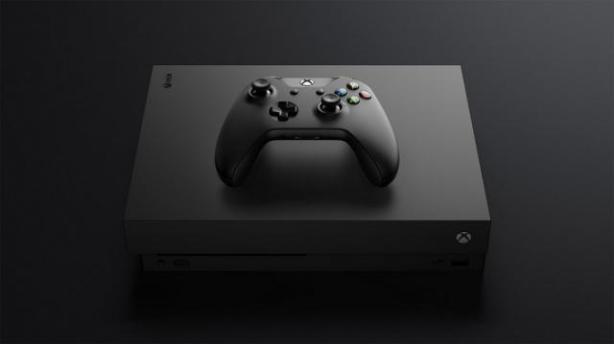
According to the report, Anaconda will deliver a design that’s similar to the current Xbox One X. However, on the inside, the device will ship with faster processors and better graphics cards from AMD. Microsoft is also deciding whether to bundle solid-state drives in the device, which would allow for the console to access and start playing games more quickly.

The second model, called Lockhart, will apparently be a cheaper version of Anaconda, similar to the Xbox One S. Not much is known about Lockhart just yet, but look for it to offer lesser specs and power, but still come with support for all the same games. Windows Central says that both consoles will be shipping with backward compatibility with games built for the Xbox, Xbox 360, and Xbox One.

Not surprisingly, the consoles will also incorporate Microsoft’s xCloud game-streaming service, according to the report. Microsoft has already said that it wants to make a big push in cloud-based gaming and distribution and there appears to be a good chance that that will happen in the next generation of Microsoft hardware.

According to the report, Microsoft’s hardware will ship in 2020. But in an effort to generate some revenue in 2019, Microsoft is also apparently considering launching a disc-less version of its Xbox One S next year. The device, which could be announced as early as January, would likely launch in the Spring, according to the report.

Visit us at http://www.gamersoutpost.net/


MW-GZ410_GameSt_20181130113426_ZH

by Ciara Linnane via Market Watch

GameStop Corp. is “lost at sea” with a leadership that remains unjustifiably optimistic in the face of declining new and used software sales, a shift toward lower margin hardware sales, continued discounting and a “Hail Mary” effort to sell the rest of the company.

That’s the view of Benchmark analyst Mike Hickey, who said the company’s weak financials are an impediment to attracting a bid, dampening the takeover hopes that have been one of few catalysts for the stock this year. The videogame retailerGME, +0.34% is in the midst of a strategic review as it struggles to sell physical games to customers who can simply download them at home, and has said it is open to a sale of the company.

GameStop “has become irrelevant in the videogame market, as consumers accelerate the migration towards digital purchases, and as games adopt live service models that greatly extend the average play experience and where platform/publishers work towards future subscription/streaming models,” Hickey wrote in a note Friday.

What’s more, the management team “lacks investor credibility” and there are no signs of a turnaround. “We believe GME has zero terminal value, and we see financial performance and valuation suffering over the long term,” said Hickey. The analyst is sticking with his sell rating on the stock and lowered his price target to $9 from $10, or 32% below its current trading level.

GameStop shares were trading down 9% Friday after the company slashed forecasts for the year as it reported third-quarter earnings after market close on Thursday. Hickey’s assessment was harsher than most, but analysts were generally concerned that the company is unable to slow the decline in its core videogame business and fight its way out of its doldrums.

GameStop posted net losses of $488.6 million, or $4.78 a share, after net income of $59.4 million, or 59 cents a share, in the year-earlier period. Adjusted for items such as goodwill and asset impairments due to the company’s sustained stock decline, earnings were 67 cents a share, ahead of the FactSet consensus of 57 cents.

Revenue rose to $2.08 billion from $1.99 billion in the year-ago period, also ahead of the FactSet consensus of $2.03 billion. But the company said it expects adjusted earnings of $2.55 to $2.75 a share for fiscal 2018 and for sales to decline by 2% to 6%. Analysts were expecting fiscal 2018 adjusted earnings of $3.04 a share.

The company’s pre-owned business fell 13.4% in the quarter, partly due to new digital access to older titles. GameStop’s used-game business is a major profit center as sales of physical disks decline.

On the company’s earnings call, Chief Operating Officer and Chief Financial Officer Robert Alan Lloyd said that trend had picked up.

“We are seeing more of the impact of that in recent months and it does have to do with how customers can get some of those older titles, the very inexpensive titles that you can get through either subscription memberships or online in a pretty heavily discounted mode,” he told analysts on the call, according to a FactSet transcript.

The pace of digital downloads in lieu of physical purchases appears to have sped up in the quarter, said Wedbush analyst Michael Pachter. The company blamed the trend on a weaker-than-expected performance by Activision Blizzard’sATVI, -0.02%  “Call of Duty” and sports titles, but Pachter said it was more likely due to attractively priced offerings from gaming companies such as “season passes” for downloadable products.

“With EPS declining more rapidly than we expected ($3.34 last year and an estimated $2.75 this year) before taking into account the proposed Spring Mobile sale, GameStop clearly deserves to trade at a compressed multiple,” he wrote in a note.

Wedbush cut its price target to $18 from $19, but said it is sticking with an outperform rating because it believes a sale to private equity is imminent. The recent announcement that the company is selling its Spring Mobile business, or Tech Brands, a network of AT&T Wireless stores, for $700 million, “increases the potential for GameStop to ultimately be acquired,” said the analyst.

At Jefferies, analyst Stephanie Wissink agreed that the sale removes a deal hurdle, as reselling and franchise rights agreements come with some tricky change of control provisions.

“Without the Tech Brands, GME is a much more attractive takeout candidate and has greater LBO capacity,” she wrote in a note.

Assuming the $700 million payment is used to reduce debt, it could save the company $48 million in interest payments, which is more than the estimated free cash flow from the tech brand division, she said.

Wissink still sees value in the model if the company can reduce dependence on software and focus on advantages in hardware and peripherals, content and community and collectives. Still, she said, “fundamental push-outs don’t help.”

Credit Suisse analysts noted that the company highlighted strong trends over the Black Friday, Cyber Monday holiday weekend. But those were also supported by promotions and discounting, which along with the shift to lower margin categories, will squeeze margins.

“We remain on the sidelines as we balance risks of declining cash flow of the core business with upside risk/ optionality from further strategic alternatives (that process is still ongoing) and very low current valuation,” they wrote in a note.

Credit Suisse rates the stock as neutral and lowered its price target to $13.50 from $15.00.

GameStop shares have fallen 23% in 2018, underperforming the S&P 500’sSPX, -1.02%  2.6% gain and the Nasdaq’s COMP, -0.31%  5.6% gain. The Dow Jones Industrial Average DJIA, -1.42%  has gained 2.4% in the year so far.

Visit us at http;//www.gamersoutpost.net/ ❤

xbox-one-x

by Chris Smith via BGR News

We’ve known for a while that Microsoft is working on an Xbox console that will not have a physical optical drive, but a new report says the console will come bundled with Microsoft gaming subscriptions at launch that would let gamers get into the action as soon as they plug in the device. The same source, Thurrott, which revealed details about Microsoft’s future Xbox consoles in the past, is out with a new report about the affordable console.

The cheaper Xbox will arrive in early 2019, and the console will be bundled with subscriptions right out of the box. When ordering, customers will have the option of purchasing both the console as well as Xbox Live Gold and Xbox Game Pass subscriptions at once.

That way, the console will be ready to play games right out of the box. Gamers won’t have to buy physical copies of games, and they’ll have access to more than 100 titles directly from Microsoft. The report also says the next-gen high-end Xbox console, the “Scarlett,” may be bundled with subscription services when it arrives as well:

Imagine you go on Microsoft.com, select the disc-less console, then pick two years of Xbox Live Gold and Game Pass, pay the fee, and when the console arrives, it’s all set up with the service ready to go. This functionality should arrive next year and also be part of the Scarlett business model as well.

In the future, the cheap console will also work with the xCloud game streaming servicethat will let gamers play high-end titles on a variety of devices. Microsoft’s cloud will handle all the heavy lifting for xCloud gaming, allowing full games to be streamed to smartphones, PCs, and Xbox consoles. Xbox fans looking to buy high-end games without breaking the bank may be interested in pairing the cheap console with the future xCloud service.

That said, the report doesn’t mention any prices for the upcoming cheap Xbox console, the various bundles that might launch alongside the new hardware, or the forthcoming xCloud gaming service.

Right now, Microsoft offers gamers an Xbox All Access program that includes an Xbox One S or X console, a year of Xbox Live Gold and the new Xbox Game Pass. The program makes the Xbox even more affordable, as gamers end up paying a monthly fee for 24 months rather than buying the console outright.

Visit us at http://www.gamersoutpost.net/

6dff435f7bb0e89184e71bf50a5b6455

by Rachel England via Engadget

Unless there are very significant changes involved, updates to gaming consoles are rarely released to any fanfare, silently slipping on to the market with minor tweaks designed to rectify any teething problems associated with that model’s launch. That the latest release of the PS4 Pro was so discreet is fitting, then, because its revision has made it the quietest PS4 Pro yet.

The PS4 Pro is powerful, no doubt about it, and with that power comes noise — the commonly-cited “jet engine” effect. The latest revision — the CUH-7200 version — was measured by Eurogamer to have reduced the console’s noise output from a minimum 50 decibels for the launch model (CUH-7000) to just 44 decibels. It’ll peak at 48 decibels at its loudest, but that’s still comparatively a whisper compared to the roar of older models at their max. However, it does seem that Sony has achieved this by doing away with thermal reduction, so expect the newer version to run hotter than its predecessors.

Of course, the CUH-7200 looks pretty much exactly the same as the others, so you’ll need to check the label to clarify which is which. Or, have a look on the back of the model — this one now uses the same “figure 8” power plug as the PS4 Slim and Microsoft’s Xbox One. Right now, it seems it’s only available as part of the Red Dead Redemption 2 bundle pack, but it’ll no doubt make its way onto shelves as a standalone once stores have run out of the previous, noisier models.

Visit us at http://www.gamersoutpost.net/