Archive for the ‘Game Articles’ Category

Saints-Row-Undercover

By Ron Duwell via TechnoBuffalo

Days after some digging by Unseen64 revealed the cancelled PSP game Saints Row: Undercover, developer Volition has decided to spread the love with a free ISO of the prototype, making it available for all to play.

Volition believes that the prototype should be preserved and archived, and it has released it through three file sharing websites. You can download it for free at:

The ISO is fully playable on any PSP emulator, but no word on if it can run on a modded handheld. Download it while it’s out there, and be sure to thank Volition.

Visit our Official Website at http://www.gamersoutpost.net

Nintendo-logo-with-Super-Mario-characters

by Bob Chipman via ScreenRant

After being counted out by many game analysts following the underwhelming performance of the GameCube, Nintendo made a major comeback in the early 2000s with the unprecedented success of the groundbreaking Wii. But sales of the console’s follow-up, the Wii U, have proved disappointing – despite the presence of popular, critically-praised titles like Bayonetta 2 and Super Mario Maker – leading many to speculate that Nintendo would have to launch a new console earlier than expected or face a continued slide against competition from Microsoft’s Xbox One and Sony’s PS4.

While Nintendo has openly acknowledged plans for new hardware currently codenamed “NX,” specific details of what this would mean have been hard to come by from the notoriously secretive Japanese electronics giant. Now, new rumors are beginning to surface that details of the NX have begun to leak online; offering a tantalizing glimpse at the possible future of the console gaming stalwart, and suggesting that an official reveal could be approaching soon.

bowser-super-mario-64

Nintendo’s policy of not responding to rumors or unofficial leaks remains largely in place, but the new rumors fall largely in line with previous hints that had already widely circulated. No official confirmation (or denial) has been offered, but the early buzz on the NX has suggested that it will be a “hybrid” device built to allow a console and handheld device to interact directly (and even share the same games) – with a goal of ultimately supplanting both the Wii U and 3DS product-lines and merging Nintendo’s previously-segregated home and mobile gaming branches.

New rumors reported by Extreme Tech and Nintendo Life suggests 900p and 60fps resolution, a new online service with TV and streaming capabilities, exclusive new titles based on Nintendo’s long-enduring classic franchises, and a surprisingly low $200 US price tag. That $200 price tag could make more sense if an additional rumor turns out to be true – specifically that the NX will be released and sold in two pieces, with a handheld system hitting store shelves in November 2016, while the console “partner device” would land later in 2017. Those new (albeit unverified) details align with rumors that the portable device (which may or may not feature touchscreen-based controls) would double as a controller for the console.

Most eyebrow-raising by far, however, is talk that the handheld may also be capable of interacting with Sony’s PlayStation 4 – though exactly how that would work, or for that matter why longtime rivals like Nintendo and Sony would enter into such an arrangement, is entirely unclear. It’s possible, given that other rumors have suggested the NX might also interface with smartphones as part of Nintendo’s new mobile push, that the device could interface with any wireless-enabled device on some level, but given Nintendo’s infamous unease with non-proprietary hardware, even those reporting the initial rumors have cast doubt on that particular feature. Back in the 90s, Nintendo and Sony had considered an alliance to create a CD-Rom add-on for the Super Nintendo, but the deal went south with Sony opting to rework their designs into what became the original Playstation.

2440f610-2a43-11e4-aabf-f748131afaf3_consoles

With the Xbox One and Playstation 4 already prominently positioned in the market, an attractive price point could give Nintendo much needed edge to make up lost ground – particularly if the device can match or exceed its competition in graphics and processing power. However, Nintendo’s biggest challenge is expected to be winning back third party developers, who have been uneasy about bringing best-selling multiplatform series like Assassin’s Creed and Call of Duty to Nintendo consoles. While legendary first-party franchises like Super Mario Bros, The Legend of Zelda and Pokemon continue to sell well along with popular new properties like Yo-Kai Watch, non-Nintendo developers have tended to look askance at consoles built around underpowered hardware and unfamiliar control schemes like the Wii and Wii U. Thus far, controller rumors have centered on the possibility of a button-free touchscreen, which if true can’t be making third parties any less wary on that front.

Nintendo has thus far had no comment on any NX rumors, and is not expected to reveal anything about the console until at least this year’s E3.

Visit our Official Website at http://www.gamersoutpost.net

Jan-Release-Back-Compat_HERO-940x376-670x268

by Joe Pring via We Got This Covered

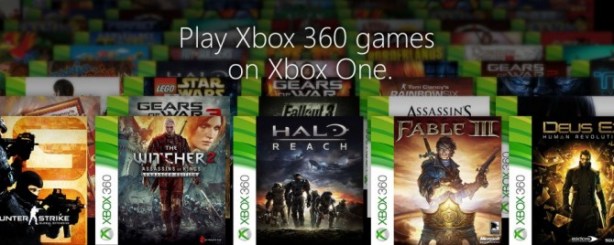
It’s a new year, and with it Microsoft have brought several new games to the Xbox One‘s backwards compatibility service. Are they the titles you’ve been waiting to see since the service began last year? Not likely, as there’s some really obscure stuff on the list this time around.

Besides The Witcher 2: Assassins Of Kings and Counter-Strike: GO, you’re not likely to recognize many of the other games present for January’s update. But hey, there must be a large enough audience for the likes of Jeremy McGrath’s Offroad – they are, after all, voted for (in part) by Xbox owners.

You can check out the full list below.

  • The Witcher 2: Assassins of Kings

  • Sam & Max Save the World

  • Aegis Wing

  • Counter-Strike: GO

  • Age of Booty

  • Space Giraffe

  • Soulcalibur

  • Skullgirls

  • Jeremy McGrath’s Offroad

  • Small Arms

Interestingly, Microsoft announced in the same post that, going forward, updates to the backwards compatible library will be handled slightly differently. Instead of being released in batches – like today – Microsoft’s Xbox Engineering team will begin releasing titles as they become available instead of grouping several up into one large batch.

Based on your feedback, the Xbox Engineering team will start to pilot a new way to launch Xbox One Backward Compatibility titles. Starting today, we’ll release titles as they become available, rather than a set monthly launch date. What this means for you is that you won’t have to wait to find out the latest titles; we’ll release whatever is available, when they’re available, once each title has received the engineering and publisher stamp of approval.

Despite the continued updates to the service, there’s undoubtedly that one obscure game you’re still waiting to be added to the Xbox One. Let us know what it is in the comments below!

Visit our Official Website at http://www.gamersoutpost.net

1d3cb4faa1f06a4f611e8d8de4faa67c

by Dante D’Orazio via The Verge

Soon, when you buy a new PC, it won’t support Windows 7 or 8. Microsoft has announced a change to its support policy that lays out its plans for future updates to its older operating systems, and the new rules mean that future PC owners with next-generation Intel, AMD, and Qualcomm processors will need to use Windows 10.

It’s not usual for old PCs to fall short of the minimum requirements of a brand new operating system, but in this case, the opposite is happening. Microsoft and its partners will not be putting in the significant work necessary to make new hardware work with older versions of Windows. The old operating systems, at best, will merely lack the latest updates. At worst, they might not function properly.

Policy starts with Intel’s current processors, Skylake

“Going forward, as new silicon generations are introduced, they will require the latest Windows platform at that time for support,” Microsoft notes in a blog post published on Friday. “Windows 10 will be the only supported Windows platform on Intel’s upcoming ‘Kaby Lake’ silicon, Qualcomm’s upcoming ‘8996’ silicon, and AMD’s upcoming ‘Bristol Ridge’ silicon.”

This new policy doesn’t mean that Windows 7 and 8.1 are no longer supported in general. The two operating systems will continue to get updates through January 14, 2020 and January 10, 2023, respectively. But that’s only if you’re using hardware that was contemporaneous with those operating systems.

For current PC owners, the detail to note is that Intel’s current, sixth generation processors, known as Skylake, are the first that won’t support either of the older versions of Windows. (Intel and Microsoft say that the platform and Windows 10 were designed for each other.) Microsoft is phasing in the policy now.

Microsoft offers 18-month grace period for enterprise customers

For the company’s all-important enterprise customers, who often lag behind on hardware and software updates in order to guarantee stability, Microsoft says it will be maintaining a list of approved Skylake systems that are guaranteed to have Windows 7 and 8.1 support through July 17, 2017. That gives companies an 18 month grace period to buy modern hardware for employees before committing and implementing upgrades to Windows 10.

After the grace period, only “the most critical Windows 7 and Windows 8.1 security updates will be addressed for these configurations, and will be released if the update does not risk the reliability or compatibility of the Windows 7/8.1 platform on other devices.” Companies and consumers, of course, can still buy older PC hardware that doesn’t utilize Intel’s Skylake platform or other modern CPUs — the last generation of supported Intel processors are known as Broadwell, and those chips are still widely available.

The policy change not only makes Microsoft’s hardware partners happy — they no longer are on the hook to develop as many costly software updates for past versions of Windows — but it also helps Microsoft push adoption of Windows 10. The company sees the operating system as the “final” version of Windows; it’s now a service, not a product, and this change better reflects that. There’s only one current version of Windows, and while Microsoft will fulfill its legacy hardware obligations, it won’t be expending resources to help users steer clear of its latest and greatest.

Visit our Official Website at http://www.gamersoutpost.net

untitled

by Gabe Carey via Digital Trends

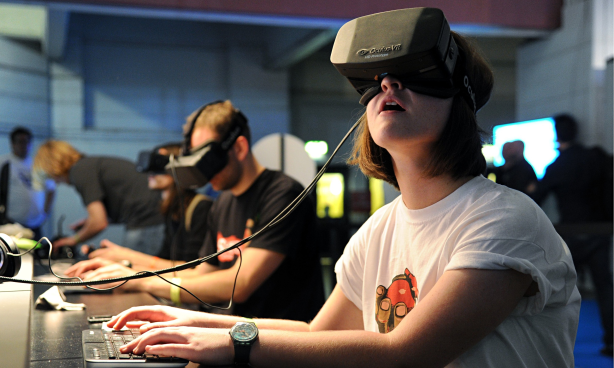
After years of restless nights spent questioning when the Oculus Rift would arrive, we’re finally one step closer, as it was revealed today that pre-orders for the wildly anticipated VR headset would open up on Wednesday, January 6 at 8 a.m. Pacific. That’s probably what most of us were expecting since, just last month, we caught word that every Oculus Rift unit would ship with a complimentary download of one of its flagship launch titles, dogfighting shooter Eve: Valkryie.

How much will it cost?

Oddly enough, although both a release window and a pre-order date have been disclosed, it’s still unclear how much the Oculus Rift will cost when it finally launches in the first quarter of this year. If previous dev kit iterations are anything to go by, we can expect a price tag of between $350 and $400.

Last May, Oculus CEO Brendan Iribe said in an interview at Re/Code that the combined price of a Rift and a PC shouldn’t exceed the “$1,500 range.” Considering most Oculus Ready PCs start at $1,000, we can infer that a suitable PC would demand the bulk of that cost.

What can it do?

As I reported in a spec showdown against Samsung Gear VR earlier this year, Oculus Rift boasts two OLED displays featuring a combined 2,160 x 1,200 pixel resolution with a 90Hz refresh rate. Sensor-wise, it packs in a whole lot, including a gyroscope, an accelerometer, a magnetometer, and a constellation array, which helps with head-tracking.

By default, the distance between eyes on the Oculus Rift is set to 64 mm, though it can be adjusted depending on personal requirements. It supports both Xbox controllers and the Oculus Touch controller, which was recently delayed until the second half of 2016. While official dimensions have yet to arise, the most recent dev kit sports a 1.3 x 14.7 x 7 inch build, which should be indicative of the final design.

What will I need to use it?

According to Oculus, for “the full Rift experience,” you’ll need a fairly hardy rig, as the headset requires an Nvidia GTX 970 or AMD 290 and an Intel i5-4590 equivalent or greater, at least 8GB of RAM, HDMI 1.3 output, three USB 3.0 ports, one USB 2.0 port, and Windows 7 Service Pack 1 or greater.

This means you could build your own or get a PC pre-built with the full intent of using it for virtual reality.

What else does it come with?

In addition to the more mature and competitive Eve: Valkyrie, every pre-ordered Oculus Rift unit will ship with the vibrantly colorful Lucky’s Tale from Playful Corp, a studio comprised of former Words With Friends developers.

It’s not clear at the moment what else comes bundled with the consumer version of the Oculus Rift. If the first two dev kits are any indication, however, we’ll likely see the headset, two pairs of vision lenses, an external camera for position tracking, a USB cable for the camera, an HDMI-DVI adapter, a sync cable, and a power cord sporting a USB adapter.

When is it coming? 

It’s not apparent at the moment when exactly we’ll get our hands on the Rift, but Oculus promises it will be some time in the first quarter of the year, which just so happens to end on March 31. This gives Oculus a head start on the competition, considering the increasingly promising HTC Vive was delayed last month until April.

Given the onerous system requirements and warning signs from graphics card makers, there’s no doubt virtual reality is going to be a tough sell. With as much as a few more months to go, however, it won’t be long until we see for sure just how well the new tech is received by the public.

Visit our Official Website at http://www.gamersoutpost.net

super-nintendo-console

by Chris Smith via BGR

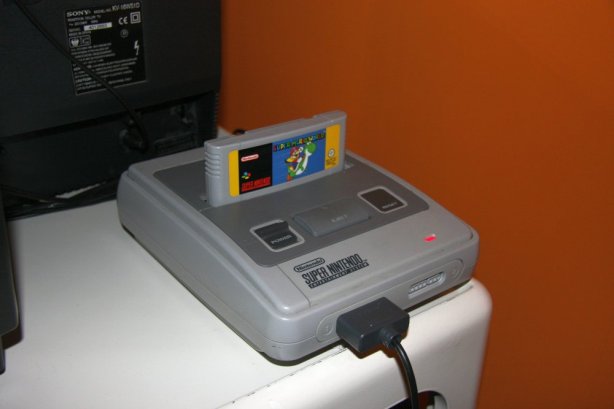
We’ve all been there. We’ve all fought for saved games that we’d thought we’d need at some point in the future. But one hardcore gamer has probably beat all of us, as he left an old Nintendo console turned on for over 20 years just to keep a saved game alive.

A Twitter user by the name of Wanikun revealed he left the Nintendo Super Famicom (the Japanese name for Super Nintendo) turned on for more than 20 years just to preserve the save game data belonging to a Japanese game called Umihara Kawase. Yes, we hadn’t ever heard of it either.

The game came out in 1994, and those game cartridges came with static RAM and lithium ion batteries, IGN explains. This type of tech allowed users to hang on to their saved games for as long as there was battery juice left in the cartridge. But Wanikun’s battery started to fail, which meant he had to keep the console plugged in and turned on at all times to save the progress.

Apparently he only had to unplug the old Nintendo console once when he moved to a new house, but the battery stayed alive during the move.

The gamer says he kept the console alive for more than 20 yeas, which translates to more than 180,000 hours. I guess there’s no point turning it off now, considering the length of this unusual accomplishment. And yes, it’s likely that he’s not even interested in playing the game any longer.

(Not to mention, the game can be played on newer consoles, including the PlayStation Vita.)

Visit our Official Website at http://www.gamersoutpost.net
Dreamcast_2_106737

by William Usher via CinemaBlend

There’s a possibility of a new console coming from Sega. That sounds like a pipe dream and something far off from reality, but it’s actually the truth. There’s a project making a lot of headway called “Project Dream”, which is aimed at bringing a PC-style Dreamcast 2 console to the market.

According to The Gaming Ground, Patrick Lawsen, a member of the Sega Dreamcast 2 super group aimed at reviving the Dreamcast brand with the help of some Sega of Japan interns and independent OEM designers, has been making some serious progress with the project.

According to Lawson there’s a lot of potential for a new Sega console, stating…

“I’m truly excited about the Crowdfunded prospect for SEGA RingEdge Zero/RingWide Elite. […] If we can get just a million backers worldwide, our upcoming KS could be funded in record time and with SEGA licensing it could have it out on the market in less than a year!

[…] SEGA should be unveiling some new Arcade hardware at AOU in February [2016]. We have [Sega of Japan] interns involved. They will present the ideas to SEGA of Japan next Quarter. SEGA will revive its old IPs.”

What Lawsen and the rest of the group want to do is bring a competitively priced PC rig to the market that can run Sega’s old and new games alike. The plan is that it will be a direct competitor to things like the Steam Machines or dedicated gaming rigs offered by companies like Cyberpower and Alienware.

The device will run an Intel Core i5 Haswell and will be designed to play Sega games right off the hard drive after being digitally installed. The point of the system will be to play old and new Sega titles on HDMI compatible devices with HD upscaling capabilities.

The whole point is to put Sega back into the running as a viable console competitor. The system will have a similar shell as the original Dreamcast but modified and updated for today’s standards. A mock-up is what’s in the main image of this article. The system will also have a wireless controller, just like the Xbox One and PS4 or the Wii U’s Pro Controllers.

This all originally kicked off with a petition on Change.org from a certain Ben Plato from Melbourne, Australia, which managed to accrue more than 22,000 signatures for Sega to release a new Dreamcast that can play Sega’s illustrious library of games. It picked up enough steam over the months that started attracting serious attention, and Lawsen and the rest of the group working to revive the Dreamcast 2 got involved and are now taking things directly to Sega of Japan. From there they plan to host the Kickstarter to get the hardware and designs finalized. The idea that a new console could be out by the end of 2016 almost sends chills down my spine.

At first it looked like a real long shot but with Lawsen and the rest of the group going directly to Sega of Japan and with so much support from the community wanting to see a new Dreamcast on the market, I’m curious to see how this will turn out.

Visit our Official Website at http://www.gamersoutpost.net

gamerstereotype

by Ben Gilbert via Tech Insider

Despite what you may believe, the statistics don’t lie: men and women play video games in a roughly equal proportion. In fact, more women than men own video game consoles.

And yet, not many people self-identify as “gamers.”

More men than women call themselves gamers, but among the largest demographic group that plays video games — 18 to 29-year-olds — only 33% of men identify as “gamers,” while just 9% of women in that group identify as such.

Those statistics all come from the Pew Research Center, which issued a massive new report on gaming demographics on December 15. The responses come from “2,001 adults, 18 years of age or older, living in all 50 U.S. states and the District of Columbia.”

This isn’t exactly surprising news.

There’s a vast gulf between the culture surrounding major console games like “Call of Duty” (which are largely marketed towards young men) and the culture surrounding massively popular mobile games (which are often marketed at mobile phone users of all genders).

screen shot 2015-12-15 at 12.50.34 pm

The results were similar across racial lines, too. Around 19% of Hispanic respondents “say the term ‘gamer’ describes them well” compared with just 11% of black respondents and 7% of white respondents.

But what does the term “gamer” mean?

That was at the heart of several essays last year, including one particularly incendiary one on game industry trade website Gamasutra, titled, “‘Gamers’ don’t have to be your audience. ‘Gamers’ are over.”

That piece and others like it are at the heart of the ongoing “GamerGate” saga — described by Pew as, “a debate centered on the identity politics of the gaming community.”

Pew defines the term “gamer” as, “a fan of gaming or a frequent game-player.” But for many it’s a loaded term with varying interpretations.

The term “gamer” is often associated with a stereotype: men of a particular age group (13-25, give or take), often white.

But does that stereotype make sense in a world where games are everywhere — not just in living rooms, but on smartphones and tablets? And what about the millions of millennials who grew up with video games on everything from school computers to cell phones to game consoles at home? What about those people with parents who also play games?

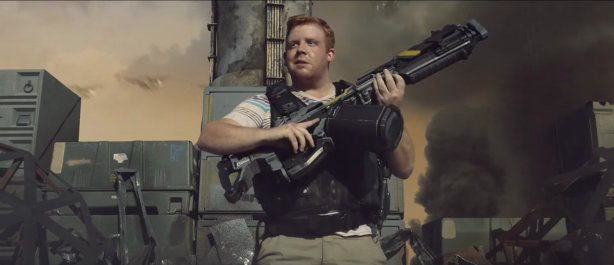
The results of Pew’s survey indicate that, no, the stereotype doesn’t make sense in the modern world. Despite the above ridiculous stock image.

Visit our Official Website at http://www.gamersoutpost.net

Neither PS2 Classics nor your existing PS2 discs are supported

1a2492dc59705fab8184c77def250d1b

by Samit Sarkar via Polygon

The PlayStation 2 is 15 years old, and Sony is bringing some of its best games to the PlayStation 4 starting today.

Eight well-loved PS2 titles will be available on the PlayStation Store in the Americas and Europe tomorrow:

Sony Europe trademarked a few of those games today, suggesting they were coming to PS4. Dark Cloud was leaked on Thursday. The video above, which is also from PlayStation Europe, mentions that Fantavision and Arc the Lad: Twilight of the Spirits are coming soon.

To be clear, this is not PlayStation 2 backward compatibility on PlayStation 4. As the video notes, your PS4 won’t be able to play PS2 classics or PS2 discs that you already own. Instead, you’ll be buying new, enhanced versions of these PS2 titles. All of them have been upscaled to 1080p, and Sony has added other features that are built into PS4 games, such as Remote Play, Share Play, Activity Feeds on the PS4 dashboard, second-screen support on the Vita or PlayStation App, and livestreaming.

Asked why PS2 games on PS4 are relatively expensive, a Sony representative pointed out the enhanced features (which may not be available for all titles) and told Polygon that these games offer “an upgraded gaming experience compared to PS One/PS2 Classics.”

Sony plans to bring more PS2 games to PS4 “on a regular basis,” said Shuhei Yoshida, president of Sony Computer Entertainment Worldwide Studios, in a post on the PlayStation Blog. Upcoming titles include PaRappa the Rapper 2 and The King of Fighters 2000, both of which will be playable this weekend at PlayStation Experience along with a few of the games from the list above.

Visit our Official Website at http://www.gamersoutpost.net
GettyImages-81385412.0

by Ross Miller via The Verge

Since Metal Gear Solid V: The Phantom Pain has been released, Hideo Kojima — the creative mind behind the Metal Gear Solid series — has been missing in action. It was expected that Kojima would make an appearance tonight at The Game Awards, but apparently Konami’s lawyers intervened. Here’s how host Geoff Keighley described the situation:

“Mr. Kojima had every intention of being with us tonight, but unfortunately he was informed by a lawyer representing Konami just recently that he would not be allowed to travel to tonight’s award ceremony to accept any awards. He’s still under an employment contract and it’s disappointing.”

For all intents and purposes, it looks as if Hideo Kojima has left Konami, even if Konami insists he’s just on vacation. Earlier this week, a Konami PR representative appeared in Kojima’s place at the PlayStation Awards to accept trophies for The Phantom Pain, and now we can safely guess why.

Kiefer Sutherland, who voiced Venom Snake in MGSV, accepted tonight’s award on Kojima’s behalf.

Visit our Official Website at http://www.gamersoutpost.net