Archive for the ‘Game Articles’ Category

1d3cb4faa1f06a4f611e8d8de4faa67c

by Dante D’Orazio via The Verge

Soon, when you buy a new PC, it won’t support Windows 7 or 8. Microsoft has announced a change to its support policy that lays out its plans for future updates to its older operating systems, and the new rules mean that future PC owners with next-generation Intel, AMD, and Qualcomm processors will need to use Windows 10.

It’s not usual for old PCs to fall short of the minimum requirements of a brand new operating system, but in this case, the opposite is happening. Microsoft and its partners will not be putting in the significant work necessary to make new hardware work with older versions of Windows. The old operating systems, at best, will merely lack the latest updates. At worst, they might not function properly.

Policy starts with Intel’s current processors, Skylake

“Going forward, as new silicon generations are introduced, they will require the latest Windows platform at that time for support,” Microsoft notes in a blog post published on Friday. “Windows 10 will be the only supported Windows platform on Intel’s upcoming ‘Kaby Lake’ silicon, Qualcomm’s upcoming ‘8996’ silicon, and AMD’s upcoming ‘Bristol Ridge’ silicon.”

This new policy doesn’t mean that Windows 7 and 8.1 are no longer supported in general. The two operating systems will continue to get updates through January 14, 2020 and January 10, 2023, respectively. But that’s only if you’re using hardware that was contemporaneous with those operating systems.

For current PC owners, the detail to note is that Intel’s current, sixth generation processors, known as Skylake, are the first that won’t support either of the older versions of Windows. (Intel and Microsoft say that the platform and Windows 10 were designed for each other.) Microsoft is phasing in the policy now.

Microsoft offers 18-month grace period for enterprise customers

For the company’s all-important enterprise customers, who often lag behind on hardware and software updates in order to guarantee stability, Microsoft says it will be maintaining a list of approved Skylake systems that are guaranteed to have Windows 7 and 8.1 support through July 17, 2017. That gives companies an 18 month grace period to buy modern hardware for employees before committing and implementing upgrades to Windows 10.

After the grace period, only “the most critical Windows 7 and Windows 8.1 security updates will be addressed for these configurations, and will be released if the update does not risk the reliability or compatibility of the Windows 7/8.1 platform on other devices.” Companies and consumers, of course, can still buy older PC hardware that doesn’t utilize Intel’s Skylake platform or other modern CPUs — the last generation of supported Intel processors are known as Broadwell, and those chips are still widely available.

The policy change not only makes Microsoft’s hardware partners happy — they no longer are on the hook to develop as many costly software updates for past versions of Windows — but it also helps Microsoft push adoption of Windows 10. The company sees the operating system as the “final” version of Windows; it’s now a service, not a product, and this change better reflects that. There’s only one current version of Windows, and while Microsoft will fulfill its legacy hardware obligations, it won’t be expending resources to help users steer clear of its latest and greatest.

Visit our Official Website at http://www.gamersoutpost.net
untitled

by Gabe Carey via Digital Trends

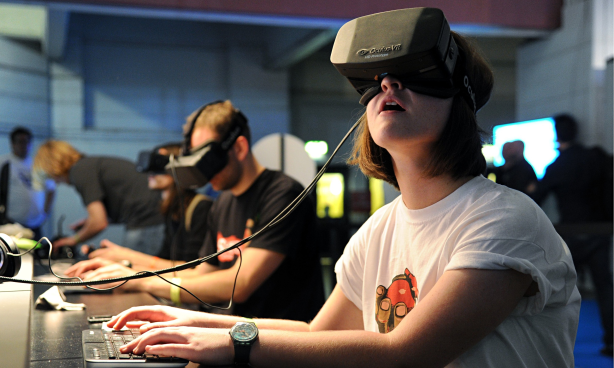
After years of restless nights spent questioning when the Oculus Rift would arrive, we’re finally one step closer, as it was revealed today that pre-orders for the wildly anticipated VR headset would open up on Wednesday, January 6 at 8 a.m. Pacific. That’s probably what most of us were expecting since, just last month, we caught word that every Oculus Rift unit would ship with a complimentary download of one of its flagship launch titles, dogfighting shooter Eve: Valkryie.

How much will it cost?

Oddly enough, although both a release window and a pre-order date have been disclosed, it’s still unclear how much the Oculus Rift will cost when it finally launches in the first quarter of this year. If previous dev kit iterations are anything to go by, we can expect a price tag of between $350 and $400.

Last May, Oculus CEO Brendan Iribe said in an interview at Re/Code that the combined price of a Rift and a PC shouldn’t exceed the “$1,500 range.” Considering most Oculus Ready PCs start at $1,000, we can infer that a suitable PC would demand the bulk of that cost.

What can it do?

As I reported in a spec showdown against Samsung Gear VR earlier this year, Oculus Rift boasts two OLED displays featuring a combined 2,160 x 1,200 pixel resolution with a 90Hz refresh rate. Sensor-wise, it packs in a whole lot, including a gyroscope, an accelerometer, a magnetometer, and a constellation array, which helps with head-tracking.

By default, the distance between eyes on the Oculus Rift is set to 64 mm, though it can be adjusted depending on personal requirements. It supports both Xbox controllers and the Oculus Touch controller, which was recently delayed until the second half of 2016. While official dimensions have yet to arise, the most recent dev kit sports a 1.3 x 14.7 x 7 inch build, which should be indicative of the final design.

What will I need to use it?

According to Oculus, for “the full Rift experience,” you’ll need a fairly hardy rig, as the headset requires an Nvidia GTX 970 or AMD 290 and an Intel i5-4590 equivalent or greater, at least 8GB of RAM, HDMI 1.3 output, three USB 3.0 ports, one USB 2.0 port, and Windows 7 Service Pack 1 or greater.

This means you could build your own or get a PC pre-built with the full intent of using it for virtual reality.

What else does it come with?

In addition to the more mature and competitive Eve: Valkyrie, every pre-ordered Oculus Rift unit will ship with the vibrantly colorful Lucky’s Tale from Playful Corp, a studio comprised of former Words With Friends developers.

It’s not clear at the moment what else comes bundled with the consumer version of the Oculus Rift. If the first two dev kits are any indication, however, we’ll likely see the headset, two pairs of vision lenses, an external camera for position tracking, a USB cable for the camera, an HDMI-DVI adapter, a sync cable, and a power cord sporting a USB adapter.

When is it coming? 

It’s not apparent at the moment when exactly we’ll get our hands on the Rift, but Oculus promises it will be some time in the first quarter of the year, which just so happens to end on March 31. This gives Oculus a head start on the competition, considering the increasingly promising HTC Vive was delayed last month until April.

Given the onerous system requirements and warning signs from graphics card makers, there’s no doubt virtual reality is going to be a tough sell. With as much as a few more months to go, however, it won’t be long until we see for sure just how well the new tech is received by the public.

Visit our Official Website at http://www.gamersoutpost.net
super-nintendo-console

by Chris Smith via BGR

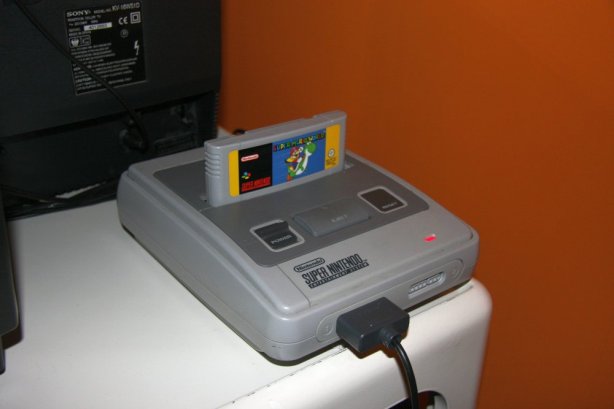
We’ve all been there. We’ve all fought for saved games that we’d thought we’d need at some point in the future. But one hardcore gamer has probably beat all of us, as he left an old Nintendo console turned on for over 20 years just to keep a saved game alive.

A Twitter user by the name of Wanikun revealed he left the Nintendo Super Famicom (the Japanese name for Super Nintendo) turned on for more than 20 years just to preserve the save game data belonging to a Japanese game called Umihara Kawase. Yes, we hadn’t ever heard of it either.

The game came out in 1994, and those game cartridges came with static RAM and lithium ion batteries, IGN explains. This type of tech allowed users to hang on to their saved games for as long as there was battery juice left in the cartridge. But Wanikun’s battery started to fail, which meant he had to keep the console plugged in and turned on at all times to save the progress.

Apparently he only had to unplug the old Nintendo console once when he moved to a new house, but the battery stayed alive during the move.

The gamer says he kept the console alive for more than 20 yeas, which translates to more than 180,000 hours. I guess there’s no point turning it off now, considering the length of this unusual accomplishment. And yes, it’s likely that he’s not even interested in playing the game any longer.

(Not to mention, the game can be played on newer consoles, including the PlayStation Vita.)

Visit our Official Website at http://www.gamersoutpost.net

Dreamcast_2_106737

by William Usher via CinemaBlend

There’s a possibility of a new console coming from Sega. That sounds like a pipe dream and something far off from reality, but it’s actually the truth. There’s a project making a lot of headway called “Project Dream”, which is aimed at bringing a PC-style Dreamcast 2 console to the market.

According to The Gaming Ground, Patrick Lawsen, a member of the Sega Dreamcast 2 super group aimed at reviving the Dreamcast brand with the help of some Sega of Japan interns and independent OEM designers, has been making some serious progress with the project.

According to Lawson there’s a lot of potential for a new Sega console, stating…

“I’m truly excited about the Crowdfunded prospect for SEGA RingEdge Zero/RingWide Elite. […] If we can get just a million backers worldwide, our upcoming KS could be funded in record time and with SEGA licensing it could have it out on the market in less than a year!

[…] SEGA should be unveiling some new Arcade hardware at AOU in February [2016]. We have [Sega of Japan] interns involved. They will present the ideas to SEGA of Japan next Quarter. SEGA will revive its old IPs.”

What Lawsen and the rest of the group want to do is bring a competitively priced PC rig to the market that can run Sega’s old and new games alike. The plan is that it will be a direct competitor to things like the Steam Machines or dedicated gaming rigs offered by companies like Cyberpower and Alienware.

The device will run an Intel Core i5 Haswell and will be designed to play Sega games right off the hard drive after being digitally installed. The point of the system will be to play old and new Sega titles on HDMI compatible devices with HD upscaling capabilities.

The whole point is to put Sega back into the running as a viable console competitor. The system will have a similar shell as the original Dreamcast but modified and updated for today’s standards. A mock-up is what’s in the main image of this article. The system will also have a wireless controller, just like the Xbox One and PS4 or the Wii U’s Pro Controllers.

This all originally kicked off with a petition on Change.org from a certain Ben Plato from Melbourne, Australia, which managed to accrue more than 22,000 signatures for Sega to release a new Dreamcast that can play Sega’s illustrious library of games. It picked up enough steam over the months that started attracting serious attention, and Lawsen and the rest of the group working to revive the Dreamcast 2 got involved and are now taking things directly to Sega of Japan. From there they plan to host the Kickstarter to get the hardware and designs finalized. The idea that a new console could be out by the end of 2016 almost sends chills down my spine.

At first it looked like a real long shot but with Lawsen and the rest of the group going directly to Sega of Japan and with so much support from the community wanting to see a new Dreamcast on the market, I’m curious to see how this will turn out.

Visit our Official Website at http://www.gamersoutpost.net

gamerstereotype

by Ben Gilbert via Tech Insider

Despite what you may believe, the statistics don’t lie: men and women play video games in a roughly equal proportion. In fact, more women than men own video game consoles.

And yet, not many people self-identify as “gamers.”

More men than women call themselves gamers, but among the largest demographic group that plays video games — 18 to 29-year-olds — only 33% of men identify as “gamers,” while just 9% of women in that group identify as such.

Those statistics all come from the Pew Research Center, which issued a massive new report on gaming demographics on December 15. The responses come from “2,001 adults, 18 years of age or older, living in all 50 U.S. states and the District of Columbia.”

This isn’t exactly surprising news.

There’s a vast gulf between the culture surrounding major console games like “Call of Duty” (which are largely marketed towards young men) and the culture surrounding massively popular mobile games (which are often marketed at mobile phone users of all genders).

screen shot 2015-12-15 at 12.50.34 pm

The results were similar across racial lines, too. Around 19% of Hispanic respondents “say the term ‘gamer’ describes them well” compared with just 11% of black respondents and 7% of white respondents.

But what does the term “gamer” mean?

That was at the heart of several essays last year, including one particularly incendiary one on game industry trade website Gamasutra, titled, “‘Gamers’ don’t have to be your audience. ‘Gamers’ are over.”

That piece and others like it are at the heart of the ongoing “GamerGate” saga — described by Pew as, “a debate centered on the identity politics of the gaming community.”

Pew defines the term “gamer” as, “a fan of gaming or a frequent game-player.” But for many it’s a loaded term with varying interpretations.

The term “gamer” is often associated with a stereotype: men of a particular age group (13-25, give or take), often white.

But does that stereotype make sense in a world where games are everywhere — not just in living rooms, but on smartphones and tablets? And what about the millions of millennials who grew up with video games on everything from school computers to cell phones to game consoles at home? What about those people with parents who also play games?

The results of Pew’s survey indicate that, no, the stereotype doesn’t make sense in the modern world. Despite the above ridiculous stock image.

Visit our Official Website at http://www.gamersoutpost.net

Neither PS2 Classics nor your existing PS2 discs are supported

1a2492dc59705fab8184c77def250d1b

by Samit Sarkar via Polygon

The PlayStation 2 is 15 years old, and Sony is bringing some of its best games to the PlayStation 4 starting today.

Eight well-loved PS2 titles will be available on the PlayStation Store in the Americas and Europe tomorrow:

Sony Europe trademarked a few of those games today, suggesting they were coming to PS4. Dark Cloud was leaked on Thursday. The video above, which is also from PlayStation Europe, mentions that Fantavision and Arc the Lad: Twilight of the Spirits are coming soon.

To be clear, this is not PlayStation 2 backward compatibility on PlayStation 4. As the video notes, your PS4 won’t be able to play PS2 classics or PS2 discs that you already own. Instead, you’ll be buying new, enhanced versions of these PS2 titles. All of them have been upscaled to 1080p, and Sony has added other features that are built into PS4 games, such as Remote Play, Share Play, Activity Feeds on the PS4 dashboard, second-screen support on the Vita or PlayStation App, and livestreaming.

Asked why PS2 games on PS4 are relatively expensive, a Sony representative pointed out the enhanced features (which may not be available for all titles) and told Polygon that these games offer “an upgraded gaming experience compared to PS One/PS2 Classics.”

Sony plans to bring more PS2 games to PS4 “on a regular basis,” said Shuhei Yoshida, president of Sony Computer Entertainment Worldwide Studios, in a post on the PlayStation Blog. Upcoming titles include PaRappa the Rapper 2 and The King of Fighters 2000, both of which will be playable this weekend at PlayStation Experience along with a few of the games from the list above.

Visit our Official Website at http://www.gamersoutpost.net

GettyImages-81385412.0

by Ross Miller via The Verge

Since Metal Gear Solid V: The Phantom Pain has been released, Hideo Kojima — the creative mind behind the Metal Gear Solid series — has been missing in action. It was expected that Kojima would make an appearance tonight at The Game Awards, but apparently Konami’s lawyers intervened. Here’s how host Geoff Keighley described the situation:

“Mr. Kojima had every intention of being with us tonight, but unfortunately he was informed by a lawyer representing Konami just recently that he would not be allowed to travel to tonight’s award ceremony to accept any awards. He’s still under an employment contract and it’s disappointing.”

For all intents and purposes, it looks as if Hideo Kojima has left Konami, even if Konami insists he’s just on vacation. Earlier this week, a Konami PR representative appeared in Kojima’s place at the PlayStation Awards to accept trophies for The Phantom Pain, and now we can safely guess why.

Kiefer Sutherland, who voiced Venom Snake in MGSV, accepted tonight’s award on Kojima’s behalf.

Visit our Official Website at http://www.gamersoutpost.net

Adobe Flash is finally dead

Posted: December 3, 2015 in Game Articles

adobe-flash

by Zach Epstein via BGR News

Adobe Flash is dead, long live Adobe Flash. Late Apple co-founder Steve Jobs famously penned a public letter about Adobe Flash back in 2010. Jobs wasn’t the first person to dislike Flash. In fact, developers had hated the technology for years because of its volatility and instability. But Jobs made their plight public and the Internet is now a better place because of it. Once in the public eye, Adobe had no choice but to devote time and resources to making Flash a better product, and the Flash experience of 2015 is nowhere near as bad as it was five years ago.

Of course, Flash still has issues with stability and security that make promoting and growing the technology difficult. In fact, a recently discovered vulnerability in Flash was so bad that the only way to fix it was to completely uninstall Flash Player.

And so Adobe has finally decided to kill Flash… sort of.

“For nearly two decades, Flash Professional has been the standard for producing rich animations on the web,” Adobe said in a blog post this week. “Because of the emergence of HTML5 and demand for animations that leverage web standards, we completely rewrote the tool over the past few years to incorporate native HTML5 Canvas and WebGL support. To more accurately represent its position as the premier animation tool for the web and beyond, Flash Professional will be renamed Adobe Animate CC, starting with the next release in early 2016.”

It might be long overdue, but it finally happened: the Flash brand is no more.

“Adobe Animate” will replace Flash beginning with the next major release in the coming months, and Adobe will then begin the long and painful process of trying to make the world forget “Flash” ever existed. The company is already off to a good start as it continues to harp on the fact that it has embraced HTML5, the web tech that Jobs fought for so vehemently back in 2010.

“Today, over a third of all content created in Flash Professional today uses HTML5, reaching over one billion devices worldwide,” Adobe said. “It has also been recognized as an HTML5 ad solution that complies with the latest Interactive Advertising Bureau (IAB) standards, and is widely used in the cartoon industry by powerhouse studios like Nickelodeon and Titmouse Inc.”

The company is of course still being careful to let the world know that legacy Flash support is not going to vanish overnight. Flash and AIR formats will continue to be supported as “first-class citizens,” according to the company, and end-user PCs will continue to support the current crop of Flash content.

Visit our Official Website at http://www.gamersoutpost.net

PS4_APU-590x330

by Matthew Humphries via Geek

From launch day, the Xbox One has been carrying a performance deficit when compared to the PlayStation 4. Hardware choices made during the design stage by Microsoft meant a games console that can’t quite match Sony’s offering. Much has been done in the last two years by Microsoft’s engineers to try and close the gap, but it looks as though Sony is about to unlock more performance and pull further ahead.

Both the Xbox One and PS4 use an 8-core AMD processor, but initially two of those cores were reserved in either console for background operations and the operating system to function. In order to close the performance gap Microsoft unlocked more GPU bandwidth and the 7th core on the Xbox One late last year. While this did give developers more performance to use, it meant losing a few features including voice commands and disabling Kinect functionality.

PS4_box_contents

Since then, the Xbox One performance has been closer to PS4, but still can’t match it in most games and games run at a lower resolution. The bad news for Microsoft is that Sony has quietly rolled out a new Software Development Kit (SDK) to developers and it does the same thing: unlocks that 7th processor core.

The impact of this change won’t be seen immediately, but games in development for Sony’s console right now should be able to take advantage of the extra performance this will offer. The end result seems inevitable: the PS4 will increase the performance gap to its rival.

The performance comparisons between the two machines won’t stop any time soon, and will happen every time a multi-platform release hits the shelves. There’s very little else Microsoft can do to close that gap, so it probably won’t be a major focus for them. Instead it’s the games that count, and in particular exclusive games. Not timed exclusives such as Tomb Raider, but Xbox-only releases if they can be secured.

Visit our Official Website at http://www.gamersoutpost.net

the-last-nuke-1200x621

by Paul Tassi via Forbes

A long while back, fans speculated that Hideo Kojima had buried a secret inside Metal Gear Solid 5: The Phantom Pain that was going to be almost impossible to trigger. Now, Konami has confirmed that all the fan theories were true, and the grand “nuclear disarmament” community event is actually for real.

What Kojima wants players to do is work together to disarm the entire Metal Gear Solid 5 multiplayer world from any and all nuclear devices. Nukes are powerful weapons in the game’s FOB mode, so sacrificing them gives up a lot of security for your base. The goal of the secret “event” is to get the number of nukes on each regional server to zero, either through convincing players to voluntarily scrap their own, or sneaking into rival bases and destroying the nukes for players who refuse to give them up.

And yes, it is really, really hard to ensure every single player in the game gives up the one of the game’s best weapons, so much so that it might actually be impossible. But Konami really, really wants players to complete it, hence why they’ve gone public with the secret, and now are posting daily updates about how many nukes are in the wild.

The overall trend shows that the numbers of nukes in the wild are dropping dramatically, especially over the past month:

* By November 1st

– PlayStation 4: 2761

– PlayStation 3: 1685

– Xbox One: 525

– Xbox 360: 1011

– PC(Steam): 36552

* By November 25th

– PlayStation 4: 352

– PlayStation 3: 250

– Xbox One: 96

– Xbox 360: 85

– PC(Steam): 15691

Big drops, right? Unfortunately, I believe that this is happening less because players are suddenly trying to give peace a chance, and more because they’re probably moving on from Metal Gear Solid’s (honestly not great) FOB mode to one of the zillion other huge games that came out in November. As such, it becomes a little easier for active players to invade bases and wipe out nukes when they’re not actually be defended or replenished anymore.

the-last-nuke2-1200x629

However, Konami has started publishing the totals for nukes every day now, and those numbers have been fluctuating a lot more now that Konami has revealed the secret is for real. Some platforms are down the past few days, while others are now up. Naturally, when something like this is confirmed, you will have die-hards trying to complete it, but you will also have players that don’t care in the least or purposefully try and ruin everyone’s fun by cranking out as many nukes as possible. World Peace trolling, if you will.

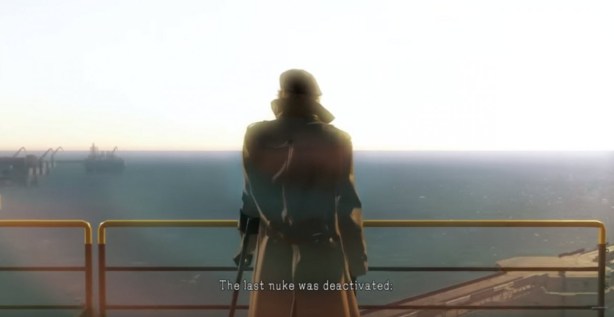
The problem with this event, other than the fact that it might be impossible, is that what it unlocks has probably already been discovered for months now. An eight minute-long cutscene that celebrates the end of all nukes has already been extracted from the game via datamining, and you’re free to watch it on YouTube below:

Players think that nothing else will be unlocked besides this cutscene. The hopeful think that somehow an entirely new chapter of the game is hidden away, which could hopefully clear up the game’s ridiculously abrupt ending, but it would seem insane to hide something that important behind a close to impossible task. But this is Hideo Kojima, so who knows.

Kojima clearly is trying to make a point about the nuclear arms race, but it’s not clear on if he’s saying it is possible to all lay down our WMDs, or by making this event so hard to trigger, he’s showing how impossible the idea is.

I think this is a pretty cool secret, but one I’m not sure if the community will ever unlock unless the entire fanbase loses interest in the game entirely and the last few remaining players sneak around to eliminate nukes. Otherwise, some hearts and minds will never be changed, and there will always be one more nuke left to ruin things. But if all it unlocks is a cutscene everyone has been able to watch for months, I’m not sure it’s worth the effort. There’s only one way to find out, though.

Visit our Official Website at http://www.gamersoutpost.net