ps4_0_0

by Andrew Webster

Tomorrow the PlayStation 4 is getting a big update — and it will include a few features that owners of the console have been waiting for. The update is so big it has a codename: “Yukimura.”

Chief among the new additions in the 2.50 system update is the suspend / resume feature; originally promised when the PS4 was first announced way back in 2013, the option lets players quickly jump in and out of games by pushing the PS4’s power button, putting the console into a rest mode. You just push it again to turn it back on and pick up where you left off. Sony says the feature will be “supported by nearly all of your PS4 games.”

Other new features include the ability to backup and restore things like saved data and user settings to an external USB drive. There will also be new social features, letting you find Facebook friends who also happen to own a PS4. You’ll also now be able to figure out which friends are playing the same games as you, with the “Friends Who Play This” option. The PlayStation Network is also taking a page from Twitter’s book, introducing new verified accounts; a badge on select accounts will let you see when you’re playing against certain game developers. Meanwhile, Dailymotion has been added to the list of services where you can upload your gameplay clips.

As for future updates, Sony is introducing a new option so you can install them automatically. There’s a lot more in the update, including better accessibility features, so be sure to check out the PlayStation blog for the full rundown. The update is expected to go live in North America tomorrow.

6e3bbd0755731c2458f3fb40414fd495

by Eddie Makuch

In a new interview with Japanese business publication Nikkei, Nintendo president Satoru Iwata spoke–albeit briefly and in vague terms–about the company’s mysterious new platform, codenamed “NX.”

Although he did not offer specifics, Iwata suggested that the NX aims to catch gamers by surprise and offer meaningful innovation.

“If you only expand upon existing hardware, it’s dull,” Iwata said in the report, as translated by Kotaku. “In some shape or form, we’re always thinking about how we want to surprise players as well as our desire to change each person’s video gaming life.”

Iwata officially announced the NX during a presentation in Japan last week, where the company also revealed plans to finally enter the smartphone market. Revealing the NX project was a means to demonstrate that Nintendo remains committed to gaming hardware.

“As proof that Nintendo maintains strong enthusiasm for the dedicated game system business, let me confirm that Nintendo is currently developing a dedicated game platform with a brand-new concept under the development codename ‘NX,'” Iwata said at the time.

More details about NX are set to be revealed in 2016. And though concrete information about Nintendo’s NX is extremely light at the moment, one retailer is already accepting preorders for the device.

ac754be5b8406372da4807cea5ff77cb

by Michael McWhertor

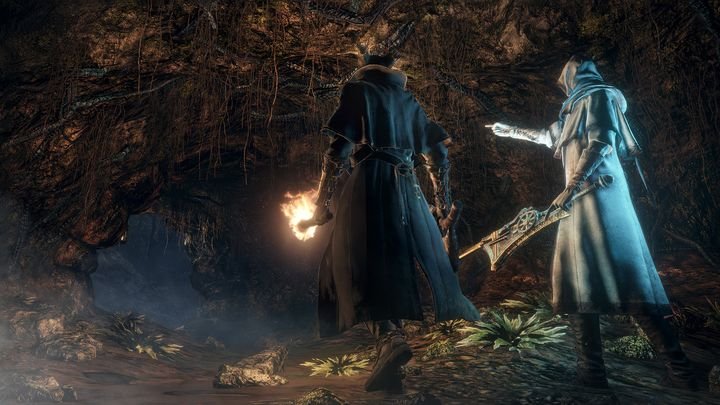
Bloodborne, a new successor to From Software’s Demon’s Souls and Dark Souls, comes to PlayStation 4 this week. Directed by Souls series creator Hidetaka Miyazaki, Bloodborne blends concepts from previous Souls games while managing to carve out its own distinct space. Like its predecessors, it’s notoriously difficult and mysterious. It’s a Souls-like game, but will likely challenge players’ preconceptions of that series.

For the better part of the past week, I’ve played Bloodborne solo. Without much help from the community that previously helped players and complemented the Souls experience so well, I’ve struggled against some of the game’s impenetrability. Bloodborne is a tough game and introduces a few new concepts that often aren’t immediately obvious to the player, so here are a few things I wish I’d had explained to me early on.

I’ve done my best to avoid spoilers, but if you’re looking for 100 percent raw, uncut game mechanic discovery, I do explain some things you might uncover on your own.

Questions? Put them in the comments and I’ll do my best to answer them.

For the newcomer

Even if you’ve never played Demon’s Souls or Dark Souls, you’ve still likely heard that these games can be incredibly challenging. Bloodborne is similarly tough, but (for the most part) fair. I’ve played Demon’s Souls and Dark Souls extensively, with different characters through multiple play-throughs. But I still found Bloodborne to be hard enough that I’ve considered very seriously snapping my DualShock 4 in half and whipping those broken pieces against a wall.

From Software’s games, from Demon’s Souls to Bloodborne, are designed to be difficult, esoteric and frequently perplexing. There is little in the way of a tutorial, and item descriptions can be vague at best. Everyone in the game, from the NPCs you encounter to whoever wrote the game’s UI descriptions, kind of assumes you know what you’ve gotten yourself into. Bloodborne, like its predecessors, can be deliberately obtuse.

But there’s help! You can get assistance from other players by summoning them to your world to help you out. There is already a passionate community picking apart the game and contributing to its wikis.

I found Bloodborne’s starting area to be immensely difficult; it took hours before I was able to defeat the game’s first major boss. But with practice and perseverance, I managed to make it through. You can too, if you’re willing to put in the work and maybe unlearn a few things AAA games have taught you over the years.
9045d582154014e6ced4df16e89bf5ae

If you have played Souls games, a lot of things have changed

Bloodborne plays like a Souls game in a lot of familiar ways. But some players might be surprised at how sharply it deviates from that series’ conventions.

There is really no magic to speak of in Bloodborne, so if you were a heavy magic user in Demon’s Souls and Dark Souls, you’ll need to quickly brush up on your melee combat. There’s also little in the way of effective ranged weapons. Yes, about a third of the game’s arsenal consists of pistols, shotguns, rifles and even a cannon, but these firearms aren’t heavy damage-dealers. You can’t cheese big enemies with poison arrows from 100 yards away anymore.

Bloodborne all-but eliminates the shield, an indispensable defensive measure for many Souls players. (There is at least one shield in the game, but it feels like it was included as a cruel joke.) Without a shield, you’ll need to stay on offense. Fortunately, the game equips you with some solid tools with which to be effective while being aggressive.

Bloodborne has a hub, called the Hunter’s Dream, that’s a lot like the Nexus from Demon’s Souls. Players can return to the Hunter’s Dream to upgrade their character and weapons, buy items from vendors and travel to other regions. There’s no bonfire-to-bonfire warping, as in Dark Souls. You’ll need to head back to the hub to get around.

Other items, concepts and mechanics introduced in Demon’s Souls, and later expanded in Dark Souls, have been either rethought or stripped out altogether.

  • There are just six character stats to upgrade. And, walking back a change from Dark Souls 2, it appears you can no longer respec your character.
  • There’s no more equip weight, so you don’t have the option to play as either a heavily armored tank or a nimble ninja. Don’t expect to drape yourself in Havel’s armor or anything. Bloodborne doesn’t have that.
  • You can’t upgrade your armor with materials in Bloodborne.
  • The upgrade path for weapons is incredibly straightforward and only requires one type of material.
  • There is no “Boss Soul” equivalent in Bloodborne, and there are far fewer weapons and items available to the player.
  • There is no phantom or hollow state, and unlike Dark Souls 2, dying repeatedly has no detrimental effect on the player’s character.

One change that many longtime fans of Souls games will notice is in Bloodborne’s combat dynamics. In short, if you were adept at parrying and riposting in Souls games, you’re going to love Bloodborne.
3eb6df4ef5b20141853ffee1f6d86025

How combat works

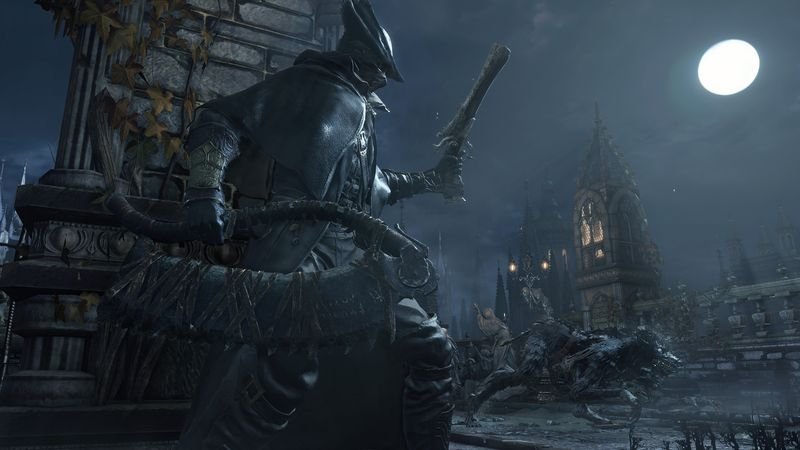
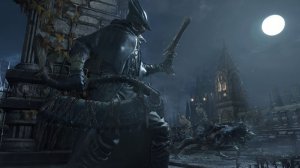
Bloodborne’s combat is primarily focused on hand-to-hand, up-close-and-personal melee combat. The standard setup puts a firearm in your character’s left hand and a melee weapon — often a transforming blade or club called a Trick Weapon — in its right.

Firearms aren’t very effective at dealing much damage. They also carry very limited ammo. However, they’re fantastic at setting up deadly Visceral Attacks. To pull off a Visceral Attack, you need to shoot an enemy in the middle of its attack animation, sometimes within a very short window of that animation. Fire at just the right time, and you’ll stagger your opponent, leaving it wide open to Bloodborne’s equivalent of a riposte.

I don’t think I can stress just how important it is learn how to use Bloodborne’s firearms appropriately. Staggering your opponent is crucial to winning battles in Bloodborne, far more so than the parry-riposte of Souls games. It’s a risky move, but not quite as risky as it was in Souls titles, thanks to the Regain system.

Regain lets you recover some of your character’s health in the moments just after you’ve taken damage. If you’ve been hit and lost some health, a portion (and sometimes the full amount) of your life meter can be regained if you immediately strike back. This is represented with a pinkish-orange glow that surrounds your character as it retaliates. Regain is super important in keeping your character alive and in good health, so don’t back up if you’ve been hit — stay aggressive.

One more thing: You can also sometimes stagger opponents by charging up your heavy attack. That’s a great way to take down stronger enemies from behind.

Trick Weapons give the player a good variety of combat options. I started with the Saw Blade, which afforded me fast, powerful strikes up close with its compact form, and extra range in its extended form. Other Trick Weapons include one-handed swords that can transform into a heavy hammer or a two-handed great sword. One weapon I found and later stuck with was the Tonitrus, an electrified club that doesn’t transform, but can be powered up for a stronger electrical attack. Through a series of weapon upgrades, it served me well throughout the game.

a6c1e15af52b18185f0d5e9ae05d6d58

How weapon upgrades and Caryll Runes work

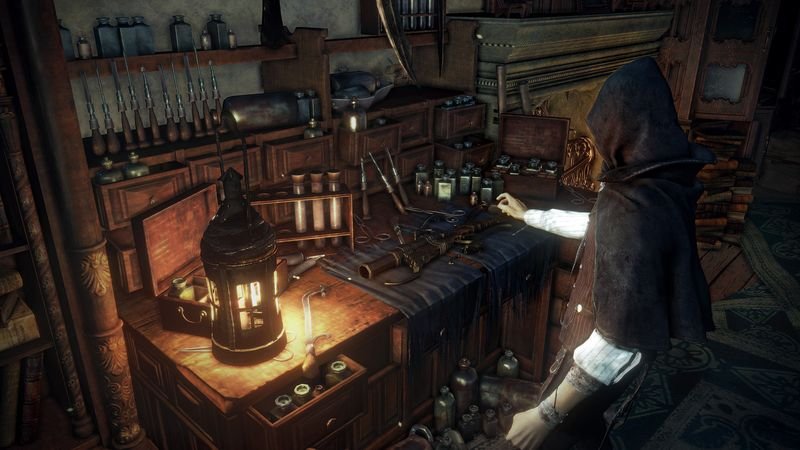
You’ll be able to strengthen your weapons in Bloodborne in a workshop at your hub. Using Bloodstones, you’ll be able to increase the damage and effectiveness of your swords, axes, clubs and firearms. The workshop is also where you repair damaged and broken weapons, and it appears that’s the only place where you can fix them. I haven’t found any consumable items that repair durability.

In that same workshop, you’ll also be able to add Blood Gems to your weapons after they’ve been upgraded. You’ll need to find the Blood Gem Workshop Tool first, which you should be able to acquire after beating a couple bosses. Blood Gems add effects to your weapons, increasing their damage and adding elemental effects like fire, electrical bolts and poison. Don’t worry: you can swap Blood Gems in and out of weapons back at the workshop whenever you want.

Next to the workshop, at a nearby altar, is where you’ll apply Caryll Runes to your character. They’re the closest thing Bloodborne has to rings and you’ll need to find the Rune Workshop Tool to apply them to your character. Again, you should be able to get this after you beat a couple bosses, so don’t play for 15 hours before finally tracking it down like I did. With Caryll Runes, you can give your character more hit points, better resistances, more stamina and other perks. This is also where you’ll apply Oath Memory to your character, Bloodborne’s version of Covenants.

Other concepts and tips

There’s a stat called Insight that does a few things. You’ll acquire Insight points by meeting certain characters and defeating bosses. You can also manually add Insight by consuming an item called Madman’s Knowledge.

Insight can be spent at one of the vendors in the Hunter’s Dream. Some items appear to be exclusive to the Insight Shop. Insight is also spent to initiate a cooperative multiplayer session. You’ll need to ring the Beckoning Bell to search for other players to play co-op with you and doing so will cost you Insight.

Bells used in multiplayer are available for purchase in the Insight Shop, which is just outside the workshop.

Insight affects another attribute in Bloodborne. The higher your Insight, the more susceptible you are to Frenzy, a new status effect that can cause serious damage and can only be cured with an item called sedative.

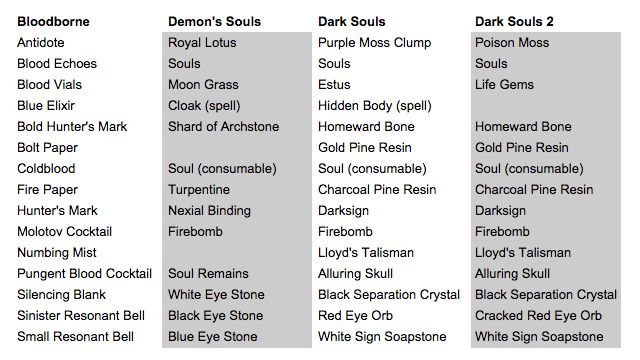
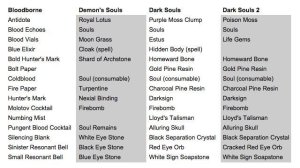
Here’s a quick breakdown of a few consumable items and their nearest equivalents in Demon’s Souls and Dark Souls.
13b205889afbb0e00b1d979d5c178cf2

Finally, make sure to explore and talk to as many characters as possible, particularly those behind lighted windows and with candles burning outside their doors. And trust your instincts when it comes to NPCs.

Good luck, Hunter.

2440f610-2a43-11e4-aabf-f748131afaf3_consoles

by Paul Tassi

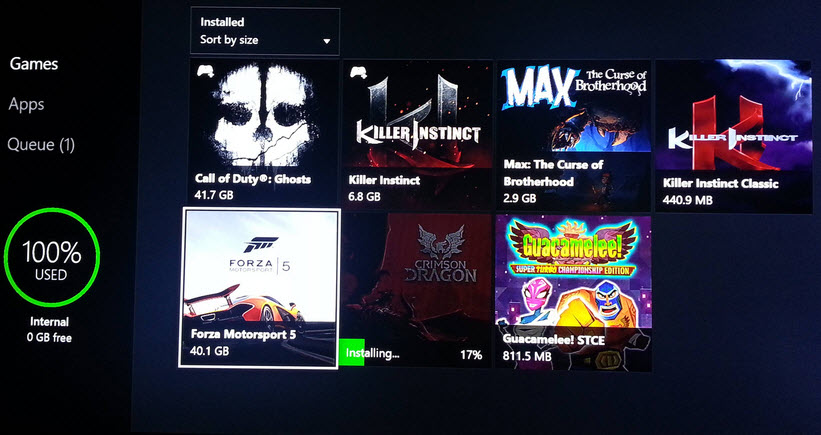
It finally happened. As I went to install my Bloodborne review copy on PS4 this weekend, I got a message. “This action cannot be completed, you need 5.72 GB of free space to install this file.” After less than a year and a half of ownership, my PS4 was already full. The Xbox One hit that mark a few weeks ago when I installed Evolve, and now it was official. It’s time to start deleting.

Sixteen games and fifteen months, that’s how long it took to fill up my PS4. That’s including tiny games like 500 MB of Resogun, and also behemoths like 50 GB of Wolfenstein: The New Order. It’s not as if first generation consoles weren’t going to fill up at some point, we all know they will, but in this new age, it’s happening more quickly than ever, and the solutions are awkward for early adopters of these new systems.

I had a 16 GB Xbox 360, which was one of the earliest models of the system sold. And yet, I only started running up against the full hard drive wall near the very end of its lifespan. To download one new piece of DLC, I’d have to delete one or two others. But by that point, the sun was setting on its lifecycle, and the Xbox One was already on the horizon.

Today, however, the industry is different. Both Sony and Microsoft MSFT +0.22% have made a huge push to make digital downloads easily accessible and the preferred option for many players, saving them a trip to the store and allowing them to start playing before the game is even finished downloading. But of course, with 20-50 GB games, 500 GB hard drives with between 360 and 400 GB of actual, usable space, that means your systems can get clogged up very quickly indeed.

But what many may not realize is that it’s not only downloaded games that take up space. Most games run full installs from the disc itself, or have massive DLC-supporting patches that bloat the size of the file. For example, I had a disc copy of Xbox One’s Dead Rising at launch, but after a series of patches, the game ended up taking 24 GB of hard drive space with no actual DLC purchased. And this weekend, despite having a disc copy of Bloodborne, the game takes up 30 GB of space. Dragon Age: Inquisition takes up a mammoth 44 GB, even though I’m using a disc copy there as well.

While I just hit this full hard drive mark now, I expect many avid players will have run into it earlier. I have both a PS4 and Xbox One, which means I’ve divided up third party games between them. If a player is using only one system, chances are if they’ve picked up many of the big multiplatform games just for that system, they could easily max out either console in under a year.

hard-drives

So, what to do? Deletion, mass deletion. I cleared out about a 100 GB of old games on my PS4 this weekend, from Watch Dogs to Infamous: Second Son to Need for Speed: Rivals, and gave Bloodborne a comfortable home. Now, to play any of them, if they were digital downloads I’ll have to start that whole process over again, or if I have the disc, I’ll have to reinstall them from there.

It’s not the end of the world, but it does show the limitations of this ideal digital age full of graphically intense games that have the ability to completely fill up your system in a little over a year if you’re even picking up just one game a month. Even if you still own these games, it does make you cringe just a little bit when you have to delete them from your system, just as it was irritating when I was deleting old DLC to make room for new expansions on my 360, but it’s starting much, much earlier, and is clearly going to have to be a repeated occurrence over the life of both systems.

Obviously newer models of the One and PS4 will have larger hard drives. A special Call of Duty Xbox One bundle already offers a 1 TB hard drive, but costs $585. Eventually, that hard drive size will be standard, and hopefully more terabytes come after that. But for the tens of millions who have a launch-era system, options are inelegant at best.

While you can’t replace the Xbox One’s internal hard drive, you can buy an external drive that you can hook in via a USB 3.0 port. You can replace PS4’s internal drive, but they will start offering external support as well through items like the upcoming Nyko Data Bank which attaches itself to the top of your system like an angular tumor, and allows for more storage space that way.

These solutions are a bit cumbersome, will probably cost at least $80, and are not from Sony or Microsoft directly. But they are going to be almost necessary unless you want to spend the next five to seven years of this console generation deleting and reinstalling games in order to maintain a growing collection. And it doesn’t matter if you’re a digital downloader or a disc-purchaser, as the disk space will be eaten away regardless.

Everyone guessed that the PS4 and One’s hard drive would prove undersized, but we’re now entering a point in time where that’s going to start happening to many, many early adopters. I think both companies would be wise to offer their own official versions of these aftermarket hard drive expansions to compliment the current line-up, and educate more casual players on the proper way to migrate over to a bigger drive. Otherwise they’re going to be forcing their players to erase their own collections in order to keep playing games, and that just isn’t a good feeling this early in the console generation.

god-of-war-feature

by Khurram Imtiaz

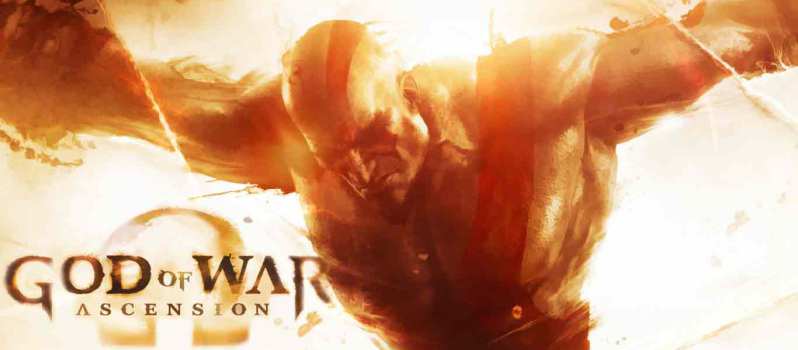
God of War 3 Remastered was officially announced by Sony last week during an event celebrating the 10th anniversary of the series.

This announcement came as a surprise as earlier rumors had suggested a God of War: Ascension Remaster for the PS4, but that rumor has yet to be confirmed.

Industry Insider Shinobi602, clarified that God of War: Ascension is still happening for the PS4, and that he was not aware that Sony was planning to remaster God of War 3 as well.

The person I spoke to about that works at a Sony studio, however I no longer have contact with him unfortunately. In a metrics listing, “GOW: A – PS4″ was listed, so I was a bit surprised GOW3 was remastered first. I spoke to another individual earlier today after the announcement to do some fact checking and it turns out Ascension remaster is supposedly still a thing but coming separately later.

Shinobi added that the Remaster took more work than anticipated, and as a result, they couldn’t do both at the same time.

Yea no problem, and I agree as I said the same thing. Apparently remastering them was a bit more intensive than initially planned so couldn’t do them at the same time.

Now, such a remaster shouldn’t be surprising, given the track record of Sony remastering PS3 games for the PS4. We’ll have more on this topic as it develops over the next few weeks.

nintendo-NX

by Tim Maison

During the Nintendo press conference in which president Satoru Iwata revealed Nintendo would be teaming up with DeNA, a Japanese mobile gaming company, to produce mobile content featuring Nintendo’s characters as well as develop a new, multi-platform membership service to replace the currently presiding Club Nintendo, Iwata hinted at the Big N’s next console.

As Iwata explained, Nintendo has far from lost its vision concerning “dedicated video game systems.” “As proof,” Iwata insisted, “let me confirm that Nintendo is currently developing a dedicated game platform with a brand-new concept under the development codename ‘NX.’” Little more information was teased about “NX” outside of the fact that it will be included in the membership service Nintendo and DeNA are developing and that more information will be given next year.

None of this is news, though, so why another article? Simple, with so little information given, its unclear whether “NX” is Nintendo’s next home console, portable console, or something else entirely, despite the massive assumption that this is the successor to the “failed” Wii U. Let’s look at ALL of the facts. The “NX” is presumably going to be revealed at E3 next year, exactly five years after the reveal of the Wii U and potentially released a year later, again following the pattern of the Wii U. So has Nintendo “given up” on the Wii U?

Not at all. Should “NX” be the Big N’s next home console, that would be a five year lifetime for the Wii U, which perfectly aligns with Nintendo’s usual new console release schedule. Don’t believe me? Look at the time span between the SNES and the N64, and then the N64 and the Gamecube, and then the GameCube and the Wii. All of these consoles were in the spotlight exactly five years before the next console came out. The only exceptions to the rule are the first of Nintendo’s home consoles, the NES, at six years, and the most recent, the Wii, whose staggering sales and success probably extended its lifetime to seven years. So why all the doom and gloom surrounding the mystery shrouded “NX”? Even if industry standards dictate longer lifetimes for consoles, Nintendo has proven time and time again that it marches to the beat of a different drum and they’ll do what works for them.

A lot of the fear and frustration permeating around the platform seems to be the term “brand new concept,” that the “NX” is already toting, especially when many consider the primary “gimmick” of the Wii U a failure. The opinion is out there that the Wii U’s GamePad is underused and adds little value. This is not only untrue, it is also an unfair argument. To begin with, some of the GamePad’s brilliance isn’t in operating as a necessary second screen (which it has succeeded in in several titles), but in acting as the primary screen for the console. Am I the only one who has a wife that wants to watch Netflix on the TV while I play Mario Kart, Smash Bros., or any number of games? Or what about secret playing during holiday family movie nights when mom gets to pick the movie? Utilizing the gamepad as a controller and TV simultaneously not only has its uses, but is pretty fun to boot. Bring in the argument that the gamepad comes equipped with a standard headphone jack, and you are set up for complete surrounding disengagement!

Miyamoto-Wii-U-970-80

The argument is unfair in that many of the Wii’s biggest hits underutilized the motion controls (The Legend of Zelda: Twilight Princess, Super Mario Galaxy, Super Smash Bros. Brawl) and no one called foul, while a lot of the titles that utilized the motion controls best came late in the Wii’s lifetime. The fact is, the Wii U is only two-and-a-half-years-old, and we’ve yet to see what the console can really do. One simply has to look back at The Legend of Zelda: Skyward Sword to see a late console entry making full use of the console’s concept, the Wii’s motion controls, and overcoming its graphical limitations by generating a gorgeous, impressionist art style thus fully demonstrating both what the Wii was capable of. While the Wii U has a lot of wonderful games, it hasn’t quite found that title yet, and until I’ve played Zelda Wii U and several of the other titles slated for release this year, I will hold off harsher judgment.

It also seems unfair to criticize the GamePad when it’s only now really making use of one of its hottest features, near field communications, or NFC. That’s right, I’m talking about amiibo. Amiibo, figurines of Nintendo characters that can interact with certain games and save and store data in the figure itself, arrived on the scene late last November. Since then there have been two more waves of figures, with a fourth set to come out next month. As of January, Nintendo reported it had already sold 5.7 million units worldwide. At $13 a unit, that’s about $74.1 million dollars in sales in under three months, all before the release of the New Nintendo 3DS which also has NFC capabilities. If that isn’t counted as a Wii U win, I don’t know what is. Based on the popularity of titles like Skylanders and Disney Infinity, and seeing the frenzy that amiibo has already generated, the Wii U, with its NFC capable GamePad, stands to make a killing and further mark its comeback. Really long story short, if “NX” replaces the Wii U, it is not because the Wii U is a failed console or featured a failed concept, it was merely a matter of time.

Here are the rest of the facts. Where the Wii U has yet to turn three, the Nintendo 3DS is days shy of turning four here in the States (Happy Almost Birthday, 3DS!). Should “NX” be revealed at next year’s E3 and be released the following year, 2017, around third or fourth quarter, the 3DS will be six-years-old going on seven! While many of Nintendo’s mobile consoles have longer life cycles than five years, with more revisions than home consoles, some portable platforms were only given three years to shine, amongst them the Game Boy Color and the Game Boy Advance. The 3DS has already had three revisions (the XL, the 2DS, and now the New Nintendo 3DS), so where will it be in 2017? Always complete with their own “new concepts,” including the DS’s double screen and touch screen (did you forget what “DS” stood for?) and the 3DS’ 3D display, the “NX” could easily be Nintendo’s next portable console. Should that be the case, we shouldn’t be discussing what Nintendo will do to keep up with Sony and Microsoft, but what Sony will attempt to keep up with Nintendo in the portable market. Based on the PS Vita’s track record, not much (just kidding, Sony enthusiasts!).

The fact remains that no one outside of Nintendo knows what “NX” is, home console, portable, or other. We’ll see Nintendo mobile titles before the “NX” is revealed. So, in the infamous words of Heath Ledger’s Joker, “Why so serious?” As it stands, the Wii U is far from dead, the 3DS is better than ever, and, like Pokemon before them, we’ve got amiibo to collect (Nintendo, have you thought about a Pokemon amiibo line with a new Pokemon title released alongside? There’s money in that idea!). So until the Nintendo Entertainment Xperience is announced (totally what “NX” should be called. It’s throwback-y, but still hip because of the “X”), let’s enjoy what we have. Until NX’t time, thanks for reading.

Phil-Spencer

by Rashid Sayed

Xbox One boss, Phil Spencer has once again taken to to his Twitter account to reveal and tease some interesting information regarding their strategies and development for games on the Xbox One. When asked whether a Gears of War collection or a remastered version is in the works for the Xbox One, Spencer teased that he ‘will have more to say coming up’ and he ‘can’t talk more about the plans yet.’

This is rather interesting since Rod Fergusson from Black Tusk Studios, the team that is working on the new Gears of War for the Xbox One, outright denied that such a remaster is in development for the Xbox One. He also assured that the Phantom Dust reboot has not been canceled and that they are adding new features in the game. “Game dev isn’t that cut and dry. Things will be used, new stuff will be created, it will be a mix,” he stated on Twitter.

He also teased there might be more than one major announcement for the Xbox One in the future. “I hope we have more than just one but you have strong minds so we’ll have to see how we do”, he teased when asked by a fan on how they plan to blow everyone’s mind off. He also further stated that developing first party games is critical for the Xbox One so a game like Sunet Overdrive is great to have on the console.

He also clarified that Microsoft are not lying about the advantages of DirectX 12 on the Xbox One and it will provide speed improvements over DX11 but ultimately it depends on how developers update their code. If this is the case, then Microsoft should probably share some benchmark results soon for the Xbox One.

kojima-productions-japan-la-studios-logos(m)

by Matt Stanyon

In a fresh interview with GameSpark (via Reddit and The Snake Soup), Konami’s Editorial Department has revealed that Hideo Kojima will continue as the director of the Metal Gear series, and that because of the reorganization at Konami, Kojima Productions Japan will be disbanded. Konami says that “all releases previously made under different studios will be centralized and coordinated from headquarters.”

We’ve also got confirmation that the staff at Kojima Productions Japan are dealing with restricted internet and e-mail access, because of the reorganization, so that they can provide a greater development environment, and that Hideo Kojima will become less available for interviews.

Will Kojima Productions be disbanded?
Yes. All releases previously made under different studios will be centralized and coordinated from headquarters.

Will Kojima be leaving his position?
Kojima will remain the director of the “Metal Gear” series. He will continue to innovate with new ideas as creator.

What about talks of him stepping down as director? Are those true?
He is still one of our employees, and is continuing to work full-strength on “MGSV:TPP”.

And is it true that he has been changed to a contract employee?
We cannot reveal private details.

Is it true that KojiPro’s staff have restricted internet and e-mail access?
It is true that the reorganization has resulted in this. This is done in order to provide a greater development environment.

In that case, will Kojima be less available for interviews?
As a result, yes.

The last couple of days have been crazy when it comes to the future of Hideo Kojima and Kojima Productions Japan. It all started when Konami started removing Hideo Kojima’s name from all websites, social media and Metal Gear Solid branding, and even renamed the new Kojima Productions LA Studio to Konami Los Angeles Studio. Then, an inside source at Konami said that Hideo Kojima will apparently leave the publisher following the completion of Metal Gear Solid V: The Phantom Pain.

Apparently, Kojima Productions and Konami have had a fallout which led to senior staff at the studio getting restricted access to corporate internet, e-mails and phones, and meant that key developers like Hideo Kojima would have limited opportunities to lend their names to promotions for the game. The fallout was described as a “power struggle” between Kojima Productions and Konami, and led the publisher to make “drastic changes,” including the employee status of its Metal Gear team, which saw some senior staff becoming contractors at the publisher rather than permanent employees.

Following that, Konami revealed that were planning to “embark on production of a “new Metal Gear series” after the completion of Metal Gear Solid V: The Phantom Pain, and that they were seeking “key staff” to work on that “new Metal Gear series”, with auditions to “begin” upon production. They also revealed that Hideo Kojima would “remain involved throughout” the development of Metal Gear Solid V: The Phantom Pain. Hideo Kojima himself said that he is “100% involved” in the continued development of Metal Gear Solid V: The Phantom Pain and will continue working on the game until the end.

Hideo-Kojima

by Chris Mawson

The rift between Konami and Hideo Kojima looks to be intensifying, as the publisher has today effectively erased the Metal Gear creator’s name from series history.

It was well publicised yesterday that the studio had removed all Kojima Productions branding from promotional materials for the upcoming Metal Gear Solid V: The Phantom Pain, following rumours that the game director and his team are set to part ways with Konami.

tpp-coverlarge

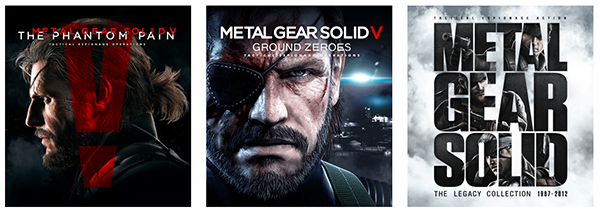
It seems they’ve gone even further than that, however, with Kojima’s name also being removed from the company’s back catalogue of Metal Gear titles, including Metal Gear Solid V: Ground Zeroes and the Metal Gear Solid Legacy Collection. Below are two screenshots: one taken from an archived version of the official Metal Gear website late last year, and one of how the site currently looks:

mgskojima-screen1

mgskojima-screen2

In related news, Konami issued a statement this morning in which it refused to confirm Kojima’s involvement with the company beyond the release of the Phantom Pain, while somewhat ominously announcing that it will be hiring a new development team to begin working on a new Metal Gear title following the conclusion of The Phantom Pain. The game’s September 1 release date is currently unaffected.

ibb_and_obb_-_world_2-1_0

by Andrew Webster

If you only have a few dollars to spend on new games, that’s okay: you can still grab a lot in the latest PlayStation Store sale. Sony is offering huge discounts on a number of PS3, PS4, and Vita games, all of which are available for under $1. That includes a number of classics like Dino Crisis and Katamari Damacy, as well as indie hits like Ibb & Obb and Tokyo Jungle. It’s a lot of games for very cheap, including plenty of hidden gems, but you’ll have to act soon, as the sale ends on Monday.