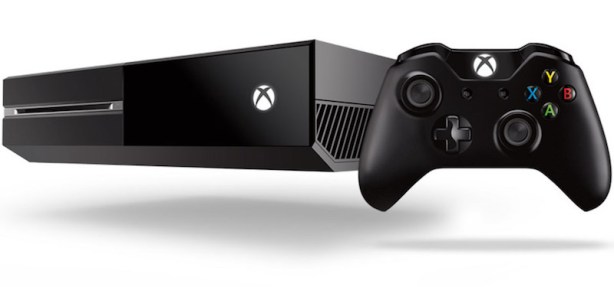
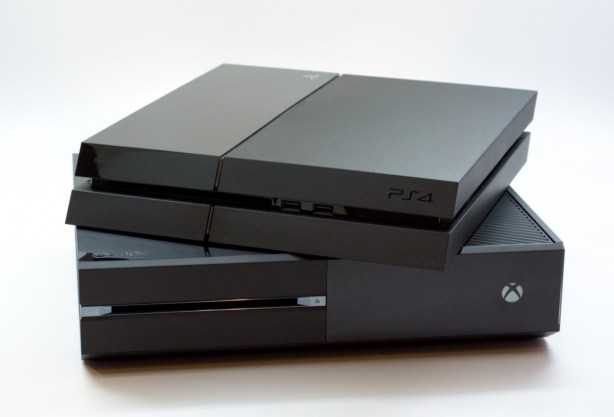
It’s as official as possible without being officially official: According to numerous sources speaking with Kotaku, Microsoft will release a new, more powerful version of the Xbox One (code named Scorpio) in 2017. This doesn’t come as a big surprise, seeing as Xbox heaD Phil Spencer strongly hinted at an upgraded Xbox One several months ago. And with all the rumors we’ve been hearing lately about a PlayStation 4.5, it seems inevitable that we’ll be getting new gaming hardware from all of the major console makers much quicker than anyone expected.
This signals a major shift in the video game industry, which has always progressed through “console generations,” periods of five or more years between new, better hardware. The Xbox One Scorpio and PlayStation 4.5 would be “half-step” consoles that extend the current console generation indefinitely. Microsoft’s Phil Spencer envisions a future for Xbox that looks like the iPhone. New models are introduced over the years, but they maintain compatibility with the games and apps that came before.All of this begs the question: Are frequent console upgrades a good thing? Here are some pros and cons about the rumored Xbox One Scorpio.
Pro: Potentially endless backwards compatibility
If you like playing old games, you know how much of a pain it is to keep all of your video game consoles plugged into a TV. According to Phil Spencer, if the future of Xbox plays out how he outlined earlier this year, all Xbox One games will still be playable on all Xbox consoles going forward. That means, in theory, that your copy of Halo 5 will be compatible with whatever an Xbox is in 2035.
Con: You’ll probably spend more money
No one has to buy a super-charged Xbox One Scorpio, of course, but if you want to stay current on video games, you’ll need to get one eventually. That’s too bad, because most Xbox One owners bought their console with the expectation that they’d have a system capable of playing state-of-the-art Xbox games for a good five to 10 years. More frequent hardware refreshes means more money for gamers who want to stay current.
Pro: Better graphics
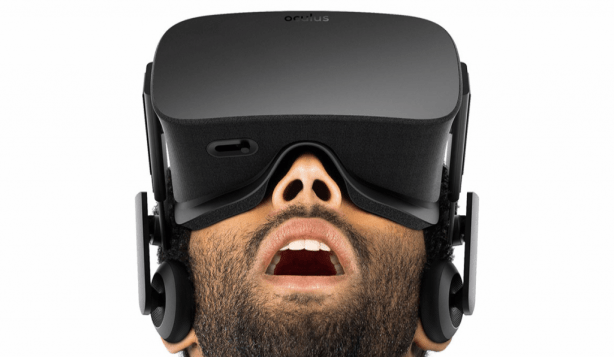
Obviously, a more powerful new console allows for better looking games. Standard Xbox One games already look pretty fantastic as they are now, but with hardware powerful enough to pump out 4K graphics and power an Oculus Rift — as the rumors suggest — the Xbox One Scorpio could run games that look even more incredible.
Con: Xbox gaming would be more complicated
One great thing about console gaming is that if you own the console, you know you can play any game made for that console. That’s not the case with PC gaming, where games have required hardware specs and occasional compatibility issues with certain PC parts. With a new, more powerful Xbox One coming out, the Xbox One market will be split. Some people will have the original Xbox One, while others will have the newer, more powerful Xbox One Scorpio. It seems likely that games in the future will drop compatibility with the original Xbox One.
Pro: The Oculus Rift could come to Xbox One Scorpio
With Sony set to launch PlayStation VR in October, Microsoft’s virtual reality future looks bleak, seeing as it hasn’t announced anything at all for Xbox gamers (HoloLens doesn’t count). If the rumors are true and Microsoft is looking to partner with Oculus to bring the VR headset to Xbox One Scorpio, it would be a major boon for Microsoft and Xbox fans.
If Microsoft does launch a new and improved Xbox One in 2017, it will shake up much of what gamers have come to expect from consoles. It’s pretty exciting, even if I’m not looking forward to dropping several hundred dollars on a new console that’s only marginally better than the one I already own.
Disclaimer: This is a very personal story, one I’ve been meaning to write for a while. Given my career path and retro-gaming area of expertise, this is just the best way I could tell it creatively. Please don’t mistake my tone for trivializing a serious issue. This is a very important topic to me.
I write to you today a survivor from the seventh layer of my own personal hell. If you’ve ever been unfortunate enough to live through one of the most excruciating painful experiences known to man, then you’re about to get a fresh reminder of those long sleepless nights and dreary days spawned by powerful painkillers.
I’m, of course, talking about kidney stones. Over the course of my 30 years of existence, I’ve unfortunately suffered through about a dozen of these calcified demons, and I work hard everyday to drink enough water and manage my diet to make sure it does not happen again.
I’m roughly three years kidney stone free since starting this management, and I’m grateful every single day that I wake up pain-free. However, the slightest lingering pain in my lower-left back can still send chills down my spine for days on end until I feel it’s safe enough to relax.
Yes, kidney stones are among the absolute worst, and I’m here to help with the aid of video games. More specifically, NES classics that are bound to help you better understand exactly what kidney stones are and how to react to them.
These are five NES classics that you should play when your kidney has literally stabbed you in the back and sent torturous, jagged rocks through the most sensitive area of your body.
Life Force
Konami’s excellent NES SHMUP Life Force is actually a spin-off of its better known SHMUP series, Gradius. This classic improves the established formula in a few ways, but what’s even more unique about it is that it takes place entirely inside of a living organism.
Levels design themselves based on different areas within an alien body, and both common enemies and boss fights tend to be a twisted combination of mechanical and biological in design. Who could ever scrub from their memories that horrific brain boss at the end of level 1?
Players take control of a little white jet that navigates these thin tunnels, and one bullet or wayward enemy is all it takes to wreck your mission. Crashing into the ground also causes your ship to explode, and it is here that we find our similarities to kidney stones.
Some who have lived through kidney stones might think that the most overrated part of the experience is when it actually leaves your body. The image of passing a stone while going to the bathroom is enough to make anyone shudder, but it’s actually the easiest part, in my experience at least. Mine have been relatively small compared to what others have seen, though. A pinch of pain, a sudden spurt, and poof, it’s over.
Even so, I think most would agree that the hard part is actually the journey from the kidney into the bladder through the ureter. Kidney stones only hurt when they are in motion. They are sharp, jagged little beasts that literally slice you every single millimeter along the way. Could be two months, could be half a week, but you’ll know exactly when that thing is moving every inch of its journey.
I hope the imagery is catching on here. A small, sharp white object navigating through thin tunnels surrounded by living tissue. Just like a kidney stone, the jets in Life Force are of no risk if one can successfully guide its way through each level. Skilled players try with all their concentration to navigate, shoot, and dodge in tight quarters to make sure the worst doesn’t happen.
But when that jet steers the wrong way and crashes it jagged edges into a fleshy corridor… game over, man.
Little Nemo: The Dream Master
Capcom’s 8-bit interpretation of the 1989 remake of Winsor McCay’s classic comic. Little Nemo: The Dream Master is an excellent Mega Man clone that oozes personality. It sets itself apart from others using a unique mechanic that allows our hero to overtake the bodies of animals, contriving their powers to aid in traversing this brutal game’s torturous levels.
Nemo can take the form of a frog, mole, or gorilla and ride on the backs of lizards or hornets. And the way he can whip these animal buddies into obedience is to lull them to sleep by feeding them candy. Sweet, sweet, lovely candy that puts them right to sleep before he pounces.
Now, obviously the image of wonderful candy that puts monsters to sleep is every kidney stone sufferer’s personal savior. Delicious, wonderful goodness that not only tastes like your favorite arranged flavor but also sends you off to dreamland after a quick dose or two? Absolutely!
Kidney stones can be rough enough to deny anybody sleep, and even then, sleep is the only relief from the constant pain that these horned abominations can delve out. I remember waking up some mornings during my trials and just praying, hoping to everything that the day would not come and that I could just magically be whisked away to an unconscious state.
Luckily, drugs do allow that, and in North America, it’s not much of a problem.Take your pill, go to sleep or at least walk around in a relatively pain-free, barely aware state. In Japan, where I have had several stones erupt, it’s not quite so simple in that the medicine doctors prescribe aren’t exactly taken… “orally.”
I don’t think I need to spell it out any further, but I would definitely prefer Little Nemo’s dream candy to what the official solution is.
Popeye
Nintendo doesn’t dive into licensed properties very often, but did you know that one of its original arcade games and NES launch titles was actually a Popeye game? Don’t get too excited. There’s not much to it, and this second-thought projects feels more like a bad Donkey Kong knock-off than anything else.
Still, Nintendo working with a popular character that is not one of its own? That’s enough to churn anyone’s curiosity! How exactly does the spinach-swilling sailor tie into kidney stones? Well, pretty easily, actually.18
So, you’ve done it! You’ve passed the stone and you’re back at the hospital for a follow-up appointment. Like a good patient, you caught the devious cretin in a filter provided by your doctor, and his lab assistants have had ample time to study it and tell you exactly what caused it.
What was it? What did I put into my body that could have possibly caused me such ill-fortune? I mean, I hear a lot of french fries and get a real sweet-tooth for chocolate this time of year. Could that be it?
“No,” the doctor says. “Those certainly don’t help, but this stone was actually caused by calcium oxalate.”
And what is the most common food that contains calcium oxalates? You guessed it… spinach! I’ve improved my diet a lot over the last few years, mostly thanks to this thing called “marriage,” but back when I was suffering through kidney stones, I ate a lot of junk food.
One of the few healthy foods I genuinely loved was just that… spinach.
And it was also the cause of all my pain and sorrow in the world. The doctor instructed me to eat it with a special Japanese fish to cancel out the oxalate reaction or try a substitute like Japanese “komatsuna” which doesn’t have calcium oxalate, but it’s just not the same.
I love spinach, so much, and being banned from it just makes me crave it more. After playing this horrible Popeye game for hours on end, though, that should be enough to kill any love for the leafy vegetable. Ugh, what was Nintendo thinking?
Sorry, no spinach. Still, that’s the sacrifice one must make if they want to remain healthy. Management and balance. It’s not always junk food that must be cut.
Super Mario Bros. 2
Needs no introduction. Super Mario Bros. 2 is not the realSuper Mario Bros. 2, but anyone who says that we should have gotten the actual one back in the day is just plain wrong. This is an excellent game, and it is aging just fine alongside its NES brothers.
Now, kidney stones generally occur within older people or those who are overweight. During the peak of my kidney stone era, when I had three in a single year, I maxed out at about 195 lbs, the heaviest I have ever been in my life. Not severely overweight, given that I’m a pretty tall guy, but definitely not an ideal weight either.
However, the doctors said that it was not enough to garner such frequent kidney stones in a mid-twenties year old man, and one figured that there must be an underlying problem besides my diet. Turns out, he was correct.
Unknown to both my parents and me, my left kidney is actually a “double pelvic/double ureter” kidney. This means that it operates as two separate kidneys and both have ureters that connect to the bladder.
It’s not exactly a dangerous situation, but it can lead to an increase in kidney stones. Water is important for a kidney to function properly as it keeps them hydrated, and flushed kidneys means less chance of calcified chunks to take form. However, with a split kidney, water will usually travel to the larger, healthier, and more “normal” half, meaning that the weaker, smaller half tends to be drier unless the body is constantly hydrated.
This smaller half was the reason for my kidney stones. Fine, I keep myself hydrated, and if things get too serious, the doctors say I’ll still have the larger half working properly if the lower half ever needs to come out. Surgery is “unlikely” if I treat my body properly, but “unlikely” is not a word hypochondriacs, like myself, want to hear.
“I have a defective kidney.” The psychological impact of something being “wrong” inside your body is a heavy burden on anybody’s soul. Even if the situation is not immediately dangerous and problems can be picked up from a mile away now that I know about it, the idea of something “wrong” inside took a lot to get over.
But hey, it’s okay! Super Mario Bros. 2 has a lot of elements inside of it too that other Super Mario Bros. games don’t have. Lifting enemies above Mario’s head, POW blocks, an entirely new army of enemies to battle, Princess Toadstool and Toad as playable characters. Super Mario Bros. 2 might be “defective” and “wrong” on the inside, but it’s still a beloved game that hangs with the best of its legendary siblings.
Likewise, my kidney might be strange and weird, but it still functions. The doctor also graciously reminded me that it has kept me going for 30 years, so it can’t be that useless. Hopefully, it has many more years of health now that I know how to properly treat it.
If you can’t tell by the length of this section, coming to terms with this was actually harder than passing the kidney stones themselves. Getting the bloody thing out is only half the battle. The rest is figuring out how to stop them from forming.
No fifth game. Why is that? Because when you have a kidney stone, video games are the last thing on your mind!
You can’t sit and enjoy your hobby because a sharp piece of waste is constantly tearing your insides. You’re constantly exhausted because you can’t sleep at night, and when you can sleep, it’s because you’ve taken drugs that knock you out through chemical induced “fake” sleep.
Constantly lingering on the verge of consciousness, constantly fighting back tears of pain, constantly drinking water to keep the flow moving and ureters flushed, constantly releasing that water. Sitting on heating pads, family members propping you up if you need to walk outside or even to the john.
Seriously, who has time for videos games when your body is in such a ragged condition like this? Who can concentrate and dedicate the grueling attention required by this brutal era of level design? If you play anything on your NES, it might as well be Wheel of Fortune or something that doesn’t require quick reactions or a whole lot of focus. Because attention is something you have very little give when the horrible bits of evil are traveling through your body.
Take care, drink a lot of water, stay in shape, and treat your kidneys nicely. They are two of the most important organs in your body, and if you respect them, they’ll do their job and keep you alive. Mistreat them… they will stab you in the back.
The Uncharted Series came to an end last week. We’ve been with Nathan Drake through thick and thin, through witty and morose. And with Uncharted 4 comes a moment to reflect on those adventures, their high points, and their low points. In many ways, Uncharted 4 is a reflection of where the industry stood in 2007, refined, polished and perfected for nearly a decade. But was it the best the series had to offer? There were five Uncharted games in total, all of them excellent, but not all of them equally so. And because ranking is a thing that one does from time to time, I’ve done so:
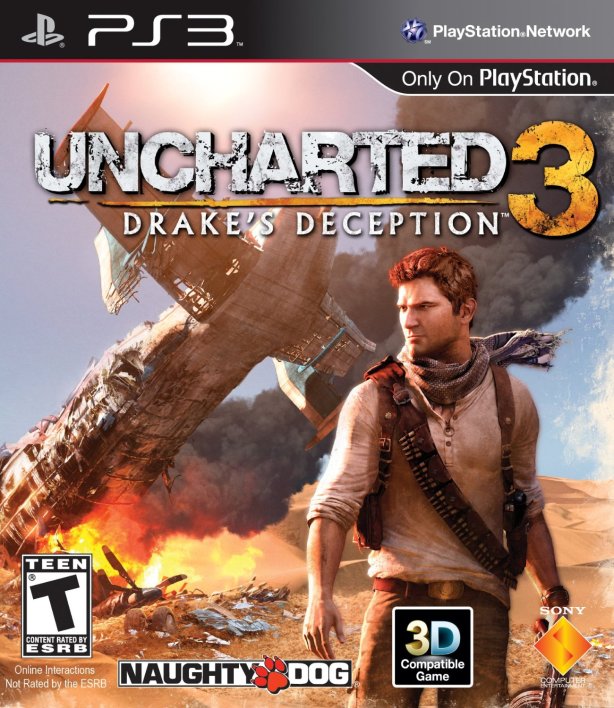
Uncharted 3: Drake’s Deception: This one was sort of a mess. The game was a trip through giant set pieces, some of which were built before the developers had any idea how they would fit into the story, and it shows. Not quite sure if it wanted to end close a trilogy or not, and not quite sure if it wanted to delve into Drake’s darker side or not, it ended up lacking both focus and drive. Uncharted 3 made some important gameplay strides forward, but I found myself more irritated with Drake than ever while playing it. A bad Uncharted game is still an excellent game, but for me Uncharted 3 just failed to capture that swashbuckling magic that defines this series. It felt stuck, and it felt, at times, like filler. And while the Atlantis of the Sands is certainly a thing, it felt like a odd attempt to toe the “lost city” line. Does it always have to be a lost city?
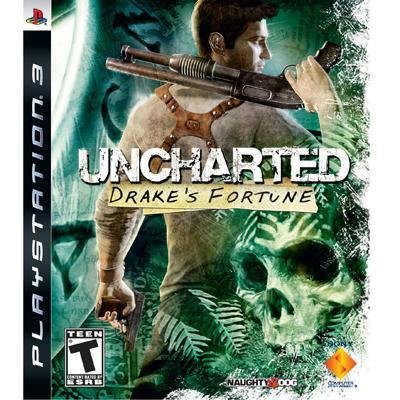
Uncharted: Drake’s Fortune: I debated the bottom two of this list for a while, because there are a lot of things we need to forgive about the first entry in this particular series. Naughty Dog hadn’t really figured the whole thing out yet, and neither the gunplay nor the navigation were quite there yet, and the pacing was all wrong. But it had that kernel to it that would later grow into Uncharted 2, and for all its faults, I had a better time with this game than I did with Uncharted 3. It was fun! It was flawed, but it was fun. Fun is important, and that’s why I’m giving it no. 4.
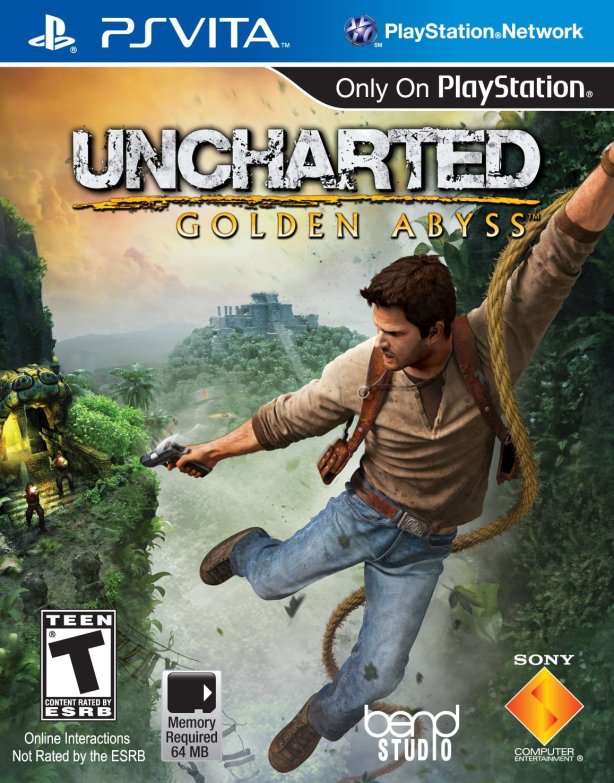
Uncharted: Golden Abyss — Some will be surprised to see a Vita port quite so high on this list. Uncharted: Gold Abyss was meant to be a selling point for Sony’s quixotic portable, showing us a future where we all played “console-quality (whatever that means)” games on the go, on the toilet, or on the couch when we didn’t feel like turning on the console. We all know how that panned out, but the Vita did leave us with this one. Golden Abyss was stacked with odd vita-specific features showcasing motion controls, a light sensitive camera, the touchscreen, and more, and that whole rigamarole could get pretty tiring. But at the heart of that game was Drake’s purest adventure in the entire series. There was none of his troubled relationship with Elena, none of the broader emotional arcs that define the main series, just a good old fashioned adventure. Golden Abyss told a self-contained, satisfying story, and for that I give it number 3. The Uncharted series is a love letter to 30′s pulp adventure stories, and no game captured that better than Golden Abyss.
Uncharted 4: A Thief’s End — This game was a true accomplishment. It takes that emotional weight that bogged down Uncharted 3 and commits wholeheartedly, wrapping up Nathan Drake’s adventure with grace, charm and a a surprising maturity. It helps that the combat is the best in the series, it helps that the visuals are the best I’ve seen in any video game, ever, and it helps that Naughty Dog experimented with opening up the corridor shooter just enough to give us a hint of player agency. Uncharted 4 was a rough game to get through sometimes — knowing that you’re coming to the end of the adventure will do that to you. But Naughty Dog pulled it off in the most emotionally affecting game of the series. The treasure of Henry Avery, too, was the only goal in the series that felt like it had a story to tell every bit as interesting as the one in the present day.
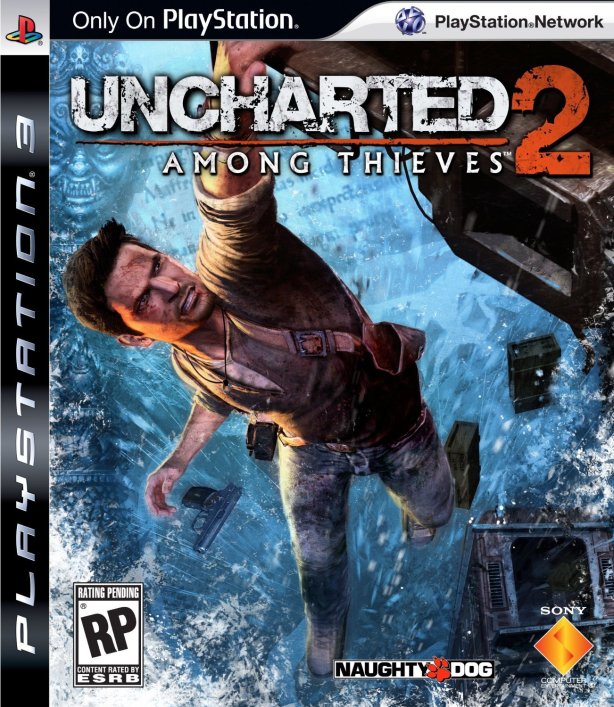
Uncharted 2: Among Thieves — As you can see from my love of Golden Abyss, I prefer it when Uncharted sticks to the breezy pulp that inspired it, and we see that in spades with Uncharted 2. This the game that came to define the series, and for good reason: we were not yet weighed down with the broader character arcs that gave us such trouble in Uncharted 3, nor were we tasked with introducing the characters like we were in Uncharted. There are parts of this game that haven’t aged quite as well — the shooting could be improved, the stealth could seriously be improved, and you spend too much time crouched behind cover mowing down legions of enemies. But damn, was this an adventure. Grand, funny, exciting and quick, Naughty Dog managed to tell a story that didn’t lag for a single moment, from the opening moments on the train to a striking, quiet moment in a Tibetan village. This game, always, will be the masterpiece of the Uncharted series.
Rumors are picking up once again for Batman: Return To Arkham HD Collection after some ads and retailer postings for the HD remaster packs leaked online. Apparently the game will release on June 10th for the Xbox One and the PS4 for $40, assuming the ads are to be trusted.
Game Informer covered the story after it originally broke on Gaming Tree House, where they managed to capture an image from a retailer listing on the Italian version of GameStop. The listing has no box art or images but stated that the game would be available for around $40 and would launch on June 10th for only the Xbox One and PS4.
The listing on the Italian version of GameStop was pulled shortly after being discovered. Gaming Tree House later discovered an ad in an Italian magazine that also showed a listing for Batman: Return To Arkham HD Collection, indicating that the package would be available with both Batman: Arkham Asylum and Batman: Arkham City packed inside.
Both games will be the full versions and will also come jam packed with all of the DLC that released over their respective lifespans.
I’m sure the most obvious thing about this collection is the fact that it’s not listed for PC. Following the absolutely atrocious debacle last year involving Warner Bros Interactive Entertainment and the PC release of Batman: Arkham Knight on PC, it was made pretty clear that the publisher would be stepping back from their PC support. They did so by completely forgoing the release of Mortal Kombat XL on PC and opted not to release any balance patches or additional season 2 DLC for Mortal Kombat X on PC.
It’s kind of unfortunate that PC gamers are being punished because Warner Bros rushed out Batman: Arkham Knight and caused a lot of heartache to paying customers on PC.
However, it’s entirely possible that Warner Bros could later announce a digital PC release of Batman: Return to Arkham HD Collection. It’s not entirely impossible that maybe they’re just waiting closer to June to make the announcement official for console and PC gamers… or at least, one can hope.
As for the HD collection containing Arkham Asylum and Arkham City, it has been rumored for quite some time that Warner Bros would attempt to re-release the games in HD. I’m a little shocked that they didn’t include Arkham Origins, though. Maybe they’ll wait it out until the PlayStation Neo and whatever the mid-gen Xbox One refresh is to re-release Arkham Origins and Arkham Knight. If the PS4K or PS Neo is going to tout 4K upscaling then I can easily see a bunch of publishers re-releasing games as 4K renditions, such as Batman: Arkham Knight 4K or what have you.
Anyway, right now the HD collection for the first two Arkham games is still a rumor, but if the June 10th date has any weight to it then we can expect an official announcement from Warner Bros soon enough to verify the claims and make an official announcement for Batman: Return To Arkham HD Collection.
Oculus Rift turned out to be an unintentionally ideal name for a gadget dedicated to carving ruptures between people. They also could have called it the “Digital Chasm” or the “Interaction Canyon.”
The virtual-reality headsets, available at 48 Best Buy stores beginning May 7, promise to widen further what is already an alarming, tech-induced gap among couples, friends and families. Smartphones have already whipped up a wasteland of blankness — the real-life equivalent of dead air on the radio.
We’re living in “Um, honey?” time. As in, “Um, honey, how was your day at school?” (No answer. Lots of tapping.)
“Um, honey, have you seen my glasses?” (No answer. “Memes” are being considered.)
“Um, honey? I need your attention, please. Please? We have an infestation of gila monsters. The house is burning down. I’m leaving you for another family.” (No answer. Snapchat being checked.)
The Oculus Rift? It’s basically a smartphone you wrap around your face. Put it on; reality can’t get in. This is the appeal of drugs, too.
As with drugs, easily bored young people are particularly susceptible. Think your kids are hard to connect with now? Wait till they get themselves an Oculus Rift and begin to expend all their attention, instead of just most of it, on the Great Elsewhere. They’ll be off in a world of their own imagining: hiking up Everest. Having a light-saber duel with Kylo Ren. Joining the Kardashian family.
Considering the porn implications of the gadgets, we’re now within half a step of the Orgasmatron, the Woody Allen-invented virtual-reality capsule (from the 1973 film “Sleeper,” which also accurately predicted the resurgence of fatty food and the surprising endurance of the Volkswagen Beetle), which couples short on time would use for a brisk, machine-made sexual experience. What Woody got wrong (in the scene in which Miles Monroe mistakenly enters the Orgasmatron alone) was that tech would assume the existence of couples.
No, tech is turning out to be the great atomizer, wrenching people apart. I well remember the first time (maybe eight years ago) I saw a couple in a restaurant, clearly on a date, yet each of them gazing longingly into a smartphone instead of addressing the facing person. I thought: Here. It. Comes.
Smartphones today are zapping dates, dinners, conversations and spontaneous meetings so everyone can disappear into his own independent iFog. Another filmmaker, Wim Wenders, foresaw this as far back as 1991, in his unappreciated but brilliant film “Until the End of the World.” In a post-apocalyptic climax, a tech gadget that can record your dreams takes the form of a wraparound virtual-reality headset exactly like the Oculus Rift. Users become addicted to their own interiors, and they begin to wander the land in the headsets, blind to one another, in a lonely daze.
Maybe we’re smarter than that. Maybe people will see the Rift forming and take a step back. Maybe Oculus Rift will be the next Google Glass.
Or maybe people will soon be using the gadget to watch videos of “Sleeper” and “Until the End of the World,” thinking: Given those prophecies, why couldn’t we have had our Oculus Rift sooner?
Activision and Infinity Ward’s latest entry in the Call of Duty series is called Infinite Warfare, and gamers are not too happy about it. Infinity Ward’s design director ran to the game’s defense following a less-than-stellar reception to the game’s announcement.
Speaking with Gamespot, design director Jacob Minkoff explained,
The approach that we’ve been taking with this game… the inspirations don’t come from sci-fi or space in any way, […] The inspirations come from war stories. This is Call of Duty. We are talking about warfare and in this case Infinite Warfare… what we feel is that classically told narratives can take place in any setting.
While Jacob Minkoff may be trying to run damage control for the poor reception of Call of Duty: Infinite Warfare’s debut trailer, that doesn’t really change how gamers feel about it.
The YouTube announcement trailer has 4.6 million views after debuting yesterday, and it has a near equal amount of downvotes as it does upvotes; 132,000 upvotes versus 126,000 downvotes, as of the writing of this article.
The general sentiment is that a lot of gamers joke that they must have accidentally clicked on a Halo trailer instead of a Call of Duty trailer.
While Jacob Minkoff’s point is that this next entry in the long-running shooter series will be grounded in some kind of military drama and tension, the reality is that gamers are still seeing another derivative sci-fi shooter on the horizon. It’s also hard to deny that the inspirations don’t come from sci-fi when we get an entire third of the trailer dedicated to players flying around in space in a spaceship firing lasers and fighting robots big enough to flip over tanks.
If Jacob Minkoff was trying to convince gamers that there’s a serious story to be told in this upcoming outing of Call of Duty: Infinite Warfare, it was utterly lost in all of the actual sci-fi elements on display in the trailer itself. And really, when gamers have to go by what Minkoff is saying or what Activision is showing, it appears most people are reacting to what they’ve been shown.
Now this isn’t to say that Call of Duty: Infinite Warfare will be bad. Just because people aren’t keen on the trailer and have become fatigued on sci-fi shooters as of late – we’ve had Call of Duty: Advanced Warfare, Halo 5, Call of Duty: Black Ops 3, Destiny, Titanfall, Evolve, Ghost In The Shell and Star Wars: Battlefront all released in the last two years. This doesn’t necessarily mean that this upcoming game will be bad. In fact, it might be the opposite.
Call of Duty: Black Ops 3 really took me by surprise, having one of the most mature and thought-provoking stories in movies and games that I’ve seen in quite some time. The writers really knocked it out of the park with that one, in spite of the heavy reliance on a science fiction theme.
Ultimately Infinity Ward will have to prove that Call of Duty: Infinite Warfare doesn’t deserve the ire its currently getting by showcasing some gameplay and some of those story elements to make gamers care. We’ll likely get to see some real-time footage at this year’s E3 during Sony’s press conference.
Call of Duty: Infinite Warfare is due out on November 4th, 2016 later this year along with a remastered version of Call of Duty 4: Modern Warfare for the PS4, Xbox One and PC.
As reported by Nintendolife, Nintendo president Tatsumi Kimishima recently spoke to Nintendo investors at one of the company’s periodic briefings and they grilled him pretty hard once he announced that the Nintendo NX and Zelda Wii U were both missing the holiday season this year. But he had an explanation (translation by Cheesemeister3k, again via Nintendolife): “Having a full software lineup when the hardware launches is one reason for the NX launch timing. Also, we must be in a state to release titles not just at launch, but continually afterwards. We are planning for it to be a platform that will be played for a long time.” What’s more, the console will be profitable from launch, and won’t be a loss leader the way the Wii U was.
If what Kimishima says is true, then Nintendo may not be in such trouble after all. If the system really does have a strong launch lineup, and a strong ramp-up after that, along with a respectable amount of third-party support, Nintendo may still be able to make the Nintendo NX into a success. Let’s just hope that new hardware from Sony and Microsoft isn’t too compelling.
A weak launch lineup killed the Wii U. The console had just a few games at launch, and no major titles for the better part of a year thereafter. By the time enough titles were out to drive some real sales momentum, third parties had given up on the console, and a lot of consumers had too. The Wii U GamePad itself never really got as exciting as it could have been either. Nintendo didn’t push its own innovation as hard as it should have. And it all stemmed from the weak launch lineup.
If Nintendo NX can avoid that, the future could be entirely different—even if the system is weaker than the upgraded hardware Sony and Microsoft have been hinting at lately. Let’s hope the lineup is really as strong as Kimishima is saying.
There has been a lot of debate about the potential of upcoming “half-consoles” that Sony and Microsoft are rumored to be making. Sony’s PS4.5, or PS4K, or NEO, seems to be more tangible, as at this point leaks have spilled nearly every detail about the system, which may be coming this fall. And though Microsoft has cautiously backed away from talking about an “Xbox 1.5,” rumor has it they are indeed testing more powerful versions of the Xbox One behind the scenes.
Some view these consoles as inevitable, that technology is evolving in ways that require incremental upgrades rather than these big leaps every 6-7 years. The idea is that the original sin was releasing underpowered Xbox Ones and PS4s to begin with, and now these new consoles may be what they were supposed to be originally. The “death” of the console generation could be a good thing, as it may allow the industry to evolve along a smoother curve with smaller upgrades in time, and so long as there’s backward/forward compatibility, it shouldn’t disrupt players who own even older versions of the new consoles.
That’s all great in theory.
What I can tell you in practice is that no matter the logic here, if Sony releases a PS4.5 as an entirely new, more powerful console this fall, you are going to make a large percentage of ~40 million PS4 owners pretty damn angry. The same goes for the Xbox crowd if Microsoft does something similar.
Though “industry experts” may be split on this development, from what I’ve seen, consumers are a lot less so, particularly if they already own one of the new-gen consoles. The idea that a new PS4 could be released this fall, and suddenly when Destiny 2 or Black Ops 4 comes out, they will see beautiful previews of the “NEO” version, but will only be able to make their game look like that after buying a new system, it’s going to be rage-inducing. PC players are looking at console players like they’re crazy, as to keep up with “maxed” PC games, you constantly have to be investing hundreds of dollars to upgrade your system.
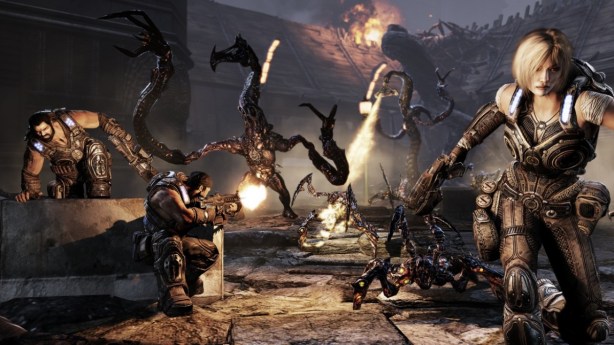
But that’s never been the case with consoles. Instead, gamers have been taught the opposite. If you buy a console at launch, and wait 6-7 years, the games at the end of its lifecycle will have evolved into something even more beautiful. Compare Xbox 360 launch era games like Perfect Dark Zero to end-of-life titles like Gears of War 3. They’re not even in the same universe, yet they were released on the same hardware, and consumers never had to upgrade anything at all. This is a major appeal of console gaming.
And yet, there’s really nothing that consumers can do about this if Sony and Microsoft decide to go down this path.
The problem with the current video game landscape is that if Microsoft and Sony both agree on something, in this case releasing “upgraded” versions of their consoles without jumping to a full generation, that’s pretty much the way it’s going to be. Why? Because in this market, consumers simply don’t have another choice.
You can say they do, but you’re wrong. For all this talk of Apple TV and other smart devices posing some threat to consoles, that has not come to pass. VR may take off, but in terms of replacing traditional console gaming? It’s still a solid decade or more away from approaching that sort of mass adoption. PC gaming is and has always been an alternative, but the PC model being brought to consoles is what these players are rejecting in the first place. And while Nintendo may end up being the only company releasing a full-on new-gen console in the next few years, it’s hard to believe that the NX is going to have rebuilt every single third party relationship that players take for granted on Sony and Microsoft systems.
So, if there’s a PS4.5 and an Xbox 1.5, and players want to continue on with the same kind of console experience they’ve enjoyed for twenty or thirty years, they will have to adapt. Players aren’t just going “quit gaming” and though they may choose to stick with their original PS4s or Xbox Ones for a while out of spite or financial necessity, if five years from now the incremental upgrade model is still in place, they’re going to cave eventually. It will simply be the new normal. It may not be “right” in the eyes of many gamers, but it will be reality, like it or not.
Sony and Microsoft are in a position to make this gospel, if they want, because there is no direct alternative to either console at this point. The Prisoner’s Dilemma play would be say, Sony trying this upgrade system out, and Microsoft acting like they were going to do the same, only backing out at the last minute, sinking more power into their unit and releasing a full-on Xbox Two in two years or so. Or Sony could pull a reversal and do the same. But the risk there is that if this mid-gen upgrade does work, do you really want to be the console that is demonstrably underpowered for a few years?
This is turning into a very weird console generation, but the fact is that if this is the direction that both Microsoft and Sony want to go, there’s really going to be nothing stopping them. Streaming boxes, Steam machines, VR, the NX and PC are all “alternate” forms of gaming, but right now, for the most traditional console experience that players have grown up with, there still isn’t anything else besides Xbox and PlayStation. If they change, their consumers will have to change as well, either by buying these new systems, or altering their gaming habits to fit one of the alternatives.
There are no doubt people that know all about whatever the plans are for a new Xbox, a PS4 4k, or the Nintendo NX. Some are at the companies responsible, of course. Others are developers, who receive dev kits in advance to make launch titles for these systems. Others are most definitely at Gamestop, which stands to profit immensely every time there’s a new round of hardware. It’s from them we heard just now, more specifically, from Gamestop COO Tony Bartel speaking at an investor/analyst day. He knows more than he’s saying, he says, but strongly hinted that new hardware was coming quite soon.
“Although we have not modeled extensive growth for new innovation in this presentation, we are very pleased to see the introduction of technology like virtual reality and rumored new console launches, some of which seem imminent,” he said when questioned about the rumors, according to Gamespot.
It’s really not hard to read into that statement. Investors and analysts would be very curious about any and all new hardware coming to Gamestop shelves, and that line is one giant wink saying that it’s happening soon, and my guess is most people in the audience would read that as a direct reference to the upcoming holiday season. That jives with some of the chatter we’ve heard before, and that’s what I’m hearing from Bartel.
He’s not specific about which one is coming out of course, but I think that both the NX and a PS4 4K are solid bets. The NX has long been rumored to be launching in holiday 2016, and there have been reports about the next iteration of PS4 as well. That would time the launch to coincide with the release of Playstation VR, and I tend to think that those two developments are inextricably linked. Microsoft remains a big question mark, but my guess is that we’re going to know more about that very soon: likely at the E3 press conference.
All of which is information that Gamestop would clearly want their investors to know about in as much detail as possible without violating NDA agreements. So my guess is that’s why we’re hearing this quite so cryptically. As far as cryptic statements go, however, this one is pretty reliable.
Getting my PlayStation account hacked was terrible, but Sony made it a whole lot worse.
Instead of helping me, Sony decided that I had to pay for the games that my hacker purchased, or face a permanent ban on my account.
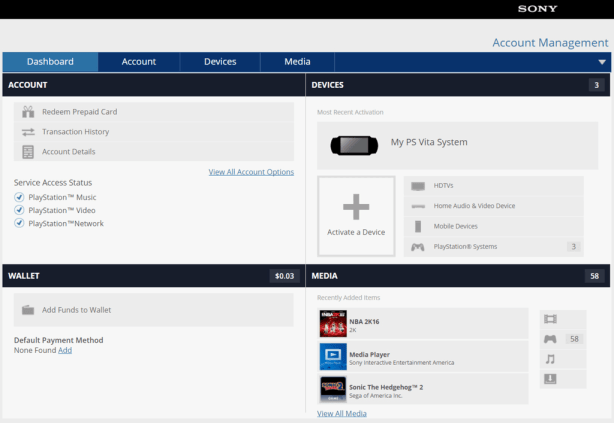
It all started Saturday afternoon. I was scrolling through my inbox and noticed some odd emails from PlayStation, all of them at 3:01 AM. There were three $25 payments to my PlayStation wallet, and a purchase for NBA 2K16 and some credits. After checking to make sure my roommate hadn’t drunkenly purchased the game, thinking he’d pay me back later, I noticed even more concerning emails.
The first asked me to confirm a change to my PlayStation account’s email. The email wasn’t opened, nor had any odd devices accessed my email account, but another message less than a minute later confirmed the email change. Yep. While I was sleeping, someone locked me out of my own account.
But PlayStation requires you to confirm an email change by clicking a link in an email sent to the old account first, right? Wrong.
As it turns out, hackers have an easy way around this problem. Payment info, or at least a portion of it, is visible in the web interface for a PlayStation account. Once an attacker has your password, they can chat with Sony tech support, explain that they don’t have access to that email anymore, and use the visible info in the account to verify their identity, changing the email on the account to prevent recovery by its rightful owner — in this case, me.
In the meantime, they added a device to my account, a PS Vita. Unlike a PS3 or PS4, a PS Vita can’t be removed from the account by Web, it can only be deactivated from the device itself.
Fortunately, social hacking your way through tech support tends to be a double-edged sword, and I knew I would be able to wrestle my account back by providing the right info. Both consoles that regularly access the account are in my home, so that’s a form of proof, and because Sony doesn’t let users change their user names, no email changes could alter my gamertag.
Following the paper trail
This all happened on a Sunday, so Sony’s phone support wasn’t open, and I was forced to use the text chat. This actually ended up working to my benefit, as we’ll see shortly, but it also raises some problems of its own.
I wasn’t at home when I noticed the hacker’s activities, but I needed to stop the intruder from making any more purchases. I called PayPal support, and an agent there was quick to de-authorize my PlayStation account from making any more pre-approved purchases. Then, I filed a dispute on all three $25 charges.
Once I got home, I sat down at a computer and fired up Sony’s chat support. At first, the agent was helpful. The intrusion and email changing were a separate issue from the disputed purchases, so we would deal with them one at a time.
The agent rolled back the account’s email to the previous address (mine), and forced a password reset when I confirmed the change. Then I was a little bewildered as the agent asked: “Now what do you want to do about the purchases?”
“I don’t want NBA 2K16, and I don’t want to add $75 to my PlayStation account,” I said. It sounded simple enough, or so I thought.
The agent passed the buck. They explained that in order to issue a refund, I needed to cancel the dispute with PayPal. Essentially, PayPal had taken the money back from Sony, and I needed to have PayPal release it so Sony could hand it back to me.
So I contacted PayPal. This turned out to be a process in and of itself. Because the dispute was security related, I had to call PayPal support, verify my identity, and then say in no uncertain terms that I was closing the case permanently, and get a guarantee that PayPal wouldn’t reopen it.
I informed the Sony tech support agent once the dispute was canceled. I didn’t get a human response. Instead, I got a copied and pasted statement explaining that Sony doesn’t offer refunds, and the funds would only be returned to my wallet. I asked what would happen if I issued a chargeback at the debit card level, and the agent explained matter-of-factly that my account would be banned until I paid the $75 in fraudulent charges.
After six years as a paying PlayStation customer, my account was now being held hostage, not by a hacker, but by Sony. I had to cover the cost of the metaphorical broken window, or my account was going to be locked. Basically, I had to apologize and pay for a thief.
Why hasn’t Sony learned?
You would think Sony would know how to handle hacking, especially after its multiple massive breaches (this one and this one) in the last five years, but it hasn’t learned. The PlayStation network has been around since 2006, but there’s no two-factor authentication, and visible payment info on the web front-end. This leaves a wide enough security hole for an elephant to walk through. The customer service agent suggested that I only use prepaid cards, but that’s more of a workaround than a real solution.
Sony has a history of poor responses to hacking. Back in 2011 when PlayStation Network went down for almost a month, the gaming brand offered affected players one month of PlayStation Plus, which meant you got a few games that were disabled after the month ended if you didn’t become a paying subscriber.
You could argue that the way it treated me is to avoid refunding purchases that people made accidentally (or drunkenly), but even if a few people take advantage of the system for an ill-gotten refund, at least they’ll stick with PlayStation.
As for me, I now have to decide whether I buy FIFA 16 on PS4 or PC. Right now, I’m not a big fan of Sony’s attitude or policies. It’s bad enough to be hacked, but it’s even worse to have to pay for the digital damage.







 Gamer's Outpost Press (Archived)