Archive for the ‘Opinion Piece’ Category

2440f610-2a43-11e4-aabf-f748131afaf3_consoles

by John Archer

Nothing makes me laugh more than the ongoing obsession with the Xbox One’s difficulties rendering games at a full 1080p resolution.

Gaming forums are full of scathing comments from PS4 fan boys about how the Xbox One delivering a number of its games with resolutions a few lines less than 1080 proves Microsoft MSFT -0.65%’s console is rubbish. Even the editorial sections of most gaming sites have fallen prey to navel gazing and technical over-analysis on the same subject.

What every single person who gets caught up in these hilariously petty arguments fails to recognise is that actually the PS4 and Xbox One are both past their sell by dates. In fact, they’ve been living on borrowed time from the very day they launched. Why? Because neither of them truly support 4K.

This argument might initially seem a stretch to ‘normal’ people not involved day to day in the inner workings of the AV industry. But I’m confident that within as little as 12 months most of you will agree that their inability to deliver games at a ‘4K’ or Ultra High Definition (UHD) resolution of 3840×2160 pixels – or something close to it, at least – will make both the supposedly ‘next generation’ consoles feel like yesterday’s news.

sonyps4console

The main reason I say this is the exceptional speed with which 4K screens are being produced and adopted. On the production side, at the time of writing Amazon already lists nearly 60 4K/UHD TVs starting from as little as $339, and I’ve spoken to a number of people working in TV hardware production who foresee a situation where possibly by the end of 2015 and almost certainly by the end of 2016 it will difficult to buy a decent big-screen TV that doesn’t carry a native 4K resolution.

It’s not just the manufacturers saying this, either. For instance, AV industry legend Joe Kane, of Joe Kane Productions, stated during a presentation at the recent IFA technology show in Berlin that ‘a year or two from now you won’t be able to buy a 1080p TV.’

Where sales are concerned, 4K TVs have already achieved a 6% global sales penetration despite currently costing considerably more than 1080p TVs. And with 4K prices plummeting daily and 4K panels rapidly supplanting 1080p ones on shop shelves, this 4K penetration figure is going to explode in the next 12-24 months. Far faster, I suggest, than the (in any case impressive) rates of 4K market penetration predicted recently by the likes of the Digitimes Research Group.

What we’re very soon going to have, then, is a situation where console gamers – many of whom tend to be early adopters of new TV technologies, don’t forget – are having to play 1080p (at best) games on 4K screens. This will quickly start to create a sense of frustration for players, especially given the obvious obsession in a large section of the gaming fraternity with resolution and graphical capabilities.

This frustrating feeling that their games console – a device which has historically led technology rather than falling behind it – is already outmoded will be exacerbated by the appearance of other native 4K sources in the next 12-24 months. For while as I discussed in a previous feature there are currently technical hurdles to delivering 4K in to the home (at least at the sort of astounding quality it’s capable of), by Christmas 2015 it now looks like there will at the very least be 4K streaming services from Netflix NFLX -1.01%, Amazon, and Nanotech, as well as 4K Blu-ray discs (as officially revealed last week by the Blu-ray Disc Association). There may even be a 4K broadcast or two.
4kultrahdlogos

In other words, 4K TV owners will soon have access to enough 4K sources to constantly highlight the lack of such quality coming from their games console.

There’s also a potential practical as well as ‘aesthetic’ problem with only gaming at 1080p on a 4K TV: input lag. I’ve covered this before in a separate article so I won’t go into detail again here. But in simple terms I’ve found that some 4K TVs take longer to render HD pictures received from gaming consoles than native 1080p TVs do, presumably because of the processing required to convert 1080p feeds to the 4K TV’s much higher resolution. Of course, wherever you’ve got any delay in pictures appearing on a TV screen, you’ve got a greater chance of, say, getting beaten to a pulp in Destiny. Ouch.

Even the makers of the Xbox One and PS4 acknowledge that 4K is a big deal. Ahead of each console’s launch last year speakers for both Microsoft and Sony were falling over themselves to try and suggest that their consoles would handle some sorts of 4K content – be it their interfaces, their streaming capabilities or even, particularly optimistically, their Blu-ray drives. But it’s all gone very quiet on this since, and it seems to me there are huge hurdles to the consoles delivering on all but the smallest of their 4K promises.

As for 4K gaming, as you might expect given the theme of this article, it’s a bust. Sony has flat-out said as much, and while Microsoft has been cagier about it – in fact, a handily unnamed Microsoft ‘representative’ even told Polygon last year that Xbox One games WOULD support native 4K – the fact that the console is struggling to run games in 1080p makes the notion of native 4K gaming on it seem laughable, frankly.

It’s argued (though I’ll believe it when I see it) that both consoles may be able to output games upsaled from HD to 4K. But even if this proves possible it’s no replacement for a true source-to-screen 4K experience.
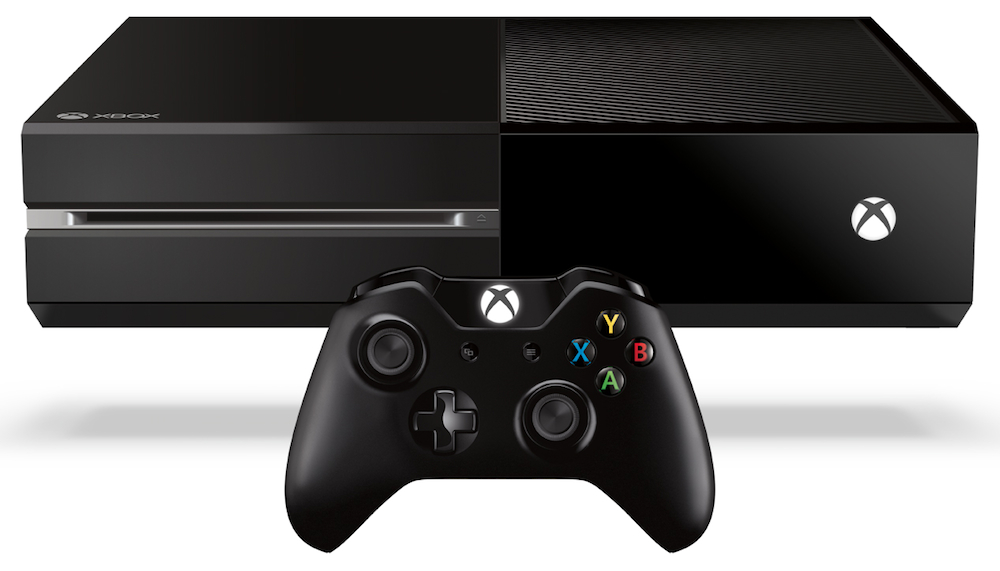
xboxoneconsole

The bottom line is that Microsoft and Sony got so caught up in the race to be first to market with a ‘next generation’ console that they failed to actually deliver a truly next generation console. Seriously, in all honesty how many of you have sat there jaw agape with amazement at what a huge step forward your PS4 or Xbox One is over its predecessor? Not many I’ll warrant. And before anyone tries to suggest that gaming is what matters, not graphics, I refer you to any gaming forum you care to mention to find out the grim pixel-based truth of the matter.

Even if Microsoft and Sony had waited just one more year before bringing their new consoles to market there’d have been at least half a chance we’d have ended up with genuine next-generation products that might have enjoyed lifespans at least in line with those of the Xbox 360 and PS3.

As it is we’re stuck with consoles that will both feel seriously underpowered by many of their users by as early as the end of next year, creating a level of frustration that both Microsoft and Sony will likely feel motivated to address with new products sooner rather than later.

At which point it’s probably best that I sign off, as I’ve suddenly started to feel a very unhelpful urge to mention that Japanese broadcaster NHK actually filmed some of the recent World Cup in Brazil in 8K…
http://www.gamersoutpost.net/

fireteam_desktop_1

by Paul Tassi

The past few days have been a blur of gunfire, alien screams and endless, nonsense sci-fi jargon, but at last I’ve reached the soft level cap in Destiny at 20. It’s where all the best gear and hardest missions are locked away, and after you hit the marker, a different phase of the game begins.

I know a lot of people are wondering exactly what endgame content in Destiny looks like, and since I probably could not have physically played this game more the past three days, I think I can comment reasonably well on what life is like post-story mode and once you hit that level wall, based on my experience so far.

There’s some confusion about whether or not 20 is the cap, and what you’re supposed to do to further your level after that, so let me clear up a few things.

You continue earning XP once you hit twenty, only instead of hitting a new level that way, you earn “Motes of Light,” a currency that can be traded in for Legendary class gear (cosmetic only, from what I can tell). Additionally, by the time you hit 20 you will not be anywhere close to maxing out your skills with either of your class specialties. XP continues to build those up as well, and it seems as if unlocks will continue well into the future, even if your rank doesn’t increase at the same rate. Alternating between my two Hunter specialties, I think I have maybe half to two-thirds of the different perks and upgrades unlocked. And now opening up a new one takes forever.

light3

So, how do you keep leveling? Like absolutely everything in this game, it has to do with “light.” In this case, Light is a new stat that you’ll find attached to your four swappable pieces of armor. The more light an item has, the closer it will push you to level 21, 22 and so on. I think you need 20 Light to hit 21, and rare gear starts off only giving you three or four each. Legendary gear available for sale will be giving you 18 or 19 Light each, so it clearly ramps up over time.

How do you earn this new gear? There seem to be two major ways forward. Certain legendary items can only be bought using Crucible marks, earned from playing competitive multiplayer. Others can only be bought with Vanguard marks, earned from playing Strike playlists. So whichever style of play suits you, aka co-op or competitive, you can start earning better gear that way.

But wait, things are even more complicated than they appear. You can also start earning marks and reputation points for the different factions inside the Tower, each with their own currency and types of gear. You have to buy a piece of their armor and equip it, then you start earning for them instead of the default Vanguard. I’m guessing this will fly over the heads of most players for quite a while, and I only just figured it out as I was writing this piece. Also, earned marks are capped at 100 a week, so play all the Crucible matches and Strikes you want, but it will take you at least two weeks to buy your first legendary weapon.

Additionally, you can find new gear randomly without earning marks or reputation at all just by replaying story missions on harder difficulties, or doing Patrol mode. These aren’t exactly reliable in terms of rewards, but I have gotten some good items from both from time to time (though I have never had a legendary drop in the wild yet). But more on Patrol mode in particular later.

After hitting 20, players will find themselves caught in a sort of purgatory when it comes to the endgame. The much talked about friends-only raids are still nowhere to be found, presumably locked away until you reach a much higher Light level. But gaining Light is often purely based on luck. I’ve done more than a few Strikes where my reward hasn’t gotten me a single new point of Light on my armor, so you’re at the mercy of drops and end-of-mission rewards.

light2

The problem with this “middle end game” is that to hit 20 in the first place, you pretty much have done everything already. Each story mission, each Strike, each Patrol mode and maybe a few multiplayer games. And once you’re at the cap, you’re simply repeating all of this content, except on a more challenging setting.

Strike playlists are a good length, usually about 25-40 minutes depending on the IQ of my fireteam. But the problem is that there are only six Strikes in the game right now, and that can lead to annoying scenarios like when I was forced to play the same Strike three times in a row. Bad luck maybe, but it’s clear all of these will get a little repetitive quickly anyway. Almost every Strike is structured the same, beginning with A) random assorted enemies  then B) a respawn free zone with yellow health bar enemies and finally C) a boss fight that has you hiding behind pillars from massive weapon blasts while trying to whittle down their comically enormous health bar.

(Update: Hold on a second. Unless I have the worst luck ever, it seems Strike matchmaking is segregated by level. As in, each tier is not picking from all six Strikes. Rather, level 18 is either the moon or Earth, level 20 is only the two Venus missions while 22 is Mars. That means if you’re choosing the proper Strike playlist for your level, you’re only coinflipping between two different Strikes, which explains why I’ve played the Venus “kill the Archon before it gets its soul” one about seven times now. If you do the level 18 one, you get garbage gear, if you do 22 before you’re ready, you will get demolished. I have absolutely no idea why each of these playlists doesn’t choose randomly between all six strikes and just adjust the level accordingly. It’s like the game is going out of its way to be repetitive.)

In that sense it’s almost more appealing to re-do one of the game’s 25-odd story missions, though those don’t come with the promise of a rare item at the end, nor Vanguard marks from what I can tell. You may have a daily mission quest that gives you some of that currency, but after that, there’s little reason to do story mode.

But what I’m most disappointed about is how much Patrol mode is lacking. It’s the fastest way to level up your Vanguard rank, but it’s painfully dull and frustrating at present.

Some missions take two seconds (kill 10 enemies) and some will have you trekking across the entire length of the map for an “exploration” or “scan” mission, and then strand you in the middle of nowhere forcing you to hike miles to an area where you can get more missions. Often times it’s easier to simply return to orbit and go back down to the planet again than make the arduous journey. Also, in 20+ hours of gameplay I’ve seen exactly one world event, and I had to complete it by myself. So all there really is to do is the same four or five sub-missions on repeat.

That’s not strictly true, as there’s still good old actual “exploration” to be done as you try to crawl down every crevice in a map. But to me, this is the most frustrating aspect of Patrol mode. You know those areas where you ran across “??” high level enemies before? Well, you can go back to them now, kill everyone, and be rewarded with….nothing.

This is so odd I almost think it’s a bug. In the Cosmodrome alone, I’ve found three areas with high level enemies, and one named boss that took me probably ten minutes to kill even though he was two levels lower than me, and there was simply no reward for doing so. In another instance, I stumbled upon a tunnel formerly filled with ?? enemies, and expected some sort of elaborate secret dungeon. Instead I killed six enemies and found it simply led to another part of the map I’d already been. You get your 25 glimmer for killing a yellow health bar enemy, but I haven’t had one drop an item yet, and I’ve found no chests lurking nearby. There’s just nothing at all, and no reason to try and find these hidden alcoves of high level enemies from what I can tell. This seems like either an outright error, or an enormous missed opportunity. Or maybe I have to kill these same clusters on repeat until they finally give something up. But right now, Patrol feels like a never-ending series of dead-ends.

light1

The problem with Destiny’s endgame content right now is that you’ve experienced all of it by the time you finish the game. As I said, I was hoping there were new, dangerous areas of each worldmap to explore, or maybe harder high level Strikes, but it’s usually the game just making old content harder.

I suppose this is why raids are looming once everyone slowly inches up their Light meter to reach higher levels. I don’t know what those will be like, but I have to imagine they’ll use the same maps and feature the same enemies, but will just be harder and longer. And even though fans are banding together to try and form raiding parties via third party websites (due to an utter lack of in-game communication), I know I’m not going to have the effort to consistently play friends-only raids. I may do one if I can coordinate with five friends or random internet strangers, but is that really going to be worth it? And if so, is that even feasible to do on a consistent basis? I can pick up a Strike any play it whenever, but a 6-man friends-only raid is going to require more coordination than I have patience.

I think Destiny’s endgame has potential, but I’m a little worried about it from what I’ve seen so far. The Strike playlist is fun, there just needs to be more of them (DLC incoming). Patrol mode needs a complete overhaul and areas that spawn dangerous enemies and actually give you a reward for killing them. The Crucible is the Crucible, and if competitive multiplayer is your thing, that’s probably the easiest overall way to consistently get new stuff.

It feels like the level 20 cap is going to confuse a lot people, as it’s not very clearly explained and I still don’t understand many aspects of it. I have three types of rare currency in my stash I have no idea what to do with, and I’m not sure how I feel about the idea of saving up marks (two more forms of currency) for Legendary gear to be bought at the Tower store. Bungie said item trading didn’t exist in the game because they wanted to ensure that you had “an epic story for each piece of gear.” I don’t really think “I played 50 Strikes to earn enough marks to buy these boots” is a terribly epic story.

Again, these are all technically just first impressions of the endgame, and I realize there’s still an end-ier game on the horizon in the form of raids. But in its current form, I think some may grow weary of the grind and cease playing Destiny earlier than Bungie and Activision want them to.

If you’ve hit 20, what do you make of the initial endgame so far? Leave your answer below.

http://www.gamersoutpost.net/

destiny_desktop

by Edward Smith

Destiny

I love Destiny. It’s somehow managed to bypass the cynical, suspicious-of-AAA, fed up with standard game design part of my brain and plug into a tiny, flickering synapse somewhere that still gets off on finding loot and collecting points. I don’t know how it’s happened – maybe it’s because, on PS4, Destiny looks incredible – but this game has got to me. I can see all of it’s little ploys in action, all that grubby meat and potatoes design, just trying to drag me in for one more hour, but I don’t care. It’s beaten me. I just want to play it.

To clarify, basically everything about Destiny goes against my personal taste. It’s a hulking great Videogame with a capital V, a corporate monolith, seemingly built with the singular purpose of getting as many people to play it for as long as possible, i.e. make a lot of money. The plot is total guff, some sci-fi fizz about prophecies and lasers, and the mechanics are straight as a die: you kill creatures, collect points, use them to upgrade your guns then kill more creatures. If I was writing a quote for some kind of anti-Destiny ad campaign I’d say it was “like Borderlands but without the jokes.” On paper, this just isn’t for me.

eeee

This is the product of people with genuine fire in their bellies

But here I am, nevertheless infatuated. When I tried the beta, I described it like a work of architecture. I said it wasn’t particularly artful, but it was clearly the product of talented, experienced game designers. I called it trade craft. I said that as by the numbers AAA launches go, Destiny was the most refined.

Now, having played the full game (or at least, 30 hours of the full game) that original assessment seems pretty reductive. Destiny is completely down the line, but that doesn’t mean it has no heart. I get the impression that the developers truly believe what they’re making is important, that they aren’t just dried up cynics, conniving new ways to squeeze a few bucks into their coffers. It’s a horrible catch-all term, but passion has definitely gone into this game. This is the product not just of game designers who are at the top of their field skills wise, but of people with genuine fire in their bellies.

It’s in everything. With a game so smoothly and flawlessly designed as Destiny, it’s easy to feel cold towards it- every function is perfectly honed, every area has been tested and re-tested until it flows perfectly. It’s easy to look at Destiny like it’s a machine, but you have to remember that getting all of these things to function so immaculately takes time, and so, so much effort. The work that has gone into Destiny can’t just have been inspired by capitalism. People have clocked in, day in, day out, for around five years in order to get this game to sing the way it does, and if that’s not passion, I don’t know what is.

Destiny-8-978x704

Destiny is more than just mass-market appeal.

And then you have these genuinely beautiful little moments. Occasionally you’ll glance something on the horizon, like a faraway star system or the floating debris of a spaceship, and it looks amazing. Other times, the social element of the game will play out just perfectly. More than once I’ve been stranded in a gunfight, down to my last few bullets and almost dead, and suddenly another player has jumped into the arena and cleaned the bad guys out, before turning to me and giving a quick wave, as if to say “no problem.” Destiny is more than just mass-market appeal. At the best of times, it can be as evocative or personal as a game from the independent scene.

But there’s always this thick, AAA carapace sitting over the top and despite the obvious fervour on Bungie’s part, I can’t enjoy Destiny without feeling acutely self-aware. I do get swept up by the lustre on occasion, but for the most part, visually, Destiny is bland. It’s that kind of Dead Space, hack-and-slash school of enemy design where everything is a rough collection of shapes and colours, where enemies flow into one another and are really only distinguishable by how many hit points it takes to kill them. Likewise, the in-game technology, especially your wee robotic pal, Ghost, is sleek and magical. Characters just press a button and everything happens for them automatically. There’s no sense of grime or attrition. The world of Destiny, though it’s supposed to be post-apocalyptic, always runs like a well-oiled engine.

Destiny-Game-Classes

And that leaves it feeling lifeless. When I think of a really good sci-fi aesthetic, I think of Alien or Blade Runner, where everything is wet, rusted and run by computers that have actual keyboards. I understand that loosely-defined, spectral technology is freeing for gameplay designers, since it gives them a context for their wilder ideas, but it really stifles your engagement. In Destiny, I never feel like I’m fighting for my life. The support characters keep reiterating how dire the situation is, but I have so many tools and guns that I can’t imagine ever losing. When one of the early level quests is to kill 100 enemies in a row without dying, it’s hard to lose yourself in the game’s apocalyptic drama.

Destiny has one simple, unwavering solution: shoot it

The structure doesn’t help, either. Invariably, your mission is to enter some zone occupied by enemies, kill them all and collect a trinket. It’s not necessarily boring – Destiny is compulsive, in the same way you can’t stop yourself from eating an entire bag of nuts – but again, it nullifies your senses. Every problem in Destiny comes with a simple, unwavering solution: shoot it. If the game has a fatal flaw, it’s that for all the monologues and orchestral music, there’s no implicit drama. You’re never thrown a curve ball. Your guns are always the answer. Any tension is artificial, since mechanically, Destiny runs like a simple input-to-output computer.

That doesn’t diminish how much of an achievement this game is. As I’ve written already, this is real craftmanship and despite my personal leanings and better judgement, I’ve been sucked into Destiny wholeheartedly. Verily, I want to play it some more. I want to level-up my character, beat all the quests and find all the MacGuffins. I’m just not sure it’s for the right reasons. I don’t feel invested in the world or the emotional experience of Destiny so much as I feel enslaved to that part of my mind that enjoys rewards and bonuses.

By that measure, I might say Destiny has a dim-view of its players. I might say it’s cynical and deliberate, in the same way as micro-transactional, cash-spinning mobile games. But still, there’s that lustre, that perfection, that craftwork. I can’t write Destiny off as a mere money-maker because, by God, some work has gone into this game.

6f92b813a176338f8416c75f2a044565

Scores:

Graphics: 8/10 – Superb. Even if the art design is lacking, the fact a world this big can look this good is incredible.
Gameplay: 7/10 – Slick, functional and perfectly refined, but the mission structure repeats itself and always runs contradictory to the game’s drama.
Writing: 5/10 – Again, it’s perfectly functional, but drab and convoluted. On top of that, it doesn’t fit, at all, with the game’s mechanics.
Sound: 8/10 – There are a few distinct tracks among the score and Peter Dinklage does some great voice work as Ghost. Guns are suitably loud, also.
Replay value: 10/10 – Destiny is massive. You’ll be playing this for years.

Overall: 8/10 – Ambitious, polished and clearly pored over by hundreds of people, Destiny is an incredible creative undertaking. It doesn’t all click, but it’s a huge achievement.

http://www.gamersoutpost.net/

anita

by Todd Martens

This column is usually dedicated to discussing video games, but in the past week and a half, you’d be forgiven for not having the stomach to play one. I haven’t.

Infighting, finger-pointing and the airing of dirty laundry have dominated the late summer in video games. For those who have played an online multiplayer game, this may sound like any other day in video games. But it’s not. Now the attacks are so threatening in nature that even the FBI has taken notice.

A long-simmering schism among select, very vocal members of the gaming community and others in the industry has come to the fore over the last two weeks, resulting in unprecedented levels of death threats and harassment directed at game designers and writers — many of them women.

This is not, to be clear, some trash-talking in a “Call of Duty” match. The hateful social media posts, a number of them threatening rape and crippling injury, have been so violent that some intended targets have gone into hiding.

The fury started in mid-August. The exact incident, in which the spurned ex of a female independent game designer reportedly published embarrassing personal details of their relationship and accused her of infidelity, is now beside the point. That moment has become an excuse, an opportunity to rail against designers and writers who are attempting to intellectualize the medium — “social justice warriors,” as they’ve been labeled by their online assailants.

These “social justice warriors” are seen as capable of destroying the very essence of what some players love about video games: violence, fantasy and scantily clad women.

Far from making a point, the ugly reaction has instead exposed the rage and rampant misogyny that lies beneath the surface of an industry that’s still struggling to mature.

Much of the ire has been aimed at Anita Sarkeesian, a respected pop-culture critic whose series of videos under the Feminist Frequency banner analyzes sexism in mainstream video games. On Aug. 26, she posted to Twitter that “some very scary threats have just been made against me and my family. Contacting authorities now.”

Sarkeesian, whose biting, unflinching observations have long made her a punching bag for those who feel she’s attacking the games they love, has been candid on social media in exposing the recent barrage of harassment. “I hope you die” is one of the few tweets slung her way this week that’s actually printable.

Her most recent supposed offense is posting a video that analyzes how top-shelf video games often resort to using women as background decorations, such as a cringe-inducing strip-club setting of the gunfight in “Mafia II: Joe’s Adventures,” in which bullets soar over the body of a dead, barely clothed exotic dancer.

Attempts to reach Sarkeesian this week have thus far been unsuccessful, as have attempts to reach a number of the other women affected. But anonymous message board postings calling for a game designer who’s been outspoken on social issues to receive a “good solid injury to the knees” is not uncommon.

On Thursday, video game site Polygon broke the news that the FBI this summer reached out to a prominent game organization to discuss alleged harassment and cybercrimes in the industry.

“We want to keep the community safe, and we don’t want people to be harassed by anybody,” said FBI spokeswoman Emily Yeh, who confirmed that the organization met with the International Game Developers Assn.

The online vitriol has become so disturbing that an appeal for decency has been endorsed by those who work for game powerhouses such as Ubisoft, Riot Games, Microsoft, Telltale Games, Sony and more. This month more than 2,400 industry professionals signed an open letter seeking an end to offensive behavior in the game industry.

“We believe that everyone, no matter what gender, sexual orientation, ethnicity, religion or disability, has the right to play games, criticize games and make games without getting harassed or threatened. It is the diversity of our community that allows games to flourish,” read an online petition started by indie game developer Andreas Zecher.

Still, at least one zealous group has formed a nascent Twitter movement to combat what is seen as the increased cultural criticism being applied to video games. It should be noted that the word “movement” is used loosely, as it’s not quite clear what those tweeting with the Gamergate hashtag are after, other than an end to all serious critiques of video games.

“Can we please just keep the agendas out of video games? Entertainment is meant to be the furthest possible thing from politics,” states one Gamergate supporter. And another: “It’d be nice if the gaming industry/gaming journalism would just … focus on games over politics.”

Such views seem driven in part by a few recent developments. It’s only in the last few years that game journalism has more regularly delved into the sort of cultural criticism common to other forms of mass media. Hobbyist media was once focused largely on product or game mechanics, but as the game audience has broadened and more have recognized the medium as a legitimate cultural force, more have also started to question if games are as smart as they should be.

And then there’s the rise in independent gaming, which has given us games that tackle depression, poverty, slavery, classism, LGBT concerns and other nuanced social issues. The fear, apparently, is that their success — and their support by those who offer cultural commentary on the game sector — will cause those who make big-budget games to conduct a little soul-searching, and in turn make their games more inclusive (or politically correct, to use a more charged term).

To most of us, this sounds swell. The indie game sector has proved what those who have loved games have known all along: namely, that the digital world is good for much more than shooting things.

But the recent brouhaha makes one wish that those old gamer clichés still held true; that the most serious of players were loners — dudes who sat alone in a room, illuminated only by a monitor. The dark at least kept the community’s most unsavory aspects hidden from view.

http://www.gamersoutpost.net/

Screen_Shot_2014-09-03_at_2_27_30_PM_0_0_cinema_1280_0

by Ben Kuchera

There has been research that measured the effects of buying things versus the effects of buying experiences, and the findings were that purchased experiences make us happier. So if you can buy a painting on one hand, or a trip to space on the other, the trip to space is going to do more for your happiness than the object.

Think of it as buying memories, a way to spend money on interesting stories and things that enrich your life. You may be more happy budgeting for a trip to your favorite vacation spot than buying new furniture for your house.

A recent study in the Journal of Consumer Psychology has looked at these findings from another angle, and presents evidence that items bought that provide experiences also provide high levels of satisfaction, and that includes things like video games. These experiential products offer much more satisfaction than other objects.

Games shouldn’t be seen as objects

The research shows that you can’t just look at objects and experiences as two distinct purchases. There are things to buy, and that includes video games, sporting equipment, or musical instruments, that are physical objects that increase our happiness in the same way as a life experience, because they themselves have to be experienced.

“Experiential products, unlike material items, enrich and create their own life experiences (Van Boven & Gilovich, 2003); for example, consuming video games facilitates multisensory, fantasy-like, and interactive experiences,” the study states.

“Moreover, the use of goods that render a service tend to be consumed more as life experiences and less as material items (Grönroos, 2008). As experiential products increase in their intangibility, consumers become more likely to reconstruct their evaluations of these purchases as life experiences (Braun, 1999), resulting in similar and rosier recollections (Van Boven & Gilovich, 2003).”

So when you buy a copy of inFamous: Second Son you’re not buying a download or a disc at a store, you’re buying the experience of playing it, the enjoyment you get out of the story and the mastery it takes to finish the game. Your brain doesn’t perceive it as a single purchase, it sees the purchase as an experience, and you enjoy the game as an adventure.

There is also the fact that these experiences are often shared.

“Moreover, video games and sporting goods are often purchased with the intention to be consumed with others. As described by Caprariello and Reis (2013), these social material purchases provide the same amount of well-being as do social life experiences because they both likely meet the need for relatedness,” the study continues later.

This also gives us some clues about why video games don’t just make us happier, they can provide people with a sense of identity.

“Darwin Guevarra, a doctoral candidate in the U-M Department of Psychology and the study’s lead author, said experiential products offer more well-being than material items because they satisfy a person’s autonomy (behaviors to express one’s identity), competence (mastering a skill or ability) and relatedness (having a sense of belonging with others),” Jared Wadley wrote in an article about the study in Michigan News.

When you buy a game, and become skilled at playing it, you’re fulfilling a number of emotional needs.

This isn’t just games, these findings hold true for any “experiential products.” So a guitar, if you learn to play or simply practice often, will be a very rewarding purchase. So will a hockey stick, as long as you learn to use it and play with others. Video games offer the same sort of rewards as musical instruments or sporting equipment, which offer a good return on happiness for your investment.

http://www.gamersoutpost.net/

Destiny-8-978x704

by Tatiana Morris

Bungie, the same developers that brought us Halo have been working on their next space-epic first-person-shooter, Destiny, for quite a while. In fact, the game is done and set to release in a week from today. Recently though, it came to light that review copies for Destiny won’t be arriving at several notable gaming outlets until Monday, September 8, a day before the game’s launch. Reviews tend to spring up a few days prior to a game’s release, but this will likely not be the case for Destiny. As an MMO-like experience, it’s probable reviewers will need considerable amounts of hands-on with the game before formulating a score.

Before you run to cancel your pre-order, consider SimCity’s launch. The game’s reception was great before it released. The online play was smooth; the game was garnered high scores. But that all changed upon release. One video game news outlet even revised their SimCity review twice, taking the score from 9.4 to 8 to 4. Why? The game’s launch didn’t go as intended — servers crashed rendering the game unplayable. It could be argued that by waiting a day to avoid all of the launch madness, the game would have received a true score.

This is where we come full circle, back to Destiny. Bungie didn’t create a game with offline play as an option; it’s all online, as in always-online (even the character creation process is done online). By the time reviewers receive their copy of the game the world will be inhabited. It will be lived in and the servers will have been tested by the absurd amount of people who pre-ordered it. The game will be reviewed at face value.

eeee

In any case, a responsible video game site would delay their review of an always-online game or make it an on-going review. You simply can not experience an always-online game prior to its release. Imagine World of Warcraft’s Azeroth inhabited by just a few review sites. The world would be empty; queues for dungeons would take too damn long and a group quest wouldn’t be possible (unless you’re a Paladin, you can do anything if you’re a Paladin). While a game’s review doesn’t always look at the atmosphere that players create, it does give you some insight on the variety builds/talents/specs in the game (think Diablo 3’s classes; glass cannon vs damaging soaking).

It could very well be argued that Bungie and Activision are afraid of review scores (and people are arguing that), but seeing as how the game already had 4.6 million beta players experience a portion of it, that’s likely not the case. Bungie’s history should be assurance enough that any delays in reviews aren’t stemming from a lack of confidence in their product.

The only valid concern that I can see is the concern on the length of the game and the content itself. The beta gave us a good idea of how it will play, but not what the story or other planets are like.

TL;DR: The world is not going to burn down because Destiny’s review copies are going out later than you’d like.

We’ve reached out to Activision and Bungie regarding review copies and will let you know if we hear anything official.

http://www.gamersoutpost.net/

xbox-one-love-ps4

by Giuseppe Nelva

There are many elements to the life of a gamer that can prove annoying and inconvenient. But there is one that can easily be defined bloody hinderingly awkward, and it’s the following scenario:

Friend A: “Hey mate, I heard you bought Destiny. How is it?”

Friend B: “Yeah, I love it. My Guardian’s almost to the cap now.”

Friend A: “I have a Warlock. We should really get a fire team going and shred some Fallen.”

Friend B: “Sounds like a plan, what’s your Xbox Live Gamertag again?”

Friend A: “Oh crap…”

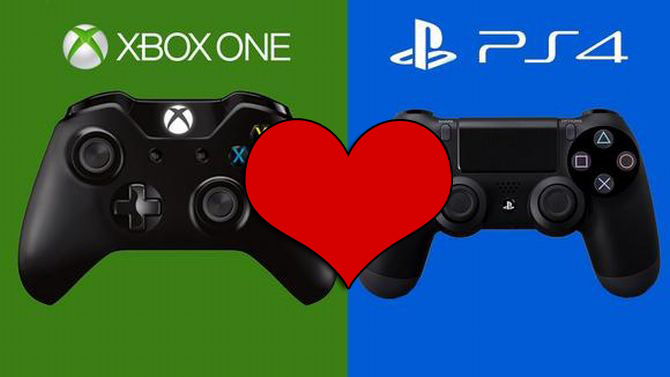
I’m quite sure a situation like that happened to almost everyone, just as much as the scenario in which, prior to purchasing a game, one has to pretty much choose between his friends on one or the other platform, knowing that he’ll be able to play with some while excluding the others.

With the fact that Xbox One and PS4 now share quite similar architecture, and that said architecture is close to a PC, it’s really time for that artificial, silly and anachronistic barrier to fall. It’s time for Xbox, PlayStation and PC gamers to be able to share the same gameplay on the same servers.

FFXIV

While it’s not possible to know all the deals and policies going on in the background, at the moment it seems that the biggest obstacle to this long overdue reunion lays within Xbox Live’s policies, which explicitly forbids any kind of direct cross-platform gameplay.

But it doesn’t really matter whose policies, caveats or nonsensical legalities are keeping gamers apart. Those have to go. It’s really that simple.

It’s not even unprecedented. Not only are there multiple games that currently permit PC and PS4 gamers to play and interact together in the same virtual spaces, but the old and venerable Final Fantasy XI puts PS2 and Xbox 360 players shoulder to shoulder against the monsters of Vana’diel.

While it has never been officially confirmed (at least to my knowledge), Final Fantasy XI‘s case seems to stand apart from the rest because the deal between Square Enix and Microsoft was sealed before the new Xbox Live policies were put in place; but that’s really besides the point. It’s definitely a demonstration that not only it can be done, but the sky didn’t fall on Microsoft’s collective head for allowing it.

It isn’t even just a matter of removing a barrier that has never made sense and makes even less sense in today’s globalized internet: by preventing cross-platform gameplay, Microsoft is missing on some games like Final Fantasy XIV: A Realm Reborn and War Thunder, which automatically became console exclusives for the PS4.

In today’s extremely competitive market in which the Xbox One is currently occupying a rather uncomfortable underdog position, Microsoft can hardly afford handing over exclusives to its rivals.

WarThunder

There’s also a more subtle, but still relevant matter at hand. In today’s fluid market, gamers move on quite readily to the next big title causing online communities to dwindle rapidly. This is especially true for MMORPGs that directly base their continued success and survival on retaining a numerous playerbase.

Grouping all major platforms together on the same servers would cement each game’s playerbase, removing a rather damaging fragmentation effect. This would keep even older games active longer and would reduce the need for server merging, saving both gamers and developers a rather large source of headaches.

Of course the ball isn’t just on Microsoft’s field — it takes two to tango. So, a full-scale opening of the borders for any developer that requires it (as I’m sure there would still be plenty developers opting to keep their players separate for one reason of another) would require a degree of coordination between Microsoft and Sony, something that can definitely be done.

Microsoft’s new head of the Xbox division — Phil Spencer — has proved to be quite the progressive thinker in the few months he has been in charge, and has even gone as far as timidly mentioning the possibility of letting Xbox One and PC gamers play together. While that would be highly welcomed, it would still fall short of what can and should be done.

It’s time for Spencer, Shuhei Yoshida at Sony and the teams behind them to put their heads together to hack down this obsolete divide.

This November will mark the first birthday of the PS4 and Xbox One. Even more importantly, it will bring the 25th anniversary of the fall of the Berlin Wall. It’s time for the division between PlayStation, Xbox and PC gamers to meet the same end. Carrying a souvenir home could be more difficult this time around, but it’d still be a day to remember.

http://www.gamersoutpost.net/

Alienware-Area-51-Featured-Image

by Usman Pirzada

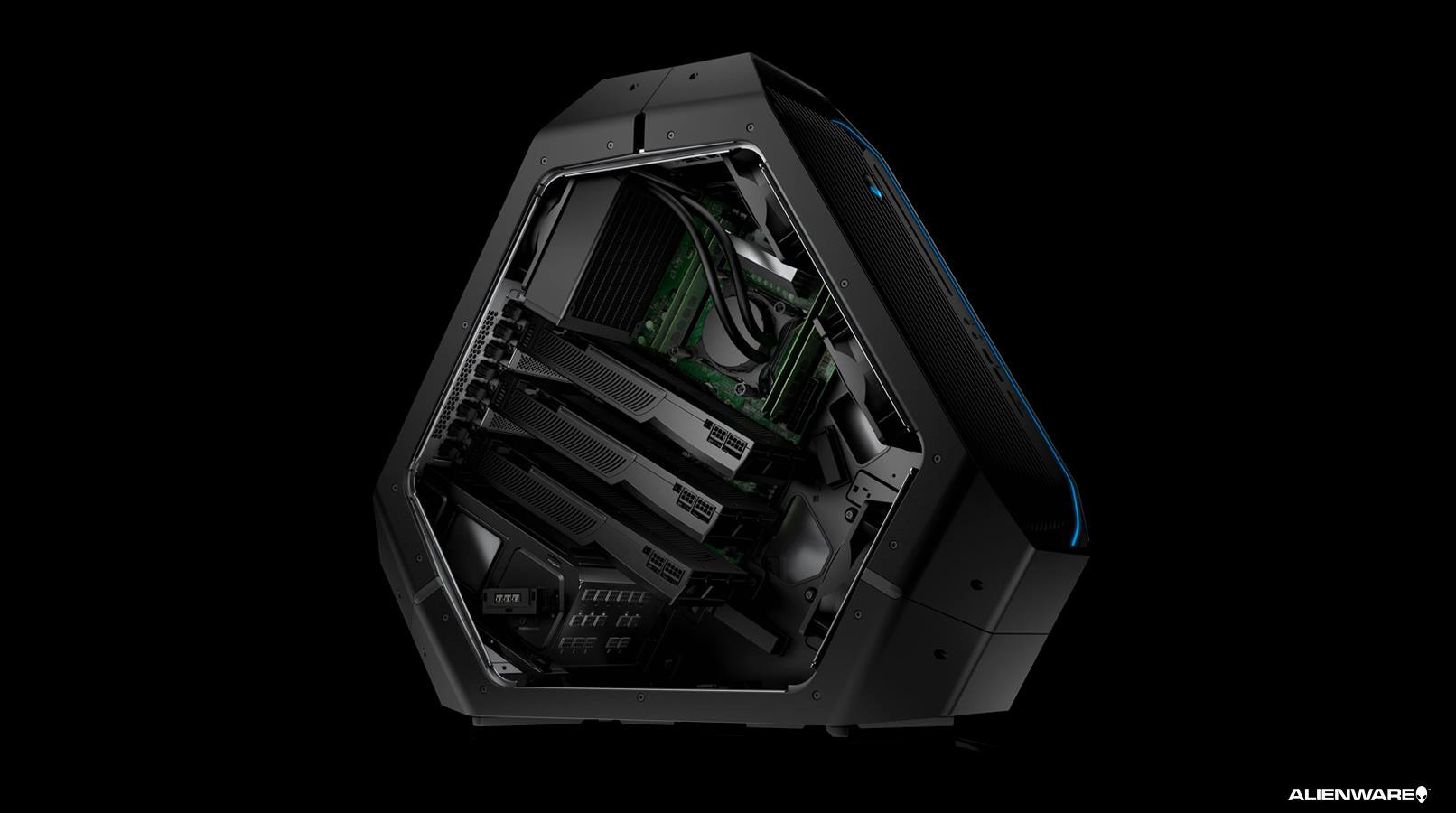
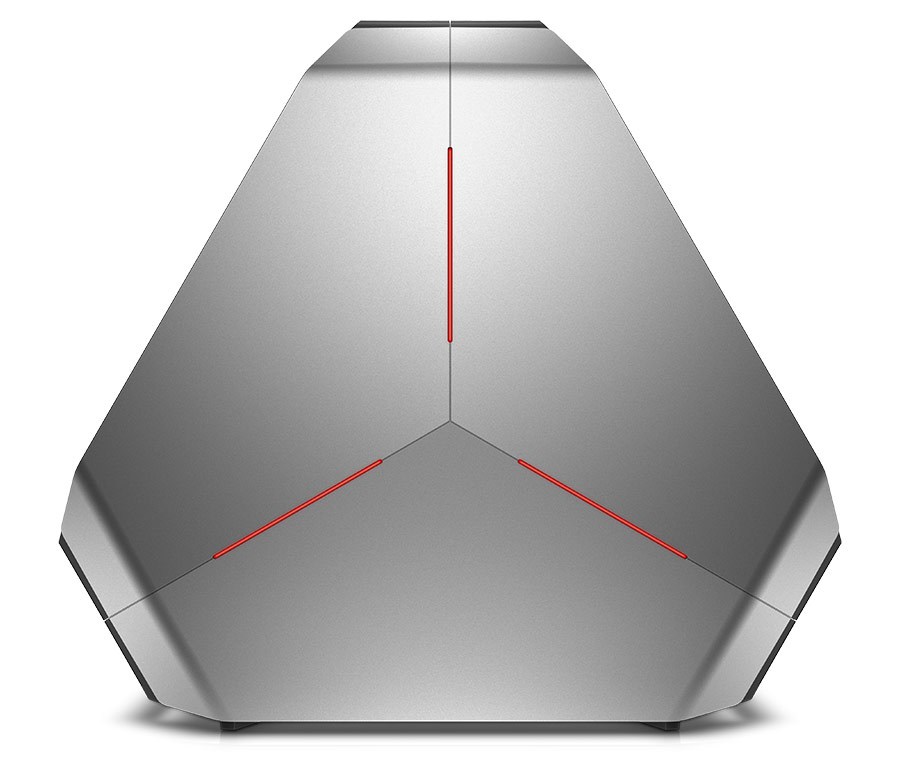
I am a solid supporter of the DIY ideology in PC builds and consider pre-built systems like these slightly less then a rip-off. However, I just couldn’t stop myself from publishing this particular Alienware reveal. The Area 51 introduces very impressive aesthetics and an absolutely insane amount of GPU – CPU horsepower for a fully 4K Ready gaming experience. Ofcourse, you can make a similar build for considerably less the price, but if you have got money to burn and want the best your gold can buy than this is for you.

Alienware-Area-51-Top-Down

Alienware Area 51 Boasts Eight Haswell-E Cores with Triple GPUs for a full 4K Experience

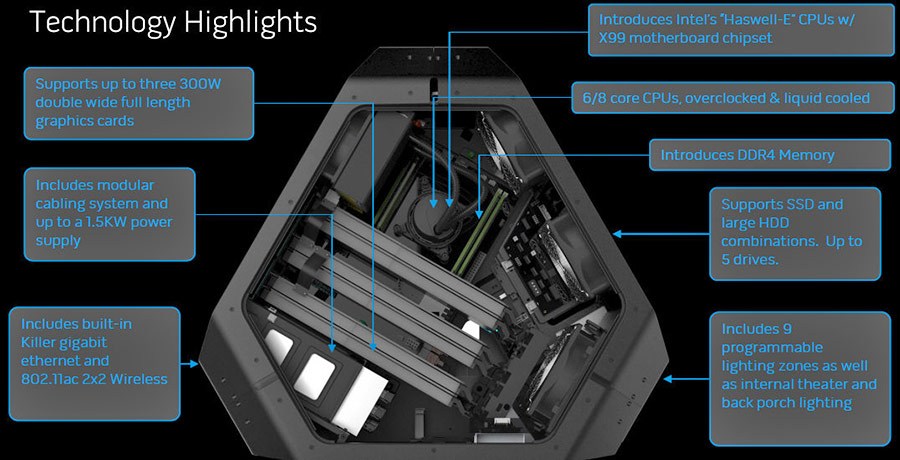
Usually I wouldn’t suggest anything past an over clocked Intel i5 to PC builders who strictly want to game, but I actually don’t dispute Alienware’s decision to go with Haswell-E processors even though they are not really meant for gaming. Normally a simple over clocked i5 is enough, and by normally I mean single GPU rigs. Once Multi GPU configurations enter the scene, things start to go pretty south. To those of you who don’t already know this, a GPU is entirely dependent on the CPU for ‘orders’ which is why a single i5 suffices for a single GPU configuration. However, triple the GPU literally means triple the ‘orders’ for the CPU to dish out, which is why unless you have a very powerful CPU, your multi GPU configuration can get bottlenecked. In this case, the Area 51, which is of course completely configurable to the customer’s needs can support a maximum of 3 GPUs, in which case you would most certainly need as much CPU power as you can get. This is one of the primary reasons low level APIs like DX12 and Mantle are so important to reduce costs.

Alienware-Area41-Wall-ThermalsAlienware-Area-51

Anyway, here are the maximum specs of the Alienware Area 51 (2014). I think one of the major reasons why I am posting this is because the I am absolutely loving the style of this thing. The chasis called the “Triad Chasis” is a simplistic triangle design that features an interesting airflow schematic. The Area 51 will feature liquid cooling and you can either opt for a 6 core or an 8 core CPU. This will ofcourse be the Haswell-E series, which consists of the i7-5820K, i7-5930K and i7-5960X. This is coupled with an X99 chipset and DDR4 Ram (upto 32GB) for increased bandwidth and lower power consumption. Now I am not really sure how much all of this will cost but I am pretty sure it won’t be easy on the wallet, at all. Not even remotely. Actually your wallet will probably stop existing. Alienware is set for the full reveal in a few days.

http://www.gamersoutpost.net

image-5be86a87-d772-4d34-85a8-ea4d2695169e

by Marty Sliva

The Order: 1886 demo I played at PAX Prime was one of the stranger slices of a game I’ve played in quite some time. It managed to reel me in from the get-go and keep my attention until the very end, despite some deep gameplay flaws. Let’s start with the positives.

I don’t need to tell you that The Order is a gorgeous video game. The characters, setting, and lighting effects are all top-notch. The world is an interesting and unique setting that straddles a nice line between Victorian horror and alternate history. The idea of a game combining werewolves and Nikola Tesla is fantastic — I love the looking at a historical setting and playing with the idea of what it would be like with a dash of technology here and a bit of magic there. The few major events I was privy to inside of the world were equally intriguing. The voice work and banter between my team was great, and it was genuinely one of the few times where a game transitioned from a cinematic into gameplay, and I just sat there not moving because I didn’t spot the hard-cut from one to the other.

But sadly, as much as I really admired these aspects of The Order, the actual act of playing the game resonated far less with me. This certainly isn’t the first time we’ve had reservations about The Order’s gameplay. Once I did actually realize that I was in control of my character, I was thrust into a cover-based gunfight against a mob of enemies scattered across the levels of a nearby building. The sticky-cover system definitely feels like Gears of War, which is not a knock in my book. Epic really nailed that aspect, so there’s no reason to fix what isn’t broke. But while Gears had a great suite of weapons with some fantastic visual feedback when you made contact with an enemy, The Order’s arsenal felt like some really gorgeous prop guns.

My main weapon in the demo was the Thermite Rifle, a machine gun that also fired off explosive-flares. I loved the small detail of how the flare would corkscrew through the air on its way to my target, but igniting the explosive never gave me the desired effect. Blasts right on top of enemies didn’t seem to faze them, and certain explosions would cause structural damage while others seemed to just be bursts of light. So I instead decided to focus on picking them off with my rifle. The problem here was that the bullets spread out in such a wide area so quickly, that I could burst-fire an entire clip at an enemy across a street and have every single bullet miss its target.

Trying to pick off the seemingly-endless droves of enemies became a Sisyphean task until I switched over to my tiny pistol sidearm, which didn’t feel all-that great to use, but at least did a better job at dispatching the enemies. As I made my way through the town to my eventual destination, I couldn’t help but compare my progression to an early-’70s Disneyland attraction. Enemies would pop in and out of cover, but exhibited the lack-of awareness and sense of self-preservation of an animatronic. The feedback I received from a direct hit didn’t feel empowering, but rather like when your laser-sight would get close enough to a node in a shooting gallery.

The demo closed with a moment where my party barricaded themselves in decrepit building. I was told to wander around and search for any clues in the environment that might help lead us to safety. The first quiet moment of the demo, I was immediately shocked by how close the third-person camera remained behind my character. The space we were in was relatively small, but the lack of distance between me and my avatar led to a claustrophobic and disorientating effect, and not in a good way like what Bloodborne accomplished. I finally had a moment to soak in The Order’s world, and all I wanted was for it to be over.

Given how gorgeous The Order: 1886 is, I want to be able to explore its world. Given how well-defined its environment is, I want to enjoy parsing through every nook and cranny. Given how much I admire its character design and writing, I want to spend time unraveling its mysteries. I’m bummed out that the actual act of playing The Order seems to urge me away from what I want. Reading about the more horror-centric slice of the game that Colin got to play at E3 leaves me with a bit of hope that the demo I saw might not be representative of everything we’ll be playing in February. Here’s to hoping.

http://www.gamersoutpost.net/

New3DSWhite-600x250

by Jeremy Peeples

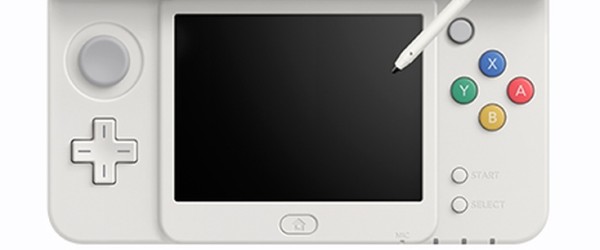
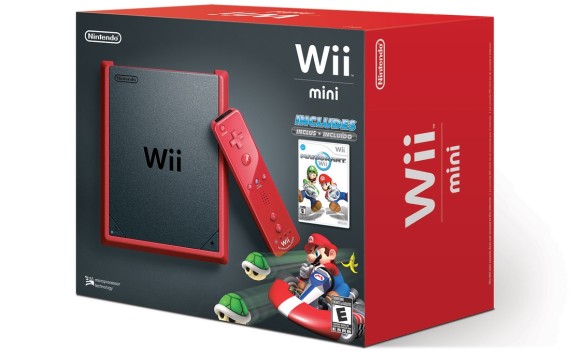
Nintendo’s announcement of the New 3DS surprised everyone, but it really shouldn’t have been too shocking. With the exception of the GameCube, Nintendo has frequently altered their hardware during its life cycle. The original DS was supplanted by the DS Lite, and both were rendered obsolete with the release of the DSi and the DSi XL that added a camera and debuted DSiWare games that couldn’t be played on either a DS or DS Lite. In the case of the original Wii, Nintendo left it alone for the most part until the tail end of its life. They released a version of the Wii bundled with New Super Mario Bros. Wii, and took out the GameCube functionality and made the system a far worse overall value. Still, this was a better value than the Wii Mini, which slimmed down the form factor, but gave you composite video-output and eliminated all web features, including the eShop and its vast library of games, and online play.

Now, Nintendo finds itself in the familiar position of doing its best to make a new version of the hardware seem like a must-buy to people who already own a version of the original system. The DSi was a hard sell because it wasn’t a huge power upgrade, but offered up a whole new storefront to use and a camera. The DSi XL came out afterwards and finally addressed an issue people had with the DS for years – the small screen size. Nintendo is helping to alleviate frustration caused by staggering the DSi and DSi XL releases (and after that, the 3DS and 3DS XL) by releasing both the New 3DS and New 3DS LL at the same time. This means that people won’t be buying one system and wind up blindsided when another variant of it hits the market — a good move in the long run.

WiiMini-570x351

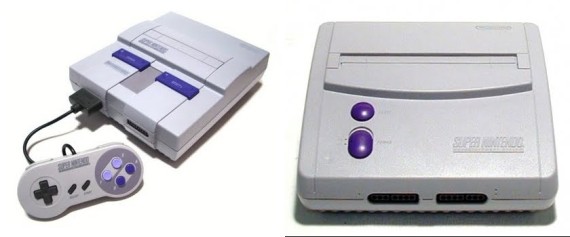
With Nintendo announcing new Wii U bundles, one also has to wonder if they’re going to phase out the Wii U in its current form in favor of one with a bit more horsepower. The system has come under fire since its launch nearly two years ago for being incredibly underpowered – with only a few third party games like Need For Speed: Most Wanted U and Assassin’s Creed IV: Black Flag really taking advantage of the increased power compared to the Xbox 360 and PlayStation 3. However, Nintendo has already released two versions of the system before – with the white 8GB basic model being phased out in order to simplify things. Why offer up two different variations of the same hardware when neither version is selling well? Nintendo realized this issue and focused on the 32GB model. They also including a variety of top-notch games to give people a reason to buy the system, which they’re continuing with this year’s holiday bundle SKUs. The difference between all of the hardware revisions done before and the Wii U is that those systems, whether they were consoles or portables, were exceptionally popular. The NES got the first major revision, and that came out with the SNES in full force and was a budget-minded version of the hardware that stripped things down to an RF connection, but was otherwise far more reliable a system than the original front-loading model, and it came with a more comfortable SNES-style pad to boot. The SNES got a Super Famicon-style revamp when the N64 was released, while the N64 got absolutely no revisions made to the hardware beyond new colors. The same story was told for the GameCube, while the Wii’s revisions were stealthy with the full-sized model, and made more apparent during the more limited release of the Wii Mini.

SNESVersions-570x237

With the Wii U just gaining traction and still having a ways to go, I doubt we’ll see any kind of upgrade in hardware for it. Nintendo didn’t do anything like that for the Wii, and it was far more out of date graphically than the Wii U is presently. The Wii U is also aided by having first-party games that regularly stun people thanks to a high level of image quality, and Nintendo is at least showing that you can indeed make impressive-looking games on it — most third parties just aren’t doing that. Their present approach of focusing on their own content and bundling top-notch, but older games is working, and including a digital copy of a game with a fairly early Mario Kart 8 purchase was brilliant. It not only showed that the company could embrace digital gaming, but giving people a fantastic deal, and an incentive to buy a game on day one (or fairly close to it). While Nintendo has taken some risks at alienating console owners before by removing some features, it’s clear that they literally can’t afford to do that with the Wii U and aren’t likely to do any major hardware changes beyond adding more on-board storage at most. They’ve already have enough issues establishing the Wii U brand name without adding to the system’s troubles with another similarly-named version of it. People already thought the Wii U was just a Wii accessory, likely due to the uDraw accessory that gained its most fame on the Wii. Nintendo didn’t help matters by making TV ads that didn’t really show off anything but the Gamepad — a mistake they’ve never repeated. Due to the Wii U’s trouble history, it’s doubtful we’ll see a 3DS-to-New 3DS style of upgrade for the company’s current console. They can afford a mistake in the portable space, but not on consoles.

http://www.gamersoutpost.net/