Archive for the ‘Game Articles’ Category

xboxoneconsole
by Sam Mattera

Kinect has been scrapped. Its price has been cut. Games have been given away for free. Despite many aggressive initiatives, Microsoft cannot seem to boost sales of its ailing Xbox One video game console.

Microsoft’s latest promotion involves all three: The Windows-maker is now offering the Kinect-less Xbox One to American consumers for just $350 with a game — a nearly 40% discount from the suggested retail price last November. Although it seems like a great deal, Microsoft has dug itself a deep hole — Sony’s lead appears insurmountable.

Pachter’s prediction
Some may be inclined to dismiss my claims as outlandish — after all, it’s only been one year. If their predecessors serve as any indication, Microsoft’s Xbox One and Sony’s PlayStation 4 could be competing at retail for the next decade. Much can change in the years ahead.

While it’s certainly possible for Microsoft to turn it around, it’s hard to see what it could do — save giving the Xbox One away — to close the gap.

No one can say Microsoft hasn’t tried. Bundles were the first attempt — in March, Microsoft gave Xbox One buyers a free copy of Titanfall, at the time, the Xbox One’s most desirable game. Nevertheless, Sony’s PlayStation 4 won out, outselling the Xbox One in March and April.

In May, Microsoft cut the Xbox One’s price by 20%, announcing a $399 Kinect-less version. But again, it made no difference, and Sony’s console continued to widen its lead over the summer. Then, in September, Microsoft upped the ante even further, announcing that it would give Xbox One buyers a free game of their choice. That meant that, for $400, buyers could get an Xbox One and two games assuming they took advantage of the available Madden and Forza bundles.

Reacting to the promotion, analyst Michael Pachter predicted that the Xbox One would finally outsell the PlayStation 4 in September — surely, gamers couldn’t pass up such a great deal. But they did — despite Microsoft’s aggression, Sony’s PlayStation 4 once again outsold the Xbox One in September.

All told, Sony has now sold 13.5 million PlayStation 4s worldwide — likely more than double what Microsoft has sold. I say “likely” because Microsoft has not been forthcoming with Xbox One sales figures — last quarter, it said it sold 2.4 million Xbox consoles, but it declined to break out the number of Xbox Ones from sales of the older Xbox 360. Prior to that, in April, it announced that it had shipped 5 million Xbox Ones, but did not say how many consumers had actually purchased.

Insurmountable network effects
In contrast to Microsoft, Sony has done virtually nothing — the PlayStation 4 still retails for the $399 it debuted at last year, effectively highlighting the futility of Microsoft’s struggle: If the Xbox One can’t catch the PlayStation 4 now, just wait until Sony cuts the price or runs a promotion of its own.

Several factors explain Sony’s lead (a more powerful console, better marketing, a more friendly stance toward used games), but are mostly irrelevant at this point. Going forward, the single factor most likely to determine sales success is outside both companies’ control.

Sony now has 7.9 million PlayStation Plus subscribers, the overwhelming majority of which are likely to be PlayStation 4 owners (the rising popularity of PlayStation Plus has coincided with strong PlayStation 4 sales). PlayStation Plus membership confers a number of benefits, but it primarily serves as a way to access online multiplayer — a central component of the most popular games. Destiny, for example, is online-only: Gamers must play on servers, primarily with (and against) their friends. With 9.5 million registered users, many are.

Microsoft’s former Xbox head, Don Mattrick, once observed that the “first company to reach 10 million in console sales” often wins the console war. With online play such a central component of most games, network effects run deep — gamers can play with their friends only if they both own the same console. Success begets success, as gamers whose friends own PlayStation 4s are highly incentivized to purchase PlayStation 4s of their own.

Microsoft may go down swinging, but the damage appears done. Barring a miracle, Sony has this one in the bag.

by Chris Reed

Video games are a big business, so it’s no surprise that Hollywood is working to turn a number of game franchises into films. After all, who doesn’t want a surefire hit? Below, we look at some of the most exciting video games that are getting the full Hollywood treatment in the coming years.

AC4BF_SC_SP_02_Whaletcm1999994-e1406907393315

Assassin’s Creed

Planned Release Date: 2015

Ubisoft has been pumping out Assassin’s Creed games in a steady stream ever since the original’s 2007 debut. The story is all kinds of convoluted, but basically a man in modern times straps on a high-tech helmet and his consciousness is transported through time into the body of a historical assassin. The film is currently in preproduction, but it’s set to star the debonair Michael Fassbender and should come out sometime in 2015.

hitman-640x234

Hitman: Agent 47

Planned Release Date: 2015

The first movie based on the Hitman game franchise was a self-titled snoozefest starring Timothy Olyphant as the bald, barcoded hero. This upcoming reboot puts Zachary Quinto in the complicated hero’s shoes as he is sent on a mission to kill a young woman. Things don’t go as planned, and the heroes have to switch gears and formulate a new course of action together. The movie is set to open on February 27, 2015.

ss_897f538a2da98a30f86349ff11b10fe99f2539ba_1920x1080-640x360

Splinter Cell

Planned Release Date: 2015

This Tom Clancy game franchise stars a gray-haired black ops agent named Sam Fisher who can usually be found sneaking his way through enemy territory. The film version will skew younger, with 36-year-old Tom Hardy playing the lead role. And while the movie is still in development, it’s set to be directed by Doug Liman (Edge of Tomorrow, Bourne Identity), who wants to see it filmed and released by the end of 2015.

Ratchet_Clank_movie_teaser_promo_cropped

Ratchet & Clank

Planned Release Date: 2015

These two unlikely heroes (a pointy-eared lombax and a tiny robot) star in a popular series of PlayStation games released over the past twelve years. The games are cartoonish and fun, with sci-fi stories that are infused with humor. The movie is reportedly based on the story of the original game, and follows the two heroes as they meet each other and go on to save the galaxy from an evil businessman named Chairman Drek.

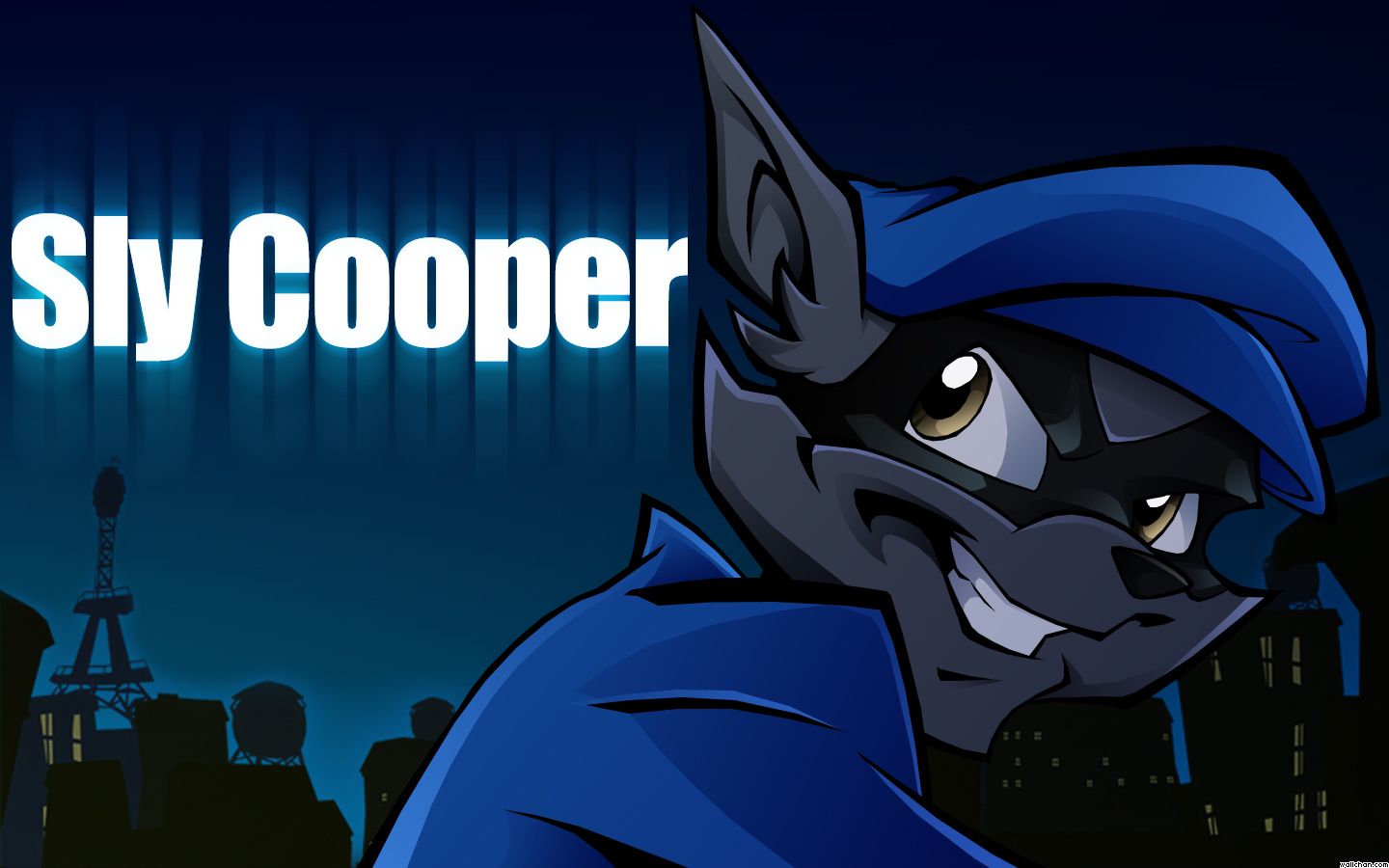
93508-sly-cooper

Sly Cooper

Planned Release Date: 2016

Another series of PlayStation action platformers is Sly Cooper. These games center on a small group of lovable thieves who only steal from other criminals. The games are cel-shaded and look like playable cartoons, but the movie seems to be going a more realistic CG route. We’ll see if that choice pays off in 2016 when the film hits theaters. In the meantime, you can watch the trailer here.

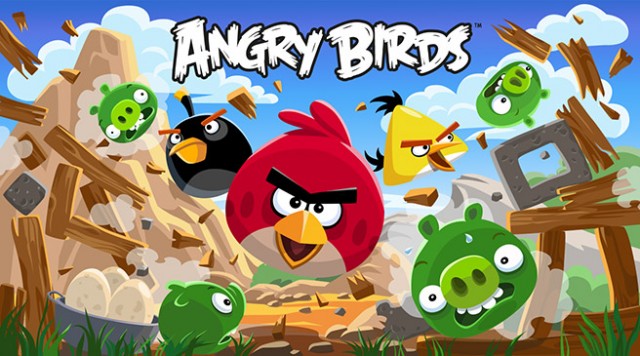
angry-birds-640x356

Angry Birds

Planned Release Date: 2016

You don’t own a game property this popular with kids and not make an animated movie out of it. Developer Rovio Entertainment is doing the only sensible thing and flinging the blockbuster game franchise Angry Birds onto the big screen. The movie will be a 3D animated feature that’s set to debut on July 1, 2016. If you don’t want to wait that long, you can pass the time by watching a series of animated shorts starring the colorful birds right here.

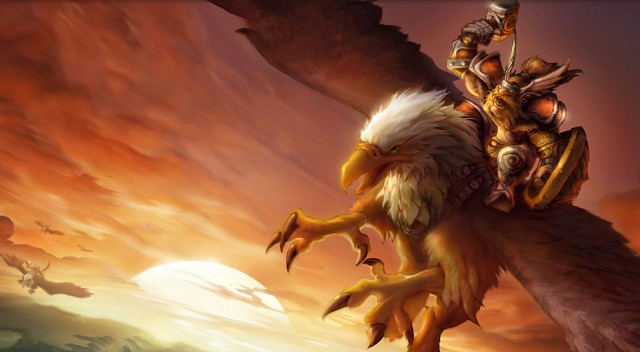
wow-e1410955576985-640x352

Warcraft

Planned Release Date: 2016

A movie based on the most popular MMO in the world is set to debut in 2016. Filming has already wrapped on Warcraft, but not a lot of information is available about the movie aside from its basic plot: humans and orcs duking it out in the fantasy world of Azeroth. It’s being directed by Duncan Jones, who directed the unique indie sci-fi flick Moon, which bodes well for this fantasy adventure.

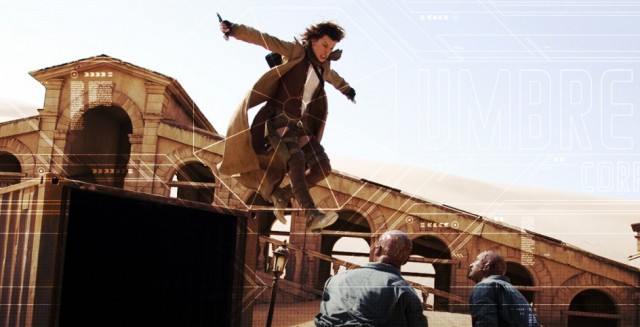
resident-evil-movie-e1410956193776-640x327

Resident Evil: The Final Chapter

Planned Release Date: 2016

Another Resident Evil sequel will come as no surprise to movie fans, as the series already contains five zombie-filled entries. The upcoming film is slated for a 2016 release, and will wrap up the ongoing story lines so the actors and director can move on to other projects. Of course, the franchise could always rise from the dead for a reboot sometime down the line.

382280

Shadow of the Colossus

Planned Release Date: TBA

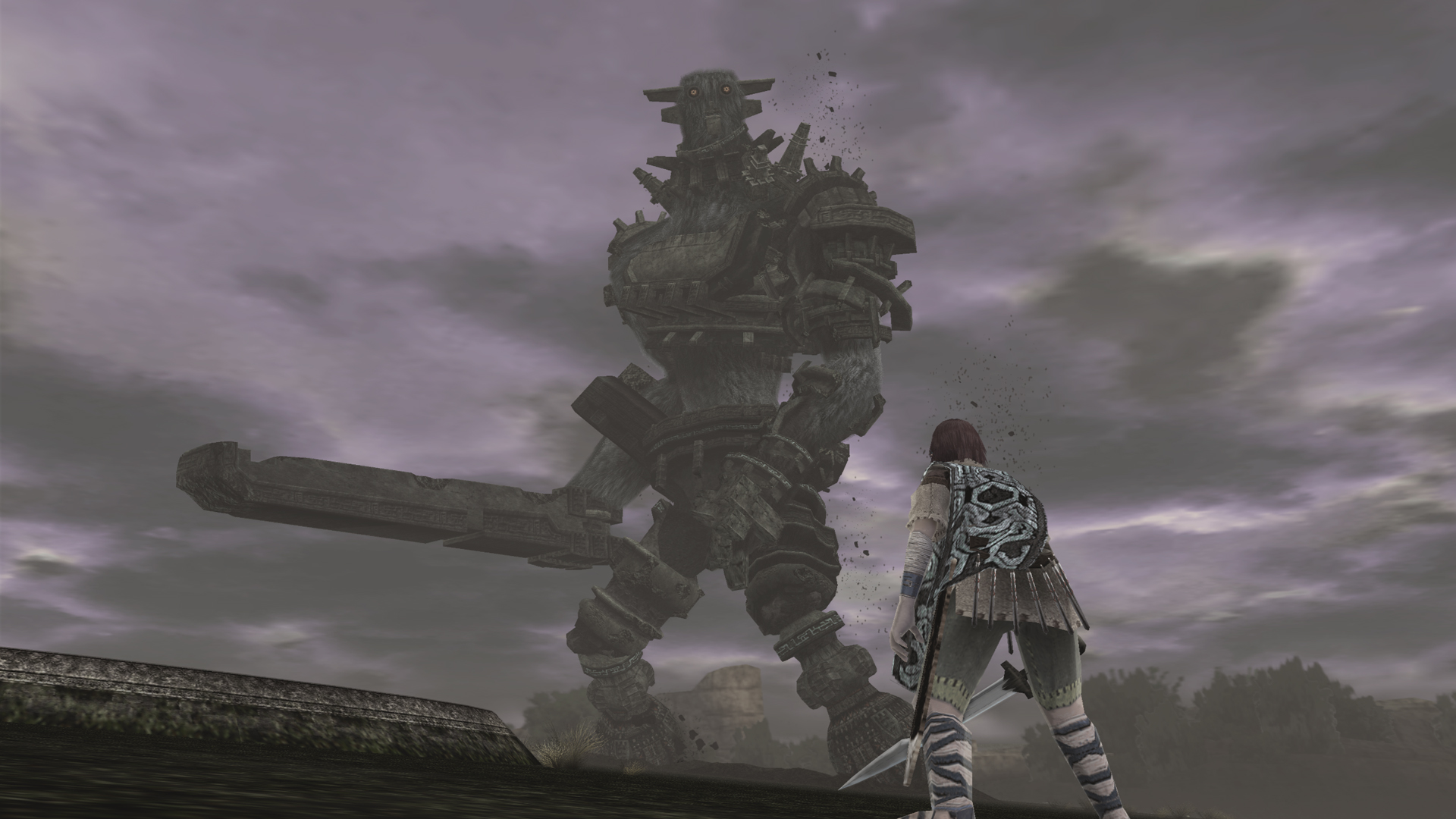
This PlayStation 2 cult classic is a triumph of atmosphere. You play as a young man who must traverse a desolate landscape and slay sixteen enormous beasts to bring his love back to life. Although the movie version has been on the back burner since 2009, Sony Pictures has just hired a new director to lead the project, Andrés Muschietti, whose horror film Mama scared audiences stiff in 2013. If anyone can bring the hopeless grandeur of the game to the big screen, it’s him.

dead-island-640x360

Dead Island

Planned Release Date: TBA

Dead Island is a game set in what would be an ideal vacation spot if only it weren’t for those pesky hordes of undead maniacs. The movie has been something of an on-and-off affair since it was announced, with Lionsgate buying the rights to the game but abandoning the project before getting it off the ground. The rights have recently been scooped up by Occupant Entertainment and publisher Deep Silver. These companies have said they’re hoping to get the project moving by early next year.

131ad674fd00fb3d8a08c974dcc3f5db

by Samit Sarkar

Some Call of Duty: Advanced Warfare players on PlayStation 4 are having trouble playing the game, and accordiing to Sony, these issues may be related to downloading it from the PlayStation Store ahead of launch.

Sony set the PS4 preload live last week, allowing Advanced Warfare pre-order customers to download the game so they’d be ready to play it at midnight on Nov. 3, the launch time for the “Day Zero Edition.”

According to a page on the PlayStation Knowledge Center, there’s a simple fix for players who preloaded Advanced Warfare and are experiencing problems with the game. They just have to delete the preloaded files from their PS4 and re-download everything. By the way, Advanced Warfare is listed on the PlayStation Store as weighing in at 39.3 GB.

Sony’s support site also advises players to “ensure you download all available updates for Call of Duty: Advanced Warfare and your system is running the latest system software.” There’s a chance that the aforementioned problems are related to PS4 system software update 2.0, which Sony released last week — and which has caused a host of issues, both with the console itself and individual games like the Evolve Big Alpha.

We’ve reached out to Activision and Sony for more details, and will update this article with any information we receive.

Update: Some people are running into an online issue on the Xbox One, according to the Xbox One support page.

“Are you running into issues using the 14-day Xbox Live Gold trial you received with the Call of Duty: Advanced Warfare bundle? We’re hard at work trying to get this fixed right now. Thanks for your patience while we work and feel free to check back here in 30 minutes for an update.”

destiny2

by Dave Thier

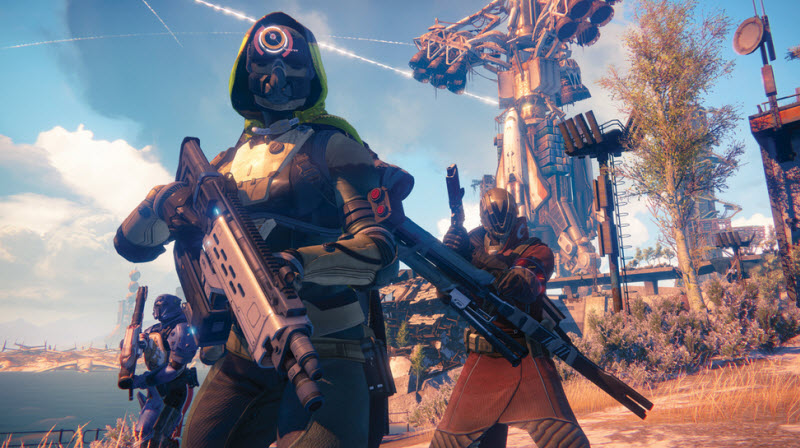
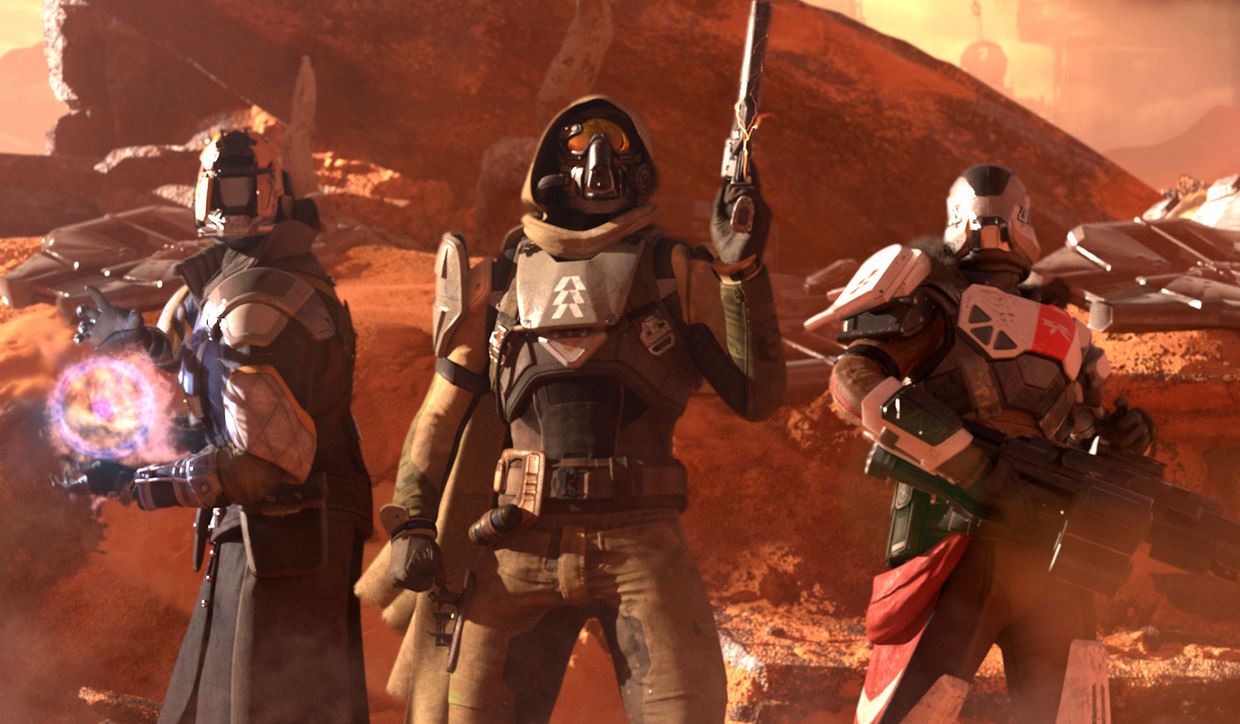
Destiny, as a game, has already had a stellar launch and opening few months. It’s a strange beast: oddly cobbled together, repetitive and wholly addictive, but these early days only represent a small portion of Activision and Bungie’s ambition. As evidenced by titles like Skylanders and Call of Duty, Activision isn’t really one to do things halfway. Bungie is already planning on releasing the first expansion pack in December, and has apparently already started work the next full retail release, though one assumes it’s a very long way off.

“Work has also begun on future expansion packs as well as on our next full game release,”  said Activision Publishing CEO Eric Hirshberg during today’s Activision Blizzard earnings call, via Polygon. “We’re very pleased with the launch and continuing engagement.”

Since the beginning, it’s been interesting to think about just how Activision plans on turning Destiny into a reliable revenue stream. The publisher already has two basic models in its wheelhouse: on the one hand, we have World of Warcraft, which charges players a monthly subscription fee as well as a larger chunk for infrequent expansions. We always knew that a subscription service wasn’t really going to fly for a console shooter of any kind. Way on the other end of the spectrum, we have Call of Duty, which relies on $60 boxed releases every year. It’s by no means an MMO, but the sort of “upgrade charge” that it asks out of regular multiplayer gamers actually looks sort of similar. Destiny was always going to have to be somewhere in the middle.

eeee

My guess is that we’re going to see something like three expansion packs a year at $20, as well as a full $60 release every two years. That gives us $90 a year for the gamer that buys everything, which is less than a World of Warcraft subscription or a Call of Duty player that buys every game and season pass.At some point, once the player base is well established, I’d also expect to start seeing some player customization-based micro transactions — ghost and ship skins, class items and that sort of thing. Again, World of Warcraft provides a decent model for when the player base will accept that sort of thing.

That’s just one possibility: I imagine that the strategy will evolve over the course of Activision’s planned decade. What’s nice about a model like this is that it really does put the onus on the developer to make expansions and upgrades that are actually worth buying. People will still upgrade just to stay with the pack, sure, but Bungie is going to have to deliver new and interesting content to get people to make that purchase every time.

Hirshberg also reported that the game has 9.5 million registered users, which isn’t chump change by any stretch.

92e270e13279dee7d1db364210c4d730
by Arthur Gies

Call of Duty: Advanced Warfare developer Sledgehammer Games has the unappealing responsibility of cleaning up someone else’s mess.

Last year’s Call of Duty: Ghosts was a low point for the series coming off its most successful game ever. Its campaign and story were uninspired and boring. Its multiplayer design took away what had proven so successful in Black Ops 2 and replaced it with something that failed to improve on the series’ defining mode of player progression, and its maps felt awkward and empty too often. And now, with Advanced Warfare, new developer Sledgehammer has to make everyone forget any of that happened with their first full Call of Duty release.

With little exception, Sledgehammer has demonstrated itself up to the challenge. Advanced Warfare’s production values and excellently paced campaign set the table, and its major additions to Call of Duty’s multiplayer, from basic mechanics to its deeply addictive progression system, might be enough to chase away bad memories of Ghosts.

“Advanced Warfare’s big changes revolve around the new exo suit”

Sledgehammer hasn’t veered away from the basic building blocks of the Call of Duty formula with Advanced Warfare’s trip to a near-future of massive paramilitary corporations and superhuman technology. It remains a fast first-person shooter oriented around crouching behind cover and aiming down gunsights with the left trigger while firing with the right. It’s arguably the most-copied set of mechanics in games from the last decade, because it works. Movement and shooting in Advanced Warfare is quick, smooth and recognizable to anyone who’s played a shooter since 2005.

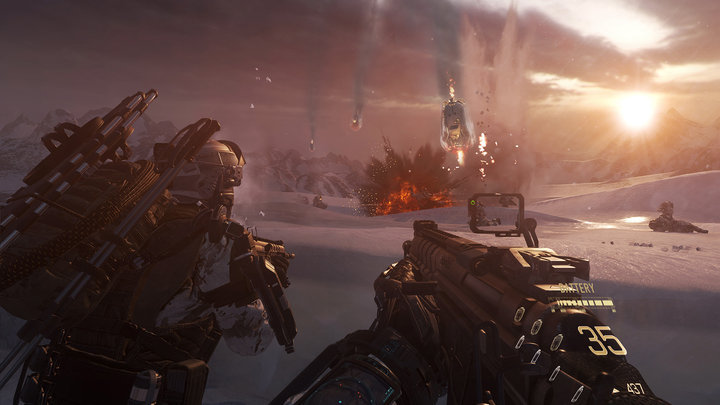
Call of Duty: Advanced Warfare’s big changes are all oriented around the Exo suit, an exoskeletal support system that’s standard issue for all soldiers in Sledgehammer’s near future setting. Practically speaking, the exo adds new kinds of mobility to Call of Duty’s genre-standard toolset, with actual options varying somewhat from level to level based on the situation at hand. Most exos allow for a double jump, and every exo allows a sort of boost left, right or backward.

4f26c7bcf8fda7f74daf1f337201a662

All of this makes moment-to-moment navigation much more interesting in Advanced Warfare than previous entries in the series or its imitators have managed. The exo conceit also allows Sledgehammer to vary up the singleplayer campaign’s format and ideas in some exciting new ways. There are some real standouts, including a brilliant stealth mission and an extended drone sequence that gives the C130 mission from the original Modern Warfare a run for its money.

In fact, speaking strictly from level and encounter design and mission variety, Advanced Warfare is the best campaign the series has seen since Infinity Ward re-imagined the franchise with Modern Warfare in 2007. There’s no muddy objectives to get stuck on, and at least on my playthrough on the “hardened” difficulty setting, there were very few cheap-feeling death loops to get stuck in. It balances fairness with enough challenge and sophistication to make success feel worth it, and I never felt like any one part overstayed its welcome.

This is somewhat more surprising, given that Advanced Warfare is longer than last years Call of Duty: Ghosts by a healthy amount — I dragged myself through last year’s game in around four and a half hours, which was more or less on par with Modern Warfare 3. My time through Advanced Warfare on Hardened clocked in closer to seven. And through that extended playtime, I didn’t feel like Sledgehammer had run out of new scenarios or concepts.

In fact, the only truly deflating element of Advanced Warfare is a story that never manages to get off the ground. Much has been made of House of Cards actor Kevin Spacey’s turn as Jonathan Irons, the CEO of a paramilitary-oriented corporation named Atlas, but his performance tends toward over-the-top. This is at odds with the over-genuine, hyper-serious sobriety of literally every other character and the overarching environment the story takes place in. The plot is just an inch or two short of completely predictable, the dialogue is frequently gibberish, and the “interactive” points in scripted scenes are often in “press X to whatever” territory — a staple that reaches some almost parodically frustrating lows here.

This is an especially sour note for the campaign given that it moves the series forward in other small ways that I appreciated regardless. In a departure for first-person war games, Advanced Warfare isn’t predicated on killing some evil invading force that seems primed on capitalizing on border paranoia, and the enemy isn’t composed of third world canon fodder. There’s concern shown for civilians. There is a somewhat sophisticated view of geopolitics and America’s place in it, and the most interesting character in the game is former-Spetznaz-turned-Atlas operator Illona, one of the series’ first major female characters.

5f5c685d613a88914088cb8713393214

Sledgehammer even wisely knows when to pull back, when to let the game breathe for extended periods of time without shooting or violence, something the series often felt like it lost after Modern Warfare. But the protagonist and leads all otherwise hedge closely to the Call of Duty status quo, leaving Advanced Warfare’s otherwise forward-thinking changes in the background. The result is a really good Call of Duty campaign that feels like it could have been truly great.

Multiplayer is a different story, as Sledgehammer more successfully leverages the new possibilities for movement and player ability more consistently. Advanced Warfare’s levels all seem tailored to the exo — you can walk around, but you’ll find much more speed and access by looking up and plotting a less conventional path. There are multiple points of entry everywhere, and they’re accessible from more places.

This change of philosophy might sound like a small addition amongst a list of new levels, new guns and the like. But this makes the biggest difference from its predecessors in Advanced Warfare’s immediate play experience. There’s less safety, less predictability, and it combines with some of the best map design the series has seen — hiding places never have total cover, and corners are hard to find. Sight lines exist all over, but there’s just as many means of breaking out of a field of fire by using a boost or performing a running slide.

One new game mode, Uplink, seems designed completely around the new physicality. Uplink most closely resembles single flag CTF, but the “flag” is actually a ball-shaped satellite device, and each team’s capture point is an “uplink point” represented by a glowing sphere suspended in mid-air. You can throw the ball through for one point, but running it through yields two, and a rewarding sense of satisfaction. Uplink takes advantage of every new mechanic that Sledgehammer introduces to fantastic effect, making it the best mode to happen to Call of Duty since Modern Warfare 3’s Kill Confirmed (which also returns).

Co-op

Call of Duty: Advanced Warfare features co-op that should feel familiar to fans – it’s a wave-based survival mode taking place on the multiplayer modes maps where you earn points to buy better weapons and upgrades for your expo. There are wrinkles that mix things up a bit. For example, some waves have objectives that need to be completed to avert additional obstacles, like a glitched out exo.

It’s all competent enough, but it lacks the distinctive identity that powers the zombies mode in developer Treyarch’s Call of Duty games. We’ll see if that remains the case.

The exo suit also offers new sub-abilities and perks to choose from, such as an energy-based riot shield, enhanced healing or temporary invisibility. All of these new options can make for more variety in play, but usage is based on a battery that only recharges after death. I found myself discouraged from using these exo abilities — I never knew when I might need them more and was afraid to “waste” my one shot per life. It’s a small complaint in the grand scheme of what Advanced Warfare is introducing, but it feels like a moment of indecision in an otherwise confident game.

But if the exo and its additions are the draw for lapsed players and jaded veterans alike, it’s Advanced Warfare’s progression that will keep them playing.

That, and the loot.

The Pick 10 system introduced in Call of Duty: Black Ops 2 returns, albeit with more options and opportunities in the form of Pick 13. Players can pick and choose weapons, perks, and streak bonuses as they like, albeit at a price. The more obscure your choices, the more they will cost you. If you want to take a primary weapon in your secondary weapon slot, you can — but you’ll have to pay with more points. Score streaks can be modified in many ways, including making them support streaks (which keeps progress for them on death, but makes them take longer to earn).

It’s a welcome return, and it allows for the most personal customization of your character class the series has seen when joined by the updated options available for avatar customization. Male or female presets can be outfitted with various cosmetic items, which are in turn now visible in multiplayer lobbies between games.

It’s cool to see other players’ operators, but this seems particularly oriented to showing off the various bits of cosmetic loot that you can earn in-game. As you play, you’ll see the same challenge rewards that have defined Call of Duty since Modern Warfare, but achieving challenges can now also yield “supply drops,” which is a fancy, Call of Duty way of saying treasure chests. You can open these chests between matches for special rewards like temporary XP boosts and improved in-game called-in support drops.

But you can also collect new pieces of armor and gear to set your soldier apart, which is a truly diabolical addition. The Pick 13 system let me find a loadout I really liked without much encouragement to vary it up, and gaining new scopes or attachments for my weapons felt tired years ago, but I got excited for every new cosmetic item I earned via a supply drop.

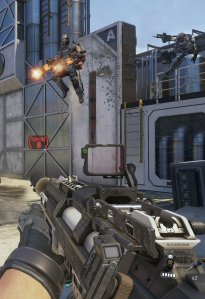
Supply Drops can also include special versions of Advanced Warfare’s weapons with multiple levels of rarity, another smart feature snagged from MMOs. This might be the most encouragement to leave your comfort zone that Call of Duty has offered in years. These weapons have minor bonuses to their attributes (along with a couple of penalties as well) and hardwired attachments that can’t be removed; the pull to use them was almost impossible to resist. This is especially useful in Advanced Warfare, given the presence of unrecognizable weapons for long-term fans — for example, directed energy weapons like the TAC shotgun or, you know, the lasers.
2b81d8baa5c6e8d82d932082279df8c3

No really. There are lasers. And tracking robots you fire out like grenades.

That said, I would have resisted more, if not for the genius of Advanced Warfare’s firing range. Until now, testing a new weapon loadout in Call of Duty meant using it in a match and hoping for the best. But now a press of a button in the pre-game lobby will take you and your loadout more or less instantly into a virtual arena where you can fire on targets and get to know your guns without feeding yourself to the wolves.

It seems like a small thing, but the firing range is symptomatic of smart decisions that seem poised to continue moving Call of Duty’s multiplayer forward. And in the present, right now, Advanced Warfare is the most fun I’ve had with the series since it re-invented the shooter mold. Which isn’t to say everything is perfect, exactly — there’s still a meat-grinder mentality to the multiplayer, where a few great players will likely contribute the lion’s share of the kills, and anybody below that threshold will probably die again and again.
gg2012-secret-of-mana

by Ron Ruwell

Square Enix is home to treasure troves of classic, wonderful video game properties that go sadly unrecognized in the modern age. I’ve always been more partial to Brave Fencer Musashi and Parasite Eve, but by and large, the most popular of these untapped franchises are SaGa and Mana, the company’s third and fourth oldest RPG series’. Square Enix has teased fans with whispers of revivals in recent times, and one could be upon us within a week!

A new teaser site from the Japanese publisher shows the countdown of a single week and a curious saying in Japanese that roughly translates into “The legend will be revived.” The word “densetsu,” meaning “legend” in English, can also be found in the Mana franchises Japanese title, “Seiken Densetsu,” meaning “Legend of the Holy Sword.” Many fans point to this as the most likely culprit, and I am willing to believe them.

Square Enix has hinted at attempts to get back to its JRPG roots over the last year, and what better place to start than its most beloved “lost” series? It has already made a small comeback with Rise of Mana, a free-to-play smartphone game which has a better reception than most others, and it has even been confirmed for a PS Vita port. It is unknown if this is the revival Square Enix is hinting at or not, but why release a countdown clock for something that is already publicly known?

If we see an original game, it will fulfill series Producer Masaru Oyamada’s wish to please the Mana fans “who’d like to sit back and enjoy it (on home console).” If not, well… what else is new?

I’ve learned not to get my hopes up too high over Square Enix’s numerous countdowns, but this is one I think will pan out in our favor. If not a new Mana game, it should be something that will please Square Enix’s longtime fans. If that happens, then we can continue to hope for a localization and that Square Enix finds it in itself to continue tapping those RPG roots once more.

See you in a week, hopefully with good news!

prey2

by Mike Minotti

This one hurts.

Publisher Bethesda has revealed that Prey 2, the sequel to the 2006 sci-fi first-person shooter, is officially cancelled. CNET discovered this via Bethesda vice president Pete Hines at the ongoing PAX Australia convention.

“It wasn’t up to our quality standard, and we decided to cancel it,” Hines told CNET. “It’s no longer in development. That wasn’t an easy decision, but it’s one that won’t surprise many folks given that we hadn’t been talking about it.”

Bethesda originally unveiled Prey 2 at E3 2011. While the original was a pretty standard shooter, the sequel was an open-world game that focused on bounty hunting. The trailer and hands-off demo had a lot of people buzzing. Unfortunately, that was pretty much the last good look we ever got at the game. Slowly, Bethesda talked less and less about it, sometimes only to say that work was completely restarted. Now, Prey 2 is officially done.

Which kind of sucks. I was at E3 2011, and Prey 2 was the coolest thing I saw at that show (keep in mind that Bethesda’s Skyrim was also on display right next door). Sure, my preview of it was hands-off, so maybe everything I saw was just smoke and mirrors, but the demo showed off a beautiful world and interesting characters who would react to their surroundings (for instance, the tone in one alien’s voice completely changed when he was suddenly staring at a drawn gun).

Sadly, we’ll never get to play Prey 2 now. It joins the likes of Sonic X-treme and StarFox 2 in the sad halls of games that almost were.

15fb9eb34e0fee5b4b8cfeb429a97bf6

by Rob Crossley

Sony’s troubles with the PlayStation 4 and PlayStation Network have worsened further as users begin to report of console crashes and glitches following the “Masamune 2.0” system update.

One of the most widely reported issues in the aftermath of the 2.0 update is a bug which prevents the console powering back on after it enters “Rest Mode” (the new name for Standby Mode).

A growing number of complaints have been issued to Sony via the official PlayStation community forums, which Sony has acknowledged, adding that it is looking into the problems. As a temporary counter-measure, Sony suggests users boot in safe mode if they are having problems.

Another bug some users are reporting is with YouTube functionality, with reports of the service not responding during video uploads.

Both issues come amid intermittent PSN downtimes as the 2.0 update stresses Sony’s servers, and in the wake of a three-week disaster launch for the online racer Driveclub. Meanwhile, the PlayStation Plus version of Friveclub has been put “on hold”.

On Wednesday, Sony told GameSpot: “We are aware of issues reported by some PS4 users following the release of PS4’s latest system software update, v2.00. We are investigating these issues and will provide an update as soon as we have more information.”

Bayonette_1_1920x1080

by Chris Mawson

In one of the more unusual popular culture cross-promotions in recent memory, family-friendly gaming giant Nintendo has combined forces with Playboy to promote hack-and-slash title Bayonetta 2, which was released exclusively for the Wii U on Friday (October 24).

Playboy Playmate Pamela Horton, voted Miss October 2012, donned the skin-tight leathers, guns and pistol-heels of the trigger-happy witch for a photoshoot posted below.

All photos by Playboy:

c_limit,h_720,q_80,w_900_http___images_contentful_com_ogz4nxetbde6_1L2WI9XIqM6kemMQmcgq2y_f898b5cb4b6176876c51e03b6dcb3156_03_Bayonetta_Pamela-Horton c_limit,h_720,q_80,w_900_http___images_contentful_com_ogz4nxetbde6_2rXXD2IeZKk6So0CaG0mAU_33b798193e535063a5355a1c9a5ab560_01_Bayonetta_Pamela-Horton c_limit,h_720,q_80,w_900_http___images_contentful_com_ogz4nxetbde6_4YPioMJqruaiWi28Y0kEmo_e40ea1af56b4460c811da2c571139471_02_Bayonetta_Pamela-Horton c_limit,h_720,q_80,w_900_http___images_contentful_com_ogz4nxetbde6_1VKOYztxQs0ekMIQCyq6UK_03b7c11d8b9fb34116e11e1acf466fbb_04_Bayonetta_Pamela-Horton c_limit,h_720,q_80,w_900_http___images_contentful_com_ogz4nxetbde6_w217mwNZBugQyqoSKG48O_7005edc5471a011122559fe8cece3710_07_Bayonetta_Pamela-Horton c_limit,h_720,q_80,w_900_http___images_contentful_com_ogz4nxetbde6_6Yh4ZXftjqOw8ceKIeceK0_53cc1e25fd1106803a261117aa6cbbee_06_Bayonetta_Pamela-Horton  c_limit,h_720,q_80,w_900_http___images_contentful_com_ogz4nxetbde6_5becxji92EkQYWeoe0e4GE_834482103644f73fb062dbbe4fdd148f_05_Bayonetta_Pamela-Hortonc_limit,h_720,q_80,w_900_http___images_contentful_com_ogz4nxetbde6_21b8aOcYkgIUkaSqYgUa8U_62dd7716338e42ea1297e4fbcf30c130_08_Bayonetta_Pamela-Hortonc_limit,h_720,q_80,w_900_http___images_contentful_com_ogz4nxetbde6_4J5WRRutxSmumUSOU2WWWo_aaca0cbb4ff8bdadb6fb5eac1001f003_09_Bayonetta_Pamela-Hortonc_limit,h_720,q_80,w_900_http___images_contentful_com_ogz4nxetbde6_6QhX4Zh5VCgW0ca4kY4UOQ_62750029c91c5c8838b0a67b5ca93544_10_Bayonetta_Pamela-Horton

PS4-logo-see-the-future

by Giuseppe Nelva

We’re still learning a few caveats about the rather innovative Share Play feature coming on the 28th with the “Masamune” 2.0 software update for the PS4, and there’s a rather interesting one, mentioned by PR Manager Andrew Kelly in the comments of yesterday’s PlayStation Blog post.

“Trophies gained during Share Play will be reflected on the host’s account, not the visitor’s.”

While this means that a guest won’t be able to earn trophies without owning a game, which is pretty understandable, it also means that he will be able to literally help out the host earn trophies he might be having trouble with.

There’s also another interesting fact. The limit to one hour to the share play session got people suspicious on whether there could be some kind of wall in order to push the guest to actually play the game after a while. Luckily this isn’t the case.

Kelly clarified that the 60 minutes limit is in place regardless of whether the guess has the game or not (even if both players own it, the session will still end in one hour), he also mentioned that there’s no limit to the number of sessions you can initiate with the same person. This means that the 60 minutes limit is virtually not existent, given that you can start a new session right after.

So why implementing the 60 minutes limit to begin with? This hasn’t been explained, but my guess would be so that people don’t just idle for hours keeping the servers clogged.

That said, I’m personally not so sure if I appreciate the fact that people will just be able to have someone else earn trophies for them. I guess it was already possible by having someone else sit at your console, but this makes it even easier.