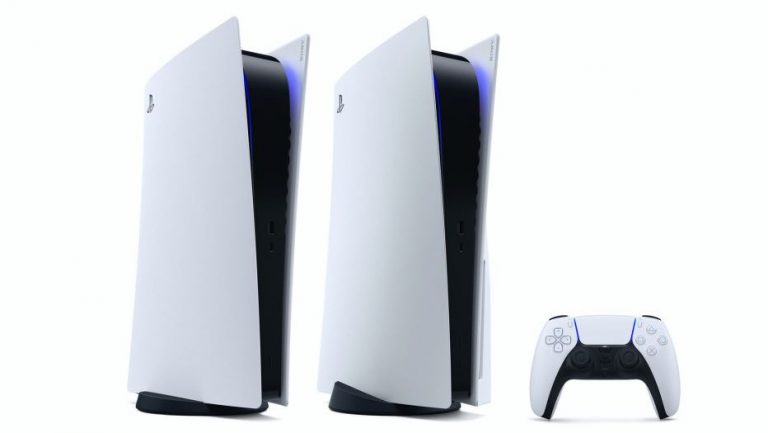
A new patent which was filed by Sony this year and found by T3 could suggest that Sony is looking at releasing an even more powerful PS5 Pro model with a dual-GPU inside.
The patent’s abstract reads as follows:
“In a multi-GPU simulation environment, frame buffer management may be implemented by multiple GPUs rendering respective frames of video, or by rendering respective portions of each frame of video. One of the GPUs controls HDMI frame output by virtue of receiving frame information from the other GPU(s) and reading out complete frames through a physically connected HDMI output port. Or, the outputs of the GPUs can be multiplexed together.”
And when delving deeper, you can find that the patent says that this would be a “scalable game console” where “a second GPU communicatively coupled to the first GPU”. The system would then be used for “home console and cloud gaming usage”.
This patent is interesting and could suggest that we might see an extremely high-end PS5 unit at some point in the future, with the two graphics cards likely increasing the price of the console dramatically. The patent also describes how this system could contain more memory and other features.
A PS5 Pro would be stunning to see, especially as the multiple GPUs might create one of the most expensive consoles in a while and further cement the idea that consoles are just becoming PCs. What are your thoughts on the possibility of a PS5 Pro?
Square Enix has yet to earn back the money it spent on the development of Marvel’s Avengers. In its most recent earnings report, spotted by IGN, the company said its HD Games segment posted a 7 billion yen (approximately $67 million) loss for the quarter.
Yosuke Matsuda, the president of Square Enix, attributed the downturn to a combination of poor sales and an expensive advertising campaign the company ran to promote the release of the game. “The HD Games sub-segment posted an operating loss as initial sales of Marvel’s Avengers were lower than we had expected and unable to completely offset the amortization of the game’s development costs,” he said. The executive went on to say Square Enix hopes DLC like the Kate Bishop add-on developer Crystal Dynamics announced last week will make the game profitable over the long run.
To find out Marvel’s Avengers has been struggling isn’t too surprising. When we previewed the game ahead of its release, we didn’t come away with a strong positive impression of what it had to offer. It also highlights that live-service games are a risky proposition for publishers. Much-hyped titles like Anthem have fizzled out, and even a heavyweight like Destiny has struggled at times, leading to a split between the game’s developer and publisher. Even with a lucrative property like The Avengers, there’s no guarantee a game will find an audience that can sustain years of ongoing development.
November 2020 feels like a lot of things, but the start of a new console generation isn’t one of them. And yet it must be, since I’ve been staring at the enormous, unmistakable body of Sony’s PlayStation 5 for over a week now, playing games new and old to see what “Next Gen” means for the future of interactive home entertainment.
This is a great time to release a game. The ongoing coronavirus pandemic has resulted in huge swaths of the world’s population spending far more time at home than they’d like, and with the rapidly rising infection rates, particularly in the U.S. and Europe, that’s not changing anytime soon. People are starved for content. Netflix has gotten less interesting and more expensive, while the launch of all the new streaming services over the last 12 months—including the already-failed Quibi—has further fractured and confused the content-consumption experience.
The video game industry has provided when it could; titles like Final Fantasy VII Remake and The Last of Us Part II drove gaming discourse for weeks and months, while Animal Crossing and Among Us grew big enough that both were used in the final weeks of the U.S. election cycle to get out the vote—the former with Joe Biden’s campaign island that players could visit, and the latter with Rep. Alexandria Ocasio-Cortez’s breakout Twitch stream that became one of the biggest in the platform’s history.
Even for those tightening their belts in an economically fraught time, the occasional video game to help relieve some stress seems like an appropriate purchase. But a new console? Especially one that is going to have a $70 base price for its games (ending the $60 standard set with the Xbox 360 in 2005)? Read the room.
At least the prices aren’t as bad as the rumor mill suggested. At launch, the PlayStation 5 is $400 for the “Digital Edition” and $500 for the “Standard” model. Where Microsoft has created two similar-but-different boxes in their $300 Series S and $500 Series X consoles, Sony’s two systems are internally identical with a single difference: a disc drive. The Standard PS5 has a UHD Blu-ray drive from which it can play movies and physical games, while the Digital Edition requires everything exist entirely on either its super-speedy internal storage or a compatible external drive.
This is both a massive shift and none at all. There was talk leading up to the unveiling of the PlayStation 4 and Xbox One that the companies might release versions of their systems without disc drives. Back then, it was largely centered around an industry-wide backlash against the idea of used games, but now it’s a reflection of consumer behavior. In yet another trend accelerated by the pandemic, 2020 marked the first time more games were purchased digitally than physically—and it’s hard to imagine going back if and when this is all over.
Looking at the console, I imagine that Sony prefers the Digital Edition. Not just because they’re financially incentivized to have you buy a system that requires any purchases be made through their store, giving them the cut of every purchase that Amazon, GameStop, et al. take on physical media, but because that version simply looks nicer. When put side by side, the extra disc hump looks almost tacked on, and it makes an already garish design downright ugly. Regardless of version, the PS5’s curvy, white-with-black design is an active repudiation of the sleek all-black box Sony has been pushing since the PlayStation 2. It is also unapologetic in its hugeness. This is the largest video game console in decades and will be a struggle for some to fit under their TVs. It barely fits beneath mine, and I am a little worried about the cramped space impacting airflow and causing the system to overheat. (So far, so good.)
But while I may not like the way it looks in my entertainment center—and I really don’t—what matters is when the magic happens, when I get that controller into my hands and turn the thing on. Sony has made some unique choices with its new “DualSense” controller that do sometimes feel a little like magic. The general language of game controllers has become pretty standardized over the past few generations, and they’re all pretty good. I’ve always preferred the asymmetrical analog stick placement used by Microsoft and Nintendo to Sony’s, but all modern controllers feel good, and this is no different.
The color scheme matches the console: mostly white, with black accents. The button layout and placement echoes its predecessor, the DualShock 4, with speaker, lighting, and clickable touch bar included, but there’s one addition: a dedicated microphone on/off button to accompany the new mic built into the controller. I can see it being a nice addition for those who want to play online but don’t want a full-on headset, but it’s also a gimmick used for the gimmickiest part of the PS5’s pack-in game, Astro’s Playroom. Astro’s Playroom is a 3D platformer that is, at its core, a way to show off the new controller wrapped up in a whole lot of PlayStation fan service. It’s a fun little thing that has some neat ideas and also an onscreen prompt telling me to blow into the microphone to make wind. I thought we were over that after Nintendo did it in 2015, yet here we are.
Far more intriguing are the changes you can’t see: a pair of technologies that completely change the way games feel. First is haptic feedback, which is basically super-fancy rumble. Where traditional rumble just, well, rumbles a whole section of the controller, haptic feedback is targeted. So, for example, when someone is typing on a keyboard in the PS5 version of Spider-Man: Miles Morales, you will feel small little taps, as though you were pressing a key down and it was pressing back. This is primarily a way to make your connection to the digital world a little more tactile, but the precision of it could allow you to feel the individual ticks during a lock-picking mini-game. It’s just a nice little extra bit of immersion… though it doesn’t alter the actual experience of playing the way so-called “adaptive triggers” do.
While I had read that the “trigger” buttons on the DualSense—the back-most buttons on each shoulder—could change their resistance, I didn’t really understand what that meant until I felt it happen. It’s bizarre. Astro’s Playroom is actually a perfect showcase for it: I was just doing my regular running and jumping when all of a sudden I got zipped up into a suit attached to a giant spring. And now I need to spring my way through the next section. A prompt tells me to pull the trigger, so I do…but it didn’t move. It was suddenly fighting back. I pushed harder, and down it went and so did Astro. Seemingly by magic, the controller had changed its physical properties: it truly felt like I was pushing down on a spring to wind up, so much so that I got tired and had to switch to my middle fingers in order to complete the section.
The combination of haptic feedback and adaptive triggers resulted in a genuinely new experience, and it didn’t stop there. Another area had me pulling a lever to get something from a toy-capsule vending machine. The start of the pull requires the increased pressure, but once it hits the point where the in-game mechanical slot has finished, the real-world resistance gives way, and the last little bit of movement happens easily. It’s an extremely visceral feeling, and I can only imagine how this technology is going to be used in games down the line.
Which, unfortunately, brings us to the big caveat in all this: The reason I have to imagine how the technology might be used is because there aren’t many games to actually show me. This is one of the thinnest launch lineups in recent memory, with the only one thinner perhaps being the Xbox Series X/S’s after Halo Infinite was delayed to next year. That’s not to say there aren’t some solid games available for prospective buyers: there are (more on that next week!), but many of these day-one titles are going to be available on the PlayStation 4 as well, including that Miles Morales Spider-Man spin-off. Any cross-generation games will look and play better on PS5, but the only big exclusive at the launch of a new system is a remake. The new Demon’s Souls does look very good. Is that worth $400+?
There’s no question that the PlayStation 5 is a very powerful machine with a lot of technology under the oversized hood that will make games load faster, play better, and look amazing. Heck, it’s already doing those first two things to many existing PlayStation 4 titles. More than 99 percent of PS4 releases are playable on the new machine, and certain games have already received updates to specifically take advantage of the extra power, with more to come. Even those that don’t get a specific update, though, get a little boost: extensive load times are dramatically lessened thanks to the switch from a spinning hard disk to a blazing-fast solid state drive, and occasional visual hiccups are smoothed over. This is all great! However, it makes the PS5 at launch feel more like a PS4 Pro-Pro than a true PlayStation successor.
Maybe I shouldn’t have been surprised. Any brand-new piece of technology is sold less on what it offers in the moment than its potential. That’s rarely been truer than with the PlayStation 5. This has been a strange and scary year for every industry, and video games are no exception. I have no doubt Sony had a brilliant strategy to slowly drip-feed information and excite the masses—and to better fill out this launch day lineup. But when everyone was sent home as the realities of the coronavirus became apparent, that got thrown out the window. Sony hadn’t even announced the price of the system two months ago, and they’re clearly having trouble manufacturing systems considering their pre-order fiasco. This launch feels less like a celebration than an obligation: they promised it would be out this year, and so it must be. So it is.
Still, I am looking forward to what the future holds—or what Sony believed 2020 held. The hardware is there. Now we need everything else to catch up.
GameStop hosted a TikTok contest for employees and among the prizes was a dubious reward: extra work hours during Black Friday.
The contest was posted on the GameStop Conference website, which features competitions for different rewards. One contest, called the “Incisiv TikTok Dance Challenge,” asked store managers to film dance routines with their workers.
It sounded like a fun event, but the reward has raised some eyebrows.
“The winner of the challenge will receive an Echo 8, Echo Auto, $100 VISA gift card and 10 additional labor hours to use during Black Friday week,” the contest rules stated. (thanks, TheGamer).
The language regarding these labor hours are cryptic, and, as Kotaku noted, GameStop hasn’t clarified the offer. Would it have counted towards overtime? Would it have counted as holiday pay? We don’t know.
Gamers on Twitter widely condemned the contest as exploitative and abusive.
“They’re literally making the working class dance for the right to put food on the table,” one user wrote. “This is an ultimate new low.”
“This is absolutely appalling,” another user tweeted. “You want your employees to advertise for you for the privilege to work more hours for you? GameStop can’t die soon enough.”
And this isn’t the first time GameStop has sparked controversy this year. When the United States announced the national COVID-19 quarantine in March, GameStop declared itself as an essential business, to the outrage of its own employees. The retailer closed all its stores later in the month following backlash.
As the United States suffers yet another spike in coronavirus cases, Black Friday is sure to be a fraught environment for GameStop workers. Fall is always the busiest season in video games, but this year’s Black Friday is primed to be especially chaotic.
With the Xbox Series X/S and PlayStation 5 both releasing this year, eager customers are going to be swarming retailers in a shopping spree that could result in another explosion of COVID-19 infections.
GameStop creating a contest for tired, unsupported workers to compete for more working hours is not putting forth a very good look.
Terry Marshall, the voice actor behind Grand Theft Auto IV character “Real Badman,” died on November 1. At the moment of publishing, details are scarce. This includes not only the cause of death, but basic information like Marshall’s age. As for the news itself, it comes way of both Marshall’s brother and Rockstar Games. According to the former, Marshall has “departed this physical reality and traded it in for some other dimension.”
As noted, further details are currently scarce. In fact, these are where the details, about both Marshall and his death, end. Marshall’s brother notes the voice actor lived in New York City, but that’s the only other additional detail divulged in the announcement.
“My brother has departed this physical reality and traded it in for some other dimension,” writes Marshall’s brother on both Instagram and Twitter.
Marshall’s death occurred on November 1, but it’s only now that many are hearing about it after Rockstar Games officially addressed the tragedy via its official Twitter account. As you may know, Marshall played Grand Theft Auto IV character Real Badman, also known as Teafore Maxwell-Davies. In the game, Badman is the leader of the posse Yardies.
Of course, when and if more details are provided on both Marshall’s life and death, we will be sure to update the story. In the meanwhile, we would like to extend our deepest condolences to Marshall’s family and friends during this incredibly tragic and difficult time.
Halo Infinite director and studio head Chris Lee has stepped down from his role on the troubled game. Lee was overseeing the long-awaited next entry in the Halo series, which was supposed to arrive alongside the Xbox Series X and Series S consoles next month. However, Microsoft and 343 Industries have delayed Halo Infinite to sometime next year.
Lee has been with 343 Industries since 2008 and he has worked on several entries in the series, including Halo Reach, Halo 4 and Halo 5: Guardians. He’s still a Microsoft employee and he told Bloomberg he’s “looking at future opportunities. I believe in the team and am confident they will deliver a great game and now is a good time for me to step away.”
There’s been a bit of a personnel merry go round during the development of Halo Infinite. Lee is the second project lead to leave the team in the last two years. Creative director Tim Longo and executive producer Mary Olson departed last year.
Microsoft roped in Halo veteran Joe Staten to oversee the single-player campaign in August. Around the same time, Pierre Hintze, who led the Halo: The Master Chief Collection publishing team, stepped in to lead development of the free multiplayer modes. As such, Lee’s role on the project was somewhat reduced.
YouTuber iJustine poses in front of the XBox fridge
by Lillian Stone, The Takeout
When I was eight, some kid in my third grade class created a very rude chant based solely on the fact that my name (Lillian) rhymed with another student’s name (Killian). “Lillian loves Killian!,” the kid chanted. “Lillian loves Killian!”
To get ahead of the joke, I decided to confirm the rumor. “Yeah, I do,” I replied calmly. “I do love Killian.” That pretty much tanked the rumor. It also ensured that Killian stayed a full 30 feet away from me for the remainder of the academic year. The moral of this story: If somebody’s teasing you, it’s best to get in on the joke. Lo, the latest XBox marketing stunt: a full-sized XBox refrigerator.
Some background: According to XBox fans, the new Xbox Series X looks a lot like a mini fridge. To get ahead of the joke, XBox made three full-sized, functioning refrigerators shaped just like the Series X. Just look at those oblong dimensions! The brand delivered the fridges by forklift, sending them to YouTuber Justine Ezarik and, oddly, Snoop Dogg. Actually, it’s not that odd—Snoop’s definitely had his fair share of video game cameos. Slashgear reports that XBox will auction off the remaining fridge to one lucky fan.
Admittedly, the fridge is pretty damn cool. It emits that signature XBox green glow and even blares the console’s start-up sound when opened. It’s also decked out with oversized USB ports and a slot for the Seagate Storage Expansion Card, which is apparently a must-have for serious gamers. According to General Manager of Xbox Games Marketing Aaron Greenberg, it’s the “fastest, most powerful fridge” ever made. Seems like the perfect vessel for whatever gamers are drinking these days. Last time I checked, it was Mountain Dew.
Cyberpunk 2077 is the most highly anticipated game of the year, but according to a former developer, it’s coming at a high human cost.
An anonymous Reddit poster who identified themselves as a former CD Projekt Red developer described a brutal working schedule and leadership who had a disturbing disregard for the wellness of its workers. Bloomberg reporter Jason Schreier confirmed the poster was indeed an employee of CD Projekt Red.
I think this Reddit comment from someone who worked at CD Projekt Red is worth sharing, especially since folks out there still think their overtime is limited to 48 hours a week. I can confirm they used to work at CDPR (just got off the phone with them): https://t.co/kWdSzlTUCIpic.twitter.com/XCDjqo2KsH
The former CD Projekt Red developer said that some Cyberpunk 2077 teams have been crunching (the game industry term for excessive mandatory overtime) since July 2019. If what the poster is claiming is true, it means that the company has been forcing its employees to work 16-hour workdays for more than a year now.
“The people that want the product out ASAP are the board and the marketing directors,” the former CD Projekt Red employee wrote on Reddit. “And they don’t give a flying f*** about the work balance.”
When Bloomberg released its report on CD Projekt Red mandating six-day workweeks in the two-month lead-up to Cyberpunk 2077’s release, it sent shockwaves through the industry. CD Projekt Red had backed out on its promise in June 2019 when the company’s leadership vowed that it wouldn’t force its employees to crunch.
Fans were divided by the news. Many rightfully condemned CD Projekt Red for labor abuse and reneging on its commitment to work-life balance. However, some defended the company and dismissed the Bloomberg piece as a smear campaign, despite the fact that crunch has a long-documented history of harming workers and has even led to class-action lawsuits.
CD Projekt Red’s defenders claimed that the six-day workweek wasn’t a mandate but rather a collective decision made by the employees. Schreier spoke with several current CD Projekt Red developers who told him this was false — there was never a discussion, only an order.
To clear up another point, I asked a couple of CDPR devs if it’s true that the majority of them wanted six-day weeks over a delay. They said that conversation never took place. One: “We got the email and then a meeting with our team leaders. It was never an option or question”
Crunch is a sadly common aspect of video game development, an industry that has a long history of abusing the average worker with the justification that they should be grateful that they even have a job in games in the first place. Though there is no evidence that crunch increases productivity, it continues to remain a toxic cultural precedent.
“And this my friends is why I left the game dev industry,” Another Redditor wrote in the same thread. “I’ve sat through many crunches to the point I didn’t even feel like I was alive anymore.”
Did you know that Amazon, the biggest company in the world, launched a big-budget video game this year?
The game is called “Crucible,” and you could be forgiven if this is the first you’re hearing about it. Despite being free to play and available on the world’s largest gaming platform, Steam, “Crucible” quickly came and went from the top-100 chart.
One week after it launched in late May, the online multiplayer game had fewer than 5,000 players on average — a major issue, given that it was intended to compete with the likes of “Fortnite” and “Valorant.”
“Ultimately we didn’t see a healthy, sustainable future ahead,” the post said, adding, “That evaluation led us to a difficult decision: We’ll be discontinuing development on ‘Crucible.'”
Any purchases that players made within the game can be refunded, and the ability to buy in-game currency has already been suspended. The game’s matchmaking functionality, which enables multiplayer, will be disabled “in the coming weeks,” with a final sunset date for custom games on November 9, the post said.
“Crucible” is a team-based online multiplayer shooter that takes inspiration from online multiplayer battle-arena games like “League of Legends” and “DOTA 2” rather than competitive shooters like “Fortnite.”
It’s also a free-to-play game with a PC focus, putting it in direct competition with games like “Valorant” and “Fortnite.” Amazon’s goal for “Crucible,” which it had been working on since at least 2014, was to attract tens of millions of players and, with any luck, make it a major esport game.
Amazon’s “Crucible.” Amazon
The contrast between how “Crucible” launched and how “Valorant” launched helps illustrate why the former failed while the latter has succeeded.
When “Valorant” launched this year, it was available in a closed beta that you could access only by watching Twitch streamers play the game live; through a “drop” system tied to Twitch accounts, viewers would gain free access to the beta. This way, new “Valorant” players already had some idea of how to play the game, because they’d watched someone play it live.
In the weeks leading up to and following the launch of “Crucible,” Amazon, which owns Twitch, didn’t use its own streaming service to promote the game. There were no major streamers playing the game and hyping it up, no trailers for it running as ads, and no drop system to gain early access. Similarly, on YouTube, ads for “Crucible” were nowhere to be seen.
“Crucible” had about 25,000 concurrent players at its peak, on May 21. By May 22, two days after launch, it had already disappeared from Steam’s list of the 100 most-played games, which bottoms out at about 5,000 concurrent players.
The post-event high of the PlayStation 5 Showcase has had fans buzzing, but new information from Sony has turned that buzz into mild disappointment.
PlayStation 5 will not be backwards compatible with the PlayStation 1, PlayStation 2 and PlayStation 3, as Famitsu confirmed (via Ars Technica). However, Sony Interactive Entertainment president and CEO Jim Ryan told Famitsu that “99 percent” of PlayStation 4 games will be playable on the PlayStation 5.
As Ars Technica also noted, this is an unusual change of heart for Ryan. In 2017, he questioned if PlayStation fans would ever take advantage of backwards compatibility in the first place, despite the fact that gamers have requested the feature for years.
“When we’ve dabbled with backward compatibility, I can say it is one of those features that is much requested, but not actually used much,” Ryan told Time. “That, and I was at a Gran Turismo event recently where they had PS1, PS2, PS3 and PS4 games, and the PS1 and the PS2 games, they looked ancient, like why would anybody play this?”
Some gamers on Reddit bristled at this quote and described Ryan as a corporate suit who is out of touch with his own consumers.
“Is this guy serious?” one Redditor asked. “This is the head of Playstation?”
“Don’t care how good Gran Turismo Sport looks,” said another Redditor. “GT4 has nearly [three] times the cars, better tracks, glorious OST and an actual proper campaign. I’ll always play it … and many other PS2-era games that their modern-day counterparts have yet to rival.”
For Sony, backwards compatibility is most likely not a technical issue. Indeed, people with jailbroken PlayStation 4s have discovered that the console is capable of running PS1 and PS2 games. (In The Know does not endorse jailbreaking a PlayStation — or any device, for that matter.)
The issue more likely has to do with licensing. For many games, the rights to use assets such as music are limited, so a digital version of an older driving game might be pulled from platforms because its sample of Lil Jon’s “Get Low” (skeet skeet skeet) has expired and the publisher doesn’t see the value in renewing it.
Noclip’s documentary on video game distributor GOG.com, which specializes in retrofitting classic titles for modern PCs, showed the enormous amount of work and legal red tape involved in preparing these games for rerelease.
It’s not clear how much console companies stand to gain or lose by limiting backwards compatibility, but there are still a lot of gamers out there who can’t (and won’t) let the past die. And for good reason! Bushido Blade still goes hard.