Archive for the ‘Game Articles’ Category

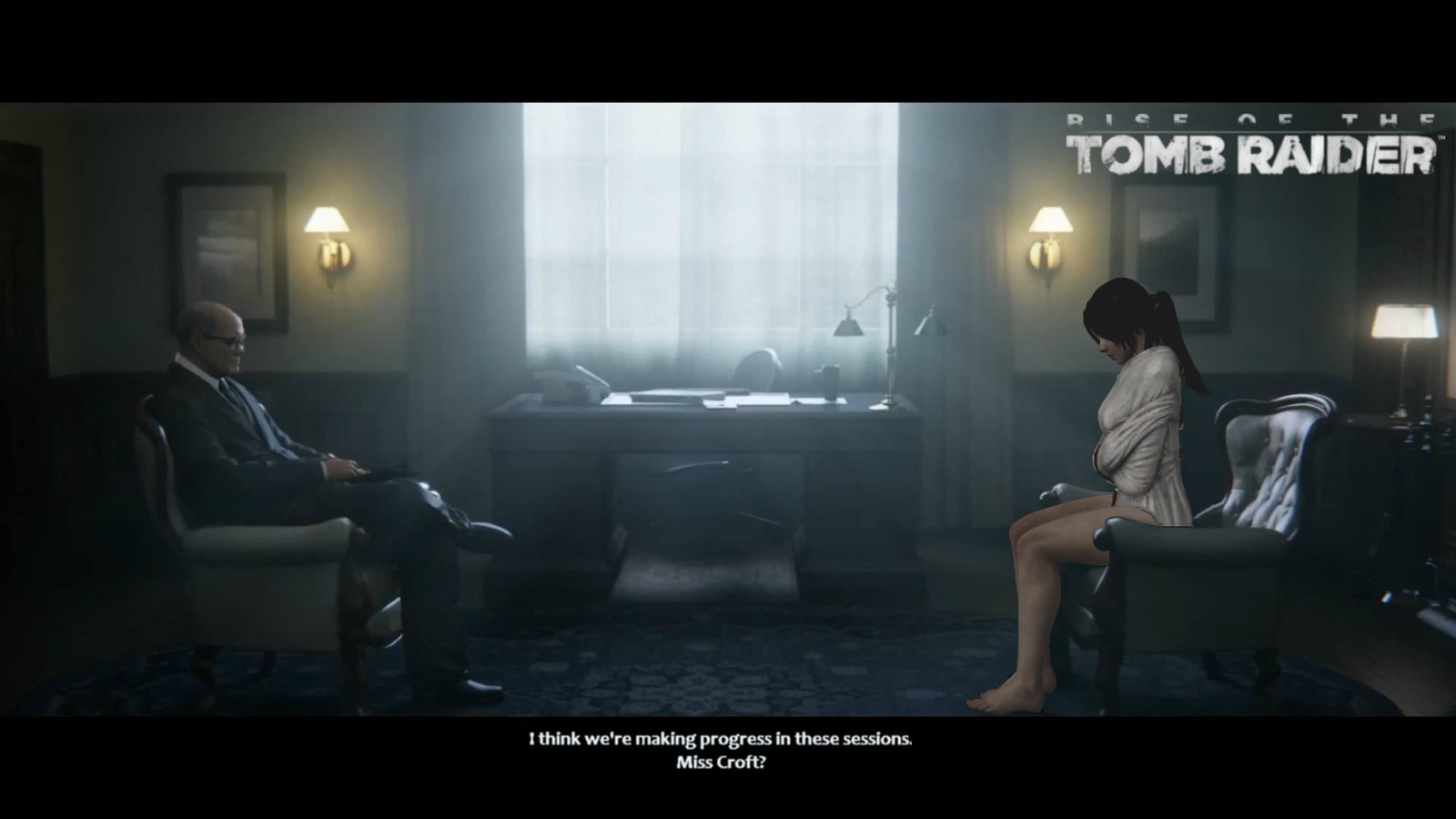
rise_of_the_tomb_raider_by_honkus2-d7lsknm

by Rob Crossley

Rise of the Tomb Raider will star a distraught Lara Croft one year after her perilous expedition across the Yamatai, now obsessed with immortality myths and venturing across the frozen wilds of Siberia for answers.

The new details were disclosed in the latest edition of Game Informer magazine, which describes the Crystal Dynamics-developed adventure as both a fight against the savagery of nature and Lara’s internal battle with the trauma from her last game.

Storms, avalanches, wolves, and grizzly bears are just some of the natural hazards that players will encounter in the snow-blanketed region of Russia. According to Crystal Dynamics, the game will also take players though other distinct locations across the globe, with Game Informer citing “dusty sandscapes, dense forests, and underwater caverns”.

“Lara feels like an outsider in the real world”
— franchise director Noah Hughes

Rise of the Tomb Raider follows Lara one year after her fight for survival in Yamatai. Having discovered on that island what she believed was an immortal being, Lara is now in search of Kitezhm, a mythical city she believes can be found in Siberia, which could provide answers to her question.

“People think she’s crazier than she is,” said franchise creative director Noah Hughes.

“If you came back [from Yamatai] and started talking about an immortal being and a secret sun-worshipping cult, that’s a tough pill to swallow. So Lara feels like an outsider in the real world. Her next expedition is a way of dealing with the trauma she’s been through, but it’s also a way of finding peace by chasing any shred of evidence that what she saw was real.”

Players will have enhanced options for crafting new survival gear along the way. Plants, minerals, metals, clothes, hides, and other rare relics can be collected, though some preparation will be required to amass enough items for crafting.

“You might have a particular upgrade that requires an alpha wolf hide, but wolves only come out at certain times of the day,” Hughes says, inferring to some form of day-night cycle within the game world.

The serious tone and sheer brutality of the previous game will also make a comeback here, he said, and the effects on Lara’s psychology will be fairly well pronounced.

“Lara’s learned a lot from the last game, but she doesn’t have unflinching confidence. She can’t face unlimited opponents unscathed. She’s in a life-and-death situation, so we want to capture a certain amount of humanity by showing that Lara is continually challenged as a character. It’s important for us to capture those moments where she is uncertain about her identity, her direction, or her ability to come out alive.”

In the video above, Hughes also appeared to suggest that the game would lean on more of a Metroidvania style, with environmental puzzles to explore and overcome.

“We love that game structure, I think the most important thing to us is really to live up to that promise of tomb-raiding, and make sure that–as much as this is a game about traversal, exploration and combat–it’s also very much about tombs and puzzle solving.”

Crystal Dynamics also reveals in the Game Informer article that the Tomb Raider development team worked 18-hour days for about a year in order to finish the 2013 reboot on time. It adds that sales, including those of the Definitive Edition, now totals more than 7 million units.

Rise of the Tomb Raider will be a timed Xbox One and Xbox 360 exclusive, scheduled for release later this year, and published by Microsoft.

The Xbox 360 version will be developed by an external studio.
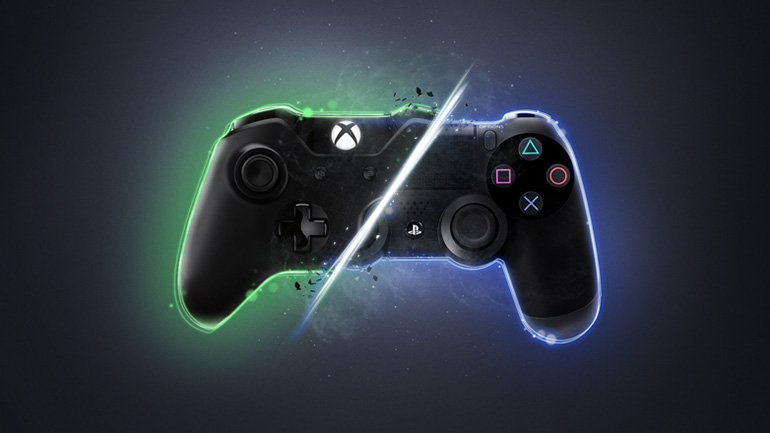
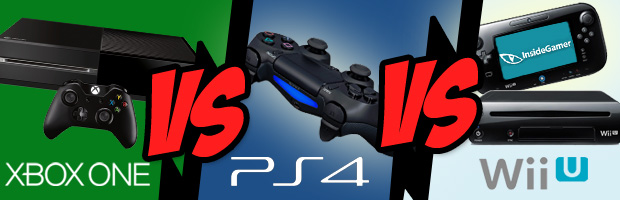
Microsoft-Xbox-One-vs-Sony-PlayStation-4-Side-by-Side-Comparison-Infographics

by Mark Milian

There’s a far more entertaining video game competition happening right now than anything streaming on Twitch. It’s the shootout between Microsoft and Sony as they try to one-up each other in game-console sales.

For those following along at home, Microsoft’s Xbox One pulled ahead in sales during the holiday-shopping season in the U.S., the company said, citing data from market researcher NPD Group. That was the Xbox One’s first lead over the PlayStation 4 since its brief victory in December 2013, when Sony was struggling to produce enough of its hardware.

Several factors determine which system comes out on top in any given month: exclusive game releases, new online multiplayer features, and available apps. (On the latter, PlayStation 4 just got Spotify on Wednesday, Jan 28.) With the latest PlayStation and Xbox each having Blu-ray players, subscription game networks, and a similar roster of games, however, the lines between the two have never been blurrier. That leaves one big wild card: price.

sonyps4console

The PlayStation 4 came out in the U.S. on Nov. 15, 2013—a week before the Xbox One—at $100 less. It took Microsoft seven months to match the $399 price. The company finally undercut Sony in November with a “special, limited-time promotional offer.” You can see what happened next in the chart below, which relies on data from the industry website VGChartz, because NPD declined to release its data.

The $50 discount ended on Jan. 3 as promised, but then Microsoft did something unusual. On Jan. 16, the Xbox One was back at $349. In a press release, Microsoft called it a “special price”—whatever that means. In an e-mail, Microsoft says it “saw a great response” to the holiday promotion and decided to bring it back. “We are not going into depth on the life of the price promotion at this time, but we will share more details soon,” Microsoft says.

The pricing strategy has been good for moving products off the shelf, although not so good for Microsoft’s profit margins. That can even out later as the company collects royalties on game sales and pushes add-ons, such as annual subscriptions to Xbox Live and downloadable content. It’s the reason many console makers are willing to take a loss on the hardware, which Microsoft and Sony are both doing, according to researcher IHS.

Game systems are a somewhat unusual breed among consumer electronics. Apple doesn’t sell the same iPhone for eight years, and you won’t find a six-year-old Lenovo PC on display at Best Buy. While there isn’t a precise formula for the economics of game-console pricing, bargain hunters can look for certain signals to determine when to buy a new system. The price is highest at launch, when hardcore gamers are willing to wait in line and supplies are low as hardware makers struggle to churn enough off assembly lines. Price drops tend to happen more frequently in the first couple of years with each new generation of consoles. And if you see an Xbox go down in price, you can expect the PlayStation won’t be far behind.

Lowering the price isn’t generally the preferred option, says Julia Miller, a former marketing executive at Microsoft and Sega. “Price is always one of your marketing levers, but the ramifications of that are pretty widespread, because you have the physical cost of goods to create the hardware,” says Miller, who now runs a digital-marketing agency called Digipowers where Sony’s PlayStation is a client. “You can only get to a certain point of dropping price to be successful.”

xboxlaunch_screen010

When Miller helped launch the original Xbox at Microsoft, things were simpler in the console price wars. As you can see from the chart below, price drops were formulaic: One company announces a reduction, and the other follows almost immediately. Microsoft was just getting a feel for the console market, and Sony could rely on a loyal fan base it amassed with its first PlayStation. (Nintendo’s GameCube was a distant third.)

At that time, the companies relied more heavily on other factors besides price to differentiate. Microsoft introduced Xbox Live in 2002 with an emphasis on voice chat, which was new to the living room, and an exclusive shooter called Halo that was an instant hit. Sony had a two-year window starting in 2001 when it had the only game system that played the mobster breakout Grand Theft Auto III.

These exclusive games introduced a different way to sell systems. Hardware makers cut deals with game publishers to bundle popular games with consoles, a move that increased demand each time a new release in the series came out. Microsoft and Sony liked doing this because it delayed the need for a permanent price drop, and publishers liked it because they sold more games. “Bundling allowed you to satisfy a consumer demand for value,” Miller says. “Bundles help sell consoles.”

In the next generation of consoles, price was used more aggressively. The Xbox 360 not only had a one-year head start on the PlayStation 3, but it was $100 cheaper. During the new PlayStation’s first year on the market, Microsoft cut the price of its cheapest Xbox 360 by $20 and then by another $80 the next year. The Xbox 360 won this round. (Well, really the Nintendo Wii did, but its simpler, motion-based games appealed to a different audience.) There were major differences between the two systems from Sony and Microsoft. For one, the PlayStation 3 had a Blu-ray player, and the Xbox 360 didn’t. But Microsoft created another big franchise in 2006 with Gears of War, which helped it sell more consoles.

2112138979_1369656419

That brings us to today. Must-have games are now generally available for both the PlayStation 4 and Xbox One. None of the 10 top-selling games last year were exclusive to either system. (Nintendo’s Wii U had one: Super Smash Bros.) Microsoft and Sony have brokered for exclusive access to certain levels or weapons in some games, which they’ll bundle with their consoles, but those distinctions can be harder for gamers to make.

So price is becoming an even more important lever. Sony, which didn’t respond to a request for comment, can’t afford to take as big a loss as Microsoft in the game business. The Japanese company, which is in the middle of cutting thousands of jobs, has $14.1 billion in cash and equivalents, according to data compiled by Bloomberg. Microsoft has more than six times that amount, which means it can afford to eat an extra $50 per console for quite a long time.

KenLevine2

by  Joey Davidson

After basically closing Irrational Games once he was finished with BioShock Infinite and its DLC, Ken Levine formed a new studio within 2K Games and got to work on another game.

Yesterday on Twitter, Levine opened up to taking a string of questions from fans about his new project. Those questions lead to an interesting set of notions, some totally predictable, surrounding this new effort.

Let’s start with the basics. This will likely be a first-person title.

RT @braxton_wheeler: @IGLevine what is the game about? will it be first person or third? -Current thinking is first.

The game is, and I love these terms, both “sci-fi ish” and “open worldish.” Ha.

RT @Trey_Tice: give us a hint as to what this setting is? Or is that confidential? –We’re playing with something sci fi. Or sci-fi ish.

@krustentier7 i think small open worldish (but not necessarily outdoors) rpg with quest structure coming from passion system.

Levine says they’re looking at films from creators like Kubrick and Wes Anderson for inspiration (talk about two very unique styles). He says the title will offer a “replayable narrative,” chapter-like structure and a completely new universe.

It sounds like something Levine would work on, and I offer that without a single measure of insult. It’s a compelling set of ideas, though we really have nothing too concrete here to go on.

I will say that I dig Kubrick, Anderson, sci-fi themes and the idea of a replayable narrative. All of that sounds great. How it will come together for a game? We’ll find out when Levine is good and ready to tell us.

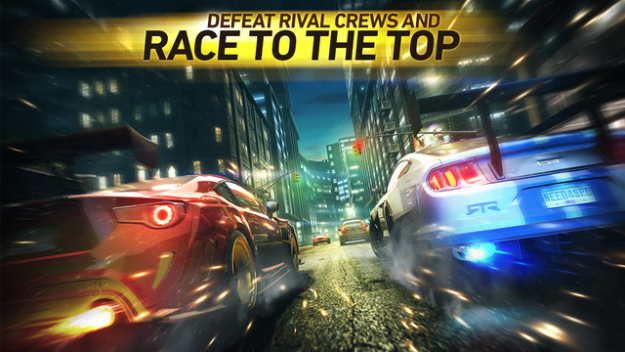
need-for-speed-no-limits

by Chris Smith

The freemium game industry just took a twist for the worse — although you can’t help but appreciate the ingenuity of developers in this particular case. EA has decided that players will need gas for their car races inside Need for Speed: No Limits, and the company will sell it to you via in-app purchases.

Of course, there’s always the option of waiting for your tank to fill back up automatically, but that will not always coincide with your need for gaming, as that will take some time.

As Android Police reports, the game, which is available on iPhone and should be launched on Android in the future, requires a certain amount of gas for each race, meaning that some players may choose to pay for gas to be able to play the game at their own pace.

In other words, EA’s “No Limits” game is rather limited in terms of what you can do without in-app purchases.

As expected, there are multiple levels of currency in the game, the most precious one being gold that can be bought with actual money. And no, before you ask, there’s likely no correlation between the current price of oil and Need for Speed: No Limits‘ gas cost.

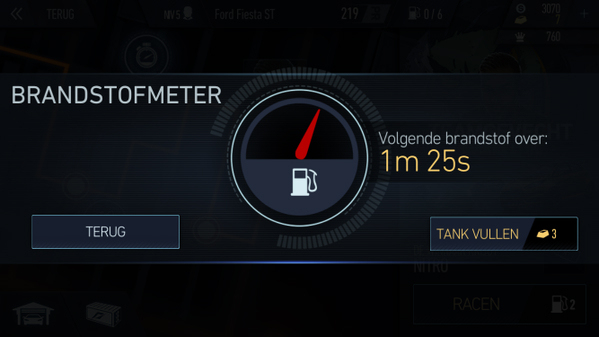
An image showing gas consumption as featured inside the game follows below.

need-for-speed-no-limits-gas-in-app-purchase


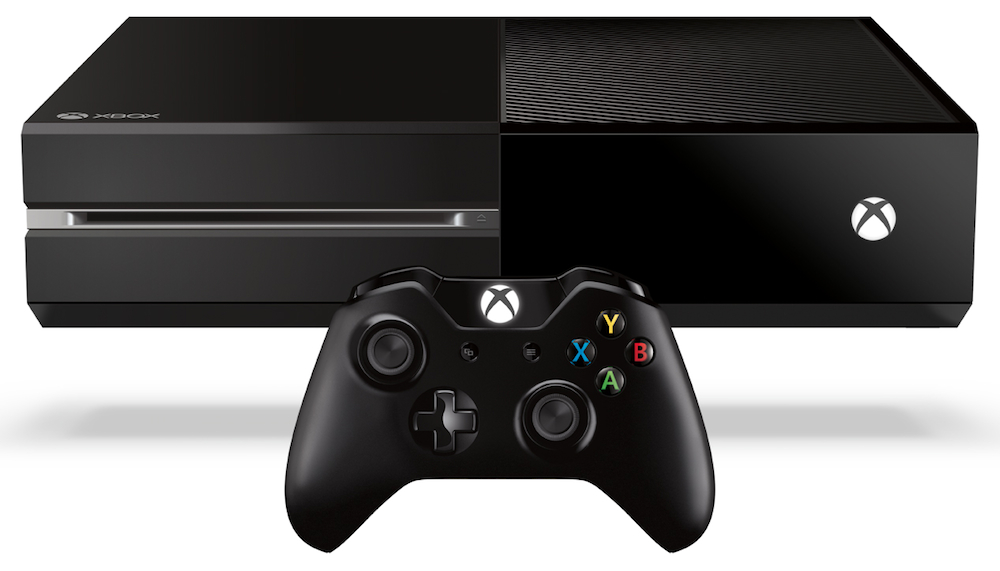
xboxoneconsole

by Sam Mattera

Price makes all the difference

Microsoft’s Xbox One video game console finished the year on a high note, outselling Sony’s rival PlayStation 4 during the key holiday months of November and December, according to recent data from NPD. Microsoft’s machine has regained positive momentum, particularly in the United States.

Sony remains in the lead globally, but the PlayStation 4’s dominance — which appeared absolute just two months ago — has begun to waver.

More like the Xbox 180

The Xbox One has transformed significantly over the last 14 months. At its late 2013 debut, the console was 25% more expensive than the PlayStation 4, did not include any games, and required the use of Kinect 2.0.

But prompted by a widening sales gap, Microsoft took aggressive action, slashing the price of the Xbox One, ditching Kinect, and offering a multitude of free games. Today, you can purchase the Kinect-less Xbox One Assassin’s Creed Bundle (which includes two games) for just $349 — $50 less than Sony’s PlayStation 4.

Despite falling short of analyst expectations in September, Microsoft benefited from the holiday shopping season. In the U.S., the Xbox One was the best-selling console in both November and December, and in terms of unit sales, it outpaced its predecessor, the Xbox 360, by 50% at that point in its lifecycle, according to a company blog. Moreover, Xbox One gamers appear to be more active, buying more games during those two months than owners of the PlayStation 4.

These results come as a surprise to me, as the Xbox One appeared to be in dire straits going into the holiday season. Although Microsoft had offered a variety of promotions throughout 2014, the PlayStation 4 had consistently outsold the Xbox One — at times by a wide margin — each and every month. Given the increasing connectivity of the platforms — many games, including Titanfall, Destiny and Evolve are based almost entirely around online play — it appeared that network effects were benefiting Sony.

Sony looks to have the stronger software lineup in the first half

It seems clear, however, that buyers can be persuaded if the price is attractive enough. While Microsoft has not offered exact sales figures for the Xbox One, it’s probably still lagging behind the PlayStation 4 — which, according to Sony, has sold at least 18.5 million units globally. Still, the gap may be close enough now to ensure that the two machines stay competitive.

Microsoft has a strong slate of games planned for 2015, but the PlayStation 4 should benefit from two major exclusives coming in the first half of the year. The Xbox One will get marquee titles such as Halo 5 and Rise of the Tomb Raider next fall, but the PlayStation 4 will get The Order: 1886 and Bloodborne in February and March, respectively. With the Xbox One offering no substantial exclusives in the first half of the year, Sony could regain the lead.

Disaster averted

Investors have questioned the importance of the Xbox One to Microsoft as a whole, but the company has remained steadfast in its support of the brand. Former CEO Steve Ballmer declared that Microsoft had accomplished “two-and-a-half tricks” over its multidecade life — creating Windows, bringing microprocessor technology into the data center, and Xbox. Its new CEO, Satya Nadella, has since reiterated Microsoft’s commitment to gaming.

Its a good thing, then, that Microsoft was able to retake the lead in November and December. With its competitor outselling it, at times, by a ratio of 2-to-1, the Xbox One was not in a good place early last year. To its credit, Microsoft appears to have turned the situation around completely.

final_fantasy_vii_56120

by Jeff Grubb

Cloud gaming means you don’t need a console to play video games, and now another new company is stepping in to make that happen.

Shinra, a technology company based out of New York, is kicking off a beta-testing phase for its new game-streaming platform. The company’s cloud gaming will enable players to access a number of publisher Square Enix’s releases from throughout the years. Those include Final Fantasy VII, 2013’s Tomb Raider, and Hitman: Absolution. The test starts Feb. 17 and runs for three months.

To get the beta off the ground, Shinra partnered with Internet company NTT East and Techorus Coporation. NTT East is ensuring that Shinra’s supercomputer has direct access to Japan’s high-speed fiber-optic network. Techorus is providing the rendering technology that keeps each instance of a cloud game running smoothly.

In addition to the traditional Square Enix games, Shinra will also release a massively multiplayer online twin-stick space shooter. The company is hoping this will demonstrate the service’s versatility and how it might make sense for Internet gaming cafes, which remain popular in Asia.

While this test is only coming to Japan, Shinra president Yoichi Wada, the former president of Square Enix, says the company is planning a similar beta for the United States this summer.

In a statement, Wada went on to talk about how Shinra wants to change “everything about content, infrastructure, and business models” in the gaming industry.

DSCF7225_0_0_0

by Sam Byford

Of course you want the limited edition 20th Anniversary PS4 in original-PlayStation gray. How could you not? It’s gorgeous. But how much would you pay for the most prestigious model of all — the one with serial number 00001 from the run of 12,300 units?

Well, Sony decided to find out by holding a bidding war on Yahoo Auctions in Japan, and when all was said and done one lucky user had secured themselves the console for ¥15,135,000 — that’s about $129,000. “We appreciate all who participated in the auction and are surprised at the highest bid price, which was higher than our expectations,” a Sony representative told The Wall Street Journal. The money will be donated to Save The Children Japan.

Earlier this month Sony announced that the PlayStation 4 has sold over 18.5 million units worldwide since its launch in late 2013. The regular price is $399.

093f12bd8de644972411c49afecee565

by Eddie Makuch

Following the announcement of a $15 million settlement last year, Sony on Friday began reaching out to United States users with details about how they can claim compensation over the 2011 PlayStation Network attack that compromised more than 70 million accounts.

Anyone who had a PlayStation Network, Qriocity, or Sony Online Entertainment account before May 15, 2011 can request documents to file a settlement claim via PSNSOESettlement.com.

Individual compensation will vary depending in part on what type of account(s) you had at the time. Some of the options, per Sony’s official descriptions, include:

  • Payment equal to paid wallet balances (if $2 or more) in PSN or SOE accounts that have been inactive since the intrusions.
  • One or more of the following: a free PS3 or PSP game, three free PS3 themes, or a free three-month subscription to PlayStation Plus (once valid claims exceed $10 million, class members will still be eligible for one free month of PlayStation Plus).
  • A free month of Music Unlimited for Qriocity account holders who did not have a PSN account.
  • $4.50 in SOE Station Cash (amounts will be reduced proportionally if valid claims exceed $4 million).

In addition, Sony said it will reimburse users with out-of-pocket charges who suffered legitimate identity theft related to the network intrusion. Users can receive up to $2,500, though they’ll need to provide documentation that the theft was caused by the network hack.

People who don’t want to file claim forms over the internet can request the forms from Sony’s Claims Administrator by writing to “PSN-SOE Settlement, PO Box 1947, Faribault, MN 55021” or by calling 1-877-552-1284.

A court assigned to the case will hold a Fairness Hearing on May 1, 2015 to confirm the settlement, and all claim submissions must be filed either online or in the mail by August 31, 2015.

About the settlement terms in general, Sony writes: “The Sony Entities deny any claims of wrongdoing in this case, and the settlement does not mean that the Sony Entities violated any laws or did anything wrong.”

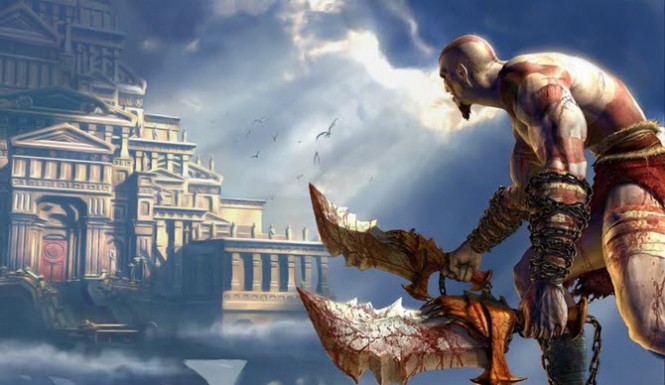
god-of-war-665x385

by Scott Grill

The PlayStation Network security breach that occurred in 2011 may seem like it happened forever ago in gaming terms, but a class action lawsuit against Sony for the hack was concluded. The company settled that lawsuit recently, and is now offering a free PlayStation 3 game, PS Vita game, PSP game, PS Plus membership, or free themes as compensation to any of the more than 70 million accounts affected.

Those eligible to receive compensation for the security breach had a PlayStation Network, Qrocity, or Sony Online Entertainment account prior to May 15, 2011. Each account type is eligible for different forms of compensation, depending on whether on whether or not they participated in the “Welcome Back” program that Sony initially ran to compensate those affected by the breach.
psn-logo
For example, if you already accepted a free game from the “Welcome Back” program, then you can receive only one free game or theme as part of the settlement. If you did not receive anything from the “Welcome Back” program, then you are eligible for two. Additionally, the three-month PS Plus offer is only available to those who do not currently have a membership with the premium service.

This will require some work on your end though. There is paperwork that you can fill out either to file electronically or to send through snail mail. You will have to provide your personal information along with the list of PlayStation Network or other Sony accounts you had before May 15, 2011 when the service came under attack.

Here is the list of free PS3, PS Vita, PS Vita games, and themes that are being offered.

PS3

  • Dead Nation
  • inFamous
  • LittleBigPlanet
  • Super Stardust HD
  • Rain
  • Puppeteer
  • Invizimals: Lost Kingdom
  • God of War HD Collection

PSP

  • LittleBigPlanet
  • Modnation Racers
  • Patapon 3
  • Killzone Liberation
  • Wipeout Pure
  • Syphon Filter: Dark Mirror

PS Vita

  • LittleBigPlanet
  • Patapon 3
  • Killzone: Liberation

Themes

  • WipeEout HD Dynamic Theme
  • Uncharted 3: Drake’s Deception Dynamic Theme
  • Tokyo Jungle Dynamic Theme
  • The Last of Us Dynamic Theme
  • Ratchet & Clank Dynamic Theme
  • Uncharted 2: Among Thieves Dynamic Theme

This is a separate offer from the recently announced compensation to PlayStation Plus users for the PSN outage over the holidays. Those who had active subscriptions to the premium service during the outage had their membership extended by five days. Additionally, all PSN users will receive a 10 percent discount code that can be used to purchase games and other content on the PS Store. This promotion starts Friday, January 23, and runs through the weekend, per the PlayStation Blog.

Are you one of those affected by the 2011 PlayStation Network hack? Sound off in the comments below if you will be taking advantage of this compensation.

Stan-Lee

by John ‘Spartan’ Nguyen

Marvel has made a big announcement today about the Marvel Universe by teasing that it will end. With everything “ending” and the Marvel and Ultimate Universe colliding, what does the godfather of Marvel think about a possible new beginning? Stan Lee, the man who co-created the X-Men, Spider-Man, Hulk, Fantastic Four, and more, is fine with it.

“It’s probably good,” Lee said. “Anything they do that’s unexpected and different usually captures the attention of the fans. People will want to follow it to see what happens and where it will lead. Marvel cannot keep doing the same stories over and over again. You always have to come up with new angles and new approaches to things. I think it’s probably a good idea. It sounds intriguing to me.”

Even though he thinks it’s intriguing, he still has a spot for the original.

“Of course I have an emotional attachment to the original Marvel Universe, because I was so involved in it,” he said. “But that doesn’t mean I expect it to be that way forever. It might be better under this new approach. I’m eager to see what might happen.”

If Lee had the chance to do it all over, would he do it?

“At the time, what I did, I thought was the right way to go, and maybe sometimes, even the perfect way to go,” Lee said. “I liked making the Fantastic Four superheroes without a secret identity. I liked the tragedy of Spider-Man’s origin, the ‘with great power, there must also come great responsibility.’ I thought it was the right way of doing things at the time. And I still like what I’ve done. I can’t think, off the top of my head, of anything I’d really want to change.”

Lee understands that it’s important to surprise fans.

“I was once the creative head of the company, but the company was smaller,” he said. “I don’t know what I would do if I was the creative head of the company today. I’d have to ponder that for a bit. I know that you always have to have surprises. You always have to make the reader say, ‘Wow, I never expected this!’ You have to keep doing that. It’s kind of become the Marvel tradition. If this continues that tradition, I’m happy for them all, and I’m happy for the fans.”