Archive for the ‘Game Articles’ Category

kojima-productions-japan-la-studios-logos(m)

by Matt Stanyon

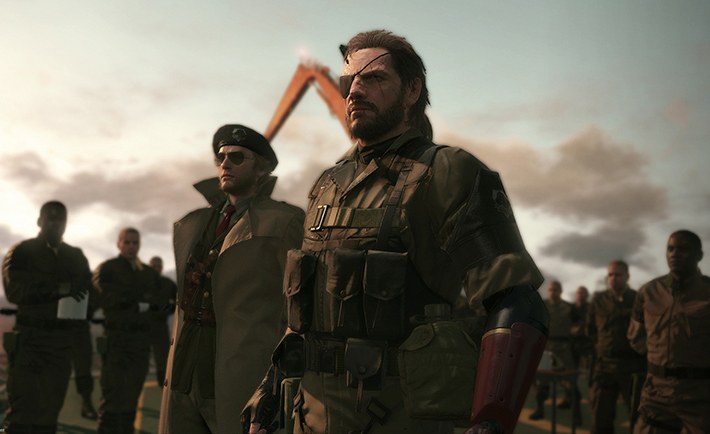
In a fresh interview with GameSpark (via Reddit and The Snake Soup), Konami’s Editorial Department has revealed that Hideo Kojima will continue as the director of the Metal Gear series, and that because of the reorganization at Konami, Kojima Productions Japan will be disbanded. Konami says that “all releases previously made under different studios will be centralized and coordinated from headquarters.”

We’ve also got confirmation that the staff at Kojima Productions Japan are dealing with restricted internet and e-mail access, because of the reorganization, so that they can provide a greater development environment, and that Hideo Kojima will become less available for interviews.

Will Kojima Productions be disbanded?
Yes. All releases previously made under different studios will be centralized and coordinated from headquarters.

Will Kojima be leaving his position?
Kojima will remain the director of the “Metal Gear” series. He will continue to innovate with new ideas as creator.

What about talks of him stepping down as director? Are those true?
He is still one of our employees, and is continuing to work full-strength on “MGSV:TPP”.

And is it true that he has been changed to a contract employee?
We cannot reveal private details.

Is it true that KojiPro’s staff have restricted internet and e-mail access?
It is true that the reorganization has resulted in this. This is done in order to provide a greater development environment.

In that case, will Kojima be less available for interviews?
As a result, yes.

The last couple of days have been crazy when it comes to the future of Hideo Kojima and Kojima Productions Japan. It all started when Konami started removing Hideo Kojima’s name from all websites, social media and Metal Gear Solid branding, and even renamed the new Kojima Productions LA Studio to Konami Los Angeles Studio. Then, an inside source at Konami said that Hideo Kojima will apparently leave the publisher following the completion of Metal Gear Solid V: The Phantom Pain.

Apparently, Kojima Productions and Konami have had a fallout which led to senior staff at the studio getting restricted access to corporate internet, e-mails and phones, and meant that key developers like Hideo Kojima would have limited opportunities to lend their names to promotions for the game. The fallout was described as a “power struggle” between Kojima Productions and Konami, and led the publisher to make “drastic changes,” including the employee status of its Metal Gear team, which saw some senior staff becoming contractors at the publisher rather than permanent employees.

Following that, Konami revealed that were planning to “embark on production of a “new Metal Gear series” after the completion of Metal Gear Solid V: The Phantom Pain, and that they were seeking “key staff” to work on that “new Metal Gear series”, with auditions to “begin” upon production. They also revealed that Hideo Kojima would “remain involved throughout” the development of Metal Gear Solid V: The Phantom Pain. Hideo Kojima himself said that he is “100% involved” in the continued development of Metal Gear Solid V: The Phantom Pain and will continue working on the game until the end.

Hideo-Kojima

by Chris Mawson

The rift between Konami and Hideo Kojima looks to be intensifying, as the publisher has today effectively erased the Metal Gear creator’s name from series history.

It was well publicised yesterday that the studio had removed all Kojima Productions branding from promotional materials for the upcoming Metal Gear Solid V: The Phantom Pain, following rumours that the game director and his team are set to part ways with Konami.

tpp-coverlarge

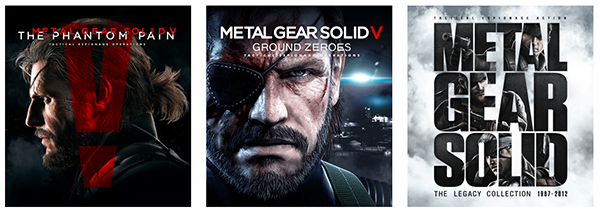
It seems they’ve gone even further than that, however, with Kojima’s name also being removed from the company’s back catalogue of Metal Gear titles, including Metal Gear Solid V: Ground Zeroes and the Metal Gear Solid Legacy Collection. Below are two screenshots: one taken from an archived version of the official Metal Gear website late last year, and one of how the site currently looks:

mgskojima-screen1

mgskojima-screen2

In related news, Konami issued a statement this morning in which it refused to confirm Kojima’s involvement with the company beyond the release of the Phantom Pain, while somewhat ominously announcing that it will be hiring a new development team to begin working on a new Metal Gear title following the conclusion of The Phantom Pain. The game’s September 1 release date is currently unaffected.

windows-10-devices

by Chris Smith

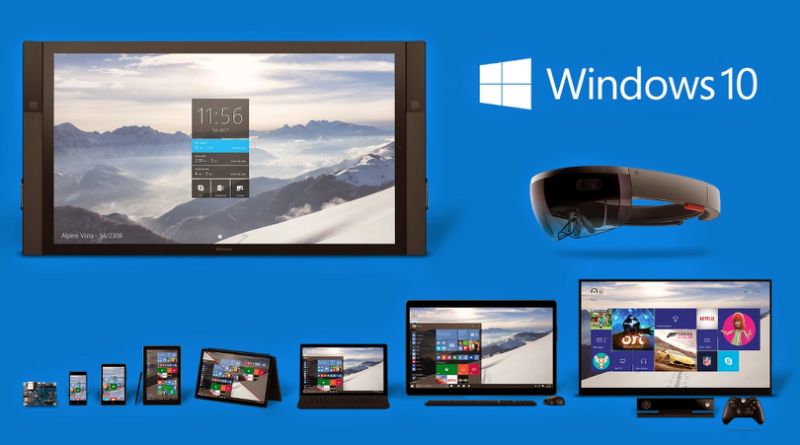
Microsoft earlier this week revealed that it plans to offer Windows pirates a free upgrade to Windows 10, even if they do not own a genuine copy of a Windows version eligible to receive the update free of charge. Initially, it wasn’t clear whether the policy applies to anyone currently stealing Windows, or only to Chinese pirates. Ars Technica has learned more details on the matter, revealing that the free update isn’t necessarily the good news pirates may have been expecting.

The publication says that ZDNet has confirmed the update path for illegal Windows copies applies to pirates everywhere, not just in China. This rather lax policy towards piracy might also encourage certain users to already take advantage of Microsoft’s intentions by installing a non-genuine Windows version on their devices and just wait for the final Windows 10 build to be released.

But once the Windows 10 upgrade is installed over a non-genuine Windows 7 or Windows 8.x version, that computer will keep being considered non-genuine by Microsoft.

“With Windows 10, although non-Genuine PCs may be able to upgrade to Windows 10, the upgrade will not change the genuine state of the license…” the company told Ars. “If a device was considered non-genuine or mislicensed prior to the upgrade, that device will continue to be considered non-genuine or mislicensed after the upgrade.”

It’s not clear what the repercussions might be after the Windows 10 upgrade is installed on a non-licensed device. The publication asked Microsoft for clarification on the material implications of getting a “non-genuine” upgrade, but the company did not elaborate on the matter.

Therefore, anyone planning to take advantage of this loophole towards obtaining a free Windows 10 copy – that’s installing a pirated copy of Windows on a computer and then simply updating it to Windows 10 – should think twice about what the potential implications might be.

gears_of_war_3_xbox_game-HD

by Bob Fekete

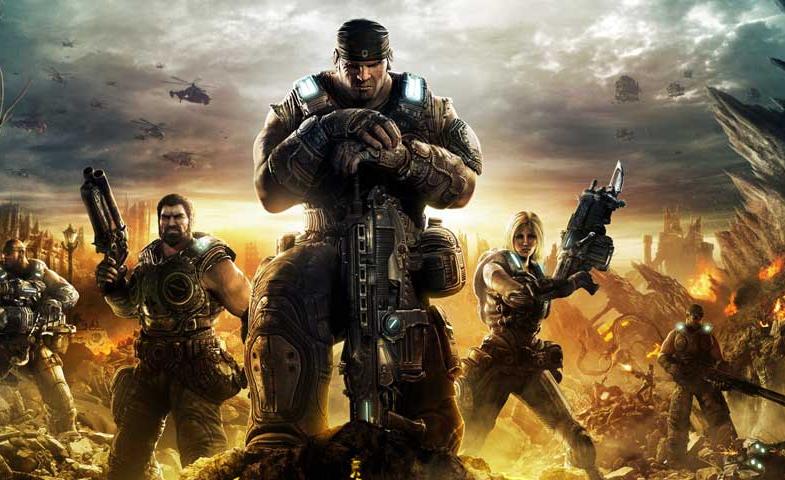
Rumors were flying Wednesday after what many interpreted as Phil Spencer, the head of Xbox, confirming a Gears of War collection could be coming to Xbox One. These rumors have since been squashed by Rod Fergusson, the Studio Manager at Black Tusk Studios. He did, however, confirm we will be seeing something from his studio at E3.

I love the passion, but there’s no Marcus Fenix Collection. We ARE working on other exciting Gears projects. I’ll see you at E3!

Fergusson tweeted Thursday morning that a “Marcus Fenix Collection” is not in the works at Black Tusk Studios. This means we will probably not see a remastered collection of Gears of War 12, and 3, any time soon. This also likely rules out a remaster of the most recent Gears of War: Judgement.

While a Gears of War collection is now out of the question, Fergusson did confirm we would see some form of Gears of War related project at this year’s E3. Seeing as how Gears of War is a Microsoft owned property, this means a trailer will probably debut at the Microsoft press conference in June. Could this be Gears of War 4? Very possible. I’m not quite sure where it could take the Marcus Fenix story, but it could also act as a prequel like Gears of War: Judgement was.


gearsofwar-tease

by Bob Fekete

According to a recent post on the Xbox One subredditGears of War may be seeing a release on Microsoft’s latest console. Based on an image submitted to the site by user Sanders67, the head of Xbox at Microsoft, Phil Spencer, has just teased there may be an announcement coming soon.

gears-tease-spencer

The message exchange reads as follows:

Xbox One user: “Hey Xboss, Please give me a simple answer Are we’ll see GOW collection Soon in my Xbox One . Yes or No :(”

Spencer’s response: “Haha, I can’t announce that. But stay tuned.”

This kind of response obviously doesn’t give any concrete information away, but reading between the lines we can see that Spencer obviously has something to say on the topic. Could this be a non-confirmation of a Gears of War collection coming to Xbox One?

This kind of release certainly wouldn’t be unexpected. Microsoft’s flagship franchise, Halo, has already received the Remastered treatment with Halo: The Master Chief Collection. This release was largely a way to get people to buy an Xbox One and be ready to go once Halo 5: Guardians releases later this fall. Since we do know that game developer Black Tusk Studios is working on the Gears of War franchise, bringing back the Gears of War games on Xbox One right before a Gears of War 4 would be the same strategy.

So what might a Gears of War collection look like? Obviously, Gears of War 1, 2, and 3 would all be included with graphical improvements. Bundling in all of the DLC such as Gears of War 3‘s RAAM’s Shadow story content and all of the additional online maps would also make sense to be included. Like HaloGears of War featured exclusive content on PC, so featuring that on an Xbox for the first time would be neat as well.

The one true mystery about what might be included in a Gears of War collection would be Gears of War: Judgement. The prequel game is set before the events of the first Gears of War, and followed Cole and Baird before they met up with Dom and Marcus. Gears of War: Judgement was not developed by Epic, like the previous Gears of War games. Gears of War: Judgement also featured a more arcade-y approach to Gears of War, with each level having bonus challenges and high scores. It would be awesome to see this included, making a potential Gears of War collection have all the Gears of War related games on it.

So what do you think? Do you want to see a Gears of War collection come to Xbox One? What would you like to see included in the collection? Let us know your thoughts in the comments section below.


b50c9dddfb0645a41761b29abdcce20c

by Emanuel Maiberg

In 2012, Mega Man creator Keiji Inafune and his studio Comcept announced that they were developing a 3DS game called Kaio: King of Pirates, but that project has now been canceled, publisher Marvelous has announced.

Marvelous announced the news in a press release (translated by Siliconera), where it also revealed that it lost around $3.8 million on the project.

Kaio: King of Pirates was going to retell the story of the Romance of the Three Kingdoms (also the subject of the Dynasty Warriors games) with animal pirate characters instead of the traditional historical setting, much like Dragon Ball retells the old Chinese story of Journey to the West.

You can watch the reveal trailer for Kaio: King of Pirates above.

Keiji Inafune and Comcept’s other big project, Mighty No. 9, seems to be moving along nicely. In January, the studio announced that the side-scrolling platformer is “pretty much finished” and is now heading into the porting and promotional stage.

The game has been given a tentative “Spring 2015” release date target, set to ship on PC, Mac, Linux, PlayStation 4, Xbox One, Wii U, PS Vita, Nintendo 3DS, PlayStation 3, and Xbox 360.

Now,_hackers_have_found_a-062fd8f7ad25f6133fcc396d7fc24dd6

by Julie Bort

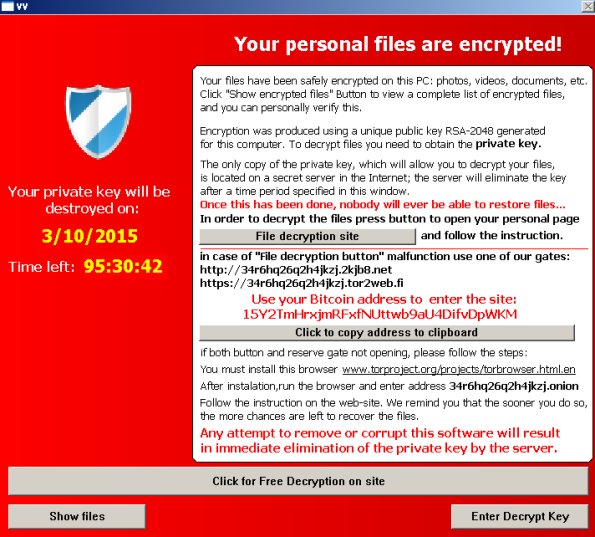
Hackers have hauled in millions over the years, mostly in bitcoins, with a blackmail scheme called ransomware, experts say.

You visit a hacked website or download an evil file, and it encrypts files on your computer and won’t give them back until you pay money to designated account.

Those who visit porn sites have been victims of this type of thing for years. Even police stations have been forced to pay up.

Now two security researchers have found a new type of ransomware that slips in through Flash files or through an old hole in Internet Explorer on a Windows PC and specifically targets video games, writes security researcher Vadim Kotov from Bromium Labs.

Want your game back? Want all your high scores and other game-related data back? Pay up.

“We haven’t seen gamers being targeted by ransomware until now,” writes  in a blog post about the ransomware.

gamer-ransomware.png

And if you’re not a gamer? It can lock down other files on the computer as well, including your iTunes, your Office documents, and your finance software.

The new form of malware, called TeslaCrypt, was discovered by Fabian Wosar of Emsisoft in late February, according to a post on Bleeping Computer.

It holds for ransom about 40 video games including popular single-player games like these:

  • Call of Duty
  • Star Craft 2
  • Diablo
  • Fallout 3
  • Minecraft
  • Half-Life 2
  • Dragon Age: Origins
  • The Elder Scrolls and specifically Skyrim related files
  • Star Wars: The Knights Of The Old Republic
  • WarCraft 3
  • F.E.A.R
  • Saint Rows 2
  • Assassin’s Creed
  • S.T.A.L.K.E.R.
  • Resident Evil 4

It also targets a bunch of popular online games, like World of Warcraft, League of Legends, and some games from Valve, which folks commenting on the Bleeping Computer say is odd, since not much gamer data from streaming games is actually stored on your PC.

Unfortunately, since it can nab other files, once you’re attacked your hosed. “At this time there is no known method of decrypting your files for free,” warns Bleeping Computer.

The best way to avoid this is prevention.

  1. Make sure your web browser and related plug-ins like Flash are the latest, most updated ones your computer can use.
  2. Back up your files.
  3. Beware of auto-backups to Dropbox or other cloud services, Kotov warns. “If you have folders synchronized with an online storage – malware will get to them too,” he says.

by Matt Weinberger

%27Games_were_supposed_to_be-ca3a620a710ccb5efb7ce068a2b3456c

(Brenda Romero / Wikimedia, CC) “There are many people silenced this year” —game developer Brenda Romero. At this week’s Game Developers Conference in San Francisco, a panel of distinguished game developers and critics gathered for a very popular panel, the third annual #1ReasonToBe — as in, “the No. 1 reason to be” a woman who works in games and technology.

The goal of #1ReasonToBe is to focus on the panelists’ accomplishments and amazing experiences.

Last year, the panel reduced the audience to tears before concluding in a standing ovation, and it became the talk of the event.

This year, people lined up before the doors opened, and the crowd filled the large auditorium.

“I hope to do more than just live; I hope to thrive,”  Elizabeth LaPensee said of her experiences as a Native American woman in video games.

It’s a common sentiment lately. The rise of harassment campaigns like the infamous GamerGate movement makes women scared to make games or work in technology at all, and we hear more and more about women who quit technical jobs over it. Those who stay find themselves unwilling or unable to speak up for fear of losing their jobs, or worse.

“There are many people silenced this year,” panel moderator and game developer Brenda Romero said.
 %27Games_were_supposed_to_be-e0ef99bdda27592664501a761de95803

Game developers, designers, and critics discussed their reasons for staying in the industry at GDC 2015. In a powerful segment called the “Empty Chair,” Romero displayed anonymous comments made by people too afraid to speak up publicly, while the room stood completely silent. For example:

  • “Games were supposed to be a fun career choice. Now I’m afraid I’ll get murdered.”
  • “I used to check Twitter for fun. Now it’s fear.”
  • “There isn’t a woman alive who doesn’t have to worry about this.”
  • “I don’t draw attention to my femininity in order to survive as a developer. I disguise it with tomboyish behavior and silliness. I am neither.”

Audience members and panelists alike could be heard crying.

Professor  Constance Steinkuehler of the University of Wisconsin at Madison talked about how she managed to sneak a toy gun from the massively popular game “Portal” into the White House during her time as a policy adviser for President Barack Obama — as well as helping shape the Obama Administration’s policy on video games and gun violence.

“You can play the games that you want to play, and I can play the games I want to play, and that’s called free speech,”  Steinkuehler said. “I can make the games I want to make, and you can’t stop me.”

 %27Games_were_supposed_to_be-c722fe14fbd9de32eb7247b9fade0ae7

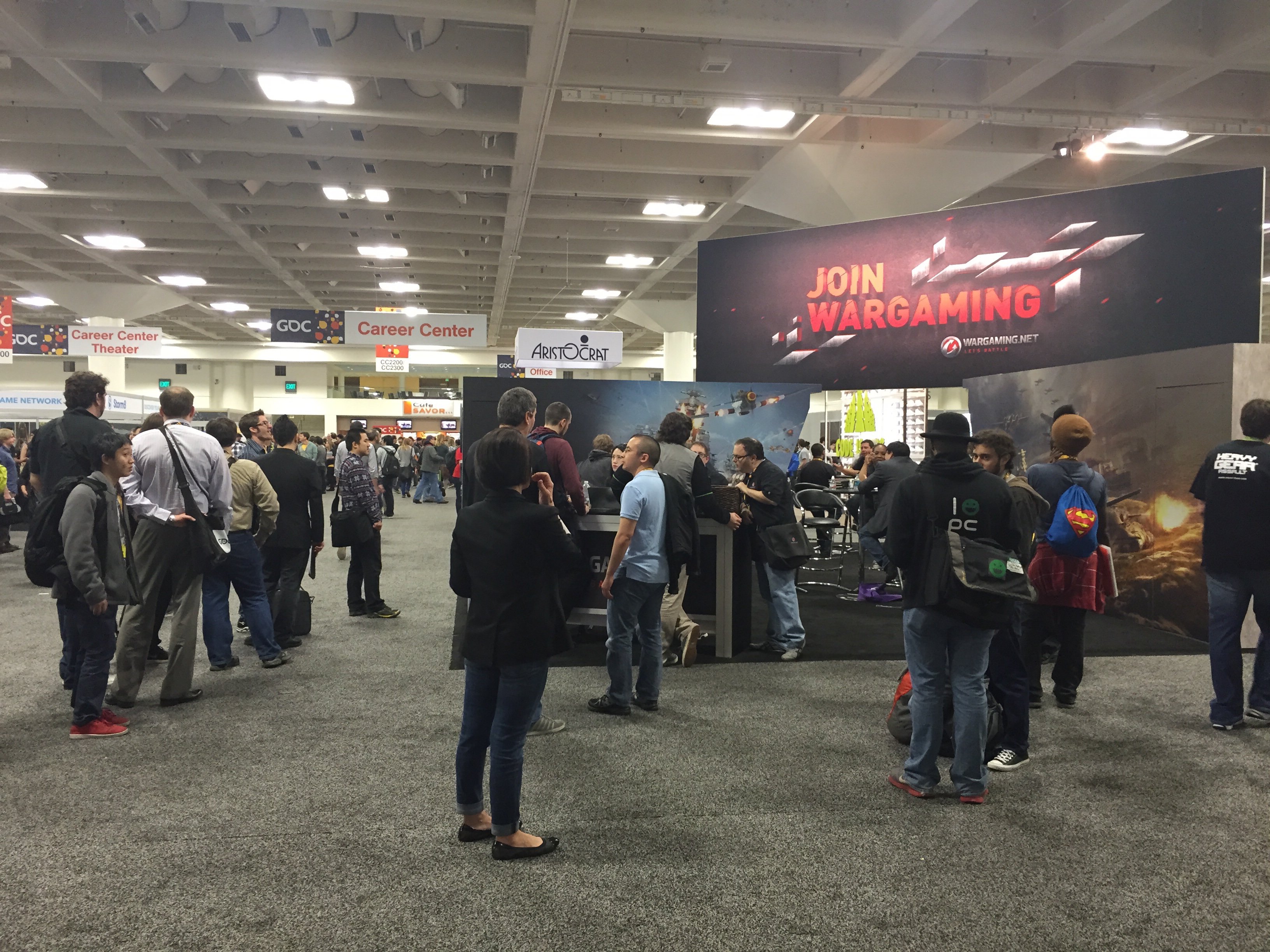
Prospective game developers lined up to meet with Wargaming recruiters at GDC 2015. That’s the reason to be in video games, for  Steinkuehler : It’s free speech, pure and simple.

The next panelist, EA creative director Amy Hennig,  discussed her love affair with old-school arcades and the Atari 2600, which eventually faded. She went to film school instead, and her dream was to become a cinematographer. But she was told it was for men only and to find another career.

She never gave up, and she eventually took a job at Atari making a game for its Atari 7800 game console to help pay for her tuition. Though the game wasn’t great, it made her consider a real career, working her way up in the industry, and doing a little bit of design work for EA on classics like “Desert Storm” and not-so-classics like Super Nintendo’s “Michael Jordan: Chaos In The Windy City.”

Her career continues to take off, with stints at major studios like Crystal Dynamics and Naughty Dog. Most recently she led creative direction for the “Uncharted” series, and now she is back at EA working on a “Star Wars” game.

 %27Games_were_supposed_to_be-289fd6a9265d3fdd853de802e7bfbfa5

For Hennig, her main reason to be in the games industry is that it has presented recurring opportunities and rewards for her, thanks to her tenacity.

“These things are not the game industry,” Hennig said of the GamerGate controversy and the harassment it involved. It’s not a man’s world, she said, adding that it was important to fight that perception.

Sela Davis, a software engineer with Microsoft, spoke on her experiences as a child who made games on her ZZT computer who then went to the Rochester Institute of Technology for information technology, only to take a break and go into creative writing and metalsmithing, and eventually a stint at SAP before going back to finish her degree.

“I wasn’t happy in art, and I wasn’t happy in tech,” Davis said of what led her to go back to RIT and learn to really make games.

Her career in games started to take off. Soon, she ran up against impostor syndrome, made much worse by the fact that she was often the only woman in the room. Not feeling as if you fit in with everybody else in the room can eat at your confidence.

Davis’ one reason to be in the games industry was that it needed more people who could feed one another’s energy.

Adriel Wallick, the independent game developer better known as ” MsMinotaur,” also touched on her own experiences with playing games. Video games were her escape when she was lonely, and she used it to bond with friends.

“They let us do lots of things,” Wallick said.

Eventually her interest turned to programming, and she built a rudimentary text adventure. Later in her life, she discovered the independent video game scene, and she started building small projects in between punching the clock at her day job. Soon, she connected with the Boston-based game studio Harmonix. Along the way, she found she got a lot of respect and support and mentorship from the games community.

“It’s allowed me to be a part of all these communities who have made me feel like family,” Wallick said of her No. 1 reason to love the games industry.

Finally, the panel turned to Katherine Cross, a Ph.D. candidate with the City University of New York, where she studies online harassment.

“Boy, have I ever been given a case study,” Cross said, referring to GamerGate, to laughs.

Cross took an academic approach to her presentation: Women are in the industry on paper, working as critics and coders, engineers and economists. The gap in understanding why harassment is a big deal, Cross said, comes because some do not realize the internet is real life, where people do business and present the work that matters to them. That’s why harassment matters, she said, because it interferes with and scares people away from a space that really matters.

When Cross faced with the wrath of GamerGate for discussing the subject publicly, she said, there was only one thing to do: Write about games more. Cue a standing ovation.

And so Cross’ reason to be in games is to be part of a community building new, interesting forms of criticism that tackle issues of sex and race in the gaming world. To create a world in which people understand why the internet and video games matter, and so aren’t threatened by women in the field. Change is being made, bit by bit, by people writing on the frontier.

“I study games because they matter. Because gamers matter,” Cross said.

The overall message is that women are here, playing video games, writing about video games, and making video games; they care about video games as much as any other gaming enthusiast, and they’re not going away just because of a hashtag. In fact, games critic Leigh Alexander announced she was launching a new website called Offworld just for criticism and interviews from and with women and minorities in games.

“I am here to stay, and there’s nowhere else I would rather be,” Cross said.

Once again, the #1ReasonToBe panelists each received a standing ovation.

Source: Business Insider

Photo credit: Matt Weinberger


b99a19ac108aa4c2a3d95daed99f97fa

by Collin Campbell

Xbox head Phil Spencer used his GDC presentation this morning to talk about Microsoft’s attempts to integrate Windows 10 with its Xbox and tablet businesses.

Spencer announced that Other Ocean’s sports-platformer IDARB will be cross-play enabled for Xbox One and Windows 10 tablets and PC.

The ID@Xbox program for indie developers is being expanded to cover all Microsoft platforms with tools provided for cross-play development. Various ID@Xbox games for Windows 10 are being demoed at GDC.

A wireless adapter for Windows 10 will be released that allows all Xbox One wireless peripherals to work on Windows devices.

A new action MOBA called Gigantic was announced from Motiga. The game will be available for Windows 10 and Xbox One and will be cross-playable between both, with the same account.

Windows PC space trading game Elite: Dangerous “will come to Xbox this summer.”

Spencer also spoke about the Windows Universal App Platform, which allows developers to create the same game across Windows 10, Xbox and HoloLens, adding that he understood that individual platforms would have their own display and input considerations. He said he wanted to see more games working across the different devices.

His talk, very much aimed at developers, also touched on the Windows Store, which will “enable cross-buy and cross use.” That will allow people to buy games on one platform and access them across platforms, but “it’s not something that we will mandate.”

A new Xbox Live SDK is being released to some “early adopter” developers today, with a full rollout of the API set to come out in the next 12 months. A Universal Development Center will act as a central tool hub for bringing games to multiple devices.

He touched on HoloLens and said that holographic APIs would be made available along with new details.

“All of the parts of gaming at Microsoft are coming together to show a complete vision,” said Spencer, adding that the company is committed to deliver services and games across multiple platforms, and not just console. “We are committed to making Windows 10 the best that gamers have ever had.”

 a7b0ffbd21fde2416497c265d42f451e

Windows 10 is Microsoft’s new PC operating system, due to be introduced later this year. It will be freely available for anyone who owns consumer editions of Windows 7 through to Windows 8.1.

Back in January, Microsoft showed the multiplatform-designed Windows 10 on Xbox as well as its Xbox PC gaming app on Windows 10. The company how it planned to allow games like Forza Horizon 2 to stream Xbox One games direct to their local PC and Windows 10-based tablet, and indicated future plans to stream from Windows 10 PCs back to Xbox.

The company also talked about how free-to-play combat adventure Fable Legends will be cross-playable across both platforms. It unveiled the HoloLens augmented and virtual reality system and announced that Cortana, Microsoft’s voice-powered digital assistant, will be baked into Windows 10.

4010a0330a998ecbb4f9ef6c2fac3bd7

by Colin Campbell

Most game players find evil paths in narrative games a big turn-off. Overwhelmingly, they follow “good” paths as the default option.

Statistics presented by Microsoft technical evangelist Amanda Lange at GDC today showed that, in narrative games where “good” and “evil” were clearly defined as story paths, only 5 percent of players opted for “evil” on a first play-through. The number jumped to around 50 percent on a second run.

In her presentation, “Beyond Binary Choices: How Players Engage With Morality,” Lange showed a series of stats based on in-game achievements and path data. In Infamous, for example, 95 percent of players who completed the game reached the “good” ending while the number who saw the “evil” ending was 65 percent, most of whom, she surmised, probably saw it on a second play.

Lange described herself as a player who enjoys the “identity tourism” of experimenting with morality and identity in games. But based on research she conducted via online polls, she found that most players tended toward making in-game choices the way they might in real life.

This raises an important question for creators of narrative games. If players are not attracted to evil paths, what is the point of them as anything other than added content for subsequent play-throughs?

Some of the answers came through her research. Many respondents said that being evil for its own sake is not attractive, that it needs to come with specific rewards or, at least, a level of ambiguity. Players are more likely to “press the red evil button” if they are in situations where they are trying to impress a specific in-game character or faction.

Players will do unspeakable things to NPCs in open-world situations, but in narrative sequences, they are much more squeamish. Notorious examples include the Grand Theft Auto 5 torture scene and the “No Russian” scene in Call of Duty: Modern Warfare 2, during which innocent civilians are gunned down. Many players reported finding these scenes distressing and uncomfortable.

I want to push the evil button and see what happens

She described these examples as good design, in that they achieved a lot of publicity, but they asked players to do things that they hated doing (No Russian was skippable). For Lange, this tendency to turn away from evil in games is strange. “I always play the bad guy,” she said. “I want to push the evil button and see what happens.”

 85f729a2c5241e83bb57a30257058eb9

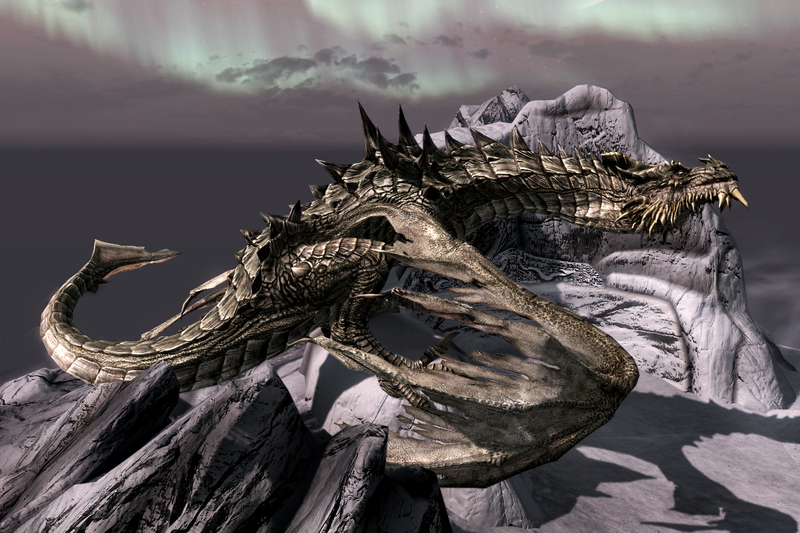
She used Paarthurnax, the good dragon in Skyrim, as an example. She killed the dragon and enjoyed a lot of gated content as a result, but most players did not. The same with Skyrim‘s “Dark Brotherhood” quest, which she said was the best quest in the game, unseen by many players.

So what is the lesson for game designers who create “evil” narrative paths, and want players to experience those stories as viable first-play options? She said that presenting pure evil without context is a bad idea, because most people find the concept off-putting. Adding friction to evil is counter-productive. Evil should come with its own risks and rewards, as it (mostly) does in real life.

“People love to have their emotional boundaries tested,” she concluded, adding that evil paths can create the most interesting moral problems.