Archive for the ‘Game Articles’ Category

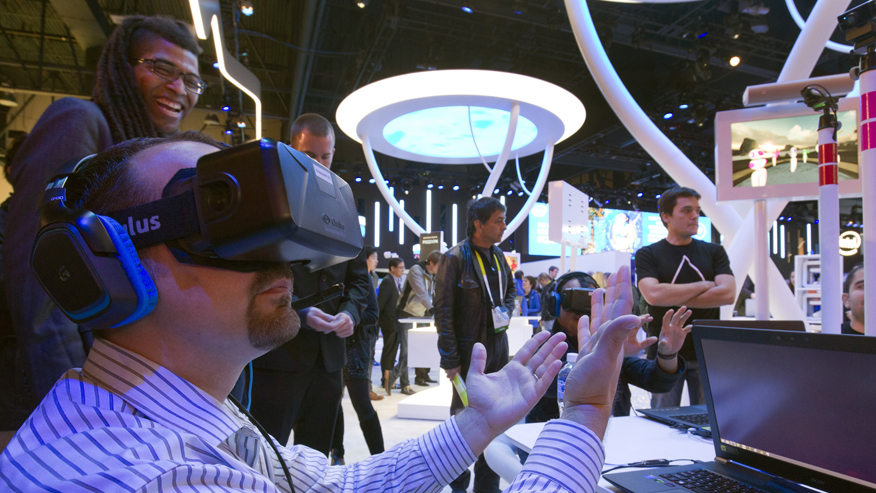
An attendee wearing an Oculus Rift virtual reality headset plays in a virtual volleyball game at the Intel booth during the 2015 International Consumer Electronics Show (CES) in Las Vegas, Nevada January 6, 2015. The goggles give a full 3D immersion and 360 degree view, a representative said. REUTERS/Steve Marcus (UNITED STATES - Tags: SCIENCE TECHNOLOGY BUSINESS) - RTR4KAO3

An attendee wearing an Oculus Rift virtual reality headset plays in a virtual volleyball game at the Intel booth during the 2015 International Consumer Electronics Show (CES) in Las Vegas, Nevada January 6, 2015. The goggles give a full 3D immersion and 360 degree view, a representative said. REUTERS/Steve Marcus (UNITED STATES – Tags: SCIENCE TECHNOLOGY BUSINESS) – RTR4KAO3

by Zach Epstein

Virtual Reality pioneer Oculus VR this week announced its acquisition of Surreal Vision, a company that specializes in recreating actual physical spaces in real time for insertion into a virtual reality environment. In other words, virtual reality just got real.

Oculus VR has spearheaded a revitalization in the virtual reality space. And when Facebook acquired the company for $2 billion last year, it became more than apparent that VR is now here to stay.

Virtual reality is nothing new, of course, but technology has finally reached a point where terrific VR experiences can be delivered by gear that is both affordable and portable. Consider Samsung’s Gear VR headset, made in partnership with Oculus VR. The device adds a superb VR gaming element to the company’s smartphones for just $199, and models are available for all three of the company’s flagship handsets.

But virtual reality is about much more than just gaming.

Consider this: From the comfort of your own home in New York, you can walk around a new exhibit at the Louvre Museum in Paris, France. Not just a still representation of the exhibit that was captured by cameras months earlier and then recreated in virtual reality. You can be there in real time, right now.

Possibilities flood the mind, and Surreal Vision is working to make those possibilities a reality. With Oculus’ focus on mixed reality, the company seems like a perfect fit to help move Oculus VR’s vision forward.

An obvious use case is telepresence. With the tech being developed by Surreal Vision, and now Oculus VR, a user would be able to remotely attend a meeting halfway around the world in real time, as if he or she were there. The same user could then visit with friends or family across the country just a few minutes later.

Surreal Vision co-founder Richard Newcombe offered the following statement alongside the announcement:

“From the human point of view, the world is constantly in motion. As we move around, our eyes dart about the scene and the rich dynamical nature of the scene’s contents come flooding in. We’re able to make sense of those changing signals to produce a coherent understanding of the world we live in, which we effortlessly navigate and interact with. Over the past three decades, a great deal of work in computer vision has attempted to mimic human-class perceptual capabilities using color and depth cameras.

At Surreal Vision, we are overhauling state-of-the-art 3D scene reconstruction algorithms to provide a rich, up-to-date model of everything in the environment including people and their interactions with each other. We’re developing breakthrough techniques to capture, interpret, manage, analyse, and finally reproject in real-time a model of reality back to the user in a way that feels real, creating a new, mixed reality that brings together the virtual and real worlds.

Ultimately, these technologies will lead to VR and AR systems that can be used in any condition, day or night, indoors or outdoors. They will open the door to true telepresence, where people can visit anyone, anywhere.

Much progress has been made toward this future, but significant challenges remain. For virtual reality, the accuracy and quality of the continuously updating 3D reconstruction must be near flawless, which is a requirement almost no other modern computer vision problem faces. When we cross these seminal thresholds, users will perceive the virtual world as truly real – and that is the experience we’re driving toward.

By achieving the ability to continuously reconstruct and track the world around us, we’ll be able to build an understanding of the world at a semantic level. This will bring the power of the digital world to the myriad of interactions we as humans perform everyday, leading toward a breakthrough in human-computer interaction and a computing platform that has true spatial awareness.

Given the team, the resources, and this shared vision, there’s no better place for us to help bring about these breakthroughs than Oculus. We’re incredibly excited for the future.”

The terms of the deal were not disclosed.
code2015_20150527_145104_7703

by Kurt Wagner

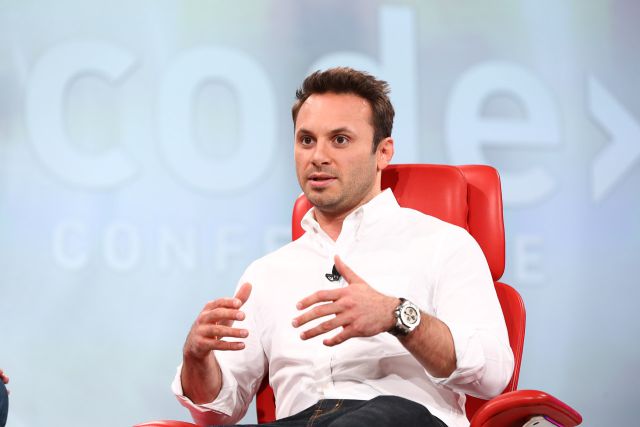
Oculus CEO Brendan Iribe said Wednesday that his soon-to-be-available virtual reality Oculus headset and the computer needed to run it will cost “in the $1,500 range.”

The company, owned by Facebook, announced in early May that it would start selling the Oculus Rift to consumers in early 2016, but the price for the headset itself has yet to be announced.

“We are looking at an all-in price, if you have to go out and actually need to buy a new computer and you’re going to buy the Rift … at most you should be in that $1,500 range,” Iribe said onstage at Re/code’s annual Code Conference in Rancho Palos Verdes, Calif. Over time, he’d like to see that cost come down to under $1,000.

In other words, it’ll be expensive.

ps4-review-1

by Jacob Siegal

If you’ve been holding out for a PlayStation 4 price drop, you might be in luck. On Wednesday, WholesomeGamer was tipped off that Sony’s official retail loyalty site, intended to reward verified video game retail employees, is currently running a promotion which gives members the chance to win a PS4, PS Vita and other prizes.

Within the rules of the promotion, Sony lists the ARV (average retail value) of each prize, but here’s the catch: the prices listed don’t match up with the current MSRP of the PS4 or the Vita.

Here’s a screenshot of the rules with the adjusted ARV:

ps4-price-drop-rumor

As you can see, the PS4 is valued at $349.00 and the PS Vita has an ARV of $89.00. On the other hand, Best Buy, Amazon, Target and most other retailers are still selling the PS4 and its various bundles for $400 and the PS Vita for $200.

A $50 price cut on the PS4 wouldn’t come as much of a shock, but the enormous discount on the PS Vita makes us think that the original version of the handheld might be the model included in the promotion.

Regardless of whether or not the leaked document is legitimate, the fact that the Xbox One managed to overtake the PS4 in April might be incentive enough to bring the price down. If a price cut is incoming, we’re sure to hear more about it at E3 2015.

b4c70cbe94038ab59e720e44d8a7efed

by Owen S. Good

This week marked the 20th anniversary of Sega’s startling E3 1995 announcement that the Sega Saturn was already on shelves in North America, ahead of its planned September launch. The rush job sealed the device’s doom, and triggered Sega’s decline from console titan to near-afterthought.

Sega Nerds talked to Tom Kalinske, the outspoken former president of Sega of America, on the anniversary of the announcement itself, and found Kalinske still adamant that hustling out the console was a terrible decision. Kalinske already is on record saying Sega of Japan’s rejection of a partnership with Sony to make its next console was “the stupidest decision ever made in the history of business.” So Sega’s Japan leadership, followed the enormous success of the Genesis/Mega Drive with two colossal blunders.

The Saturn had launched in Japan in November 1994, and the following March, the company announced it would launch in the United States in September. But in this rewind by The Guardian, one sees a Sega leadership first fixated on competing with the Atari Jaguar — an even bigger flop — and then panicked by the oncoming PlayStation. Determined to get something to shelves before Sony, Kalinske was sent to the stage in L.A. to declare that the Saturn was already on shelves, at a price of $399.

Minutes later — literally — at Sony’s own presentation, the nascent console maker shot back with Steve Race’s famous “two-ninety-nine” mic drop, announcing the PlayStation’s retail price. Sega was thoroughly pantsed, now committed to an expensive console rooted in the sprite-based, kids-on-couches days of gaming, up against a PlayStation that, for $100 less, delivered revolutionary three-dimensional visuals.

Moreover, as Kalinske lamented to Sega Nerds, rushing out the Saturn left it with a barren games lineup and next to no marketing plan, which hurt the console’s launch no matter its price. Sony, meanwhile, came to market with a robust catalog, shrewdly pursued older and higher-income demographics and rode that to success.

“Had we waited until we had more and better games, launching with all retailers instead of with a few,” Kalinske told Sega Nerds, “with marketing that could reach every player, we would have been much more successful, even if that meant waiting for a late October or November launch.”

Both reads are worth your time this weekend. Sega followed the Saturn with its much-loved and lamented Dreamcast, beating the PlayStation 2, Xbox and GameCube to the market; but the damage had been done, and it was discontinued in 2001, ending Sega’s run as a console maker.

gears-of-war-1

by Michael McWhertor

Microsoft is cracking down on some of the testers who leaked details about the Xbox One remaster of Gears of War, banning them permanently from Xbox Live and temporarily making their Xbox One consoles “entirely unusable.”

Gears of War for Xbox One, which is still officially unannounced, leaked last month when the game’s multiplayer mode went out to testers. Gameplay video of the Xbox One remaster emerged earlier this week.

Third-party testing service VMC emailed its testers today to warn them of violations against the company’s non-disclosure agreement and that some testers who violated that agreement have been banned from Xbox Live, per Microsoft’s end user license agreement.

According to an email from VMC, Microsoft “permanently disabled their Xbox LIVE accounts (as well as other suspected accounts present on their Xbox One kits) and temporarily blocked all of their Xbox One privileges — meaning that for a period of time which Microsoft decides on depending on the severity of the offense, their Xbox One is entirely unusable.”

Here’s the full email from VMC:

Hi everyone,

In the light of recent events, we’d like to bring a situation to the community’s attention in attempts to strengthened everyone’s awareness and vigilance regarding the NDA which binds every single one of you to VMC.

Recently, multiple leaks were perpetrated by several GBTN community members. In one case, a member who was participating in that test shared a screenshot on Snapchat with their friend, who wasn’t part of the project, but tricked his friend by saying he didn’t believe him when he said they were working on the same project. Upon reception of the screenshot, the friend who received the Snapchat leaked it online, betraying his friend as well as his NDA with VMC Games. While the tester who first took the screenshot didn’t think he was doing anything bad, he was still going against the NDA, and was part of the cause why the information got leaked. Because of this, both members were permanently removed from the community and addressed to our legal department, as per the terms of the NDA.

Now, new wording is about to reach the community regarding this particular event. The nature of the leak having had occurred through Xbox One, actually also went against the Microsoft EULA, which is agreed upon when creating an Xbox LIVE account, or any other type of Microsoft account. This being said, as per that agreement with the testers in fault, Microsoft also permanently disabled their Xbox LIVE accounts (as well as other suspected accounts present on their Xbox One kits) and temporarily blocked all of their Xbox One privileges – meaning that for a period of time which Microsoft decides on depending on the severity of the offense, their Xbox One is entirely unusable.

The reason behind the Non-Disclosure Agreement is not only to protect our clients and our program, but also our community, and to make each and every single one of you aware of the severity of revealing confidential information which you’re entrusted with. One screenshot, message or even conversation shared with someone else can easily snowball into a situation that goes out of control, and not only penalize the offender as well as anyone else directly involved, but sometimes far beyond that. In certain cases, there were consequences which had affected people which had no malicious intentions but ended up entwined within the legal case – we’re fully aware that this also targeted very faithful, hard workers who had been with us from the start, and this situation crippled the entire community. We do not want to go that way ever again and are constantly in search of better solutions to single out perpetrators before too much is at risk. The community itself is growing stronger, and often times leaks are reported by community members to us – and we’re extremely thankful for that as it not only speeds up investigations drastically, but also shows us that this community is tightly knit and merely contains a few bad apples, who unfortunately ruin the experience for too many participants already.

We would like to take this opportunity to remind everyone that this is a community. Your actions and behavior reflect on each other as well as on us, and acting selfishly has the potential to ruin the experience to everyone. Please be mindful of others throughout your actions.

Thank you,

GBTN Coordinators
Global Beta Test Network
VMC

Microsoft’s remastered version of the original Gears of War, first released in 2006 on Xbox 360, is in development at Black Tusk Studios and Splash Damage. We expect to hear more about the Xbox One game at E3 in June.

ps4_0_0

by ‘Wololo’

We’ve revealed a few weeks ago that some electronic stores in Brazil were advertising a way to copy pirate video games onto your PS4 for a fee. Although the technique was not described in details (these stores wanted, after all, to make a profit out of the scheme, not share it for everyone to get it for free, or for Sony to patch it), we’ve been in touch with several members of the hacking scene, as well as customers of these stores, who have all confirmed the existence of the “hack”.

Yesterday, journalists at UOL Jogos, a trusted site in Brazil, have confirmed that the hack is real, as they have verified it themselves on a test console (original article, in Portuguese, can be found here). It needs to be emphasized that this is not the well known “account sharing” trick, but a new kind of hack.

PS4 Hack for piracy confirmed to be real

ps4_jailbreak_raspberry_pi

Small electronics store in some streets of Sao Paulo will charge from R$ 300 to R$ 400 (about $100 to $150) in order to install 10 pirated games on your console. The UOL journalists have confirmed the hack to work on their own console.

The process, as described by Brazilian modchip stores, is close to what we have explained before: a Dump of a “legit” console with a dozen games on it is performed, and copied to the target console. In addition to a copy of the hard drive, it is safe to assume a dump of the NAND/BIOS is performed as well. It seems the dump is performed with the help of a regular raspberry pi, as this had been implied the first time we uncovered this story.

The process described on UOL is extremely similar to what has been described on the scene, and as we reported here. Activate a PS4 for a given account, make a full copy of its state/NAND, deactivate it, then copy the backed-up NAND again. UOL mentions however that in their experiment, their console ended up with 2 registered accounts, which are part of the cloning process, and required for the games to work.

A new way to pirate PS4 games, a lucrative business

Other ways have existed for pirates in the past: Sony lets people activate several consoles on the same account, so some people abuse that system by sharing accounts with their friends. This piracy technique remains limited as you can only share an account with a limited number of consoles. This new technique, however, has virtually no limit to how many PS4s could replicate the games. As such, this is a very lucrative business for these electronics shop, who make close to 100% profit on this technique.

These shops in Brazil charge about $100 to install 10 games. These games would cost almost $600 normally. This is a great deal for both the client and the seller. To get more games, one has to come back to the store and pay roughly $15 for each additional game. UOL mention that with 10 games of the current generation, your PS4 hard drive is pretty much full anyway, so you’ll have to erase a few ones to add new ones.

The article on UOL mentions that the hack initially originated on a Russian site. Given what I’ve been told so far though, it could literally have originated from anywhere, as it is heavily inspired from a similar technique on the PS3 that is widely known. It could be one of those “not so secret” secrets of the scene.

As we’ve discussed before, this is not really what could be considered as a PS4 Jailbreak, and of minimal interest from a homebrew perspective. It is still interesting however, from my point of view, to confirm once again that a system is as secure as its weakest link. Although no encryption is broken here, pirates are still able to find their way, while us “homebrewers” are left in the cold.

Sony already taking legal action in Brazil

23e58ccd18e32cab182dbd6268a12868_XL

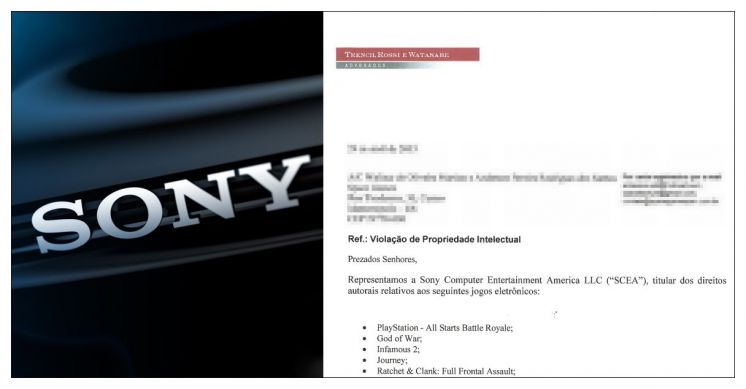
Sony are not totally ignoring the issue of piracy in Brazil. It seems they are aware of the “account sharing” technique (and how some stores are monetizing it) and already sending cease and desist notices about that. It is safe to assume they will at least do the same for this new piracy technique, and will probably be looking into ways to patch the hack. As a reminder, people on the PS4 hacking scene have told us that the technique they knew about has been patched on 2.51, so it seems the technique used by Brazilian stores is slightly different from that.

As always, we will be keeping our page up to date with the latest PS4 Jailbreak news, so you can be aware as soon as a valid technique exists that doesn’t solely rely on the greed of a few pirates.

AndrewGarfieldSpiderman

by Roger Friedman

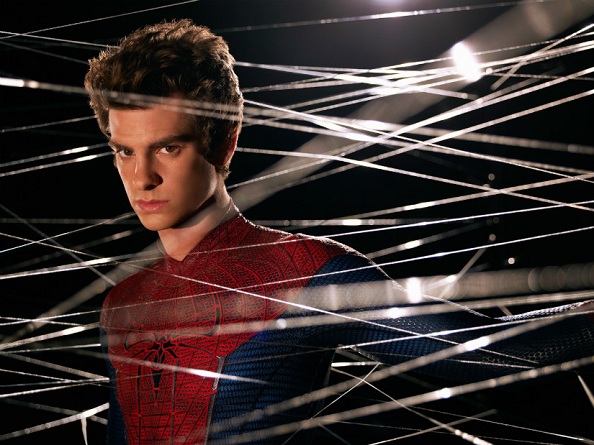
Thanks to the Sony hacks, via Wikileaks, we now know why Andrew Garfield won’t be making any more “Spider Man” movies– or maybe any Sony films for the foreseeable future.

It turns that Garfield insulted Sony chief Kaz Hirai by snubbing him last summer in Rio de Janeiro at a big Sony gala celebrating the end of the World Cup. Kaz had planned to introduce Garfield as the star of “Spider Man 3″ set for 2016 in a speech before 750 guests. But Garfield, having just arrived in Rio, made a huge mistake. He snubbed Kaz and never came down for dinner. Yikes. In Rio this didn’t go well, and the bad feeling reverberated. An email alerting everyone read: “Here we are about one hour away from our Gala event and Andrew decides he doesn’t want to attend. He has a rather scruffy beard and he just wants to be left alone.”

Kaz Hirai had planned on making this speech:

“Andrew is an actor who has graced the screen in roles in several important Sony Pictures Entertainment films, including The Social Network, in which he played Mark Zuckerberg’s onetime friend and co-founder of Facebook, Eduardo Saverin. The Social Network, to my mind, is the Citizen Kane of the 21st Century, a film that social historians hundreds of years from now will point to as one of the most emblematic of our era.

Another historic movie starring Andrew is The Amazing Spider-Man and The Amazing Spider-Man 2, which continues to weave movie magic in hearts and minds around the world. Together those two films have taken in more than $XXX million at the global box office.

I’m proud to say that Andrew will be returning as Peter Parker in The Amazing Spider-Man 3, which will be released in May, 2016.”

Needless to say, when Garfield didn’t come down for dinner, the speech was changed. Garfield next stars in “99 Homes” this September, and Martin Scorsese’s “Silence” with Adam Driver.

Here is a series of emails explaining all this:

Fwd: Andrew Garfield in RioBegin forwarded message:
From: “Clark, Nigel”Date: July 14, 2014 6:53:47 PM PDTTo: “Pascal, Amy”

Cc: “Blake, Jeff”

Subject: Andrew Garfield in Rio

Amy,
As requested, here are the relevant emails.
In red, at the very bottom: the email I received on Saturday afternoon, from Steve Bernard informing me that Andrew was not making the red carpet or the Sony gala dinner, and Kay Aoki’s response.

In blue: my email correspondence with Rupert upon receiving the news.
In black (immediately below): an email from Steve Bernard in response to my asking earlier today how Andrew was feeling.

As I mentioned when you called, it may very well be that Andrew met Kaz on the day of the match etc. I’m not aware of that.

Best,
Nigel

Very happy. Mark Wachter took him and Rupert surfing this morning. They are touring the city now.
Sony Music took them out for a late dinner last night.
I asked AG if he minded if I sat Santana next to him at the match. He had a big smile.

All good now

Stevan (Steve) Bernard
Executive Vice President – SEHS
Sony Pictures Entertainment

Rupert,
I’m sure the event was successful, despite Andrew’s absence. The last minute change to Kaz’s speech and to the seating arrangement was manageable, but it’s a slight to Kaz and the Sony hosts on the ground.
Nigel
_____

From: Rupert Fowler
To: Clark, Nigel; Enriquez, Vianne; Knight, Prue
Cc: Aoki, Keiko; Bernard, Stevan; van der Werff, Susan; Blake, Jeff
Sent: Sat Jul 12 16:13:35 2014
Subject: RE: URGENT URGENT: World Cup

​Hi Nigel,

He had been feeling under the weather all day and exhausted from coming off the plane early this morning so I gave as much notice as I could. Not ideal though I understand, hope it didn’t have too great an impact on things.
Rupert
_____

From: Clark, Nigel
Sent: 12 July 2014 19:56
To: Rupert Fowler; Enriquez, Vianne; Knight, Prue
Cc: Aoki, Keiko; Bernard, Stevan; van der Werff, Susan; Blake, Jeff
Subject: Re: URGENT URGENT: World Cup

Rupert,
I hear that Andrew decided at the last minute to skip the Sony event and dinner. Is that true? It puts us in an embarrassing situation with Kaz Hirai.
Nigel

That is extremely embarrassing….
But I will tell Kaz and change the seating and his speech!!
Thanks for letting me know.

Kay

From: Bernard, Stevan
Sent: Sunday, July 13, 2014 4:49 AM
To: Clark, Nigel
Cc: Aoki, Keiko
Subject: AG Problem – PLEASE READ
Importance: High

Nigel/Kay,
Here we are about one hour away from our Gala event and Andrew decides he doesn’t want to attend. He has a rather scruffy beard and he just wants to be left alone

twd_128.0.0

by Michael McWhertor

The console versions of Overkill’s The Walking Dead will be published by 505 Games, the same company that published the developer’s online co-op shooter Payday 2, the two companies announced today.

Overkill’s The Walking Dead is coming to PlayStation 4, Xbox One and Windows PC, 505 confirmed. The company also said that Overkill is working with The Walking Dead series creator Robert Kirkman to “create new characters, plots and story-arcs that will live in the ever expansive world of The Walking Dead graphic novel series.”

Kirkman said at SXSW last month that the new Walking Dead shooter will build upon Overkill’s experience with Payday.

“I can say that it will be Payday-esque because [Starbreeze and Overkill] are currently doing Payday,” Kirkman said. “But I’m told it will be in a bigger world than Payday currently encompasses. They are going to be learning a lot of stuff from Payday that they will be incorporating into The Walking Dead game.”

Overkill’s The Walking Dead was announced last summer as an online co-op first-person shooter, with an expected release coming sometime in 2016.

Microsoft_just_showed_us_that-2c82a9bca6608d4fa8b3de0ef9c8f2b8

by Matt Weinberger

We hear a lot about The New Microsoft, where cloud computing, mobile apps, and holographic computing are driving the company to record profits.

But at the same time, Microsoft’s traditional Windows and Office businesses are shrinking as the company moves to new software models where customers pay for monthly subscriptions, not boxed software.

At today’s Microsoft Build developer conference in San Francisco, it was abundantly clear that Microsoft is embracing and even driving this change. The company that’s basically synonymous with personal computing has moved past the personal computer.

It was two announcements that really show where Microsoft sees computing (and itself) going: The ability to use a Windows Phone running Windows 10 as a PC, and HoloLens, the holographic computer.

There was one particularly telling HoloLens demo on stage today. A Microsoft employee showed off a tiny, wheeled robot whose software was based on Windows 10.

When that employee put on her HoloLens, the robot came to life with a holographic avatar over its head. She was able to direct the robot around by pointing, and change its color by opening a virtual control panel over it.

It’s easy to extrapolate what this could mean. Any Windows 10 device in the real world could have a holographic bit associated with it. You don’t need a screen or a keyboard for a computer that’s the size of a credit card, if all of that interface is projected onto a table with something only you can see.

So why would anybody need a full computer at all?

A Windows 10 phone with an associated holographic interface could be all the machine you’ll ever need. Similarly, any other interface anywhere else could have the same deal. A totally nondescript desk could be an interactive collaboration space, if only it has an embedded Windows computer and you’re wearing your HoloLens.

This is all years off. Demand for personal computers may be shrinking, but they’ll still be around for a while.

But Microsoft is teasing a future where all you need to get through your day, at work and at home, is a phone and a hologram, and it wants its developers to help us get there as soon as possible.

If that means that the traditional PC market has to fall by the wayside, including its traditional software business, so be it.

rachel-bryk-commits-suicide-600x330

by Ryan Martinez

Transgender game developer Rachel Bryk was told by cyber bullies to jump off a bridge, in the end that’s what she decided to do.

It’s a sad time for the gaming industry as it loses a creative young game developer to suicide. Rachel Bryk, 23, was a prominent transgender developer who was best known for her work on Gamecube and Wii emulators. Years before she dived into development work and joined all the communities involved in it, however, she had suffered from low self esteem and chronic pain. Those problems only grew worse after joining the only game development community where she was subject to constant harassment.

As many people know being gay or transgender in the gaming community can make you a major target for trolls and cyber bullies. Rachel Bryk was no exception, for months now cyber bullies told the young developer that she should jump from a bridge. On April 23, after months of this severe bullying Bryk jumped from the Washington Bridge in New York. Only weeks after posting on a 4chan VG that she would be leaving a number of online communities because of their treatment.

That post was also met with a wall of hateful message telling Bryk that she should commit suicide. Now as news of her death spreads scores of other game communities, like the one centered around the Dolphin emulator, mourn her loss. Memorials have appeared all across the internet to remember Bryk and the contributions she made to the emulators she loved.That outpouring of sadness at her loss has sparked a new discussion in the gaming world about homophobia and transphobia.

The strongest voices in that new conversation are the people she worked with on the Dolphin emulator. Rachel Bryk was an important name to anyone who closely follows Dolphin and her presence is already being sorely missed there:

“She was a very kind and helpful person, one of many to help guide me through the project when I first started to contribute to the program. Her contributions to both the TAS and Dolphin Emulator community were vast, adding multiple helpful and sorely needed tools to make Dolphin easier to TAS. Although I did not know her as long as the others, I know she will surely be missed by all of those who knew her.”

In memory of Rachel, here she is playing the hell out of her favorite game: Pucca’s Kisses Game.

Source: Dolphin Emulator Blog