Archive for the ‘Game Articles’ Category

The_head_of_Xbox_says-46e60f97767bec933247277c3e69e813

by Ben Gilbert and Corey Protin

In 2010, Microsoft launched its original “Kinect” camera peripheral for the Xbox 360 with a midnight event in Time Square. Hundreds lined up and chanted “You are the controller!” – Microsoft’s marketing message for Kinect; the camera/microphone peripheral tracks the human body and recognizes voice commands, thus putting players directly into games.

The first version of Kinect went on to sell some 24 million units, one third of which were sold in the first 60 days it was available. To say it was popular is a dramatic understatement.

When Microsoft launched the Xbox One in 2013, it came with a new version of Kinect. It also made the Xbox One cost $100 more than the competition: PlayStation 4. And that’s where Microsoft went wrong.

Despite a raucous consumer response to the first version of Kinect, the second iteration largely failed with consumers. It forced the cost of Xbox One to $500, whereas the first Kinect was an optional addition to the Xbox 360. The PlayStation 4 launched at the same time as the Xbox One, and it cost $100 less while offering much of the same content.

In short, Kinect has been a hindrance for Microsoft’s Xbox division across the past two years: A reminder of previous success and recent missteps all at once.

Despite unbundling the Kinect from Xbox One at retail – thusly cutting the price of Xbox One to match PlayStation 4 – Microsoft’s position on Kinect remains one of commitment. Xbox leader Phil Spencer echoed this sentiment in an interview with Business Insider on Monday in Los Angeles:

I see the engineering resources that we’re putting in, to build out what Kinect’s able to do, and I think that idea of voice response and motion response is critical to where gaming’s going.

Beyond just the Xbox One, Spencer pointed out that Microsoft’s “next big thing” – the HoloLens headset it unveiled in January 2015 – employs much of the same technology as Kinect to work its magic. For example, HoloLens needs to scan the world around you and understand surfaces in a three dimensional environment. It also accepts voice commands. That is exactly what Kinect’s latest iteration was built to do.

“The importance of Kinect and understanding where a player is and allowing them to interact using their voice and gesture in an experience spans beyond just what console is about. A lot of what’s in HoloLens is the same surface area that a Kinect developer would use,” Spencer told us.

He also sees its use as a voice command machine to be of crucial importance: Xbox One owners with Kinect are largely using it as a means to command their console via voice, not with gestures (i.e. waving around your arms).

Personally, my Kinect is in a box in the closet after weeks of failed attempts at using it easily in my living room. But if the impressive technology in Kinect helps make the insane “mixed reality” of HoloLens better, then consider me on board. Whether or not Kinect itself will be “critical” to the future of gaming is unclear, but the tech inside Kinect seems a no-brainer for driving the future of interaction in gaming.

9fa2da537272e41e52c2c7a024d133ec

by Eddie Makuch

The Xbox One may be trailing behind the PlayStation 4 in the current-generation sales race, but Microsoft has high hopes for its console this holiday. Speaking with GameSpot this week at E3 2015, Microsoft executive Aaron Greenberg said a string of blockbuster exclusive games and new backward compatibility functionality will lead to a “massive migration” of Xbox 360 owners moving to Xbox One.

“A lot of people have been waiting for the next Halo; a lot of people have been waiting for Gears; a lot of people have been waiting for backwards compatibility,” Greenberg said.

Halo 5: Guardians, Gears of War Ultimate Edition, and backward compatibility will all be available on Xbox One before the end of the year.

“And so we think having all of that coming this holiday; we expect we’re going to see a massive migration,” he added. “We expect millions of Xbox 360 owners to migrate and move to Xbox One. We see that the majority of people who buy an Xbox One today own an Xbox 360. So our fanbase has stayed very loyal. And frankly, they’re waiting for those new releases to come this year.”

Greenberg stressed that you should not underestimate how pivotal backwards compatibility will be in encouraging people to upgrade from an Xbox 360 to an Xbox One.

reggie-fils-aime_741c6

by Brian Crecente

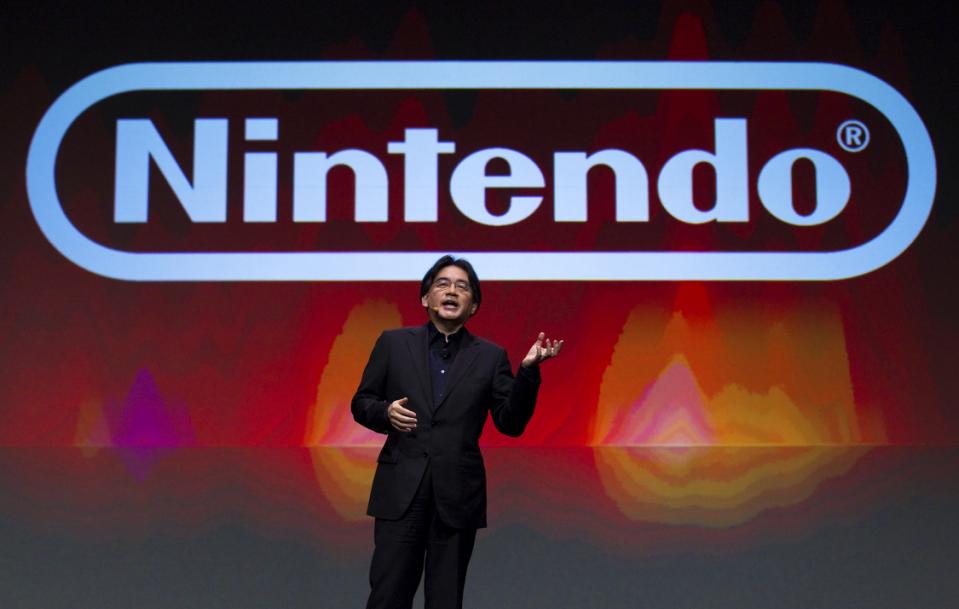
To be perfectly clear: Nintendo president Satoru Iwata didn’t apologize.

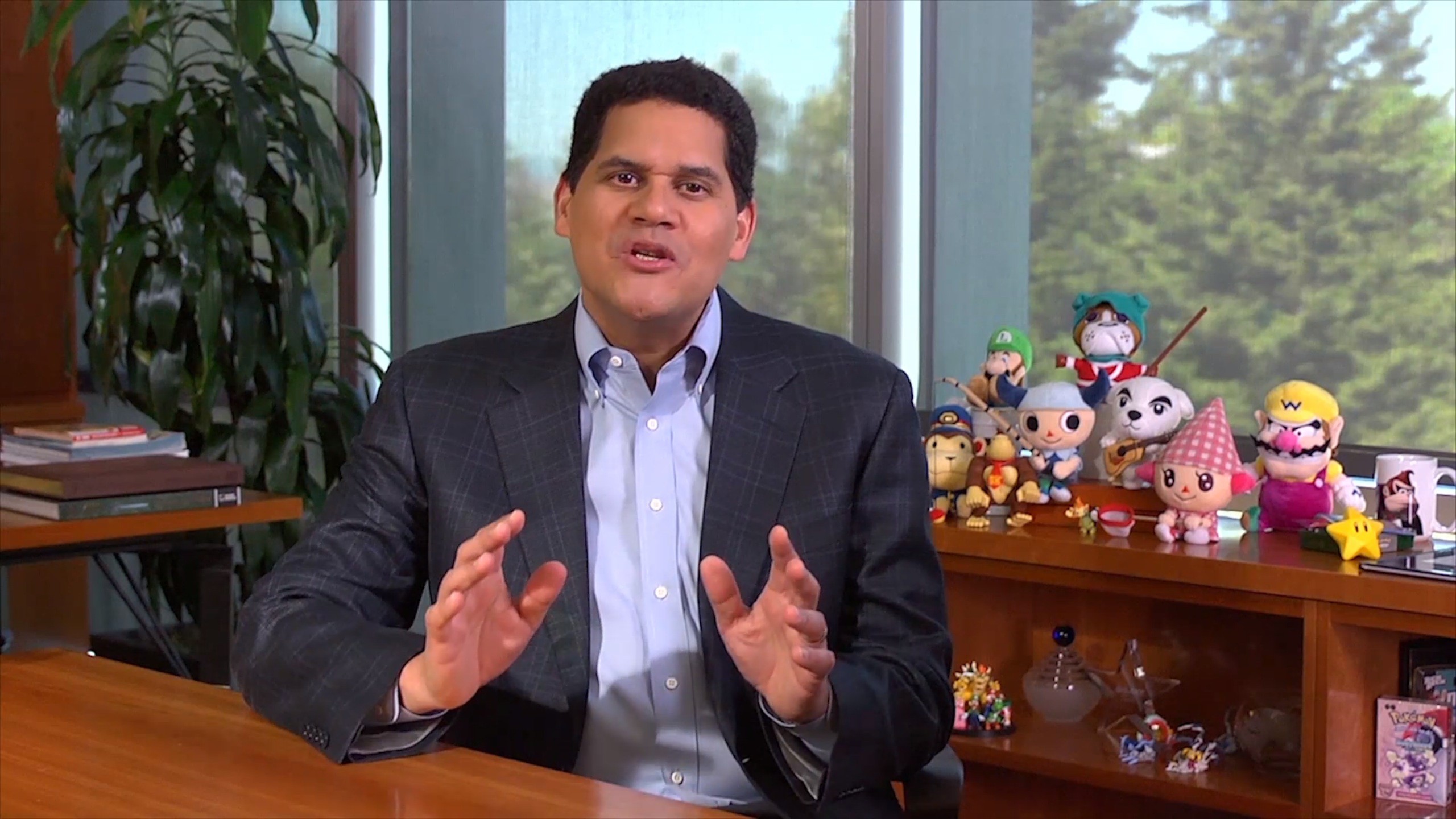
“It was not an apology,” said Nintendo of American president Reggie Fils-Aime. “It was not a statement about the content we’re showing, essentially it was an ‘I hear you’ message.”

The not-apology, the message, was a tweet sent out by Iwata seemingly in reaction to a tidal wave of negative online reaction to the company’s E3 Nintendo Direct this week.

One translation, by NeoGaf user Cheesemeister has Iwata saying this:

“Thank you for watching. We take opinions of this year’s Digital Event seriously and will work to better meet your expectations.”

But Fils-Aime says that translation isn’t exactly right and misses some of the context.

“Mr. Iwata is in Japan and what he’s trying to do is help explain to consumers in Japan what’s going on at E3,” he said. “The correct translation of his message was: ‘Thank you for your feedback. We hear you and we are committed to continuing to meet your expectations,’ was essentially his message.

Apology or not, it was certainly spurred by the reaction to the games and news Nintendo pushed out at E3.

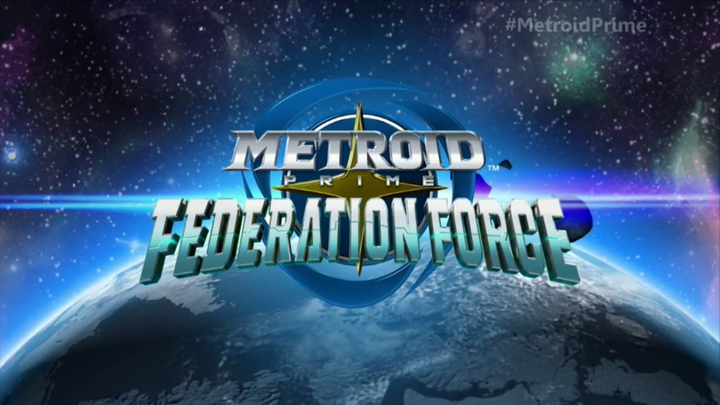
Many fans reacted with vitriol, either disappointed with what wasn’t said, or with what was. Nearly 12,000 fans signed a petition on Change.Org to try and convince Nintendo not to continue developing one of the newly announced games: Metroid Prime: Federation Force.

9e6db53bf8c934af0ce05b207f060d5d

But Fils-Aime seems unfazed by the reaction.

“One of the things I find interesting is that if you look at E3 historically for Nintendo, typically what happens is a press briefing happens or our digital event happens,” Fils-Aime said, “and then over the course of the next couple of days people see the games get to play the games and the appreciation and understanding of what we’re doing increases over those three days and continues to build into the holidays.”

Take for example Splatoon, he said.

Splatoon, a new sort of shooter unveiled at last year’s E3 based on an entirely new IP, didn’t receive an entirely positive reaction at the show. At least not initially.

“Splatoon is a game that people are loving right now, but if you rewind to E3 last year, Splatoon was being viewed as, ‘Yes, it’s innovative and it’s different, but the controls are a little hard and I don’t understand the mechanic of turning into a squid and going through the ink.’ There were all of these complaints. But now you look at the finished product and the satisfaction is huge.”

The key to Nintendo’s success, Fils-Aime said, isn’t just to make good games, but to help people understand why they’re good.

“For us, our goal is to make sure we announce the content, help people understand the content, but most importantly get hands on with the games,” he said.

That’s why Nintendo has programs like the one that delivers demo versions of unreleased games at Best Buys around the country or allows people to download early version’s of games on their Wii U to try for themselves.

“I haven’t heard the feedback (for this year’s Best Buy demonstrations), but I think the feedback is going to be quite positive because what we do is make great games and they show well and they really lead to consumer excitement.”

ps4-backwards-compatibility-not-straightforward

by Brian Crecente

News during Microsoft’s E3 press conference this week that limited Xbox 360 backward compatibility was coming to the Xbox One was met with a roar of approval.

The surprise announcement, coming so long after the launch of the Xbox One, also caught the attention of Sony. But not enough to get the company to reconsider its take on PlayStation backward compatibility.

“The backward compatibility news was interesting,” said Shuhei Yoshida, Sony Computer Entertainment’s head of world wide studios. “The technology involved must be very challenging.

“I’m interested in seeing the list of titles.”

Earlier in the week, Xbox head of publishing Shannon Loftis said the Xbox One will essentially be running an Xbox 360 emulator and that the decision to create support on the Xbox One for a number of 360 titles — a hundred by this holiday — was driven by that company’s desire to offer more options to gamers.

“I still play some Xbox 360 titles,” she said. “I love them and I have a big investment in them, both emotionally and financially.”

While Yoshida seemed impressed with the news of Xbox backward compatibility, he was clear it wasn’t going to change anything about PlayStation’s decision not to support previously purchased PS3 games on the PS4.

“The announcement didn’t change,” he said, “I don’t think we will change our approach. The PlayStation 4 doesn’t have backward compatibility.”

Instead, he said, the company will continue to focus on creating new services and new features on the PS4.

That includes the recently announced new media player that people have been asking for, he said.

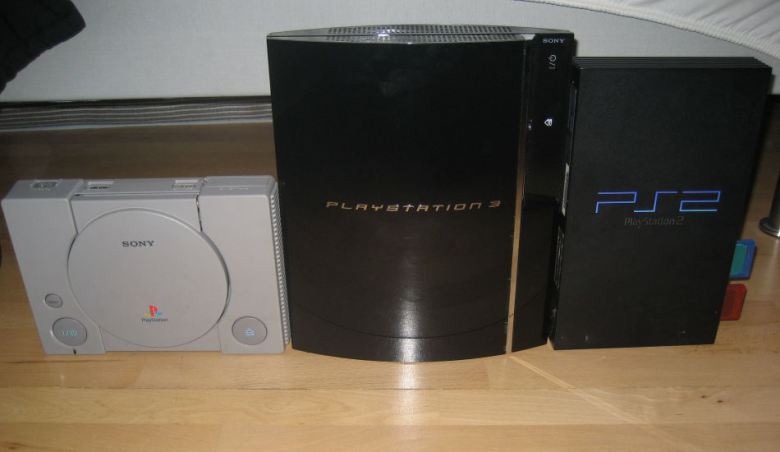
The closest thing the PlayStation 4 has to backward compatibility is PlayStation Now, an on-demand video game rental service that includes a select number of PlayStation 3 games.

“PlayStation Now works surprisingly well,” Yoshida said. “But the primary purpose of that project was to create a new network service that could be used to bring PlayStation games to multiple devices including non-PlayStation devices, like Sony and Samsung televisions.

“That is an example of our adding and creating new services and initiatives.”

But why doesn’t Sony want to do backward compatibility on the PS4? I asked.

“Backward compatibility is hard,” he said. “I won’t say we’ll never do it, but it’s not an easy thing to do.

“If it was easy we would have done that.”

6cc5d6f6b5dc99da66acf03766edce92

by Samit Sarkar

At last, Doom will launch next spring on PlayStation 4, Windows PC and Xbox One, culminating a development history stretching back as far as 2007, Bethesda announced tonight at its pre-E3 news conference.

Originally called Doom 4, the game’s development has been long and troubled, even seeing id Software throw everything away and go back to the drawing board after being acquired by ZeniMax Media in June 2009. Reports spoke of a game trapped in the archetypal “development hell” as designers plotted out and threw away concepts and design changes.

The beta offer in Wolfenstein followed by a formal reveal last year at QuakeCon indicated the game was finally back on track.

Developing …

e8097c1a31f64920da16124e2f5049ed

by GameSpot Staff

Microsoft’s E3 lineup has just gotten a little smaller.

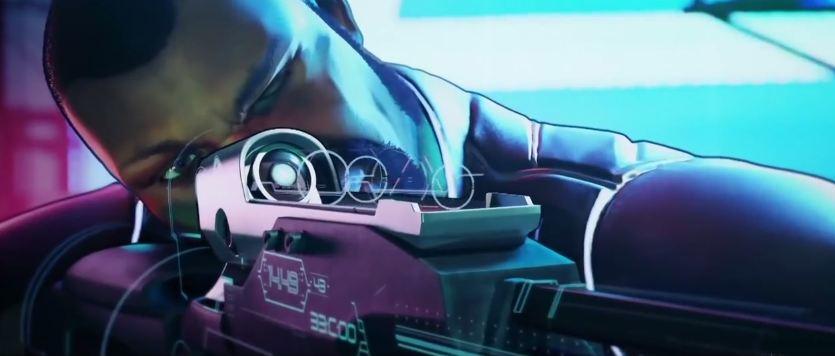
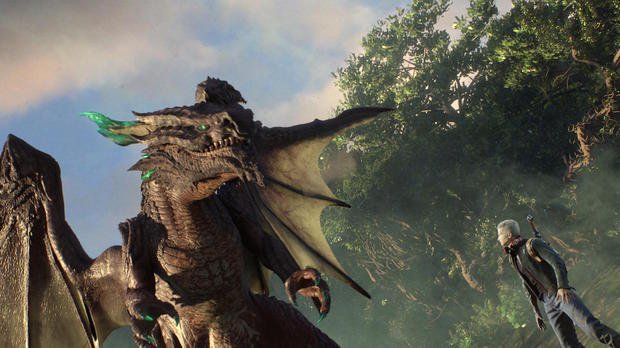
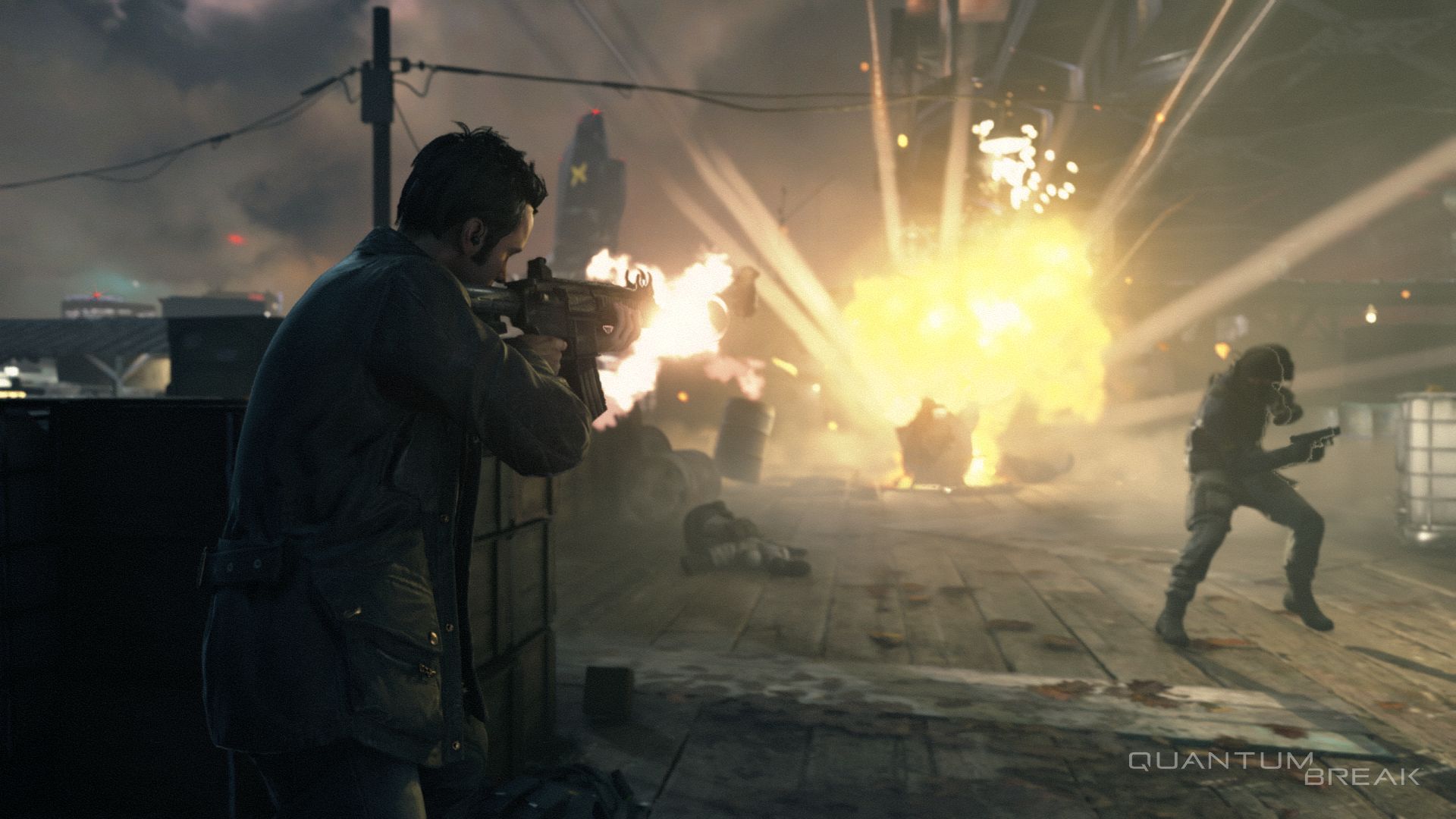
According to a post on the Xbox website, Scalebound, Crackdown, and Quantum Break will not show up at the conference next week. Instead, Microsoft will hold off on showing these Xbox One exclusives until Gamescom, which takes place in Germany in early August.

bf744473e507b7983d6f900f7a3b9432

Head of Xbox Phil Spencer explained, “Having a jam-packed lineup of games to show at E3 means that there simply isn’t enough time to give each of our upcoming titles its well-deserved time in the spotlight. We’ve decided to save some of our most eagerly-awaited future titles for Gamescom in August.”

Additionally, he stated that the company will have more Windows and Xbox games to reveal at Gamescom alongside news about announced games.

QB-Screenshot3

Microsoft still has a lot of games to show off at E3. Rise of the Tomb Raider, Halo 5: Guardians, and Forza Motorsport 6 are among the upcoming Xbox One exclusives that the company will bring to the conference.

E3 takes place this week, and Microsoft’s big press conference is on Monday.

fallout-4

by Owen S. Good

The trailer for Fallout 4, highly anticipated though it was, arched some eyebrows for the dull in-engine visuals it chose. That led to a ton of message-board speculation the rest of the week that maybe this game began its life with Xbox 360 and PlayStation 3, or might be announced for those consoles later. The answer to that, per Bethesda itself, is no.

“It is not coming to 360 and PS3, the stuff we’re doing will never work there,” Matt Grandstaff, the global community manager for Bethesda Softworks, said in this thread on NeoGAF yesterday evening.

Case closed, apparently.

When it was formally announced on Wednesday, Bethesda Softworks said it will launch on PlayStation 4, Windows PC and Xbox One. The game will be set in Boston.

35578f81d6ba03ca0b135927289858bd

by Tamoor Hussain

Nintendo’s next console, codenamed the Nintendo NX, may use Google’s Android platform as its operating system, according to Japanese newspaper Nikkei.

In a recent article from the publication, Nintendo highlighted the fact that third-parties were not able to easily move between developing games for other gaming hardware and Nintendo’s console.

Instead, the console’s architecture required developers to create titles specifically for Wii U and, as a result, development costs tend to be greater.

Nintendo has not provided any information on its next console beyond the codename. With this in mind, it’s important to note that this is currently a rumour, albeit one from a publication with a reliable track record.

According to CEO Satoru Iwata, the company will not reveal the Nintendo NX until 2016, which means it will not be featured in its E3 2015 showcase.

The hardware’s development was first confirmed March, along with Nintendo’s plans to bring its games and IP to mobiles and smartphones.

At the time, Iwata said that the hardware project represents a “brand-new concept”, but didn’t elaborate further.

“As proof that Nintendo maintains strong enthusiasm for the dedicated game system business, let me confirm that Nintendo is currently developing a dedicated game platform with a brand-new concept under the development codename ‘NX’,” Iwata explained at the press conference.

“It is too early to elaborate on the details of this project, but we hope to share more information with you next year.”

Nintendo has also confirmed that, along with the Nintendo NX, its mobile and quality of life titles will also not be shown at E3.

“Since we understand that E3 is an event for dedicated video game machines, we do not intend to discuss the smart devices as well as quality of life,” said Iwata.

post-63234-These-two-Diablo-III-players-s-eaZB

by Michael Thomson

Last year, Blizzard cooperated with the FBI to get two Diablo III players to plead guilty in criminal court over charges relating to a series of in-game thefts in summer after the game’s release. Patrick Nepomuceno and Michael Stinger spent a summer using a Remote Access Tool sent as as link sent through Diablo III’s chat system to take control of other players’ computers and transfer gold and Legendary items to their own accounts. Reporting on the case for Fusion, Kashmir Hill recounts the duo’s plans to sell the stolen items through the game’s now defunct Auction House, a contentious addition to the game that allowed players to sell each other gear and items in exchange for real money.

Stinger contends Blizzard banned their accounts before either had a chance to actually make any money but estimates they had amassed around $9000 worth of items before they were caught. The pair eventually accepted misdemeanor plea offers for probation and promised to repay the $5,654.61 Blizzard claims to have spent investigating the case in $100 monthly payments.

The case is not the first time videogame publishers have turned on their fans and cooperated with the government in prosecution cases. Last year, an Australian man was arrested after hacking into a Riot Games employee’s computer and claiming to have access to 24.5 million League of Legends accounts. Before he was arrested, he was said to be making $1000 a day selling rare character skins taken from these accounts. He would also occasionally harass high-level players by disconnecting them from matches during public streams or resetting their accounts to far-away countries to cause game lag. He was arrested on nine charges of hacking and fraud and found with more than $110,000 in Bitcoin.

Perhaps most famously, Valve worked with the FBI in 2003 to set up a fake job interview to lure Axel Gembe, a young German who hacked into the company’s internal servers to download a pre-release copy of Half-Life 2, into confessing his crime. Valve claimed Gembe had cost them $250 million dollars in damage, but he would eventually be given two years probation. Ironically, Valve would later turn this fan desire to see an in-development game into a proprietary business with its Early Access program, a way of exploiting fan eagerness to actually pay to contribute to focus testing and bug testing a game.

Each of these cases reveal an alarming tendency to make play culture subject to criminal laws meant to protect profit and property in the name of public interest. There remains an irreconcilable ambiguity in the idea that a digital good constitutes defensible property. In the case of Diablo III, the idea that one weapon is more desirable than any other is an algorithmic construct, built from a model of artificial scarcity and simulated labor players are expected to perform in order to simulate progress. Stringer and Nepomuceno were not stealing items from other players but triggering some small piece of code that unlocked those items in software they already owned. Likewise, those items remained in the game software of their supposed victims. What the two ultimately did was find an alternate way to trigger access to those items within the software, pushing back against the artificial limits of Blizzard’s design.

Though the actual charges against them were for illegally accessing a “protected computer,” which courts have interpreted under the Computer Fraud and Abuse act to mean any computer connected to the Internet, it’s hard to exculpate Blizzard from its role in designing a game in a way that makes such behavior more gratifying and playful than simply following the rules.

Theorist and researcher Nathan Jurgenson has popularized the concept of digital dualism as a way of describing the erroneous belief that there are digital and non-digital dimensions of reality. While this argument has been useful in deflating portentous arguments about how alien and exceptional new technologies are, there remain important distinctions in software as legally defensible material that makes it worthwhile to hold onto some sense of dualism. Game makers criminalizing certain player behavior points to a distinction between play and software, between executable code and the ideological models of behavior and thought they force us to engage with.

In The Interface Effect, Alexander Galloway describes a long-running dialectic of computer code as both narrative and machinic. Computer code “must always exist as an amalgam of electrical signals and logical operations in silicon.” Yet, code is always infused with a “mystification or distancing” something that ensures its material operation and eventual consequence are “most definitely not the same thing.” As games, the use of rules to coerce certain types of behavior must always be conditional and subject to player rejection or interference. Criminal prosecutions against people attempting to uses software for precisely these playful purposes reflect an elevation of the ideological values of software over the often largely unaffected material basis from which those values come.

This conflict is at the heart of a wide variety of arguments about the value of digital media and how it should be protected through criminal and property laws. When Blizzard participates in the prosecution of its customers, it’s not defending any particular material interest but the company’s authoritative position in controlling the uses of its software. In recent years, the requirement of some regular online authentication to make a game operable has made it possible for developers and publishers a near autocratic power to monitor how their products are used. This expanded oversight has made it possible to extend the market domain of each developer or publisher, monetizing not just the software, but of individual uses of its parts, governed by the structure of a digital marketplace that depends on a symbolic scarcity of items, which only the developer or publisher shall have authority to manipulate through code the player already owns.

More than any public interest or material value, it’s this position within a hierarchy of ideological control that digital fraud laws protect. A recent story in the New York Times co-authored by two Yale psychologists and two Harvard economists argued symbolic or social incentives trump financial ones when trying to encourage behavior change. People are more likely to obey a certain rule or do a certain thing if they are given a visible token or if they’re provided information on how others acquired their tokens. “When your choices are observable by others, it makes it possible for good actions to benefit your reputation. Similarly, norms make you feel you’re expected to cooperate in a given situation, and that people may think poorly of you if they learn you are not doing your part.”

The overlap with Diablo III’s structure, not as a game but as a software built around uneven distribution of identity tokens, is less about play than about maintaining Blizzard’s centrality in defining how its tokens are valued. It’s clear the drop rate for Rare and Legendary loot in Diablo III began at an extreme low to push people to use the Auction House, and in the time since it was shut down, the drop rates have become significantly more generous.

The digitization of commercial culture has proven the artifice of market-driven scarcity models, and the incoherence of giving transnational industries authority over pastimes. Though optimists sometimes argue that software has been the pretext through which play has become the defining spirit of our times, a ludic century in the words of designer and academic Eric Zimmerman, the legal aggression of game designers over the pettiest matters make a persuasive case that play has been used as a pretext for an epochal expansion of computation, something that’s proven more effective at creating coercive social and political norms against which no playful transgression will be tolerated.

If the 21st Century is to become genuinely ludic, we will at some point have to accept the spirit of play is antithetical to computation. Forms that seem to combine those two opposites may produce momentary spectacles, but over time those individual works lose their novelty and become recognizable as bizarrely machined trickery, something that depends on jealously guarded networks of control, punishment, and profit, values which always seem to be given precedence over playful ones in every instance where they come in conflict.
446a936490b81dcb18bab98c6adf7adf

by GameSpot Staff

The chief executive of Grand Theft Auto parent publisher Take-Two Interactive has spoken out on the subject of microtransactions, one of the industry’s hot-button topics. Speaking this week during the 43rd Annual Technology, Media & Telecom Conference in New York, Strauss Zelnick said players should never feel as if they’re being robbed.

Rockstar Games “You never want to the consumer to feel as though you’ve picked their pocket,” he explained. “You want a consumer to feel like you gave them a great experience. You want them to be happy that they spent money on the experience.”

This might seem like an obvious approach to take, but Zelnick also said, without naming any names, that some developers prioritize monetization over creativity.

“But I think some interactive entertainment companies, typically not the console companies, but some of the free-to-play companies, have focused entirely on monetization and, ‘creativity as a necessary but annoying pre-condition to monetization,'” he added. “And we just don’t look at it that way at all. Monetization stems organically from creativity. And so the more that we give consumers to do that they love doing, the more likely they are to spend money while they’re doing it.”

Zelnick said 2K Sports’ NBA 2K franchise has a “really high pay rate” for in-game currency sales. The executive has also previously spoken about Grand Theft Auto V’s online mode, GTA Online, as “the gift that keeps on giving” as it relates to microtransactions. In addition, he pointed out that, importantly, Take-Two designs its games to be fun, complete experiences that don’t require people to pay extra for in-game items or currency.

How do you feel about microtransactions in console games? Let us know in the comments below.