Archive for the ‘Game Articles’ Category

b726f292de0ab8c743585228fd64cee9

by Owen S. Good via Polygon

A Finnish teenager who claimed responsibility for the cyberattack that brought down Xbox Live and PlayStation Network last year has been convicted of more than 50,000 instances of cybercrime.

His punishment, according to Finnish media, is a two-year suspended prison sentence and a requirement to speak out against cybercrime.

Published reports said Julius Kivimaki, 17, known as “zeekill” online, was part of the Lizard Squad group whose denial-of-service attack over the Christmas holiday culminated a monthlong war with another hacker group. Lizard Squad members justified the attacks saying “chaos is entertainment,” in a short email to Polygon at the time.

Both United Kingdom and Finnish authorities made arrests soon after the attacks, which were substantial enough that PlayStation Network later offered subscription extensions, purchase discounts and other premiums to compensate members for the lost time.

At the time of the January arrests, reports suggested Kivimaki faced four months to four years in prison.

The Daily Dot spoke to a victim of Kivimaki’s online harrassment, who said he was “absolutely disgusted by the ruling.” The victim, an American, said Kivimaki called in false threats that sent American law enforcement to his home, and demanded the U.S. Federal Bureau of Investigation step in.

Model CUH-1200 gets picked apart.

e055d9b4bdbf9e47458d83ad03e253d0

by Gamespot Staff via CNET

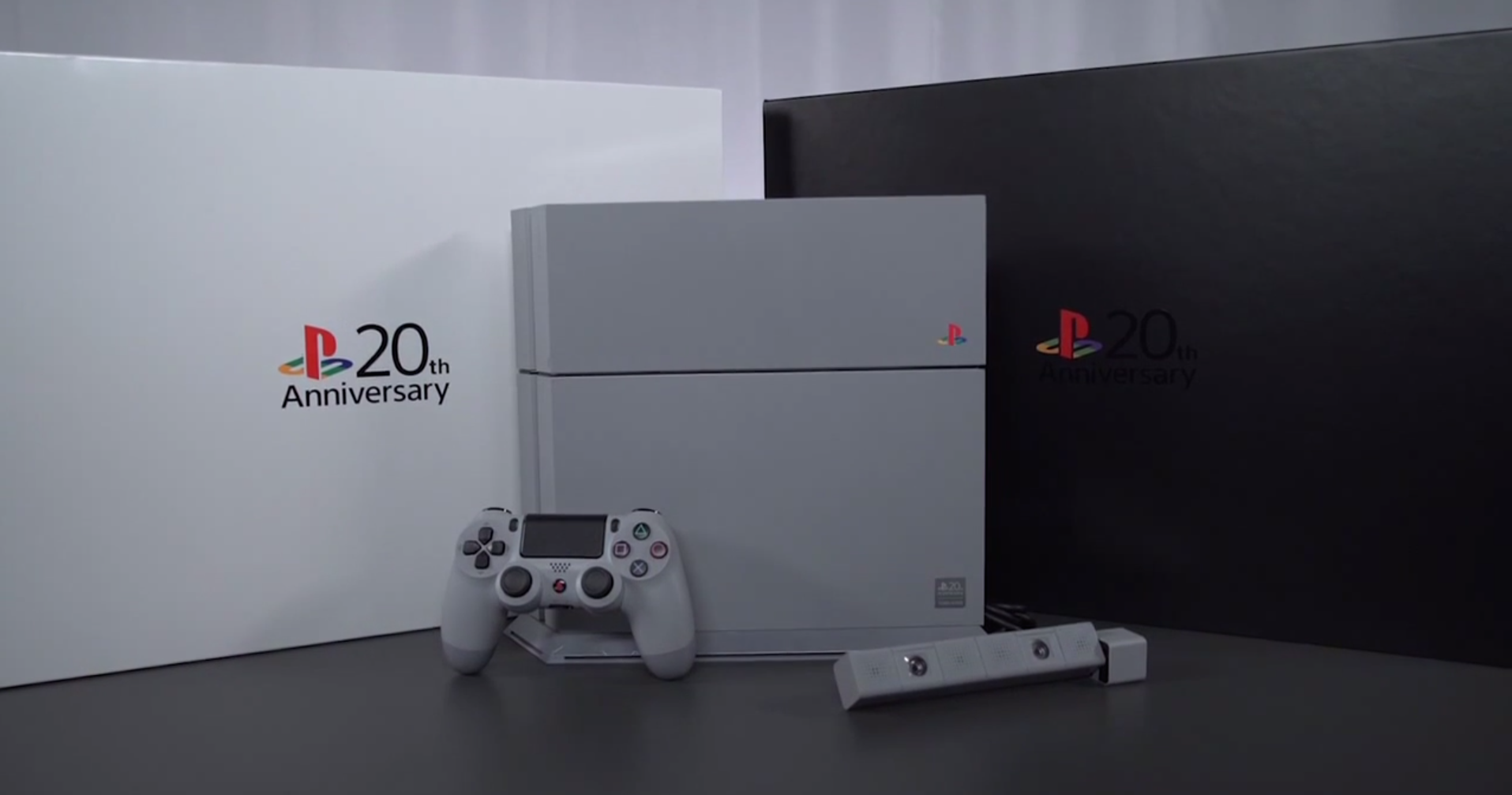
The latest iteration of the PlayStation 4 is quieter and more power efficient than previous models Sony has released into the market.

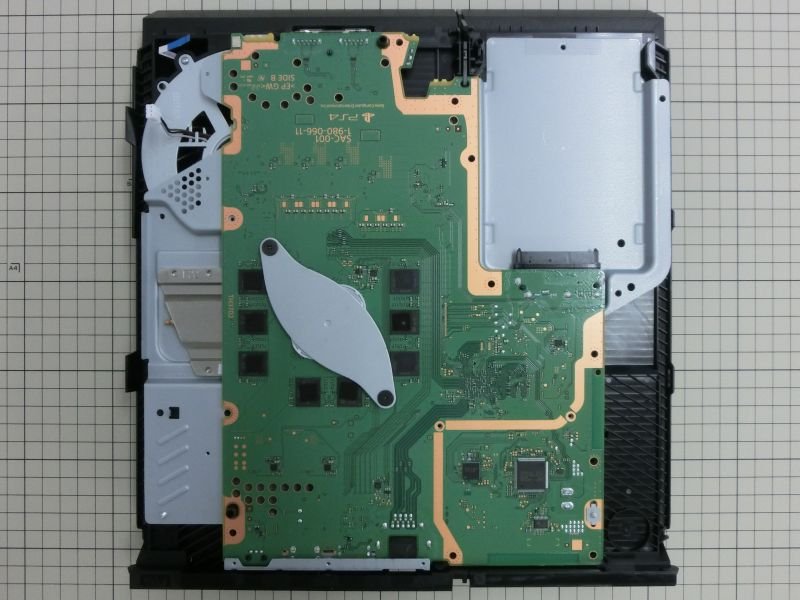
According to analysis conducted by Pocket News, translated and reported by Eurogamer, model CUH-12000–currently only available in Japan–features a smaller motherboard with a new GDDR5 memory configuration.

As opposed to the 16 memory modules the previous PS4 models used, the new version features just eight, which in turn makes it more energy efficient.

The site notes while the size of the main processor is still the same, it has received a new designation, suggesting something has changed internally.

Other changes introduced in the new PS4 model include a new Blu-ray drive design, a new HDMI controller, and a new power supply, which is 80g lighter than the previous one and has a lower energy output.

It also seems that Sony has reduced the amount of noise the PS4’s fan makes, though this has yet to be confirmed. For a more in-depth list of the changes, take a look at the site’s breakdown using the link above.

In June 2015, shortly before E3, the Federal Communication Commission (FCC) has certified two new PS4 models for release in the US.

A new PS4 model was announced for release in Europe on July 15. Dubbed the “Ultimate Player Edition,” the new model will be available in “select Europe and PAL territories.”

“Offering twice the storage of the existing PS4, you’ll be able to download more of the games you love to your PS4, extend your play with more great add-on content and save and share even more of your best gaming highlights,” Sony said of the new model.

The new model is also 10 percent lighter, weighing a total of 2.5 kg, and also uses 8 percent less energy. Its hard-drive bay cover has a matte finish instead of a glossy one.

640x0

by Michael Thomsen via Forbes

Over the last year, there has been much contention about who actually plays video games and what they want from them. A new survey by games research firm Quantic Foundry suggests that much of the vitriol and factional conflict comes from marginal groups at odds with the majority of people who play video games.

Taken from a sample of 1,127 people, about half of whom were regular played massively multiplayer online games (MMO), 66% of agreed or strongly agreed that video games need to be more inclusive in terms of gender and ethnicity. Only 14% disagreed or strongly disagreed, while 21% were neutral. 69.8% of respondents were men, and the average age was 36.7 years old, a slightly above the ESA’s average game player age of 35.

The survey also undermined a number of common assumptions about games and gender, with 91% of respondents disagreeing with the proposition that women “biologically-wired” to prefer certain categories of games. 98% of respondents rejected the idea that video games should serve an “exclusively” male audience, and 85% affirmed the idea that relationships begun through online games can be as “genuine” as those started through face-to-face meetings. A plurality of respondents disagreed with the proposition that Facebook games aren’t “real games,” and 79% rejected the idea that Wii games aren’t “real games.”

The findings are an apt capstone to the last year or so of aggression and abuse directed mostly at women and trans people for criticizing video games’ uncannily homogenous characters and play styles. There was little unusual or offensive about the critiques, and it was largely a reflection of individuals performing services for the benefit of the community that major developers and publishers weren’t. The narrative justification for antagonizing those asserting their right to exist and participate on equal terms in the video game community was built on fear of infiltration from outsiders, people interested in violating the fundamentals of commercial games through an agenda of nepotism and identity politics.

Quantic Foundry’s findings suggest this reaction was indeed reflective of a relatively small group within the wider population of video game players. In part, this is due to the fact that people often talk about the home console industry and the companies that serve it as metonymic with the entire form. As the Electronic Software Association has long enjoyed pointing out in its annual survey of game players, there are more than twice as many women over the age of 18 who play video games than there are boys 18 and younger. The average age of women players is 43, eight years older than the average male player. Though the survey regrettably doesn’t acknowledge trans people, the split between men and women is nearing an equilibrium point at 56% men and 44% women.

These statistics seem surprising in part because the console games industry often feels excessively male-centric, something that’s helped create an anomalous culture of desperate over-identification with a narrow and self-replicating set of experiences. There’s an economic logic underwriting all of this, with the console games industry’s profitability founded on the mania of abandonment, machines that have almost all been sold at or close to a loss in order to profit from games licensing. This has created a culture of perpetual doubt about the sufficiency of the present, something that needs regular proving through testimonial and the displacement of present needs toward future products—the unannounced game, the exclusive for a system you don’t own, the sequel that’s even better.

For years Activision has been the world’s biggest games publisher—though it was finally passed this spring by Warner Bros.—with annual revenue in 2013 topping $4.8 billion driven in large part by 25 million units of Call of Duty: Black Ops II. By contrast, developer King.com had more than 500 million installs of Candy Crush Saga but earned only $2.4 billion in 2014. Angry Birds has been downloaded more than 2.8 billion times over the course of its life, and 600 million times in 2014, reaching a group of players far beyond console favorites like Grand Theft Auto and Call of Duty, yet the company made only $169 million in 2014.

Though these companies operate on dramatically different sales models, the larger point is that even the most popular and well-regarded console games reach only a small minority of the overall gaming population. Yet, the degree to which the values and aesthetics of console games have become interchangeable with games culture as a whole has distorted several generations understanding of what games and play are. This has left us with a socially alienated group of consumers encouraged to think they represent a majority that must defend some fundamentally valuable culture that would be lost or diminished through accommodation of others.

The debate about inclusiveness in games thus rests on the assumption that there is something innately valuable in video games, a supposition that becomes kindling for conflict, fueling antagonism by creating a social script of risk and embattled morality that becomes ironic fuel to keep all parties locked in a battle over consumerist identification for a particular subcategory from which only a small group of companies profit. In Time, Labor, and Social Domination, theorist and professor Moishe Postone glossed the Marxian idea that the “boundless strivings of capital and its narrow basis are tied to each other” in a kind of dream of “utter boundlessness, a fantasy of freedom as the complete liberation from matter, from nature. The ‘dream of capital’ is becoming the nightmare of that from which it strives to free itself—the planet and its inhabitants.”

In these terms, believing in the value of something that cannot be imagined separate from a process of industrial production, such as a video game, eventually leads one to a faith in the goodness of industry, which comes to justify itself by characterizing everything not industrially driven as a threat, a nightmare from an alien realm. This is a direct violation of the spirit of play, which depends on empowering people to continuously engage with one another in a performative negotiation over what should and shouldn’t be valued, an impulse that rewards curiosity and adaptability over dogma and discipline and cannot have meaning without an openness to all.

Play requires neither games nor video games. It should be of no surprise that people most interested in play also tend toward tolerance and recognition of those outside their own experiences. And it should be more shocking than it is that the companies feeding off that culture have made that attitude seem like an alien presence that must be beaten back at all costs.

49cb5c5707f3e967b0c5c56667dac5de

by Anthony Domanico via CNET

Here’s the bottlecap collection Seth sent to Bethesda last week. Who knew it would pay off for him?

If you’ve played any of the Fallout video games, you probably know a thing or two about bottle caps, one of the primary forms of digital currency used in the game’s post-apocalyptic United States.

One Fallout fan named Seth loves the series so much that he started collecting bottle caps — the tangible kind you hold in your hand — in real life. Seth amassed quite a collection during 7.5 years of college and grad school, and estimates that he has around 2,240 caps in his possession.

After seeing Bethesda’s announcement for the hotly anticipated Fallout 4, Seth came up with a brilliant idea to see if he could use his bottle cap collection to buy the game when it’s released in November for Microsoft’s Xbox One, Sony’s PlayStation 4 and PCs. The first game in the open-world role-playing series came out in 1997 on PCs and Macs.

Seth posted pictures of the caps, as well as the accompanying letter he sent to Bethesda, to an Imgur gallery, hoping his story would become so popular that Bethesda’s PR department wouldn’t dare turn him down. Seth got his wish answered Wednesday when he received an email from Bethesda’s Global Community Lead Matt Grandstaff, who ended up on the receiving end of the 11.2-pound (about 5-kilogram) box of bottle caps Seth sent to Bethesda.

In the email, which was confirmed Thursday by CNET, Grandstaff told Seth he would receive a copy of the game when it’s released, and that Grandstaff plans to take the bottle caps to the People’s Bank of Point Lookout post-haste. That’s a nerdy Fallout joke, of course. For the uninitiated, the People’s Bank of Point Lookout is a fictional pre-apocalyptic bank in the Fallout 3 expansion Point Lookout.

While Seth was successful in getting Bethesda to promise him the game in exchange for bottle caps, Grandstaff was clear that this is only because he was the first to attempt the stunt. Anyone else who wants to play Fallout 4 in November will have to preorder the game with good old-fashioned pre-war money.

004a5a6bf178f2f0c2a6055daf7a28434cb4ea54

by Kristofer Wouk via Digital Trends

As news began to break about the numerous issues affecting the PC version of Batman: Arkham Knight, players of the console version breathed a sigh of relief and got back to playing the game. Now players of the PlayStation 4 version are having problems of their own, albeit much less severe ones.

Players firing up Batman: Arkham Knight are still able to play the game just fine, but they’re being greeted with a message about the game’s leaderboard support: “A connection to PlayStation Network cannot be established. Gameplay will continue without leaderboard access until a connection is made.”

Not all players are experiencing the issue, but from the number of reports on the game’s message boards and Sony’s community help pages, a significant number of players are affected. Leaderboards are used for the game’s Gotham’s Greatest feature, which lets players see how their friends measure up as Batman.

This isn’t the first time this has happened with a Warner Brothers game at launch. Mortal Kombat X also suffered from similar issues at launch, GameSpot points out.

While it’s surely annoying for some players, this issue pales in comparison to those affecting the PC version of Batman: Arkham Knight. Bugs and performance issues ran rampant, even for those with powerful graphics cards like Nvidia’s Titan X. Nvidia released a new driver which helped some graphical issues, but file integrity bugs still caused players to have to re-download multiple gigabytes of the game.

Problems were severe enough that Warner Brothers eventually suspended further sales of the game while it worked to fix the issues. Players who had already bought the game had the option of keeping the game and waiting for a patch, or trying out Steam’s new refund system.

At the time of this writing, reports are still coming in regarding PS4 leaderboards, though neither Sony or Batman: Arkham Knight developer Rocksteady have issued a statement.

Nintendo_says_this_is_the-40085de080130223c158f6587c8f6e18

by Ben Gilbert

Nintendo’s latest home video game console, the Wii U, is a retail failure.

The Wii U simply isn’t competitive with the likes of Microsoft’s Xbox One and Sony’s PlayStation 4. Despite the Wii U launching a full year ahead of competition from Microsoft and Sony, Wii U sales lag far behind those of its competitors: the Wii U has sold around 7.5 million units worldwide, while the PlayStation 4 topped 20 million this past February, and the Xbox One is somewhere north of 10 million units as of last holiday.

Nintendo’s chocked up the failure of the Wii U to a handful of factors across the past few years, but has largely settled on one reason: a poor job explaining what the Wii U is and why you should buy it.

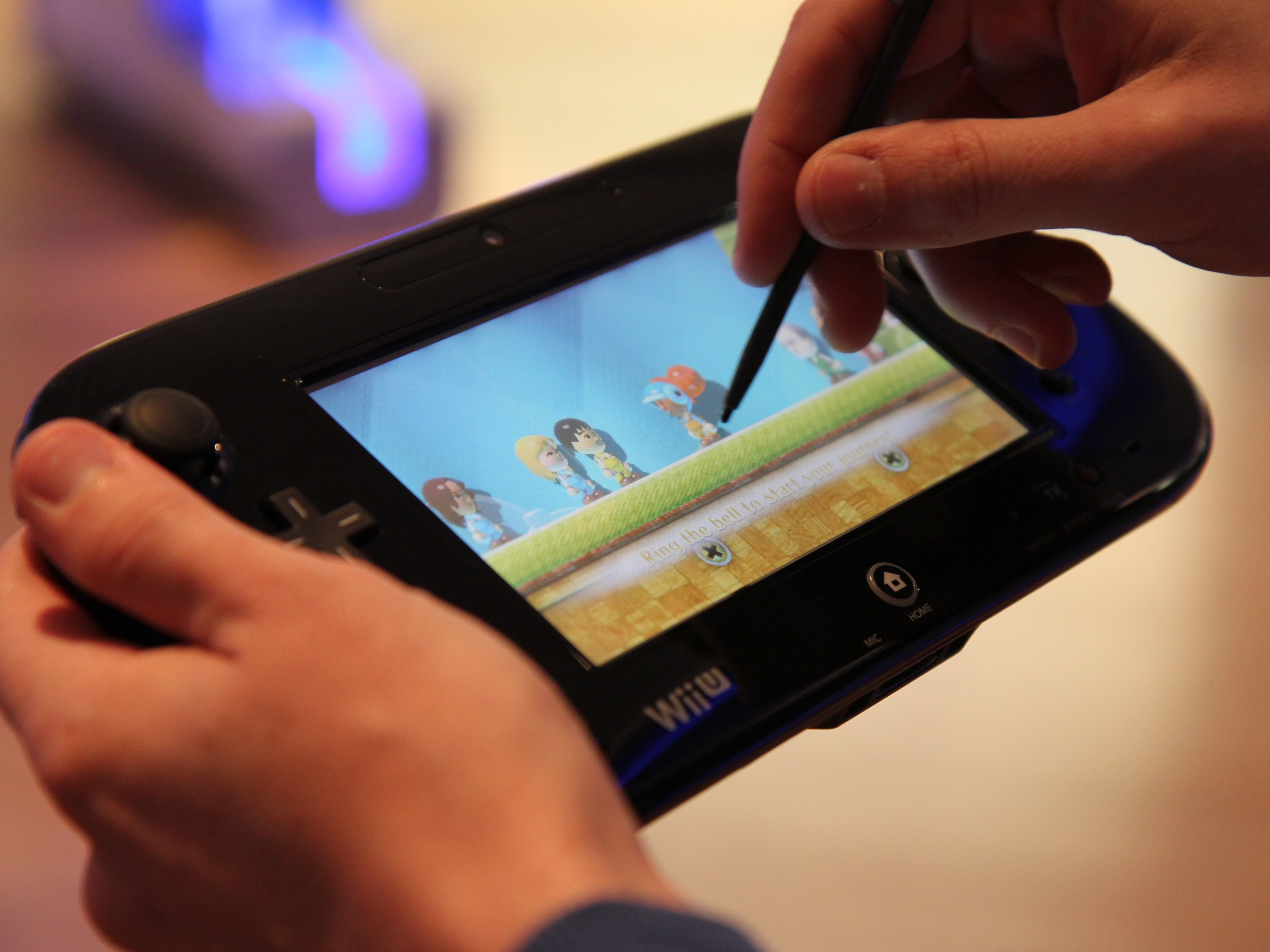
The name, for one, makes the Wii U sound like an extension of the original Wii – the wildly popular Nintendo console that pre-dates the Wii U. The fact that the Wii U’s gamepad looks like a weird iPad didn’t help with the perception that the Wii U was simply an extension of the original Wii.

The man who created Super Mario and Donkey Kong, Shigeru Miyamoto – who now oversees the entire games department at Nintendo – offered a more thorough explanation for the Wii U’s failure in a recent interview with NPR. His first reason comes down to price:

“Unfortunately with our latest system, the Wii U, the price point was one that ended up getting a little higher than we wanted.”

But the Wii U launched at a relatively affordable price: $300 for the base model, and $350 for the “deluxe” version (which came with more space to store digital games). That’s at least $50 lower than the price of the PlayStation 4, which launched one year later. Not only did Nintendo have a jump on the competition in terms of launch timing, but also the cost of the system to consumers.

Nintendo_says_this_is_the-2e51f3c805b216b34d68ae6ee4d2aca0

Thankfully, Miyamoto wasn’t done explaining why he thinks the Wii U failed. The bigger issue, he says, is that the defining tech is a tablet-like gamepad, and actual tablets were far, far more powerful.

“What ended up happening was that tablets themselves appeared in the marketplace and evolved very, very rapidly, and unfortunately the Wii [U] system launched at a time where the uniqueness of those features were perhaps not as strong as they were when we had first begun developing them.”

In short: the Wii U’s “unique” characteristic was trumped by the companies that invented the category. Companies like Apple and Samsung were releasing newer, shinier, more powerful tablets every year while Nintendo was simply reacting to the popularity of the tablet phenomena. That remains the case today.

Miyamoto didn’t say anything about Nintendo’s next steps in the hardware world. The company’s repeatedly discussed its successor to the Wii U – currently codenamed “NX” – as well as some form of “Quality of Life” initiative.

He did, however, express his hope for a more positive reception from consumers next time around: “After Wii U, we’re hoping that next time it will be a very big hit.”

c8e44449be95fb9890bccc62eb84d52b

by Alex Newhouse

Remember all of those games that you played when you were a kid? Now you can go buy them again. Starting today, GameStop is selling retro games and systems online and in its stores.

Games are available from six consoles: Nintendo 64, Super Nintendo, Nintendo Entertainment System, Sega Dreamcast, Sega Genesis, and the original PlayStation.

Be cautious, however. All of the games being sold in this new program are pre-owned. You’ll have to turn to Ebay or another retailer for any mint-condition factory-sealed software you’ve been looking for.

The most expensive games include:

  • Conker’s Bad Fur Day for the N64 — $79.99
  • Suikoden II for the PlayStation — $89.99
  • Cannon Spike for the Dreamcast — $79.99

This marks the beginning of vintage hardware and software sales for the store, which often phases out old games in favor of newer consoles. The store stopped selling PlayStation 2 games in 2013, but began again in March because of high demand.

775473a497d4c4543558a168459b72ef

by Tamoor Hussain

Phil Spencer, the head of Xbox, has explained how Xbox 360 game emulation is being achieved on the Xbox One, as well as the ethos behind the company’s decision to support legacy content.

Speaking on Giant Bomb’s E3 Day One podcast, Spencer said the decision to support Xbox 360 games was made to “make 360 owners look at Xbox One as a safe place to play.”

“Millions of people made investments in 360 content,” he said. “We thought the right thing to do was to make that content go forward, but we didn’t know [how difficult it would be].”

“[Emulation] is hard,” admitted Spencer, explaining that the company was dealing with having to harmonise PowerPC architecture with x86.

 “The approach that we’ve taken is to actually emulate the full Xbox 360 hardware layer. So the [operating system] for the 360 is actually running when you run the game,” Spencer explained.

“If you watch the game’s boot you’ll see the Xbox 360 boot animation come up. From a performance standpoint it allows [emulation] to work. We’re able to get frame by frame performance equivalents.”

“[Xbox Live] thinks you’re on a 360, so people have been asking ‘hey, why are you playing Mass Effect on the 360?,’ I was actually playing on the Xbox One.”

Spencer continued to explain that, since the Xbox One thinks it’s playing a normal game, features such as streaming and screenshots are supported.

“The 360 games think they’re running on the 360 OS, which they are. And the 360 OS thinks its running on the hardware, which it’s not, it’s running on an emulated VM. On the other side, the Xbox One thinks it’s a game. That’s why things like streaming, game DVR, and screenshots all work, because it thinks there’s just one big game called 360.”

Delving deeper, Spencer explained exactly how the emulator packages the Xbox 360 games, and how it compares to Xbox 360’s emulation of original Xbox games.

“You download a kind of manifest of wrapper for the 360 game, so we can say ‘hey, this is actually Banjo, or this is Mass Effect. The emulator runs exactly the same for all the games.

“I was around when we did the original Xbox [backwards compatibility] for Xbox 360 where we had an emulator for every game and it just didn’t scale very well. This is actually the same emulator running for all of the games. Different games do different things, as we’re rolling them out we’ll say ‘oh maybe we have to tweak the emulator.’ But in the end, the emulator is emulating the 360, so it’s for everybody.”

Asked about whether Microsoft would require permission from game publishers to adjust game code, Spencer clarified it would not be interfering with code.

“The bits are not touched,” he said. “There’s some caveats, and as always I like to be as transparent as I can be on this: Kinect games won’t work from the 360, because translating between the Kinect sensors is almost impossible.”

Finally, the subject of multi-disc games was also addressed. According to Spencer, it’s an issue engineers are looking into.

“We’re still working on multi-disc,” he said. “Lost Odyssey and Blue Dragon are some of my favorites from the 360. There’s actually work in packing a multi-disc into single that requires us to go back and look at the original package on the multiple discs and reconfigure that.”

Microsoft announced Xbox One backwards compatibility with Xbox 360 games at its E3 press conference. According to the platform holder digital Xbox 360 titles already purchased via XBLA, as well as retail discs of last-gen titles, will eventually be “natively” playable on Xbox One.

destiny-ps4-e1403010724655

by Emanuel Maiberg

Last week, a Destiny clan named DoD Legion lost a member, Joshua R. Stokell, who passed away after a lifelong battle with cystic fibrosis. A fellow clan member who goes by the handle Ln_Wanderer on Reddit put out a call on the Destiny sub-Reddit, asking dellow Destiny players to send video clips the clan can put together as a kind of memorial montage.

“As expected, you the Destiny community, came through is an amazing way,” Ln_Wanderer wrote. “More than 250 people have stopped by here and the Bungie forum to offer your condolences and to submit video clips. From the bottom of our hearts- Thank You! We are proud to honor our friend with the following video:”

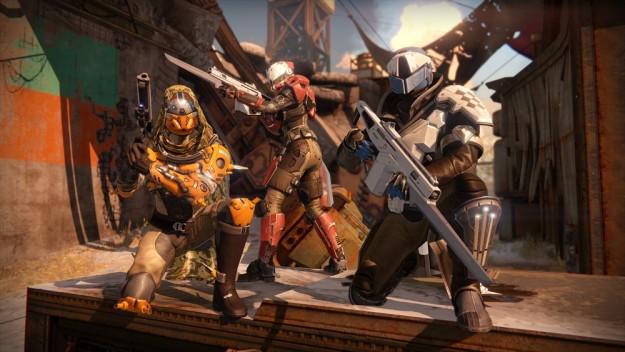
The 3-minute video shows Destiny players firing their guns in unison, saluting, and waving goodbye from all around the game’s universe in honor of Stokell, or TheSquashPhD, as he was known in the game.

In other Destiny news, Bungie was at E3 2015 to announce the newest expansion for the game, The Taken King, which launches on September 15.

IMG_20150618_101225537

by Marshall Honorof

LOS ANGELES — You’ve got to hand it to Nyko, it makes products that people want. The popular gaming accessory manufacturer rarely produces the flashiest gear or the biggest announcements, but their products have an amazing way of making you slap your forehead and asking, “Why didn’t I think of that?” For instance, why wouldn’t you want a tiny keyboard to plug into your controller? The company’s latest line of peripherals mostly targets the Xbox One to streamline your gaming experience.

I took a look at Nyko’s new lineup during E3 2015, and the new products all looked like potentially useful things to own. Just as the company announced upgrades and enhancements for the PS4 during CES 2015, this round of add-ons focused mostly on the Xbox One, looking to expand its storage space and helping gamers type faster on it.

The Nyko Type Pad for Xbox One will launch around October and retail for $30. You simply plug a small keyboard into the bottom of your Xbox One controller, then attach a USB dongle to your Xbox One. The Type Pad allows gamers to type in Web addresses, login details and messages to friends much faster than selecting words one painstaking letter at a time onscreen. There’s also a small scrolling nub to jump easily from text field to text field.

The Data Bank for Xbox One is another very simple idea that could solve a rather pernicious problem. If you’re running low on space on your console, you can install an external hard drive, but there’s no good place to put it. The Data Bank supports any 3.5-inch hard drive, connects it to the Xbox One via USB, and provides its own dedicated power cord. This way, players can buy large, cheap hard drives, and secure them in place with a handsome black enclosure that sits neatly on top of the system. The Data Bank costs $40 and will launch in October, along with the Type Pad.

Nyko also shared a few smaller non-Xbox announcements. The Cygnus is a controller for Android devices, and represents a stripped-down, no-frills alternative to the expensive, rechargeable models on the market. The Cygnus runs on AA batteries, has a full complement of buttons, and costs only $25, but don’t expect any fancy features beyond that.

Finally, Nyko’s PS4 modular charging station is getting a small upgrade. This add-on plugs into the PS4’s USB ports to provide an easier method of charging controllers. Fans wanted a way to recharge controllers without losing the USB ports, however, and Nyko has developed a new version of the modular charge kit with two USB passthroughs. This model will ship once the current model’s stock runs out, likely between August and October.

Amidst trailers for Tomb Raider, The Last Guardian, Star Fox and the like, a few gaming accessories may not seem like much. However, you can’t play games without a gaming system, and these peripherals could help some players get a little more out of theirs.