Archive for the ‘Game Articles’ Category

RIP PlayStation 3

Posted: March 18, 2017 in Game Articles

ps3

by Mike Wehner via BGR News

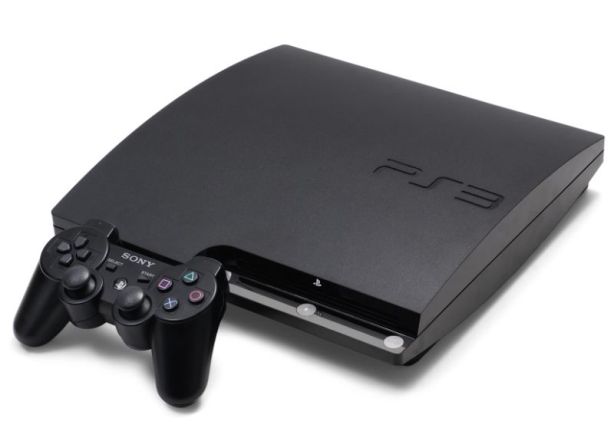
Sony’s PlayStation 3 has had one heck of a life. Debuting as the most expensive console in ages, suffering early defeat in the face of huge Xbox 360 sales figures, but it eventually regained its footing and scored some fantastic exclusive titles. Now, its storied existence is finally coming to and end, as Sony has revealed that it will stop production of the console in Japan — which is always the first and most impactful nail in any PlayStation’s coffin.

Following the runaway success of the PlayStation 2, the PlayStation 3 was hotly anticipated leading up to its eventual reveal at E3 2005. Then, at E3 2006 gamers finally learned Sony’s pricing strategy for the device — a 20GB model for $499 and a 60GB version for $599 — and much of the early hype turned into shock. When the system debuted in a head-to-head battle with the Xbox 360, which launched with two models priced at $299 and $399, Sony’s struggles began in earnest.

Many price cuts and a couple of complete redesigns later, the PlayStation 3 today has reached sales parity with its longtime rival, but both the Xbox 360 and PS3 failed to match the sales of Nintendo’s Wii. Nevertheless, Sony’s third generation PlayStation is home to some of the most popular titles in gaming history, such as the Uncharted series, Gran Turismo 5, and The Last of Us.

Sony’s decision to finally wind down production of the PlayStation 3 in Japan means that the major markets will likely see supplies begin to wane. However, as popular game consoles often see continued life in regions where they launch many years after their original debut, such as Brazil, it’s likely that PlayStation 3s will continue to be produced for those areas for at least a little while longer.

Visit Us ♥

GAMER’S OUTPOST:
http://www.gamersoutpost.net/

GAMER’S OUTPOST: MEDIA:
https://plus.google.com/+GamersoutpostNetPoweredByGamers

TRADE4CASH:
http://www.trade4cash.com/video-games.html and use our Official Promotion Code “gamersoutpost” at checkout for huge cashback rewards!

TWITCH CHANNEL:
https://www.twitch.tv/gamersoutpostnet

TWITTER FEED:
https://twitter.com/GamersOutpostne

VIRAL VIXENS:
https://www.facebook.com/viralvix

YOUTUBE CHANNEL:
https://www.youtube.com/channel/UCabN1X_DvXyZP-tEFYLJaoA/feed?view_as=public

c6e4ac63e9dec42b22c1a4baa74874e1

by IBT Staff Reporter

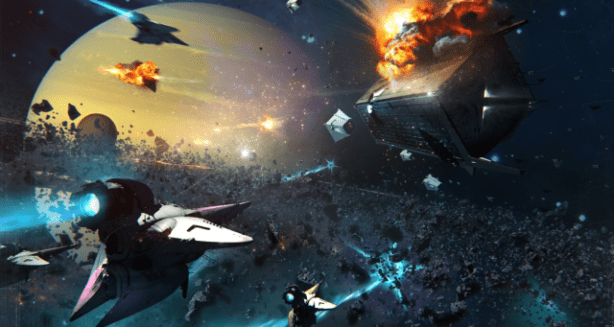
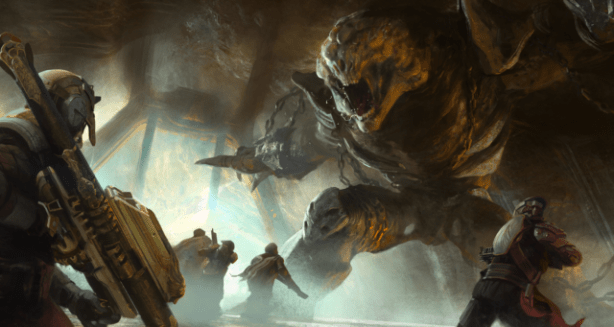
There is no video game series out there quite like Destiny: Bungie’s enormous and ambitious persistent online shooter. Released in 2014, every facet of the game’s existence pre and post-launch has been subject to immense scrutiny.

Few would disagree that vanilla Destiny (ie. the original version of the game) disappointed in terms of story and just how much there was to play, but mechanically it was sublime and quickly fostered a huge player-base.

Few shooters feel as good to play as Destiny, but it lacked in other areas and was slow to address its faults. It took a year and three paid (and expensive) expansions for Bungie to prove Destiny’s potential as more than a mechanically-satisfying shooter.

Following 2015’s string of expansions and 2016’s sole expansion, Rise of Iron, Destiny 2 is set to launch later this year. For Bungie, this is the game where it all needs to fall into place.

When was Destiny 2 announced?

The first official word of Destiny 2’s existence arrived in February 2016 during an investor call held by publisher Activision. A press release sent alongside the call stated that a “full game sequel” would arrive in 2017 following a sole expansion in 2016.

One year later, Activision confirmed the game was still on course for release later this year. Then, in early March, Bungie themselves referenced the sequel in official channels for the first time.

When will Destiny 2 be released?

All we know officially is that it will be released later this year, but given the release of prior games September seems very likely. Vanilla Destiny was released on 9 September, 2014, The Taken King expansion was released on 15 September 2015 and Rise of Iron on 20 September.

It’s likely to also be a worldwide release on a Tuesday, meaning it could be 5 September, 12 September, 19 September or 26 September.

2aaaf811eaeb4a38fd712e8dd9d99410

How will Destiny 2 link to the original game and its expansions?

In terms of an individual player’s progress in the first game, only the look of their Guardian avatar will carry over to the sequel. This was confirmed in the Bungie blog post which first referenced Destiny 2.

“We are going to recognize the dedication and passion you’ve shown for this world,” the post reads. “Specifically, the class, race, gender, face, hair, and marking selections for all characters that have achieved Level 20 and completed the Black Garden story mission* will carry forward.”

This means the leveling system will start afresh in the new game and players will lose all their weapons, ships and loot items in the transition.

*The Black Garden mission is the last story mission of vanilla Destiny.

In terms of story there’s no obvious jumping off point for the sequel. A direct follow-up seems unlikely if Destiny 2 is being conceived and pitched to a wider audience as something of a fresh start.

Will Destiny 2 be released on PC?

There’s been no official word yet, but a report from Kotaku published in September 2016 corroborated a rumor that the series would be coming to PC for the first time with Destiny 2.

What changes can we expect from Destiny 2?

That same Kotaku report states that Bungie wants the game to “feel like a proper sequel” with the plan, at that time at least, being for “Destiny 2’s planet areas to feel more populated with towns, outposts, and quests that are more interesting than the patrol missions you can get in Destiny.”

The base elements of the game, its co-operative play, mission structure, loot systems and Crucible multiplayer will most likely stay broadly the same, but with larger changes to hub areas and how Bungie presents the sequel’s narrative.

Generally it’s expected that Destiny 2 will approach story in a very different way in the hope of connecting with a wider audience in a way Destiny has not to date.

Will vanilla Destiny be switched off?

No. At least not immediately. Speaking to Gamesradar following the reveal of the Age of Triumph event that will be the final event before Bungie switches focus purely to the sequel, the developers’ community manager David “DeeJ” Dague said: “Destiny 1 is still a game that will be there for players.

“We’ve planned to support it for the foreseeable future, so while we do have a sense of finality and closure as the theme of this event, we are by no means turning the lights off on Destiny 1.”

cdd9e7e91fc7bd8e3025bdba6aa87561

by Ben Gilbert via Business Insider

Nintendo’s new console nails a crucial aspect that the PlayStation 4 and Xbox One whiffed on Each “generation” of video game consoles has a theme.

With the original Nintendo Entertainment System (NES), it was the promise of arcade-quality graphics and gameplay at home. With the Nintendo 64 / PlayStation 1 generation, it was the promise of 3D gaming.

Part of why a game like “Super Mario 64” is such a big deal was because it set standards for how 3D gaming works — standards that are still employed today.

Nintendos_new_console_nails_a-47264739b7f943e5050ee865a97955ec

(This sure looks like 1996) 

That concept of themes still exists today with the current generation of consoles: the Xbox One, PlayStation 4, and Nintendo Wii U. The theme this time? Being the centerpiece of your living room.

This is why the Xbox One has an HDMI-in port — so you can pump your cable box through the Xbox itself rather than turning it off. This is also why the PlayStation 4 and Wii U have dozens of streaming video apps, the ability to browse the internet, and much more. The Wii U even had a concept called “TVii,” which was meant to “revolutionize” how you watched television (the service was shuttered in 2015).

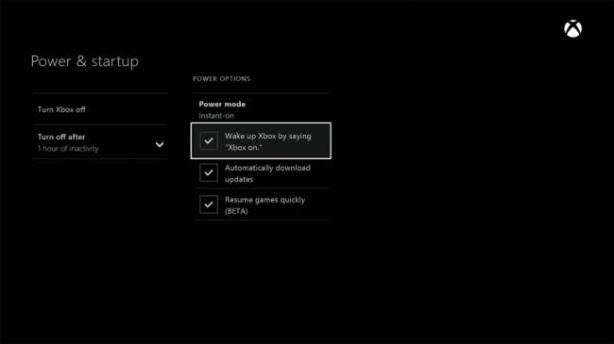
It’s also why — in the case of the PlayStation 4 and Xbox One — a low-power mode was included that enabled the consoles to be started far more quickly than in the past.

Nintendos_new_console_nails_a-1e369a4962b5b95d4cbe1a22e16f63f1

(Xbox One Power Menu)

The concept is simple: Turn off the PS4 or Xbox One in “low-power mode,” and the next time you turn it on everything is exactly as it was. The game you were playing? It’s still running, and you can hop right back in where you left off. Convenient! At least that was the reaction when this stuff was announced in 2013.

More than just convenient, it’s become an expectation. For most modern electronics — stuff like computers, tablets, and phones — the concept of shutting down completely is the exception.

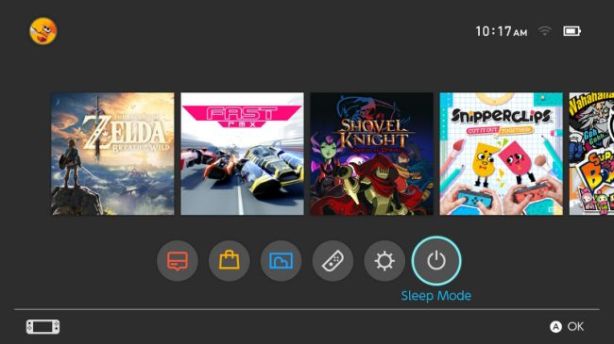
And that’s why Nintendo’s new console, the Switch, is such a revelation. It’s incredibly speedy, and its version of “low-power mode” is near-identical to that of a tablet or a laptop. (You have to hold down the power button on the Switch to even access power modes other than, “Sleep Mode.”Nintendo)

Nintendos_new_console_nails_a-bce6f3cfb67b33821f8c554b2d483301

Unlike the PS4 or Xbox One, you press a button on the Nintendo Switch and it turns on — instantly.

This cannot be overstated: On the Xbox One and PlayStation 4, turning on the console — even in low-power mode/quick start mode — takes far longer than it should. Rather than turning on instantly, ready for action, they plod along and slowly load. They feel old, and muddy, and — frankly — not as good as modern electronics should.

On the contrary, the Switch feels like modern technology.

It turns on quickly, it goes back to sleep quickly, and jumping from games to the home menu is instant. It feels like using an iPhone, albeit much larger and less premium.

Nintendos_new_console_nails_a-ace8d670e42fc2e501ec48c7b4fa40fe

(This is the splash screen that pops up when the console is in sleep mode and you wake it up.) 

Most importantly, the speed at which it operates respects your time. It seemingly acknowledges that you may only have a few moments to play a game, and encourages that kind of use.

And when you’re using the console at home, the Switch operates more like an Apple TV or a Roku than a traditional game console. It literally takes longer for my television to switch HDMI inputs than for the Switch to turn on.

It makes the other two game consoles sitting in my entertainment center feel like dinosaurs in this respect. It makes my TV feel old (which, in fairness, my TV is old). And while there are plenty of things about the Switch that it’s lacking — Netflix and Hulu, for example, or cloud saves, or major game franchises like “Call of Duty” — it completely nails one of the most important aspects of operation: It’s fast and easy to use, regardless of where you are. And that’s huge!

Visit Us ♥

GAMER’S OUTPOST:
http://www.gamersoutpost.net/

GAMER’S OUTPOST: MEDIA:
https://plus.google.com/+GamersoutpostNetPoweredByGamers

TRADE4CASH:
http://www.trade4cash.com/video-games.html and use our Official Promotion Code “gamersoutpost” at checkout for huge cashback rewards!

TWITCH CHANNEL:
https://www.twitch.tv/gamersoutpostnet

TWITTER FEED:
https://twitter.com/GamersOutpostne

VIRAL VIXENS:
https://www.facebook.com/viralvix

YOUTUBE CHANNEL:
https://www.youtube.com/channel/UCabN1X_DvXyZP-tEFYLJaoA/feed?view_as=public

The gaming veteran who worked on GoldenEye 007 shares his thoughts.

scorpio

by Eddie Makuch via GameSpot

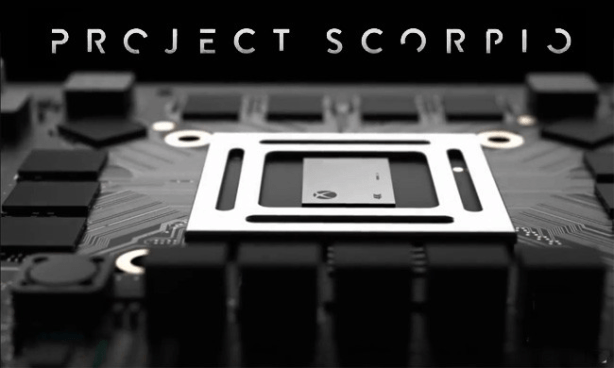
Gaming veteran Ken Lobb, who is a creative director at Microsoft, is the latest to weigh in on the company’s upcoming super-powerful Project Scorpio console.

He was interviewed in the latest issue of Game Informer, which is out now. Asked for his take on the new platform, Lobb praised the device, specifically its backwards compatibility component.

“What’s new is we’ve figured out how to write software in such a way that it can be better, but still be forward and backward compatible,” Lobb explained. “The Xbox One S is a good version of this. It’s better than the One. It’s, you know, less than 10 percent better, but it’s better, and that kind of thing was sort of impossible when you go back to the Super NES. We couldn’t have shipped a 10 percent faster Super NES. Most of the games would have broken. They would have run at a different clock rate, and things would have melted down.”

He added: “The way we do software development today makes it possible. How can a PC game run on a laptop and on a Titan X? How is that possible? Well, because developers over the last 15 years-plus have figured out how to make their games scale with hardware. So it’s not rocket science to think, ‘Well, gee, if I have an Xbox, can’t I have a more powerful Xbox? And isn’t that better than just one that’s a different color or a little smaller?’ I think that this idea is fantastic.”

Before joining Microsoft, Lobb worked at Nintendo of America. One of his credits includes the landmark shooter GoldenEye 007. One of its guns, the “Klobb,” is named after Lobb.

The full interview Lobb gave to Game Informer is a great read that covers his life and career. You can find out how to get your hands on the newest issue of the magazine here.

Project Scorpio is set to come out this year. Last week, Xbox boss Phil Spencer said Microsoft may announce more details about it before E3 and then during the show itself.

One of the biggest unanswered questions is about price. Spencer says the system will carry a “premium” price tag, more than the $300 Xbox One S, but that’s all we know for now.

“I’m not trying to scare anybody on the price,” he said. “We’re going to come out on a price that we think is fair for the product that we build and the customers will tell us as they always do. I call it premium because I don’t want people to get confused that somehow Scorpio is the thing that is going to take over the Xbox line.”

Spencer added that he fully expects that Xbox One S, with its lower relative price point, will sell far better than Project Scorpio.

“The majority of the consoles that we’re going to sell are the Xbox One S and I’m very proud of that,” he said.

Visit Us ♥

GAMER’S OUTPOST:
http://www.gamersoutpost.net/

GAMER’S OUTPOST: MEDIA:
https://plus.google.com/+GamersoutpostNetPoweredByGamers

TRADE4CASH:
http://www.trade4cash.com/video-games.html and use our Official Promotion Code “gamersoutpost” at checkout for huge cashback rewards!

TWITCH CHANNEL:
https://www.twitch.tv/gamersoutpostnet

TWITTER FEED:
https://twitter.com/GamersOutpostne

VIRAL VIXENS:
https://www.facebook.com/viralvix

YOUTUBE CHANNEL:
https://www.youtube.com/channel/UCabN1X_DvXyZP-tEFYLJaoA/feed?view_as=public

nintendo-switch-review1

by Zach Epstein via BGR News

It’s not entirely a shock, but it’s still a bit surprising how universally positive the early response has been to the Nintendo Switch. After the travesty that was the Wii U, expectations for the Nintendo Switch were sky-high ahead of its release earlier this month. Despite very positive reports from earlier reviews like BGR’s own Nintendo Switch review that was published ahead of launch, the lack of available games at launch seemed like it might be a big problem for Nintendo, especially since the pain from the lack of top-tier Wii U games is still so fresh on everyone’s minds. But the novelty of the Switch’s hardware design and the incredible response to the new console’s first flagship game, The Legend of Zelda: Breath of the Wild, have been praised far and wide.

As positive as the response to Nintendo’s Switch console has been so far, there are still obviously a handful of complaints that people have about the system. Some are more serious than others, of course, but one in particular has some gamers absolutely furious.

Allow us to paint you a picture. You’re powering your way through Breath of the Wild. You’ve breezed through all of the shrines, you’ve gathered all sorts of powerful weapons, and you’ve spent countless hours exploring Hyrule and completing tasks as you go. Then, something happens to your Nintendo Switch console. Maybe something happened and it won’t turn on anymore. Maybe there was a manufacturing defect and you need to swap your system out for a new one.

No big deal, right? You’ll just grab your new console and pick up right where you left off, right? Wrong.

Nintendo has confirmed in the Nintendo Switch FAQ on its website that game save data cannot be transferred between systems. Period. Full stop. “On Nintendo Switch, game save data is stored on the console’s System Memory,” the website says. “This will not change whether downloadable software or software from a game card is being played.”

The FAQ continues, “Game save data cannot be saved or copied to a microSD card.” And as a nice little added jab, the site notes that if your internal store fills up and you no longer have any space to save game data, your only option will be to free up space using this procedure — you won’t be able to store any save data on a microSD card.

There is a tiny glimmer of hope that this terrible policy might change at some point in the future, however. Nintendo used the language “at this time” when explaining the policy to Kotaku, which implies that some day, this clear and obvious shortcoming may be addressed in some sort of system update. Maybe.

Visit Us ♥

GAMER’S OUTPOST:
http://www.gamersoutpost.net/

TRADE4CASH:
http://www.trade4cash.com/video-games.html and use our Official Promotion Code “gamersoutpost” at checkout for huge cashback rewards!

TWITCH CHANNEL:
https://www.twitch.tv/gamersoutpostnet

TWITTER FEED:
https://twitter.com/GamersOutpostne

VIRAL VIXENS:
https://www.facebook.com/viralvix

YOUTUBE CHANNEL:
https://www.youtube.com/channel/UCabN1X_DvXyZP-tEFYLJaoA/feed?view_as=public

windows-10-game-mode

by Matt Weinberger via Business Insider

If you’ve ever played PC games, you know the feeling.

Maybe you leave Google Chrome or Skype open in the background while you play, and you get a ton of notifications, or a video loads in an open tab. The sudden demands on your system make your game freeze up, stutter, and otherwise perform poorly.

“Gamers may not be aware of stuff that’s running in the background,” says Microsoft Xbox Group Product Manager Peter Orullian.

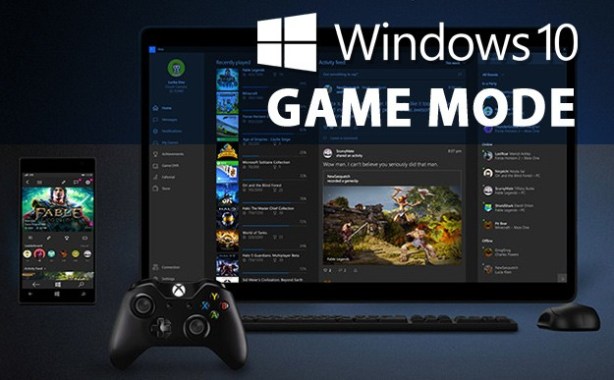
Microsoft believes it has a fix for this problem. It’s a new setting called “Game Mode,” and it’s coming with the free Windows 10 Creators Update, arriving later in Spring 2017.

This new mode takes certain technology gleaned from Microsoft’s experience with the Xbox One game console, and applies it back to Windows 10, Orullian says. The Xbox One lets players run apps like Twitch or Pandora in the background, and Microsoft did a lot of work making sure that this stuff didn’t interfere with the gaming experience. Now the idea is to make Windows 10 an even better place to play games. But if you really love your PC the way it is, fear not: Game Mode works entirely behind the scenes.

“We’re not trying to make the PC into an Xbox,” says Orullian.

What is Game Mode?

The idea, Orullian says, is that when Game Mode is enabled, it’ll optimize your computer’s processor and graphics card to prioritize a game you have open. So whatever software is in the background will still be running, but your computer will divert fewer resources to them.

The end result is a much smoother gaming experience. Depending on your hardware setup, Game Mode may actually boost the overall performance of the game, but Orullian warns that that’s not what Microsoft is aiming for. The goal is consistency, so no matter what’s running in the background, it’ll be a smooth experience.

Here’s a video showing how it all works:

In the future, and as Microsoft gathers more data, its “ambition is to handle both” performance upgrades and the consistency. But because so many different computers have so many different arrays of hardware and software, it’s hard for Microsoft to guarantee a big boost to the majority of Windows 10 users.

Game Mode is currently something of a mixed bag: It’s available to members of Microsoft’s Windows Insider beta testing program, and early reports from our friends at Ars Technica and PC Gamer show that its benefits are real but still relatively subtle. Orullian says that Microsoft is gathering data from testers and will improve it over time, and sees Game Mode as a “long game” that they’re investing in.

At the start, you’ll have to opt-in on a game-by-game basis to use it, though Microsoft-made games like “Minecraft” and “Halo Wars 2” that get purchased from the Windows Store will have it on by default. And if you don’t like it at all, you can turn it off entirely from the Windows 10 settings.

Visit Us ♥

GAMER’S OUTPOST:
http://www.gamersoutpost.net/

GAMER’S OUTPOST: MEDIA:
https://plus.google.com/+GamersoutpostNetPoweredByGamers

TRADE4CASH:
http://www.trade4cash.com/video-games.html and use our Official Promotion Code “gamersoutpost” at checkout for huge cashback rewards!

TWITCH CHANNEL:
https://www.twitch.tv/gamersoutpostnet

TWITTER FEED:
https://twitter.com/GamersOutpostne

VIRAL VIXENS:
https://www.facebook.com/viralvix

YOUTUBE CHANNEL:
https://www.youtube.com/channel/UCabN1X_DvXyZP-tEFYLJaoA/feed?view_as=public

c1e30af36a02bde195a269694fdb4c0c42a00fa5

by William Usher via CinemaBlend

This new Xbox Game Pass has a lot of people chattering about the possibilities of Microsoft’s new digital-only subscription service. It sent GameStop shareholders into a tizzy, and now Microsoft is hoping to do the same for gamers, now that they’ve revealed a few more details about the project.

Kotaku managed to get some details on the Xbox Game Pass and how the library will work on a month-to-month basis. They explain that the contents of the Game Pass library is not constant and will change frequently. They mention that some games will be added to the Game Pass library while some games may be removed. It seems to be a similar to the EA Access vault, where they put some titles in and give gamers an opportunity to play them for a while and then cycle in other games to flesh out the offerings as well. The plan is to keep over 100 Xbox One and Xbox 360 games available in the library for gamers to peruse.

Of course, one of the more important details is whether or not games will stay in your library even after your subscription period runs out. The answer is a big, fat, emphatic… no!

So long as you continue to pay $10 a month you will have access to the entire catalog of games available through the Xbox Game Pass. You can play the games as long as you want, as much as you want, whenever you want. So long as your subscription is active, you can play anything available in the Xbox Game Pass library.

However, if your subscription lapses, if you fail to pay to keep the service active, or if you cancel your Xbox Game Pass subscription, you will instantly lose access to every game in the Xbox Game Pass library. Some people were curious about the games already downloaded and installed on the Xbox One hard drive… well, those games will be automatically deleted. It’s not entirely cruel, though. The saved data and achievements you unlock will still persist on your account, even if you have unsubscribed from the Game Pass service.

Essentially it’s like Netflix for Xbox games.

One of the other big questions is how this will affect the Games With Gold program. Well, Microsoft revealed to Kotaku that Games With Gold and the Xbox Game Pass are “two different service offerings”.

So just to reiterate: the Xbox Games With Gold program will not be affected in any way by the new Xbox Game Pass. Both services will operate independently from one another, and gamers will continue to receive free Games with Gold titles each month along with their paid Xbox Live Gold subscription.

Additionally, Microsoft explained that if you want to play the multiplayer portions of games made available through Xbox Game Pass, you will need an active Xbox Live Gold subscription. So basically you’ll have to pay $10 a month for the Game Pass on top of what you would pay for Xbox Live Gold if you want access to the library and to be able to play multiplayer games in an online environment.

Visit Us ♥

GAMER’S OUTPOST:
http://www.gamersoutpost.net/

GAMER’S OUTPOST: MEDIA:
https://plus.google.com/+GamersoutpostNetPoweredByGamers

TRADE4CASH:
http://www.trade4cash.com/video-games.html and use our Official Promotion Code “gamersoutpost” at checkout for huge cashback rewards!

TWITCH CHANNEL:
https://www.twitch.tv/gamersoutpostnet

TWITTER FEED:
https://twitter.com/GamersOutpostne

VIRAL VIXENS:
https://www.facebook.com/viralvix

YOUTUBE CHANNEL:
https://www.youtube.com/channel/UCabN1X_DvXyZP-tEFYLJaoA/feed?view_as=public

by Matt Peckham via Fortune

“Whoa,” says my 4-year-old son as I scoot onto his bunk bed grasping Nintendo’s eminently totable new game system, called Switch. My son’s like a mini-me version of Keanu Reeves’ Ted, except the incredulity is 100 percent sincere.

We’d been playing The Legend of Zelda: Breath of the Wild for Nintendo’s console on the living room TV, until I told him it was time to say goodnight…then followed him to his room, Switch in tow. “Are we going to play your new Zelda in my bed?” He makes a hysterical giggling sound, same as when we tell him we’re going swimming, or building a room-scale blanket fort, or that tonight’s a “stay up late” night. Not that he’s never held a screen in bed before. His iPad mini harbors just one game, Minecraft, and as far as he’s concerned, Minecraft is god. But tonight, for the first time in months, with the flip of a you-know-what, we have inexplicably killed god.

Except it’s entirely explicable, once you’ve hefted Nintendo’s new $299 hybrid TV/mobile entertainment platform in your hands. The novelty of a mainstream gaming system that goes wherever you do feels gravitationally irresistible. You can get why it exists by observing what it does, a feat that’s true of little else in the games industry. There’s certainly none of that confusing “Which screen do I eyeball now?” business per Nintendo’s Wii U. Drop Switch in its cradle, count to three, and it’s on your TV. Pull it out and it’s in your hands. Decouple the Joy-Con controllers from its sides, pop the rear kickstand and it’s on a table (or seat-back tray), your hands free to roam anywhere like creatures loosed from their cages.

1b9cb49dad2e0dc5e21bd0506fbb64a1

These are just my first impressions of the system, but for the past 48 hours neural scans of my brain would probably resemble explosions in the sky. This, in theory, is the system I’ve wanted Nintendo to make for a very long time. As I’m typing this, the Switch (in handheld mode) is nestled in an elongated case inside a backpack sitting beside me at a coffeehouse. Yes, that’s something mobile phones, tablets and Nintendo’s own 3DS can do. But it’s all the things they can’t do that seem to validate Switch’s existence.

Chief among them is Switch’s ability to facilitate continuous play. Drop it in its cradle (the cradle attaches to your TV with an included HDMI cable), slide the Joy-Con controls up and off the 6.2-inch OLED touchscreen’s sides, and you can either play holding them separately in your hands, or slip them onto an included “grip” that approximates the geometric feel of a traditional gamepad. The game never ceases to function. There’s no shuffling of save files, waiting for video streams to buffer, or rebooting of operating systems. You merely shift video outputs, a process simpler (and faster) than tapping the “input” button on a TV remote.

And then you’re playing the same game, with precisely the same controls. If you disagree with the mindset that smartphones and tablets are ubiquitous to mobile gaming’s future, and if you believe that buttons, triggers and thumb-sticks are superior at enabling vital forms of play when contrasted with touch screens (which, granted, are perfectly apt in their own ways), Switch is a kind of rebel yell in your direction.

It’s important to note how durable and substantial Switch feels, an unostentatious but strangely beautiful carbon-black slate that’s like a blue collar version of an Apple product–all the same “magical” design elegance, none of the pretension. I haven’t hurled it to the floor, as someone at Nintendo allegedly once did with the company’s original Game Boy. Nor have I brutalized the screen with my car keys as I want to do whenever someone asks whether screen protectors are worth the money. But at roughly the same weight as an iPad mini, it feels suitably compact and lightweight, though dense in the way human brains seem wired to associate with high craftsmanship.

cdd9e7e91fc7bd8e3025bdba6aa87561

Those disappointed by the Wii U’s sluggish controls (myself included) can rest easy: Switch’s operating environment is a full 180. It’s also spartan, a parade of square boxes signifying available games that’s like an austere rendition of the PlayStation 4’s left-right selection tool. Below that, six circular options let you explore News, the eShop, a photo Album (of screen captures), check on connected controllers (including battery levels, which is very helpful), System Settings and a Sleep button. Hold the Home button on the right Joy-Con and you’ll conjure a quick menu that lets you put Switch to sleep or enable Airplane Mode. Whatever you do, Switch’s responsiveness clocks in microseconds.

My worries at this point are premised on all the stuff Nintendo has yet to clarify about Switch. In no particular order: Will it have a virtual console that’s at least on par with Wii U’s? Will eShop purchases carry over? How robust will the online service be? How does the upcoming mobile app work, and is it (along with a smartphone or tablet) complementary or mandatory? Will finding, friending and interacting with other players be as intuitive as rivals’ approaches? And will Switch support some form of in-game accomplishments tied to player profiles? Nintendo is famously resistant to imitating others’ ideas, but crafting some sort of meta-motivational framework feels like a piece that’s missing from the Nintendo-verse.

There’s an update promised just prior to launch that’s supposed to add the online functionality, but at this point what it harbors and how well it’ll work is as hypothetical for those of us with early review units as it is for just about anyone reading this.

Yes, 32 gigabytes of internal storage (of which 25.9 gigabytes is accessible) is tiny, so let’s talk about that. The digital version of Breath of the Wild is said to consume 13.4 gigabytes. If that’s at all representative, you’re not getting much else in the door here without picking up an expansion micro SDXC card. You can find 64 gigabyte options for around $15, so it’s not some crazy hidden expense. But just as with Nintendo’s 3DS handheld, it’s also a compelling argument for buying the physical versions of games, which come on tiny cartridges, since they take up no storage internally.

e5dd62695fd8bf35642bcaf4d47dfef5

The only game I’ve been able to try so far is Breath of the Wild, and while I’m not allowed to write about it yet, I can say the battery while playing in handheld mode drains quickly, definitely near the 2.5 hour side of Switch’s official 2.5 to 6 hour range. The system also seems to charge slowly while docked if you’re simultaneously using it, a probable pain point if your play schedule doesn’t involve breathers for the system to gulp down electricity.

I also have a minor use-case worry about the dock’s ability to stay in place on a shelf. I’ve been playing a lot with the Pro controller (sold separately for $69), which connects to the dock via USB-C. While I admire its ergonomics even more than Sony’s DualShock 4 (my prior high watermark), the cable comes up short at about 4 feet. The good news is that the Pro controller runs for something like 40 hours off one charge. The bad news is that if you’re playing with the cable attached and accidentally tug on it even slightly (or trip over it, as I’ve done with other systems), the Switch and dock are going to fly right off the shelf, kaboom, because they weigh so little. It’s enough of a worry for a klutz like me that I’m considering plugging the Pro controller’s cable into something that’s not the Switch dock. Affixing the dock to whatever you’ve set it on (with Velcro, say, or a two-sided adhesive) might not be a silly idea.

Summing up, Switch is so far everything I’d hoped it might be, save for the the part where I’m still generally clueless about its online abilities. Yes, so much depends on a red wheelbarrow-full of unreleased software. Whether third parties will ultimately flock or demur is a question only answerable if you’re clairvoyant. But the theory–of a device that both follows players and maybe, just maybe, revitalizes face-to-face engagement in this era of “alone together”–seems laid on solid footing so far.

Visit Us ♥

GAMER’S OUTPOST:
http://www.gamersoutpost.net/

GAMER’S OUTPOST: MEDIA:
https://plus.google.com/+GamersoutpostNetPoweredByGamers

TRADE4CASH:
http://www.trade4cash.com/video-games.html and use our Official Promotion Code “gamersoutpost” at checkout for huge cashback rewards!

TWITCH CHANNEL:
https://www.twitch.tv/gamersoutpostnet

TWITTER FEED:
https://twitter.com/GamersOutpostne

VIRAL VIXENS:
https://www.facebook.com/viralvix

YOUTUBE CHANNEL:
https://www.youtube.com/channel/UCabN1X_DvXyZP-tEFYLJaoA/feed?view_as=public
c5pynidvcaic4lq

by Ben Gaurino via The Washington Post

Twenty-two hours into a 24-hour-long marathon video game session, Twitch streamer Brian Vigneault, 35, got up to take a smoke break. He never returned to his computer.

His fans, mainly fellow gamers who watched Vigneault play the online skirmisher “World of Tanks,” wondered if Vigneault had fallen asleep. Although it was around 4:30 p.m. on Sunday, falling asleep in the afternoon would not have been completely unexpected. Vigneault, under the online nickname Poshybrid, would play “World of Tanks” for extreme lengths of time to raise donations for charity.

When a moderator messaged Vigneault a few hours after his abrupt disappearance, a Virginia Beach detective responded via Vigneault’s computer on the chat app Discord, according to a Reddit post. Vigneault was found unresponsive at his Virginia Beach home early Sunday evening. He had died while raising money for the Make-A-Wish charity.

Twitch.tv, for the unfamiliar, is a website where people play video games for a live Internet audience. Outside of the professional video game tournaments, the vibe is low-key and friendly. A Twitch stream has been described as a microcommunity, but it is perhaps better likened to a friend’s couch. (On this particular couch, there’s always a good seat, and your friends are all very good at video games.) Spectators chime in, offering comments, questions or monetary donations. Amazon, whose chief executive Jeffrey P. Bezos owns the Washington Post, purchased Twitch in 2014 for close to $1 billion.

 Vigneault, a “World of Tanks” player for the past five years, had raised nearly $11,000 for various charities during his streaming career, according to his Twitch profile. Like several Twitch streamers, Vigneault would play between five and seven nights a week, often from night until early morning.

Video game website Kotaku recently explained the motivation behind superlong Twitch streams: “Marathon streaming has been a sort of long-standing fad among the Twitch community. Twitch titans like Sodapoppin and ManVsGame regularly game for a day straight, pausing only to eat, use the bathroom, stretch and respond to their chat. Hitting every time zone is an effective strategy for building your audience, which can lead to more donations.”

controller

In 2013, the average American gamer played just over 6 hours a week, a Nielsen report found. It is not unheard of for some Twitch streamers to play for double or triple that time in a single day. Others aimed for even longer. In 2014, for instance, Neal “Koibu” Erickson attempted to stream on Twitch for 120 hours straight. He fell asleep in his computer chair a few minutes short of the 90-hour mark.

A few, though not all streaming on Twitch, have tested the limits of endurance while playing video games. A multiplayer session of six Dutch players lasted for 50 hours of the Wild West shooter “Red Dead Redemption” in 2010. The world record stands at a continuous 138 hours of “Just Dance 2015.”

Vigneault’s passing marked one of the very few, if not the first, deaths during a marathon Twitch game-playing event. But there have been several publicized, though rare, incidents of gamers dying in the middle of extremely long sessions. In 2015, a 24-year-old man collapsed and died after playing “World of Warcraft” for 19 hours in a Shanghai Internet cafe. Three years prior, a Taiwanese teenager also died at an Internet cafe, playing “Diablo 3” for 40 hours. And in 2005, a South Korean man’s heart failed 50 hours into a “Starcraft” marathon.

The Virginia Beach Police Department confirmed to the Washington Post on Wednesday that it had investigated his death. The officers reported no criminal motivation or activity.

“There is no reason at this time to suspect foul play,” a representative for the police department told Polygon.

Vigneault’s gaming clan, Fame, posted a note in memoriam on Facebook. “We just cannot find words to describe how sad is this moment for all of us,” said the Fame post. “This game will not be the same without the legend.”


ea09be76941fc161c1b629cbeb6f9645

by Josh Condon via The Drive

A number of Ford engineers have been proving out a theory that many of us at The Drive believe is self-evident: Level 3, or “conditional”, autonomy, where a human driver is supposed to take over in a matter of seconds for an overwhelmed autonomous vehicle, is a recipe for disaster.

As we’ve seen many times before, most people seem to implicitly trust machines to the point where partial autonomy creates a false sense of security. This is apparently true even of trained Ford engineers whose job it is to remain alert and monitor the company’s test fleet of self-driving cars; according to Bloomberg, these professional monitors are dozing off in self-driving cars—and even buzzers, alerts, or the presence of another human being isn’t enough to stop mid-evaluation nap time from happening.

Raj Nair, Ford’s product development chief, put it this way in an interview: “These are trained engineers who are there to observe what’s happening. But it’s human nature that you start trusting the vehicle more and more and that you feel you don’t need to be paying attention.”

Ford Joins Waymo in Skipping Level 3

As such, Ford has decided to forego plans for Level 3 vehicles altogether, instead aiming to roll out fully autonomous cars by 2021—a decision that Waymo, the company heading up Google parent company Alphabet’s self-driving-car project, already reached.

Germany’s Big Three of BMW, Mercedes-Benz, and Audi, however, still plan to roll out Level 3 cars as early as next year.

Visit Us ♥

GAMER’S OUTPOST:
http://www.gamersoutpost.net/

GAMER’S OUTPOST: MEDIA:
https://plus.google.com/+GamersoutpostNetPoweredByGamers

TRADE4CASH:
http://www.trade4cash.com/video-games.html and use our Official Promotion Code “gamersoutpost” at checkout for huge cashback rewards!

TWITCH CHANNEL:
https://www.twitch.tv/gamersoutpostnet

TWITTER FEED:
https://twitter.com/GamersOutpostne

VIRAL VIXENS:
https://www.facebook.com/viralvix

YOUTUBE CHANNEL:
https://www.youtube.com/channel/UCabN1X_DvXyZP-tEFYLJaoA/feed?view_as=public